Water Heater Gas Control Valve: Symptoms, Testing and Replacement
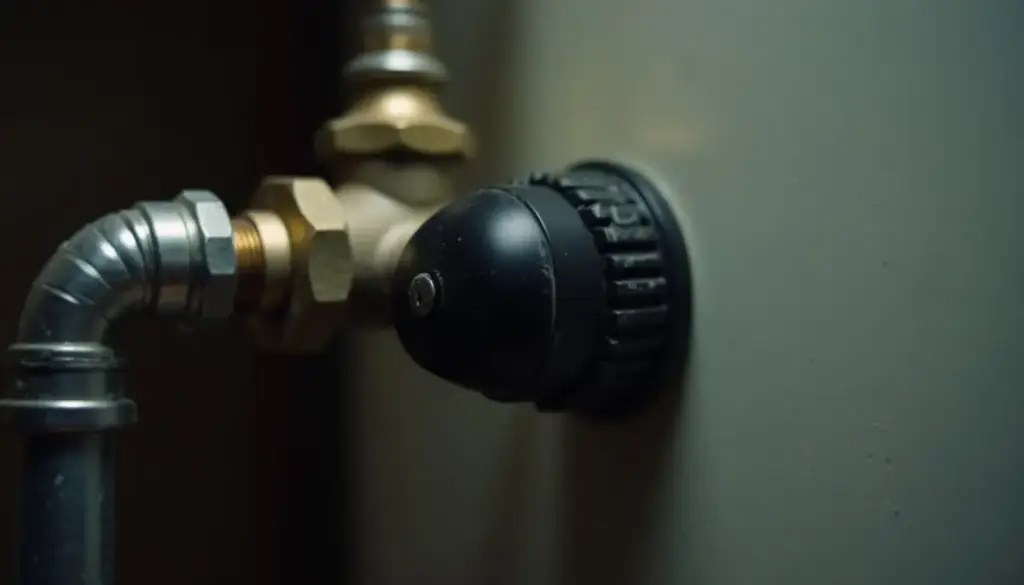
A water heater gas control valve is the knob-and-thermostat block that meters gas to the burner; test the thermocouple or thermopile, gas pressure and status light before buying one, because the installed price runs $150 to $550.
Key Takeaways
- Bradford White’s FVIR service manual defines Honeywell flash codes 1 through 8, from one flash (normal) to eight (pilot valve stuck open, replace control).
- A Honeywell thermopile should read 350 to 850 mV, and a White-Rodgers thermocouple 20 to 30 mV open circuit, per Bradford White, before you blame the valve.
- Bradford White sets manifold pressure at 4.0 inches water column (plus or minus 0.5) for natural gas and 10.0 for LP; out of range on a White-Rodgers valve means replace it.
- Fuels are not swappable. Bradford White notes the LP feedline nut uses left hand threads, natural gas right hand.
- HomeGuide puts the job at $150 to $550 installed, with a $350 average and $100 to $300 for the valve alone.
- HomeGuide advises replacing the heater instead when the repair tops $500 or the tank is over 10 years old.
What does a water heater gas control valve do?
The gas control valve is the box on the front of a tank heater that holds the temperature knob. It combines a thermostat, a safety shutoff that only opens while the pilot proves flame, a pressure regulator, and an energy cut-off (ECO) that kills gas if the water overheats. Makers call it a combination thermostat/gas valve or simply the gas control. Before testing any of these components, know what to do if you smell gas near the tank, covered in gas odor safety steps.
Two families dominate. Mechanical valves from White-Rodgers and Robertshaw run off a single thermocouple. Electronic Honeywell controls, now sold through Resideo (Honeywell’s former home controls business), run on a thermopile and add a green status light and a plug-in temperature sensor.
- Honeywell (electronic): 5 major parts (cover, piezo igniter, valve body, temperature sensor, back plate), each replaceable on its own, per Bradford White.
- White-Rodgers (mechanical): Bradford White calls it “a non repairable device.” A failed valve gets replaced, not rebuilt.
- Robertshaw (mechanical): tested with a thermocouple adaptor, Bradford White part 239-44642-00 or Robertshaw part 75036.
What are the symptoms of a bad water heater gas control valve?
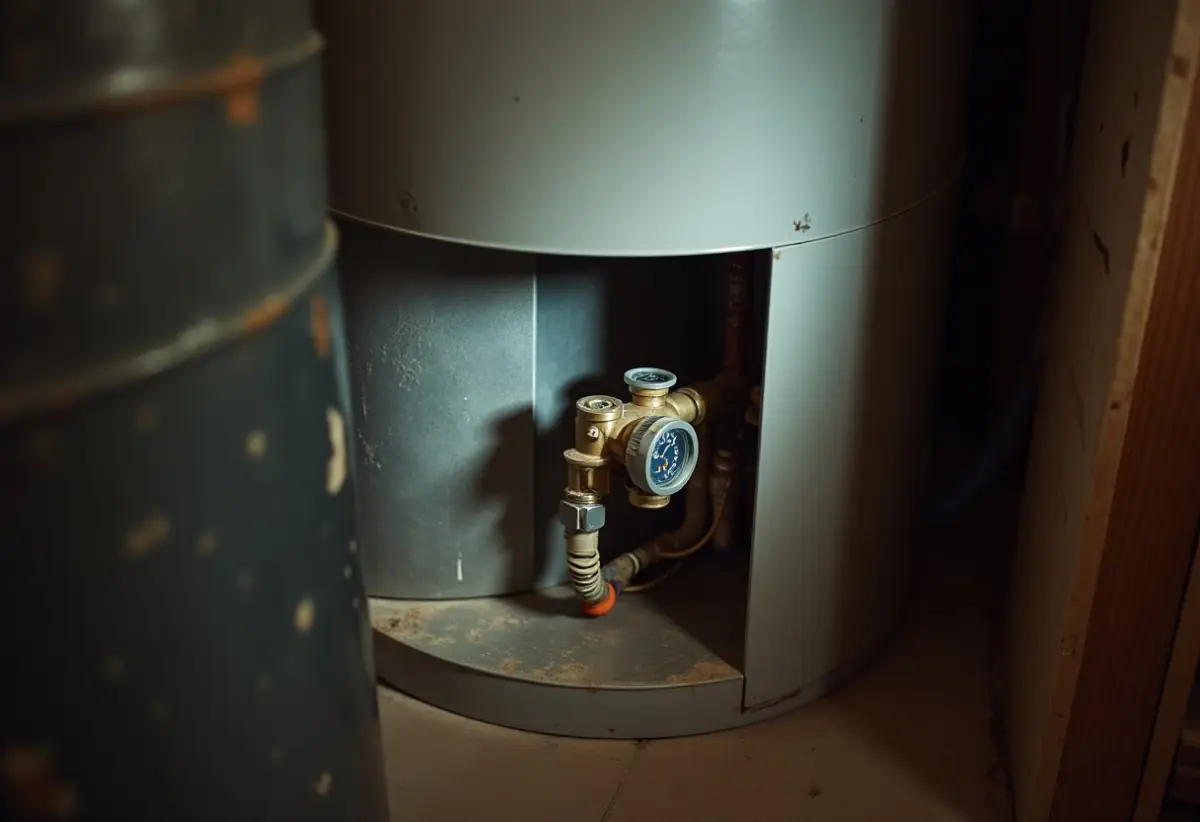
The common signs are no hot water with the pilot lit, water hotter than the dial setting, a pilot button that will not pop back up, a knob that will not turn, or gas odor at the valve fittings, per HomeGuide. Each also has a cheaper cause, so condemn the valve last.
Bradford White’s White-Rodgers chart narrows it down. A pilot that dies when the button is released implicates the valve only after the thermocouple, its connection (finger tight plus 1/4 turn) and the resettable thermal switch check out. A pilot that lights with no main burner points to a low dial, low gas pressure, or a valve out of calibration.
If the pilot is the problem, start with relighting the pilot and watching how long it holds. A dead tank with no obvious cause belongs in a broader no hot water check of supply, venting and settings.
What do the water heater gas control valve blink codes mean?
On Honeywell electronic controls, the green LED flashes a code, pauses three seconds, and repeats. Count one group. Bradford White’s charts define the codes below; only 7 and 8 point straight at the control, while 2 through 5 usually trace to the pilot, thermopile or sensor first.
| Status light | Meaning | Fix |
|---|---|---|
| No light | Pilot out, control not powered, or thermopile failed | Relight. If the pilot will not stay lit, replace the pilot assembly, then the control if it persists |
| 1 flash, 3 second pause | Normal. Knob in PILOT or thermostat satisfied | None. Turn knob to the desired setting |
| Strobe (2 quick flashes), 3 second pause | Thermostat calling for heat (ICON sheet) | None |
| Solid on | Knob recently turned to OFF | Wait for the LED to go out before relighting |
| 2 flashes | Weak pilot signal | Test thermopile, clean or replace pilot, check thermal switch |
| 3 flashes | Insufficient heating, no temperature rise in time | Check sensor ohms, confirm water is not running |
| 4 flashes | Excessive tank temperature, ECO lockout | Knob to OFF, wait 5 minutes, relight. If it returns, test sensor, then control |
| 5 flashes | Temperature sensor fault | Test sensor resistance, replace sensor or cover with probe |
| 6 flashes | Water leak detected by accessory module (if fitted) | Check T&P valve, fittings and tank |
| 7 flashes | Gas control electronic fault | Reset once. If wet, damaged or recurring, replace the gas control |
| 8 flashes | Pilot stays on with knob at OFF, pilot valve stuck open | Shut off gas at the supply valve and replace the gas control |
Source: Bradford White FVIR service manual (Honeywell chart, pages 5 and 6) and the Bradford White ICON error code sheet. An American Water Heater manual adds 9 flashes (combustion chamber sensor circuit) and 10 flashes (contaminants in the combustion chamber) for its own control.
Why is my White-Rodgers water heater gas valve blinking?
The White-Rodgers valve in Bradford White’s FVIR manual is mechanical, with no status light. A White-Rodgers control that blinks is an electronic model whose codes may differ from Honeywell’s, so match the count only to the chart on your heater’s label or manual.
Is it the gas valve, the thermocouple or the thermopile?
Measure before you buy. A thermocouple or thermopile costs a fraction of a $100 to $300 valve, and Bradford White gives pass and fail numbers for each. If the sensor passes and the symptom stays, suspect the valve. If it fails, follow our water heater thermocouple replacement steps first.
| Test | Valve type | Pass | Fail means |
|---|---|---|---|
| Thermocouple, closed circuit | White-Rodgers | 10 mV or higher | Replace thermocouple |
| Thermocouple, closed circuit with adaptor | Robertshaw | 13 mV or higher | Replace thermocouple |
| Thermocouple, open circuit | White-Rodgers | 20 to 30 mV | Replace thermocouple |
| Magnet dropout | White-Rodgers | Holds through a drop of at least 6 mV from 13 mV or more | Clicks early: replace valve |
| ECO continuity | White-Rodgers | Continuity, pilot tube to magnet opening | Open ECO: replace valve |
| Thermopile, open circuit | Honeywell | 350 to 850 mV | Under 350 mV: replace pilot assembly |
How do you test a water heater gas control valve, step by step?
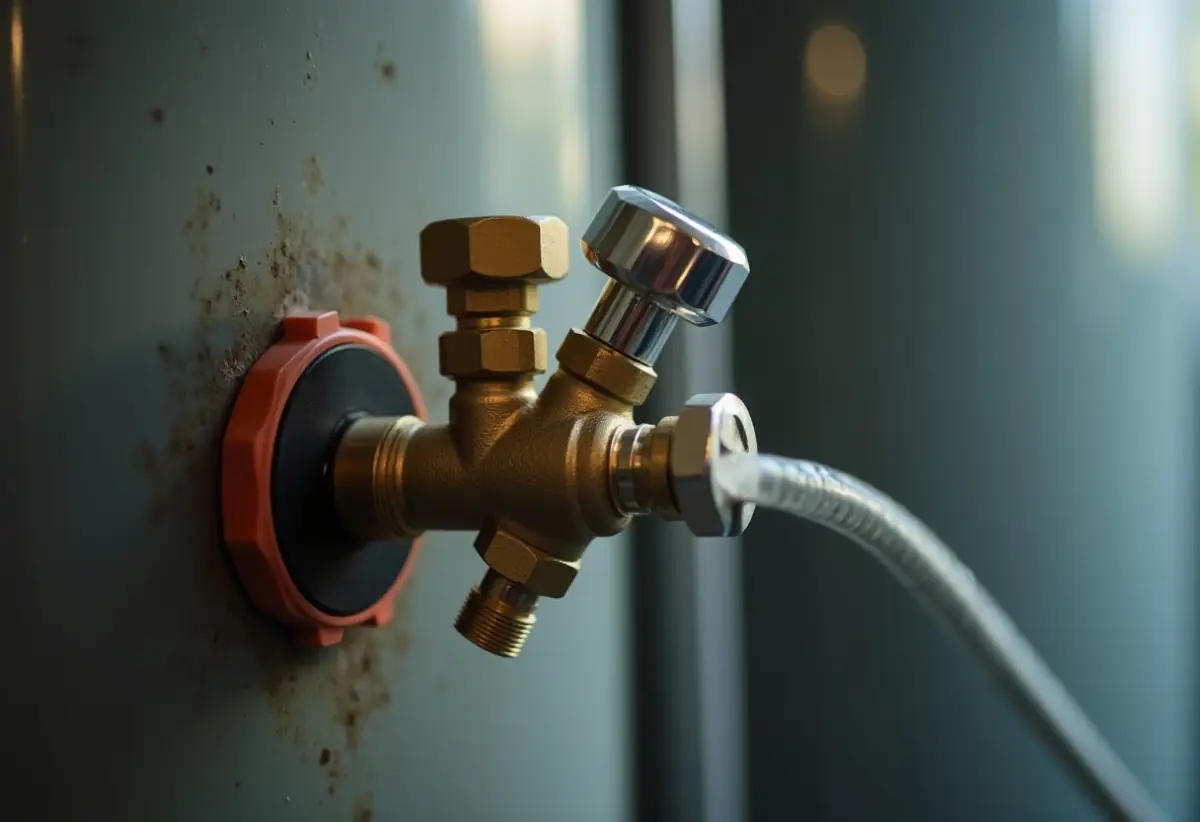
Work from the gas supply inward, cheapest suspect first, following Bradford White’s procedures RG-II, RG-V and RG-VI. You need a millivolt-capable multimeter and a manometer. Pressure testing means opening a gas port, so homeowners without a manometer should stop after step 3 and book a licensed plumber or gas fitter.
- Confirm gas is on at the appliance shutoff and the knob is set past PILOT to a temperature setting.
- Read the status light (Honeywell) or note the symptom (White-Rodgers, Robertshaw).
- Test the thermocouple or thermopile against the numbers in the table above.
- Check line pressure with the burner on and off. Maximum is 14.0 inches water column; minimum is 1.0 inch over the rated manifold pressure on the rating plate.
- Check manifold pressure at the 1/8 inch NPT pressure tap. Natural gas should read 4.0 inches (plus or minus 0.5); LP should read 10.0 (plus or minus 0.5).
- On White-Rodgers, run the magnet dropout and ECO continuity tests. The manifold pressure is not adjustable, so out of range means replace.
- On Honeywell with codes 3, 4 or 5, test sensor resistance with pin probes (standard probes damage the connector). Bradford White’s chart lists 8,449 ohms at 84°F and 3,758 ohms at 120°F.
For the sensor check, shut the cold inlet, draw and discard about 4 gallons, then take the temperature of the next gallon. Resistance that matches the chart means replace the control; a mismatch means replace the sensor.
Why must a replacement gas control valve match your heater model?
The valve is calibrated to the burner it feeds. HomeGuide notes valves are not always interchangeable because gas flow must match the heater’s BTU output, and different fuels use different valves. Order by the model number on the rating plate, not by the look of the old valve.
- Fuel: Bradford White regulates natural gas to 4.0 inches water column and LP to 10.0. The regulator inside each valve is built for one gas.
- Threads: the natural gas feedline nut uses right hand threads, the LP nut left hand threads, per the same manual.
- FVIR sealing: flammable vapor ignition resistant heaters seal the combustion chamber, and the inner door gasket must be inspected for tears, cracks, missing material and debris every time the door comes off.
- Control type: thermopile Honeywell and thermocouple White-Rodgers valves use different pilot assemblies, so do not mix them.
How is a water heater gas control valve replaced?
Replacement takes a full drain, because the valve threads directly into the tank and its sensor sits in the water. Bradford White’s FVIR manual marks every procedure as “to be performed ONLY by qualified service providers,” and HomeGuide clocks the job at 1 to 1.5 hours for a pro. The steps below summarize the maker’s sequence, not a substitute for it.
- Turn the knob to OFF. Honeywell turns counter-clockwise; White-Rodgers is depressed slightly and turned clockwise.
- Shut the gas supply valve and disconnect the gas line at the control inlet.
- Shut off the cold water and drain the heater completely.
- Remove the outer door, the thermal switch leads, and the right inner door (2 hex screws plus 2 on its flange). Protect the gasket.
- Disconnect the feedline, pilot tube and thermocouple (Honeywell adds the igniter, red and white wires). Pull the burner.
- Unscrew the control counter-clockwise using a control body wrench or a length of 1/2 inch NPT pipe threaded into the inlet. Never put a wrench on the body.
- Thread in the new control clockwise, upright so the feedline aligns. Do not over-tighten, and if you pass alignment, do not back it off.
- Reconnect everything. On Honeywell, the red wire goes to the positive terminal and the white wire to the negative.
- Reconnect gas with a backup wrench on the control’s wrench boss, refill the tank, check joints for leaks with soapy water, then relight per the label.
Gas work often requires a permit or a licensed plumber or gas fitter, depending on state and local code. If you smell gas, leave and call your gas utility from outside.
How much does water heater gas valve replacement cost?
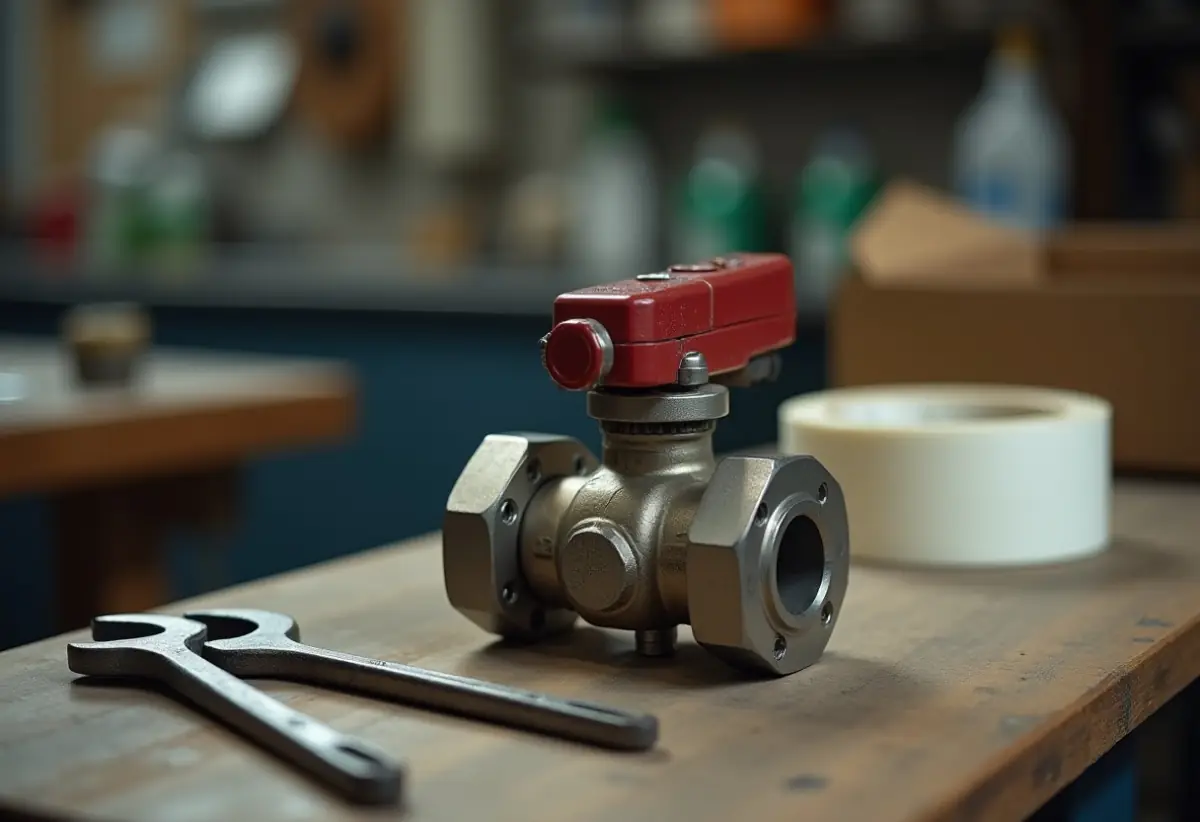
HomeGuide’s cost guide puts a water heater gas valve replacement at $150 to $550 installed, with a $350 national average and reported jobs from $100 to $800. A DIY swap costs the $100 to $300 valve plus $10 to $20 in supplies.
Bars show the top of each range. The HomeGuide data dates to January 2024, so 2026 quotes may run higher in costly metros.
When should you replace the water heater instead of the gas valve?
HomeGuide’s rule of thumb is to replace the whole heater when the repair estimate is over $500 or the unit is more than 10 years old. A new water heater runs $600 to $3,100 installed in the same data.
- Under 10 years, quote under $500: replace the valve.
- Over 10 years, or a leaking tank: put the money toward a new heater.
- Wet control: Bradford White lists water damage as a 7 flash cause, so fix the leak before fitting a new valve.
Our water heater repair guide covers which other fixes pay off on an older unit.
How we sourced this
We consulted 9 sources and cited 4. Codes, test values, pressures, part numbers and steps come from Bradford White’s FVIR service manual and ICON error sheet, cross-checked against an American Water Heater manual. Costs come from HomeGuide (January 2024). We excluded blink codes from third-party sites that did not match a maker chart.
Frequently asked questions
How do I know if my water heater gas valve is bad?
Rule out the cheaper parts first. On a mechanical valve, a thermocouple reading 20 to 30 mV open circuit that still cannot hold the pilot points to the valve magnet or ECO. On a Honeywell electronic control, seven flashes after a reset or eight flashes with the knob off mean replace the control, per Bradford White’s service chart.
How much does it cost to replace a gas valve on a water heater?
HomeGuide puts the installed price at $150 to $550, with a $350 national average. The valve alone runs $100 to $300 depending on brand, and labor adds $50 to $250. Plumbers in that data charge $45 to $150 per hour plus a $50 to $200 minimum service fee, and the swap takes 1 to 1.5 hours.
Why is the light on my water heater gas valve blinking?
The status light reports what the control sees. On Honeywell controls used by Bradford White, one flash every three seconds is normal, two flashes means a weak pilot signal, four flashes means the tank overheated, and seven flashes means an electronic fault. Count the flashes between the three second pauses, then match the count to the chart on your heater.
Are water heater gas valves interchangeable?
Not reliably. HomeGuide notes valves are matched to the heater’s BTU output and fuel. Natural gas valves regulate to about 4.0 inches water column and LP valves to about 10.0, and the LP feedline nut uses left hand threads, per Bradford White. Order the valve by the heater’s model number from the rating plate.
Do you have to drain the water heater to replace the gas valve?
Yes. The gas control threads into the tank and its temperature sensor sits in the water, so Bradford White’s procedure says to shut off the cold supply and drain the heater completely before unscrewing the valve. On a 40 or 50 gallon tank, plan for a garden hose to a floor drain and time for the tank to empty.
How do I reset a water heater gas control valve?
For the Honeywell four flash overheat lockout, Bradford White says to turn the knob to OFF, wait at least 5 minutes, then relight using the label instructions. For seven flashes, reset once the same way. If either code comes back, the sensor or the control has failed and needs testing or replacement by a qualified technician.
Is it worth replacing the gas valve or should I replace the water heater?
HomeGuide suggests replacing the whole heater when the repair quote tops $500 or the unit is more than 10 years old. A new water heater runs $600 to $3,100 installed in the same data. On a 4 year old tank with a $350 valve quote, repair usually wins. On a 12 year old tank, put the money toward a new heater.