How to Connect PVC to Cast Iron
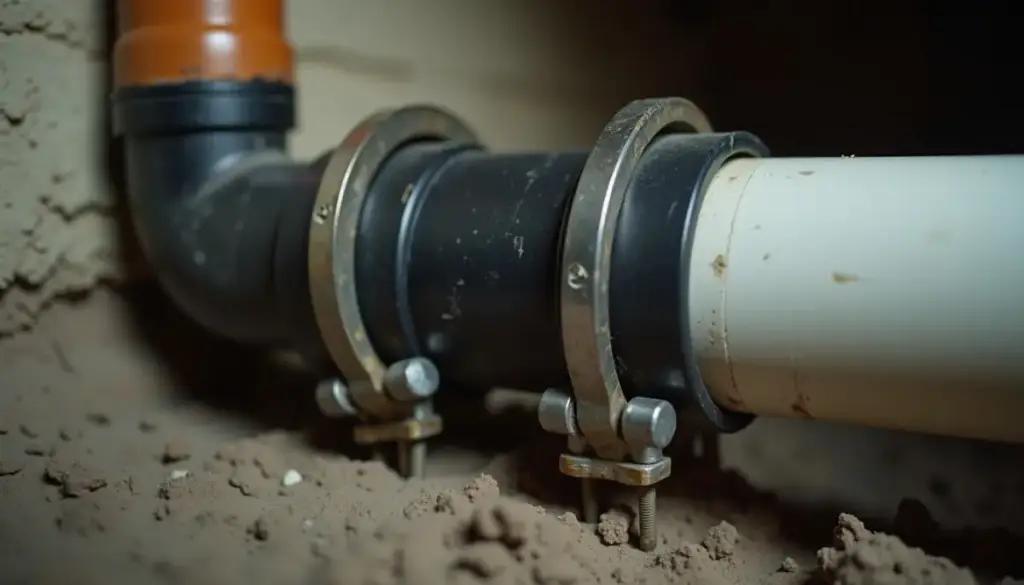
Learning how to connect PVC to cast iron comes down to one part, a shielded coupling sized to both outside diameters and torqued to the maker’s spec, usually 60 inch-pounds.
Key Takeaways
- Standard CISPI 310 no-hub couplings tighten to 60 inch-pounds with a calibrated torque wrench, per the CISPI Handbook and Tyler Pipe’s instructions.
- 4 inch no-hub cast iron measures 4.38 inches outside and service weight 4.30 inches, per the CISPI Handbook, while 4 inch Schedule 40 PVC runs 4.50 inches.
- California’s UPC-based plumbing code (Section 705.10) requires ASTM C1173 couplings below ground, C1460 above ground and C1461 for both.
- Fernco lists 4.3 psi as the maximum test pressure for its couplings, the same as the 10-foot water column CISPI recommends.
- Tyler Pipe says joining its hubless pipe with unshielded couplings voids the warranty, and Charlotte Pipe’s warranty excludes them too.
How do you connect PVC to cast iron?
You connect PVC to cast iron with a mechanical joint, never glue. Cut the cast iron square, support the pipe on both sides, then join the two pipes with a shielded no-hub coupling, a shielded transition coupling or a hub gasket that is listed for both materials. Tighten the bands to the printed torque, often 60 inch-pounds, and water test before you hide the joint.
PVC cement fuses plastic to plastic and does nothing to iron, so every joint relies on rubber compressed by stainless steel. Three things decide success: the coupling type, each pipe’s outside diameter and the clamp torque.
If you are still deciding whether to keep the iron at all, our cast iron vs PVC pipe comparison covers noise, lifespan and fire rules.
Which coupling should you use to connect PVC to cast iron?
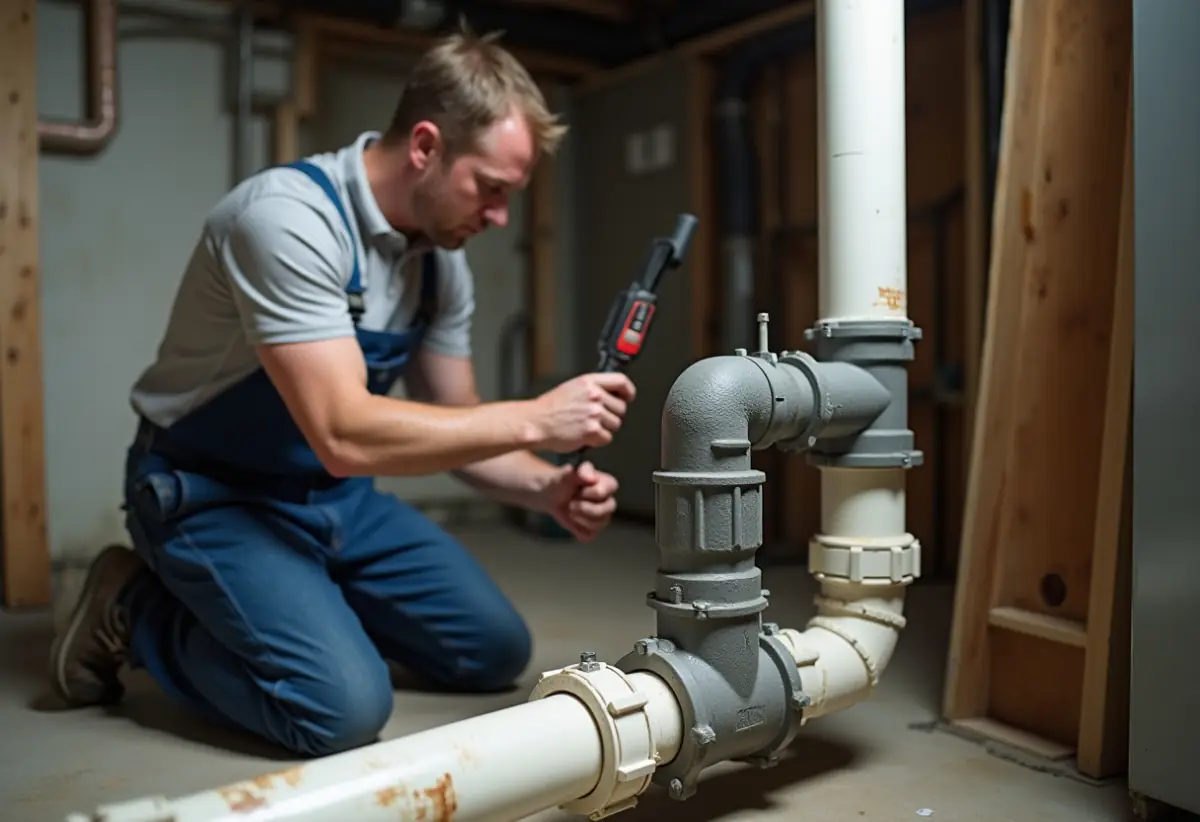
Use a shielded coupling whenever the joint is above ground or will be covered. A CISPI 310 no-hub coupling works when its label covers both pipe ODs. A shielded transition coupling made to ASTM C1460 handles mismatched ODs above ground. An unshielded ASTM C1173 rubber coupling is often limited to below ground work, depending on local code.
| Connection type | Where allowed | Pros | Cons |
|---|---|---|---|
| Shielded no-hub coupling (CISPI 310 / ASTM C1277) | Above and below ground where the label covers both pipe ODs | Corrugated 301 stainless shield, 60 in-lb install, keeps the cast iron maker’s warranty intact | Sized for cast iron OD; a 3 in. coupling may not grip 3.50 in. PVC unless the label says so |
| Shielded transition coupling (ASTM C1460, such as Fernco Strong Back) | Above ground under California’s UPC-based code; C1461 versions above and below ground | Molded bushing bridges different ODs; rigid shield resists sag and shear | Costs more; must match both pipe ODs |
| Unshielded flexible coupling (ASTM C1173, plain Fernco style) | Below ground under California’s code; above ground only where the local code allows | Cheap, sold everywhere, forgiving of small misalignment | Can sag or shear; voids Tyler Pipe and Charlotte Pipe hubless warranties |
| Hub compression gasket (donut, ASTM C564 elastomer) | Where the remaining cast iron end is an intact hub, if the gasket is listed for a plastic spigot | No cutting of the hub; push-in joint with lubricant | Must match hub class; old hubs are often cracked |
| Heavy-duty coupling (ASTM C1540) | Commercial work or wherever a spec calls for extra joint rigidity | Wider gasket, more clamps, stiffer joint | 80 to 120 in-lb torque; overkill for most home repairs |
The coupling is just one entry in a long list of DWV plumbing fittings,. Read the standard number printed on the coupling. That number, not the brand, tells the inspector where the part may go.
Fernco vs no-hub coupling: what is the difference?
A standard Fernco coupling is a flexible elastomeric PVC sleeve held by two stainless clamps, with no full-length shield. A no-hub coupling built to CISPI 310 or ASTM C1277 puts a neoprene sleeve inside a corrugated stainless steel shield. The shield keeps the pipes in line and resists the shear that makes plain rubber couplings sag.
Fernco’s own FAQ describes its standard couplings as an elastomeric PVC sleeve with stainless steel clamps and says shielded options give the best overall performance, especially below ground or where extra rigidity is needed. Fernco sells both unshielded and shielded (Strong Back) couplings.
Charlotte Pipe’s CISPI 310 guide gives the standard no-hub coupling specs: a 0.007 inch type 301 stainless shield, 5/16 inch hex-head screws, an ASTM C564 neoprene gasket rated to 212°F and a 5 degree maximum joint deflection.
Shielded coupling vs unshielded: which one wins?
The shielded coupling wins for almost every joint inside a house. It holds alignment under a heavy iron stack and is the type cast iron makers require for warranty. The unshielded coupling earns its place below ground, where soil supports the pipe and codes such as California’s accept ASTM C1173 parts.
Why do cast iron and PVC outside diameters not match?
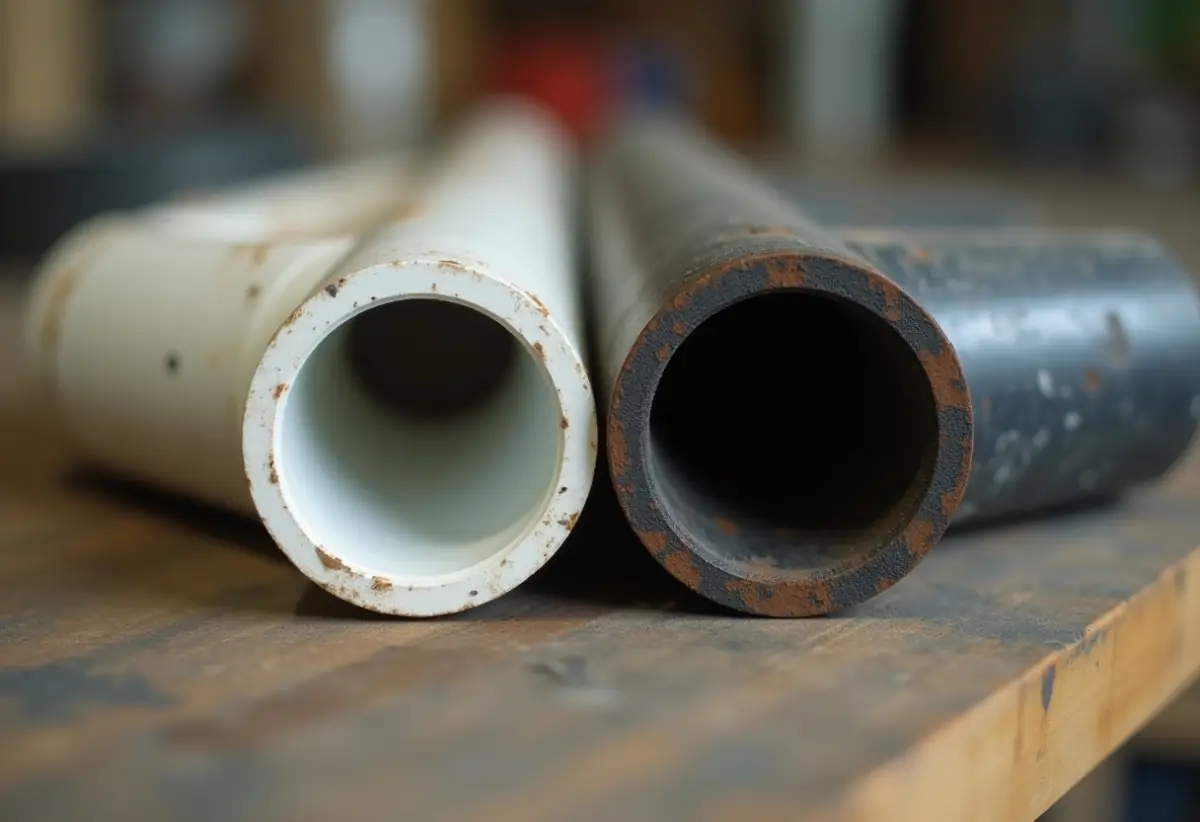
Cast iron and PVC follow different sizing systems. The CISPI Handbook lists 3 inch no-hub cast iron at 3.35 inches and 4 inch at 4.38 inches outside. Schedule 40 PVC uses iron pipe size ODs of 3.50 and 4.50 inches under ASTM D2665 and D1785. Service weight hub-and-spigot iron is smaller again, at 3.30 and 4.30 inches.
A gap of 0.12 to 0.20 inches is the difference between a gasket that seals and one that weeps. The CISPI Handbook notes that service weight and extra heavy iron differ in OD because the extra wall goes on the outside. Extra heavy 4 inch iron matches 4 inch PVC at 4.50 inches; the others do not. Measure before you buy, since Fernco says coupling sizing is OD-based, not nominal.
How do you connect PVC to cast iron step by step?
The step-by-step job is support, cut, clean, couple, torque and test. Order matters most at the start, because a cast iron stack that loses support when you cut it can drop, crack a hub below or pull apart joints above. Clamp the stack first, then cut.
- Identify the pipe. Divide the measured circumference by 3.1416 to get the OD, then compare it with the CISPI figures in the chart above.
- Support the stack before you cut. Install a riser clamp above the cut so it bears on the floor framing, and add one below if the lower section can shift. The CISPI Handbook calls for vertical cast iron to be secured at each stack base, with riser clamps at floor intervals of no more than 15 feet.
- Cut square. A soil pipe snap cutter gives the cleanest, squarest break; our guide on how to cut cast iron pipe covers snap cutters, grinders and saws. Tyler Pipe’s instructions say field-cut ends should be square.
- Clean and deburr both ends. Wire-brush scale off the cast iron where the gasket seats, file the sharp cut edge and deburr the PVC.
- Dry fit the coupling. Slide the sleeve onto one pipe and the shield and band assembly onto the other. Seat both ends firmly against the molded center stop inside the sleeve, as the CISPI Handbook directs.
- Torque the bands. Center the shield over the sleeve and tighten the bands alternately to the maker’s figure, 60 in-lb for standard CISPI 310 couplings. On four-band couplings, Tyler Pipe says to tighten the inner bands first, then the outer pair.
- Hang the new PVC. Support each horizontal coupling within 18 inches, per CISPI, and follow your local code for PVC hanger spacing so the plastic does not hang off the joint.
- Test before you close up. Run the water test described below before drywall, backfill or a ceiling hides the joint.
What about connecting PVC into a cast iron hub?
When the cast iron end you are keeping is a sound hub, a rubber compression gasket, often sold as a donut, can seat in the hub and accept a PVC spigot. Per the CISPI Handbook, clean the hub, fold the gasket fully in, lubricate and push the spigot through every sealing ring until it bottoms out.
The gasket must match the hub class and be labeled for a plastic spigot of your size. Old leaded hubs often hide cracks, so many plumbers cut back to sound pipe and use a coupling instead.
What does plumbing code say about PVC to cast iron joints?
Codes require a listed mechanical joint for dissimilar materials, and many name the coupling standard by location. California’s plumbing code, adapted from the UPC, requires ASTM C1173 couplings below ground, ASTM C1460 above ground and ASTM C1461 for either. IPC jurisdictions generally call for compression or mechanical-sealing joints. Local amendments vary, so ask your building department.
Section 705.10 of the 2022 California Plumbing Code also says these joints must follow the manufacturer’s instructions, and plastic joined to other materials needs a listed adapter or transition fitting for that specific transition.
- Above ground: expect to need a shielded part (ASTM C1460 or C1461) in UPC-based jurisdictions.
- Below ground: an ASTM C1173 flexible coupling is often accepted.
- Fire-rated walls and floors: the CISPI Handbook’s model spec language says unshielded couplings should not connect noncombustible piping at a rated penetration unless fire integrity is shown to be maintained.
- Concealed joints: some inspectors want shielded couplings anywhere a joint gets covered.
Warranty adds another layer. Tyler Pipe’s catalog says using unshielded couplings, or any coupling not meeting CISPI 310, will void its hubless pipe warranty, and Charlotte Pipe says its warranty does not cover hubless joints made with unshielded couplings.
How do you test a PVC to cast iron joint?
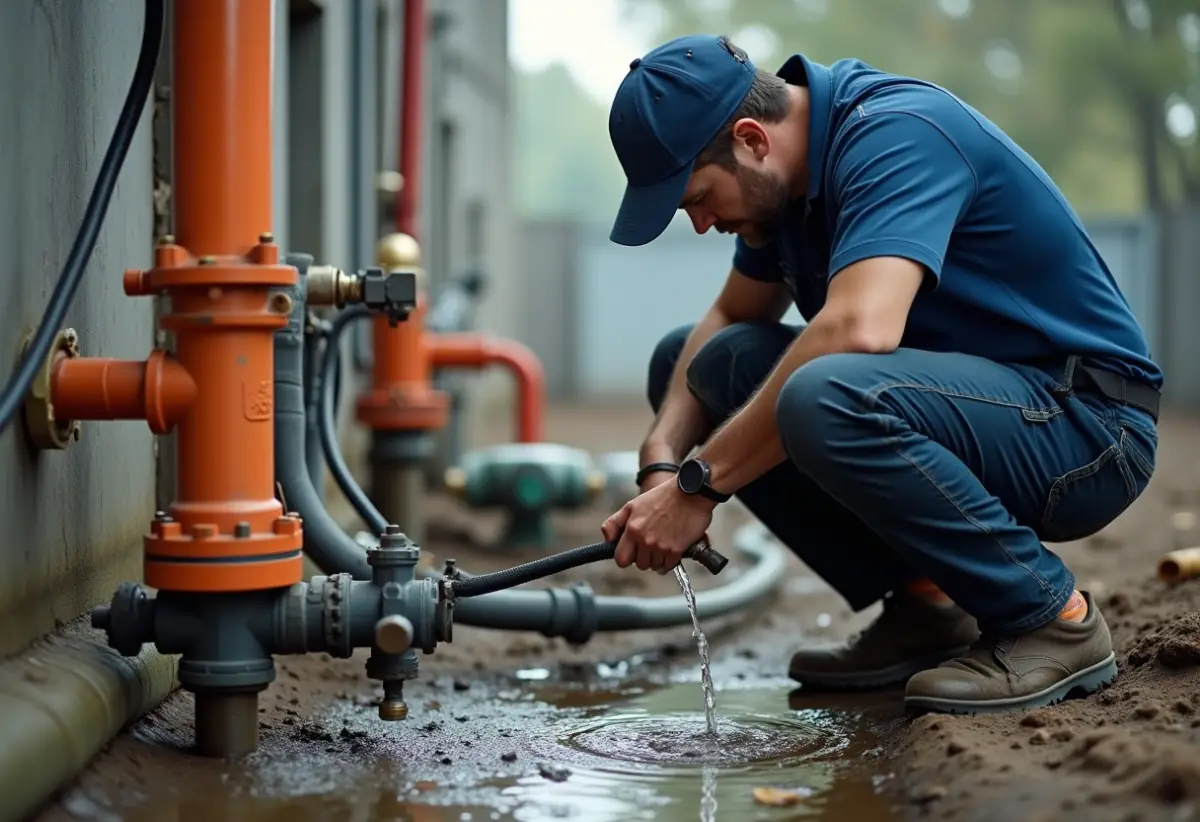
Test the joint with water before it is concealed. The CISPI Handbook recommends filling the system to a 10-foot water column, about 4.3 psi, then checking every joint for 15 minutes. Fernco lists 4.3 psi as the maximum test pressure for its couplings, so a 10-foot head is the ceiling, not a starting point.
Plug the line below the repair, fill from an opening above it and watch the coupling. CISPI notes that most leaks found during water tests come from hubless couplings that were not torqued to the recommended 60 inch-pounds, and re-torquing usually fixes them.
Skip the air test on the plastic side. Charlotte Pipe does not recommend air testing PVC, CPVC or ABS under any circumstances, because a failure under stored air pressure can throw shards of pipe and test plugs. The CISPI Handbook caps air tests on cast iron at 6 psi.
When should you call a plumber to connect PVC to cast iron?
Call a licensed plumber when the cut is on a main stack, when the iron is cracked beyond the section you can reach or when your area requires a permit and inspection. A single branch repair in an open basement is a reasonable DIY job; a stack serving upper floors is not.
If the cut reveals flaking scale, pinholes or channel rot along the bottom of the pipe, pricing a full swap makes more sense than another coupling, and our cast iron pipe replacement cost guide breaks down what that job runs.
How we sourced this
We reviewed the top-ranking October 2026 search results for how to connect PVC to cast iron and Fernco vs no-hub coupling, then checked every number against primary sources. Torque, dimension, support and test figures come from the 2026 CISPI Cast Iron Soil Pipe and Fittings Handbook, Tyler Pipe’s no-hub coupling installation instructions and catalog, Charlotte Pipe’s CISPI 310 guide and Fernco’s FAQ. Code language comes from Section 705.10 of the 2022 California Plumbing Code. PVC outside diameters follow ASTM D2665 and D1785 iron pipe sizing, cross-checked against a supplier’s transition coupling sizing table. We excluded forum claims, unmatched retailer torque figures and unverified pricing. Local codes vary.
Frequently asked questions
Can you connect PVC directly to cast iron?
Yes, but only through a mechanical joint. PVC cement fuses plastic to plastic and will not bond to iron, so the link is always a coupling or gasket. Most plumbers use a shielded no-hub or transition coupling, or a compression gasket in a cast iron hub. The part must be listed for the two pipe materials and outside diameters you are joining.
Is a Fernco coupling up to code for PVC to cast iron?
Often, depending on where it goes. California’s plumbing code, based on the UPC, accepts ASTM C1173 couplings below ground, ASTM C1460 shielded transition couplings above ground, and ASTM C1461 couplings in both places. A plain rubber Fernco is usually a C1173 part, so many inspectors want a shielded version above ground. Ask your local building department.
What is the difference between a Fernco and a no-hub coupling?
A standard Fernco is a flexible elastomeric PVC sleeve with two stainless clamps and no full shield. A no-hub coupling made to CISPI 310 or ASTM C1277 wraps a neoprene sleeve in a corrugated 301 stainless steel shield, per Charlotte Pipe. Fernco also sells shielded models, so compare the printed standard rather than the brand.
How tight should a no-hub coupling be?
Standard CISPI 310 couplings in the 1-1/2 to 10 inch range tighten to 60 inch-pounds with a calibrated torque wrench, according to the CISPI Handbook and Tyler Pipe. Tighten the bands alternately so the shield draws up evenly. Heavy-duty ASTM C1540 couplings run 80 to 120 inch-pounds per Charlotte Pipe, so always follow the number printed on your coupling.
Do I need a transition coupling for 4 inch cast iron to PVC?
Check the outside diameters first. The CISPI Handbook lists 4 inch no-hub cast iron at 4.38 inches and service weight at 4.30 inches, while 4 inch Schedule 40 PVC runs 4.50 inches. Some standard 4 inch no-hub couplings are sold for both cast iron and Schedule 40 PVC. If the coupling label does not cover both ODs, use a listed transition coupling sized for each end.
Can you use a rubber coupling behind a wall?
Sometimes. Fernco says its standard couplings are rated for above and below ground use, but the code in your area decides what may be concealed. Under California’s UPC-based code, above ground transition couplings must meet ASTM C1460, which describes shielded parts. Pressure test the joint before closing the wall, as Fernco advises.
How do you test a PVC to cast iron joint?
Most plumbing codes use a water test. Plug the line, fill the stack to a 10-foot column of water, which equals about 4.3 psi, and check every joint for 15 minutes, as the CISPI Handbook describes. Fernco lists 4.3 psi as the maximum test pressure for its couplings. Charlotte Pipe warns against air testing PVC systems, so confirm the test method with your inspector.
How do you connect PVC to metal?
You connect PVC to cast iron with a mechanical joint, never glue. Cut the cast iron square, support the pipe on both sides, then join the two pipes with a shielded no-hub coupling, a shielded transition coupling or a hub gasket listed for both materials. Tighten the bands to the printed torque, often 60 inch-pounds, and water test before hiding the joint.