How to Cut Cast Iron Pipe: Snap Cutter, Sawzall, Grinder, or Hacksaw
How to cut cast iron pipe cleanly comes down to one rental: a soil pipe snap cutter (about $39 a day at Home Depot) for square cuts, or a diamond grit Sawzall blade where the chain will not fit.
Key Takeaways
- A RIDGID 226 ratchet snap cutter cuts 1.5 to 6 inch hub and hubless soil pipe and rents for $39 a day at Home Depot (listing checked October 2026; rates vary by store).
- A 10 foot length of 4 inch no-hub cast iron weighs about 74 pounds and a 6 inch length about 110 pounds, per the Tyler Pipe submittal, so clamp the stack before you cut.
- Charlotte Pipe’s cutting instructions say to always make a square cut, and the pipe ends must be smooth and clean before a no-hub coupling goes on.
- Milwaukee rates its diamond grit Sawzall blade at up to 30 times the life of a standard carbide grit blade, which matters on a material this abrasive.
- OSHA’s construction lead standard (29 CFR 1926.62) sets a lead exposure limit of 50 micrograms per cubic meter, and old pipe paint and hub joints can contain lead.
- Forum plumbers on Fine Homebuilding report 1 to 2 minutes per cut with a snap cutter versus half an hour or more with a saw or grinder on large pipe.
What is the best way to cut cast iron pipe?
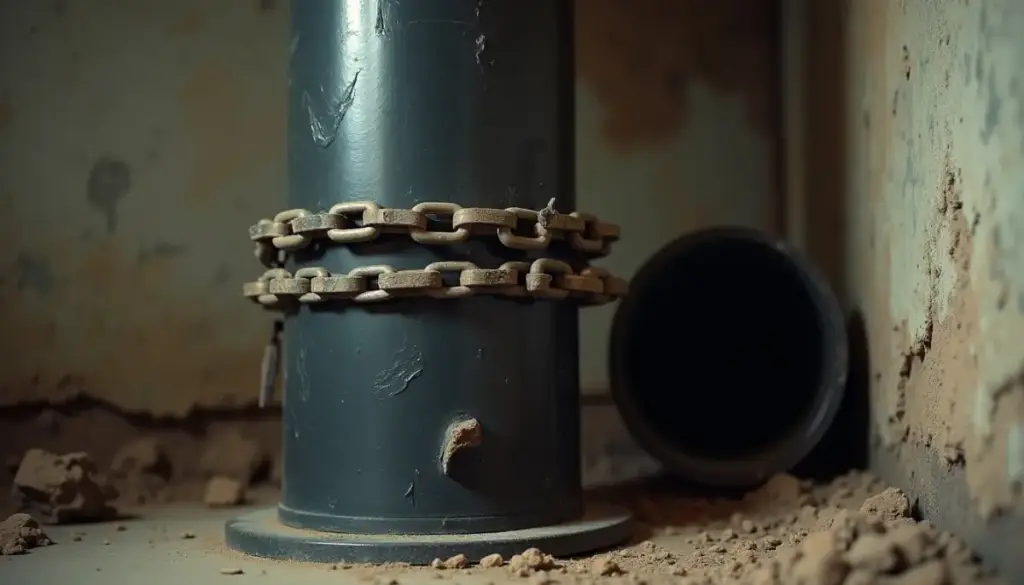
The best way to cut cast iron pipe is a ratchet soil pipe snap cutter. It wraps a chain of cutting wheels around the pipe and squeezes until the brittle iron cracks along a clean, square line. It makes no sparks and almost no dust. A reciprocating saw, angle grinder, or hacksaw works too, but each is slower and messier.
One splice in a tight corner is a saw or grinder job. A stack tear-out with a dozen cuts pays for a day’s snap cutter rental many times over.
| Tool | Speed per cut | Cost | Best for |
|---|---|---|---|
| Ratchet snap cutter (RIDGID 226 or similar) | Fastest; about 1 to 2 minutes per forum reports | $39/day at Home Depot; $35 to $50/day at independent rental shops | 1.5 to 6 inch pipe, multiple cuts, vertical stacks, square ends for couplings |
| Reciprocating saw with diamond or carbide grit blade | Slow; several minutes and heavy vibration on 4 inch pipe | One specialty blade if you already own the saw | A single splice, pipe tight to a wall where the chain cannot wrap |
| Angle grinder with diamond or abrasive wheel | Faster than a saw; heavy sparks and dust | One wheel if you own a grinder | Tight clearances, scoring before a chisel break, cuts near a floor |
| Hacksaw with a carbide grit blade | Slowest; can take half an hour or more | Lowest; blade only | 1.5 and 2 inch vent pipe, no power on site |
If you are weighing a bigger project, our breakdown of cast iron pipe replacement cost shows what pros charge per foot when they do the cutting and hauling for you.
How much does cast iron pipe weigh, and why does it matter before you cut?
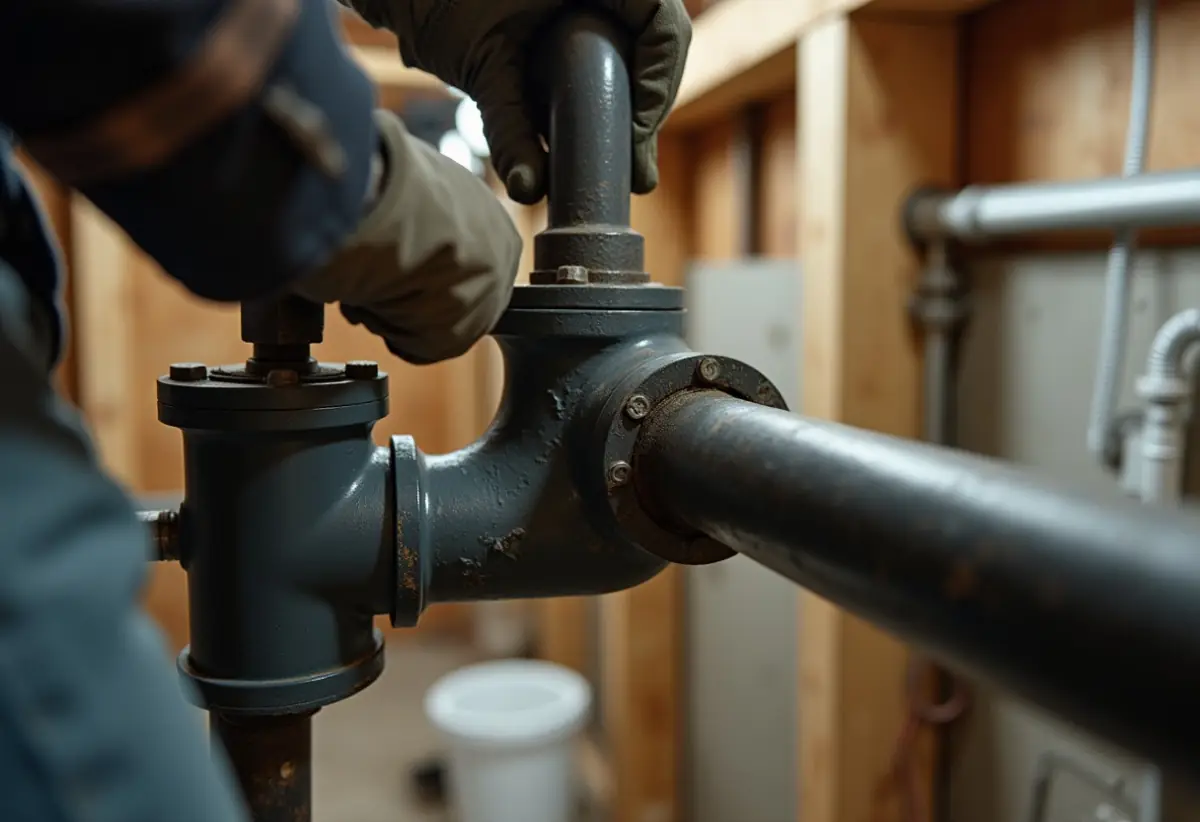
Cast iron pipe weighs about 3.6 pounds per foot at 2 inches, 7.4 pounds per foot at 4 inches, and 11 pounds per foot at 6 inches, based on Tyler Pipe’s CISPI 301 no-hub submittal. That weight is the main hazard. Cut a stack without support and the section above can drop, crack a joint, or land on you.
Those figures come from the Tyler Pipe no-hub submittal, which labels them approximate shipping weights for pipe made to the CISPI 301 and ASTM A888 standards. Older hub-and-spigot service weight pipe is heavier still.
How do you support a cast iron stack before cutting it?
Support a cast iron stack by bolting a riser clamp to the pipe above the cut and another below it, with each clamp resting on framing or blocking. The upper clamp carries the stack overhead once the section below is gone. The lower clamp keeps the bottom piece from shifting. Add a third clamp if you are removing a long section.
- Install a riser clamp a few inches above your upper cut line, snug the bolts, and set the clamp ears on 2x blocking screwed across the studs or joists.
- Install a second clamp below the lower cut line the same way.
- Mark both cut lines in the pipe barrel, away from any hub.
- Have a helper hold the section you are removing so it does not drop or swing once the second cut frees it.
Model codes require cast iron stacks to be supported at the base and at each floor, though spacing rules vary by the code your area adopts.
How do you cut cast iron pipe with a snap cutter?
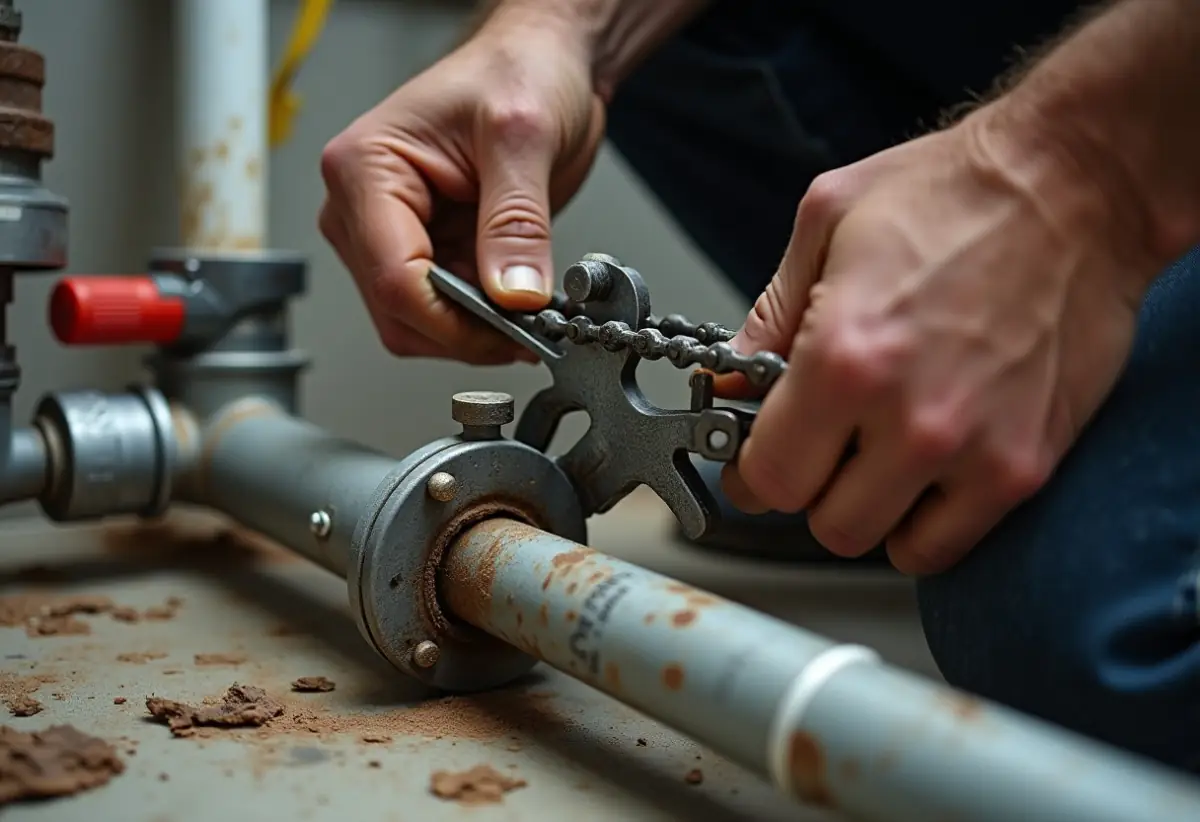
To cut cast iron pipe with a snap cutter, wrap the chain around the pipe on your mark, hook it into the tool, ratchet the handle until the wheels score the iron, then rotate slightly and apply quick pressure until the pipe snaps. Charlotte Pipe’s published steps follow this order, and a clean cut usually takes a minute or two.
- Measure and mark the cut line all the way around the pipe with chalk or a paint marker.
- Wrap the chain so it sits square to the pipe and as many cutting wheels as possible touch the iron.
- Ratchet the handle until the wheels press a visible score into the pipe, then release.
- Rotate the chain a few degrees so the wheels cover the gaps, re-tighten, and pump the handle with quick pressure until the pipe cracks through.
Charlotte Pipe’s cutting guide stresses that the cut must be square. Old, thin, or heavily corroded pipe is the exception, because a snap cutter can crush or shatter it rather than snapping a clean line. On pipe like that, a saw or grinder cut is safer.
Home Depot’s rental counters stock the RIDGID 226 in-place cutter, which the rental listing prices at $27 for 4 hours and $39 a day at the store we checked. Independent shops such as EQ Rents and Lawrence Tool Rental list $35 to $50 a day.
Can you cut cast iron pipe with a Sawzall or angle grinder?
Yes. A reciprocating saw with a diamond grit or carbide grit blade and an angle grinder with a diamond or abrasive cutoff wheel both cut cast iron. They are the tools to reach for when the pipe sits tight to a wall, when you only need one cut, or when the pipe is too fragile for a chain. Both are slower and dirtier than a snap cutter.
Reciprocating saw steps
- Fit a blade made for cast iron. Milwaukee’s Diamond Max diamond grit blade lists cast iron as a target material, and Diablo sells diamond and carbide grit blades marked for cast iron.
- Set the saw to a moderate speed and turn off orbital action if your saw has it.
- Rest the shoe against the pipe and cut with light, steady pressure. Heavy pressure slows grit blades down.
- Work around the pipe if you can reach, keeping the cut on your marked line so the end stays square.
Angle grinder steps
- Mount a 4.5 inch diamond wheel or metal cutoff wheel and keep the guard in place.
- Score a shallow groove all the way around the pipe on your mark.
- Deepen the groove in passes until you cut through, or finish with a cold chisel and hammer along the score.
- Keep a fire extinguisher close and shield wood framing and insulation from sparks.
A grinder needs less room than a saw, so plumbers use it for cuts tight to a floor or joist. For pipe that disappears into a slab, an internal cutter working from inside the pipe is the other option.
What about a hacksaw?
A hacksaw with a carbide grit blade will cut cast iron, but it is the slowest method. Plumbers on the Fine Homebuilding forum report half an hour or more for hand-sawn cuts. It suits 1.5 and 2 inch vent pipe or a job with no power, and it belongs in any list of essential plumbing tools.
What safety gear do you need to cut cast iron pipe?
Wear safety glasses plus a face shield for any powered cut, hearing protection, heavy work gloves, and a respirator with P100 filters when grinding, sawing, or cutting near old paint or concrete. A snap cutter cuts the dust and spark risk sharply.
- Lead. Old cast iron is often painted, and hub joints were commonly sealed with oakum and poured lead. OSHA’s construction lead standard sets an 8-hour limit of 50 micrograms per cubic meter and an action level of 30. Cut in the barrel, never through a lead joint, and avoid grinding painted pipe without a respirator.
- Silica. If you cut or chip concrete to reach a pipe in a slab, that work creates respirable crystalline silica dust. OSHA’s silica rule covers this dust, and wet cutting plus a respirator is the usual control.
- Sewer contents. Run no water upstream, keep a bucket under the cut, and plug open ends with a test cap.
- Sparks and noise. Grinders and saws throw hot metal and run loud. Clear flammables and wear earplugs or muffs.
How do you get a square cut and join the new pipe?
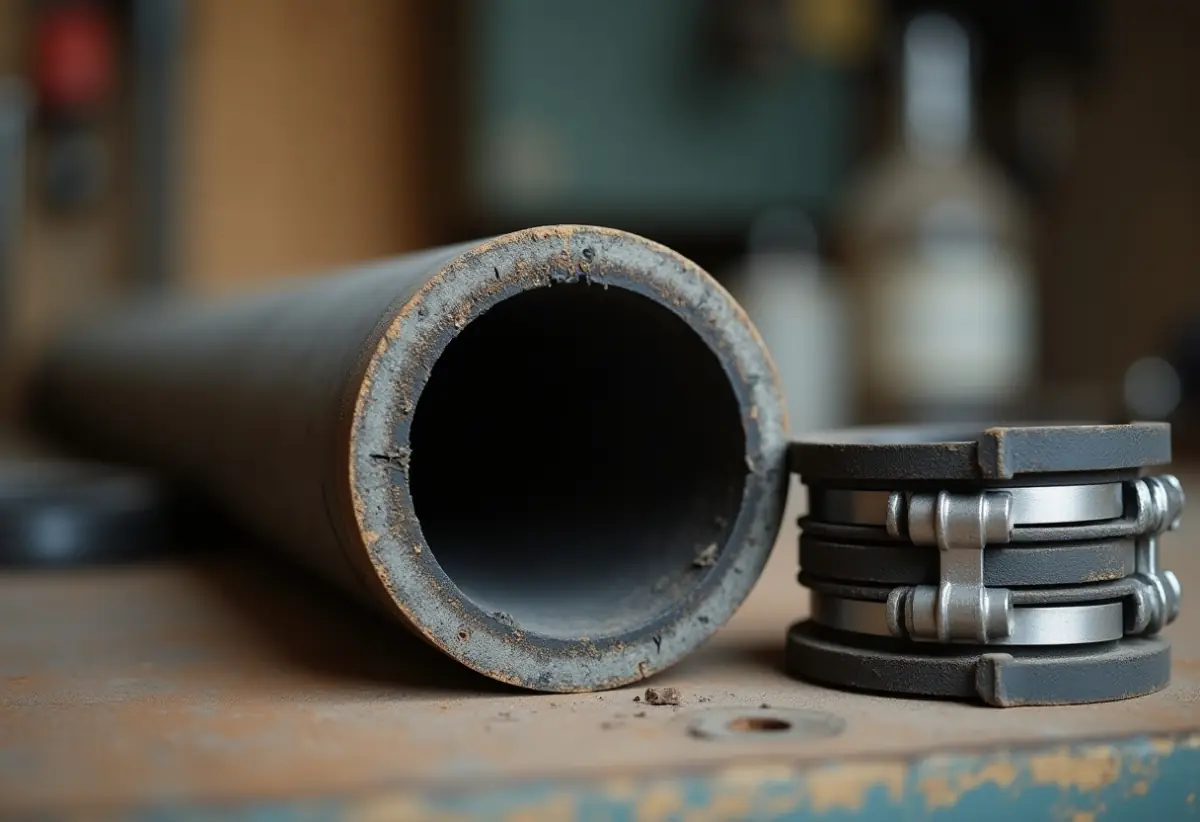
A square cut is one where the pipe end sits at a right angle to the pipe’s length, so the coupling’s gasket presses evenly all the way around. Snap cutters produce square ends by design. With a saw or grinder, mark a line with a wrap of paper or tape, cut on it, and file off burrs and sharp edges before fitting the coupling.
Charlotte Pipe’s instructions say the pipe ends must be smooth and clean, each end must be pushed into the gasket until it reaches the internal shoulder, and the bands must be tightened in the right order with a torque wrench. Hubless couplings call for 60, 80, or 120 inch-pound torque wrenches depending on the coupling type, and Charlotte recommends shielded couplings made to CISPI 310, ASTM C1277, or ASTM C1540.
Most repairs swap the removed section for plastic pipe. Our guide on how to connect PVC to cast iron walks through the transition coupling, and our comparison of cast iron vs PVC pipe covers what you give up in noise control when you switch.
What do you do with old cast iron pipe after cutting it?
Old cast iron pipe is ferrous scrap, so most scrap yards and metal recyclers accept it, and some pay by the pound. Knock off loose rubber gaskets and bag any lead joint material separately, since many yards want clean iron. Call ahead for current prices and rules, which change often and vary by region.
Cast iron is too heavy for most curbside pickup. If a section has lead paint or lead joints, ask your local solid waste office how to handle the lead material.
How we sourced this
We reviewed the top-ranking search results for “how to cut cast iron pipe,” “best way to cut cast iron pipe,” and “snap cutter vs sawzall” in October 2026, then went to primary sources. Pipe weights come from Tyler Pipe’s CISPI 301 no-hub submittal. Cutting and joining steps come from Charlotte Pipe. Rental rates come from Home Depot and independent US rental listings checked in October 2026 and vary by store. Blade claims are the manufacturer’s own. Safety limits come from OSHA standards. Cutting times are forum reports, not our own timed tests, and we excluded UK hire rates and non-US prices.
Frequently asked questions
What is the best thing to cut cast iron pipe with?
A ratchet soil pipe snap cutter is the best tool for most cuts. It cuts 1.5 to 6 inch pipe square in a minute or two, makes no sparks, and rents for about $39 a day at Home Depot. Use a reciprocating saw with a diamond grit blade or an angle grinder only where the chain cannot wrap around the pipe.
Can I cut a cast iron pipe with a Sawzall?
Yes. A reciprocating saw cuts cast iron if you fit a diamond grit or carbide grit blade made for it, since standard bi-metal teeth dull almost at once. Run the saw at a moderate speed with light pressure and let the grit do the work. Expect a slower, louder cut than a snap cutter and plenty of vibration through your hands.
Is cast iron difficult to cut?
Cast iron is hard and brittle, so it resists saw teeth but snaps cleanly under even chain pressure. That is why the snap cutter beats every saw on speed. The real difficulty is weight and access. A 10 foot length of 4 inch no-hub pipe weighs about 74 pounds, so the pipe must be clamped before you cut.
How do you cut cast iron pipe in a tight space?
Use a compact in-place snap cutter such as the RIDGID 226, which is built for 1.5 to 6 inch soil pipe in tight quarters. If even that will not fit, an angle grinder with a 4.5 inch diamond wheel needs the least clearance. Score the pipe all the way around, then finish the cut slowly to avoid jamming the wheel.
Can you cut cast iron pipe with an angle grinder?
Yes. An angle grinder with a diamond wheel or a metal cutoff wheel cuts cast iron quickly, and many plumbers score the pipe with a grinder and finish it with a cold chisel. Keep the guard on, wear a face shield over safety glasses, and clear anything flammable from the area, because the grinder throws a heavy stream of sparks.
How do you cut cast iron pipe flush with the floor?
Snap cutters and saws cannot reach below floor level, so plumbers use an internal pipe cutter that runs inside the pipe on a drill or a grinder fitted with a thin diamond wheel held flat to the slab. Vacuum the dust as you go. If the pipe sits in concrete, the slab cutting can create silica dust, which needs a respirator and wet cutting.
Is cutting old cast iron pipe dangerous?
It can be. Old stacks are heavy and can drop when the support below a cut is gone. Older pipe may carry lead-based paint, and hub joints were often sealed with poured lead, so grinding or sawing near them creates lead dust. Wear eye, ear, and respiratory protection, clamp the stack first, and never cut through a lead hub joint.