Well Pump Pressure Switch: Settings, Problems and Replacement
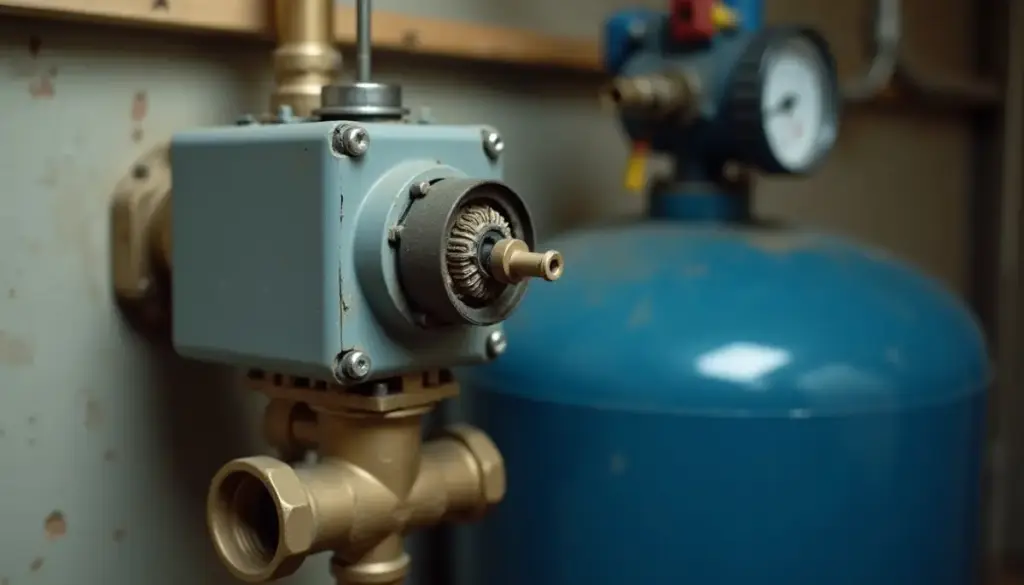
A well pump pressure switch starts the pump at its cut-in pressure and stops it at cut-out, usually 40 and 60 psi, and most switch problems trace back to the tank, the contacts, or a clogged sensing port.
Key Takeaways
- Square D’s Pumptrol catalog lists the standard residential ranges as 20-40, 30-50, 40-60 and 50-70 psi, each with a 20 psi spread between cut-in and cut-out.
- Amtrol’s Well-X-Trol manual says to set the tank air precharge 2 psi below cut-in, so a 40/60 switch pairs with a 38 psi precharge.
- Schneider Electric says to adjust cut-in first with the large range nut, then cut-out with the small differential nut, clockwise to raise each.
- HomeAdvisor’s 2026 guide puts a pressure switch replacement at $120 to $175 installed, against a $974 average for a well pump repair.
- Rapid on-off cycling is more often a waterlogged tank than a bad switch, so check the precharge before you buy a part.
- Many well pumps run on 240 volts and the switch line terminals stay live even when the contacts are open, so shut off the breaker every time.
What does a well pump pressure switch do?
A well pump pressure switch is a pressure-operated electrical switch that turns the pump on when system pressure falls to the cut-in point and off when it climbs to the cut-out point. It sits on a small pipe near the pressure tank, senses water pressure through a diaphragm, and opens or closes a set of contacts that carry the pump’s power. When those contacts fail to close or power never reaches them, the whole pump can seem dead, a scenario covered in troubleshooting a well pump that won’t start.
The switch is the control, and the tank is the buffer. Amtrol explains that as the pump fills the tank, the air above the diaphragm compresses, pressure rises, and that rise is what tells the switch to shut the pump off. Without a healthy tank, the switch has nothing to time against, which is why the two parts fail together so often. Our guide to the well pressure tank and how it pairs with the switch covers sizing and drawdown in detail.
Pump type sets how far the switch can be pushed, since a shallow jet pump may struggle to reach a 70 psi cut-out. Our breakdown of submersible and jet well pump types shows how to tell.
What do 30/50, 40/60 and 50/70 pressure switch settings mean?
The first number is cut-in, the pressure at which the pump starts, and the second is cut-out, the pressure at which it stops. A 40/60 switch starts the pump when a faucet drags pressure down to 40 psi and shuts it off at 60 psi. Square D sells these as factory-set codes, and every standard residential code carries a 20 psi differential.
40/60 is the most common setting on private wells. A 30/50 switch suits older homes and weak jet pumps. A 50/70 switch gives stronger upstairs pressure, but only if the pump can build 70 psi.
| Switch setting | Square D code | Pump starts | Pump stops | Tank precharge (Amtrol rule) |
|---|---|---|---|---|
| 20/40 | J20 | 20 psi | 40 psi | 18 psi |
| 30/50 | J21 | 30 psi | 50 psi | 28 psi |
| 40/60 | J24 | 40 psi | 60 psi | 38 psi |
| 50/70 | J33 | 50 psi | 70 psi | 48 psi |
Codes come from Square D’s Pumptrol 9013 catalog, which also lists a 55-85 psi code (J34) with a wider 30 psi differential. The precharge column applies Amtrol’s 2 psi rule to each setting.
How should the pressure tank precharge match the switch?
Set the tank’s air precharge 2 psi below the switch’s cut-in, measured with the pump off and the tank drained of water. Amtrol’s Well-X-Trol installation manual gives exactly that rule, with the example of a 38 psi precharge for a 40/60 switch, and ships its tanks at 38 psi from the factory.
The 2 psi gap matters. If the precharge sits at or above cut-in, the tank empties before the pump starts and you get a pressure dip at the faucet. If it sits far below, the tank holds less usable water and the pump cycles more often, which wears the switch contacts faster.
Amtrol warns that raising precharge on a tank in service carries a rupture risk if you skip its procedure, and says never to add air to a tank that has lost air or shows corrosion. It also wants the tank close to the switch. On a long pipe run, move the switch with the tank or adjust its setting for line pressure loss.
How do you adjust a well pump pressure switch?
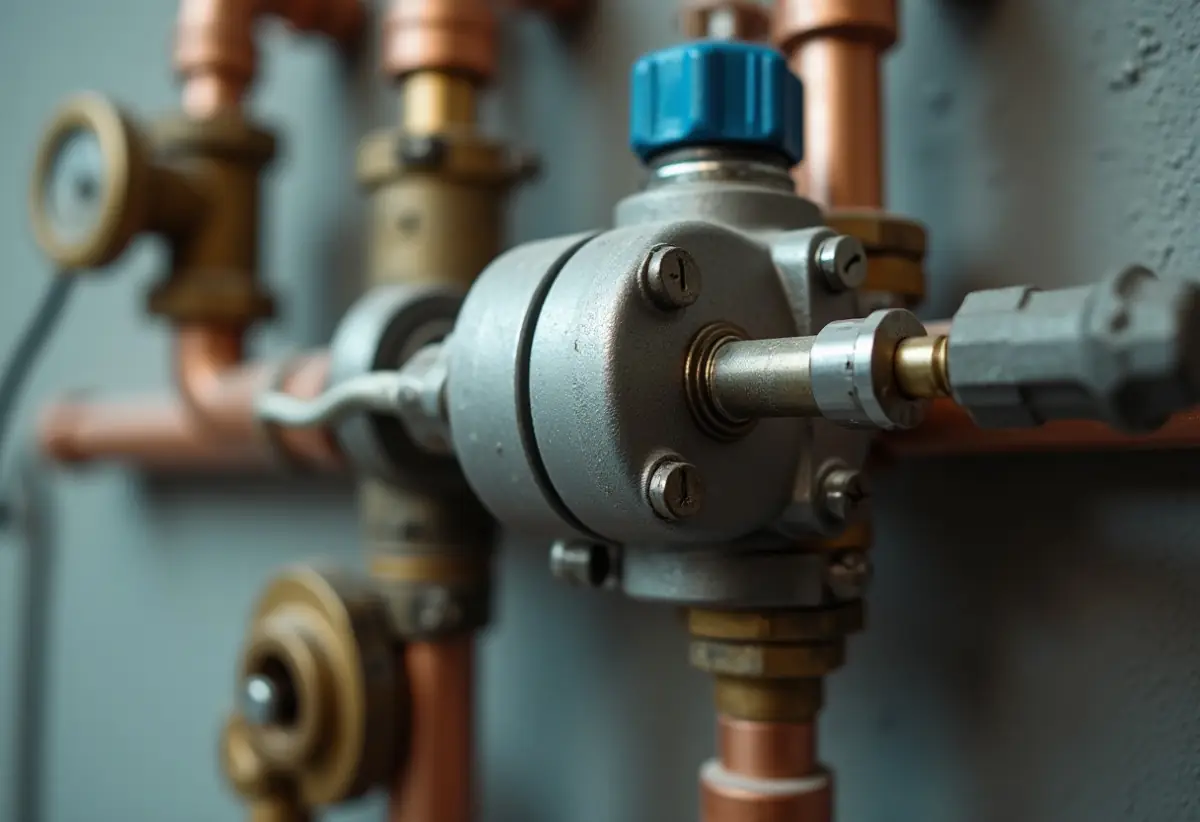
Shut off the pump’s breaker, pull the switch cover, and turn the nuts on the two springs inside. Schneider Electric’s Pumptrol adjustment instructions say to set cut-in first with the large range nut, then cut-out with the smaller differential nut. Clockwise raises pressure on both, counterclockwise lowers it. Restore power and read a gauge to confirm.
The large nut moves cut-in and cut-out together, so turning it shifts the whole band up or down while keeping the 20 psi spread. The small nut moves only cut-out, which widens or narrows the differential. A troubleshooting guide from Hunker puts about three and a half turns of the range nut at roughly 10 psi, so work in small steps.
- Read the current cut-in and cut-out on the tank gauge by running a faucet through one full pump cycle.
- Turn off the pump breaker and confirm the switch is dead with a non-contact voltage tester.
- Remove the cover and find the tall range spring (large nut) and the short differential spring (small nut).
- Turn the large nut clockwise to raise both settings or counterclockwise to lower them, about one turn at a time.
- If you need a wider or narrower spread, turn the small nut to move only the cut-out.
- Replace the cover, restore power, and cycle the system while watching the gauge. Repeat until the numbers land where you want them.
- Reset the tank precharge to 2 psi below the new cut-in, with the tank drained.
Never raise cut-out past what the pump can deliver. If it cannot reach cut-out, the contacts never open and the motor runs nonstop.
What is a low-pressure cutoff switch?
A low-pressure cutoff switch is a pressure switch with an extra lever that kills the pump when pressure drops far below cut-in, as it would if the well ran dry or a pipe broke. Square D sells this as the M4 option on its 9013FSG line and says the feature opens the contacts and turns off the pump if system pressure is lost for any reason.
The trade-off is that the pump stays off until someone resets it, usually by holding the side lever at start until pressure builds past cut-in. That is a nuisance, but it can save a submersible motor from running dry.
What are the signs of a bad well pump pressure switch?
The classic signs are a pump that will not start at cut-in, a pump that will not stop at cut-out, a buzzing or chattering switch, and pressure that drifts away from its original settings. Most trace to one of three faults: burned or pitted contacts, a sediment-clogged sensing port, or a tired diaphragm or spring inside the switch.
Pitted contacts are the most common failure. Every start arcs across the contact faces, and over thousands of cycles they burn, pit, and weld shut or stop conducting. Filing buys a few weeks at best.
A clogged nipple fools the switch into reading the wrong pressure. Most Pumptrol switches thread onto a 1/4 inch fitting, and iron, sediment, or scale can plug that port. Chattering often comes from pressure pulses at start-up, and Square D sells a pulsation plug for exactly that case on high-speed jet pumps or surge-prone valves.
| Symptom | Likely cause | Fix |
|---|---|---|
| Pump will not start, gauge below cut-in | Pitted or burned contacts, tripped breaker, tripped low-pressure cutoff | Check breaker, reset M4 lever, replace switch if contacts are burned |
| Pump will not shut off | Contacts welded shut, clogged sensing port, cut-out set above pump capacity | Kill power, clear or replace the nipple, lower cut-out, replace switch |
| Pump cycles every few seconds | Waterlogged tank or low precharge, rarely a bad switch | Drain tank, check precharge, replace tank if water leaks from the air valve |
| Pump starts with no water in use | Leaking check valve or plumbing leak | Isolate the house side, then test or replace the check valve |
| Switch buzzes or chatters at start-up | Pressure pulses, worn contacts, switch far from tank | Add a pulsation plug, move switch next to the tank, replace switch |
| Pressure settings drift | Fatigued springs or diaphragm, partly clogged port | Clear port and readjust, replace switch if drift returns |
Is it the pressure switch or a waterlogged tank?
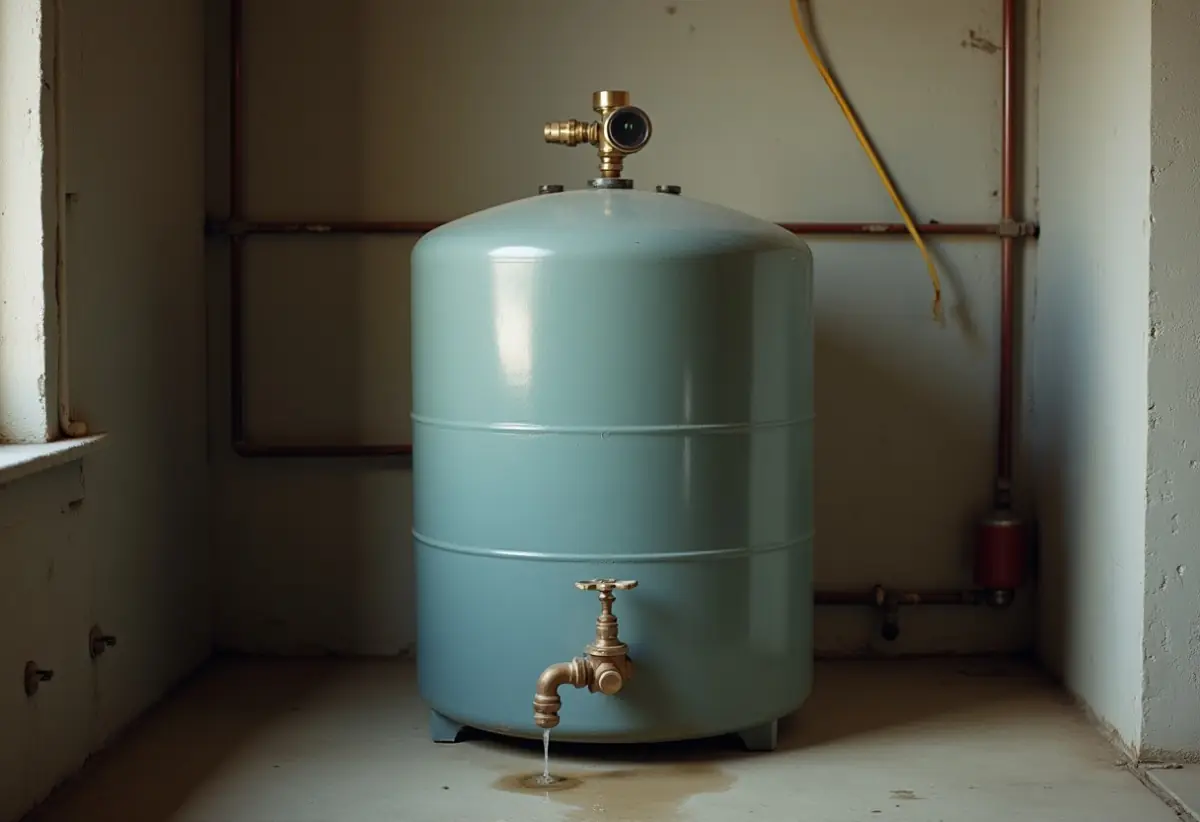
If the pump clicks on and off every few seconds while a faucet runs, suspect the tank first. A waterlogged tank has lost its air cushion, so pressure jumps from cut-in to cut-out almost instantly and the switch obeys. The switch is doing its job, and replacing it will not stop the cycling.
Test it in a few minutes. Shut off the pump breaker, open a faucet until the gauge reads zero, and press a tire gauge on the tank’s air valve. A reading well under cut-in minus 2 psi means low precharge. Water spitting out of the valve means the bladder or diaphragm has failed and the tank needs replacing.
A leaking check valve gives a different pattern, the pump kicking on now and then with nothing running. Sputtering faucets after a cycle point to air leaking in, which our guide on air in water lines from a well walks through.
How do you replace a well pump pressure switch and what does it cost?
Replacing a well pump pressure switch is about an hour of work for a pro, and HomeAdvisor’s 2026 well pump repair guide puts it at $120 to $175 installed. The switch itself runs $25 to $60 on Contractor+’s 2026 materials list. Match the new switch to the old cut-in, cut-out, and horsepower rating, and replace the nipple at the same time.
Chart sources: Contractor+ materials list, HomeAdvisor well pump repair cost and HomeAdvisor well pump replacement cost, both updated June 2026. HomeAdvisor also lists a $100 to $150 house call minimum and about $50 an hour for well pump labor. A full pump job is covered in our well pump replacement cost guide.
- Photograph the wiring and note the old switch’s settings and model number.
- Turn off the pump breaker and confirm both line terminals are dead with a voltage tester.
- Open a faucet and drain the system until the tank gauge reads zero.
- Disconnect the line, load, and ground wires, then unscrew the switch from its fitting.
- Inspect the 1/4 inch nipple. Clear it or replace it if it is packed with sediment or rust.
- Wrap the threads with PTFE tape, thread the new switch on, and keep it upright.
- Rewire exactly as before, tighten the ground screw, and refit the cover.
- With the tank still empty, check and reset the precharge to 2 psi below cut-in.
- Restore power, watch one full cycle on the gauge, and check the fitting for leaks.
A note on 240 volts. Many well pumps, submersibles especially, run on 240 volts through a two-pole switch. The line terminals stay energized even when the contacts are open and the pump is off, so draining pressure does not make the switch safe. Kill the breaker, test both legs, and in some areas local code may require a licensed electrician or well contractor for this work.
How we sourced this
We reviewed top-ranking pressure switch guides for coverage, then took every number from named sources: Square D’s Pumptrol 9013 catalog (pressure codes, M4 low-pressure cutoff, pulsation plug), Schneider Electric’s adjustment FAQ, Amtrol’s Well-X-Trol installation manual (precharge rule, factory precharge, relief valve, switch location), HomeAdvisor’s June 2026 repair and replacement cost guides, and a Contractor+ 2026 materials list. The turns-per-psi figure comes from a secondary Hunker guide and is approximate. We excluded mirrored and unattributed how-to pages. Reviewed October 2026.
Frequently asked questions
What should my well pressure switch be set at?
Most homes run fine on a 40/60 switch, meaning the pump starts at 40 psi and stops at 60 psi. A 30/50 setting suits older plumbing or weaker jet pumps, and 50/70 gives stronger pressure if the pump can build it. Whatever you pick, set the tank precharge 2 psi below cut-in, per Amtrol.
Which nut adjusts cut-in on a pressure switch?
On a Square D Pumptrol, the large range nut on the tall spring sets cut-in and moves cut-out along with it. The small differential nut on the short spring moves only cut-out. Schneider Electric says to set cut-in first and turn clockwise to raise pressure. Always shut off the breaker before touching either nut.
Can I change my well pressure switch from 30/50 to 40/60?
Usually yes, by turning the large range nut clockwise about 10 psi and confirming on a gauge. Check that the pump can reach 60 psi first, or it may run nonstop. Then drain the tank and raise the precharge to 38 psi, following Amtrol’s procedure, since a raised setting needs a matching precharge.
How do I know if my well pressure switch is bad?
A bad switch fails to start the pump at cut-in, fails to stop it at cut-out, buzzes or chatters, or drifts off its settings. Pull the cover with the power off and look for black, pitted contacts. Rapid cycling alone usually points to a waterlogged tank, so check the precharge before replacing the switch.
Why does my well pump turn on and off rapidly?
Rapid cycling is most often a waterlogged pressure tank or low precharge, which leaves no air cushion and lets pressure jump between cut-in and cut-out in seconds. Less often the switch differential is set too narrow or the switch is far from the tank. Check tank precharge with the system drained first.
How much does it cost to replace a well pressure switch?
HomeAdvisor’s 2026 guide puts a pressure switch replacement at $120 to $175 with labor. The switch alone costs about $25 to $60 according to Contractor+ 2026 materials pricing. Expect a house call minimum of $100 to $150 if a pro does it, and more on weekends or after hours.
How do you reset a low pressure cutoff switch on a well?
Lift the lever on the side of the switch to the start position and hold it while the pump runs. Let go once the gauge climbs above the cut-in pressure. If it trips again soon after, look for a low-yield well, a leak, or a pump losing capacity rather than a faulty switch.