Sump Pump vs French Drain: Which Do You Need?
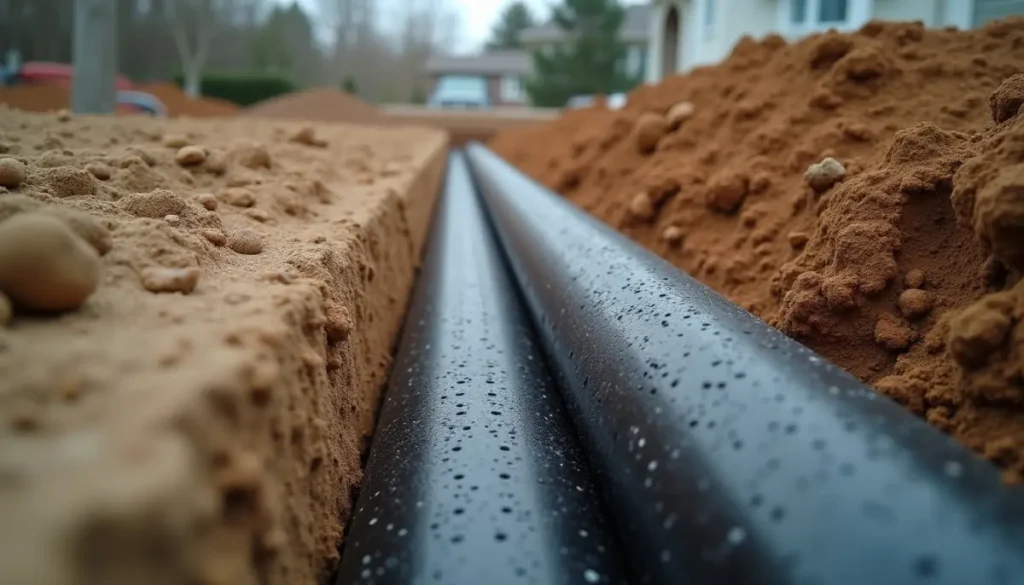
Sump pump vs French drain is usually a false choice: the French drain collects groundwater and moves it by gravity, and the sump pump lifts that water out when the basement sits too low for gravity to work.
Key Takeaways
- A French drain is passive pipe and gravel; a sump pump is a powered machine. Most below-grade basements with seepage need both, per the drain-tile-to-sump layout the IRC allows in section R405.1.
- Installed French drains run $10 to $100 per linear foot, about $45 on average, and $9,250 for a typical project, according to HomeAdvisor.
- Interior basement drains cost the most, $40 to $100 per linear foot and $5,000 to $18,000 per job, because the crew cuts and repours the slab (HomeAdvisor).
- A sump pump installation alone runs $500 to $2,000, per HomeAdvisor, so the pump is the cheap half of the combo.
- Before buying either, check grading. IRC R401.3 calls for the ground to fall at least 6 inches within the first 10 feet of the foundation.
- A well-built French drain lasts 30 to 40 years (HomeAdvisor), while a sump pump is closer to 10 years on InterNACHI’s life-expectancy chart.
What is the difference between a sump pump and a French drain?
A French drain is a trench of washed gravel around a perforated pipe that catches groundwater and carries it downhill to an outlet. A sump pump is an electric pump sitting in a pit at the low point of a basement that pushes collected water up and out of the house. One collects and routes water; the other lifts it. Neither replaces the other’s job.
Think of the French drain as a gutter for your soil. Our French drain guide covers trench depth, fabric, and pipe choices in detail.
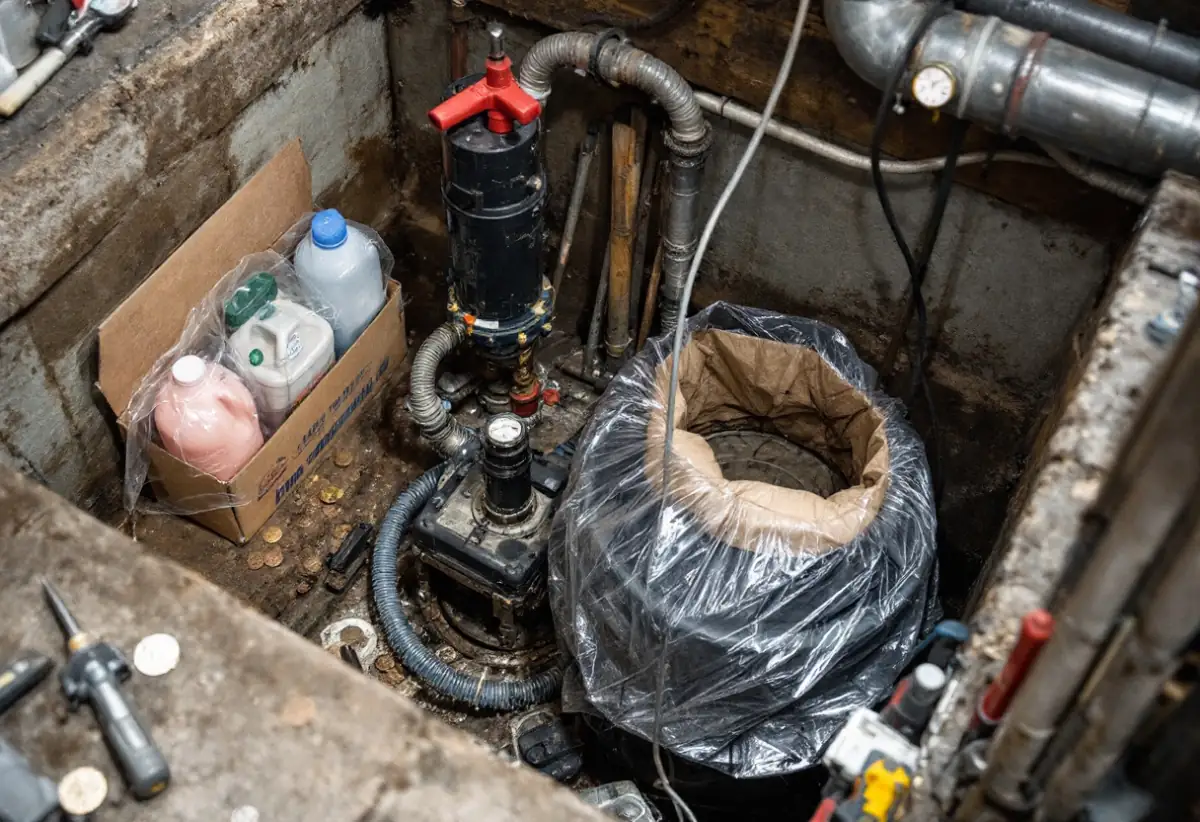
The sump pump only matters once water has nowhere lower to go. When the drain pipe ends below the yard surface, as it does under a basement floor, a float switch starts the pump, which sends water through a discharge line with a check valve to a spot away from the foundation.
| Feature | French drain | Sump pump |
|---|---|---|
| What it does | Collects and routes groundwater | Lifts water out of a pit |
| Power | None, runs on gravity | 120V outlet, backup recommended |
| Where it goes | Yard, along footings, or under the slab | Basement or crawlspace low point |
| Typical lifespan | 30 to 40 years (HomeAdvisor) | About 10 years (InterNACHI) |
| Main failure | Silt clogging, poor slope | Switch, motor, or power failure |
| Installed cost | $10 to $100 per linear foot | $500 to $2,000 per install |
Sump pump vs French drain: which one does your symptom call for?
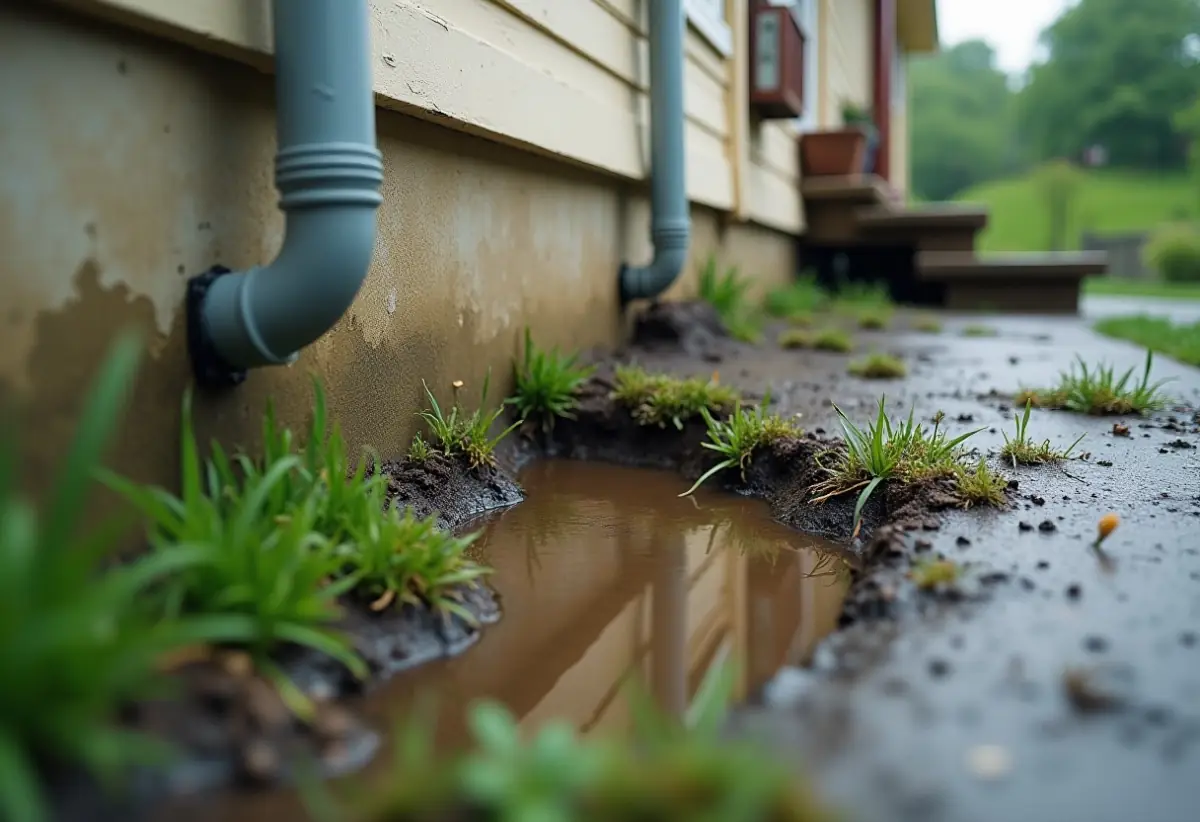
Match the fix to where the water shows up. Pooling in the yard or a soggy strip along the house points to an exterior French drain or simple grading. Water seeping at the cove joint, where the basement wall meets the floor, points to an interior drain tile plus a sump pump. Water rising through the slab during wet seasons points to a high water table, which needs both.
| Situation | Usual answer | Why |
|---|---|---|
| Puddles in the lawn, slope available to a lower spot | French drain | Gravity can carry water to daylight with no pump |
| Runoff from an uphill yard or neighbor | French drain (curtain drain) | A shallow trench across the slope intercepts water before it reaches the house |
| Wet basement only near downspouts or window wells | Neither yet | Gutters, extensions, and grading usually fix roof water for a fraction of the cost |
| Seepage at the cove joint after heavy rain | Both | Interior drain tile catches it under the slab; the pump lifts it out |
| Water coming up through floor cracks, pit full in dry weather | Both, plus backup | A high water table pushes from below and the pump may run for weeks |
| Existing sump pit that runs often, walls still damp | Add French drain | The pit only drains a few feet around itself without perimeter pipe feeding it |
Two quick tests help. Tape a 2-foot square of plastic sheet to the wall for 48 hours; moisture under it means water is coming through the wall, while moisture on top means indoor humidity. And watch an existing pit during a dry week. If it keeps filling, groundwater sits high under the house.
When can a French drain work without a sump pump?
A French drain works alone whenever its outlet sits lower than every part of the pipe. That is common for yard drains and for footing drains on houses built into a hillside, where a pipe can run to daylight downhill. Flat lots with full basements rarely qualify, because the footing sits 7 or 8 feet below grade and there is no lower ground nearby.
Installers commonly pitch French drain pipe at about 1 percent, roughly 1/8 inch per foot, so a 100-foot run needs about a foot of fall from start to outlet. Measure that before you buy anything. A line level or a laser level along the planned route tells you whether gravity is an option.
The outlet options, in rough order of preference:
- Daylight to a lower part of your own lot, with a grate or pop-up emitter at the end.
- Dry well buried in soil that drains well (clay often defeats this).
- Storm connection where your city allows one, often with a permit.
- Sump pit when nothing else sits lower than the pipe.
Call 811 before any trench, since most states require utility locating before you dig, and the service is free.
Do you need a sump pump with an interior French drain?
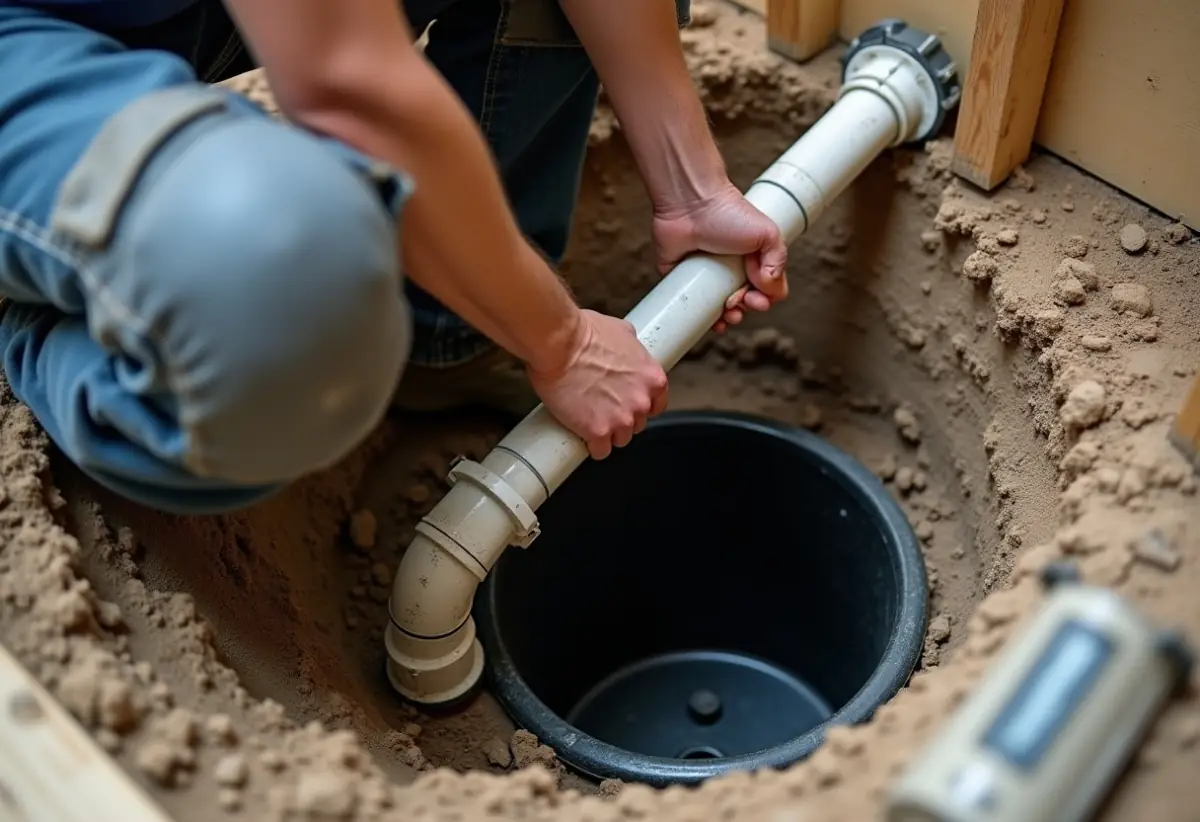
Yes, almost always. An interior French drain, also called interior drain tile or a perimeter drain, sits under the basement slab beside the footing. That is the lowest point on the property, so the water it collects has nowhere to fall. It flows to a sump pit, and the pump lifts it to grade. Without the pump, the pipe simply fills and the water returns.
This interior combo is the standard basement waterproofing job in much of the Midwest and Northeast. The crew saws a 12-inch strip of slab along the walls, digs to the footing, lays perforated pipe in stone, often adds a dimple membrane against the wall, and repours the strip. The pipe slopes to one or more pits.
The model code backs this layout. IRC section R405.1 requires drains around concrete or masonry foundations that enclose below-grade living or usable space, and it allows that drainage to discharge by gravity or by mechanical means. Your local code may amend it, and well-drained sandy soils can be exempt.
A long perimeter on a wet site may justify a second pit or a higher-capacity pump. Our breakdown of submersible, pedestal, and backup sump pump types covers which pump suits which load.
How much do a sump pump and French drain cost, alone and together?
Sump pump and French drain cost ranges sit far apart. A sump pump installation runs $500 to $2,000, while an interior French drain runs $5,000 to $18,000, both per HomeAdvisor. Exterior and curtain drains land in between. Adding a pump to an interior drain job therefore raises the total by roughly 10 to 15 percent on a mid-size basement, by our math.
The chart shows the high end of each HomeAdvisor range; the last bar is our sum of the interior drain and sump pump ranges. Low ends start much lower: $500 for an exterior perimeter drain, $1,000 for a curtain drain, and $5,000 for an interior system.
Run your own math with the per-foot figures. A 30 by 40 foot basement has a 140-foot perimeter. At HomeAdvisor’s $40 to $100 per foot for interior work, that is $5,600 to $14,000 for the drain, plus $500 to $2,000 for the pit and pump, or roughly $6,100 to $16,000 together. Our sump pump cost breakdown splits the pump side into unit, labor, pit, and discharge line.
Price drivers to ask about on any quote:
- Slab thickness and whether the crew hauls out the broken concrete.
- Number of pits and whether a battery backup pump is included.
- Discharge routing, including buried lines and freeze protection.
- Permits, which HomeAdvisor lists at $50 to $200 where required.
What should you fix before paying for a French drain or sump pump?
Fix roof water and grading first. Most wet basements start with gutters that overflow, downspouts that dump at the foundation, or soil that slopes toward the house. IRC section R401.3 requires lots to be graded so the ground falls at least 6 inches within the first 10 feet of the foundation. These fixes often cost a few hundred dollars and can make a drain unnecessary.
The code also gives fallbacks for tight lots. Where lot lines or walls block 6 inches of fall, R401.3 calls for at least a 5 percent slope toward drains or swales. Swales within 10 feet of the foundation need at least 2 percent slope, and so do driveways and patios in that zone.
- Clean and test the gutters during a hard rain. Look for overflow at corners and sags.
- Extend every downspout so water lands several feet from the wall and keeps flowing away.
- Regrade the soil with compactable fill, not mulch or topsoil alone, to meet the 6-inch-in-10-feet target.
- Check patios and walks that tip toward the house and channel water to the wall.
- Watch one full wet season. If the basement still seeps at the cove joint, the problem is groundwater and drain tile is the next step.
How long do sump pumps and French drains last, and what upkeep do they need?
A French drain built with filter fabric and washed stone lasts 30 to 40 years, per HomeAdvisor. A sump pump lasts about 10 years on InterNACHI’s life-expectancy chart, and submersible units with sealed motors often fail sooner than pedestal pumps. Over the life of one drain you may replace the pump three or four times, so budget for it.
French drain upkeep is light but not zero:
- Keep the outlet clear of leaves, soil, and mower clippings.
- Flush through a cleanout with a garden hose every year or two if your system has one.
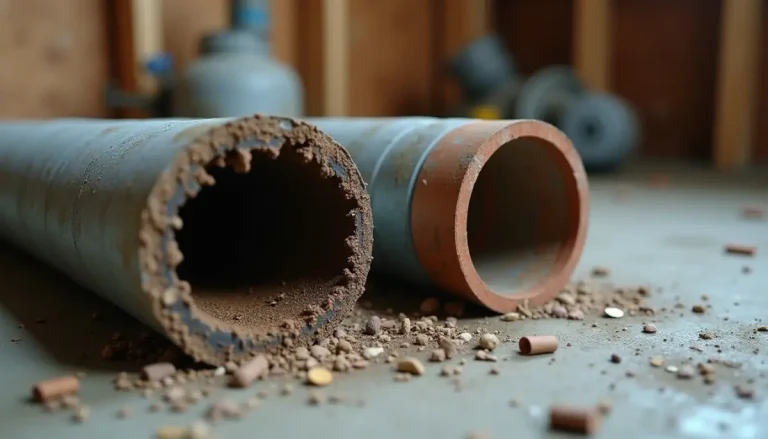
- Watch for wet spots along the trench, which signal silt or a crushed pipe.
Sump pump upkeep is more hands-on. Pour a bucket of water into the pit each spring and fall to confirm the float trips and the pump empties the pit. Clear debris from the intake screen, confirm the check valve closes, and make sure the discharge outlet is not frozen or buried. Our sump pump installation guide walks through the pit, check valve, and discharge line details that cause most failures.
What happens to a sump pump and French drain when the power goes out?
The French drain keeps working, because gravity needs no electricity. The sump pump stops. During a storm outage, the drain tile keeps feeding water into the pit, so a pump-dependent basement can flood faster with a perimeter drain than without one. That is the strongest argument for a backup pump on any combo system.
Backup choices include a battery DC pump, a water-powered pump on city pressure, or a standby generator. A battery backup also covers the other common failure, a stuck float or burned-out motor while the power is still on. A high-water alarm costs little and tells you when the primary has quit.
Where the water goes matters too. Many cities prohibit sump discharge into the sanitary sewer, because clean groundwater overloads treatment plants during storms. Route the line to the yard or an approved storm connection, and check local rules before tying in anywhere.
How we sourced this
We reviewed the top-ranking pages for “sump pump vs French drain” and related questions in October 2026, then went to primary or first-hand sources for every number. Cost figures come from HomeAdvisor’s French drain cost guide, which reports both drain and sump pump installation ranges. Grading and foundation drain requirements come from the 2021 International Residential Code, sections R401.3 and R405.1, published by the ICC; local amendments vary. Pump life expectancy comes from InterNACHI’s published chart. The 140-foot basement estimate is our own arithmetic on HomeAdvisor’s per-foot ranges. We excluded contractor-blog figures we could not trace to a dataset.
Frequently asked questions
Is a French drain better than a sump pump?
Neither is better, because they do different jobs. A French drain collects groundwater and moves it by gravity, while a sump pump lifts water that has no lower place to drain. For yard pooling a French drain alone often works. For a below-grade basement with seepage, the usual answer is an interior drain feeding a sump pump.
Do I need a sump pump if I have a French drain?
You need one only if the drain pipe cannot reach an outlet lower than itself. Yard drains and footing drains on sloped lots can often run to daylight with no pump. Drains under a basement slab sit at the lowest point of the property, so they almost always empty into a sump pit and need a pump.
Can a French drain be connected to a sump pump?
Yes, and that is the most common basement waterproofing layout. The perforated drain pipe slopes toward a sump pit, enters the pit through a hole in its side, and the pump sends the water out through a discharge line with a check valve. Long perimeters on wet sites may use two pits.
How much does a French drain with a sump pump cost?
HomeAdvisor puts interior French drains at $5,000 to $18,000 and sump pump installation at $500 to $2,000, so the combination commonly totals about $5,500 to $20,000. For a 140-foot basement perimeter at $40 to $100 per foot, our math lands near $6,100 to $16,000 with the pump included.
Does an interior French drain need a sump pump?
Almost always. Interior drain tile sits under the basement floor beside the footing, which is lower than the surrounding yard, so water cannot drain out by gravity. It collects in a sump pit and the pump lifts it to grade. The IRC allows foundation drains to discharge by gravity or by mechanical means.
Where should a French drain empty?
A French drain should empty somewhere lower than the whole pipe run. Good outlets include daylight on a downhill part of your own lot, a dry well in fast-draining soil, a storm connection where the city permits it, or a sump pit. Many cities prohibit sending groundwater into the sanitary sewer.
How long does a French drain last compared to a sump pump?
A well-built French drain lasts 30 to 40 years, according to HomeAdvisor, as long as filter fabric keeps silt out of the stone. A sump pump lasts about 10 years on InterNACHI’s life-expectancy chart. Expect to replace the pump several times during the life of one drain system.
My French drain is full of dirt. How can I clear it?
Silt clogging is the main failure mode for French drains, so check whether your system has a cleanout. If it does, flush it with a garden hose every year or two to clear built up soil. Also keep the outlet clear of leaves, soil, and mower clippings, and watch for wet spots along the trench, which signal silt or a crushed pipe needing attention.