Air in Water Lines: Why Faucets Sputter and How to Fix It
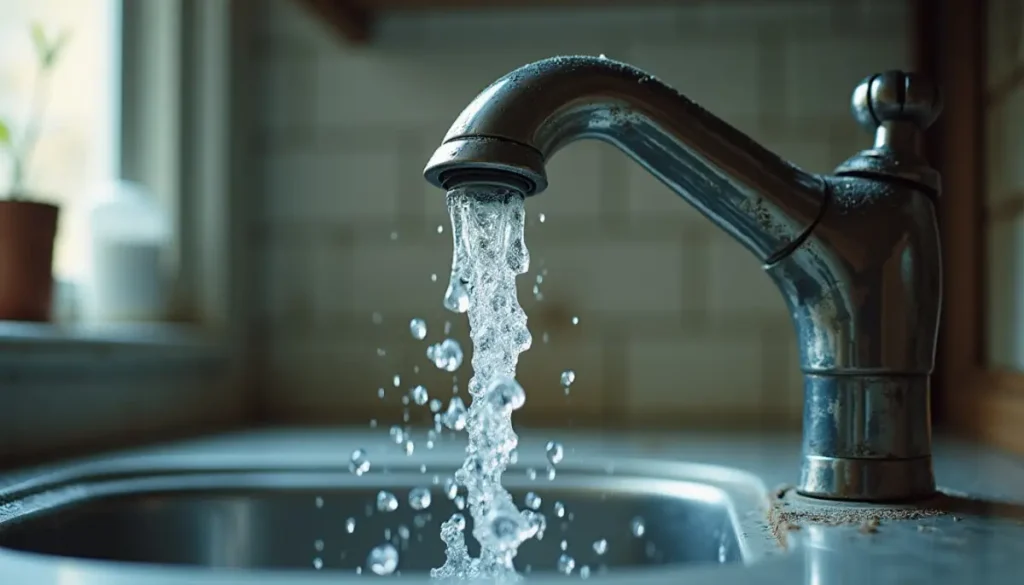
Air in water lines usually comes from a recent shutoff, main repair or meter swap on city water, or from a pump, check valve or pressure tank fault on a private well.
Key Takeaways
- The City of Rockville, Maryland says spurting faucets and cloudy water after a main repair are temporary and should clear in less than 24 hours.
- EBMUD says milky water caused by air clears within minutes in a glass, and it suggests running an outdoor hose bib first after pipeline work.
- On a well, sputtering that keeps coming back points to drawdown, a leaking check valve or foot valve, a drop-pipe leak or a failed pressure tank.
- The Minnesota Department of Health says methane at as little as 1 mg/L can build to explosive levels in a confined space, and it comes out of solution above 58°F.
- HomeAdvisor puts the average well pump repair at $974, with a foot valve at $150 to $300 and a pressure switch at $120 to $175 installed.
- Sputtering at hot taps only traces to the water heater, where heat drives dissolved gas out of the water.
What causes air in water lines?
Air in water lines gets in whenever pipes lose pressure or drain and then refill. On city water that means a shutoff, a main repair, a meter swap or plumbing work in the house. On a well it means the pump, check valve, drop pipe or pressure tank is letting air in. Sputtering at hot taps only points at the water heater.
Where and when you see the air is the fastest diagnosis, as the table shows.
| Where and when you see air | Likely cause | Fix |
|---|---|---|
| Every tap, right after utility work or a shutoff (city water) | Air entered the main or house piping while it was drained | Run cold taps until steady; Rockville says it clears in under 24 hours |
| Milky water that clears from the bottom of the glass up (city water) | Air dissolved under pressure | Harmless; Chatham, Illinois asks for a call if it lasts past 5 minutes |
| One faucet spits with weak flow (any supply) | Scale or grit knocked loose into the aerator | Unscrew and rinse the aerator and showerhead screens |
| First draw of the morning (well) | Leaking check valve, worn foot valve or drop-pipe leak drains the column overnight | Replace the valve or repair the pipe; foot valve $150 to $300 per HomeAdvisor |
| After long irrigation or back-to-back laundry (well) | Pump pulls the water level down to its intake (drawdown) | Spread out heavy use, get a yield test, add dry-run protection |
| Steady spitting plus rapid pump cycling (well) | Ruptured bladder or failed air volume control on the pressure tank | Check the pre-charge, replace the tank or control |
| Constant fizzing, gurgling well, worse at hot taps (well) | Dissolved methane or other gas from the aquifer | Lab test, vent the well outdoors, add gas removal |
| Hot taps only (any supply) | Heat releases dissolved gas; hydrogen after a long idle | Run hot taps until steady; flush the heater |
Why is there air in my water lines after the water was shut off?
When a utility or plumber shuts the water off, pipes partly drain and air fills the empty space. Once pressure returns, the trapped air rides to the nearest open tap and comes out as spitting, coughing bursts. The City of Chatham, Illinois explains that some of that air also dissolves under pressure, which is why the water can look milky.
This is the most common case and the least serious. If your street just had a water main break, expect air and some discoloration on the first few draws.
Utility guidance on the fix is consistent. The City of Rockville, Maryland tells customers to open a top-floor faucet for about a minute, then open the others one at a time from highest to lowest, and says the conditions should clear in less than 24 hours. EBMUD suggests running an outdoor hose bib first until the water clears, which keeps stirred-up sediment out of indoor fixtures.
Flush with cold water first so discolored water stays out of the heater. If air returns a day later with no work nearby, call the utility.
Weak, uneven flow without any bubbles is a separate issue, and our breakdown of low water pressure causes walks through the regulator, aerator and supply-valve checks.
What causes air in well water lines?
Air in well water lines means something in the well system is admitting air, because a healthy private well stays sealed under pressure. The usual suspects are a pump drawing the water level down to its intake, a leaking check valve or foot valve, a hole in the drop pipe, a failed pressure tank, or dissolved gas such as methane coming up with the groundwater.
- Drawdown. A pump that moves water faster than the well recovers pulls the level down to the intake, and the pump starts gulping air. Sputtering after long lawn watering is the tell. Fixes include spreading out use, setting the pump deeper or adding dry-run protection such as Franklin Electric’s Pumptec.
- Check valve or foot valve. A submersible pump has a check valve above it, and a jet pump has a foot valve at the bottom of its suction line. When one leaks, water drains back overnight and air takes its place, which is why the first morning draw spits.
- Drop pipe or suction leak. A pinhole or loose fitting can pull air into a jet pump’s suction side or let the column drain on a submersible. Finding it usually means pulling the pump.
- Pressure tank. A ruptured bladder lets air and water mix. Older plain steel tanks rely on an air volume control, and when it fails it can push extra air into the house. Rapid on-off pump cycling usually comes with both faults.
- Dissolved gas. Methane, carbon dioxide or hydrogen sulfide can arrive in the groundwater itself. The Minnesota Department of Health says methane leaves solution above 58°F, while groundwater typically sits at 42 to 48°F, so the gas fizzes out as water warms in the house.
Watch the tank gauge and count pump starts. Pressure that sinks while every tap is closed points to a check valve or pipe leak. Air plus fast cycling points to the tank, and our explainer on how a well pressure tank works shows how to check its air pre-charge.
Why does only the hot water sputter?
If only hot taps sputter, the air is coming from the water heater, not the supply line. Warm water holds less dissolved gas than cold water, so heating releases bubbles that collect at the top of the tank and leave through the hot outlet. The Minnesota Department of Health notes that a dissolved gas problem is often worse at the hot water faucet.
Some spitting right after a tank refills, after a flush or a new install, is normal and clears in a few minutes.
Hydrogen is the exception worth respecting. Water heater makers, including A.O. Smith and Rheem, warn in their manuals that hydrogen gas can collect in a heater unused for two weeks or more. Before using appliances after a long trip, run a hot kitchen tap for several minutes with no smoking or open flame nearby.
How do you get air out of water lines?
To get air out of water lines, open the faucets and run them until every stream is smooth, starting at the lowest fixture and working up so air exits at the top of the system. Run cold before hot and flush each toilet. Most homes clear in one pass. If air comes back within a day on a well, bleeding only treats the symptom.
- Start at the lowest fixture, usually an outdoor hose bib or basement laundry tub, and open the cold side fully.
- Work up floor by floor, opening each cold tap, including tub spouts.
- Let each tap run until the stream is steady with no spitting, then repeat the whole round with the hot side.
- Flush every toilet once or twice so air clears from the fill valves.
- Close the taps in the same order you opened them, lowest first, leaving the top-floor tap for last.
- Unscrew aerators and showerhead screens and rinse them, since air bursts often knock scale loose into them.
Rockville gives the reverse order, top floor first. Either works, as long as each fixture runs until it is smooth.
If air or banging persists, do a full drain-down. Shut the main valve (on a well, switch off the pump breaker), open every faucet including the lowest one to empty the system, then reopen the main about halfway and close taps as they run clear. Draining also refills the air chambers that cushion pipes.
When is a sputtering faucet a warning sign?
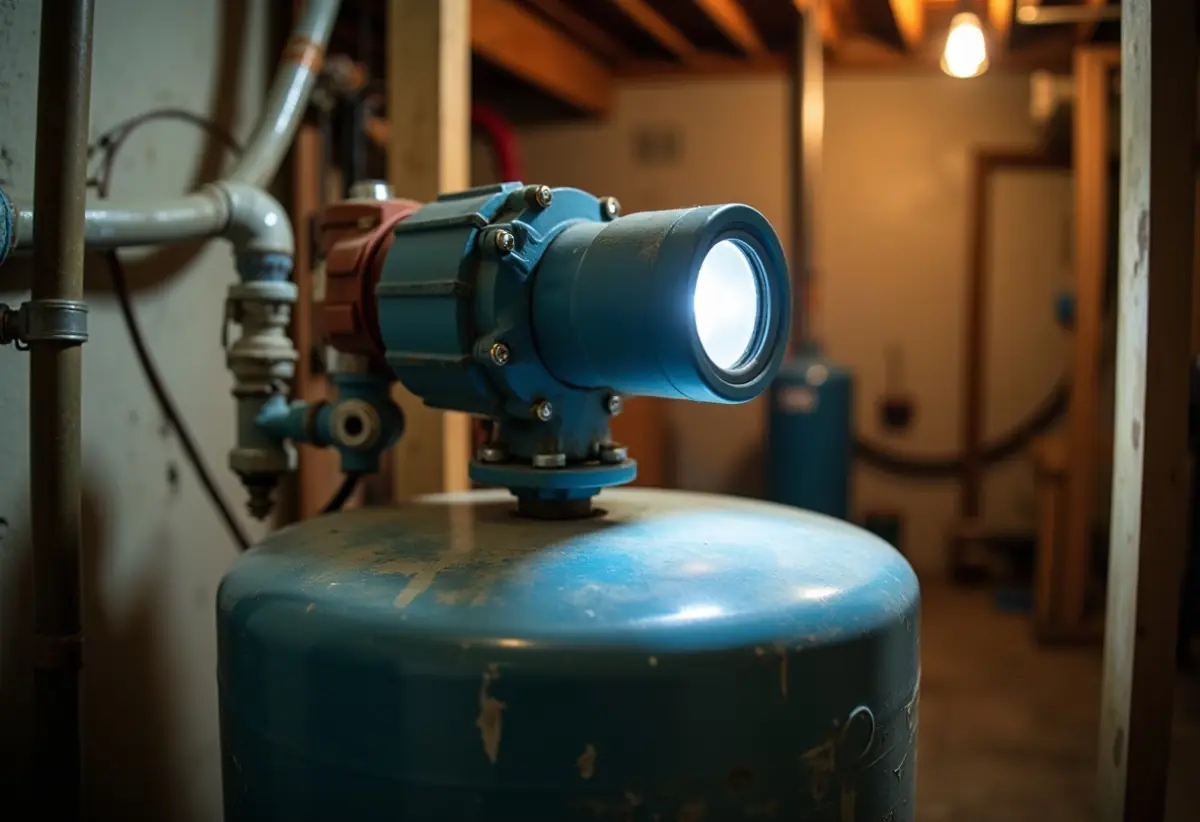
A sputtering faucet is a warning sign when it keeps happening with no utility work nearby, when it comes with a pump that cycles on and off rapidly, or when well water fizzes, looks milky and the well gurgles. The Minnesota Department of Health lists a spitting faucet, a gurgling well and banging pipes as possible signs of methane or another dissolved gas.
Methane is odorless and flammable. The Minnesota Department of Health says concentrations as low as 1 mg/L can reach explosive levels in a poorly ventilated confined space, and that methane’s explosive limit runs from 5 to 14 percent in air. It also estimates that likely fewer than 1 percent of Minnesota wells produce methane, mostly wells drilled into glacial sediments.
If bubbles in a clear jar rise and the water clears from the bottom up, a gas is present, per MDH. On city water that gas is almost always air. On a well with steady symptoms, order a lab methane test, and vent the well cap outdoors, never into a basement or pit.
Trapped air and banging pipes often travel together. A pocket of air can slam when a valve snaps shut, and waterlogged air chambers stop cushioning the flow. If knocking stays after you bleed the lines, our guide on how to fix water hammer covers arrestors and pressure checks.
A pump that runs nonstop while taps spit air may be running dry. Switch it off at the breaker and call a well contractor.
How much does it cost to fix air in water lines?
Fixing air in water lines costs nothing on city water, since bleeding the taps is a do-it-yourself job. On a well, HomeAdvisor puts the average well pump repair at $974, with most homeowners paying $373 to $1,624. Single parts tied to air problems, such as a foot valve or pressure switch, often land between $100 and $500 installed.
Bars scale to the high end of each range. HomeAdvisor lists labor at about $50 per hour on average, with a minimum house-call fee of $100 to $150, and says emergency or weekend rates usually double.
Rinsing aerators and bleeding the lines are free, and resetting a tank’s air charge takes a tire gauge and a compressor. We found no reliable published price for methane removal, so get two quotes from a licensed well contractor.
How we sourced this
We reviewed the top search results for “air in water lines” and “how to get air out of water lines” in October 2026, then checked claims against primary sources. We cited utility guidance from the City of Rockville, Maryland, EBMUD and the City of Chatham, Illinois; methane facts from the Minnesota Department of Health; and repair prices from HomeAdvisor’s well pump repair cost guide. Costs are national ranges and vary by region and well depth. We excluded forum posts and unattributed cost pages.
Frequently asked questions
Will air in water lines go away on its own?
Often, yes. After a utility shutoff or main repair, the City of Rockville, Maryland says spurting faucets and cloudy water are temporary and should clear in less than 24 hours. Running each cold tap until the stream turns steady speeds it up. Air that keeps coming back, especially on a private well, points to a mechanical fault that will not fix itself.
Is air in water lines dangerous?
Plain air is not a health risk. EBMUD says the milky look comes from tiny bubbles that rise and clear within minutes in a glass. The exception is a well that fizzes constantly, because the gas may be methane. The Minnesota Department of Health warns that as little as 1 mg/L of methane can build to explosive levels in a closed space.
Can air in water lines damage pipes?
Rarely on its own, but trapped air can make pipes bang when a pocket slams into a closed valve. On a well, the real damage comes from the cause. A pump sucking air from a drawn-down well can run dry and overheat, and a leaking check valve makes the pump short-cycle, which wears out the motor and pressure switch faster.
How long does it take to get air out of water lines?
On city water, most homes clear in the time it takes to run each tap until the flow is steady, usually a few minutes per fixture. Rockville tells customers to run a top-floor faucet for about a minute first, then work down. If sputtering still shows up a day later, call the utility or a plumber.
Why does my faucet sputter only in the morning?
On a well, a first-of-the-day burst of air usually means water drained back down the drop pipe overnight. A leaking check valve, a worn foot valve on a jet pump or a pinhole in the drop pipe lets the column fall and air takes its place. The pump then pushes that air into the house on its first run.
Why is my tap water milky white?
Milky water that clears from the bottom of the glass up is almost always air dissolved under pressure, according to the City of Chatham, Illinois. It is common after main work and harmless. If the cloudiness lasts more than 5 minutes, Chatham asks residents to call for testing. On a well, persistent milky, fizzing water is a reason to test for methane.
Can a water heater cause air in the lines?
Yes, at hot taps only. Heating water drives dissolved gases out of solution, so some spitting from hot fixtures is normal right after the heater refills. A heater left unused for two weeks or more can also collect hydrogen gas, which manufacturers warn is flammable, so run a hot tap for several minutes with no flame or spark nearby.
What causes trapped air in water pipes?
Air gets in whenever pipes lose pressure or drain and refill. On city water that means a shutoff, a main repair, a meter swap or plumbing work in the house. On a well it means the pump, check valve, drop pipe or pressure tank is letting air in. Sputtering only at hot taps points to the water heater releasing dissolved gas.
How do I clear an airlock in my water pipes?
Open faucets and run them until every stream is smooth, starting at the lowest fixture and working up so air exits at the top. Run cold before hot and flush each toilet. Close taps in the same order opened. If air persists, shut the main valve, open every faucet to empty the system, then reopen the main and close taps as they run clear.


