Is It Safe to Pour Boiling Water Down the Drain?
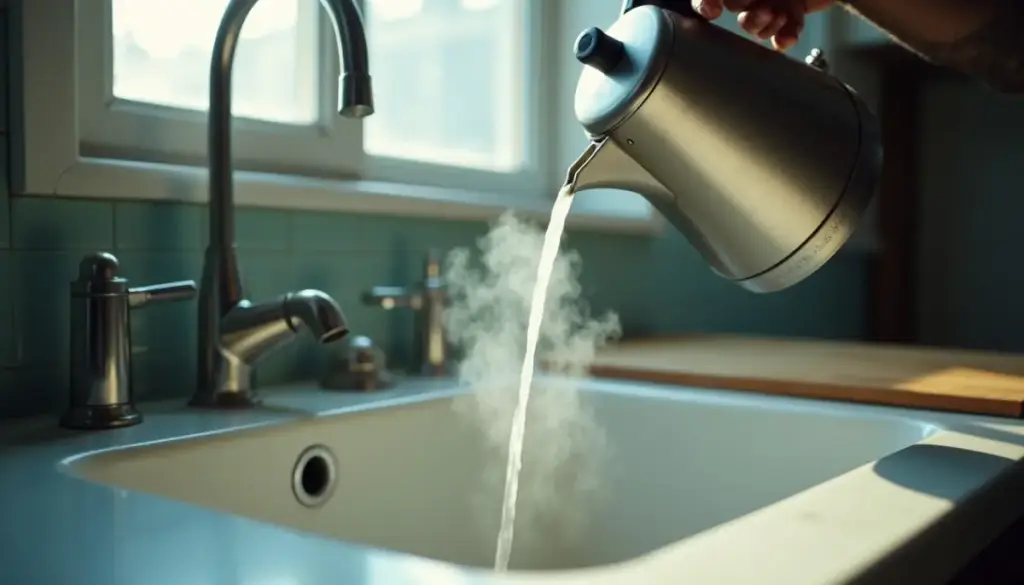
Pouring boiling water down the drain is risky in most U.S. homes, because 212°F water runs well past the 140°F rating Charlotte Pipe gives PVC and ABS drain pipe, and it can crack a porcelain toilet.
Key Takeaways
- Charlotte Pipe lists a maximum working temperature of 140°F for both its PVC DWV and ABS DWV drain pipe, the two plastics in most U.S. home drains.
- Water boils at 212°F at sea level and still at 202.4°F at 5,000 feet, per Engineering ToolBox, so boiling water beats the plastic rating at any normal altitude.
- FlowGuard Gold CPVC is rated to 180°F (Charlotte Pipe) and Uponor AquaPEX to 200°F at 80 psi, but both are supply pipes, not drain lines.
- Copper and cast iron melt above 1,900°F (Engineering ToolBox), so the metal is safe, while plastic traps, couplings, and wax rings are not.
- The CPSC urges a 120°F water heater setting and warns that 140°F water can cause third-degree burns in about six seconds.
- InSinkErator tells disposal owners to run cool water and never pour fats, oils, or grease into the unit.
Is it safe to pour boiling water down the drain?
Boiling water down the drain is safe only when every part it touches is metal or rated for the heat, and that describes few modern homes. Most newer homes drain through PVC or ABS, which Charlotte Pipe rates to 140°F. A kettle at 212°F runs 72 degrees past that, so the honest answer is no, not as a routine habit.
The risk is not instant melting. A single pour into a sink with the cold tap running mixes and cools fast. The damage builds with repetition, with large volumes such as a stockpot, and with water that sits in the pipe because a clog is holding it there.
Older homes can be different. A house with cast iron drains and a copper or brass trap can take boiling water without harm to the pipe. Even then, a single plastic trap or repair section changes the answer, so check under the sink before you pour.
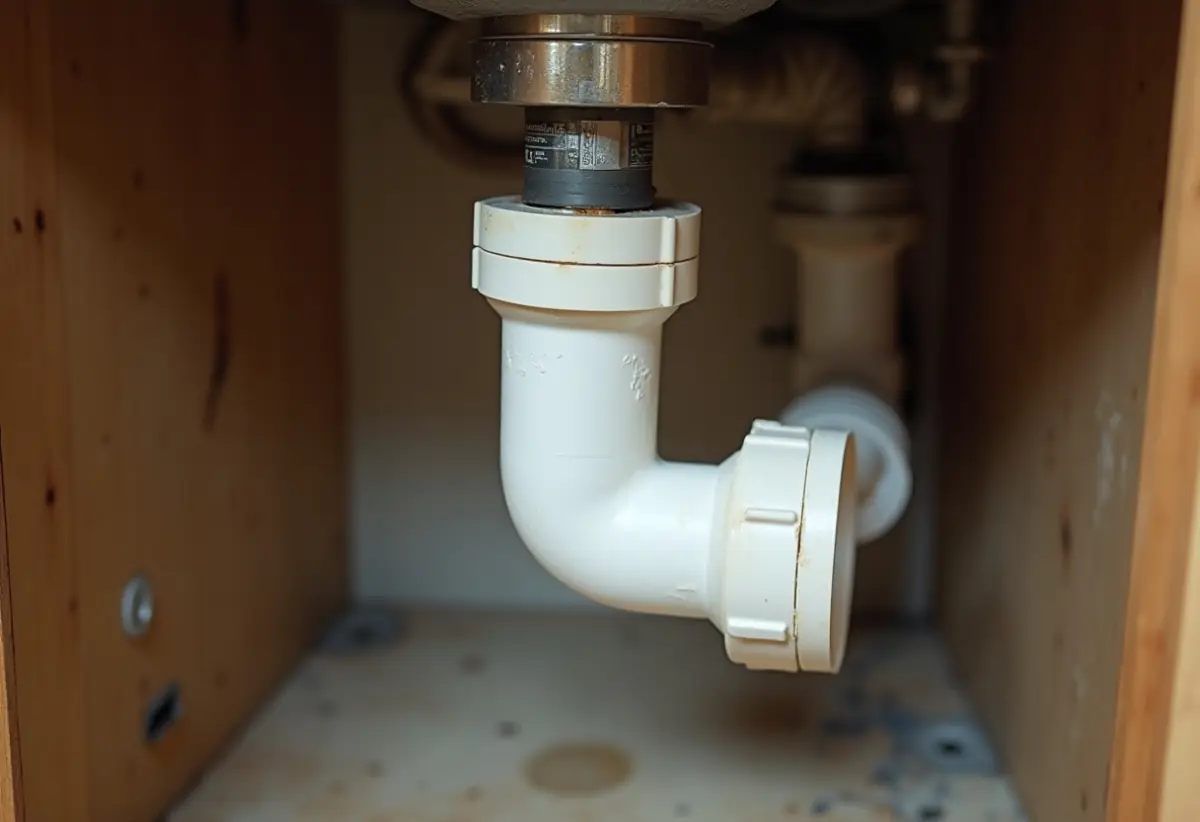
Can boiling water damage PVC pipes?
Yes, boiling water can damage PVC drain pipe over time. Charlotte Pipe, which calls itself the largest U.S. maker of drain, waste, and vent pipe, lists 140°F as the maximum working temperature for its PVC DWV pipe and fittings. Heat above that softens the plastic, and softened pipe can sag, and solvent-welded joints can loosen and start to weep.
Joints are the usual failure point. A solvent weld fuses pipe and fitting, and repeated heat cycles stress that bond. The slip-joint trap under a sink is weaker still, since it relies on plastic nuts and beveled washers that can deform and drip after enough hot pours. Our guide to PVC pipe sizes, schedules, and ratings covers how the material is graded.
Standing water makes it worse. When a slow drain holds a pot of boiling water in the trap, the plastic stays hot for minutes instead of seconds. That is the exact moment most people reach for the kettle, which is why the habit and the damage tend to arrive together.
What temperature can each drain pipe material handle?
Drain plastics top out at 140°F, supply plastics run higher, and metals are far beyond boiling. Charlotte Pipe rates PVC and ABS drain pipe at 140°F and FlowGuard Gold CPVC at 180°F. Uponor rates AquaPEX at 200°F and 80 psi. Copper and cast iron melt at well over 1,900°F, so the pipe metal never limits a kettle pour.
The table below lists each common material, its published limit, and whether boiling water is a sensible thing to pour through it. Where we could not find a published maker figure, we say so rather than guess.
| Pipe or fixture | Max temperature | Boiling water safe? | Source |
|---|---|---|---|
| PVC DWV drain pipe | 140°F working | No, not as a habit | Charlotte Pipe BR-PK |
| ABS DWV drain pipe | 140°F working | No, not as a habit | Charlotte Pipe BR-PK |
| CPVC CTS (FlowGuard Gold) | 180°F, 100 psi | Below 212°F, and a supply pipe | Charlotte Pipe BR-PK |
| PEX (Uponor AquaPEX) | 200°F at 80 psi | Below 212°F, and a supply pipe | Uponor submittal |
| Copper pipe | Melts near 1,983°F | Yes, the metal is fine | Engineering ToolBox |
| Gray cast iron | Melts 2,061 to 2,199°F | Yes, but check rubber couplings | Engineering ToolBox |
| Vitreous china toilet | No maker figure found | Avoid, thermal shock risk | No published rating located |
| Garbage disposal | Maker says cool water | Avoid | InSinkErator |
Two notes on the chart. The CPVC and PEX bars are supply ratings, and those pipes rarely carry drain water, so they show headroom you will not find in the drain itself. Uponor also says domestic hot water service should not exceed 140°F at 80 psi under ASTM F2023, the same 140°F line the drain plastics sit on.
Altitude barely helps. Engineering ToolBox puts the boiling point at 210.1°F at 1,000 feet, 202.4°F at 5,000 feet, and 193.2°F at 10,000 feet. Even in a mountain town, boiling water arrives 50 or more degrees above the plastic drain rating.
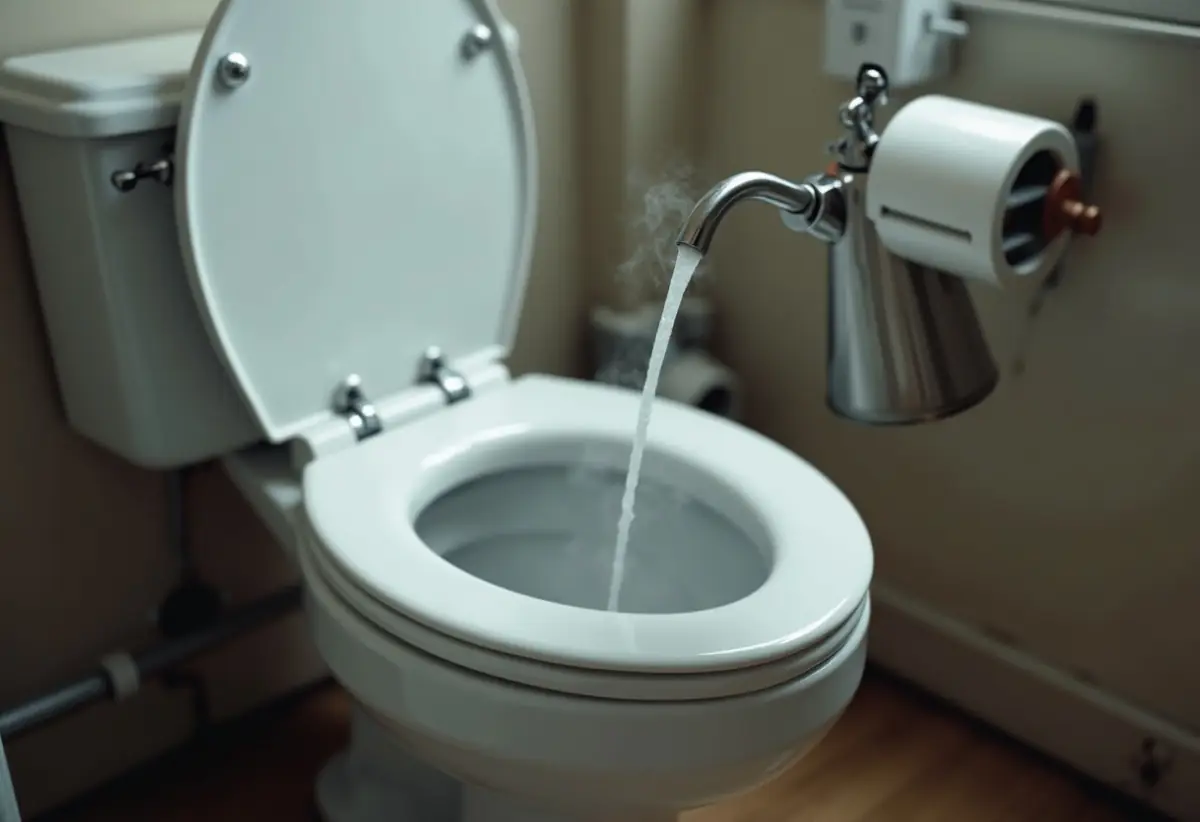
Can you pour boiling water down the toilet?
You should not pour boiling water into a toilet. The bowl is vitreous china, a fired ceramic that sits at room temperature, and a sudden flood of 212°F water heats the inner glaze faster than the body behind it. That uneven expansion, called thermal shock, can start a hairline crack that leaks slowly or splits the bowl later.
We looked for a published temperature limit from a major toilet maker and did not find one, so treat this as a known ceramic failure mode rather than a rated number. The cost math is simple anyway. A cracked bowl means a new toilet, and the kettle trick rarely clears a toilet clog in the first place.
Heat also travels past the bowl. The wax ring that seals the toilet to the flange softens with heat, and many homes have a PVC or ABS closet bend right below it. For a clogged bowl, a flange plunger and the steps in our guide on how to unclog a toilet work better and carry none of that risk.
Does boiling water down the drain actually clear a clog?
Boiling water down the drain clears only soft, meltable clogs, and often only for a while. Heat liquefies grease and soap film near the opening, so the sink drains and the fix looks complete. The fat then travels into colder pipe, cools, and hardens again downstream, where it is harder to reach and catches the next load of debris.
Most kitchen clogs are grease bound up with food particles. Melting the grease frees the plug for a moment but does not remove it from the system. Bathroom clogs are mostly hair and soap, and hair does not melt at any kitchen temperature, so boiling water does little for a shower or tub drain.
- May help briefly: fresh bacon fat, soap scum, toothpaste film near the strainer.
- Will not help: hair, wipes, coffee grounds, rice, eggshells, mineral scale, tree roots.
- Makes it worse: large grease loads that set up again in a colder branch or the main line.
For a real blockage, a plunger, a hand auger, or removing the trap does more. Our step-by-step guide on how to unclog a drain walks through each method in order of effort.
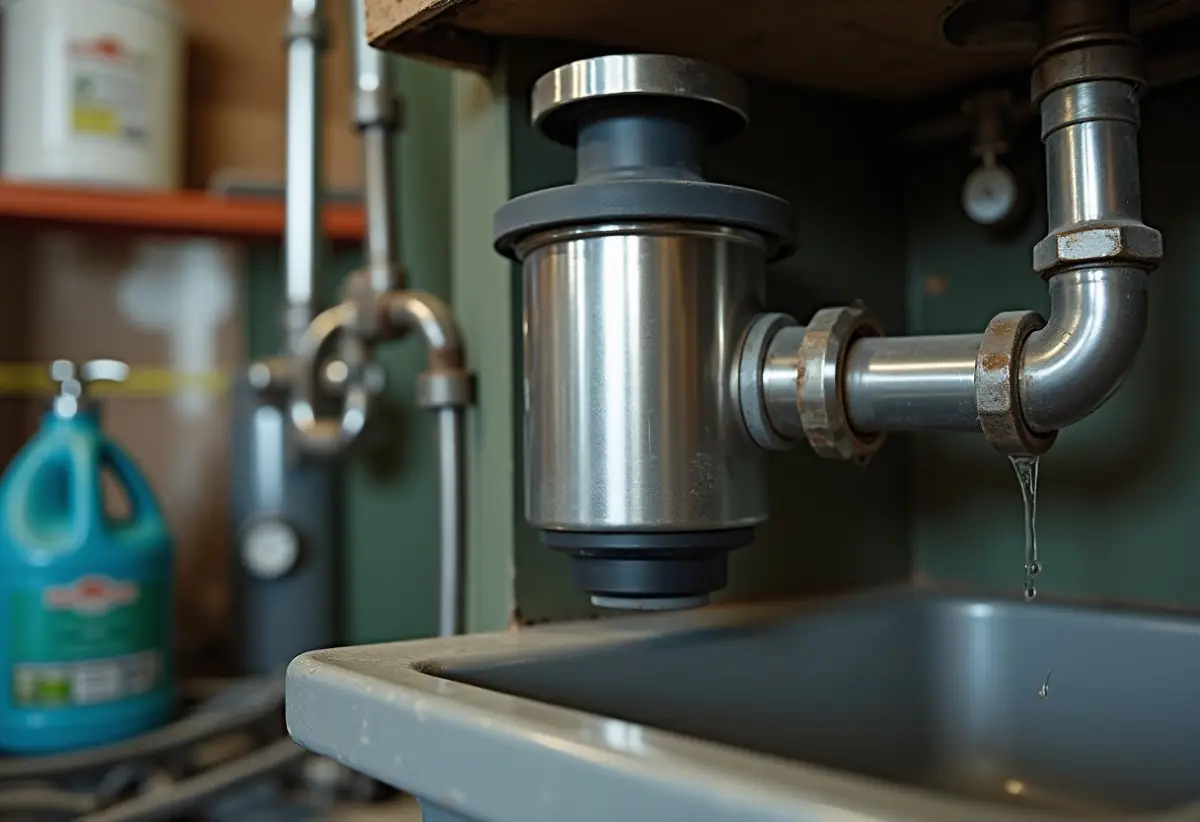
Is boiling water bad for a garbage disposal, glass sink, or enamel sink?
Boiling water is a poor match for a garbage disposal and a gamble for some sink materials. InSinkErator tells owners to run a steady stream of cool water before switching the disposal on and to never put fats, oils, or grease into it. Cool water keeps grease solid so the unit can grind and flush it instead of coating the pipe.
Sink material matters too. Glass vessel sinks and thin porcelain can suffer the same thermal shock as a toilet bowl when a cold basin meets a sudden boiling pour. Enameled cast iron and stainless steel tolerate heat far better, though the plastic trap below them is still rated at 140°F.
Pasta water is the most common case. A large pot can dump several quarts of near-boiling, starchy water into the trap at once. Run the cold tap at full flow while you drain the pot, or let the water sit for a few minutes first, and scrape oily sauce into the trash.
What should you use instead of boiling water down the drain?
Use hot tap water instead of boiling water down the drain, followed by mechanical tools for a real clog. Hot tap water usually lands between 120 and 140°F depending on the water heater setting, which sits at or under the 140°F PVC and ABS rating. The CPSC urges a 120°F setting, which also limits scald risk at the sink.
- Run the hottest tap water for two to three minutes to soften fresh soap or grease film.
- Plunge the drain with a cup plunger, sealing any overflow opening with a wet rag.
- Pull and clean the P-trap over a bucket if the clog sits near the fixture.
- Run a hand auger through the trap arm for hair or deeper debris.
- Call a plumber if several fixtures back up at once, which points to a main line problem.
If you want something to pour, a kettle that has cooled for a few minutes, or boiling water mixed half and half with cold tap water, lands near the safe range. Many people pair it with a fizzing mix, and our test of baking soda and vinegar for drains shows what that mix can and cannot do.
Prevention beats any pour. Wipe greasy pans with a paper towel, collect fat in a can, use a strainer basket in the kitchen sink and a hair catcher in the shower, and flush drains with hot tap water once a week.
How we sourced this
We consulted 11 sources and cited 6. Pipe temperature limits come from Charlotte Pipe’s Plastics Product Knowledge Guide (BR-PK, updated April 2026) and Uponor’s AquaPEX submittal. Boiling points by altitude and metal melting points come from Engineering ToolBox, with Celsius values converted to Fahrenheit. Scald data come from CPSC Document 5098, and disposal guidance from InSinkErator. We excluded contractor blog figures we could not trace to a manufacturer, including a frequently repeated 180°F rating for ABS, since Charlotte Pipe lists 140°F. We did not locate a published hot water limit from a toilet maker. Boiling point data is from the Engineering ToolBox altitude table. Reviewed October 2026.
Frequently asked questions
Is it OK to pour boiling water down the drain?
Not as a habit in most modern homes. Charlotte Pipe rates its PVC and ABS drain pipe for a maximum working temperature of 140°F, and water boils at 212°F at sea level. An all-metal drain handles the heat, but many newer houses have plastic traps or drain lines somewhere in the run. Hot tap water is the safer choice.
Can boiling water damage PVC pipes?
It can. PVC drain pipe is rated for 140°F, so a full kettle at 212°F runs 72 degrees over the rating. A single pour into a draining sink usually cools quickly, but repeated pours, or boiling water that sits above a clog, can soften the pipe, stress solvent-welded joints, and loosen slip-joint washers in the trap until they drip.
Can you pour boiling water down the toilet?
Avoid it. A toilet bowl is fired vitreous china sitting at room temperature, and a sudden pour of boiling water heats the inside surface faster than the outside, which can start a hairline crack. The heat also reaches the wax ring and the plastic closet bend under many toilets. Use hot tap water and a flange plunger instead.
Does boiling water unclog drains?
Sometimes, for a fresh, soft clog of soap film or warm grease near the opening. Heat melts the fat and the clog seems to clear, but the grease cools and hardens again farther down the line, often in a colder section of pipe. Hair, food scraps, wipes, and mineral scale do not melt, so boiling water does little for them.
Can I pour pasta water down the sink?
Yes, if you let it cool first or run the cold tap at full flow while you pour. Pasta water comes off the stove near boiling, and a big pot dumps several quarts of it into the trap at once. Strain the noodles in the sink with cold water running, and scrape any oily sauce residue into the trash.
Is boiling water safe for a garbage disposal?
It is not the recommended practice. InSinkErator tells owners to run a steady stream of cool water before turning the disposal on, and to never put fats, oils, or grease into it. Cool water keeps grease solid so the unit can chop and flush it, while hot water melts grease that later hardens in the trap or branch line.
How hot should water be to flush a drain?
Aim for hot tap water, usually 120 to 140°F depending on your water heater setting. That range stays at or under the 140°F rating Charlotte Pipe lists for PVC and ABS drain pipe. The CPSC urges owners to set water heaters at 120°F, and it warns that 140°F water can cause third-degree burns in about six seconds.
Is boiling water safe for cast iron or copper drains?
The pipe itself can take it. Engineering ToolBox lists copper melting at 1,084°C, about 1,983°F, and gray cast iron far higher still, so 212°F is nothing to the metal. The weak points are elsewhere, such as rubber no-hub couplings, a PVC trap under the sink, or a plastic repair section spliced into an old metal line.