Well Pump Replacement Cost: 2026 Prices by Pump Type
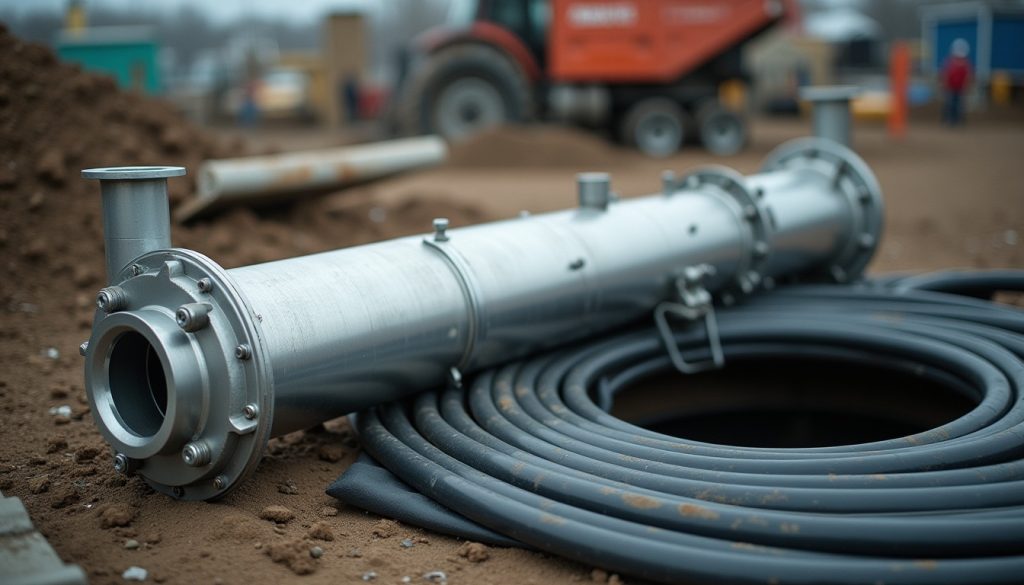
Well pump replacement cost runs about $974 to $2,821 installed in 2026, with a $1,897 national average, and the pump type, well depth, and parts replaced alongside it decide where you land.
Key Takeaways
- HomeAdvisor’s 2026 guide puts the national average at $1,897, with most jobs between $974 and $2,821 and extremes from $200 to $5,800.
- Installed submersible pumps run $1,000 to $2,500 and shallow jet pumps $400 to $1,400, per a 2024 ClearVantage survey for American Home Shield.
- Constant-pressure (variable-speed) systems cost the most at $2,000 to $5,000, according to both American Home Shield and HomeAdvisor.
- Labor alone runs $250 to $1,000 at $45 to $150 an hour, per HomeAdvisor, and pulling a deep submersible is where that labor goes.
- Well pumps last 8 to 15 years (HomeAdvisor), and American Home Shield puts the average at 14 years.
- Franklin Electric’s troubleshooting guide lists a pressure switch, waterlogged tank, check valve, or plumbing leak as causes of short cycling, so the pump is not always the failed part.
How much does well pump replacement cost in 2026?
Well pump replacement costs $974 to $2,821 for most homeowners, with a national average of $1,897, according to HomeAdvisor’s well pump replacement guide (updated June 2026). The full range spans $200 for a simple jet pump swap to $5,800 for a deep, high-horsepower or constant-pressure job. Your number depends mostly on pump type and how far down the pump sits.
Other 2026 guides land in the same band. This Old House (updated March 2026) puts a typical complete replacement at $900 to $2,500. American Home Shield’s survey data, covered below, prices installed pumps from $400 to $5,000 by type.
The gap between a $300 pump on a store shelf and a $1,900 average bill is almost all labor, fittings, wire, and the risk the installer takes pulling equipment out of a hole in the ground. Permits add $50 to $200 in areas that require them, per HomeAdvisor.
What does each type of well pump cost to replace?
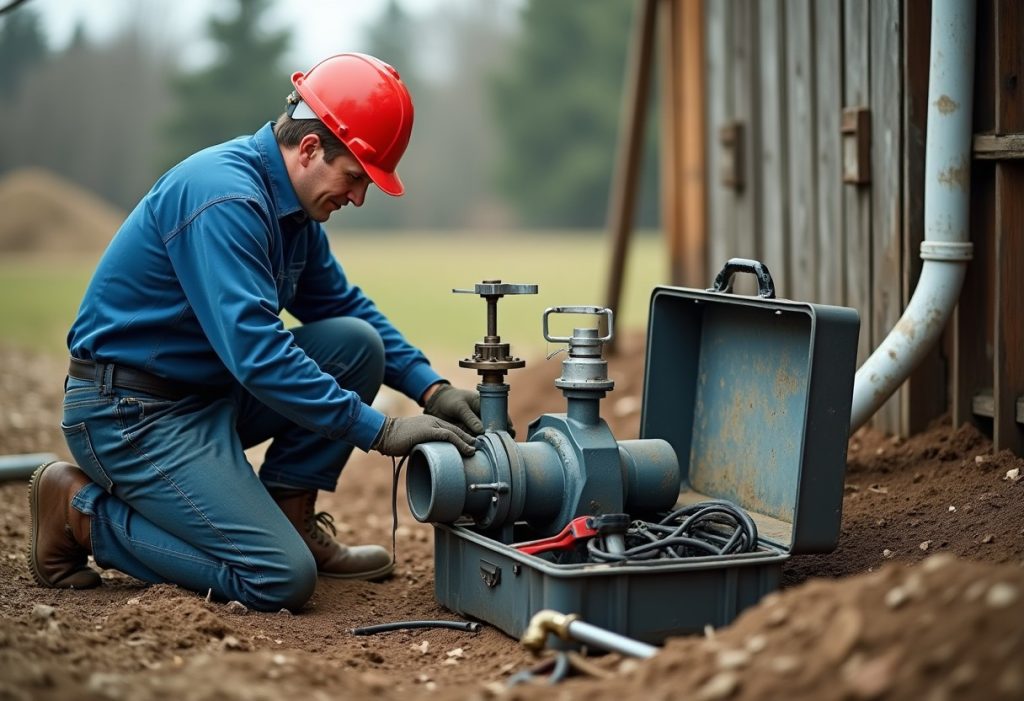
Pump type sets the baseline. A shallow-well jet pump installed costs $400 to $1,400, a deep-well jet pump $500 to $1,400, a submersible $1,000 to $2,500, and a constant-pressure system $2,000 to $5,000, according to a 2024 nationwide homeowner survey by ClearVantage for American Home Shield. Hand and solar pumps ran $400 to $2,500.
You usually replace like with like, because the well’s depth and diameter decide which pump fits. If you are not sure what you have, our guide to the types of well pumps shows how to tell a jet pump in the basement from a submersible down the casing.
| Pump type | Typical installed cost (AHS) | Pump unit only (HomeAdvisor) | Lifespan | Best for |
|---|---|---|---|---|
| Shallow-well jet pump | $400 to $1,400 | $230 to $1,000 | 8 to 15 yr typical | Wells with water within about 25 feet of the surface; pump sits above ground |
| Deep-well jet pump | $500 to $1,400 | $440 to $1,200 | 8 to 15 yr typical | Older moderate-depth wells already plumbed with a two-pipe or packer jet setup |
| Submersible pump | $1,000 to $2,500 | $275 to $1,550 | 8 to 15 yr typical | Most modern drilled wells, including deep ones; quiet and efficient |
| Constant-pressure (variable speed) | $2,000 to $5,000 | $2,000 to $5,000 | 8 to 15 yr typical (controller may fail sooner or later) | Larger homes, irrigation, or anyone tired of pressure swings in the shower |
| Solar pump | $400 to $2,500 (hand or solar) | $1,800 to $6,500 | Not reported by sources reviewed | Off-grid cabins, livestock water, remote sites |
The AHS and HomeAdvisor columns use different methods (homeowner survey versus cost-guide database), so they will not always nest. No source we reviewed splits lifespan reliably by pump type, so we report the all-type range.
The constant-pressure bar is roughly double the submersible bar because you are buying a variable-speed drive and controller on top of the pump. Brands such as Grundfos and Franklin Electric sell these systems to hold one steady pressure instead of the usual on-off band.
What drives submersible well pump replacement cost up?
Submersible well pump replacement cost climbs with depth, horsepower, and everything that comes up the hole with the pump. American Home Shield notes that deeper wells need more powerful pumps and more labor, and that the drop pipe, wiring, or pressure tank may also need replacing. Each of those turns a $1,000 job into a $2,500 one.
Pulling the pump from depth
A submersible hangs at the bottom of a string of pipe and wire that can run hundreds of feet. Pulling it takes a pump hoist or truck-mounted rig and at least two people, because a full column of pipe is heavy. The deeper the setting, the longer the pull and reinstall, which is why HomeAdvisor’s labor line runs from $250 up to $1,000.
Horsepower
Higher-horsepower pumps cost more and draw more current, so the wire gauge, control box, and breaker may need to step up too. American Home Shield lists horsepower and flow rate among the main cost drivers. Do not upsize on a hunch; the pump has to match the well’s yield and the depth to water.
Pipe, wire, and fittings
Once the string is out, the installer can see corroded galvanized drop pipe, cracked poly pipe, or wire with nicked insulation. Replacing them while the pump is out costs far less than paying for a second pull later. Expect a line item for new pipe, a splice kit, and a torque arrestor on most submersible jobs.
Pressure switch and pressure tank
The pressure switch is an inexpensive part, and many installers replace it by default during a pump swap. The tank is the bigger decision. HomeAdvisor lists pressure tank replacement at $800 to $3,800, and an old well pressure tank that has lost its air charge will short cycle a new pump to death, so check it before you sign off.
Emergency and weekend calls
Losing all water usually means an urgent call, and many well contractors bill after-hours or weekend work at a premium. Ask for the emergency rate before dispatch, and whether a temporary fix can hold until a weekday visit.
What are the signs your well pump is going bad?
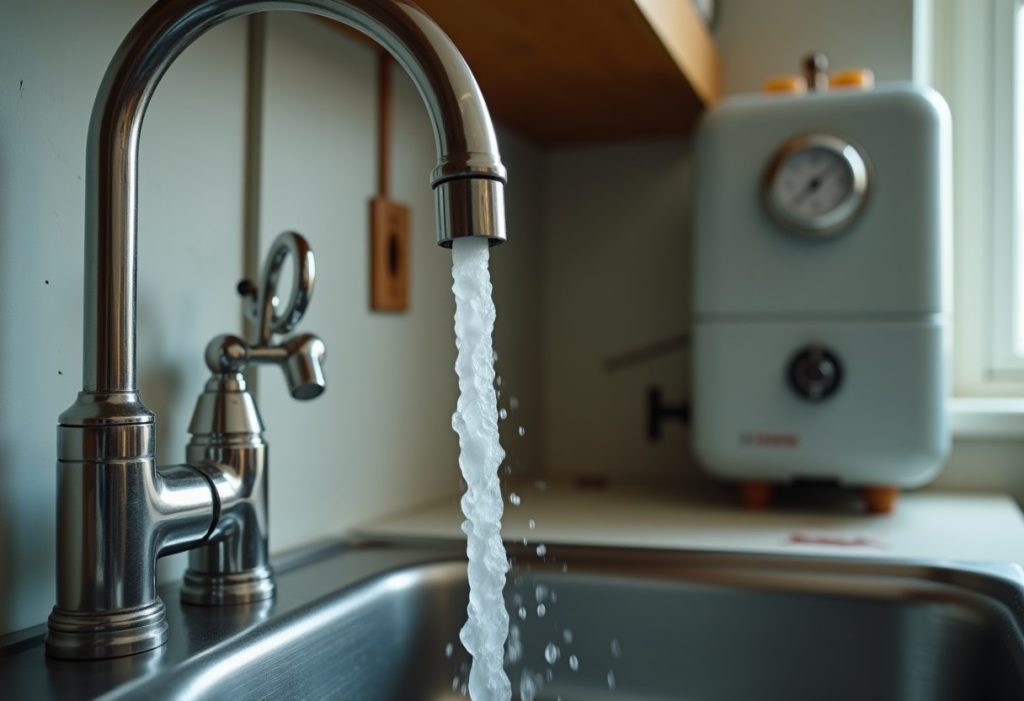
The signs your well pump is going bad are no water at any tap, sputtering faucets that spit air, low or swinging pressure, a pump that starts and stops every few seconds, a pump that never shuts off, and a higher electric bill with no other explanation. Any one of these warrants a check of the system before the pump quits outright.
- No water at all. The pump is not starting, not moving water, or has no power.
- Sputtering or air in the lines. The water level may be dropping to the pump intake, or the drop pipe may have a leak.
- Short cycling. The pump clicks on and off every few seconds when one tap is open.
- Pump runs nonstop. It never reaches cut-out pressure, a sign of a worn pump, a leak, or a low water level.
- Higher electric bill. A pump that runs longer or starts more often uses more power.
- Pressure swings or weak flow. Showers go hot and cold, or pressure fades during use.
- Sand, grit, or cloudy water. A worn pump or failing well screen can draw sediment.
If the water turns gritty, cloudy, or starts to smell, schedule well water testing as well, because a water quality problem and a pump problem can show up together.
Is it the pump, or something cheaper?
Many “bad pump” calls turn out to be a cheaper part. Franklin Electric’s submersible motor troubleshooting guide, excerpted in The Driller, lists blown fuses, tripped breakers, a defective pressure switch, and a control box fault as causes of a motor that will not start, ahead of a bound pump or failed motor. Rule those out before anyone pulls the pump.
| Symptom | Possible causes (Franklin Electric guide) | Check first |
|---|---|---|
| Motor does not start | No power or wrong voltage, blown fuse or tripped breaker, bad pressure switch, control box fault, bad wiring, bound pump, bad cable or motor | Breaker, then the pressure switch contacts, then the control box |
| Motor starts too often (short cycling) | Pressure switch, check valve stuck open, waterlogged tank, leak in system | Tank air charge with the tank empty, then look for leaks |
| Motor runs continuously | Pressure switch, low water level in well, leak, worn pump, broken shaft or coupling, blocked screen, check valve stuck closed, control box | Pressure switch and visible leaks before pulling the pump |
| Overload protector trips | Incorrect voltage, overheated protectors, bad control box, bad motor or cable, worn pump or motor | Voltage at the control box (electrician or well contractor) |
Of those, short cycling deserves the most attention. A waterlogged tank or a leak makes the pump start for every glass of water, and frequent starts wear out a motor faster. Fixing a tank charge or a leak now can save a pump that would otherwise fail years early.
How long do well pumps last?
Well pumps last 8 to 15 years on average, according to HomeAdvisor, and American Home Shield puts the average at 14 years. Life depends on how many times a day the pump starts, how much sand or sediment the well produces, voltage quality, and whether the pressure tank keeps the pump from short cycling. A well-sized system can outlast the range.
Age alone is not a reason to replace a working pump that runs quietly and holds pressure. Age matters most when the pump is already coming out of the well for another reason.
Should you repair or replace a well pump?
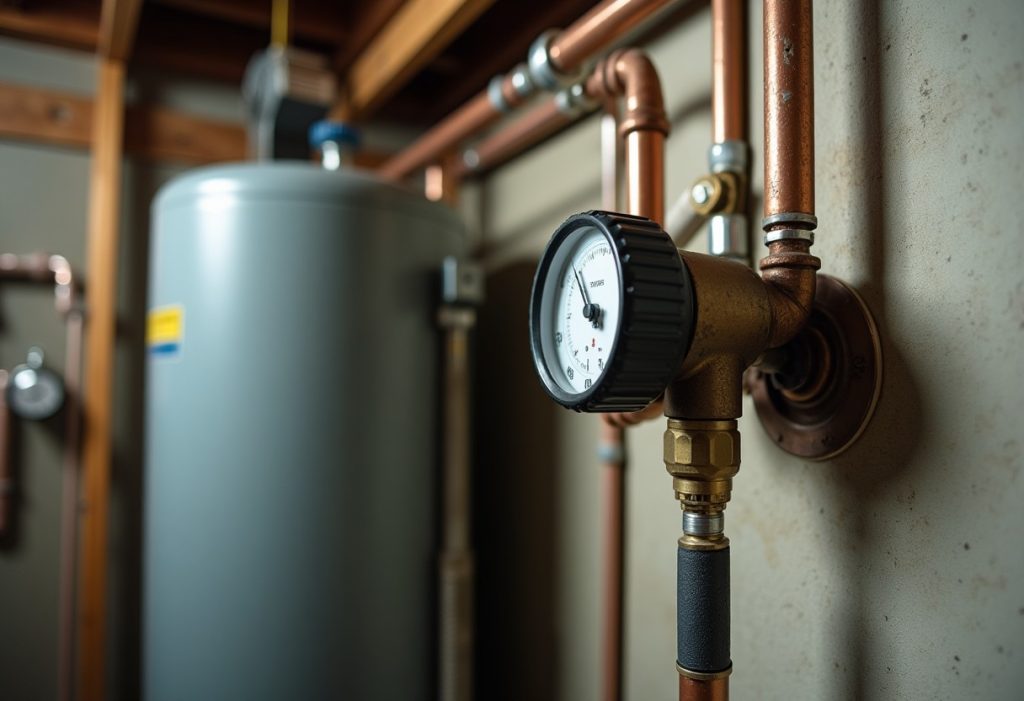
Repair when the fault is above ground, and replace when an older submersible has to come out of the well anyway. A pressure switch, control box capacitor, or tripped breaker costs little to fix and needs no pulling rig. Once the crew pulls a pump, you have paid most of the labor, so putting a new pump on the string usually beats rebuilding an old one.
This is our editorial rule of thumb, not a manufacturer rule:
- Confirm power, breaker, pressure switch, and tank charge first. These fix a large share of no-water calls.
- If the pump must be pulled and it is under about 5 years old, ask about warranty coverage and repair.
- If it must be pulled and it is past about 10 years, replace it and inspect the pipe and wire at the same time.
- If the tank is waterlogged or near the end of its life, replace it in the same visit so the new pump does not short cycle.
Can you replace a well pump yourself, and how long does it take?
A shallow jet pump at ground level is a manageable DIY job for a homeowner who is comfortable with 240-volt wiring and threaded pipe. A submersible is not. American Home Shield warns that replacing a well pump takes specialized tools, electrical knowledge, and the ability to handle heavy equipment safely, and recommends a licensed professional for most homeowners.
The risks with a submersible are specific. A dropped pump or a parted pipe joint can leave equipment at the bottom of the well, and fishing it out often costs more than the original job. Wire splices that fail under water are hard to find later. Some states also require a licensed pump installer for this work, and the National Ground Water Association’s wellowner.org lists contractors by area.
Time on site is short. HomeAdvisor puts a professional replacement at a half day to a full day. Here is what a typical submersible swap looks like:
- Diagnose the fault and confirm the pump is the problem.
- Kill power at the breaker and the disconnect.
- Pull the pump, drop pipe, and wire with a hoist or rig.
- Inspect and replace pipe, wire, splice, and check valve as needed.
- Lower the new pump, set it at the correct depth, and wire the control box or drive.
- Set the pressure switch and confirm the tank pre-charge, then test the cut-in and cut-out.
- Disinfect the well and test the water.
That last step is easy to skip. Opening the well casing can introduce bacteria, so many state health departments advise you to shock the well after pump work and then retest for coliform before drinking the water again. Budget a few days for that, even though the pump itself is back in service the same day.
How we sourced this
We reviewed 2026 cost guides plus manufacturer and industry pages and cite four: HomeAdvisor’s well pump replacement guide (updated June 2026), American Home Shield’s cost page (February 2026, based on a 2024 ClearVantage homeowner survey), This Old House (March 2026, pump prices from Home Depot listings), and Franklin Electric’s submersible motor troubleshooting guide as published by The Driller. We excluded cost pages that did not name a data source or date. Ranges are national and vary by region, depth, and contractor; chart bars show the midpoint of each AHS range. Emergency premiums and pressure switch prices are not quantified because no reviewed source gave a dated national figure.
Frequently asked questions
How much does it cost to replace a well pump?
Most homeowners pay about $974 to $2,821, with a national average of $1,897, according to HomeAdvisor’s 2026 cost guide. A shallow jet pump swap sits at the low end, a deep submersible pull sits near the top, and a constant-pressure system can reach $2,000 to $5,000. Replacing the pressure tank or drop pipe at the same visit adds to the total.
How long do well pumps last?
Most well pumps last 8 to 15 years, per HomeAdvisor, and American Home Shield puts the average at 14 years. Life depends on how often the pump starts, sand or sediment in the water, voltage problems, and whether the pressure tank holds its air charge. A waterlogged tank that makes the pump short cycle can shorten that span sharply.
What are the signs your well pump is going bad?
The common signs are no water at any tap, sputtering faucets that spit air, pressure that swings or stays low, a pump that clicks on and off every few seconds, a pump that never shuts off, and a jump in the electric bill. Several of these also point to a bad pressure switch or tank, so test those first.
Should I replace the pressure tank when I replace the well pump?
Often yes, if the tank is old or waterlogged. A failed tank makes the pump short cycle, and that wears out a new motor early. If the tank still holds its pre-charge and is fairly new, many contractors leave it. Replacing it at the same visit avoids a second service call and a second labor charge.
Can I replace a well pump myself?
A shallow jet pump at ground level is a reasonable DIY job for someone comfortable with 240-volt wiring and threaded pipe. A submersible pump is different, because the pump, drop pipe, and wire hang hundreds of feet down and can drop into the well. American Home Shield advises that most homeowners hire a licensed professional for that work.
How long does it take to replace a well pump?
A professional crew usually finishes in a half day to a full day, according to HomeAdvisor. A jet pump swap at ground level is the fast case. A deep submersible takes longer because the crew pulls and reinstalls the full string of pipe and wire. Plan on a bacteria test afterward, which adds days before drinking water is cleared.
Is it worth repairing a well pump instead of replacing it?
Repair makes sense when the fault is above ground, such as a pressure switch, control box capacitor, or tripped breaker, because nothing has to be pulled. Once a submersible must come out of the well, the pulling labor is the same either way, so a pump older than about 10 years is usually better replaced than rebuilt.


