How to Remove a Sink Stopper (Every Type, Step by Step)
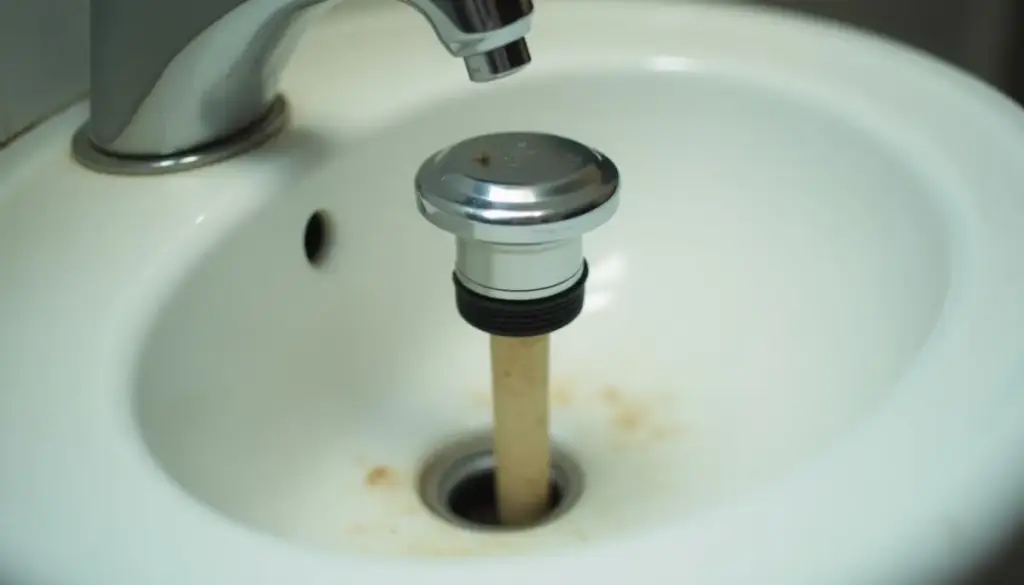
How to remove a sink stopper depends on its type: lever pop-ups release at the pivot nut behind the drain, push-buttons unscrew from the top, and lift-and-turns come off at one set screw.
Key Takeaways
- Delta’s metal pop-up instructions (sheet 85210, Rev. E) tell installers to hand tighten the pivot nut, so on most sinks you can loosen it without a wrench.
- Delta ships its pop-up stoppers to install as either removable or non-removable; the non-removable style is the one that “won’t come out” until you pull the pivot rod.
- Bathroom sink drains are a 1-1/4 inch size, matching the 1-1/4 inch minimum lavatory trap in International Plumbing Code (IPC) Table 709.1 and Moen’s 131553 spec.
- Delta’s RP62472 replacement pop-up fits sinks 1-5/8 to 2-3/8 inches thick; measure yours before buying a new assembly.
- Replacement pop-up drains listed from $55.60 (Delta RP62472) to $178.95 (Kohler K-7124-A clicker drain) at manufacturer and dealer sites in October 2026.
- The trap below the stopper must hold a 2 to 4 inch water seal under IPC Section 1002.4, which is why you set a bucket under it before you pull anything.
What type of sink stopper do you have?
Look at the top of the stopper and behind the faucet before you touch a tool. A thin rod sticking up behind the spout means a lever pop-up. A domed cap that clicks when pressed is a push-button. A small knob on top that you twist is a lift-and-turn. A flat perforated disc with no moving part is a grid drain, which has no stopper to pull. Tubs use a different family of stoppers, which our guide on how to remove a bathtub drain stopper walks through type by type.
Getting the type right saves the most common mistake, which is yanking on a lever pop-up that is locked in place by a rod under the sink. Pulling harder just bends the rod or cracks a plastic drain body. The table below covers the six types you will find in US bathrooms. Once the stopper is out, check our guide to clearing a clogged bathroom sink for the next steps in tackling stubborn blockages.
| Stopper type | How to tell | How to remove | Tools |
|---|---|---|---|
| Lever pop-up (lift rod) | Lift rod behind the faucet spout; rod under the sink enters the back of the drain | Lift and quarter-turn; if locked, loosen pivot nut under the sink and slide the rod back | Bucket, flashlight, slip-joint pliers |
| Push-button (click-clack) | Domed cap, no lift rod, pops up and down when pressed | Press to open, unscrew cap or stopper counterclockwise off its threaded post | Rag or rubber grip, taped pliers |
| Lift-and-turn | Small knob on top that you lift and twist to open | Hold body, unscrew knob, back out the set screw under it, unscrew stopper from crossbar | Small Phillips or flat screwdriver |
| Toe-touch | Spring stopper opened by pressing, more common in tubs and vessel sinks | Open it, unscrew top cap, then unscrew the core from the crossbar | Flat screwdriver, rag |
| Flip-it (toggle) | Small lever on top that flips the plug open and shut | Turn to open and pull straight up; rubber O-ring holds it in by friction | None |
| Grid drain | Fixed slotted or perforated disc, no moving stopper | Nothing to remove; clean from above or pull the trap below | Plastic hair tool, bucket |
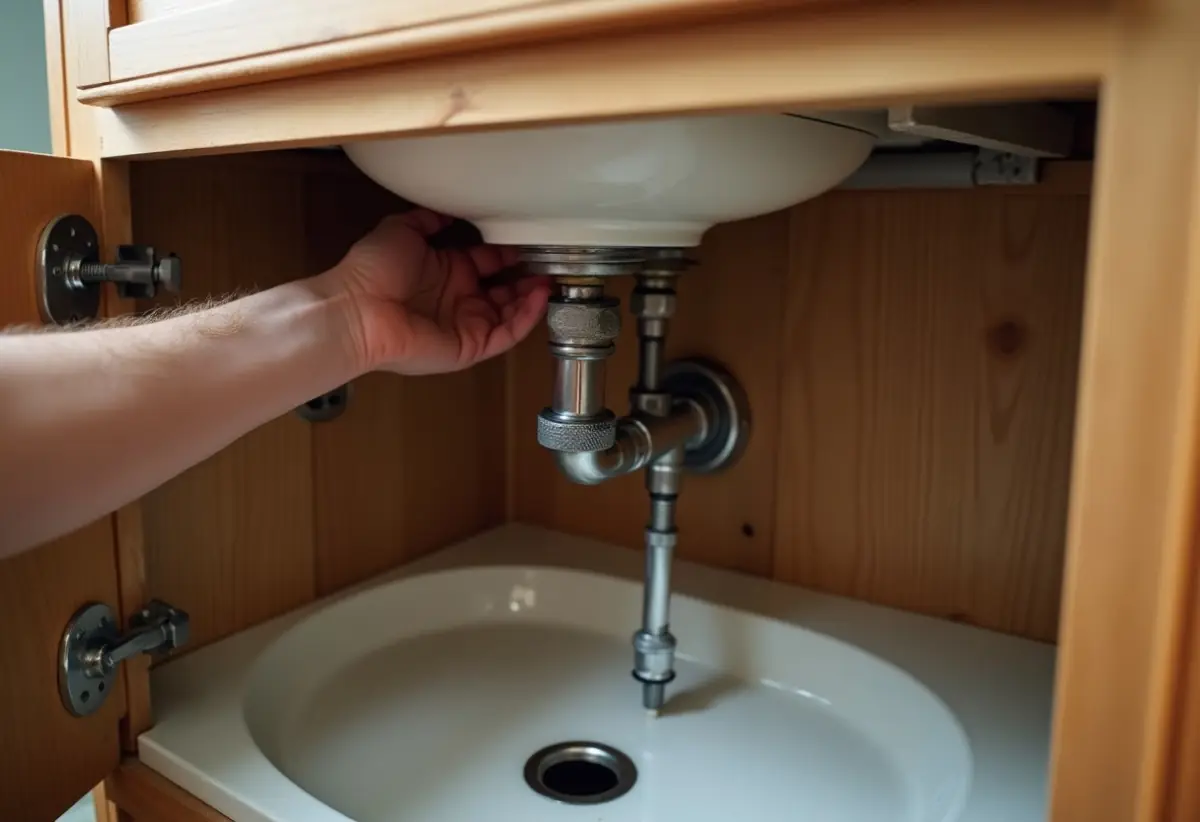
How do you remove a pop-up sink stopper with a lift rod?
Try the easy release first: raise the lift rod, grab the stopper, and turn it a quarter turn while lifting. Removable pop-ups have an open slot in the tail that lets the pivot rod slip free. If the stopper only rises a half inch and stops, it is the non-removable style, and you have to loosen the pivot nut under the sink.
Delta’s metal pop-up installation sheet shows both setups in one step: the horizontal rod goes through the stopper “as removable or non-removable,” and the pivot nut is hand tightened. If you have not worked under a vanity before, our guide to how the parts under a bathroom sink fit together labels each piece.
- Clear the cabinet and set a bucket and a towel under the drain. The tailpiece and trap hold water.
- Find the horizontal pivot rod. It runs from the back of the drain body to a flat perforated strap (the clevis) hanging from the lift rod.
- Squeeze the spring clip and slide it off the rod, then pull the rod out of the clevis hole. Note which hole it was in.
- Unscrew the pivot nut on the back of the drain body counterclockwise. Use slip-joint pliers only if hand pressure fails.
- Pull the pivot rod straight back about an inch. Leave the plastic ball and gasket on the rod so you do not lose them.
- Go back up top and lift the stopper out of the drain.
A pivot nut frozen by 20 years of mineral scale needs penetrating oil and a few minutes of waiting, not force that cracks a plastic body.
How do you remove a push-button sink stopper?
Press the stopper so it pops to the open position, then grip the cap and turn it counterclockwise. On most click-clack drains either the cap unscrews to expose a threaded post, or the whole stopper spins off that post. No trip under the sink is needed, and the job usually takes less than a minute once you get a grip on the chrome.
Push-button drains such as the Moen 131553 push-button waste assembly use a spring cartridge inside the stopper and a 1-1/4 inch drain thread. Wet chrome is slippery, so dry the cap and use a rag or a rubber jar opener. If the cap turns but the stopper body spins with it, wrap pliers jaws in electrical tape and hold the stem just below the cap while you turn.
When a push-button is stuck closed, you cannot reach the cap. Fill the basin with an inch of water and work a small cup plunger over it; the suction often lifts the stopper enough to grab.
How do you remove lift-and-turn, toe-touch, and flip-it stoppers?
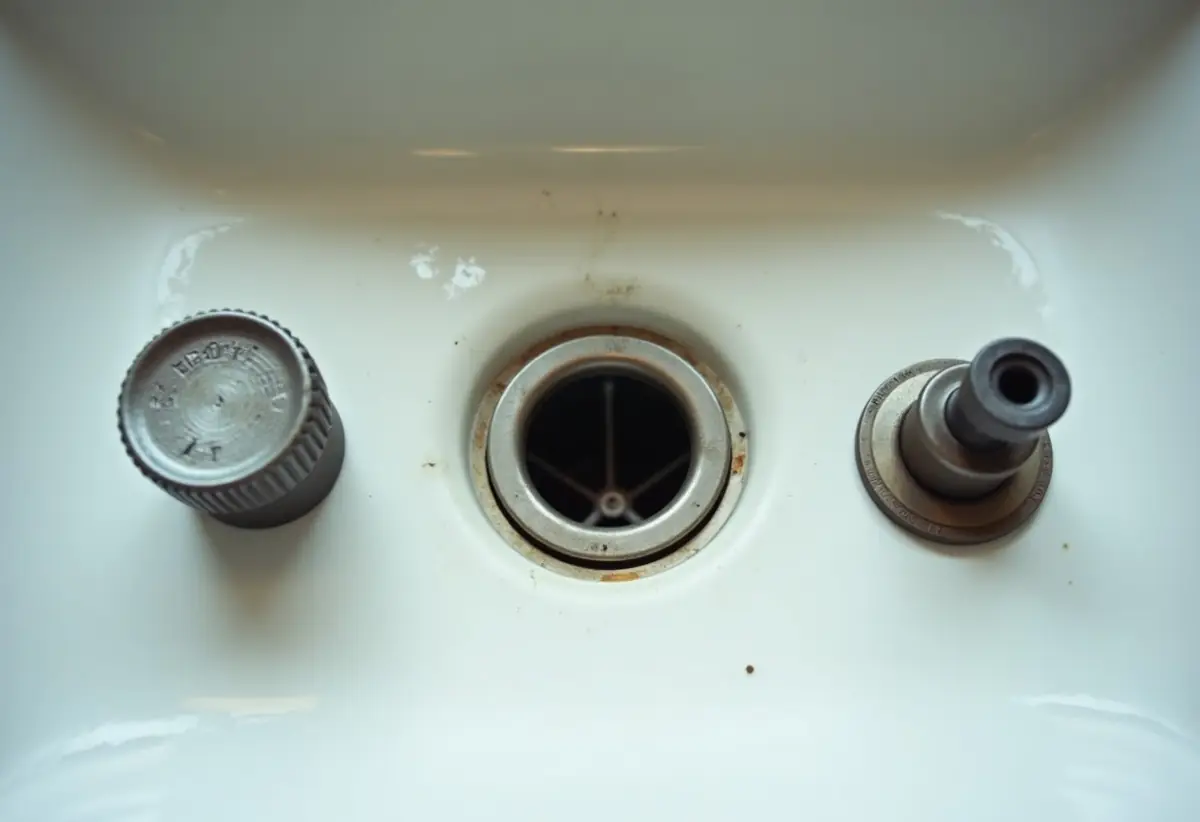
All three come out from above. A lift-and-turn has a set screw hidden under its knob: hold the stopper body, unscrew the knob, back out the screw, then turn the body counterclockwise off the crossbar. Toe-touch stoppers unscrew in two pieces. Flip-it stoppers have no threads and pull straight out against an O-ring.
Lift-and-turn
Open the stopper and hold the body still with one hand while you unscrew the small knob counterclockwise with the other. Under it is a Phillips or flat set screw. Back it out a few turns, not all the way, then spin the whole stopper counterclockwise until it lifts off the threaded post in the drain crossbar.
Toe-touch
Press the stopper into the open position, then unscrew the top cap. Beneath it you will see a screw head or a slotted core; turn it counterclockwise with a flat screwdriver to free the core from the crossbar.
Flip-it and grid drains
A flip-it stopper is a plug with a toggle on top and a rubber O-ring around the shaft. Turn it to the open position and pull straight up while wiggling. A grid drain has nothing to remove, so the hair has to come out with a plastic barbed hair tool from above, or by pulling the trap from below.
How do you clean the stopper and drain once it is out?
Pull the hair mat off the stopper tail with a gloved hand or a paper towel, then scrub the tail and the underside of the cap with an old toothbrush and hot soapy water. Run a plastic hair tool or a bent wire down the open drain to snag what is left in the drain body before you put anything back.
The slime on a stopper is more than gross. That film of hair, soap, and skin cells is where drain fly larvae live, and the overflow channel collects the same film. Scrubbing the stopper, the drain throat, and the overflow hole with a bottle brush is half the work of getting rid of drain flies around a vanity.
If the basin still drains slowly with the stopper out, the clog is farther down. The next stop is the P-trap under the sink, which unthreads by hand on most plastic traps and catches the heavy clumps that slipped past the stopper. Past the trap, our guide on how to unclog a drain covers hand augers and when to stop and call a pro.
- Skip chemical drain openers while the stopper is out. They splash, and they can soften old plastic pop-up bodies.
- Check the pivot rod gasket and plastic ball for cracks while you are there. A worn gasket is the most common pop-up leak.
How do you reinstall a bathroom sink stopper so it seals?
Drop the stopper in with its tail slot facing the back of the sink, slide the pivot rod back through the slot or hole, and hand tighten the pivot nut. Then set the clevis: push the stopper fully down, pull the lift rod all the way up, and tighten the clevis screw so the closed position matches the lift rod’s top travel.
Delta’s instructions say the pivot nut must face the faucet, which means the pivot opening points to the back wall where the clevis hangs. Rotating the drain body to get a better angle on the nut is a common way to break the seal under the sink flange, and Delta’s sheet warns “DO NOT TWIST” twice for that reason.
- Lower the stopper into the drain, tail slot toward the back.
- From below, push the pivot rod into the drain body so the ball seats in its socket and the rod passes through the stopper tail.
- Hand tighten the pivot nut. Stop when snug; overtightening pinches the ball and makes the stopper stiff.
- Thread the pivot rod through a clevis hole and replace the spring clip on the rod, one clip on each side of the strap if your kit has two.
- Loosen the clevis screw, push the stopper fully closed, lift the lift rod to its highest point, and retighten.
- Fill the basin, wait five minutes, and check the water level. Then pull the stopper and check the pivot nut for drips.
If the stopper does not open high enough, move the pivot rod one hole closer to the lift rod on the clevis. If it will not close, the clevis is set too low; repeat step 5. A stopper that closes fully but still loses water needs a new gasket or a cleaner drain flange seat.
When should you replace the whole pop-up drain assembly?
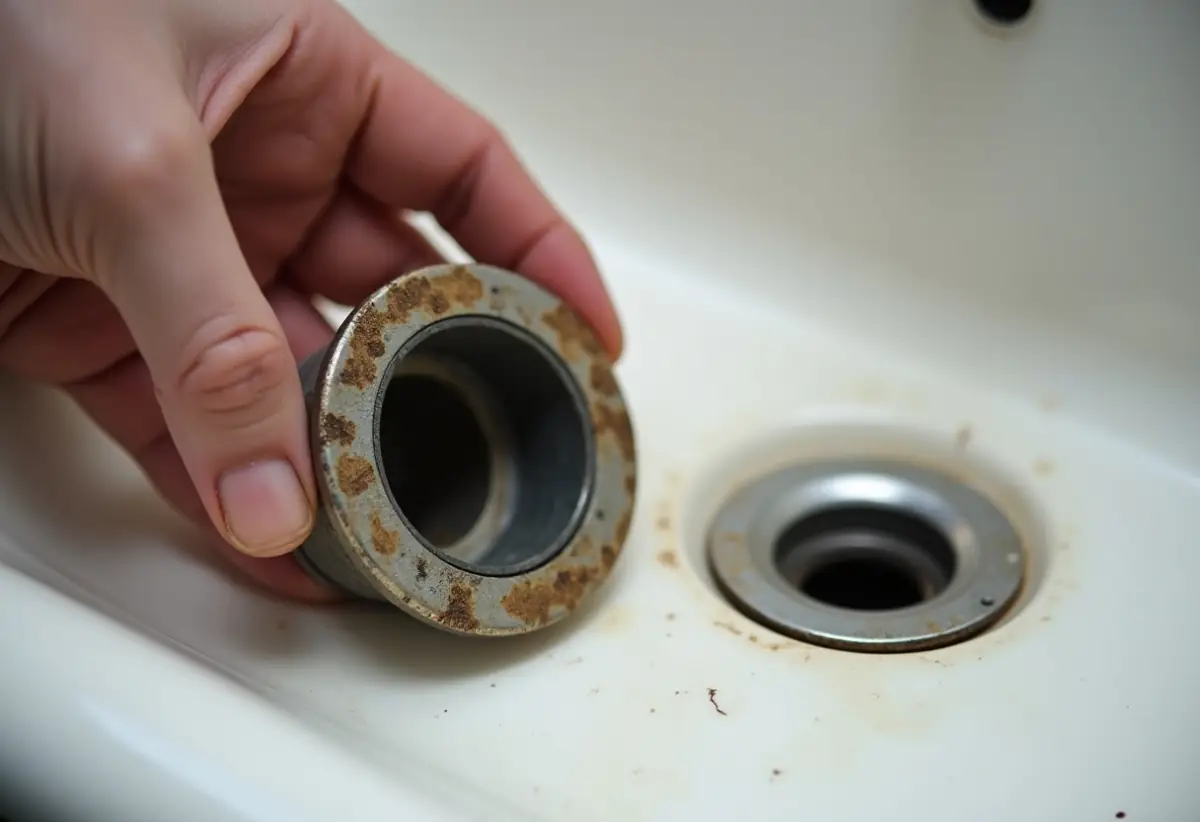
Replace the assembly when the drain body or flange leaks, the finish has worn through, the plastic body has cracked, or the pivot socket leaks even with a new gasket. A stuck, dirty stopper is a cleaning job. A leaking drain body is a replacement job, and it is often cheaper than chasing leaks on a 20-year-old part.
Price spread is mostly finish and mechanism. The Delta RP62472 is a plastic-bodied lever pop-up sold without its lift rod, listed at $55.60 and sold online for $44.48. The Kohler K-7124-A clicker drain is a brass push-style drain with a 1-1/4 inch connection, offered in ten finishes.
Before buying, match three things: overflow or no overflow (a no-overflow drain in an overflow sink lets the basin flood), the 1-1/4 inch tailpiece, and your sink’s thickness. Delta lists its RP62472 for sinks 1-5/8 to 2-3/8 inches thick. A vessel sink or a thick stone top may need a long-body drain, and a mismatch here is the top reason a new pop-up leaks on day one.
What tools do you need to remove a sink stopper?
Most stoppers need only your hands, a bucket, a rag, and a flashlight. Add slip-joint pliers for a stuck pivot nut, a small screwdriver for lift-and-turn set screws, and disposable gloves for the hair. A plastic barbed hair tool costs a few dollars and handles grid drains and the gunk below any stopper.
- Bucket and towel: the tailpiece and trap hold water that drains out when the pivot nut loosens.
- Flashlight or headlamp: the pivot nut sits behind the drain, against the back wall.
- Slip-joint or tongue-and-groove pliers: for crusted pivot nuts and trap nuts. Wrap jaws in tape on chrome.
- Small Phillips and flat screwdrivers: lift-and-turn set screws and toe-touch cores.
- Plastic hair tool and old toothbrush: cleaning the stopper tail, drain throat, and overflow.
How we sourced this
We read Delta Faucet’s metal pop-up installation sheet (model 72177, document 85210 Rev. E, dated December 5, 2023) for pivot nut orientation, hand-tightening, and removable versus non-removable stopper setup. Prices come from manufacturer or authorized dealer pages checked in October 2026: Delta’s parts site (RP62472), PDI Supply (Moen 131553BN), and the Kohler Store run by General Plumbing Supply (K-7124-A). Drain and trap sizes come from the International Plumbing Code 2021, chapters 7 and 10. We also reviewed the top-ranking how-to pages for this query, including Home Depot’s guide. We excluded marketplace resale prices and did not cite any hair-clog share figure because we found no named survey that measures it. Prices change often and vary by finish and retailer.
Frequently asked questions
How do you remove a sink stopper that won’t come out?
Check whether it is a non-removable pop-up first. Many lever stoppers are held by the horizontal pivot rod passing through a hole in the stopper tail, so no amount of pulling frees them. Loosen the pivot nut under the sink, slide the rod back an inch, and the stopper lifts out. If it still sticks, hair wrapped around the tail is usually the cause.
Can you remove a bathroom sink stopper without going under the sink?
Often yes. Push-button, lift-and-turn, flip-it, and toe-touch stoppers all come out from above. Some lever pop-ups are the removable style and lift out after a quarter turn. Only the non-removable lever style, where the pivot rod threads through the stopper itself, forces you to open the cabinet and loosen the pivot nut behind the drain.
How do you unscrew a push-button sink stopper?
Press the button so the stopper pops to its open position, then grip the cap and turn it counterclockwise. On most click-clack drains the cap or the whole stopper spins off a threaded post. A dry rag or rubber jar opener improves grip on chrome. If it spins without loosening, hold the stem below the cap with pliers wrapped in tape.
How do you remove a pop-up drain stopper without tools?
Try lifting and turning it a quarter turn first, since removable pop-ups release that way. If it is held by the pivot rod, the pivot nut under the sink is usually hand tight, and Delta’s own instructions say to hand tighten it during install. Unscrew the nut by hand, pull the rod back, and lift the stopper out from above.
Why won’t my sink stopper close all the way?
The clevis strap is usually set too low on the lift rod, so the stopper runs out of travel before it seats. Loosen the clevis screw, push the stopper fully down, pull the lift rod all the way up, and retighten. A stopper that seats but still leaks water past it needs a new gasket or a cleaning of the drain flange.
Do all sink stoppers come out?
Nearly all of them do, but some take more work. Grid drains have no moving stopper at all, so cleaning them means using a plastic hair tool from above or removing the trap below. Pop-up, push-button, lift-and-turn, toe-touch, and flip-it stoppers can all be removed, though older pop-ups may need the pivot nut freed with pliers.
How often should you clean a bathroom sink stopper?
Pull and rinse it whenever the sink starts draining slower than usual, and many homeowners do it every few months as routine upkeep. Hair, soap, and toothpaste build a sticky mat on the stopper tail that grows fast once it starts. Regular cleaning also removes the film that drain flies breed in, which cuts down on gnats around the vanity.