How to Clean a Garbage Disposal: Safe Steps, Splash Guard, and Smell Fixes
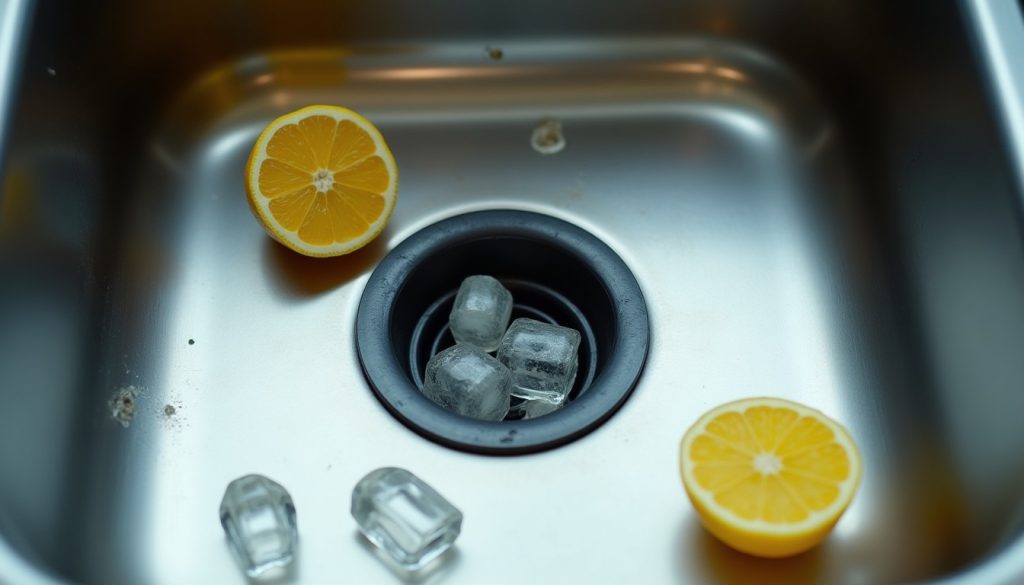
How to clean a garbage disposal safely: cut the power, lift debris out with tongs, scrub the underside of the rubber splash guard, then grind ice, rock salt, or citrus under cold running water.
Key Takeaways
- Kill the power at the wall switch and the breaker (or unplug the cord under the sink) before anything goes into the drain opening, and use tongs, never fingers.
- The underside of the rubber splash guard is where most odor lives. InSinkErator tells owners to remove the baffle and scrub its underside with a scouring pad.
- Ice does not sharpen anything. InSinkErator says its disposals have no blades, only impellers (lugs) that push food against a stationary grind ring.
- Grease is the most common cause of reported sewer blockages, at 47%, according to EPA’s 2004 Report to Congress on sewer overflows.
- Never mix bleach with vinegar or other cleaners. The CDC warns the vapors can be very dangerous to breathe.
- About 51% of US homes had a disposal in the kitchen sink in the 2009 American Housing Survey, released by HUD.
How do you clean a garbage disposal step by step?
To clean a garbage disposal, cut power at the switch and breaker, pull visible debris out with tongs, scrub the splash guard with dish soap and a brush, restore power, grind ice and rock salt with cold water, then finish with baking soda and vinegar or citrus. The whole job takes about 20 minutes and needs no special products.
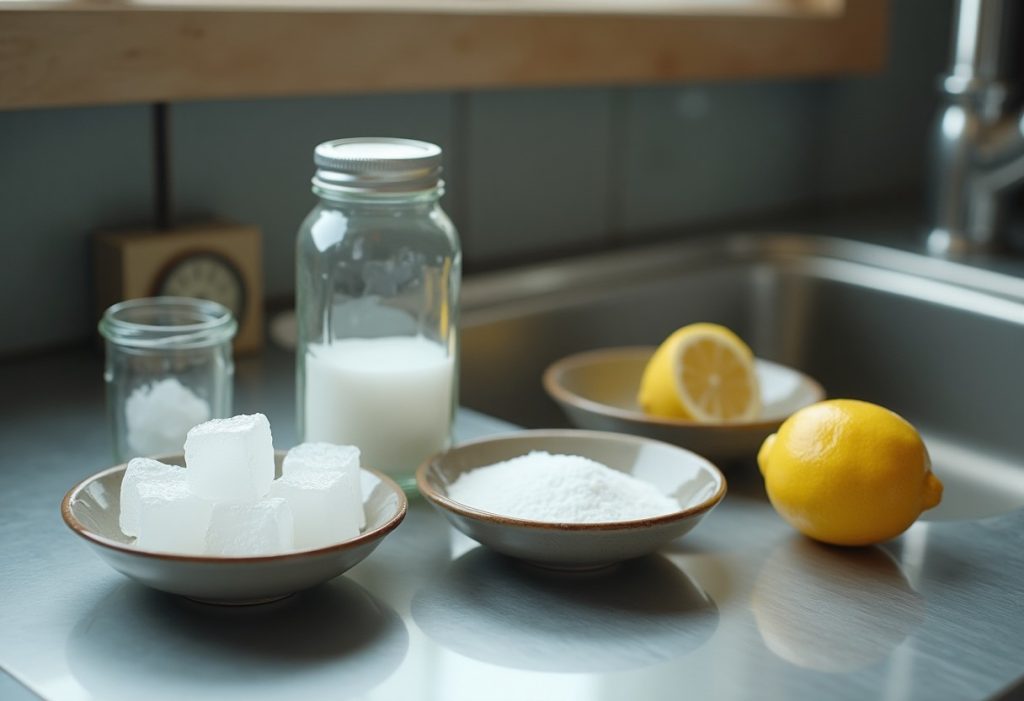
Gather a flashlight, kitchen tongs or long needle-nose pliers, an old toothbrush or bottle brush, dish soap, about 2 cups of ice, 1 cup of rock salt or coarse kosher salt, half a cup of baking soda, a cup of white vinegar, and a lemon. Those amounts match the ratios common retail cleaning guides suggest.
- Cut the power. Flip the wall switch off. If the unit plugs into an outlet under the sink, unplug it. If it is hardwired, switch off its breaker too, then test the wall switch to confirm nothing happens.
- Look before you reach. Shine a flashlight into the drain opening. Lift out bottle caps, fruit pits, twist ties, or bones with tongs or pliers. Never put a hand in the chamber, even with the power off.
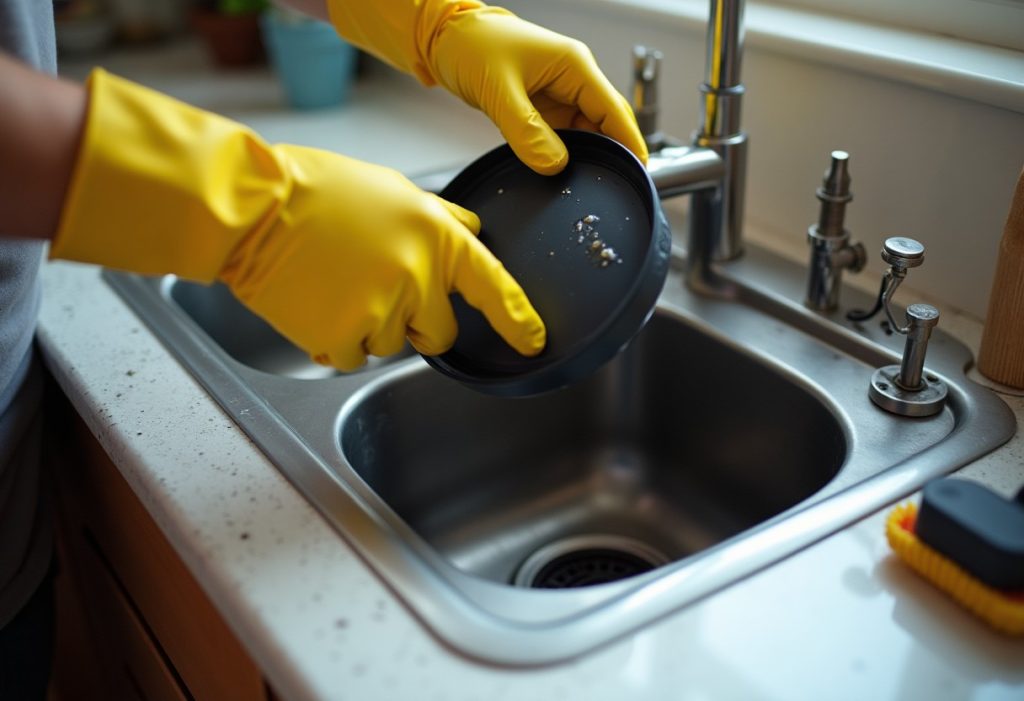
- Scrub the splash guard. Pull it out if it is removable, or fold the flaps up and work a soapy brush around the underside and the collar. Rinse.
- Restore power and run cold water. Use a medium, steady stream, the flow InSinkErator recommends during grinding.
- Scour with ice and salt. Turn the disposal on and feed the ice and rock salt in. Let it grind until the noise settles.
- Deodorize. With the unit off, pour in the baking soda, then the vinegar. Wait 10 minutes, then run cold water and the disposal to flush it.
- Finish with citrus. Feed lemon wedges in one at a time with the unit running and cold water on, then let water run a few seconds after grinding stops.
Step 2 is where people get hurt. A fruit pit or bone shard in the chamber can cut, and tongs reach farther than fingers anyway. The same chamber that hides sharp debris also traps other kitchen culprits, so it’s worth knowing why pouring grease down the drain causes buildup and whether coffee grounds down the drain are just as risky.
Why does my garbage disposal smell?
Garbage disposal smells usually come from a slimy film of food and bacteria on the underside of the splash guard and the walls of the grind chamber. Less often, the odor comes from a clogged dishwasher drain connection, a sink trap that has dried out, or food packed below the grind ring. Clean the guard first, then work down the list.
- Splash guard film. Food splashes onto the underside of the rubber flaps every time you grind, and water never fully rinses it. This dark, slimy layer is the most common source.
- Biofilm in the chamber. Bits of starch and protein cling to the grind ring and the upper chamber walls. Ice and salt or citrus rinds knock most of it loose.
- Dishwasher drain connection. Many dishwashers drain into a small inlet on the side of the disposal. Food can collect in that hose and its knockout port and rot there, which smells like the disposal but will not clear with ice.
- Grease and packed food in the drain. Fat that went down hot hardens in the pipe beyond the unit and traps scraps. Odor plus slow draining points here.
- A dry trap. If the sink sat unused for weeks, the water in the trap can evaporate and let sewer gas back into the kitchen. Running water for a minute refills it.
If the odor comes back within a day or two of a full cleaning, look past the disposal. Our guide to the kitchen sink drain and trap shows how the trap, tailpiece, and dishwasher branch fit together, so you can find where water is sitting. A unit that also hums without spinning or trips its reset button has a mechanical problem, and the steps for a garbage disposal that hums, jams, or will not start come before any cleaning.
How do you clean the garbage disposal splash guard?
Clean the splash guard with the power off, using dish soap and a stiff brush on the underside, where food film collects out of sight. On many InSinkErator models the baffle lifts straight out, so you can scrub it at the sink like a dish. On fixed guards, fold each flap up and scrub around the collar in place.
InSinkErator’s own cleaning instructions say that Evolution Series models come with a removable baffle that sits in the collar of the disposal. Pull it out, rinse it, and wipe off the residue. Its FAQ goes one step further and says to clean the underside with a scouring pad before putting it back.
Whether your guard comes out depends on the model. If you are not sure which type of garbage disposal you own, the model sticker on the bottom of the unit names the series. A torn or stiff guard is cheap to replace.
What about the dishwasher inlet?
If your dishwasher drains through the disposal, check that connection whenever the smell persists. Loosen the hose clamp, pull the hose off the inlet, and clear any packed food from both ends. The setup is explained in our walkthrough of how a garbage disposal is installed, including the knockout plug that must be removed before a dishwasher can drain into it.
Which garbage disposal cleaning method works best?
No single method does everything. Scrubbing the splash guard removes the most odor, ice and rock salt scour the grind parts, baking soda and vinegar freshen light film, and citrus masks smells while the rind scrubs. Use them together in that order for a full clean, and pick one quick method for weekly upkeep.
| Method | What it removes | Time | Caveat |
|---|---|---|---|
| Splash guard scrub (dish soap and brush) | Black slime and food film under the rubber flaps | 5 minutes | Power must be off. Some guards lift out; fixed ones are scrubbed in place. |
| Ice and rock salt | Film on the grind ring and impeller plate | 1 to 2 minutes | Does not sharpen anything. InSinkErator says ice usually melts before it cleans the whole chamber. |
| Baking soda and white vinegar | Light residue and odor | 10 to 15 minutes | Mild fizz only. It will not break up a clog or hardened grease. |
| Citrus wedges or peels | Odor, plus some film scrubbed by the rind | 1 to 2 minutes | Feed one wedge at a time with cool water running, per InSinkErator. |
| Dish soap and cold water flush | Thin grease film on chamber walls | 1 minute | Use cold water while grinding so fat stays solid and gets carried away. |
| Tongs or pliers (power off) | Pits, caps, bones, and other jammed objects | 2 minutes | Never use your hand. Confirm power is off at the breaker or cord first. |
InSinkErator also suggests grinding half a peach with its pit to knock loose stuck food. Its grind guide lists peach pits only for the Power and Advanced series, not the entry Badger Series.
Does ice and salt sharpen garbage disposal blades?
No. Ice and salt cannot sharpen garbage disposal blades because a disposal has no blades. InSinkErator says its units use impellers, also called lugs, mounted on a spinning plate that throw food against a stationary grind ring. The ice and coarse salt still help, because they scour film off those parts while they tumble.
InSinkErator’s explainer on what you can grind calls the mechanism a bladeless grind system, and its how-it-works page compares the grind ring to a cheese shredder. The lugs are blunt by design. They are meant to fling food outward, not to cut it, so nothing about them needs an edge.
The ice trick still earns its place. Hard pieces bounce around the chamber and knock off residue water alone misses, and rock salt adds grit. InSinkErator’s caveat is that ice tends to melt before the chamber is fully clean, which is why the splash guard scrub matters more.
What should you never use to clean a garbage disposal?
Never use bleach mixed with other cleaners, chemical drain openers, or hot grease, and never reach in by hand. InSinkErator warns against bleach and drain cleaners, the CDC warns that mixing bleach with other cleaners releases dangerous vapors, and grease is the single biggest cause of sewer blockages in EPA’s national data.
- Bleach combined with anything. The CDC says never to mix household bleach with other cleaners or disinfectants because the vapors can be very dangerous to breathe. A disposal you just treated with vinegar or a citrus cleaner still holds that residue.
- Chemical drain openers. InSinkErator’s owner guidance for its food waste disposers says bleach and drain cleaners will play havoc with the disposer and should be avoided. Caustic liquid can also sit in the chamber and splash on whoever clears the jam next.
- Grease, oil, and fat. InSinkErator prints NEVER put fats, oils, or grease into the disposal on every series in its grind guide. An EPA fact sheet quotes its 2004 Report to Congress, which found grease from restaurants, homes, and industry caused 47% of reported sewer blockages.
- Hot water while grinding. Hot water melts fat so it hardens farther down the line. Cold water keeps it solid so it gets chopped and carried off.
- Fibrous scraps on a small unit. InSinkErator lists celery, corn cobs, banana peels, and pineapple cores only for its Advanced Series. On an entry model, those strings can wrap around the plate.
- A full pot of pasta or rice. InSinkErator lists both as fine for every series, with proper use. The catch is volume: dumped in all at once, starch swells and packs the trap. Feed small amounts gradually with water running.
- Pre-loading. InSinkErator says water first, then the motor, then food a little at a time.
How often should you clean a garbage disposal?
Clean a garbage disposal lightly once a week and thoroughly about once a month. A weekly round of ice or citrus keeps film down, and a monthly splash guard scrub with baking soda and vinegar handles the rest. InSinkErator says simply using the disposal often, with cold water, keeps food from building up in the chamber.
Adjust the schedule to your kitchen. A family that cooks nightly and drains the dishwasher through the disposal will see film sooner than a couple who eats out.
How many homes need this routine depends a lot on where you live. Disposals have long been common in the West and far rarer in the Northeast. The Census Bureau’s regional profile from the 1995 American Housing Survey is the most recent regional breakdown we could verify.
Source: US Census Bureau, Housing Profile: Regional Differences in Housing, American Housing Survey 1995. Nationally, HUD’s release of the 2009 survey put the share at 51% of homes.
How we sourced this
We reviewed the top-ranking cleaning guides for this query, then went to primary sources for every factual claim. Mechanism, splash guard care, run water, banned items, and grindable foods come from InSinkErator’s US cleaning page, FAQ, myths page, grind guide, and its India owner guidance (consulted October 2026). The grease figure comes from EPA’s foodservice pretreatment fact sheet quoting EPA-833-R-04-001 (2004). The bleach warning comes from the CDC. Ownership shares come from HUD’s 2009 American Housing Survey release and the Census Bureau’s 1995 AHS regional brief, the latest regional split we could confirm; newer regional figures were not found and are excluded. Ingredient amounts reflect common retail guidance and are not lab-tested.
Frequently asked questions
Is it OK to put vinegar and baking soda down a garbage disposal?
Yes. Half a cup of baking soda followed by a cup of white vinegar is a gentle way to loosen light film and cut odor. Let it fizz for about 10 minutes, then run cold water and the disposal to flush it. It will not dissolve a clog or grease buildup, so treat it as a freshener, not a drain opener.
Can I pour bleach down my garbage disposal?
Skip it. InSinkErator warns owners away from bleach and drain cleaners, and the CDC says never to mix bleach with any other cleaner because the vapors can be dangerous to breathe. A disposal often still holds vinegar, citrus, or dish soap residue, so bleach poured in can react with whatever is already there. Dish soap and a brush do the job more safely.
Does ice really sharpen garbage disposal blades?
No. A garbage disposal has no blades to sharpen. InSinkErator says its units use impellers, also called lugs, that throw food against a stationary grind ring that shreds it like a cheese grater. Ice and rock salt still help, because they scour film off the grind ring and impeller plate, but nothing gets sharper.
How do I get rid of a garbage disposal smell?
Start under the rubber splash guard, because that is where rotting film usually sits. Cut the power, scrub the underside with dish soap and a brush, then grind citrus wedges with cold water. If the odor comes back within a day or two, check the dishwasher drain connection and the sink trap, since a clog or a dry trap can smell just like a dirty disposal.
Should I run hot or cold water with a garbage disposal?
Run cold water while you grind. InSinkErator tells owners to turn on cold water before starting the disposal and to let it run a few seconds after grinding stops. Cold water keeps any fat solid so it gets chopped and carried away instead of melting, coating the pipe, and hardening farther down the line where it is harder to reach.
Can I use a chemical drain cleaner in a garbage disposal?
Manufacturers advise against it. InSinkErator says bleach and drain cleaners will play havoc with a disposer, and caustic products can sit in the grind chamber and splash back if someone flips the switch or a plumber has to reach in later. For a slow drain, cut power and clear the chamber with tongs, then snake the line below if needed.
How often should you clean your garbage disposal?
A quick freshen with ice or citrus once a week and a full scrub of the splash guard about once a month suits most households. InSinkErator says frequent use with cold water helps clear scraps before they build up in the chamber. Clean sooner if you notice an odor, see black slime on the splash guard, or the unit sat unused for a week or more.
Can you put lemons in a garbage disposal?
Yes. InSinkErator recommends cutting a lemon or orange into wedges and feeding them in one at a time with the disposal running and a steady stream of cool water. The rind scrubs the grind parts and the oils leave a fresh smell. Cut the fruit small, skip whole lemons, and never pack several wedges in before switching the unit on.
What is the black gunk in my garbage disposal?
The black gunk is a slimy film of food and bacteria that collects on the underside of the rubber splash guard, since water splashes onto the flaps every time you grind but never fully rinses it away. Similar film, made of starch and protein, can also cling to the grind ring and upper chamber walls as biofilm.


