Why Are My Pipes Whistling? Causes, Tests and Fixes
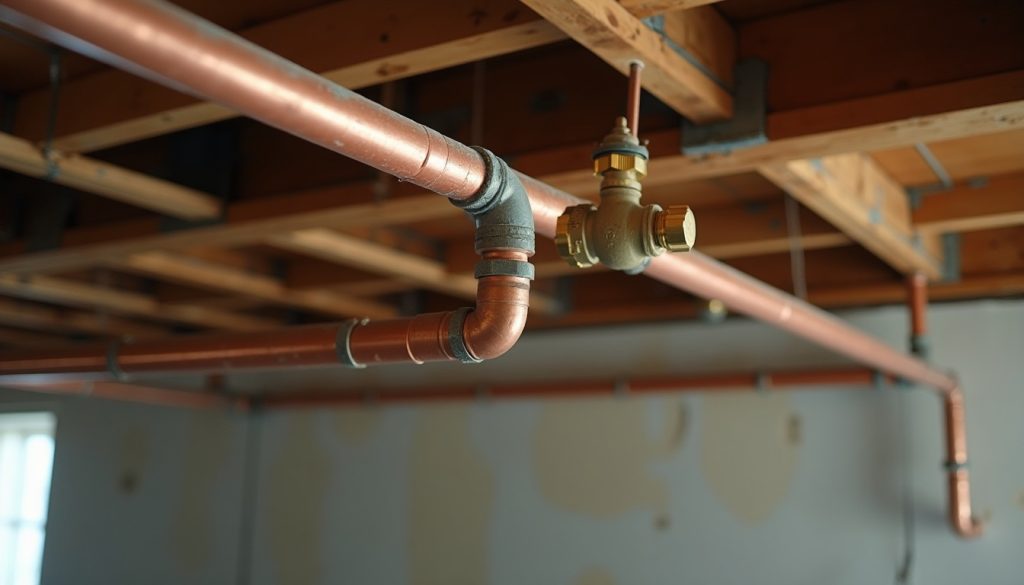
Why are my pipes whistling? Water is forcing through a too-small opening: a worn washer or cartridge, a leaking toilet fill valve, a half-closed valve, scale, or pressure above the 80 psi code limit.
Key Takeaways
- A whistle means restriction. Roto-Rooter says the most common source of a whistling sound in household plumbing is a toilet fill valve that is slowly leaking.
- The International Plumbing Code (Section 604.8) requires a pressure-reducing valve whenever static pressure exceeds 80 psi, and caps pressure at every fixture at 80 psi.
- Watts ships its LF25AUB pressure-reducing valve set at 50 psi, adjustable from 25 to 75 psi, which makes 50 psi a sensible target for most homes.
- IPC Table 604.3 sets the minimum flow pressure at 8 psi for a lavatory, shower or kitchen sink and 20 psi for a close-coupled tank toilet.
- EPA WaterSense estimates a constantly running toilet can waste 200 gallons or more per day, so a toilet that whistles while refilling is costing you money.
- Humming and vibrating usually point to high pressure, loose pipe straps or a well pump, not a worn part. Banging is a separate problem called water hammer.
Why are my pipes whistling?
Pipes whistle when water is pushed through an opening smaller than the one the system was built around. The narrow spot speeds the water up, the fast water turns turbulent, and a loose washer, a valve seat or a scaled-up fitting vibrates like the reed in a whistle. Find the narrow spot and you have found the fix.
The restriction almost always sits in one of seven places: a partly closed or failing valve, a worn washer or cartridge, a toilet fill valve, pressure that runs too high (often a failed pressure-reducing valve), mineral buildup in a fitting, loose pipe straps, or a well pump and pressure switch.
Banging is a different problem. A loud knock when a valve snaps shut is a pressure surge, not a whistle, covered in our guide on how to fix water hammer.
What does each pipe noise tell you?
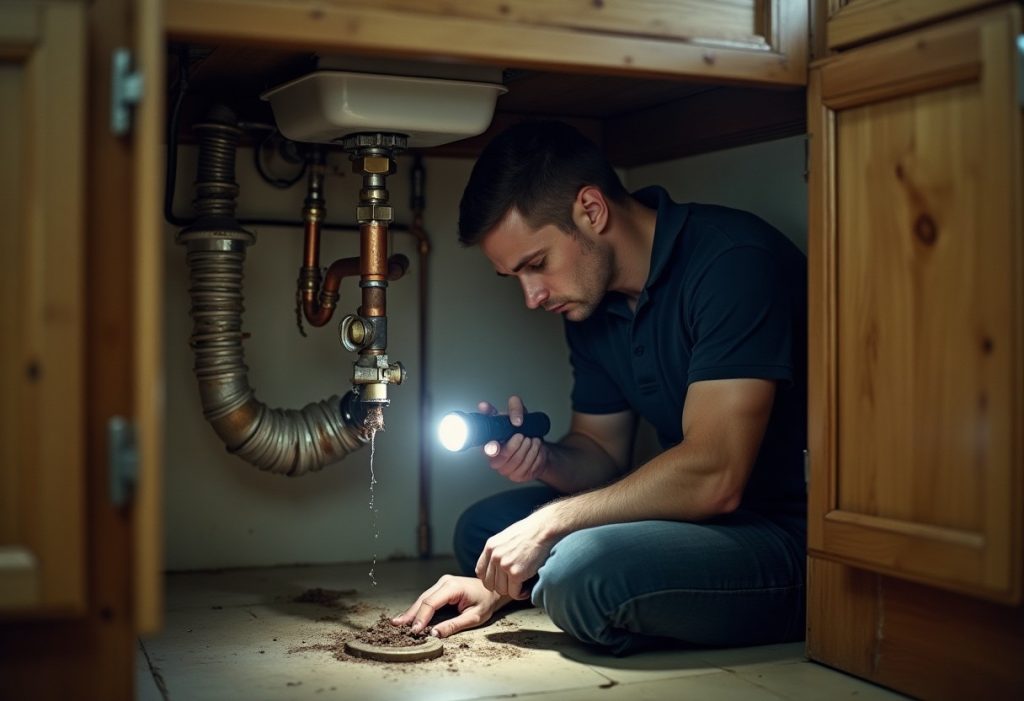
The sound and the moment it happens narrow the cause faster than any tool. A whistle from one faucet points inside that faucet. A whistle every time any tap runs points to the main valve, the pressure-reducing valve or house pressure. A hum without any water running usually points to a pump or appliance. Use the table below as your first pass.
| Sound and when you hear it | Likely cause | Fix |
|---|---|---|
| High-pitched squeal from one faucet, only while it runs | Loose or hardened washer (compression faucet) or worn cartridge | Replace the washer and seat screw, or the cartridge |
| Whistle at one sink that changes as you open the tap | Supply stop (angle stop) under the sink left partly closed | Open the stop fully; replace it if the stem is stuck |
| Whistle or hiss from the bathroom after a flush, or at random | Toilet fill valve worn or partly blocked; flapper leak triggering refills | Clean or replace the fill valve; replace the flapper |
| Whistle at every fixture, worse with several taps open | Main shutoff partly closed, or a failing pressure-reducing valve | Open the main fully; test pressure; replace the PRV |
| Whistle only when hot water runs | Worn hot-side cartridge, scale in the hot line, partly closed water heater valve | Open the heater valve fully; service the cartridge; descale |
| Steady hum or buzz along a pipe run while water flows | Pressure above 80 psi or loose pipe straps | Test pressure; add or tighten cushioned clamps |
| Hum at the pressure tank on a well, with or without taps open | Well pump running, pressure switch chattering, or waterlogged tank | Check switch contacts and tank air charge; call a well pro |
| Hum or whistle only while the washer or dishwasher fills | Appliance inlet (solenoid) valve, or high house pressure | Clean the inlet screen; replace the valve; test pressure |
Why does only one faucet make a high-pitched noise?
A faucet that squeals by itself has a problem inside the faucet or the valve that feeds it. In an older two-handle compression faucet, the rubber washer on the stem goes hard or its screw works loose, and the washer flutters in the stream. In a cartridge faucet, worn seals or scale on the cartridge do the same job. The fix is cheap and usually takes less than an hour.
Before you take the faucet apart, rule out two easy causes. A supply stop under the sink turned only part way open creates the same restriction as a bad washer. Sand and scale packed into the aerator screen can make a faucet sing too.
If both check out, shut off the stops, remove the handle, and pull the stem or cartridge. Replace a compression washer with one of the same size and bevel, and replace the brass screw that holds it. If the stop itself is old and will not open fully, swap it for a quarter-turn ball stop. Our breakdown of types of plumbing valves explains why multi-turn compression stops are the ones that tend to whistle.
Why is my toilet whistling or hissing?
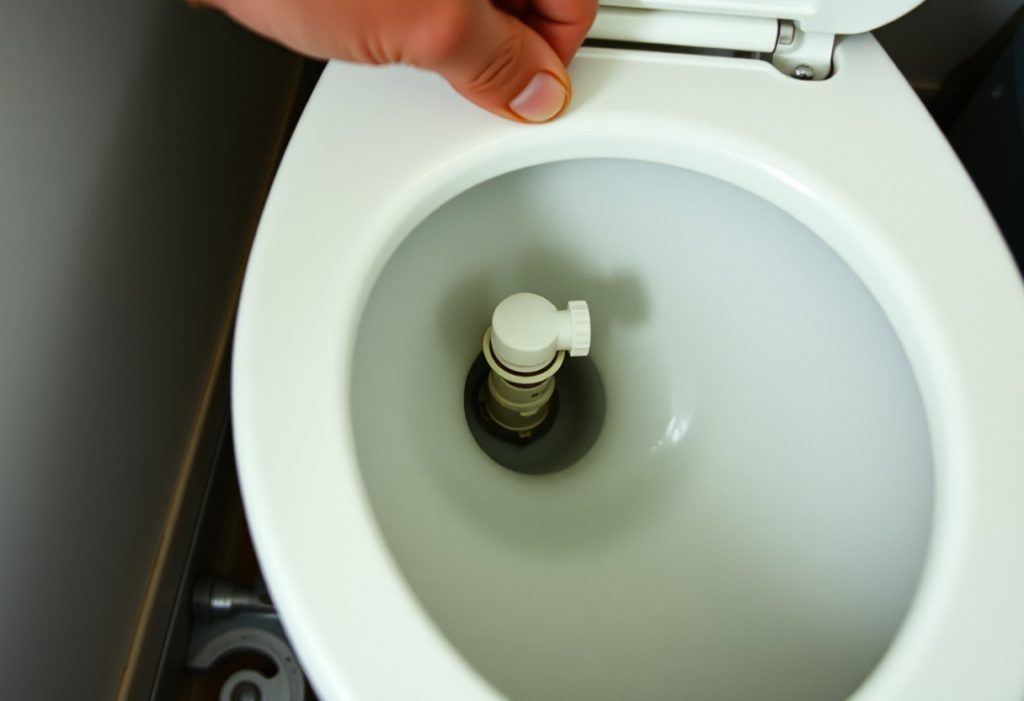
A toilet that whistles while the tank refills has a fill valve that is worn, scaled or partly blocked. Roto-Rooter names a slowly leaking fill valve as the usual source of whistling heard in household plumbing, and it notes the sound tends to come and go. The fix is to adjust the fill valve, and if that fails, replace it.
Take the tank lid off and flush. If the whistle starts as the tank refills and stops when the valve shuts, you have your answer. Old ballcock valves with a brass arm and float ball are the noisiest; a modern float-cup valve such as the Fluidmaster 400A is the common replacement.
A toilet that whistles when nobody has flushed usually has a leaking flapper too, so the fill valve keeps topping off the tank. EPA WaterSense estimates a toilet that runs constantly can waste 200 gallons or more every day, and that leaks in the average household add up to nearly 10,000 gallons a year. Drop food coloring in the tank. If color shows in the bowl within about 10 minutes without a flush, replace the flapper too.
Could high water pressure be why my pipes are whistling or humming?
Yes, and it is the cause to rule out first when the noise shows up at more than one fixture. Water pushed at high pressure moves faster through every valve seat and fitting, and the extra speed turns small restrictions into whistles and long pipe runs into hums. The International Plumbing Code treats 80 psi of static pressure as the ceiling for a home.
IPC Section 604.8 requires an approved pressure-reducing valve where static pressure exceeds 80 psi, and it limits pressure at any fixture to 80 psi under no-flow conditions. The City of College Station, Texas, for example, notes homes built before 2002 may not have one. Local codes may differ.
At the low end, IPC Table 604.3 sets minimum flow pressure at 8 psi for a lavatory, shower or residential sink and 20 psi for a close-coupled tank toilet. A whistle far more often signals too much pressure than too little. For the full picture of where a house should sit, see our guide to normal water pressure for a house.
Chart sources: IPC 604.8, IPC Table 604.3 and the Watts LF25AUB-Z3 specification.
How to test your pressure with a gauge
A screw-on pressure gauge with female hose threads tells you in two minutes whether pressure is the problem. Buy one with a second, maximum-reading needle that holds the highest pressure it sees, so it catches spikes you would otherwise miss.
- Turn off every faucet, appliance and irrigation zone.
- Thread the gauge onto the hose bib closest to where the water service enters the house (or next to the pressure tank on a well).
- Open the hose bib fully and read the needle once it settles. That is your static pressure.
- Leave the gauge in place overnight, then check the maximum needle in the morning.
- Compare the readings. Above 80 psi at any point means the house needs a working pressure-reducing valve.
If you already have a pressure-reducing valve and the reading is high, the valve is likely failing. A worn valve can also whistle on its own. Our guide to the pressure-reducing valve covers how to adjust one and when to replace it. Keep in mind that a working valve closes the system, so the plumbing code also expects thermal expansion control (usually an expansion tank at the water heater) to keep pressure from climbing every time the heater fires.
Why do pipes hum or vibrate when water runs?
A hum is vibration, not restriction. High pressure can make a long run of copper resonate like a guitar string, loose or missing pipe straps let a pipe buzz against studs and joists, and on a private well the pump or its pressure switch can send a hum through the whole system. Appliance fill valves are a fourth, often missed, source.
Start with pressure, since a reading above 80 psi explains both hums and whistles. Then watch exposed runs in the basement or crawlspace while someone runs water upstairs; a pipe that moves needs more straps. Use cushioned clamps, and isolating clamps on copper to avoid galvanic corrosion.
On a well, listen at the pressure tank. A pump that hums and cycles every few seconds usually means a waterlogged tank that lost its air charge, and a buzz at the pressure switch can mean pitted contacts chattering. The switch carries line voltage, so leave both to a well or pump contractor.
If the hum only happens while the washer or dishwasher fills, suspect the appliance inlet valve. Clean the screen where the hose attaches, and replace the valve if the noise continues.
Why do pipes whistle only with hot water or only at night?
When the whistle depends on the time or the tap, the timing is your clue. A whistle only on the hot side points to the hot half of a faucet cartridge, scale that has built up in the hot line, or a partly closed valve at the water heater. A whistle at night, with no taps open, almost always points to a toilet refilling itself.
Hot water drops minerals out of solution faster than cold, so in hard-water areas the hot side scales up first. Check that the cold inlet valve at the water heater is fully open, since a valve left partly closed after a repair restricts every hot tap in the house. Then service the hot side of the faucet that whistles.
For a night whistle, run the toilet dye test first. If every toilet passes, leave your gauge on overnight. Many water systems see less demand at night, so street pressure can rise while you sleep, and the maximum needle will show it.
How do you fix whistling pipes step by step?
Work from the cheapest, most likely cause to the most expensive. Most whistles end at step two or three. Only move on to the pressure-reducing valve or a plumber once the gauge confirms a whole-house pressure problem.
- Find the fixture. Run each tap and flush each toilet one at a time.
- Open every valve fully. Check the stop under the noisy fixture, the main shutoff and the water heater cold inlet. Partly closed valves are the cheapest fix there is.
- Clean the aerator and inlet screens. Scale and sand cause plenty of single-fixture whistles.
- Replace the washer, cartridge or fill valve. Match the part to the faucet or toilet brand. Replace the flapper if the dye test fails.
- Test the pressure. Use the gauge steps above. Anything over 80 psi needs a pressure-reducing valve under the IPC.
- Adjust or replace the pressure-reducing valve. If one is installed and the reading is high, adjust it toward 50 psi. If it will not hold a setting, replace it.
- Secure loose pipes. Add cushioned clamps to any run that moves or buzzes.
- Call a pro for the big jobs. A pressure-reducing valve swap, a main shutoff that will not open, a well pump or pressure switch, or a noise inside a wall usually means shutting off the service and, in many areas, a permit. A hiss with every fixture off and a moving meter suggests a leak, not a noisy valve.
How we sourced this
We reviewed the pages ranking for “why are my pipes whistling” and “pipes humming” in October 2026 (including Roto-Rooter, The Money Pit, Hoffmann Brothers and Thumbtack) to map the causes they cover and the questions searchers ask. Pressure limits come from IPC Section 604.8 and Table 604.3, read via the 2024 Maryland adoption on UpCodes; local codes may differ. Valve settings come from the Watts LF25AUB-Z3 specification, water-loss figures from EPA WaterSense, and utility guidance from the City of College Station, Texas. We excluded repair-cost figures from aggregator pages we could not verify against a named, dated source.
Frequently asked questions
Why are my pipes whistling?
Pipes whistle when water squeezes through an opening that is smaller than it should be. The usual suspects are a worn faucet washer or cartridge, a toilet fill valve that is slowly leaking, a shutoff valve left partly closed, mineral scale inside a fitting, or house pressure that is too high because a pressure-reducing valve has failed. Find which fixture makes it and you have usually found the cause.
Is a whistling pipe dangerous?
A whistle is rarely an emergency on its own, but it is a warning. It often means a valve is wearing out, a toilet is leaking water around the clock, or pressure has crept above the 80 psi limit in the International Plumbing Code. Sustained high pressure strains supply lines, fill valves and the water heater, so test it within a week or two.
Why does my faucet make a high-pitched noise?
A high-pitched squeal from one faucet almost always comes from inside that faucet. In older compression faucets a loose or hardened washer vibrates in the water stream. In cartridge faucets a worn cartridge or a scaled-up aerator does the same thing. Check that the supply stop under the sink is fully open, then replace the washer or cartridge.
Why are my pipes humming?
A steady hum usually means vibration, not restriction. High water pressure can make a long pipe run resonate, loose pipe straps let pipes buzz against framing, and on a private well the pump or a chattering pressure switch can hum through the plumbing. Appliance inlet valves on washers and dishwashers can also hum while they fill.
Why do my pipes whistle at night?
Night whistling is usually a toilet refilling on its own because a leaky flapper let the tank drain, which wakes the fill valve. It can also be higher street pressure, since many water systems see less demand overnight. A gauge with a maximum-reading needle left on a hose bib overnight shows whether pressure is spiking while you sleep.
How do I stop my toilet from whistling?
Remove the tank lid and flush. If the whistle starts as the tank refills, the fill valve is the source. Clean its seal and adjust the float first, as Roto-Rooter advises. If it still whistles, replace the whole fill valve, a job most homeowners finish in under an hour with a sponge, a bucket and an adjustable wrench.
Can high water pressure cause pipes to whistle?
Yes. Water moving faster than a valve or fitting was designed for creates turbulence, and turbulence at a tight spot makes noise. The International Plumbing Code requires a pressure-reducing valve when static pressure tops 80 psi. Watts ships its LF25AUB valve set at 50 psi, adjustable from 25 to 75 psi, so a reading near or above 80 needs attention.
Is whistling noise a serious problem?
A whistle is rarely an emergency by itself, but it is a warning sign. It often means a valve is wearing out, a toilet is leaking water around the clock, or house pressure has crept above the 80 psi limit set in the International Plumbing Code. Sustained high pressure strains supply lines, fill valves and the water heater, so testing within a week or two is advised.


