Does a Home Warranty Cover Plumbing? What 3 Sample Contracts Say
Does a home warranty cover plumbing? Usually yes for leaks, breaks, and clogs inside the foundation, and usually no for sewer laterals, slab work past a small cap, code upgrades, and the water damage itself.
Key Takeaways
- The American Home Shield (AHS), Choice Home Warranty, and First American sample contracts all cover leaks and breaks of water, drain, and vent lines located inside the home’s main foundation.
- Drain clearing has a footage limit: AHS and Choice clear mainline stoppages up to 100 feet from an accessible cleanout, and First American’s California contract goes to 125 feet.
- Roots are the big drain exclusion. AHS and Choice exclude lines stopped by roots even inside the foundation, and First American excludes stoppages caused by roots.
- Pipes in or under concrete are capped at $1,000 per term by AHS, $500 or $1,000 by First American depending on plan, and $500 for any access by Choice.
- Choice caps each covered item at $3,000 per 12-month period and excludes known or unknown pre-existing conditions. AHS and First American cover defects a simple inspection could not have found.
- None of the three restores finished walls or floors past a rough finish or pays for the water damage a leak causes.
Does a home warranty cover plumbing leaks and pipe breaks?
Yes, a home warranty typically covers leaks and breaks in the water, drain, waste, vent, and gas lines that run inside your home’s main foundation, as long as the failure came from normal wear. The AHS, Choice, and First American sample contracts all list that item. The pipe outside the foundation, and the water damage, sit outside the deal.
The foundation line is the key boundary. AHS’s Nevada sample contract (revision 12/22) requires covered items to sit within the main foundation of the home or garage. First American’s California sample (version GCA.B, 03/24) and Choice’s sample agreement use nearly the same rule.
Freezing is the second boundary. First American covers leaks and breaks “except caused by freezing,” and AHS lists freezing among the causes it will not pay for. A copper line that pinholes from age is a warranty claim. A line that splits in a cold snap usually is not.
Corrosion is treated differently by company. First American’s California contract says covered items include malfunctions due to lack of maintenance, rust, corrosion, and sediment buildup. Choice says it covers only failures from normal wear and tear and may ask for maintenance records or home inspection reports when you dispute a denial.
Does a home warranty cover clogged drains and sewer stoppages?
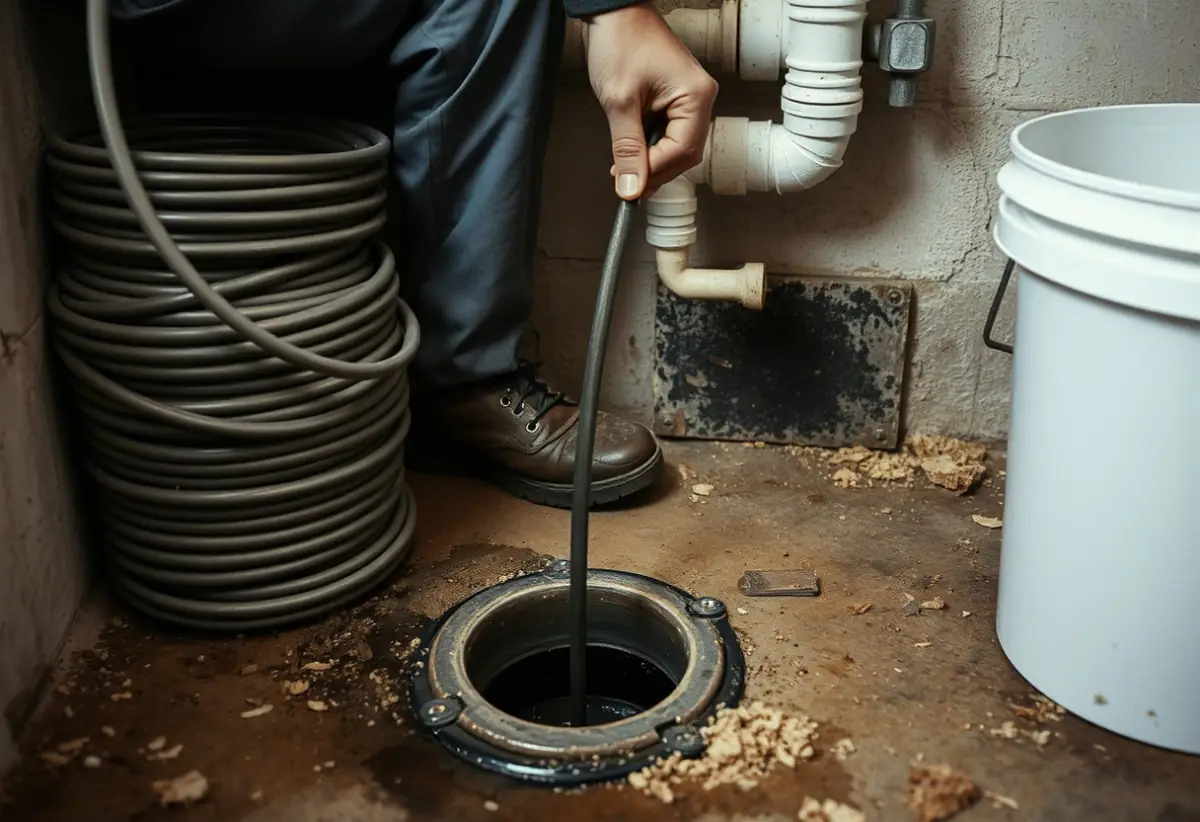
Yes, most home warranties cover clearing clogs in sinks, tubs, showers, and toilets, plus mainline stoppages that a cable can reach through an existing cleanout. The limits are distance and cause. AHS and Choice stop at 100 feet from the access point, First American’s California plan goes to 125 feet, and all three exclude roots and broken lines outside the foundation.
The cleanout clause catches a lot of homeowners. AHS and Choice exclude the cost to locate or open cleanouts that cannot be found, the cost to install a new one, and access through roof vents. First American excludes the same costs on its Starter and Essential plans, then pays up to $250 to install a ground-level cleanout on Premium.
First American also covers hydrojetting when a cable cannot clear a sewer stoppage. AHS and Choice do not mention hydrojetting in their plumbing sections.
Does a home warranty cover slab leaks and pipes under concrete?
Only partly. Home warranties treat pipe in or under a slab as a capped item, and the caps are small next to a real slab repair. AHS pays up to $1,000 per contract term for plumbing reachable only through concrete. First American’s California plan pays $0 on Starter, $500 on Essential, and $1,000 on Premium. Choice limits access to any covered item to $500.
Each cap bundles more than the pipe repair. AHS’s $1,000 covers access, diagnosis, repair or replacement, and returning the opening to a rough finish, with the homeowner paying anything above it. First American’s “Concrete Limit” also includes diagnosis and access. Choice’s $500 is the access limit for roofs, walls, ceilings, floors, and concrete-encased items alike.
Are toilets, faucets, water heaters, and garbage disposals covered?
Toilets and water heaters usually are, while faucets and garbage disposals depend on the plan. AHS and Choice cover toilets, wax ring seals, faucets, shower heads, and shower valves in their base plumbing language. First American covers toilets on every plan but adds faucets and shower heads only on Premium. Tubs, sinks, and shower enclosures are excluded by all three.
The contract sets replacement quality. First American uses a white builder’s standard toilet on Starter and Essential and like quality up to $600 per occurrence on Premium. Choice uses builder’s standard grade for most items.
Water heaters
AHS covers all water heater components and parts, tankless units included, in its base ShieldSilver plan. Choice covers tank and tankless units but excludes expansion tanks, vents, flues, and anything over 75 gallons. First American’s California Starter plan leaves water heaters out, Essential caps them at $1,000, and Premium removes that cap and adds expansion tanks. Our guide to water heater repair covers the common failures these claims involve.
Garbage disposals and sump pumps
The disposal moves around. AHS files it under appliances in ShieldGold, with a $3,000 cap per covered appliance malfunction, so its ShieldSilver plan does not include it. First American covers disposal parts in the plumbing section of its Starter plan. Choice lists the disposal as a covered appliance, with plan-dependent coverage. AHS and First American both cover permanently installed sump pumps that handle ground water only.
What plumbing problems does a home warranty not cover?
A home warranty usually does not cover sewer laterals or water lines outside the foundation, root intrusion, freeze damage, fixtures like tubs and sinks, code upgrades, permits, finished wall or floor restoration, or the water damage a leak causes. Pre-existing problems split the providers. Choice excludes them outright, while AHS and First American cover defects not detectable by a simple inspection.
The table pulls each item from the three sample contracts we read in October 2026. Terms vary by state and plan, so your own contract controls.
| Plumbing item | Commonly covered? | Common limit or exclusion | Source |
|---|---|---|---|
| Leaks and breaks, interior supply, drain, and vent lines | Yes | Inside the main foundation only; freeze damage excluded | AHS NV; First American CA; Choice |
| Sink, tub, shower, and toilet clogs | Yes | Roots and foreign objects excluded by all three | AHS NV; First American CA; Choice |
| Mainline sewer stoppage | Yes, through an existing cleanout | 100 ft (AHS, Choice) or 125 ft (First American); no cost to find or install a cleanout | AHS NV; First American CA; Choice |
| Sewer lateral or water line outside the foundation | No | Stoppages from collapsed or broken lines outside the foundation excluded | AHS NV; First American CA; Choice |
| Slab leak or pipe in concrete | Partly | $1,000 per term (AHS); $0, $500, or $1,000 by plan (First American); $500 access (Choice) | AHS NV; First American CA; Choice |
| Toilets | Yes | Lids and seats excluded (AHS, Choice); $600 per occurrence on Premium (First American) | AHS NV; First American CA; Choice |
| Faucets and shower heads | Varies | Covered by AHS and Choice; First American Premium only | AHS NV; First American CA; Choice |
| Tubs, sinks, shower enclosures | No | Listed as not covered by all three | AHS NV; First American CA; Choice |
| Water heater | Usually | Over 75 gal excluded (Choice); $1,000 cap on Essential, none on Starter (First American) | Choice; First American CA |
| Garbage disposal | Varies by plan | Appliance tier at AHS (ShieldGold); parts on First American Starter | AHS NV; First American CA |
| Code upgrades and permits | Mostly no | Excluded (Choice); $1,000 per term on ShieldPlatinum (AHS); $500 combined on Essential, $1,500 on Premium (First American) | Choice; AHS NV; First American CA |
| Wall, floor, tile restoration | No | Openings returned to a rough finish only | AHS NV; First American CA; Choice |
| Water damage from the leak | No | Secondary or consequential damage excluded | AHS NV; First American CA; Choice |
| Pre-existing conditions | Varies | Known or unknown excluded (Choice); undetectable defects covered (AHS, First American) | Choice; AHS NV; First American CA |
Two more exclusions trip people up. First American’s unknown-defect coverage does not extend to renewal customers or buyers outside a real estate transaction. All three also refuse items under a manufacturer’s warranty or recall, which matters for a newer water heater.
How much does a home warranty pay per plumbing claim?
It depends on the company. AHS’s 2022 sample sets no dollar cap in its plumbing section beyond the $1,000 concrete limit. Choice caps every covered item at $3,000 per 12-month period, with a $500 access limit inside that. First American caps specific pieces, such as water heaters at $1,000 on Essential and toilets at $600 per occurrence on Premium.
On top of the caps, you pay a service call fee each time you open a claim. None of the three sample contracts prints a dollar amount. AHS lets you choose the fee when you buy, and First American and Choice list it on your plan summary pages.
AHS charges one Trade Service Call Fee per trade request, and First American charges once per Trade Call even when the same repair needs several visits. AHS and Choice both send a contractor back without a new fee if a repair fails within 30 days. Compare your fee with what a plumber charges for a service call in your area before you file a claim for a small clog.

How does a plumbing claim work under a home warranty?
You report the problem to the warranty company, not a plumber, and the company picks and dispatches a contractor from its network, usually within 48 hours. The contractor diagnoses the cause, the company decides whether it is covered and whether to repair or replace, and you pay the service fee. Work done without prior approval is generally not reimbursed.
- Report the failure as soon as you find it and before the contract term ends. AHS takes requests 24 hours a day, and First American says a phone call is sufficient notice.
- Limit secondary damage. First American’s contract says you will take reasonable measures to prevent it, so shut the fixture or main valve.
- The company dispatches a network contractor. AHS contacts one within 48 hours under normal circumstances, First American starts service within 48 hours, and Choice dispatches within 48 hours.
- The contractor diagnoses and reports the cause. Roots, freezing, a broken lateral, or a pre-existing defect usually ends the claim here.
- If the claim is denied, ask for a second opinion fast. AHS gives you 7 days and First American gives 14. Both charge another service fee only if the second opinion agrees with the first.
- Pay the service fee, plus any amount above the contract’s cap.
Emergencies follow state rules. AHS’s Nevada contract says service will start no later than 24 hours after an emergency claim, and it cites the Nevada Revised Statutes definition that includes loss of plumbing. Choice’s Utah terms let owners in a qualifying emergency hire an insured provider directly and submit the invoice for reimbursement.
Home warranty or homeowners insurance: which one pays for plumbing?
They pay for different things. A home warranty pays to repair or replace a plumbing part that wore out, such as a leaking supply line or a failed toilet valve. Homeowners insurance pays for sudden, accidental damage, such as the soaked floor and drywall when that line bursts. One plumbing event can involve both, and neither one covers everything.
All three sample contracts exclude the resulting damage. AHS excludes secondary, incidental, and consequential loss, First American excludes secondary damage, and Choice’s agreement has the customer waive consequential damages. Our breakdown of when homeowners insurance covers sudden water damage explains the deductible and the slow-leak exclusions on that side.
The gap between the two is the yard. Warranties stop at the foundation, and homeowners policies often exclude wear on buried pipe, which is why sewer line insurance exists for the lateral to the street.
How we sourced this
We read three publicly posted sample contracts in October 2026, the American Home Shield Nevada consumer contract (revision 12/22), the First American California sample contract (version GCA.B, 03/24), and the Choice Home Warranty sample agreement (undated web version), plus AHS’s plumbing coverage page. We checked top-ranking consumer guides for coverage gaps, but every number here comes from the contracts. We excluded third-party service fee figures because they conflict. Terms vary by state, plan, and purchase date. Providers are named to attribute terms, not to recommend one.
Frequently asked questions
Does a home warranty cover a burst pipe?
Often not, if the pipe burst from freezing. The First American California sample contract covers leaks and breaks except those caused by freezing, and the American Home Shield sample excludes failures due to freezing. A pipe that splits from age or corrosion inside the foundation is usually covered. The water damage the burst causes goes to homeowners insurance, not the warranty.
Does a home warranty cover sewer line replacement?
Rarely. The American Home Shield, Choice, and First American sample contracts all exclude stoppages caused by collapsed or broken sewer lines outside the main foundation, and none of the base plans pays to dig up and replace the lateral to the street. That repair usually needs a separate sewer line add-on, a utility-sold sewer line policy, or out-of-pocket payment.
Does a home warranty cover water damage from a leak?
No. A home warranty pays to fix the failed pipe or part, not what the water ruined. American Home Shield excludes secondary and consequential damage, First American excludes secondary damage, and the Choice agreement has the buyer waive consequential damages. Wet drywall, flooring, and cabinets after a sudden leak are a homeowners insurance question, subject to that policy’s deductible and its own exclusions for slow leaks.
Does a home warranty cover a slab leak?
Partly, and only up to a small cap. American Home Shield pays up to $1,000 per contract term for plumbing reachable only through concrete. First American’s California sample pays nothing on its Starter plan, $500 on Essential, and $1,000 on Premium. Choice limits access to any covered item, concrete included, to $500. A full slab repair or reroute often runs past those caps.
Does a home warranty cover tree roots in the sewer line?
Generally no. American Home Shield and Choice exclude lines broken, infiltrated, or stopped by roots even inside the main foundation, and First American excludes stoppages caused by roots. The warranty contractor may still clear an ordinary clog through an existing cleanout, but if the camera shows roots, expect the claim to be denied and the root work billed to you.
Can I use my own plumber with a home warranty?
Usually not without approval. All three sample contracts give the company the right to choose the contractor and refuse to reimburse work done without prior authorization. Choice’s terms for Oregon residents describe an option, in certain cases, to use your own provider after it approves an itemized diagnosis. In a qualifying emergency, the Choice terms for Utah residents let you call a qualified, insured provider directly and submit the invoice.
Is a home warranty worth it for plumbing?
It depends on your house. Many plumbing problems are small jobs like clogs, toilet parts, and short pipe repairs, where a service fee may not save much over paying a plumber. The value rises with an older water heater, many fixtures, or frequent clogs inside the foundation. It falls if your real risk is a sewer lateral, a slab leak, or code-driven repiping.