Toilet Keeps Clogging? The Real Causes, a Test for Each, and the Fix
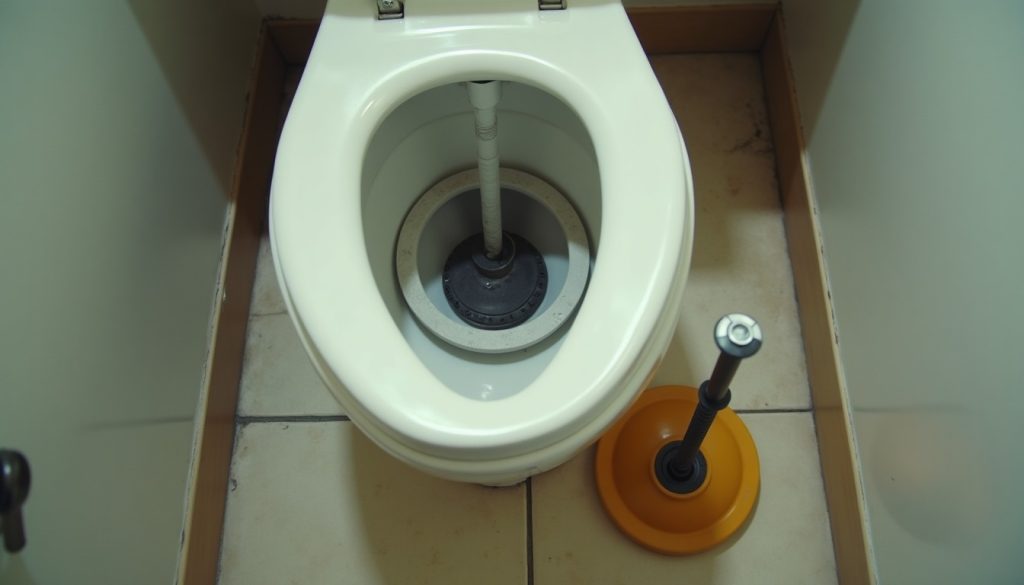
Toilet keeps clogging? The cause is almost always one of six things: a weak early low-flow bowl, too much paper or wipes, an object in the trapway, a blocked vent, a main-line problem, or a full septic tank.
Key Takeaways
- Early 1.6-gallon toilets built to the Energy Policy Act of 1992 are the classic repeat cloggers: in the first MaP report (2003), about half of the models tested failed to clear 250 grams, per PHCP Pros.
- A WaterSense toilet must clear 350 grams of test media in at least 4 of 5 flushes while using 1.28 gallons or less, per the EPA WaterSense specification.
- MaP testing scores toilets from 250 to 1,000 grams; MaP calls 500 grams or more “exceptional” and sets its PREMIUM tier at 600 grams.
- None of the 23 “flushable” wipes in a 2019 Toronto Metropolitan University (then Ryerson) study fully broke down in its disintegration test.
- If two or more fixtures back up or gurgle together, the problem is the vent or the main line, not the toilet.
- Septic homes should have the tank pumped about every 3 to 5 years, per EPA SepticSmart; a full tank shows up first as slow, clog-prone toilets.
Why does my toilet keep clogging?
A toilet keeps clogging because something is shrinking its flush or narrowing its path. Inside the toilet, that means a weak bowl design, low tank water, a flapper that closes early, scaled jets or an object stuck in the trapway. Outside it, the culprit is a blocked vent, a partly blocked main line, tree roots or a full septic tank. One quick test separates the two groups.
Run the isolation test first. Flush the toilet while someone watches the tub and the nearest floor drain, then run the washing machine or a bathtub full of water and watch the toilet bowl. If water rises in the tub, or the bowl bubbles and gurgles, the problem sits downstream of the toilet.
If only the toilet misbehaves, the fault is in the fixture. Plunge or auger to clear the clog in front of you first, then work through the tests below so it does not come back next week.
| Cause | Quick test | Fix |
|---|---|---|
| Early low-flow toilet (1990s 1.6 gpf) | Check the date stamped inside the tank; note if normal use needs double flushes | Replace with a WaterSense model scoring 500 g or more on MaP |
| Too much paper or any wipes | Clogs follow certain users or habits; paper wad comes back on the plunger | Flush mid-use, switch to a thinner paper, trash all wipes |
| Low tank water level | Lift the lid: water sits below the fill line or the mark on the overflow tube | Raise the float on the fill valve |
| Flapper closes too early | Watch a flush: flapper drops before the tank is mostly empty | Shorten chain slack or replace the flapper |
| Scaled rim holes and siphon jet | Swirl is weak; water drops straight down instead of spinning | Clear holes with a wire, soak scale with vinegar |
| Object in the trapway | Plunger clears it, clog returns within days; auger hits something hard | Pull the toilet and push the object out from the bottom |
| Blocked vent | Gurgling, bubbles in the bowl, slow drains across the bathroom | Clear the roof vent opening (often a pro job) |
| Main line or tree roots | Tub or floor drain backs up when the toilet flushes | Snake from the cleanout, then a camera inspection |
| Full septic tank | Lowest fixtures slow first; wet or smelly ground over the drainfield | Pump the tank and have it inspected |
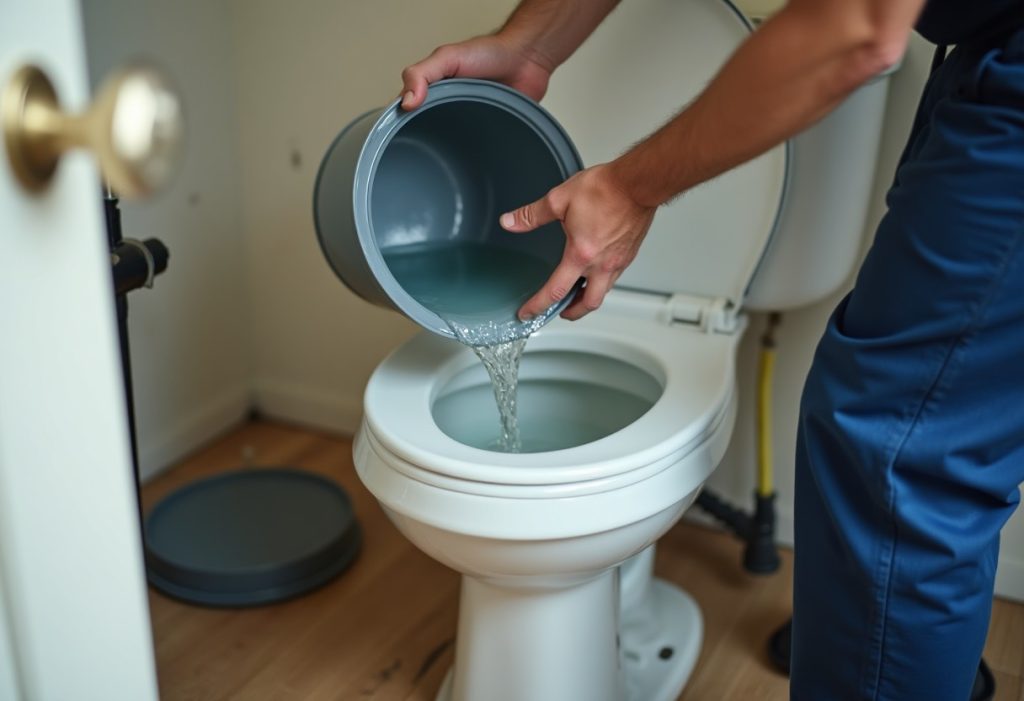
Is your toilet too weak to flush?
An early low-flow toilet is the most common reason a toilet keeps clogging with normal use. When the Energy Policy Act of 1992 capped toilets at 1.6 gallons per flush, many makers shrank the water without redesigning the bowl. EPA says those 1990s models “were sometimes associated with performance issues (e.g., requiring double flushing).” Modern bowls fixed that through better trapway and jet design.
The independent proof came from MaP (Maximum Performance) testing. When Koeller and Company and Veritec Consulting released the first MaP report in 2003, about half of the models tested failed the 250-gram minimum, according to a PHCP Pros history of water efficiency.
MaP tests each toilet to failure with 50-gram soybean paste samples, adding 50 grams at a time. The thresholds come from medical studies of human waste mass, per the MaP testing FAQ: 250 grams covers the 95th percentile of males and 350 grams the 99th percentile.
Sources for the chart: MaP testing FAQ and PREMIUM criteria; EPA WaterSense tank-type toilet specification; PHCP Pros for the 2003 minimum. If your toilet predates the 2000s and clogs weekly, the bowl design is a prime suspect.
Weak flushes also come from parts you can fix in 10 minutes. Check that the tank water reaches its fill line, that the flapper chain has only slight slack, and that the rim holes under the bowl lip are not crusted with scale. In hard-water areas, a blocked siphon jet (the hole at the bottom front of the bowl) can cut flush energy sharply.
Are too much paper and wipes causing the repeat clogs?
Yes, in a large share of homes. Paper volume and wipes are the habit-driven cause of a toilet that keeps clogging, and the tell is a pattern: the clog follows one user, one time of day, or the weeks after a new paper brand. Thick, multi-ply paper breaks down more slowly, and wipes barely break down at all. If wipes are part of the routine, flushable wipe testing explains why “flushable” labeling rarely matches drain reality.
The wipe evidence is strong. Toronto Metropolitan University (then Ryerson) tested 101 single-use wipes in 2019, including 23 labeled flushable, in a rig built to mimic a home toilet and drain line. In the university’s flushability report, none of the flushable products fully broke down, and only 2 even partly disintegrated.
- Flush mid-use when a lot of paper is needed. Two small flushes beat one big wad.
- Keep a lidded trash can by the toilet for wipes, hygiene products, cotton balls, floss and paper towels.
- Kids are a top source of trapway objects. Toys, toothbrushes and combs often enter during bath time.
Could something be stuck in the toilet trapway?
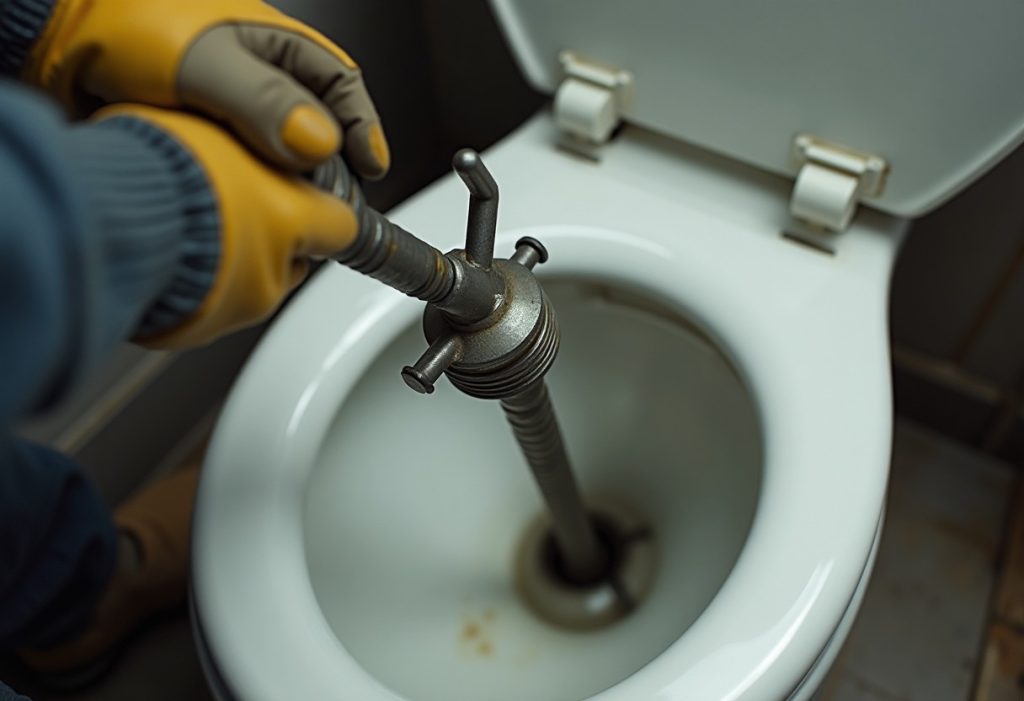
A partial obstruction in the trapway is the likely cause when a plunger clears the clog but it returns within days. A toy, comb, pen cap or wad of wipes can lodge at a bend and leave a gap that water passes but paper cannot. Each flush adds paper to the snag until the trapway seals again, so the clog keeps coming back.
Test it with a closet auger. Feed the cable through the bowl outlet and crank; if it hits something hard, or pulls back fragments of plastic or fabric, an object is stuck. A small hand mirror and flashlight held in the bowl outlet can sometimes show it.
When the auger cannot hook it, pull the toilet. The process is short:
- Shut the supply valve, flush, and sponge out the tank and bowl.
- Disconnect the supply line and remove the two closet bolt nuts.
- Lift the toilet onto an old towel, flip it, and look up the outlet.
- Push the object back out toward the bowl or pull it from the outlet side.
- Reset the toilet on a new wax ring and retighten the bolts evenly.
Scale inside the trapway acts like a partial obstruction too. Hard-water deposits roughen the glaze and catch paper, which is one reason older toilets clog more as they age.
Can a blocked vent make a toilet keep clogging?
Yes. A blocked plumbing vent starves the drain of air, so the toilet loses the siphon that pulls waste out of the bowl and the drain line runs slow. The result looks like a toilet that keeps clogging, but the fault sits in the pipe above the roof. Gurgling, bubbles in the bowl and a slow sink in the same bathroom are the giveaways.
Every toilet drain ties into a vent that lets air in behind the moving water. If you are not sure how the vent stack ties into the drain, the short version is this: no air in, no strong flush out. Leaves, bird nests, debris and frost in cold climates are common blockages at the roof opening.
- Signs it is the vent: gurgling after a flush, bubbles in the bowl when the tub drains, weak flush with a full tank, sewer odor in the bathroom.
- Signs it is not: only the toilet is slow, and every other fixture in the room drains fast and silently.
Clearing a vent means working on a roof with a garden hose or a snake. Many homeowners hand it to a plumber, and in many areas a vent repair that changes pipe layout may need a permit depending on local code.
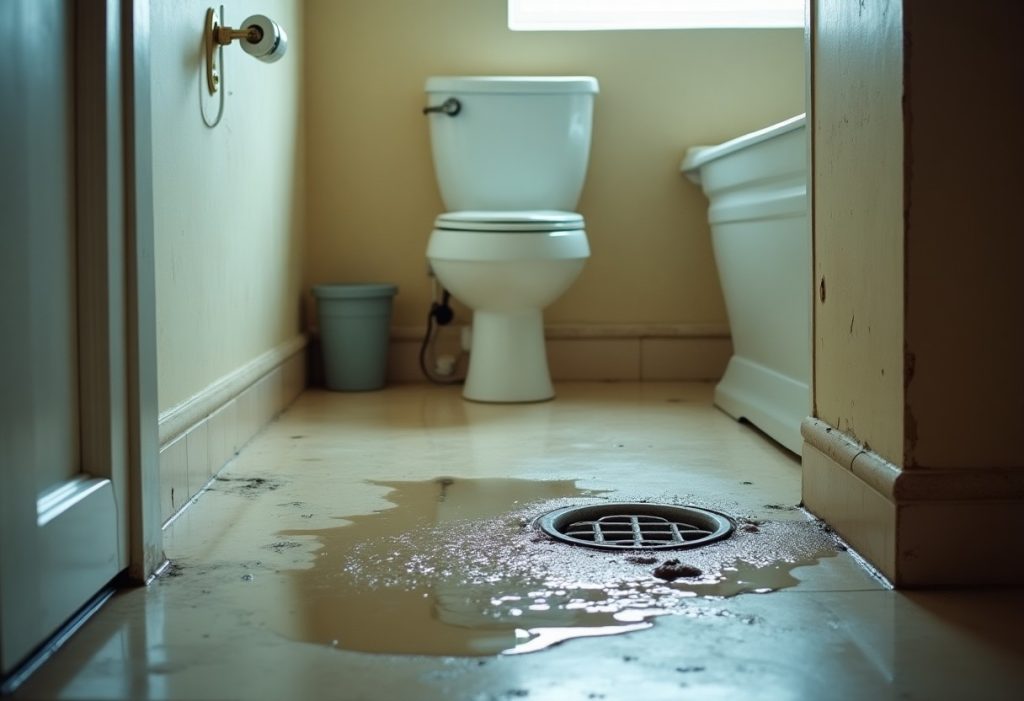
How do you tell if the main sewer line is the real problem?
The main sewer line is the problem when more than one fixture reacts to a flush. Water rising in the tub or shower, a floor drain backing up, or a toilet that gurgles when the washing machine drains all point downstream. The toilet is usually the first to show it because it sends the biggest slug of water and solids into the line.
Main-line clogs come from grease, wipes, roots, sagging pipe sections and broken joints. Tree roots are a common repeat offender in older clay and cast-iron lines, where they enter through joints and catch paper. The pattern often repeats every few months after a cleaning, because snaking cuts roots but does not remove them.
Learn the signs of a main sewer line clog before you call. A plumber will usually open the outside cleanout, check whether it is full of standing water, run a cable or jetter, and then send a camera down to look for roots, bellies or breaks.
What about homes on septic?
On septic, a full tank or a failing drainfield backs effluent up into the house, and the toilets and lowest drains slow first. EPA SepticSmart says household tanks are typically pumped every 3 to 5 years and inspected at least every 3 years. Soggy ground or odor over the drainfield points the same way.
When should you replace a toilet that keeps clogging?
Replace the toilet when it, and not the pipe, is the weak link. That means an early 1990s low-flow bowl, routine double flushing, a cracked or heavily scaled trapway, or repeat clogs after the vent and drain line test clear. A new toilet costs less over time than monthly plunging, and modern bowls use less water with stronger flushes.
Shop by two labels. The WaterSense label means the model passed the EPA WaterSense toilet certification, which includes the 350-gram flush test. The MaP score tells you how far past that floor it goes; for a home with a clogging history, aim for 600 grams or more.
Bowl style matters too. Pressure-assist models push water with stored air pressure and clear heavy loads well, while gravity and dual-flush models are quieter and cheaper to repair. Our guide to gravity, pressure-assist and dual-flush toilets compares them side by side.
- Fully glazed trapway: smoother surface, less paper catch.
- Check the MaP report for the exact model number, not just the brand family.
- Match the rough-in (the distance from wall to flange bolts) before you buy.
How we sourced this
We reviewed the top-ranking pages for “toilet keeps clogging” and the People Also Ask questions in October 2026 to map what readers want, then went to primary sources for every number: the EPA WaterSense residential toilets page and tank-type toilet specification, the MaP testing FAQ and PREMIUM criteria, the 2019 Toronto Metropolitan University flushability report, and EPA SepticSmart. The 2003 MaP failure share comes from a PHCP Pros history that cites the original Koeller and Gauley report. We excluded contractor marketing claims and any cost or failure figure we could not trace to a named source.
Frequently asked questions
Why does my toilet keep clogging all of a sudden?
A toilet that starts clogging suddenly, after years of working fine, usually has something new in the trapway, such as a toy, comb, wipe or wad of paper towel lodged at a bend. If other drains also slowed at the same time, suspect the main sewer line or a blocked roof vent instead. A sudden change points to a new obstruction, not a bad toilet design.
How do I stop my toilet from clogging so easily?
Use less paper per flush and flush mid-use if needed, put every wipe in the trash, and set the tank water to its fill line. Clean mineral scale out of the rim holes and siphon jet. If the toilet is an early 1990s 1.6-gallon model, replacing it with a WaterSense toilet that scores 500 grams or more on MaP testing usually ends the problem.
Can a clogged plumbing vent cause a toilet to clog?
Yes. A blocked vent starves the drain of air, so water drains slowly and the flush loses the siphon that pulls waste out of the bowl. Common signs are gurgling, bubbles rising in the bowl when another fixture drains, slow drains across a bathroom group, and sewer odor. Leaves, bird nests and frost are typical blockages at the roof opening.
When should I replace a toilet that keeps clogging?
Replace it when the toilet itself is the weak link: it is an early 1990s low-flow model, it needs double flushes for normal use, the trapway is scaled or chipped, or it keeps clogging after the vent and drain line test clear. A new WaterSense toilet must clear at least 350 grams of test media in EPA certification, and many models score far higher.
What is a good MaP score for a toilet?
MaP testing scores toilets from 250 grams up to a maximum of 1,000 grams of soybean paste test media. MaP says any model that flushes 500 grams or more gives exceptional performance, and its MaP PREMIUM tier requires 600 grams at 1.1 gallons per flush or less. For a home with a clogging history, 600 grams or more is a sensible target.
Do flushable wipes clog toilets?
They can, and they often do. In a 2019 Toronto Metropolitan University (then Ryerson) study of 101 single-use wipes, none of the 23 products labeled flushable fully broke down in the disintegration test. Wipes snag in the trapway, on rough pipe joints and on roots in the sewer line, where they catch paper and build a repeat clog.
Why does my toilet clog with only a little toilet paper?
If a small amount of paper clogs it, the toilet is not delivering a full flush. Check that the tank fills to its fill line, that the flapper stays open long enough, and that the rim holes and siphon jet are free of scale. If all three check out, look for a partial obstruction in the trapway or a blocked vent.
Why is my toilet keep getting clogged after I poop?
A toilet keeps clogging because something is shrinking its flush or narrowing its path. That can mean a weak bowl design, low tank water, a flapper that closes early, scaled jets, or an object stuck in the trapway. It can also be a blocked vent, a partly blocked main line, tree roots, or a full septic tank.


