Slab Leak: Signs, Causes, Detection, Repair Cost and Insurance
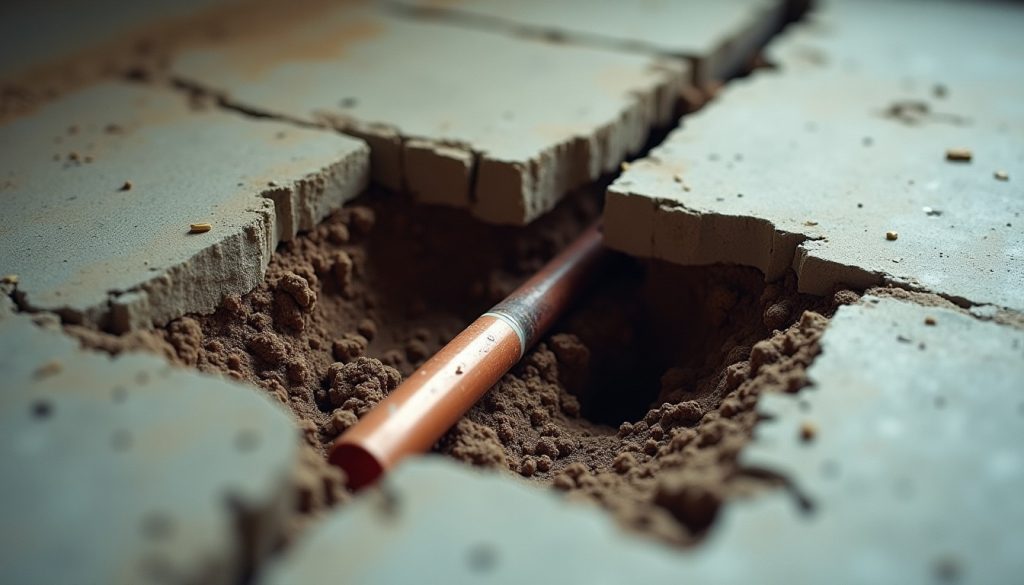
A slab leak is a broken water pipe under your concrete foundation; it typically costs $630 to $4,400 to fix, and insurance often pays for access and water damage but not the pipe itself.
Key Takeaways
- Typical slab leak repair runs $630 to $4,400, with a $2,280 national average, according to HomeAdvisor’s June 2026 cost guide.
- Electronic leak detection adds $150 to $400 (HomeAdvisor), and it is the step that decides how much concrete gets broken.
- Rerouting a full system overhead costs $4,000 to $15,000 per Fixr.
- Water damage and freezing claims hit about 1 in 60 insured homes a year, averaging $15,400 per claim over 2019 to 2023, per the Insurance Information Institute.
- Many HO-3 policies pay tear-out and water damage for a sudden leak but exclude the pipe repair and leaks lasting 14 days or more.
- A warm spot on the floor points to the hot line; a meter that spins with every fixture off confirms a leak somewhere on the system.
What is a slab leak?
A slab leak is any leak in a water supply or drain pipe that runs in or below a concrete slab foundation. Homes built slab-on-grade, common across Texas, Florida, California, Arizona and much of the Sun Belt, route copper or plastic supply lines through the gravel under the slab. When one of those buried pipes fails, the water has nowhere visible to go, so it soaks the soil and creeps up through the floor.
Most slab leaks are on supply lines, which stay under pressure 24 hours a day. Drain leaks under a slab only leak when fixtures drain and usually show up as odors or slow drains. This guide covers supply-side leaks, the kind that spin a water meter.
What are the signs of a slab leak?
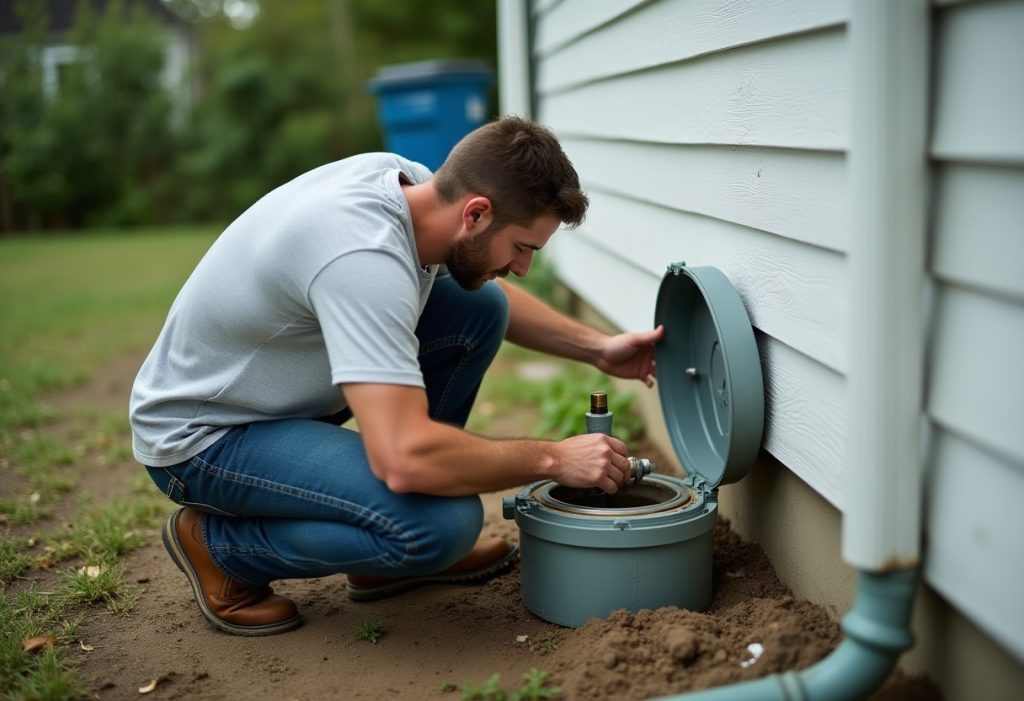
The clearest signs of a slab leak are a water meter that moves with every fixture off, a warm or hot patch on a tile or concrete floor, the sound of running water when nothing is on, and a water bill that jumps with no change in use. Damp carpet, warped wood flooring, musty odors and new floor cracks are later signs that water has been escaping for a while.
- Running meter. The leak indicator (a small triangle or dial on most meters) turns while the house is silent.
- Warm floor spots. A hot-water line leaking under the slab heats the concrete above it.
- Sound of water. A faint hiss or rush near a floor, baseboard or the water heater with all taps closed.
- High bill. The EPA WaterSense program says the average household’s leaks waste more than 9,300 gallons a year, and a slab leak running around the clock can far exceed that.
- Wet flooring. Damp carpet pad, cupped hardwood or loose tile.
- Cracks. New cracks in the slab, flooring or drywall, or doors that start sticking, can mean water is moving soil under the foundation.
How to confirm it with a meter test
A 30-minute meter test confirms a leak before you pay anyone and rules out a running toilet or irrigation zone.
- Turn off every fixture, the ice maker, the irrigation controller and any water softener regeneration.
- Check that toilets are not running by putting food coloring in each tank and waiting 10 minutes. Color in the bowl means a flapper leak, not a slab leak.
- Find the meter (usually in a box at the curb) and note the reading or watch the leak indicator.
- Wait 30 minutes without using water, then read it again. Any movement means water is leaving the system.
- Close the cold inlet valve on top of the water heater and repeat. If the meter stops, the leak is on the hot side; if it keeps moving, the leak is on the cold side or the main service line.
If the meter moves with the house main valve closed, the leak is outside, on the buried line between meter and house. That is a repair to the buried water service line, a different job with different access and often a different insurance answer.
What causes a slab leak?
Slab leaks usually come from corrosion, abrasion or movement acting on pipe that cannot be inspected. Copper lines thin from the inside out with aggressive water, rub against gravel or concrete as they expand and contract, and get stressed when expansive soil shifts. Poor original installation, such as kinked soft copper or joints buried under the slab, and high water pressure speed up every one of these. High water pressure also strains fixtures above the slab, so check out shower pan testing when ceiling stains or loose tile appear nearby.
| Cause | What happens | Who is most at risk |
|---|---|---|
| Internal corrosion | Acidic, very soft or chloraminated water pits copper until pinholes open | Homes with older copper supply lines |
| Abrasion | Hot lines expand and contract daily and rub against gravel, rebar or concrete edges | Hot-water lines without protective sleeving |
| Soil movement | Expansive clay swells and shrinks with moisture, bending pipe; earthquakes do the same | Clay soils in Texas, Oklahoma, Colorado and parts of California |
| Installation defects | Kinked soft copper, nicked pipe, or fittings buried under the slab where they cannot be reached | Any slab home; often shows within the first decade |
| High water pressure | Static pressure above 80 psi strains every joint and pinhole | Homes without a working pressure reducing valve |
The International Plumbing Code, Chapter 6, caps static supply pressure at 80 psi and calls for a pressure reducing valve above that. An inexpensive pressure gauge threaded onto a hose bib tells you where your house sits. Pressure over 80 psi is a cheap fix that protects the whole system, including the pipes you cannot see.
How do plumbers find a slab leak?
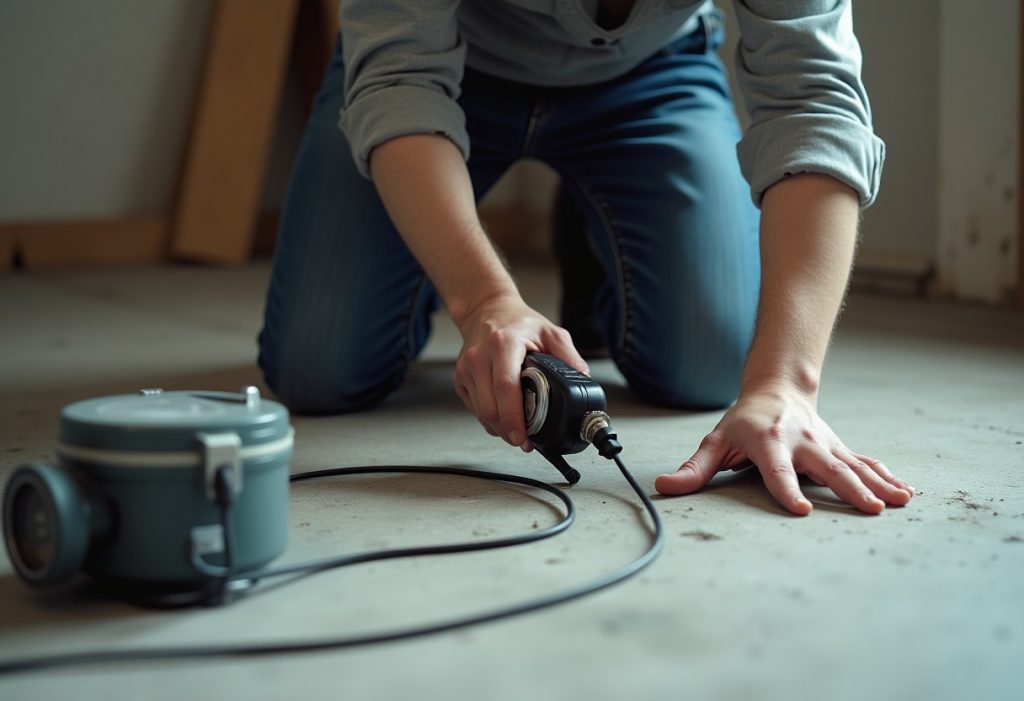
Plumbers find a slab leak in two stages: confirm and isolate it with a pressure test, then pinpoint it with acoustic listening, thermal imaging or tracer gas. A competent locate narrows the leak to a spot a foot or two across, which keeps the concrete cut small. HomeAdvisor puts detection at $150 to $400, and Fixr at $100 to $400.
| Method | How it works | Best for | Limits |
|---|---|---|---|
| Pressure test | Each line is isolated and pressurized; a gauge that drops confirms a leak on that line | Proving which line leaks (hot, cold, branch) | Confirms, but does not pinpoint location |
| Acoustic listening | Ground microphones and headphones pick up the sound of water escaping under pressure | Most pressurized supply leaks | Background noise, thick tile or deep pipe can muffle the sound |
| Thermal imaging | An infrared camera shows the heat plume above a hot-water leak | Hot-side leaks, radiant patterns under tile | Weak on cold lines; carpet and rugs blur the image |
| Tracer gas | The line is drained and filled with a hydrogen and nitrogen mix that a sniffer detects where it escapes | Quiet or very small leaks acoustic gear misses | Slower and usually priced higher |
| Video camera | A camera is fed through a drain line to see cracks or separations | Under-slab drain leaks | Not usable inside small supply pipe |
Ask the detection company to mark the spot and give you a written report; your insurer and repair plumber both need it. Our guide to professional leak detection methods covers the equipment and DIY limits in more depth.
How much does slab leak repair cost?
Slab leak repair usually costs $630 to $4,400, with a $2,280 average, according to HomeAdvisor’s June 2026 data. The method sets the price: a sealed pinhole or single spot repair sits at the low end, tunneling and pipe lining in the middle, and rerouting the whole system overhead at $4,000 to $15,000. Detection, floor replacement and water damage cleanup are often billed on top.
Chart sources: detection and single-line reroute from HomeAdvisor (June 2026); break-the-slab, tunneling, lining and whole-house reroute from Fixr. Bars scale to the top of each range.
Three things move a quote more than the pipe repair itself. First, access: a leak under a closet costs far less to reach than one under a kitchen island or a stone floor. Second, flooring: matching tile or hardwood after a cut is often a separate trade, and This Old House notes the location and type of repair drive most of the price. Third, damage: HomeAdvisor lists water damage repair at $500 to $15,000 or more, which can dwarf the plumbing bill.
Should you spot repair, reroute or repipe after a slab leak?
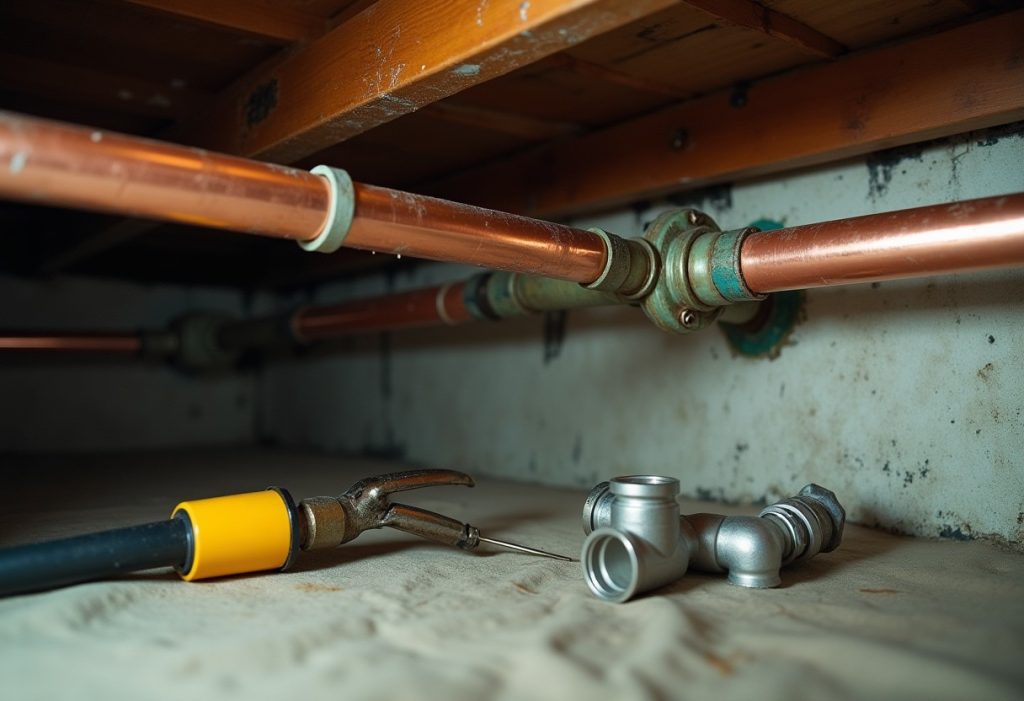
Spot repair a slab leak when it is the first one, the pipe is otherwise sound and the floor above is cheap to open. Reroute when the leak sits under something expensive, the line has leaked before, or the copper is decades old and corroding. Repipe the whole house when several lines are failing, because the next pinhole is likely already forming in the same pipe.
| Option | What the plumber does | Typical cost | Choose it when |
|---|---|---|---|
| Spot repair (direct access) | Jackhammers a small hole over the located leak, cuts out the bad section, joins new pipe, patches the slab | $500 to $3,000 (Fixr) | First leak, easy access, pipe in good condition |
| Tunneling | Digs under the foundation from outside to reach the pipe without breaking interior floors | $900 to $2,000 (Fixr); long tunnels run higher | Leak near the perimeter, high-end flooring inside |
| Epoxy pipe lining | Dries the line and coats the inside with epoxy that seals pinholes | $500 to $2,000 (Fixr) | Pinhole corrosion along a run; check code acceptance locally |
| Single-line reroute | Abandons the leaking line under the slab and runs new PEX or copper through walls or attic | $600 to $4,000 (HomeAdvisor) | Leak under a kitchen or built-ins, or a repeat leak on one line |
| Whole-house reroute or repipe | Replaces all supply lines overhead and abandons every under-slab run | $4,000 to $15,000 (Fixr) | Two or more leaks, aging copper, or plans to sell or remodel |
A spot repair fixes one hole in a pipe that may have dozens of thin spots. If the copper failed from corrosion, a second leak within a few years is common, and paying for detection and concrete work twice usually costs more than rerouting once. Abrasion or a single installation defect, on the other hand, is often a true one-off.
Many plumbers reroute in PEX because it snakes through walls with fewer fittings, though attic runs need insulation in cold climates. If you are weighing the full job, our whole-house repipe pricing guide breaks out PEX against copper by home size.
Does homeowners insurance cover a slab leak?
Homeowners insurance often covers part of a slab leak. Many policies based on the ISO HO-3 form pay to tear out and replace the floor and concrete needed to reach a sudden, accidental leak, and pay for the resulting water damage. They usually do not pay to fix the pipe itself, and they commonly exclude leaks that ran for 14 days or more or came from wear and corrosion.
That split matters on the invoice. Detection, breaking concrete, replacing tile and drying the house may be covered, while the section of pipe the plumber replaces is yours. Some insurers sell an endorsement that adds limited coverage for the pipe repair or raises the tear-out limit; others cap what they pay for slab access. Check your policy wording, not the agent’s summary.
- Usually covered: access and tear-out, flooring and drywall replacement, water damage cleanup, additional living expenses if the home is unlivable.
- Usually excluded: the pipe repair, gradual or repeated seepage, mold beyond a policy sublimit, foundation settlement, and wear and tear.
- Separate products: service line coverage protects buried lines between the street and the house, not lines under the slab, in most policies.
Adjusters look hard at timing. Staining, rot, or mold growth can show a leak ran for weeks, which can turn a covered claim into a denied one. Report the leak as soon as the meter test confirms it, photograph everything before work starts, and keep the leak detection report. Our explainer on how homeowners insurance treats plumbing claims covers sudden versus gradual losses and mold sublimits in detail.
Until the repair, close the water heater’s cold inlet valve for a hot-side leak or the main for a cold-side one. Water under a slab does not dry on its own, and soil washout can lead to settlement that HomeAdvisor prices at about $2,500 per pier.
How we sourced this
We reviewed 9 pages and cited 6: HomeAdvisor’s slab leak repair cost guide (updated June 2026), Fixr’s slab leak repair cost guide (May 2025), This Old House’s slab leak repair cost guide (April 2026), the Insurance Information Institute homeowners claims fact sheet (2019 to 2023 data), EPA WaterSense Fix a Leak Week, and the International Plumbing Code (2021) Chapter 6. Cost figures are national ranges from contractor-quote platforms and vary by region, access and flooring. Insurance terms reflect common ISO HO-3 policy language; individual policies differ. We excluded aggregator pages that republish cost figures without a named method or date.
Frequently asked questions
What are the first signs of a slab leak?
The earliest sign is usually a water bill or meter that moves when nothing in the house is running. Next come warm spots on a tile or concrete floor (a hot-water line leaking), the sound of running water with every fixture off, damp or bulging carpet, and new cracks in flooring or baseboard gaps. A meter test with all water off confirms a leak in about 30 minutes.
How much does it cost to fix a slab leak?
HomeAdvisor puts typical slab leak repair at $630 to $4,400 with a $2,280 average, plus $150 to $400 for detection. A single spot repair through the slab runs $500 to $3,000 per Fixr, while rerouting a whole system overhead can reach $4,000 to $15,000. Water damage cleanup is separate and can add $500 to $15,000 or more.
Does homeowners insurance cover a slab leak?
Often in part. Many policies built on the ISO HO-3 form pay to tear out and replace the floor and slab needed to reach a sudden leak, plus the resulting water damage, but not the cost to fix the pipe itself. Leaks that ran for 14 days or more, or that come from wear and corrosion, are commonly excluded. Read your declarations page and call your insurer before work starts.
How do plumbers detect a slab leak?
Leak specialists first isolate hot from cold lines and pressure test each one to confirm which side is losing water. They then pinpoint the spot with acoustic ground microphones that hear water escaping, thermal imaging cameras that show heat from a hot-water leak, or tracer gas pushed through the drained line. A good locate narrows the leak to within a foot or two before anyone breaks concrete.
Is a slab leak an emergency?
A slab leak is urgent but rarely a run-out-of-the-house emergency. Shut off the main or the water heater supply if the leak is on the hot side, then book detection within a day or two. Every day it runs can soak subfloors, raise the water bill, feed mold, and wash out soil under the slab, which can lead to settlement and costlier foundation repairs.
Should I repair or reroute a slab leak?
Repair the spot if the pipe is in good shape, the leak is easy to reach, and it is the first leak. Reroute the line overhead or through walls if the copper is old, you have had two or more leaks, or the leak sits under a kitchen, built-ins or expensive flooring. A reroute abandons the buried pipe, so the next pinhole cannot happen under the slab.
Can a slab leak cause foundation damage?
It can. Water escaping under a slab can wash away or swell the supporting soil, especially expansive clay, which may let parts of the foundation settle or heave. HomeAdvisor lists foundation stabilization at about $2,500 per pier and $5,000 to $10,000 for heavier settlement. Fixing the leak quickly is the cheapest way to keep a plumbing repair from becoming a structural one.


