Sewer Still Clogged After Snaking? Why a 2 Inch Cutter Clears 25% of a 4 Inch Pipe
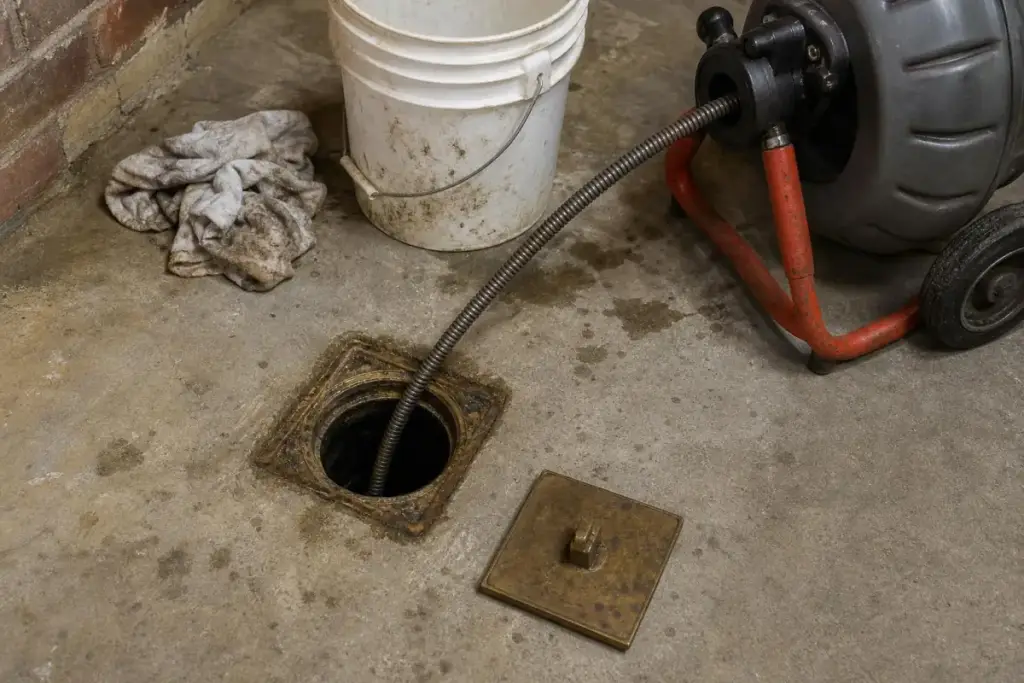
A sewer still clogged after snaking usually means the cable bored a narrow hole and left the rest behind: a 2 inch cutter opens only 25% of a 4 inch pipe. Check cutter size, cleanout and cable reach first, then pay for a camera before a third snaking.
What does a sewer snake actually remove from a 4 inch line?
A snake removes only the circle its cutter sweeps, so most of the pipe wall keeps its grease, scale or root fringe. RIDGID’s K-7500 operator’s manual sets the rule plainly: make the first pass with a spear or blade cutter 2 inches smaller than the drain, use larger tools on later passes, and keep every tool at least 1 inch smaller than the drain.
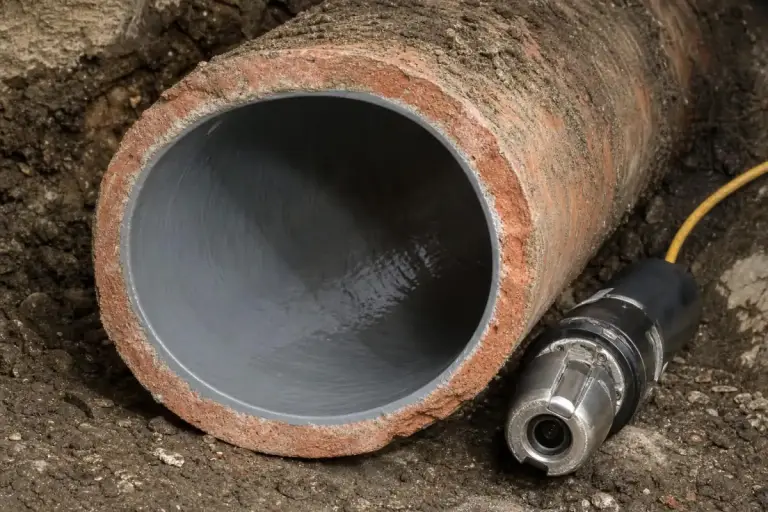
Run that rule through circle area (cleared share = cutter diameter squared divided by pipe diameter squared, nominal sizes) and the gap is obvious. In a 4 inch line the 2 inch first pass clears 4/16, or 25% of the cross section, and the largest allowed 3 inch cutter clears 9/16, or 56%. In a 3 inch line the 1 inch first pass clears 11% and the 2 inch maximum clears 44%. Water flows again through that bore, but a ring of soft buildup at least 1/2 inch thick stays on the wall even after the biggest legal cutter.
Hydro jetting differs because its rear-facing jets scour the full circumference instead of a fixed circle, which is the core of our comparison of drain snaking and hydro jetting. If the first snaking used the 2 inch starter head and stopped, a properly sized second pass is a cheaper next step than any upgrade.
Which cutter and cable size fit a 3 inch or 4 inch sewer line?
A 4 inch main takes 5/8 or 3/4 inch cable with a 2 inch cutter first and a 3 inch cutter at most; a 3 inch line stops at a 2 inch cutter. The table pulls cable and line ratings from each maker’s manual or product listing and applies RIDGID’s 2 inch and 1 inch rule to the cutter columns.
| Machine | Cable | Rated line size | 3 in line cutter | 4 in line cutter | Source |
|---|---|---|---|---|---|
| RIDGID K-400 drum | 3/8 in x 100 ft or 1/2 in x 75 ft | 1 1/2 to 3 in (3/8); 3 to 4 in (1/2) | 1 in start, 2 in max (1/2 in cable) | 2 in start, 3 in max (1/2 in cable) | RIDGID K-400 catalog |
| RIDGID K-750 drum | 3/4 in x 100 ft or 5/8 in x 125 ft | 3 to 10 in, 200 RPM | T-411 2 in double cutter max | T-411 2 in start, T-413 3 in max | K-750 manual, specifications |
| RIDGID K-7500 drum | 3/4 in x 100 ft (C-100) | 4 to 10 in only, up to 250 ft | Not rated for 3 in | T-411 2 in start, T-413 3 in max | K-7500 manual, pages 6 and 17 |
| Spartan Tool Model 1065 | Drum cable, 250 ft range | 3 to 10 in | 2 in max by the 1 in rule | 3 in max by the 1 in rule | Cleaner, April 2018 |
| Electric Eel Model C sectional | 1 1/4 in sections, 8 or 10 ft, up to 200 ft | 3 to 10 in | 2 in max by the 1 in rule | 3 in max by the 1 in rule | Cleaner, February 2016 |
| Rental: Easy Rooter, Nickell Rental | 3/4 or 5/8 in x 100 ft | 3 to 10 in | $54 for 4 hr | $72 for 24 hr | Nickell listing, read Nov 17, 2026 |
| Rental: 100 ft sewer snake, Dutch-Way | 3/4 in x 100 ft | Main lines | $75 for 4 hr | $99 a day, $225 a week | Dutch-Way listing, read Nov 17, 2026 |
Two manual notes change the rental decision. RIDGID’s K-750 and K-7500 manuals say 3/4 inch inner-core cable is not recommended through P-traps and severe bends in lines smaller than 4 inches, so a 3 inch line with tight fittings calls for 5/8 inch cable. The K-7500 is rated only for 4 to 10 inch drains, so a rental counter handing over that machine for a 3 inch branch is matching the wrong tool. The full feeding sequence is in our step by step guide to snaking a main sewer line.
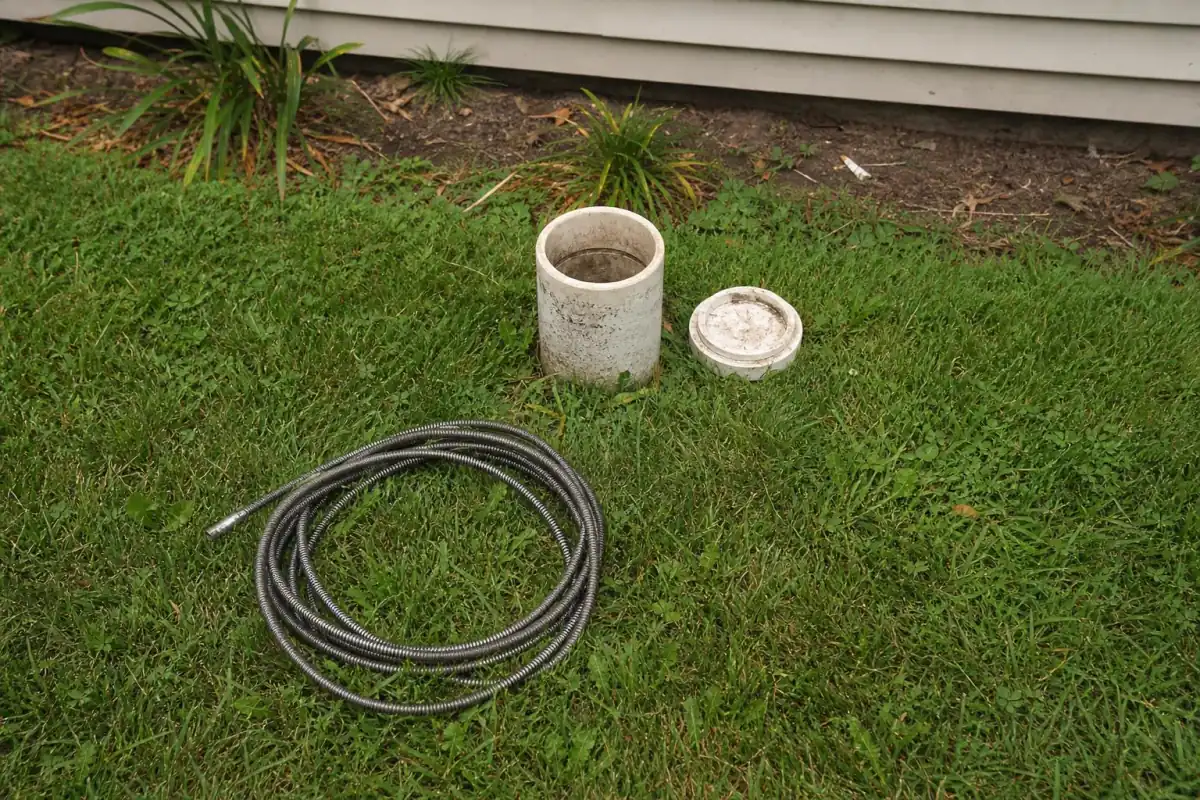
Did the cable go in the wrong opening or stop short of the clog?
A cable fed into a vent or an upstream branch cleanout never touches a clog that sits downstream of that opening. Read the cleanout before blaming the pipe: standing water in the opened cleanout puts the blockage downstream of it, toward the street, while a dry cleanout under backed-up fixtures puts the blockage upstream, between those fixtures and the cleanout. Our signs that the clog sits in the main line page covers the lowest-drain test that tells a main clog from a branch clog.
Reach is the second check. San Diego’s sewer lateral brochure defines the owner’s lateral as the full length from the building to the city main under the street, so a house set 60 feet back with the main under the far lane can need 80 feet or more of cable from a basement cleanout. A 100 foot rental with 20 feet left on the drum when the cutter spun freely may have cleared a partial plug and never reached the main connection; the K-750 manual rates its drum at 100 feet of 3/4 inch cable, which is the hard ceiling on a standard rental.
The cutter itself carries evidence. Root hair on the blade points to a joint intrusion; gray paste points to grease; a wrapped cloth points to wipes, which a T-407 retrieving auger from the RIDGID kit is designed to pull back rather than shred; a cutter that came back clean after binding at the same footage twice points to an offset, belly or collapse.
Which cause is still blocking the line, and what clears it?
The cause table pairs each common reason a line reclogs with the field sign and the fix that addresses it, with costs from Fixr’s main sewer line cost guide (updated January 31, 2025).
| Cause | Sign after snaking | What fixes it | Fixr cost |
|---|---|---|---|
| Tree roots at a joint | Root hair on cutter, clog returns at same footage | Cutting or jetting, then lining or joint repair | $100 to $800 root removal |
| Belly or sag | Camera shows standing water over a run | Re-grade and replace that section | $1,500 to $3,000 |
| Offset joint | Cutter binds at one footage, comes back clean | Spot repair or liner, camera first | $50 to $250 per linear ft section |
| Collapsed or broken pipe | Cable stops dead, soil or clay on cutter | Excavated or trenchless section replacement | $1,500 to $3,000 |
| Grease coating | Gray paste, slow drain returns in weeks | Hydro jetting | $350 to $600 |
| Flushed wipes | Cloth wrapped on cutter | Retrieving auger, then stop flushing wipes | $100 to $500 snaking |
| Scale in cast iron | Rust flakes, rough bore on camera | Descaling or jetting matched to wall condition | $350 to $600 jetting |
| Wrong cleanout or vent | Dry cleanout, fixtures still backed up | Re-run from the cleanout downstream of the clog | $0 if DIY |
| City lateral or main | Water standing at property line cleanout | Plumber documents it, city crew responds | Billed to owner only if maintenance lapsed (San Diego) |
San Diego’s brochure names older laterals of concrete, clay or cast iron as the ones prone to root intrusion and deteriorated sections that need regular inspection and more frequent cleaning, while newer plastic laterals with intact joints may run for years without trouble. That age split is why a 1950s cast iron or clay line that reclogs within a month gets a camera before anyone quotes a second jetting.
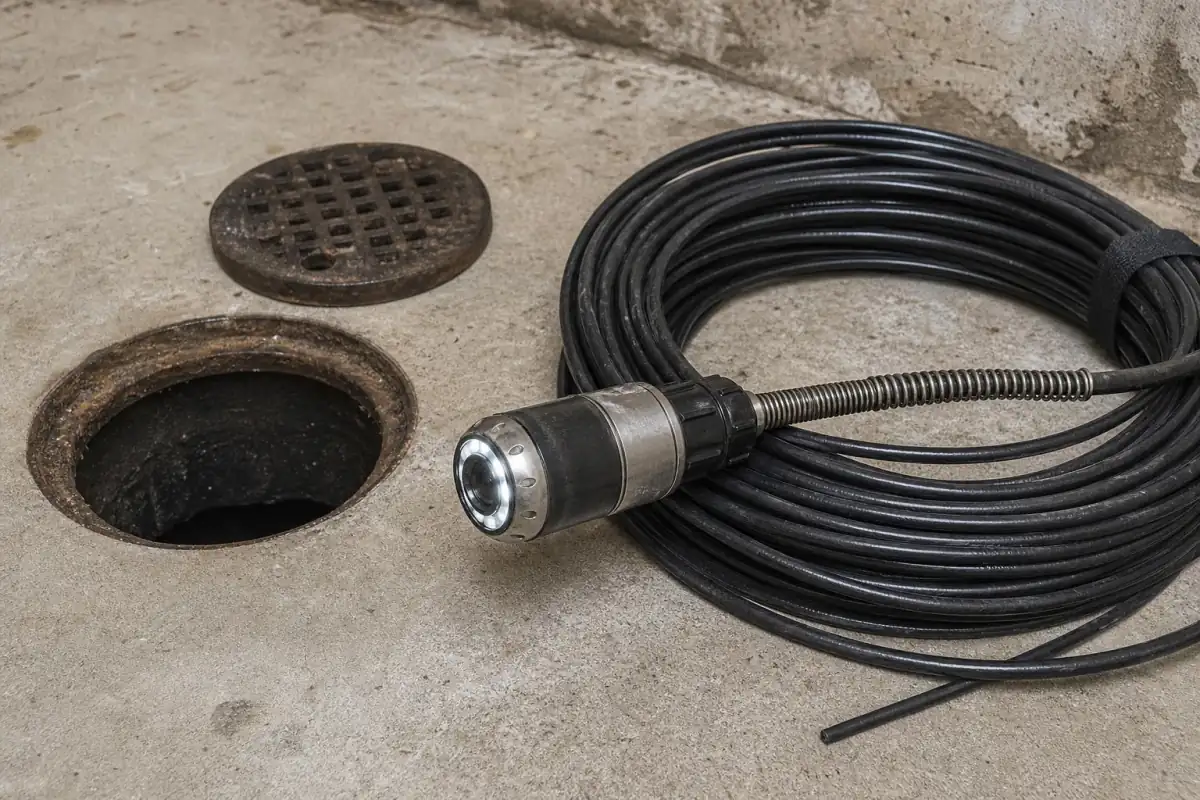
How much does each next step cost compared with snaking again?
Four snakings at the midpoint price cost more than one camera inspection plus one jetting. The ladder uses midpoints of Fixr’s January 2025 ranges: snaking $100 to $500 (midpoint $300), camera inspection $100 to $800 ($450), hydro jetting $350 to $600 ($475), and belly or broken section repair $1,500 to $3,000 ($2,250).
| Path | Inputs (Fixr midpoints) | Total | Equals this many snakings at $300 |
|---|---|---|---|
| Snake again | 1 x $300 | $300 | 1.0 |
| Camera, then targeted snaking | $450 + $300 | $750 | 2.5 |
| Camera, then hydro jetting | $450 + $475 | $925 | 3.1 |
| Camera, jetting, spot repair | $450 + $475 + $2,250 | $3,175 | 10.6 |
| DIY rental, 2 days | 2 x $72 (Nickell, Nov 2026) | $144 | 0.5 |
The decision rule from that arithmetic: after the second professional snaking ($600 spent at midpoint), a third and fourth visit add another $600, while camera plus jetting adds $925 once and ends the cycle when the cause is grease or root fringe; the break-even is 3.1 snakings. A camera that finds a belly or collapse makes further snaking money spent on a symptom, since Fixr prices that repair at $1,500 to $3,000 whether it happens now or after six more visits. Our breakdown of what a sewer camera inspection costs and finds lists other published price ranges.
How do you read the camera report a plumber hands you?
A professional report should give footage from the access point, clock position and a condition grade for each defect, and many follow NASSCO’s PACP system. NASSCO’s PACP Condition Grading System article explains that each defect gets a grade from 1 to 5, coded as either structural or operation and maintenance (O&M), with 5 the most severe.
- O&M defects such as deposits and roots trigger cleaning, root removal and infiltration control, per NASSCO; that maps to jetting, not digging.
- Structural defects such as cracks, holes and deformation drive rehabilitation or replacement, and high structural grades typically call for an engineering assessment.
- The 4 character Quick Rating reports the worst grade and how many times it occurs; NASSCO notes one or two structural occurrences may suggest a localized repair, while four or more may suggest attention over the full pipe length.
- Ask for the footage of each defect and the depth reading from the locator sonde, so a spot repair quote names one dig location.
Who pays when the blockage is past the property line?
The owner pays for the lateral in most cities, and the city steps in only after a plumber proves the stoppage is on the public side. Under San Diego City Council Policy 400-10, crews will not respond until a licensed plumber or certified drain cleaning service establishes that the failure lies between the property line and the main, crews then respond within 24 hours, and the owner is billed the full cost of the city’s response if missed routine maintenance such as root or grease clearing caused it. Check your own public works page for the local rule before paying for work near the curb.
Insurance rarely funds the pipe itself. Leavitt Group’s endorsement explainer says standard homeowners policies typically do not cover underground service lines, so line repair needs an underground service line endorsement, while a separate sewer backup endorsement covers water or waterborne material that backs up through a sewer or drain and excludes flood and owner negligence. Read the declarations page for both endorsement names before the camera report goes to an adjuster.
How we sourced this
Cutter sizing comes from the RIDGID K-7500 operator’s manual (Proper Tool Selection) and the K-750 and K-400 specification pages; Spartan Tool and Electric Eel figures come from Cleaner magazine product listings because the makers’ own PDFs refused automated access. Rental prices are from the Nickell Rental and Dutch-Way listings read November 17, 2026. Costs are Fixr ranges updated January 31, 2025. The area percentages and cost ladder are our arithmetic on those inputs, using nominal pipe sizes. A General Wire Spartan model was left out because General Wire and Spartan Tool are separate makers, and Spartan 1065 cable diameter and Spartan 100 specs were left out because no source we could open confirmed them.
Frequently asked questions about a sewer that stays clogged
Why does my main line back up again a week after snaking?
The cutter opened a channel but left the wall coating, root stubs or a structural catch point in place. A 2 inch first pass cutter clears only 25 percent of a 4 inch pipe, so grease and paper rebuild fast. A second return inside 30 days justifies a camera before a third snaking.
Can snaking make a sewer clog worse?
Yes. A cutter can pack wipes or root mass into a tighter plug downstream, and an oversized head can jam at an offset joint. RIDGID tells operators to keep every tool at least 1 inch smaller than the drain, which caps a 4 inch line at a 3 inch cutter.
How do I know if the clog is on the city side?
Open the cleanout nearest the property line. Standing water there puts the blockage further downstream. In San Diego, city crews act only after a licensed plumber shows the stoppage lies between the property line and the main, and the owner is billed if poor maintenance caused it.
Should I rent a bigger snake or hire hydro jetting?
Rent once if the first pass used a cutter 2 inches under the pipe size and you can step up to a 3 inch head. A 100 foot machine rented for 72 dollars a day at Nickell Rental in November 2026. If roots or grease return after that, jetting at 350 to 600 dollars per Fixr is the better spend.
Does homeowners insurance pay for a sewer line that keeps clogging?
Usually not for the pipe itself. Standard homeowners policies typically exclude underground service lines, so repair needs a service line endorsement. A separate sewer backup endorsement covers water that backs up through a drain into the house, and it excludes flood and owner negligence.