Septic Tank Alarm Going Off? What It Means and What to Do Now
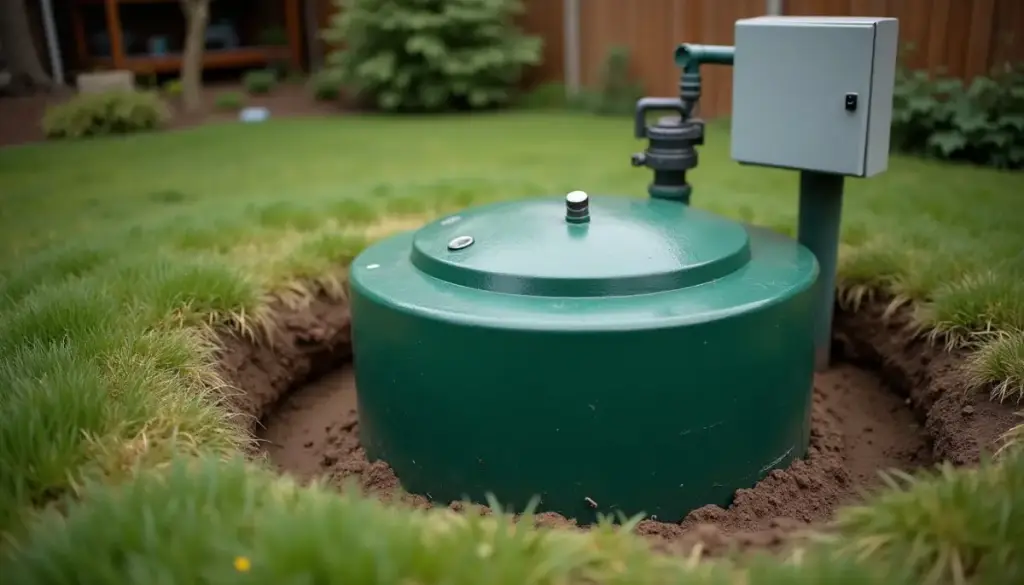
A septic tank alarm going off means wastewater has risen above the high-water float in your pump tank, so silence the horn, stop using water, check the pump breaker and call a septic pro if the light stays on.
Key Takeaways
- The alarm is a float switch in the pump tank that trips when water rises past the normal dosing level, according to Texas A&M AgriLife Extension.
- Silencing the horn does not fix anything. On SJE Rhombus Tank Alert panels the red light stays on until the water level drops, per the SJE Rhombus instruction manual.
- Texas rules size the reserve above the alarm at one third of a day’s flow, about 80 gallons for a 3-bedroom home, per Texas A&M AgriLife Extension.
- The usual causes are a failed pump, a stuck float, a tripped breaker, a surge of water use, and rain or groundwater leaking into the tank.
- A standard effluent pump costs $400 to $900 installed and a high-head pump $700 to $1,400, according to PumpLocal’s 2026 cost guide.
- HomeGuide puts septic pump replacement at $500 to $1,300, while a float switch alone runs $50 to $150, per PumpLocal.
What does it mean when a septic tank alarm is going off?
A septic tank alarm going off means the water in your pump tank or pump chamber has climbed above the high-water float, the switch set just above the level where the pump should have switched on. In plain terms, wastewater is coming in faster than it is leaving. The pump has stopped, cannot keep up, or cannot push water out to the field. Whether your setup includes a pump chamber at all often depends on the design, so it helps to understand how an aerobic septic system handles treatment differently.
Not every septic system has an alarm. A conventional gravity system, where effluent flows downhill from the tank to the drainfield, often has no pump and no alarm at all. If you are not sure which design you own, our guide on how a septic system works walks through the parts.
Alarms show up on systems that move effluent with a pump. Texas A&M AgriLife Extension lists low-pressure dosing, subsurface drip and spray distribution as pump-tank systems. Mound, pressure-dosed and aerobic systems use them too.
How the floats work
A typical pump tank holds three floats on a vertical pipe called a float tree. An on/off float starts and stops the pump. A redundant low-water off float protects the pump from running dry. The high-water alarm float sits above both and trips the alarm when water rises past the normal dosing volume.
Texas A&M notes the alarm should run on a circuit separate from the pump, so it still sounds when the pump breaker trips.
What should you do right now when the septic alarm goes off?
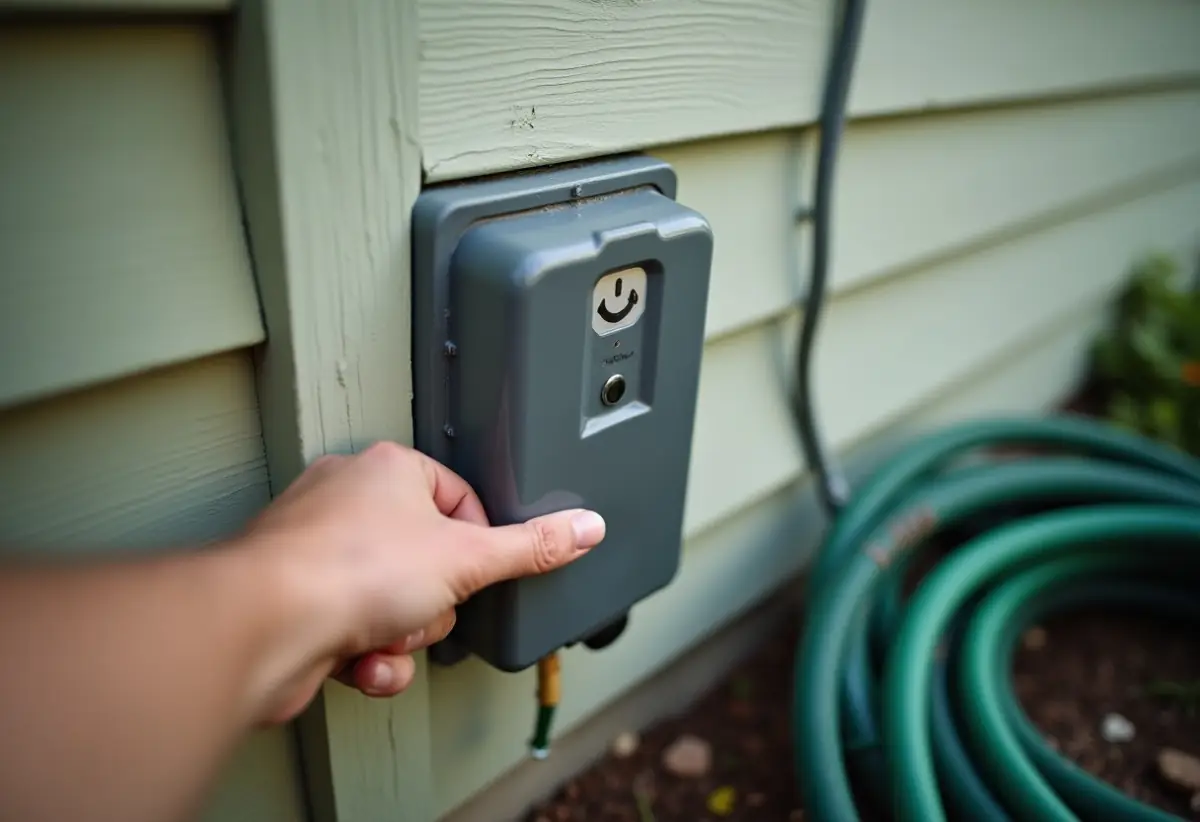
When the septic alarm goes off, press the silence or test switch to quiet the horn, cut household water use to the bare minimum, and check the breaker and any GFCI outlet that feeds the pump and control panel. Then wait a few hours. If the red light stays on, call a septic service company. Do not open the tank.
- Silence the horn. Most panels have a test/normal/silence switch. SJE Rhombus manuals note the horn goes quiet but the alarm light stays on until the level drops.
- Stop sending water down the drains. No laundry, no dishwasher, no long showers. Texas A&M tells owners not to run water-hungry appliances once the alarm sounds.
- Check the pump breaker. Look for a tripped breaker labeled pump, septic or effluent. Reset it once. If it trips again, leave it off and call a pro.
- Check GFCI outlets. Some pumps plug into a GFCI receptacle near the panel or in a riser. Press reset.
- Read the panel. Green usually means the alarm has power. Red means the alarm float is up.
- Wait and watch. Premier Tech Aqua advises calling for service if the red light is still on after a couple of hours. HomeServe suggests giving the system up to about 10 hours with minimal water use.
- Call a septic pro if the light stays on, the breaker keeps tripping or a drain backs up.
Never unplug the alarm or switch off its circuit to stop the noise. That turns a warning into a surprise backup.
Why is my septic tank alarm going off?
Your septic tank alarm is going off for one of six common reasons: the pump failed, a float is stuck or tangled, the pump circuit lost power, the house sent more water than the tank can dose out, rain or groundwater is leaking in, or a timer or control setting is off. A clogged filter or field can also slow discharge.
| Situation | Likely cause | What to do |
|---|---|---|
| Alarm sounds, pump breaker is tripped | Power loss to the pump, or a pump drawing too much current | Reset once. If it trips again, leave it off and call a septic pro |
| Breaker is fine, no pump hum, light stays red | Failed pump motor or a float stuck in the down position | Minimize water use and call for service. Do not open the tank |
| Pump hums but the level does not drop | Jammed impeller, clogged pump screen or effluent filter, or a closed or blocked discharge line | Shut off water use and call a pro to clean the screen and check the line |
| Alarm right after laundry day, guests or a holiday | Water use outran the pump’s dosing schedule | Spread out loads and wait a few hours. The alarm should clear on its own |
| Alarm during or after heavy rain | Storm water or groundwater leaking through lids, risers or joints, or a saturated field | Cut water use, and have a pro inspect risers and seals once it dries out |
| Alarm at the same time every day or night | Timer or demand-dose setting is off, or the timer has failed | Call the installer or maintenance provider to reset the controls |
| Aerobic system alarm with water level normal | Air pump or aerator failure | Call your service provider. In some states, aerobic units must carry a maintenance contract |
| Alarm comes and goes for weeks | Pump at end of life, float that sticks, or a field that is slowly failing | Book an inspection before it becomes a backup |
Pump failure
A pump that has burned out, seized or tripped its overload stops dosing, and the level climbs to the alarm float. Texas A&M warns that each float is rated for a set electrical current, and a pump drawing more than that rating can break the float switch the way a fuse blows.
Stuck or tangled float
Floats hang on cords. A cord can wrap around the pump or float tree, or debris can pin a float down so the pump never gets the signal to start. SJE Rhombus manuals tell owners to check periodically that the float moves freely. On a sewage pump tank, leave that check to a pro.

How much water can you use before a septic alarm turns into a backup?
You can use only the reserve volume between the alarm float and the tank inlet, and state rules set that reserve very differently. Texas sizes it at one third of a day’s flow, about 80 gallons for a 3-bedroom home. Illinois requires half a day with a single pump, and New Jersey requires a full day unless a standby pump is installed.
Texas regulation 30 TAC 285.34 drives the one-third rule, and Illinois’ private sewage code sets the half-day reserve. New Jersey’s N.J.A.C. 7:9A-9.2 asks for a reserve equal to the daily volume unless a matching standby pump is installed.
Tank size changes the math. Texas A&M says many residential pump tanks hold 500 gallons, while a 1,000-gallon tank can give about 2 days of storage after the alarm trips. Your permit or as-built drawing shows what you have, and our guide to septic tank size explains how to read it.
The bottom 14 to 18 inches of the tank is dead space the pump cannot reach, per Texas A&M.
Protect the field after a long outage
After a long power outage or pump failure, the tank is overfull, and Texas A&M warns the pump may dose more than the drainfield can absorb once it restarts. A pro may run the pump manually in small doses to keep the field from flooding.
What can you safely check yourself, and when should you call a septic pro?
You can safely silence the horn, reset a tripped breaker or GFCI once, cut water use, and read the panel lights. Everything that involves opening a lid, pulling floats, touching the pump or working inside the control panel belongs to a licensed septic or onsite wastewater professional, both for safety and because many states license that work.
| Task | DIY or pro | Why |
|---|---|---|
| Silence the alarm horn | DIY | Built for owners. The light stays on as your reminder |
| Reset a tripped breaker or GFCI once | DIY | Safe from the house panel. Repeat trips mean a fault |
| Press the alarm test button monthly | DIY | Texas A&M advises testing regularly if the panel has one |
| Open the tank or riser lid | Pro | Toxic gases and a fall risk into raw sewage |
| Free, adjust or replace a float | Pro | Requires reaching into an energized pump tank |
| Pull or replace the pump | Pro | New pump must match the old one’s flow and pressure |
Texas A&M stresses that a replacement must deliver the same flow and pressure as the original, because the wrong pump can underdose the field or push too hard and break the distribution system.
Septic tanks and pump chambers build up hydrogen sulfide and methane. Texas A&M calls these gases very corrosive, and they can knock a person unconscious with little warning. Never climb in after someone who has collapsed.
How much does it cost to fix a septic alarm problem?
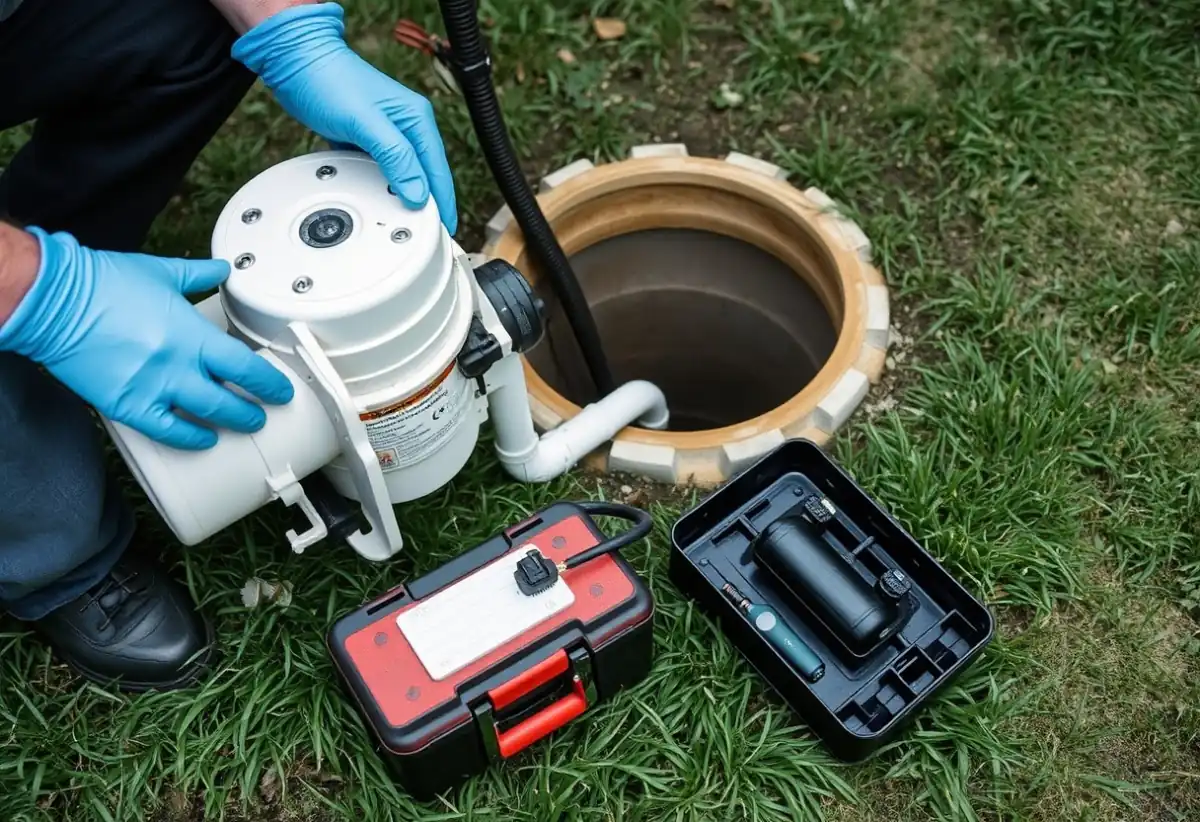
Fixing the cause of a septic tank alarm going off usually costs $50 to $1,400 in 2026. A float switch runs $50 to $150, an alarm or control panel $200 to $600, a standard effluent pump $400 to $900 installed and a high-head pump $700 to $1,400 installed, per PumpLocal. HomeGuide puts septic pump replacement at $500 to $1,300.
Bars show the top of each range. PumpLocal’s June 2026 guide notes the pump itself is rarely more than a third of the invoice. Labor, pump-down, electrical work and permits make up the rest.
Some alarm calls need a pump-out first so the tech can reach the pump, and that visit carries its own septic tank pumping cost. Texas A&M advises pumping the pump tank along with the septic tank on a 2 to 3 year cycle, and EPA SepticSmart recommends pumping household tanks every 3 to 5 years. When the alarm turns out to be a symptom of a clogged drainfield or a cracked tank, the bill moves into the bigger ranges in our septic system repair cost guide.
What types of septic alarms are there?
Most homes have a high-water float alarm wired to an indoor or outdoor panel with a horn and a red light. Other types include low-water alarms, combined pump control panels with a built-in alarm, aerobic system alarms that watch the air pump, and wireless or app-connected alarms that send a phone alert when the float trips.
| Alarm type | What triggers it | Where you see it |
|---|---|---|
| High-water float alarm | Water rises past the alarm float in the pump tank | Indoor box or outdoor post-mounted panel with horn and red light |
| Low-water alarm | Level drops below a set point, which can point to a leak | Same panel style. The SJE Rhombus Tank Alert 4X can serve either role depending on the float used |
| Pump control panel with alarm | Alarm float plus pump run, timer or overload signals | Outdoor panel near the tank, often with run and alarm lights |
| Aerobic system alarm | Air pump or aerator stops, or high water in the pump chamber | Panel on the aerobic unit or a post near the tanks |
| Wireless or smart alarm | Float signal relayed by radio or Wi-Fi | Indoor receiver or a phone notification |
SJE Rhombus rates its Tank Alert horn at 88 decibels at 10 feet and notes the alarm keeps working if the pump circuit fails, as long as it sits on its own circuit.
How we sourced this
We reviewed the top-ranking pages for “septic tank alarm going off” and related People Also Ask questions in October 2026, then built the guide from primary sources. Float layout, alarm behavior, reserve volumes and owner steps come from Texas A&M AgriLife Extension publication L-5346 and the SJE Rhombus Tank Alert instruction manual. Reserve rules come from Texas (30 TAC 285.34), Illinois (77 Ill. Admin. Code 905) and New Jersey (N.J.A.C. 7:9A-9.2). Costs come from PumpLocal’s June 2026 septic pump guide and HomeGuide’s 2026 septic repair data. We excluded unattributed aggregator and contractor marketing pages. Rules and prices vary by state and county, so confirm with your local health department or a licensed septic professional.
Frequently asked questions
Can I turn off my septic alarm?
You can silence the horn with the test or silence switch on the alarm box, but leave the panel powered. On SJE Rhombus Tank Alert units the red light stays on until the water level drops. Unplugging the alarm or flipping its breaker hides the warning without fixing the cause, so a backup can sneak up on you. Silence it, then start troubleshooting.
How long can a septic alarm stay on before the tank backs up?
It depends on the reserve volume built above the alarm float. Texas rules size that reserve at one third of a day’s flow, which Texas A&M AgriLife Extension puts at about 80 gallons for a 3-bedroom home. Illinois requires half a day with a single pump. With careful water use most homes have several hours to about a day before drains back up.
Can I shower or flush the toilet when the septic alarm is going off?
Keep it to essentials only. Every gallon you send down the drain fills the reserve space above the alarm float, and in a Texas-designed system that space may be only about 80 gallons. An occasional toilet flush is usually fine. Skip showers, laundry and the dishwasher until the light goes out or a septic pro confirms the pump is running again.
Can heavy rain set off a septic alarm?
Yes. Storm water and a high water table can leak into a pump tank through cracked lids, unsealed risers or loose pipe joints, raising the level faster than the pump can dose it out. A soaked drainfield can also slow discharge. If the alarm clears once the weather dries out, have a pro check risers and seals before the next storm, because leaks tend to repeat.
Does a septic alarm mean my tank needs to be pumped?
Not usually. Most alarms sit in the pump tank and report high water, which more often points to a stopped pump, stuck float, tripped breaker or heavy water use than to a full septic tank. Overdue pumping can still play a role when solids clog the effluent filter or pump screen. A septic pro can tell you which problem you have in one visit.
Why does my septic alarm go off and then stop?
An alarm that comes and goes usually means the pump is running but losing the race, often after laundry day, guests or a storm. It can also signal a float that sticks and then frees itself, or a pump that trips its thermal overload and restarts. Repeated short alarms are worth a service call, because each one tells you the system has little spare margin.
How do I reset a septic alarm?
Most alarms reset on their own once the water level falls below the alarm float. Press the test or silence switch to quiet the horn, check the pump breaker and any GFCI outlet feeding the panel, and cut water use. If the red light is still on after a few hours of minimal use, the pump or float likely needs a septic pro.
What would cause a septic alarm to go off?
Wastewater rising above the high-water float sets it off, and the usual reasons are a tripped pump breaker, a failed pump motor, a float stuck in the down position, a clogged pump screen or effluent filter, or a blocked discharge line. Heavy water use on laundry day or with houseguests can outrun the pump’s dosing schedule, and storm water or groundwater leaking into the tank can do the same after heavy rain.