Pot Filler Faucet: Cost, Plumbing and Is It Worth It
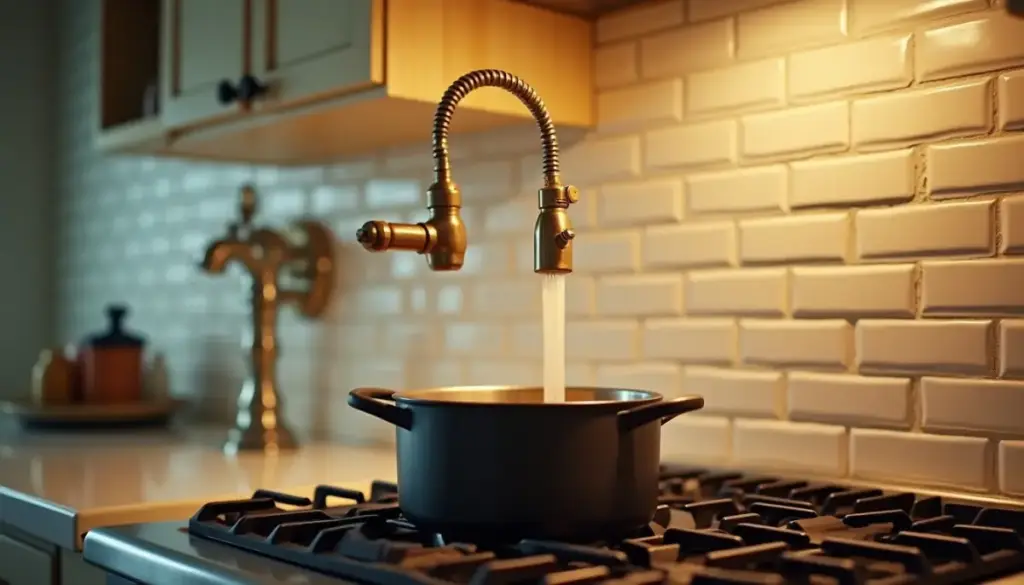
A pot filler faucet is a cold-water-only swing arm over the range, and the plumbing behind it costs more than the faucet: Angi puts the average installed price at $1,650.
Key Takeaways
- Angi’s August 2026 cost data puts the average pot filler install at $1,650, with a normal range of $975 to $3,000 and a high end of $3,500.
- The faucet itself runs $150 to $500 per HomeGuide figures cited by HomeServe.
- Angi’s scope table shows the swing: $280 for a faucet-only job versus $1,200 once major plumbing changes are needed and $3,000+ with major wall work.
- Waterstone’s install guide sets the 1/2 in stub-out about 13 in above the cooking surface and lists a 22 in reach when the arm is fully extended.
- Delta rates the 1177LF at 4.0 gpm at 60 psi, nearly double the 2.2 gpm federal ceiling for a standard kitchen faucet.
- International Plumbing Code Section 305.4 bars water pipe concealed in outside walls unless it is protected from freezing by insulation, heat or both.
What is a pot filler faucet?
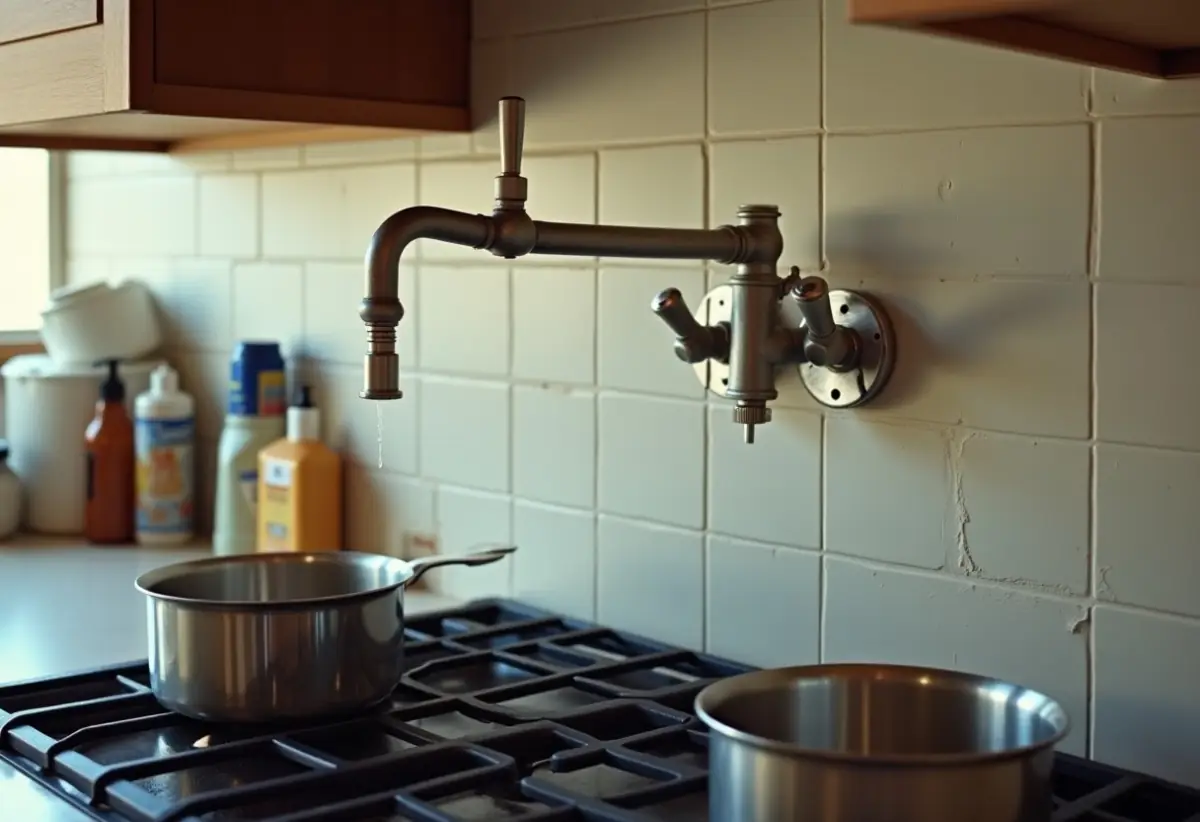
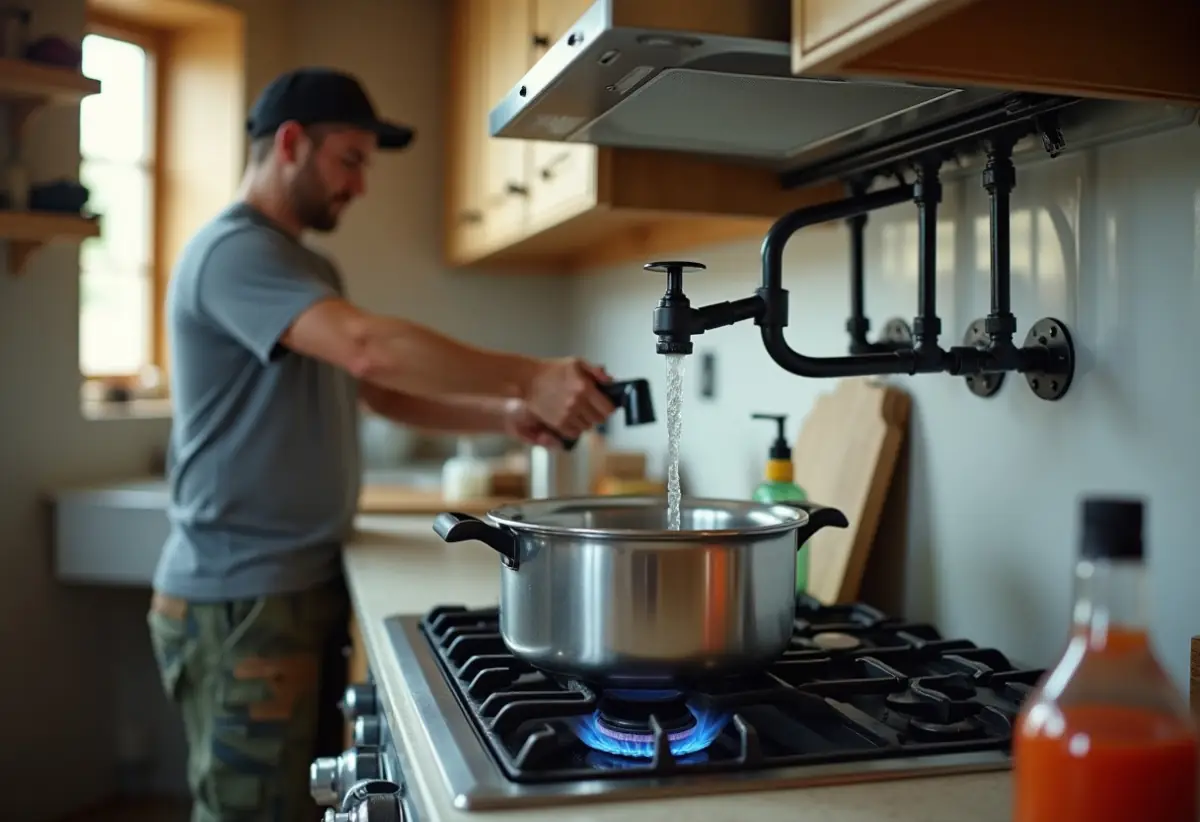
A pot filler faucet is a single-temperature faucet mounted on the wall behind a range or on the counter beside it, with a jointed arm that swings out over the burners. You set the empty pot on the stove, pull the arm over it and fill it in place. It runs on cold water only, so it needs one supply line and no hot side.
The idea, and the nickname “pasta arm,” come from restaurant kitchens, where Angi notes exposed plumbing makes them easy to add. Kraus spec sheets state the faucets connect to cold water supply only, and Newport Brass instructions call for a cold water supply line.
Most models have two valves. Delta describes its 1177LF pot filler as a “dual swing joint design with dual shut off valves,” typically one at the wall end of the arm and one near the spout. Our guide to the main faucet types shows where pot fillers sit next to pull-down, bridge and wall-mount kitchen faucets.
How much does a pot filler faucet cost to install?
Pot filler installation cost averages $1,650 nationally, according to Angi’s cost data updated in August 2026, with most jobs landing between $975 and $3,000. The faucet is the small line. Angi’s low end is $300 and its high end is $3,500, when a new line, wall reinforcement and a new backsplash all go in.
Scope moves the price far more than the faucet brand, as Angi’s breakdown shows.
HomeServe, citing HomeGuide, splits it more simply. Pot filler faucets cost $150 to $500 and wall-mount labor runs $200 to $600. With supply lines already behind the stove, the total is $350 to $1,100. Running a brand new pipe adds $450 to $1,800 per fixture.
Brand sets the top of the faucet budget; Delta lists the 1177LF at $770. The pipe itself is cheap. Angi prices a shutoff valve at $19, copper fittings at $28 and 8 feet of copper pipe at $58.
What plumbing does a pot filler need?
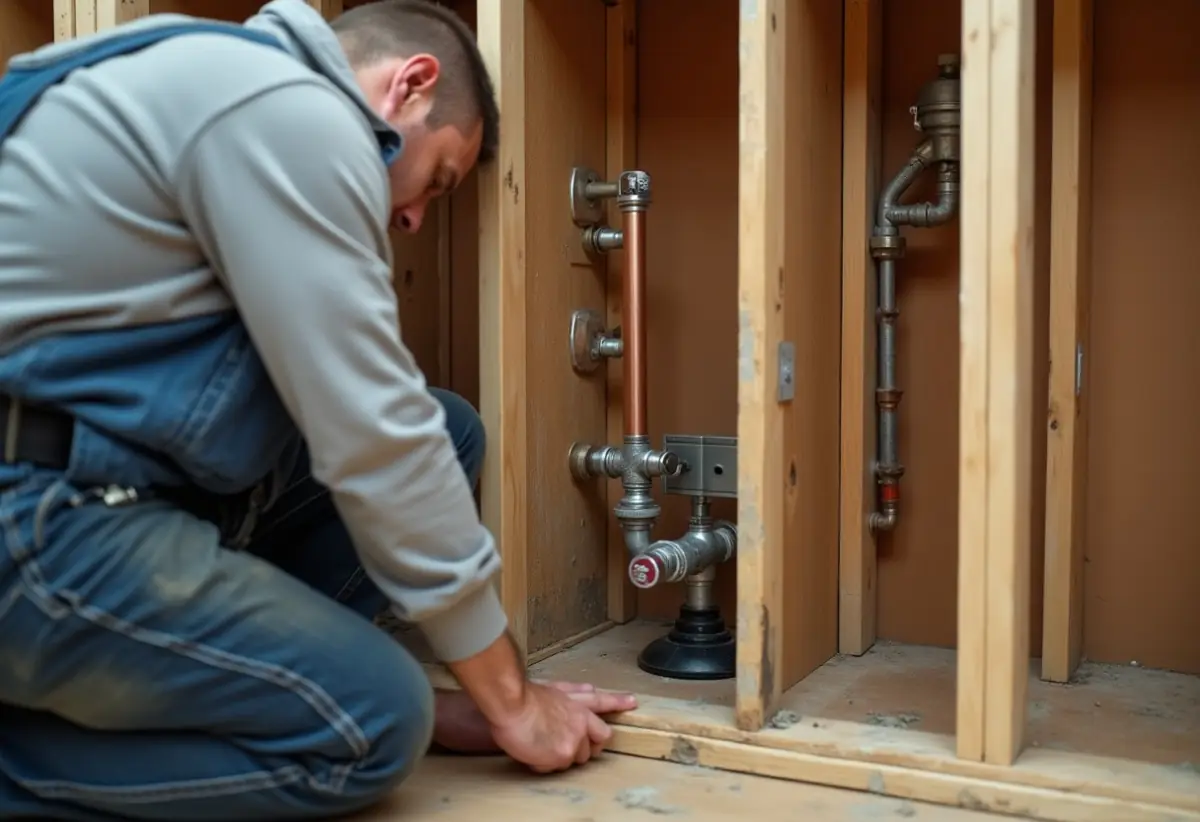
A pot filler needs one new 1/2 in cold water line run up the wall behind the range, a threaded stub-out at the mounting height, solid backing to carry the arm, and an accessible shutoff. It needs no drain and no vent. Waterstone calls for a 1/2 in NPT pipe nipple at the stub-out, and Delta’s 1177LF takes a 1/2 in IPS connection.
The usual source is the cold supply that already feeds the kitchen sink or the refrigerator water line. A plumber tees off that branch and runs PEX or copper to the wall behind the range. Planning it during a full kitchen plumbing rough-in is far cheaper than opening finished tile later.
- Shut off the water and tee into the nearest cold branch, adding a shutoff on the new line.
- Run 1/2 in pipe to the stud bay behind the range and turn up to the stub-out height.
- Anchor the stub-out to blocking. Waterstone says to leave the strapping loose for 1/8 to 1/4 in of in-and-out play and keep the stub no more than 1/2 in past the finished wall.
- Pressure test the new line before the drywall and backsplash go back on.
- Mount the faucet with thread tape on the stub and check every joint for drips.
Shutoff access matters more here than on a sink, because the line ends inside a finished wall. International Plumbing Code Section 606.2 calls for a shutoff on the supply to each fixture, and Section 606.3 says access must be provided to every shutoff valve. That often means a stop valve in the next base cabinet, the basement below or behind an access panel, depending on local code. Many jurisdictions also want a permit for new supply piping.
How high should a pot filler be above the stove?
Waterstone, which makes wall pot fillers, says in its installation guide that the stub-out pipe should sit about 13 inches above the cooking surface, which it says leaves room for most large stockpots. Not every maker sets a number. Delta told a customer on its 1177LF product page that it has no recommended height and leaves it to the owner. Your tallest pot is the real guide.
Measure your tallest stockpot standing on the grate, then add a few inches so the spout clears the rim with the arm horizontal. Faucet bodies differ (Kraus lists 10 3/8 in for the KPF-5003 and 8 3/8 in for the KPF-5002), so read your model’s sheet before the stub is set.
Too low and the big pot will not fit under the spout. Too high and water splashes and the handle sits out of reach behind hot burners.
Wall-mount vs deck-mount: which pot filler fits your kitchen?
Wall-mount pot fillers are the common choice because they put the spout directly over the burners and fold flat when stored, but they need a new pipe inside the wall. Deck-mount models sit in the counter beside a cooktop and take water from the cabinet below, which makes the plumbing and the shutoff easier to reach. The cost is counter space and a drilled countertop.
| Factor | Wall-mount pot filler | Deck-mount pot filler |
|---|---|---|
| Where it mounts | Backsplash wall above the range (Waterstone suggests aligning the valve to the left or right side, not over the center of the cooktop) | Countertop beside a cooktop, in a drilled hole (Newport Brass calls for a 1-1/8 to 1-3/8 in hole) |
| Supply connection | 1/2 in threaded stub-out in the wall (1/2 in NPT per Waterstone, 1/2 in IPS per Delta) | Supply line under the counter to a 1/2 in NPSM connection (Newport Brass) |
| Shutoff access | Needs a planned stop in an adjacent cabinet, basement or access panel | Stop valve sits in the cabinet below, like a sink |
| Where a leak shows | Inside the wall cavity, often unseen until it stains the drywall | In the base cabinet, where you can see and catch it |
| Structural needs | Blocking between studs to carry the arm | Newport Brass warns counters 3/4 in thick or less may need reinforcement |
| Retrofit difficulty | High, usually means opening tile or drywall | Lower, if the cabinet below has room for a supply line |
Newport Brass instructions warn that the arm may get hot when parked over a burner, so swing any pot filler away after use.
What are the risks of a pot filler faucet?
The main risks are a leak or drip with nothing below to catch it, a frozen line if the range sits on an exterior wall, and a pipe hidden in the wall where small leaks go unnoticed. With no basin below, a valve left open floods the range, counter and floor.
- No drain. Any drip from the spout or a swing joint runs onto the stove. Angi’s pros and cons guide also notes you still carry the full pot to the sink to drain it.
- Swing-joint wear. The joints rely on seals that wear with use. An owner on Delta’s 1177LF product Q&A reports a leak at the arm joint. Closing the wall valve after each fill keeps the arm off line pressure.
- Exterior walls. IPC Section 305.4 says water pipe shall not be concealed in outside walls unless protected from freezing by insulation, heat or both. In cold climates, keep the line on the warm side of the insulation or use an interior wall.
- Grease and heat. The finish sits in the splash zone of every pan, so it collects grease faster than a sink faucet, as HomeServe points out.
Is a pot filler faucet worth it?
A pot filler is worth it if you fill big pots often, your sink is far from the range, someone in the house struggles to carry heavy water, or the wall is already open for a remodel. It is rarely worth $1,000 or more as a stand-alone retrofit in a small kitchen where the sink is a few steps from the stove.
The math is mostly about the wall. Angi’s scope table puts a faucet-only job at $280 and a job with minor plumbing at $400, but major plumbing jumps it to $1,200 and wall work to $1,900 or more. Angi’s advice is to add it during a remodel, when the drywall is off anyway.
The speed gain is real but modest. At Delta’s rated 4.0 gpm, a 3 gallon fill takes about 45 seconds, versus about 82 seconds from a kitchen faucet at the 2.2 gpm federal maximum, at the same 60 psi. Real flow depends on your pressure. The bigger win is not carrying 25 pounds of water across the kitchen.
Resale is harder to pin down. Angi says the return is highest in larger kitchens where the sink sits far from the stove, and no source we found publishes a hard resale number.
What are the alternatives to a pot filler faucet?
The cheapest alternative is a kitchen faucet with a long pull-down hose and a high arc, which fills tall pots in the sink without new plumbing. Other options are a deck-mount filler fed from a nearby cabinet or a prep sink near the range, which also lets you drain the pot without walking it across the room.
| Alternative | What it involves | Trade-off |
|---|---|---|
| High-arc pull-down kitchen faucet | A faucet swap on the existing sink; HomeServe puts a regular kitchen faucet install at $250 to $600 | You still carry the full pot to the stove |
| Deck-mount pot filler | Countertop faucet beside a cooktop, fed from the cabinet below | Only works where there is counter and cabinet space next to the cooktop |
| Prep sink near the range | A second sink with supply, drain and vent | More plumbing than a pot filler, but it also drains the pot |
If you go the faucet route, our walkthrough on how to replace a kitchen faucet covers the swap step by step. A pot filler is usually plumber territory once a new line enters the wall.
How we sourced this
We consulted 14 sources between October 15 and October 18, 2026, and cited 8. Costs come from Angi’s pot filler cost page (updated August 3, 2026) and pros and cons guide (updated July 9, 2026), and from HomeServe’s 2025 cost guide, which cites HomeGuide. Product specs come from Delta’s 1177LF product page, the Waterstone wall pot filler installation guide, Kraus KPF-5002 and KPF-5003 spec sheets and the Newport Brass 9483 deck-mount instructions. Code language is quoted from the 2021 International Plumbing Code; your state may use another edition or the UPC. We excluded templated city cost-estimator pages and an untraceable 2026 cost guide. Fill times are our arithmetic from rated flow. We did not install or test a pot filler for this article.
Frequently asked questions
Does a pot filler need a drain?
No. A pot filler has no basin, so it needs no drain line, trap or vent, only a cold water supply. That is also its weak spot. Any drip from the spout or a worn swing joint lands on the cooktop, and a valve left open has nowhere to go but the range, counter and floor. Closing both valves after each fill limits that risk.
How high should a pot filler be above the stove?
Waterstone recommends setting the stub-out pipe about 13 inches above the cooking surface, which it says clears most large stockpots. Delta, by contrast, publishes no set height for its 1177LF and leaves it to the installer. The safest method is to measure your tallest pot on the grate, add a few inches of clearance, and check your faucet’s spec sheet.
Do pot fillers use hot or cold water?
Pot fillers connect to cold water only. Kraus spec sheets state the faucets connect to cold water supply only, and Newport Brass instructions call for a cold supply line. Cold water is standard for cooking because hot water can pick up more from pipes and tank sediment, and the pot heats on the burner anyway. One cold line also keeps the plumbing simpler.
How much does it cost to install a pot filler?
Angi’s August 2026 cost data puts the average at $1,650, with a normal range of $975 to $3,000. A faucet-only job averages $280, while major plumbing and wall work pushes past $3,000. HomeServe, citing HomeGuide, estimates $350 to $1,100 when supply pipes already sit behind the stove. The faucet alone usually costs $150 to $500.
Can you put a pot filler on an exterior wall?
Often yes, but the line needs protection from freezing. International Plumbing Code Section 305.4 bars water pipe concealed in outside walls unless insulation, heat or both protect it. In cold climates many plumbers keep the pipe on the warm side of the wall insulation or choose an interior wall. Your local code and climate decide what is acceptable.
Do pot fillers add value to a home?
They can, but nobody publishes a firm resale figure. Angi says the return is highest in larger kitchens where the sink sits far from the stove, and that buyers may see a pot filler as unneeded in a small kitchen. Treat it as a convenience and accessibility upgrade, and add it during a remodel when the wall is already open.
Can I install a pot filler myself?
Swapping a pot filler onto an existing stub-out is a reasonable DIY job with thread tape and a wrench. Running a new supply line inside the wall is different. It usually means opening the backsplash, adding blocking, installing an accessible shutoff and pressure testing, and many jurisdictions require a permit for new supply piping. Angi recommends a licensed plumber for that work.
What is the downside of pot filler?
A pot filler has no basin below it, so any drip from the spout or a worn swing joint lands on the cooktop, and a valve left open floods the range, counter and floor. An owner on Delta's product page reports a leak at the arm joint. The finish also sits in the splash zone of every pan, so it collects grease faster than a sink faucet.