Plumber’s Grease: What It Is, Where to Use It and What to Avoid
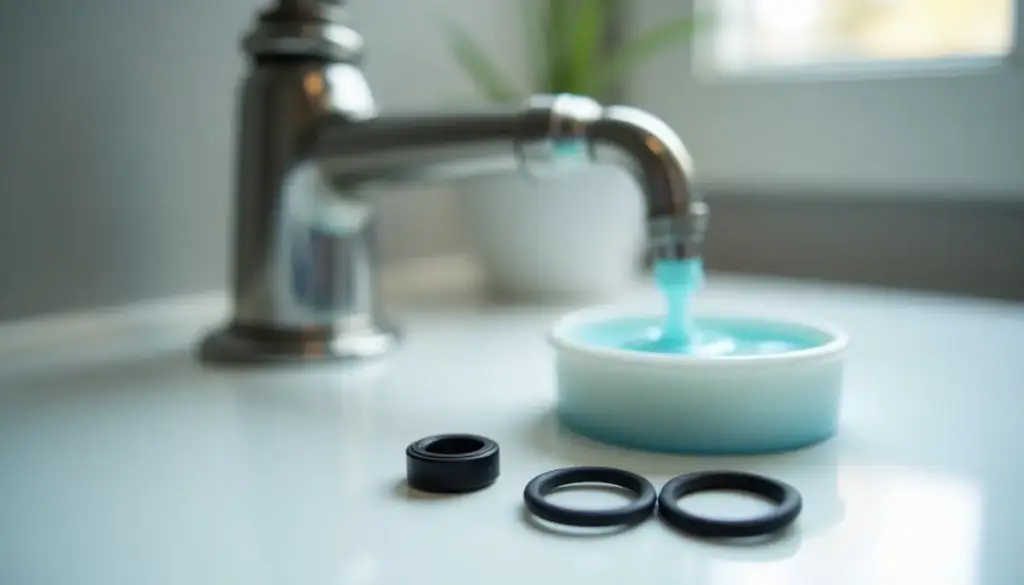
Plumbers grease is a waterproof lubricant for O-rings, stems and linkages, and the base matters most: silicone is safe on rubber and plastic, while petroleum grease can degrade both, per Oatey.
Key Takeaways
- Oatey’s grease guide says silicone suits plastics and rubber, while petroleum-based grease “can degrade rubber and plastic over time.”
- Oatey rates Hercules Plumber’s Silicone Grease (part 40610) to a 400°F maximum use temperature and labels it for rubber and synthetic O-rings.
- Oatey’s page for petroleum Hercules 300 Degree grease (part 40601) says -20°F to 300°F in its description but 325°F in its spec table.
- The Molykote 111 data sheet lists a -40°C to 200°C (-40°F to 392°F) range plus NSF 61 and NSF 51 listings.
- Moen instruction sheet INS746J tells installers to lubricate the 1222 cartridge oval on both sides and pictures packet P/N 141070.
- Grease never replaces thread sealant, solvent cement or putty, and Oatey’s own application steps call for a thin layer only.
What is plumbers grease made of?
Plumbers grease is an oil thickened into a paste so it stays put under running water. Oatey’s guide describes it as silicone oil or petroleum-based substances mixed with a thickening agent. The oil decides what the grease is safe on. Silicone is inert toward most rubber and plastic, petroleum attacks them over time, and blends sit in between.
| Type | What it is | Use it on | Keep it off |
|---|---|---|---|
| Silicone grease | Silicone oil with a thickener. Oatey’s Hercules 40610 “contains no petroleum products.” | Cartridge and stem O-rings, rubber washers, plastic valve parts, spout O-rings | Threads, solvent-weld joints, anything you need to paint or glue later |
| Petroleum grease | Mineral-oil base. Oatey describes Hercules 300 Degree as a “unique petroleum-based grease formula.” | Metal-to-metal parts. Oatey says petroleum greases fit “applications where metal meets metal.” | Rubber O-rings and plastic cartridges, which Oatey says it can degrade |
| All-purpose pipe lubricant | Fatty acid soap in a glycol and water base with clay filler, per Oatey | Gasketed joints on cast iron, concrete, plastic and clay pipe | Faucets. It is rated only -10°F to 150°F. |
| PTFE-fortified grease | Silicone or petroleum grease with PTFE particles added for slip | Stiff stems and linkages, if the base oil suits the parts it touches | Rubber parts when the base under the PTFE is petroleum |
| Food-grade (NSF H1) grease | Registered for incidental food contact in food plants | Food equipment and parts that may touch food | Drinking water parts that need an NSF/ANSI 61 listing, which H1 is not |
Which plumbers grease is safe on rubber O-rings?
Silicone plumbers grease is the safe pick for rubber O-rings. Oatey’s guide to choosing plumbing grease says silicone grease is “commonly used in plumbing due to its compatibility with plastics and rubber,” and that petroleum-based grease “can degrade rubber and plastic over time.” Faucet cartridges are usually plastic bodies wearing rubber O-rings, which puts them in silicone territory.
Oatey’s silicone product page backs that up in plain terms. It says Hercules 40610, “when applied to rubber and synthetic O-rings, insures free movement and extended service life of faucets,” and approves it on plastic and rubber parts.
Here is the catch we found. Oatey’s page for the petroleum Hercules 300 Degree grease lists faucets, valve stems and ballcock linkage as uses and prints no rubber warning, while Oatey’s own guide warns petroleum degrades rubber. A retailer listing for Black Swan Plumbers Grease, another petroleum product, does print the warning “not for use on rubber or synthetic O-rings” alongside a -20°F to 250°F range.
How hot can plumbers grease get before it fails?
Maker ratings for plumbers grease run from 150°F for a gasket lubricant to 400°F for silicone. Oatey rates Hercules 40610 silicone to a 400°F maximum use temperature, Hercules 300 Degree petroleum grease to 300°F in its description, and its All Purpose Pipe Lubricant to 150°F. Every faucet grease in the chart clears the 120°F ceiling Delta’s shower cartridge sheets recommend for the hottest flow by at least 180°F.
Sources: Oatey product pages and guide, the Molykote 111 data sheet, and a Pace Supply listing for Danco 88693. The 40601 bar uses its 300°F description figure.
Which plumbers grease products are worth buying?
For faucets and valves, buy a silicone plumbers grease labeled for rubber O-rings, and step up to a listed product like Molykote 111 when drinking water certification matters. Hercules 40610 comes in a 2 oz tub rated to 400°F. Danco 88693 is a 1/2 oz tube listed at -40°F to 400°F. Keep petroleum Hercules 300 Degree (3 oz) for metal parts.
| Product | Base | Water-contact claim | Rated temperature | On rubber O-rings |
|---|---|---|---|---|
| Hercules Plumber’s Silicone Grease, part 40610, 2 oz | Silicone, “contains no petroleum products” | Oatey’s guide calls it safe for potable water systems. The product page names no NSF standard. | 400°F maximum | Yes, Oatey lists rubber and synthetic O-rings |
| Hercules 300 Degree Plumber’s Grease, part 40601, 3 oz | Petroleum | No potable water claim on the product page | -20°F to 300°F (spec table says 325°F) | No. Oatey’s guide says petroleum degrades rubber over time. |
| Danco silicone faucet grease, 88693, 1/2 oz | Silicone | None named in the Pace Supply listing | -40°F to 400°F (Pace Supply listing) | Silicone base, the type Oatey rates compatible with rubber |
| Molykote 111 Compound (DuPont, formerly Dow Corning) | Silicone | NSF 61 and NSF 51 listed, plus FDA 21 CFR 175.300 | -40°F to 392°F | The data sheet says compatible with many plastics and elastomers |
| Oatey All Purpose Pipe Lubricant | Soap in glycol and water, clay filler | Oatey calls it nontoxic and noncorrosive | -10°F to 150°F | Made for pipe gaskets, not faucet O-rings |
Molykote 111 is the pro’s tub. The Molykote 111 data sheet lists NSF 61, the drinking water component standard, which the hardware-store faucet greases in this table do not claim on their own pages.
Moen’s 1222 instruction sheet INS746J pictures a lubricant packet marked P/N 141070 If a packet comes with your replacement part, use it before you reach for a tub.
Where should you use plumbers grease in faucets, valves and toilets?
Use plumbers grease on anything that slides, turns or seals with an O-ring. Oatey lists valve stems, faucets, ballcock linkages and sump and sewage ejector pump linkages for its Hercules greases, and adds rubber and synthetic O-rings for the silicone version. In a house, that means five places.
- Cartridge O-rings. Every single-handle faucet cartridge seals to the valve body with O-rings. Moen’s INS746J tells installers to apply lubricant to the 1222 “cartridge oval on both sides.” Our kitchen faucet cartridge replacement guide covers finding the part number first.
- Shower valve cartridges and diverter stems. A pressure-balance cartridge or a three-handle diverter stem slides past O-rings every time it moves. The Delta shower cartridge replacement walkthrough shows which Delta cartridge fits each valve series.
- Swivel spout O-rings. A kitchen spout that drips at its base usually has two O-rings in grooves on the faucet body. Fresh, greased O-rings stop the leak.
- Compression faucet stems. The brass threads on an old two-handle stem turn easier with grease, which is what Oatey means by easing “hard-turning faucets.”
- Toilet tank linkages. Both Hercules greases list ballcock linkage. A dab on a sticky fill valve arm or flush lever pivot frees it up.
Where should you never use plumbers grease?
Never use plumbers grease as a thread sealant, inside a solvent-welded PVC or CPVC joint, on a push-fit fitting the maker did not approve, or in place of putty under a drain flange. Grease is a lubricant, so in each of those spots it either blocks the seal the joint relies on or leaves the joint able to slide apart later.
| Joint | Why grease fails there | Use instead |
|---|---|---|
| Tapered pipe threads (NPT) | Grease does not fill the spiral leak path, and it lets the fitting overtighten | PTFE tape or pipe thread compound |
| Solvent-weld PVC or CPVC | Solvent cement softens and fuses both surfaces. A grease film keeps them from fusing. | Primer and cement on clean, dry, grease-free pipe |
| Gasketed PVC or cast iron drain pipe | Faucet grease is the wrong product for a large push-on gasket | Oatey All Purpose Pipe Lubricant or the gasket maker’s lube |
| Push-fit fittings | The fitting’s own instruction sheet controls what goes on the pipe | Whatever that sheet allows, and nothing it does not |
| Sink strainer or faucet base | Grease never stiffens, so it washes out of the flange gap | Plumber’s putty or the supplied gasket |
For threads, wrap PTFE thread seal tape clockwise as you face the fitting end, and skip grease entirely. For a basket strainer or a deck-mounted faucet with no gasket, plumber’s putty is the material, because it stays put under the flange where grease would wash away.
Most guides skip the gasketed row. A solvent joint must be grease-free, but a bell-and-spigot PVC sewer joint with a rubber gasket is meant to be lubricated, with pipe lubricant made for that job.
How do you apply plumbers grease to an O-ring?
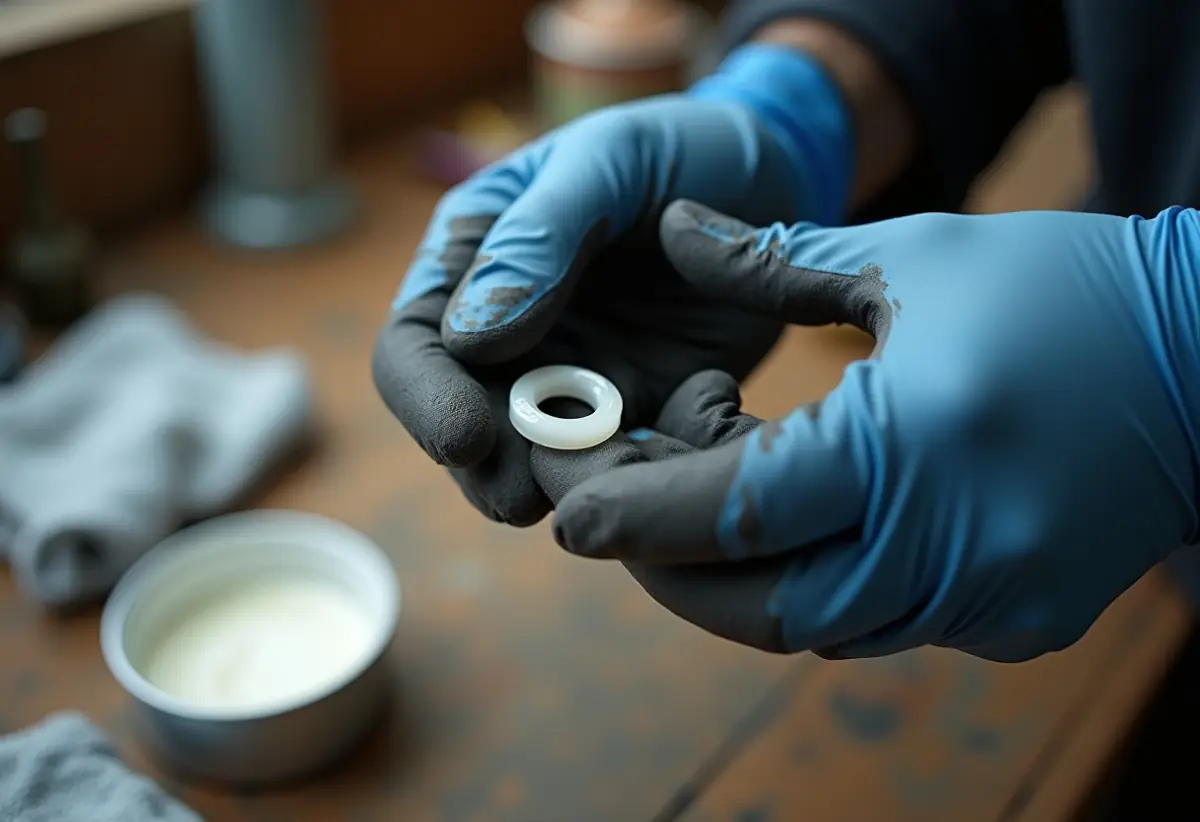
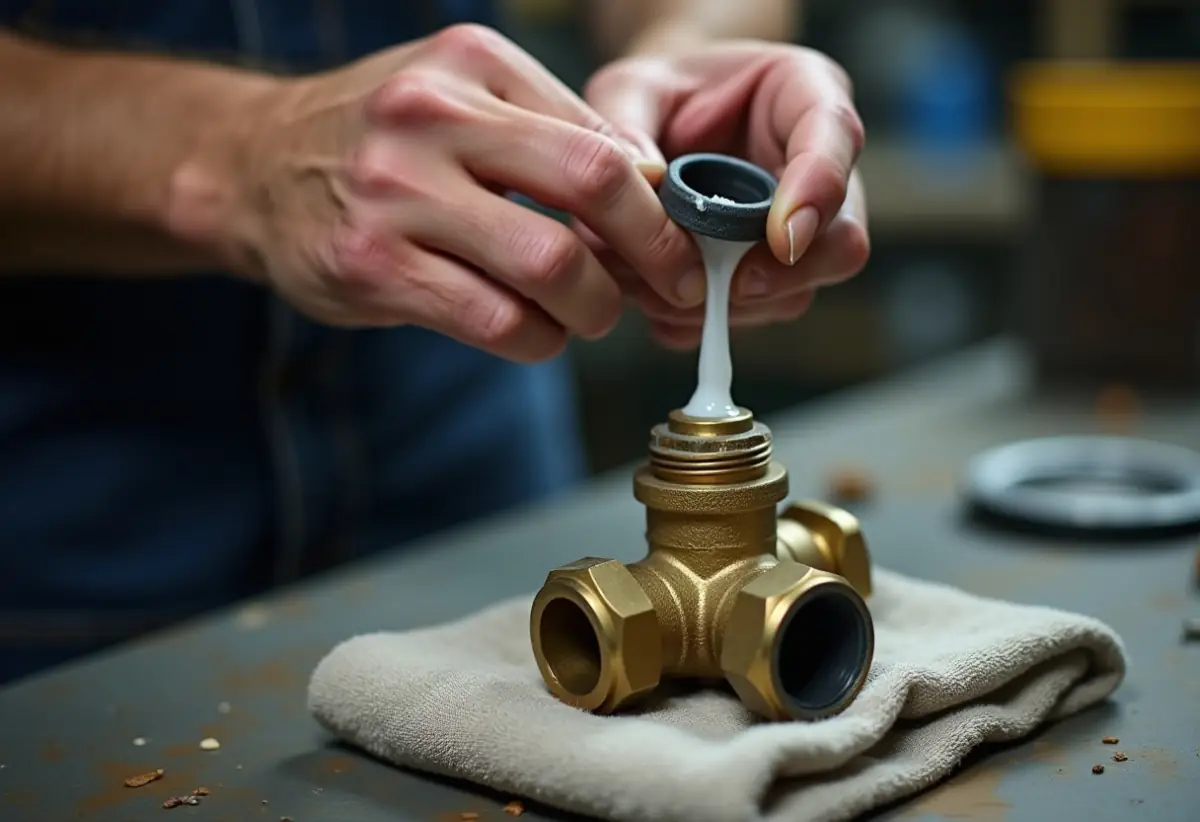
Apply plumbers grease as a thin, even film on a clean, dry O-ring, then wipe the excess. Oatey’s three steps are to clean and dry the surface, apply a thin layer with your fingers or a small paintbrush, and avoid over-applying because excess gets pushed out when parts join.
- Shut off the supply stops or the main, then open the faucet to drain pressure.
- Pull the handle, trim and cartridge or stem.
- Roll the old O-rings off with a plastic pick. A steel screwdriver can scratch the groove and make a new leak path.
- Wipe the groove and the valve bore clean and dry. Grit trapped under grease cuts a fresh O-ring.
- Match the new O-ring by inside diameter and thickness.
- Rub a dab of silicone grease between thumb and finger, then pull the O-ring through it until the whole ring looks wet and glossy.
- Roll the O-ring into its groove without twisting it. A twisted ring shows a spiral line and leaks.
- Smear a light film inside the valve bore where the O-rings will ride, and on any oval or seal surface the maker names, such as the Moen 1222 oval.
- Push the part in straight, wipe off grease that squeezes out, reassemble, and open the water slowly while you watch for drips.
Is plumbers grease safe for drinking water lines?
A plumbers grease is certified for drinking water parts only if it carries an NSF/ANSI 61 listing, the standard for drinking water system components. The Molykote 111 data sheet lists NSF 61 and NSF 51. Oatey’s guide calls Hercules silicone grease safe for potable water systems, but its product page cites no NSF standard, so read the tub yourself.
Three labels get confused. NSF/ANSI 61 covers what leaches from parts that touch drinking water. NSF 51 covers food equipment materials. An NSF H1 registration says a lubricant is acceptable for incidental food contact in a food plant, which is useful in a commercial kitchen but is not a drinking water listing.
If a job spec calls for NSF 61 components, the listing printed on the tub is the proof an inspector or engineer will ask for.
How we sourced this
We used maker sources for every specification: Oatey’s grease guide and its Hercules 40610 and 40601 product pages, the Molykote 111 technical data sheet, and Moen instruction sheet INS746J. The Danco 88693 range comes from a Pace Supply distributor listing because we could not reach a Danco page, and the Black Swan warning from a retailer listing. We checked two Google results pages for “plumbers grease” and a silicone versus petroleum variant in October 2026. We left out prices, which we could not verify on maker pages, and we found no Delta or SharkBite text on grease to quote, so we cite neither on that point. Oatey’s 40601 page lists both 300°F and 325°F, and we report both.
Frequently asked questions
What is plumbers grease used for?
Plumbers grease lubricates and protects moving parts that touch water. Oatey lists valve stems, faucets, ballcock linkages and sump and sewage ejector pump linkages for its Hercules greases, and its silicone version adds rubber and synthetic O-rings. It keeps cartridges sliding, stops O-rings from tearing on install and slows corrosion on metal stems. It does not seal threads or fill gaps.
Can I use Vaseline instead of plumbers grease?
Not on rubber or plastic parts. Petroleum jelly is a petroleum product, and Oatey’s own guide says petroleum-based grease can degrade rubber and plastic over time. Faucet cartridges are mostly plastic bodies wearing rubber O-rings, so the safe swap is a silicone grease such as Hercules 40610, rated to 400°F and labeled for rubber and synthetic O-rings.
Is plumbers grease the same as silicone grease?
Sometimes. Plumbers grease is a job name, not a formula, and it covers silicone, petroleum and blended products. Oatey sells both a silicone Hercules grease (part 40610) and a petroleum Hercules 300 Degree grease (part 40601) under the plumbers grease name. Read the label for the words silicone or contains no petroleum before it touches an O-ring.
Is plumbers grease safe for drinking water?
Only a product listed to NSF/ANSI 61 has been certified for drinking water system components. The Molykote 111 technical data sheet lists NSF 61 and NSF 51. Oatey’s guide calls Hercules silicone grease safe for potable water systems, but its product page names no NSF standard. A food-grade NSF H1 label covers incidental food contact, which is a different program.
Can you use plumbers grease on pipe threads?
No. Grease lubricates, it does not seal. Tapered pipe threads need PTFE thread seal tape or a pipe thread compound that fills the spiral leak path. Grease on threads can let a fitting turn farther than it should and still leak. Keep grease to O-rings, stems and linkages, and keep it off solvent-welded PVC and CPVC joints.
Can you use plumbers grease on toilet parts?
Yes, on the moving parts. Both Oatey Hercules greases list ballcock linkages as a use, so a thin film on a sticky fill valve linkage or flush lever pivot is in bounds. Use silicone grease on any rubber in the tank, including fill valve seals, because Oatey warns petroleum grease degrades rubber over time. Grease is not a fix for a leaking flapper.
How much plumbers grease should I put on an O-ring?
A thin film. Oatey’s application steps are clean and dry the surface, apply a thin layer with a finger or small paintbrush, and avoid over-applying because excess gets pushed out when the parts join. On a faucet O-ring that means the rubber looks wet and glossy all the way around, with no white clumps sitting in the groove.