Metallic Taste in Water: 5 Causes and What Each Test Costs
A metallic taste in water usually points to one of five things, per EPA: iron above 0.3 mg/L, manganese above 0.05 mg/L, copper above 1.0 mg/L, zinc above 5 mg/L, or pH below 6.5.
Key Takeaways
- EPA’s secondary standards list “metallic taste” as a noticeable effect for five items: iron (0.3 mg/L), manganese (0.05 mg/L), copper (1.0 mg/L), zinc (5 mg/L) and corrosive, low pH water.
- Copper has two numbers. EPA’s taste guideline is 1.0 mg/L, and the Lead and Copper Rule action level is 1.3 mg/L at the 90th percentile of tap samples.
- EPA states that you cannot see, taste or smell lead in water. A metallic taste is never a lead test, and a clean taste is never a lead all-clear.
- EPA says a lab test for lead typically costs $20 to $100, and your state or local drinking water authority keeps the list of certified labs.
- EPA does not enforce secondary standards and does not require water systems to test for them, so your city report may not list iron or manganese at all.
Why does my water taste metallic?
Your water tastes metallic because a dissolved metal or acidic water is reaching the tap. EPA’s secondary drinking water standards table names five sources with “metallic taste” as a listed effect: iron, manganese, copper, zinc, and corrosivity, which includes water below pH 6.5. The metal comes from either the source water or your own pipes.
Iron and manganese usually arrive in the source water, especially from a private well. Copper and zinc usually come off the plumbing inside the house, and low pH speeds that up.
EPA’s own wording on corrosion is direct: corrosion of iron and copper can “impart objectionable metallic taste” to water. EPA also notes corrosion control does not remove metals already in source water, so a pH fix will not cure a high-iron well.
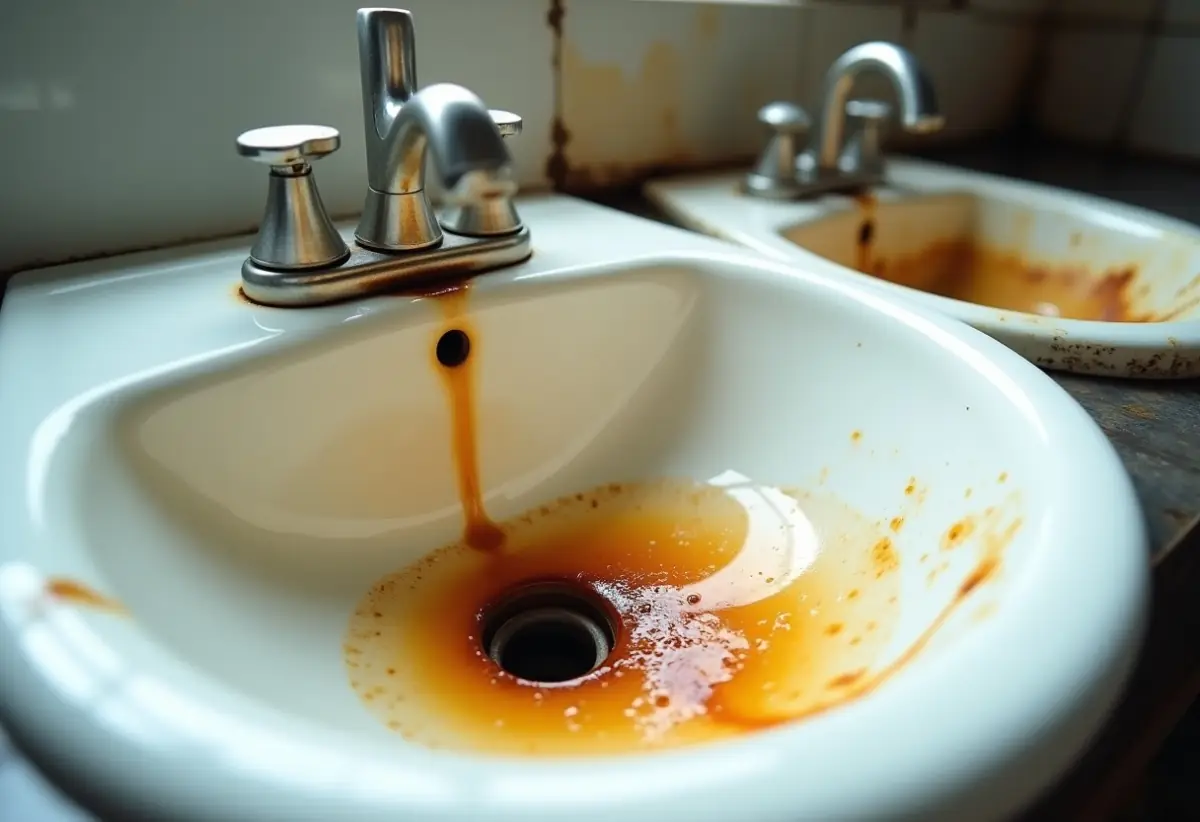
Which of the 5 causes of a metallic taste in water do you have?
You can usually narrow a metallic taste in water to one cause by pairing the flavor with a stain color and the tap where it shows up. Orange or reddish staining points to iron, black or brown staining to manganese, blue-green staining to copper, and corroded fixtures to low pH. Zinc leaves no listed stain, so galvanized pipe is the clue there.
Limits and effects below are EPA’s; the source and fix columns are our plumbing read, so confirm with a lab number before buying equipment.
| Metal or condition | EPA limit | Taste and sign (EPA) | Likely source | First fix |
|---|---|---|---|---|
| Iron | 0.3 mg/L secondary | Metallic taste; rusty color; sediment; reddish or orange staining | Well water, old iron mains, galvanized steel pipe | Oxidizing iron filter on a well; utility complaint on city water |
| Manganese | 0.05 mg/L secondary | Bitter metallic taste; black to brown color; black staining | Well water, some surface supplies | Oxidizing filter sized for manganese; point-of-use reverse osmosis |
| Copper | 1.0 mg/L secondary; 1.3 mg/L action level | Metallic taste; blue-green staining | Copper pipe and brass fittings, worst in new or acidic systems | Flush the line; raise pH; reverse osmosis at the drinking tap |
| Zinc | 5 mg/L secondary | Metallic taste | Galvanized (zinc-coated) steel pipe | Replace the galvanized runs |
| Low pH (corrosive water) | 6.5 to 8.5 range; “non-corrosive” for corrosivity | Bitter metallic taste; corroded pipes; fixture staining | Acidic well water or soft, aggressive supply | Calcite neutralizing filter on a well; report to the utility on city water |
On private wells, start with our guide to iron in well water. Test manganese separately, because its limit is six times lower than iron’s.
Source: EPA secondary standards and primary regulations. Bars to scale.
Does a metallic taste in tap water mean there is lead in it?
No, and the reverse is also true. EPA’s lead in drinking water page says “you cannot see, taste, or smell lead dissolved in water,” so testing is the only sure way to know. A metallic taste comes from copper, iron, zinc, manganese or low pH. Lead can sit in perfectly pleasant water.
The link between the two is corrosion. Acidic water that pulls copper off pipe walls can pull lead off a lead service line, old solder or brass fittings at the same time. So a metallic taste in an older house is a reason to test for lead, not a reading of it.
The regulatory numbers frame the stakes. EPA’s goal (MCLG) for lead is zero, and the current action level is 15 parts per billion when more than 10 percent of tap samples exceed it. The 2024 Lead and Copper Rule Improvements lower that trigger to 10 ppb on November 1, 2027. If you are not sure what your service line is made of, our walkthrough on how to identify lead pipes walks through the checks at the meter.
Which taps and times point to your own plumbing?
The taste pattern tells you whether the metal comes from the utility or from inside your walls. A taste that is strongest on the first draw in the morning and fades after the tap runs points to your pipes. A taste that is identical at every tap, hot and cold, at any hour points to the source water. EPA ties the stagnation effect to pipes.
- First draw only: water sat overnight against copper, brass or galvanized steel. EPA advises flushing your pipes by running the tap before drinking and asking the utility how long to run it, since the right time depends on whether you have a lead service line.
- Hot tap only: hot water dissolves more metal, and the hot side passes through the water heater tank. EPA tells households to use only cold water for drinking, cooking and baby formula.
- New copper plumbing: fresh copper has no settled mineral scale yet, so a repipe can bring a few months of copper taste, worse if the water is acidic.
- Galvanized steel lines: the zinc coating wears through and the steel rusts, so zinc and iron show up together.
Run this four-step check in about 10 minutes before you pay for any test:
- Taste the cold kitchen tap first thing in the morning, before anyone uses water.
- Run the cold tap until the water turns noticeably colder, then taste again.
- Taste the hot tap after a full run, cooled in a glass.
- Taste the cold tap at a second fixture on another branch, such as an upstairs bath.
Your notes tell the lab which sample to take. For the broader safety picture on city water, see our breakdown of whether your tap water is safe to drink.
How much does it cost to test water that tastes like metal?
Testing water that tastes like metal runs from free to roughly $100 for a single analyte. Your utility’s annual water quality report costs nothing, and EPA says a lab test for lead typically costs $20 to $100. A panel that adds iron, manganese, copper, zinc and pH costs more, and prices vary by lab, so ask each certified lab for its fee sheet.
| Test option | What it tells you | Cost | Main limit |
|---|---|---|---|
| Utility annual water quality report (Consumer Confidence Report) | Regulated contaminants for the whole system; copper and lead as 90th percentile tap results | Free from your utility | EPA does not require systems to test secondary items like iron, manganese or zinc, so they may be missing |
| State-certified lab, lead | Lead at your tap, first draw | $20 to $100 (EPA) | One analyte; add copper on the same sample |
| State-certified lab, metals panel | Iron, manganese, copper, zinc and pH at your tap | Varies by lab; request the fee sheet | You collect the sample, so follow the lab’s bottle and timing instructions |
EPA says the list of certified labs comes from your state or local drinking water authority. Ask for a first-draw sample taken after water sat overnight if you suspect your pipes, and a flushed sample too if you want to separate plumbing metal from source metal.
Home test strips show trends as color ranges, not lab numbers, and should never be used to clear lead. On a private well nobody tests for you, so our guide to well water testing lays out which panel to order and how often.
How do you get rid of a metallic taste in water?
You get rid of a metallic taste in water by treating the specific cause, not by buying a generic filter. Flushing fixes stagnation copper, a calcite neutralizer fixes water below pH 6.5, an oxidizing filter fixes iron above 0.3 mg/L and manganese above 0.05 mg/L, and point-of-use reverse osmosis covers the drinking tap when you cannot fix the plumbing.
- Flush (copper and stagnation). Run the cold tap after water has sat, as EPA advises, and draw drinking and cooking water from cold only.
- Neutralize (pH below 6.5). A calcite tank on a well dissolves into the water and raises pH back into EPA’s 6.5 to 8.5 range, which slows copper and lead leaching.
- Oxidize and filter (iron and manganese). An oxidizing media filter turns dissolved iron and manganese into particles it can trap and backwash. Size it to your lab numbers.
- Reverse osmosis at one tap. An under-sink unit certified to NSF/ANSI 58 cuts dissolved metals at the drinking faucet.
- Replace the pipe (galvanized or lead). When zinc and iron come off corroded galvanized steel, or a lead line is present, replacement is the only permanent fix.
On city water, call the utility before you buy anything. Corrosion control is part of how systems meet the 1.3 mg/L copper action level, so report a low pH reading.
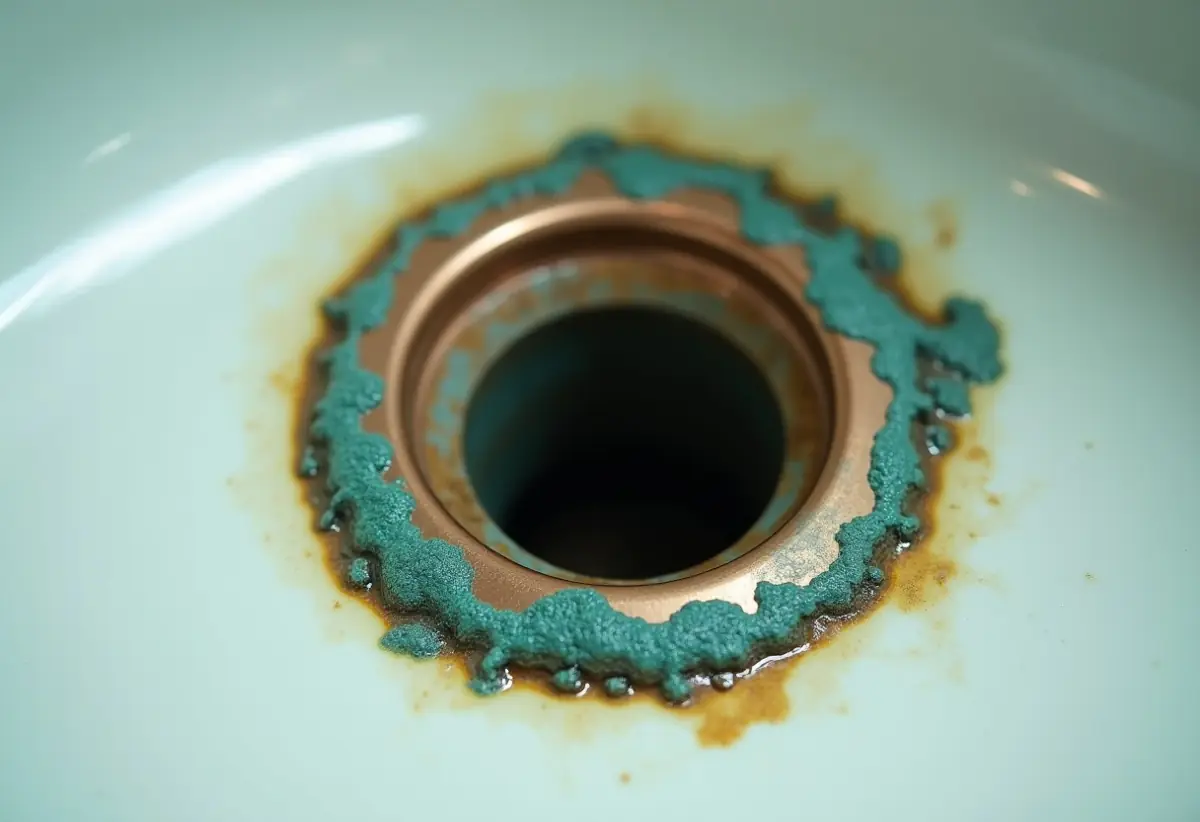
When is copper in water a health problem?
Copper becomes a health concern at the point EPA’s rules switch from taste to action. The secondary standard of 1.0 mg/L is about taste and blue-green stains, while the Lead and Copper Rule action level of 1.3 mg/L, measured at the 90th percentile of tap samples in EPA’s primary drinking water regulations, triggers required steps from the water system.
Water at 1.1 or 1.2 mg/L copper can taste metallic and still sit under the action level, so treat a copper taste as a signal to test.
The health record backs that up. A peer-reviewed review of metallic off-flavors in drinking water published on PubMed Central reports that copper contamination of drinking water was identified as the source of 27 illness outbreaks in the US since 1971.
What if the water tests clean but still tastes like metal?
If a lab panel comes back under every EPA limit and the water still tastes metallic, the cause may be you rather than the pipes. Pour a glass of bottled water and taste it side by side with the tap. If both taste metallic, the plumbing is off the hook, and a doctor, pharmacist or dentist is the right next call.
If only the tap tastes metallic and the panel is clean, retest with a first-draw sample from the exact fixture where you notice it.
How we sourced this
We ran two live searches for this keyword in October 2026, read the top vendor and lab pages for coverage, and cite five primary or peer-reviewed sources: EPA’s secondary drinking water standards table, EPA’s lead in drinking water page, EPA’s National Primary Drinking Water Regulations, the 2024 Lead and Copper Rule Improvements in the Federal Register, and a peer-reviewed review on PubMed Central. All limits are EPA’s published numbers. We excluded water-treatment vendor blogs as sources for any figure. We did not verify a state lab fee schedule for a full metals panel or an EPA manganese health advisory value, so neither appears here.
Frequently asked questions
Is it safe to drink water that tastes like metal?
Often it is, because EPA treats iron, zinc and most taste problems as aesthetic issues with unenforced secondary limits. Copper is the exception to watch, since its taste limit is 1.0 mg/L and its health trigger is 1.3 mg/L. Lead has no taste at all, so a metallic flavor tells you nothing about lead either way. Test before deciding.
Why does my water suddenly taste like metal?
A sudden change usually traces to something that moved recently. Common triggers are a repipe in new copper, work on the water main that stirs up iron sediment, a water heater that has not been flushed, or water that sat in the lines during a trip. Run the cold tap, compare hot and cold, and test if the taste lasts.
Can lead make water taste metallic?
No. EPA states that you cannot see, taste or smell lead dissolved in water, and that testing is the only sure way to know. Corrosive water that leaches lead often leaches copper or iron too, and those metals do have a taste. So the flavor can point to corrosion, but only a lab test can rule lead in or out.
Why does my hot water taste metallic but not my cold water?
Hot water dissolves more metal from pipes and fittings, and the hot side runs through the water heater tank, where sediment collects. If only the hot tap tastes metallic, the heater or the hot lines are the likely source. EPA advises using only cold water for drinking, cooking and baby formula for this reason.
Why does my water taste like metal in the morning?
Water that sits in your pipes overnight has hours of contact with copper, brass and galvanized steel, so the first draw carries the most dissolved metal. If the taste fades after the tap runs, your own plumbing is the source rather than the utility. EPA advises flushing before drinking and asking your utility how long to run the tap.
Can low pH make water taste metallic?
Yes. EPA lists a bitter metallic taste and corrosion as the effects of water below pH 6.5, the bottom of its 6.5 to 8.5 secondary range. Acidic water also pulls copper and lead out of plumbing. A calcite neutralizing filter raises pH on well systems, and a city customer should report the reading to the utility.
How much does it cost to test water for metals?
EPA says a lab test for lead typically costs $20 to $100, and a panel that adds iron, manganese, copper, zinc and pH costs more depending on the lab. Your utility’s annual water quality report is free but covers the system, not your tap. Get a list of certified labs from your state drinking water program.