Ghost Flushing Toilet: Why It Refills by Itself
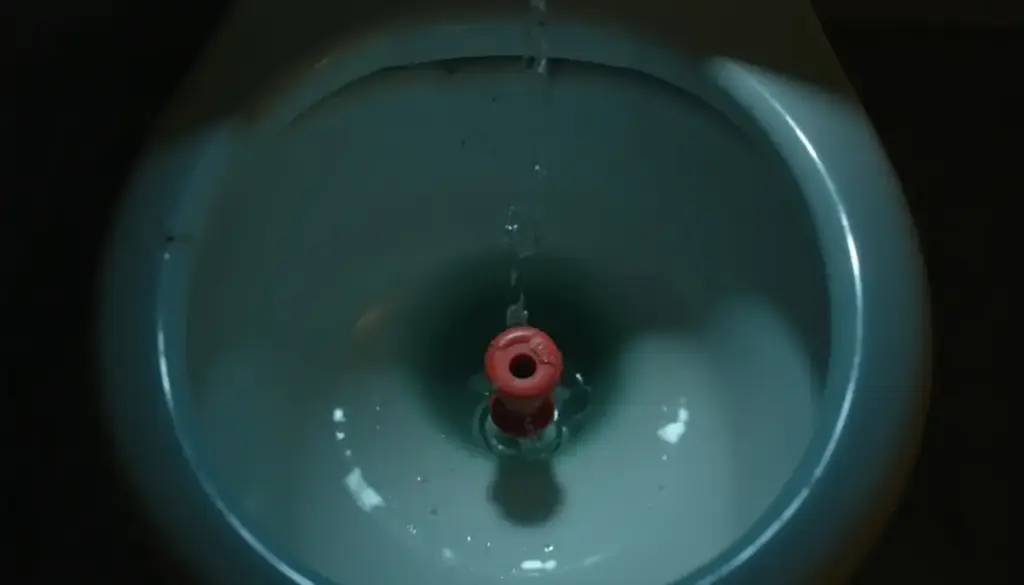
A ghost flushing toilet is slowly leaking tank water into the bowl until the fill valve kicks on to refill it, and a worn flapper is the usual cause.
Key Takeaways
- EPA WaterSense says to drop food coloring in the tank and check the bowl after 10 minutes; color in the bowl means a tank-to-bowl leak.
- Fluidmaster says flapper leaks cause refills seconds or minutes apart, while a leaking flush valve gasket can space them hours or days apart.
- Fluidmaster says a refill tube pushed into the overflow pipe below the water line siphons the tank.
- Korky says a new flapper costs less than 20 dollars and takes about 10 minutes. Match it to the drain: Fluidmaster 502 or Korky 2017 for 2-inch, Fluidmaster 5403 or Korky 3070 for 3-inch.
- A pitted 2-inch seat can be resurfaced without pulling the tank using the Fluidmaster 555C or Korky 2003MP kit.
- EPA says the average home’s leaks waste more than 9,300 gallons a year, and it recommends replacing the flapper at least every five years.
What is a ghost flushing toilet?
A ghost flushing toilet refills on its own, with nobody touching the handle, because water is escaping from the tank. When the level drops far enough, the float falls and opens the fill valve for a few seconds. Fluidmaster calls ghost flushing “merely a fill valve’s way of letting you know you have water leaking out of your tank.” The fill valve is the messenger, not the culprit.
It sounds like a few seconds of running water at random times, often at night. If your toilet runs nonstop instead, the fault is usually different; our guide to fixing a running toilet by cause covers constant running.
The interval tells you the leak speed. Fluidmaster says flapper leaks refill “seconds apart or minutes apart,” while a flush valve gasket leak can space them “hours apart or even days apart.”
What causes a toilet to refill by itself?
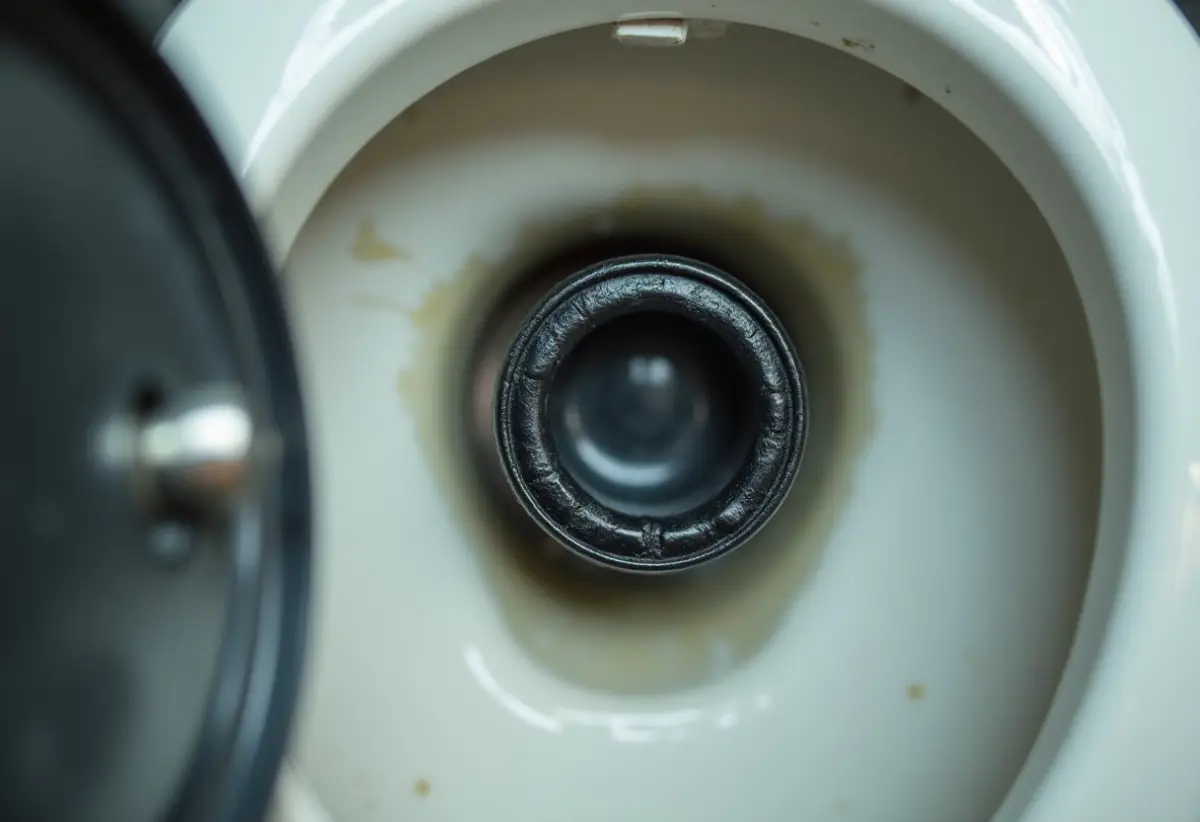
Six faults inside the tank account for most ghost flushes, and five of them sit at the bottom of the tank. Korky says the flapper is the most common source of a leaking toilet, and Fluidmaster’s leak diagram calls flapper leaks “the most common leak point.” The others are mineral or debris on the seat, a bad chain, a siphoning refill tube, a cracked overflow tube, and a water level set too high.
- Worn or warped flapper. Rubber stiffens and curls with age and chlorine. EPA says to replace it at least every five years.
- Mineral buildup or nicks on the flush valve seat. Fluidmaster says to run a finger around the rim to feel for nicks or unevenness.
- Chain too short or too long. A tight chain holds the flapper open; a loose one drops links under it. Fluidmaster specifies 1/4 to 1/2 inch of slack; Korky says 1 to 2 links.
- Refill tube pushed into the overflow below the water line. Fluidmaster says the tube then siphons water from the tank into the bowl, the level drops, and “a Ghost Flush will occur.”
- Cracked overflow tube. Fluidmaster notes plastic overflow pipes “can become brittle” and crack.
- Water level set too high. Korky says to set the level 1/2 inch below the top of the overflow tube.
A seventh cause hides under the tank: the flush valve gasket. Fluidmaster says this leak is “usually not visible and almost always leaks into the bowl,” so it mimics a flapper leak.
How do you test a ghost flushing toilet?
Start with the EPA dye test, then use a pencil-mark test to find where the water is escaping. EPA WaterSense says to put a few drops of food coloring in the tank, wait 10 minutes without flushing, and look for color in the bowl. A positive result confirms a tank-to-bowl leak, but not which part is leaking.
Fluidmaster warns that dye “does not always verify a slow leak and does not confirm where the leak is occurring.” Its pencil-mark method does both. Korky’s version waits at least 25 minutes.
- Let the tank fill completely, then turn the supply stop behind the toilet clockwise until it stops. Do not flush.
- Draw a pencil line on the inside of the tank at the water level.
- Wait 15 minutes (Fluidmaster) to 25 minutes (Korky). If the level dropped, draw a new line.
- Keep checking until the level stops falling; the water drains to the leak point and holds.
| Test result | Likely cause | Fix |
|---|---|---|
| Dye shows in bowl within 10 min; level stops just below the flapper | Worn flapper or damaged seat (Fluidmaster) | Clean seat, replace flapper; seat kit if the rim is pitted |
| Level drains almost completely; refills hours or days apart | Flush valve gasket under the tank (Fluidmaster) | Pull tank, replace flush valve and gaskets |
| Level stops at a point on the overflow tube | Crack in the overflow tube (Korky) | Replace the flush valve assembly |
| Dye clear, but water trickles from the refill tube into the overflow | Refill tube siphoning (Fluidmaster) | Clip tube to the top of the overflow, outlet above the water |
| Water spills over the top of the overflow tube | Water level too high | Lower float so water sits 1/2 in below the overflow top (Korky) |
| Dye clear, level holds with supply off, but toilet still runs | Fill valve not shutting off | Clean or replace the fill valve |
Flush right after a dye test. EPA notes the color can stain the tank if it sits.
How do you fix a ghost flushing toilet, step by step?
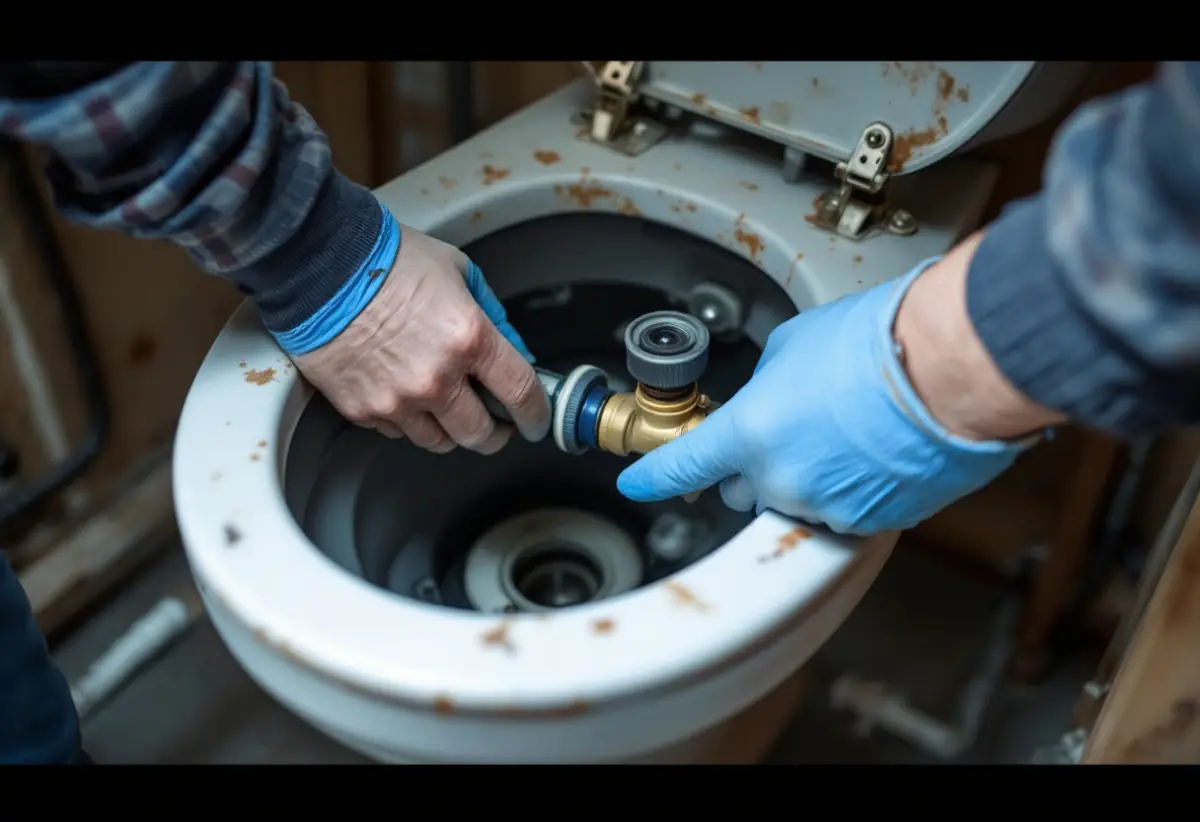
Work from free adjustments to paid parts, and stop when the refills stop. Fluidmaster’s own order is refill tube, then flapper, then the whole flush valve, and Korky says a flapper swap takes about 10 minutes. Shut the supply valve and flush to empty the tank before touching parts at the bottom.
- Reposition the refill tube. If it is pushed down inside the overflow pipe, pull it out and clip it to the top of the overflow so the outlet sits above the water line at all times (Fluidmaster). Free.
- Set the chain. Hook it to the lever hole directly above the flapper so it pulls straight up, with 1/4 to 1/2 inch of slack (Fluidmaster) or 1 to 2 links (Korky). Free.
- Check the water level. Lower the float until the level sits 1/2 inch below the top of the overflow tube (Korky). Free.
- Clean the flapper and seat. Wipe slime and grit off the flapper and seat with a clean cloth. Fluidmaster says to clean, rather than replace, a flapper under 5 years old.
- Replace the flapper. If it is over 5 years old, Fluidmaster says to “simply change it.” Match it to the drain size (next section).
- Resurface the seat. If a new flapper still leaks and the rim feels rough, install a 2-inch seat repair kit (Fluidmaster 555C or Korky 2003MP) without removing the tank.
- Replace the flush valve. If the tank drains completely or the overflow is cracked, pull the tank and install a new flush valve, such as Fluidmaster K-507A-008 (2-inch) or 540AKR (3-inch).
Rerun the dye test after each step. Unsure of your size? Our 2-inch vs 3-inch flush valve guide walks through measuring the opening.
Which flapper or repair part fits your toilet?
Buy by flush valve size, not toilet brand. Korky says an opening about the size of an orange or baseball takes a standard 2-inch flapper, and one closer to a grapefruit or softball takes a large 3-inch flapper. Korky adds that most toilets made before 2000 use 2-inch. Tower and canister valves take a model-specific seal instead.
| Part | Fits | Maker notes |
|---|---|---|
| Fluidmaster 502 PerforMAX | 2-inch flush valve | Adjustable dial flapper; Fluidmaster’s 2-inch pick for ghost flushing |
| Korky 2017 Ultra 2X | 2-inch flush valve | Chlorine-resistant red rubber; adjusts for 1.28, 1.6, 3.5 and 5 gpf; 10-year warranty |
| Fluidmaster 5403 | 3-inch flush valve | Universal adjustable 3-inch flapper |
| Korky 3070 | 3-inch flush valve | Large 3-inch 2X long-life flapper; fits most 3-inch toilets |
| Fluidmaster 523A Super Flapper | 2-inch or 3-inch | Universal pick when you cannot measure first |
| Fluidmaster 503, 504 (pre-1994) or 5051 (post-1994) | 2-inch, oval overflow or angled seat | Flexible frame for seats where rigid flappers gap at the back |
| Fluidmaster 555C or Korky 2003MP | 2-inch seat only | New seat plus flapper, no tank removal |
Korky’s FAQ says most of its flappers carry a 5-year warranty and its 2X flappers carry 10 years. For how flapper rubber wears, see our explainer on how a toilet flapper seals and wears out.
Can you fix a pitted flush valve seat without removing the tank?
Yes, on most 2-inch valves. A seat repair kit glues a new plastic rim over the old seat, so the flapper seals on fresh material. Fluidmaster says its 555C works on plastic, ceramic and metal seats, needs no tank removal, and suits toilets made after 1985. Korky’s 2003MP does the same job with silicone sealant and an adjustable flapper.
The 555C uses a pre-applied sealant ring, while the Korky kit uses silicone. Neither fits 3-inch valves, so a damaged 3-inch seat means a new flush valve such as the Fluidmaster 540AKR (a 3-inch flush valve sold with bolts).
Prep decides whether the seal holds. Fluidmaster’s 555C instructions call for these steps:
- Shut off the supply, flush, sponge the tank dry, and remove the old flapper.
- Scrub the old seat with a brush and warm soapy water, rinse, and dry it with a clean towel. For stubborn scale, the sheet lists sandpaper, steel wool or emery cloth.
- On a porcelain seat, wipe with rubbing alcohol and let it dry. Fluidmaster says the sealant ring must stay dry until it is pressed on.
- Position the seat with the chain toward the lever, peel the paper, and press firmly.
- Connect the chain with about 1/2 inch of slack, restore water, and set the flapper dial (it ships on 9; step down one number at a time until the flush fails, then go back up one).
How much water does a ghost flushing toilet waste?
EPA WaterSense does not give a single figure for ghost flushing, because the rate depends on the leak. It does say an old or worn flapper can cause a toilet to “flush on its own or silently leak thousands of gallons a year,” and that 9 percent of homes have leaks wasting 50 gallons or more per day. Toilets already account for nearly 30 percent of indoor use.
The top bar is our arithmetic: EPA’s 50 gallon per day threshold times 365. The others are EPA’s published annual figures. A fast flapper leak can land in the top group; a slow one may waste less than a dripping faucet.
Your water meter gives the real number. EPA says to read it before and after a two-hour stretch with no water use; any change suggests a leak. For normal use per flush by toilet age, see how much water a toilet uses.
When should you call a plumber for a toilet that runs every few minutes?
Call when the fix means pulling the tank or buying proprietary parts. That covers a leaking flush valve gasket (the tank drains nearly empty with the supply off), a cracked overflow tube, a corroded brass flush valve, and tower or canister valves with model-specific seals. Everything above the seat is a homeowner job.
- Flush valve gasket leak. Fluidmaster recommends replacing the flush valve and gaskets. On a new install that leaks, it says to tighten the lock nut no more than 1/2 turn past hand tight.
- Brass overflow pipe with pinholes. Fluidmaster says some brass pipes are threaded at the bottom and can be tightened, but pinholes or corrosion mean replacement.
- One-piece or low-profile tanks. Fluidmaster says its 400CARP kit will not fit low-profile one-piece toilets, toilets with 3-inch flush valves, or canister valves, so parts may need to come from the toilet maker.
How we sourced this
We used current EPA WaterSense leak and toilet pages, Fluidmaster’s ghost flushing, flapper leak and 555C pages and install sheet, and Korky’s troubleshooting, product and FAQ pages, accessed October 2026. Part numbers come only from maker pages. We excluded the widely repeated 200 gallons per day figure for a running toilet because we could not find it on a current EPA page. The 18,250 gallon chart bar is our calculation from EPA’s 50 gallon per day threshold.
Frequently asked questions
Why does my toilet refill by itself every few minutes?
Water is leaking from the tank into the bowl. As the level drops, the float opens the fill valve until the tank is full again. Fluidmaster says flapper leaks cause refills seconds or minutes apart, while a leaking flush valve gasket can space them hours or days apart.
Is a ghost flushing toilet a serious problem?
It will not flood the bathroom, because the leaking water goes down the drain. The cost is water. EPA WaterSense says a worn flapper can silently leak thousands of gallons a year, and 9 percent of homes have leaks that waste 50 gallons or more per day.
How long should I wait for a toilet dye test?
EPA WaterSense says to check the bowl 10 minutes after adding food coloring to the tank. Slow leaks may take longer to show. Fluidmaster’s pencil-mark method checks every 15 minutes with the supply off, and Korky says to wait at least 25 minutes.
Why is my toilet still ghost flushing after I replaced the flapper?
Check the chain first, since a short chain holds the flapper open and a long one gets trapped under it. Then check that the refill tube is not siphoning from inside the overflow pipe, and feel the seat for pits. If the tank drains nearly empty with the supply off, the flush valve gasket is leaking.
How much does it cost to fix ghost flushing?
Korky says a new flapper costs less than 20 dollars and takes about 10 minutes to install. A seat repair kit such as the Fluidmaster 555C or Korky 2003MP adds a new seat and flapper without pulling the tank. Replacing the flush valve means removing the tank, where many homeowners hire a plumber.
Do bleach tablets cause ghost flushing?
They can. Fluidmaster says chlorine tablets in the tank are a common reason a flapper warps, and a warped flapper stops sealing. It also warns that in-tank bleach or chlorine cleaners damage tank parts, may cause flooding, and void its warranty. Remove the tablet and replace the flapper.
What causes a phantom flush in a toilet?
It happens when tank water leaks slowly into the bowl until the float drops enough to trigger the fill valve. A worn or warped flapper is the usual cause, but mineral buildup on the seat, a bad chain, a siphoning refill tube, a cracked overflow tube, a high water level, or a leaking flush valve gasket can also cause it.
Can a phantom flush be fixed without calling a plumber?
Often yes. Repositioning the refill tube, adjusting the chain, lowering the water level, cleaning or replacing the flapper, and installing a seat repair kit are homeowner jobs that need no tank removal. A plumber becomes necessary when the fix requires pulling the tank, such as a leaking flush valve gasket, cracked overflow tube, corroded brass valve, or proprietary canister parts.