Types of Bathtubs: Styles, Materials, and Costs Compared
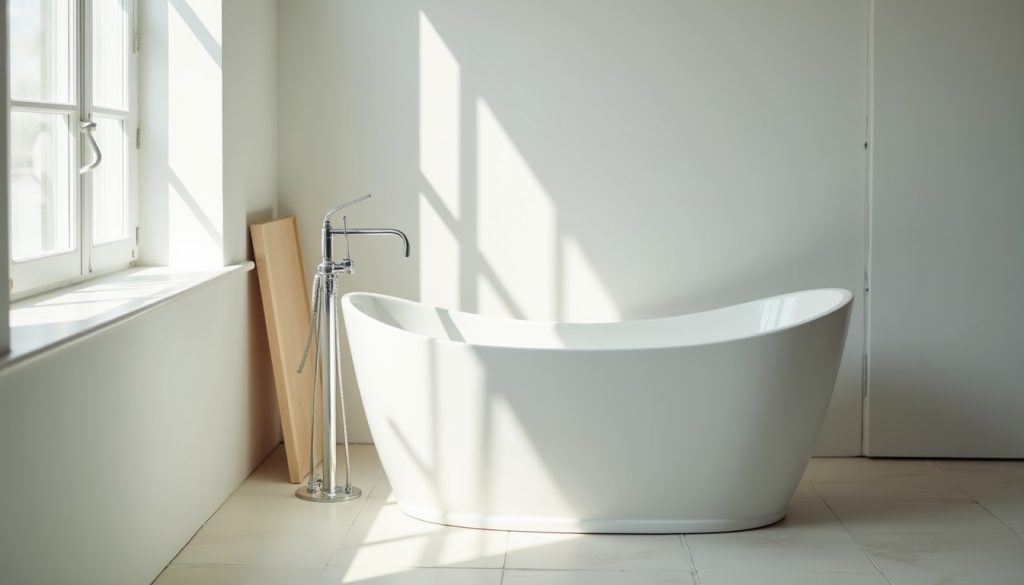
Bathtubs come in a handful of common installation styles, from alcove to walk-in, and four main materials; the right pick depends on your space, your plumbing rough-in, and your budget.
Key Takeaways
- The five installation styles are alcove, drop-in, undermount, freestanding, and corner; soaking and walk-in describe use, not a fixed shape.
- A standard alcove tub is about 60 inches long, 30 to 32 inches wide, and 14 to 16 inches high, per bathtub maker Aquatica.
- Cast iron tubs weigh roughly 300 to 500 pounds and can last decades; acrylic tubs weigh about 60 to 100 pounds and are the common lightweight choice.
- Walk-in tubs average around $8,000 installed and range from $4,000 to $15,000, the priciest common type, per Angi.
- Accessible tub grab bars mount 33 to 36 inches above the tub floor, and thresholds are limited to 1/2 inch, per the US Access Board.
- Alcove tubs ship in left-hand and right-hand drain versions; the drain roughs in about 14 to 16 inches from the back wall, so confirm the hand before ordering (plumbing rough-in spec).
What are the main types of bathtubs?
Bathtubs sort two ways. First by how they install: alcove, drop-in, undermount, freestanding, and corner. Second by shape or use: a soaking tub is simply a deeper tub for full immersion, and a walk-in tub adds a door and seat for accessibility. Any given tub combines an installation style with a material, for example an acrylic alcove tub or a cast iron freestanding tub.
Installation style drives the biggest cost and plumbing differences, so it is the first decision. Whether a tub even fits your room often comes down to a shower vs bathtub choice for the space you have.
The five installation styles
An alcove tub drops into a three-wall recess with one finished apron front, the most common layout in American homes and the usual base for a tub and shower combo. A drop-in tub has a finished rim that rests on top of a built deck. An undermount tub mounts below the deck so the countertop laps over its edge. A freestanding tub stands alone, finished on all sides. A corner tub is triangular to tuck into a corner.
Bathtub types compared: which installation style fits your bathroom?
No single bathtub type wins for every room. Alcove is the affordable, space-efficient default; freestanding and undermount are design-led and cost more; walk-in trades looks for safe access. The table below compares the common tub types on how they install, who they suit, and a typical installed cost range for 2026. Costs are US figures blending fixture and labor, and they move with material, brand, and how much plumbing has to shift.
| Tub type | How it installs | Best for | Typical installed cost |
|---|---|---|---|
| Alcove | Three-wall recess, one apron front | Standard family baths, tub and shower combos | $800 to $3,300 |
| Drop-in | Rim rests on top of a built deck | Custom decks and platforms | $700 to $3,000+ |
| Undermount | Mounted below a finished deck | Tiled or stone decks, a clean edge | $1,000 to $4,000+ |
| Freestanding | Stands alone, finished all sides | Primary baths with open floor space | $1,500 to $8,000+ |
| Corner | Triangular, fits into a corner | Larger baths wanting a soaking spot | $1,000 to $4,000 |
| Soaking | Deeper basin, often freestanding or drop-in | Long soaks, full-body immersion | $700 to $5,000+ |
| Walk-in | Watertight door, seat, low threshold | Mobility needs, aging in place | $4,000 to $15,000+ |
A soaking tub is not a separate installation type. It is any tub deep enough to cover the bather, usually 15 inches of water or more versus the 12 or so inches a standard tub holds, and it can come as a freestanding, drop-in, or alcove unit.
What bathtub materials should you choose?
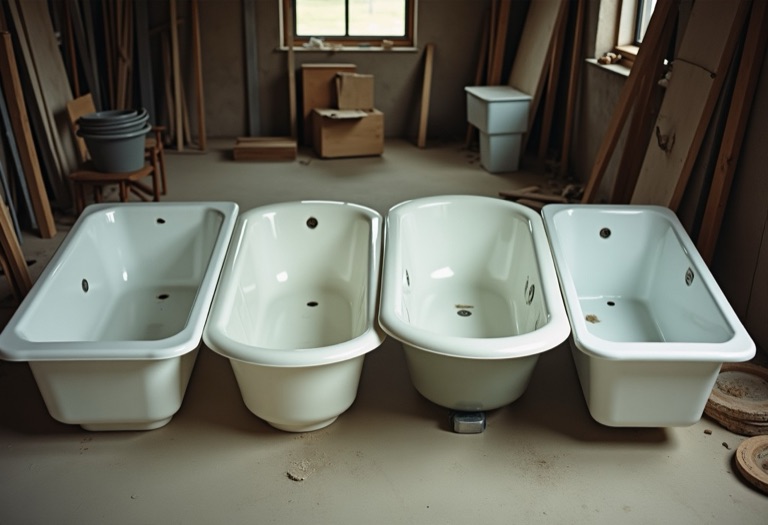
Four materials cover almost every tub: acrylic, fiberglass, cast iron, and porcelain-enameled steel. They differ most in weight, durability, heat retention, and price. Acrylic is the popular middle ground, cast iron is the heavy long-term pick, fiberglass is the budget option, and enameled steel sits between fiberglass and cast iron.
| Material | Typical weight | Durability | Notes |
|---|---|---|---|
| Acrylic | ~60 to 100 lb | Good; reinforced, scratch-resistant | Lightweight, holds heat well, easy to install and repair |
| Fiberglass | Lightest common option | Lowest; can flex and wear faster | Cheapest, needs solid support underneath |
| Cast iron | ~300 to 500 lb | Highest; lasts decades, refinishable | Enamel resists scratches, holds heat; often needs reinforced floor |
| Enameled steel | Mid-weight, heavier than acrylic | Moderate; enamel can chip | Cheaper than cast iron, loses heat faster |
The weight gap is the practical dividing line. A cast iron tub at 300 to 500 pounds often needs reinforced floor joists and at least two people to set, while an acrylic tub at 60 to 100 pounds is manageable for a careful DIY install. If durability and heat retention matter most and the floor can carry it, cast iron wins. For most bathrooms, acrylic balances weight, warmth, and cost.
What is a walk-in tub, and who needs one?
A walk-in tub has a watertight door and a built-in seat, so a bather steps over a low threshold instead of climbing over a high wall. The entry sits about 6 to 7 inches off the floor versus 14 to 16 inches on a standard tub, and the seat gives a stable place to transfer. Walk-in tubs suit older adults and people with limited mobility who want to keep bathing safely at home.
Accessibility hardware follows published standards. Per the US Access Board, grab bars in accessible bathing spaces mount 33 to 36 inches above the tub floor, measure 1 1/4 to 2 inches across, and leave 1 1/2 inches of clearance to the wall, while thresholds are limited to 1/2 inch. Residential walk-in tubs are not automatically ADA units, but many borrow these dimensions. A common tradeoff is that the bather sits inside while the tub fills and drains, so faster fill valves and quick-drain kits are worth checking. Check fill valve flow rates when comparing walk-in tub options to standard fixtures throughout the bathroom.
How much do bathtubs cost?
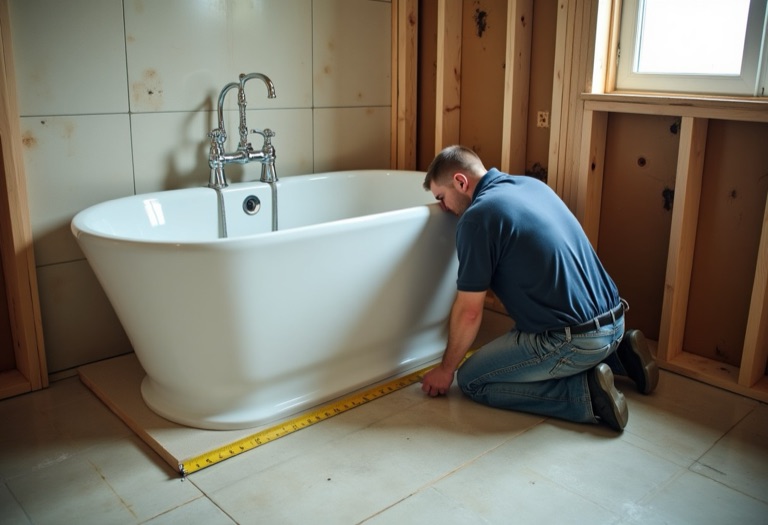
Bathtub cost depends far more on type and plumbing than on the tub alone. A basic alcove swap that reuses the existing drain and supply can start near $1,000, while a freestanding or undermount tub in a full remodel climbs into the thousands once decking, flooring, and rough-in are counted. Walk-in tubs are the outlier, averaging about $8,000 installed.
Read the chart as representative installed midpoints, not fixed quotes; each type spans the wider range in the table above. The single biggest cost lever is whether the drain and supply stay put. Relocating fixtures pushes a tub swap into remodel territory, which our guide to bathroom remodel plumbing breaks down.
What plumbing and drain rough-in does a new bathtub need?
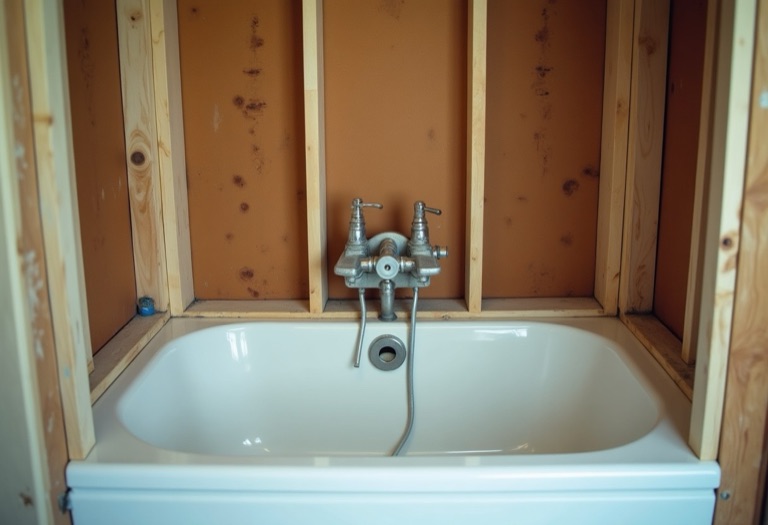
Every tub needs a drain with a P-trap and an overflow, plus hot and cold supply feeding the valve. On a standard alcove tub the drain roughs in about 14 to 16 inches from the finished back wall, and supply lines commonly land 20 to 22 inches above the floor, though the tub spec sheet is the final word. The trap sits below the subfloor, so drain position is fixed early.
The detail that trips up replacements is drain hand. Alcove tubs are made in left-hand and right-hand versions, named for the drain end as you face the tub, and the two are not interchangeable with existing plumbing. Confirm your drain hand before ordering, because a misplaced drain can force subfloor and tile rework. Freestanding tubs often use a floor-mounted or freestanding filler, which adds its own rough-in under the slab or floor.
- Measure the drain distance from the finished back wall and note which end it sits on (left or right hand).
- Match the tub’s rough-in and drain hand to your existing plumbing, or plan for the drain to move.
- Confirm the supply and valve height against the tub or filler spec sheet before framing or tiling.
Once the tub is set and the surround is finished, sealing the joint matters, and our guide to how to caulk a bathtub covers a clean bead. If the tub later drains slowly, see how to unclog a bathtub drain.
Which type of bathtub should you choose?
Match the tub to the room, the floor, and the household. For most family bathrooms, an acrylic alcove tub is the practical default: it fits a standard recess, works as a tub and shower combo, and keeps cost and weight down. Pick freestanding or undermount when the bathroom is large and design is the priority, and budget for the extra decking or open floor space they need.
Choose cast iron if you want a tub that lasts decades and the floor framing can carry 300 to 500 pounds. Choose a walk-in tub when safe entry matters more than looks, and check the fill and drain speed. Whatever the style, confirm three things before buying: the interior length and depth for comfort, the material weight against your floor, and the drain hand and rough-in against your existing plumbing.
How we sourced this
Standard alcove tub dimensions (about 60 inches long, 30 to 32 inches wide, 14 to 16 inches high) come from bathtub manufacturer Aquatica’s size guide. Material weights (cast iron roughly 300 to 500 pounds, acrylic roughly 60 to 100 pounds) and durability notes are drawn from published bathtub material comparisons. Installed cost ranges, including the roughly $8,000 walk-in tub average and $4,000 to $15,000 range, come from Angi’s 2026 cost data alongside general US market ranges for other tub types; figures are presented as ranges because they vary by fixture, material, labor, and region. The chart uses representative installed midpoints, not fixed quotes. Accessibility figures (grab bars 33 to 36 inches above the tub floor, 1 1/4 to 2 inch bar diameter, 1 1/2 inch wall clearance, 1/2 inch threshold limit) come from the US Access Board’s ADA bathing rooms guidance. Drain and supply rough-in dimensions reflect standard plumbing rough-in references and vary by the tub’s own spec sheet. Retailer and remodeler guides were read for context but not cited as figures.
Frequently asked questions
What are the main types of bathtubs?
Bathtubs are grouped two ways: by how they install and by the shape or use. The main installation styles are alcove (three-wall recess), drop-in (set into a deck), undermount (mounted below a finished deck), freestanding, and corner. By use, you also see soaking tubs (deeper for full immersion) and walk-in tubs (a door and seat for accessibility).
What is the difference between a drop-in and an undermount tub?
Both sit inside a built platform, but the deck attaches differently. A drop-in tub has a finished rim that rests on top of the deck, so the rim is visible. An undermount tub mounts below the deck surface, so the finished countertop material laps over the edge for a cleaner look. Undermount installs cost more because the deck must be built and sealed precisely.
Which bathtub material lasts the longest?
Cast iron lasts the longest. A porcelain-enameled cast iron tub can last for decades and often outlives the bathroom itself, and its enamel resists scratches and holds heat well. The tradeoff is weight, since cast iron tubs run about 300 to 500 pounds and often need reinforced floor framing. Acrylic is the durable lightweight alternative; fiberglass is the cheapest but wears fastest.
How heavy is a cast iron bathtub?
A cast iron bathtub typically weighs about 300 to 500 pounds empty, depending on size, and more with water and a bather in it. That weight often requires reinforced floor joists and at least two people to install. By comparison, an acrylic tub weighs roughly 60 to 100 pounds, and fiberglass is lighter still, which is why those are the common DIY-friendly choices.
How much does a bathtub cost to install?
A standard alcove tub runs about $800 to $3,300 installed in 2026, while a freestanding tub project can reach $1,500 to $8,000 or more once flooring and plumbing are counted. Walk-in tubs are the priciest, averaging around $8,000 and ranging from $4,000 to $15,000 installed, per Angi. Costs vary by tub, material, labor, and how much plumbing must move.
What is a walk-in tub and who needs one?
A walk-in tub has a watertight door and a built-in seat so a bather steps over a low threshold instead of climbing over a high wall. The entry is usually about 6 to 7 inches high versus 14 to 16 inches on a standard tub. Walk-in tubs suit older adults and people with limited mobility who want to keep bathing safely at home.
Does the drain location matter when replacing a bathtub?
Yes. Alcove tubs are made in left-hand and right-hand drain versions, named for the drain end as you face the tub, and buying the wrong hand means the drain will not line up with your existing plumbing. On a standard tub the drain roughs in about 14 to 16 inches from the back wall. Moving a drain more than a couple of inches can force subfloor and tile rework.


