Bathtub Overflow Drain: Leak Signs, Gasket Fix and How It Works
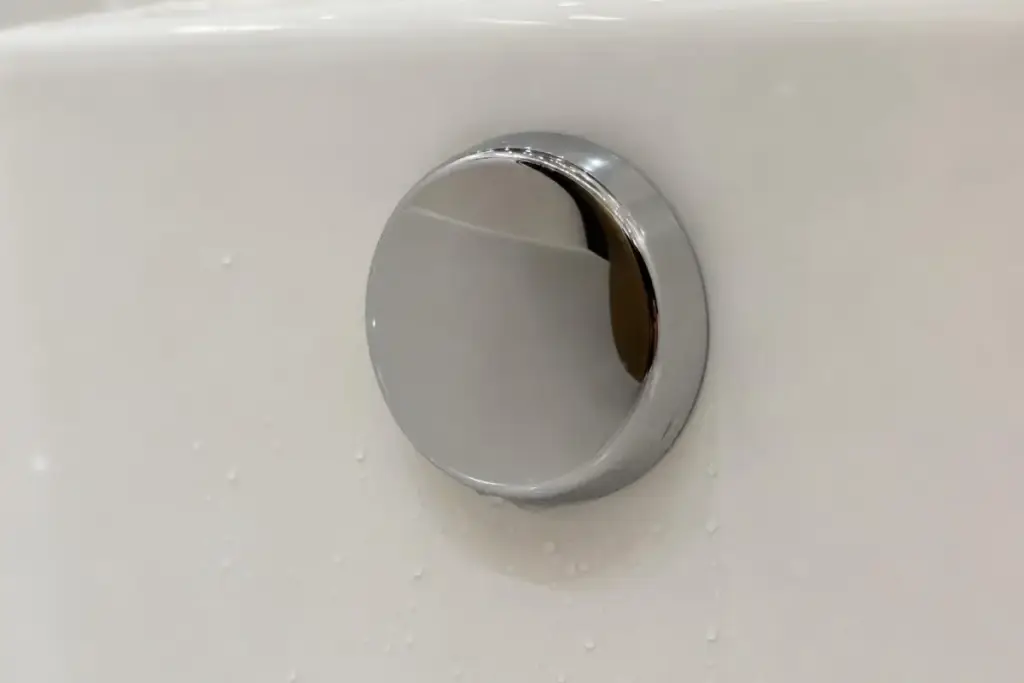
A bathtub overflow drain is an opening high on the tub wall that sends rising water through a gasket, a 1-1/2 inch pipe and a tee into the drain above the trap. If the bathtub overflow is leaking, the stain shows only after a deep bath or a shower aimed at the plate, and a new overflow gasket usually fixes it.
Which part is leaking? Match the stain to the water level
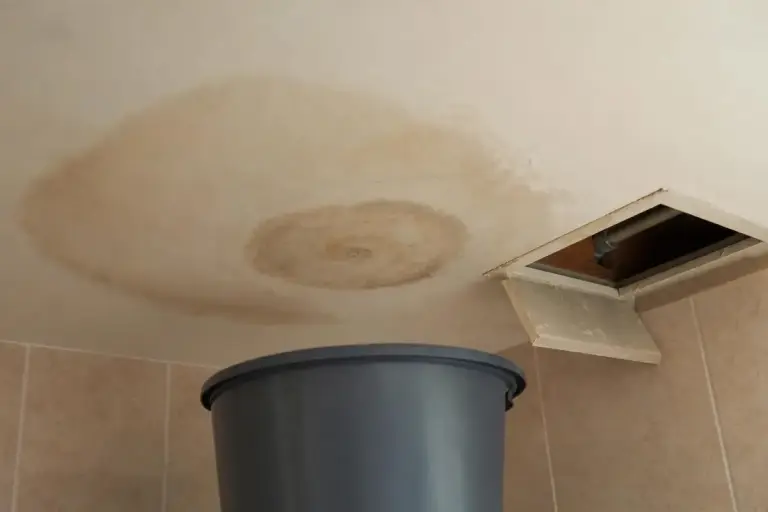
The water level at the moment the leak shows tells you which of the 2 gaskets failed. The overflow gasket sits near the rim and stays dry in a normal shower unless spray hits the plate, while the drain shoe gasket is under water any time the stopper is closed.
| When the ceiling or wall gets wet | Most likely part | Test that separates it |
|---|---|---|
| Only after a deep bath, never after a shower | Overflow gasket, or a loose faceplate screw that lets the overflow elbow sag | Fill test: fill to 1 inch below the overflow, check from below, then raise the level into the opening and check again |
| Any time water stands in the tub, even 2 inches | Drain shoe gasket or the putty under the drain flange | Shallow fill: close the stopper, run 2 inches, wait 10 minutes and look for drips at the shoe |
| Only while the tub empties | Slip nut at the shoe-to-tee joint, the tee, the tailpiece or the trap | Drain test: fill to 4 inches, open the stopper and watch the joints below the tee |
| Only with the shower running | Spray hitting the overflow plate, the spout seal, the valve trim or failed caulk | Run the shower with the head turned to the back wall, then aim a handheld at the plate alone |
| Even when nobody has used the tub | Supply side: valve body, supply joints or the shower arm | Shut every fixture and watch the meter dial for 15 minutes |
Row 4 fools people: one homeowner on Extreme How-To replaced 2 faucet valves before finding shower spray running past a rotted overflow gasket. If the shallow fill in row 2 leaks, a new overflow gasket will not stop it.
How does a bathtub overflow work inside the wall?
A bathtub overflow works by gravity: water above the opening spills into an elbow behind the tub wall, drops down a 1-1/2 inch pipe, and joins the drain at a waste-and-overflow (W&O) tee before the trap. The faceplate screws pull the elbow tight against the outside of the tub, and the gasket between them is the only thing keeping that water out of the wall.
The code sets the geometry. IPC 2021 Section 405.8 requires an overflow designed so standing water will not rise in it when the stopper is closed and will not remain in it when the tub is empty, and 405.8.1 requires it to discharge on the inlet side of the trap. Section 407.2 sets the waste outlet at not less than 1-1/2 inches and adds: “Where an overflow is installed, the overflow shall be not less than 1-1/2 inches (38 mm) in diameter.”
Under the 2021 IPC and the matching IRC Section P2713.1, a bathtub overflow is optional, not required. The UPC family handles it by reference: 2025 California Plumbing Code Section 409.3 says “Where overflows are provided, they shall be installed in accordance with Section 404.2.” Local amendments vary.
How much water can a bathtub overflow drain handle?
Less than most tub fillers deliver. Oatey’s submittal for the Dearborn True Blue bath waste rough kit (A9970, A9975) rates its overflow at 4.40 GPM and its drain at 7 GPM minimum to 15.8 GPM maximum, depending on the finish. In a 2019 ICC Building Safety Journal column, Julius Ballanco notes that some modern tub fillers flow 12 to 15 gpm or higher, and that his own whirlpool tub overflowed in about 90 seconds with the 1-1/2 inch overflow in place.
The arithmetic is simple. A 12 gpm filler against a 4.40 GPM overflow still adds 7.6 gallons a minute to the tub, and a 15 gpm filler adds 10.6. Any filler that delivers more than 4.40 GPM will eventually reach the rim with the stopper closed; the overflow buys time, it does not stop a high-flow filler left running.
Bathtub overflow gasket replacement, step by step
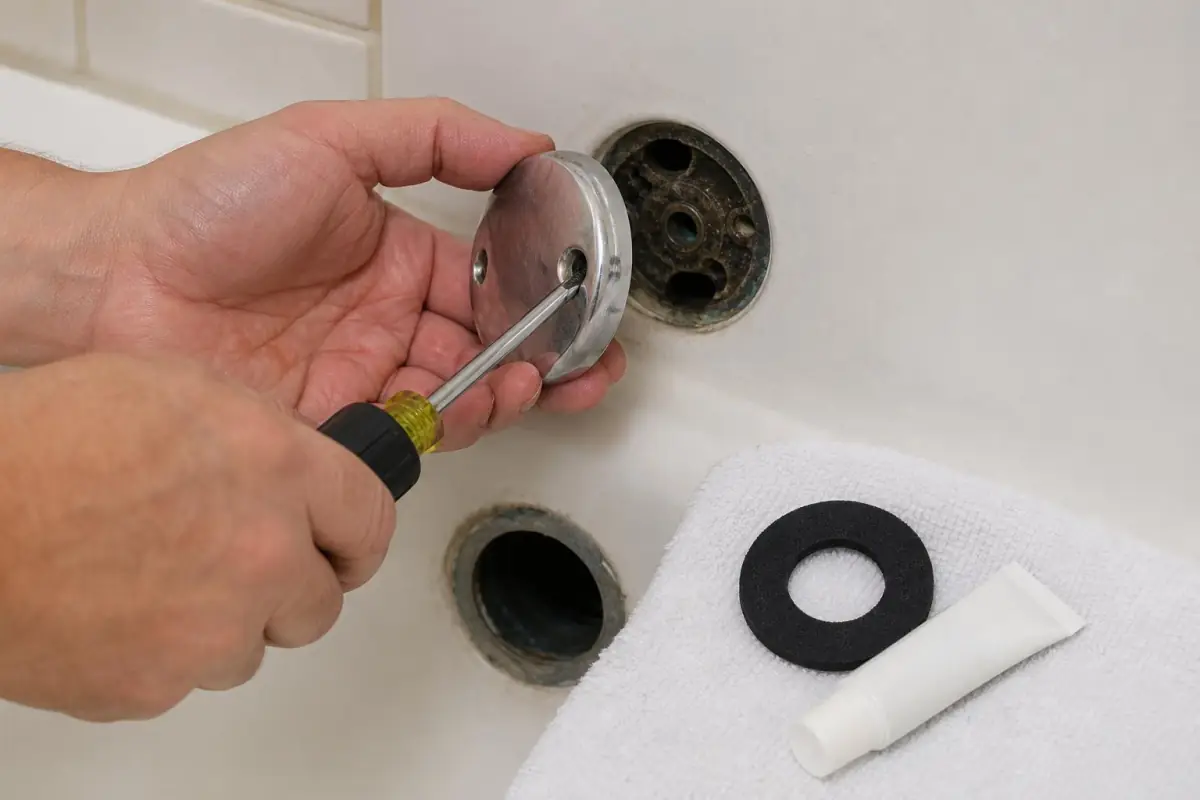
Overflow gasket replacement takes 1 screwdriver, 1 gasket and silicone grease, all from inside the tub. Oatey specifies “high memory foamed rubber” for the True Blue kit, while generic replacements such as Eastman’s sponge rubber tub overflow gasket are sold as universal fits.
- Remove the 1 or 2 faceplate screws. On a trip lever drain, pull the lever, linkage and plunger or rocker straight up and out with the plate.
- Pick out the old gasket. If it crumbles, pieces that drop into the pipe wash out at the trap.
- Coat the new gasket with silicone grease. If it is beveled, put the thick edge at the bottom, where the tub wall slopes away from the elbow.
- Reach through the hole, pull the elbow toward you and seat the gasket so it fits evenly between elbow and tub.
- Reinstall the plate and tighten the screws evenly, firm but not cracking the plate.
- Repeat the fill test from row 1 of the table and check from below.
Stop and open the wall if the elbow will not reach the tub, which happens when the overflow pipe was cut too short at install or the tee has dropped. A new gasket will not close that gap. To pull a stopper first, follow our steps on how to remove a bathtub drain stopper for each common style.
Waste-and-overflow parts: what to buy and which standard to look for
Every part below is a waste fitting, and IPC Section 412.1.2 and IRC Section P2702.2 require waste fittings to conform to ASME A112.18.2/CSA B125.2 or ASTM F409. Check the package or submittal for one of those listings before buying a replacement kit.
| Part | What it does | What to match when buying |
|---|---|---|
| Overflow gasket | Seals the overflow elbow to the outside of the tub wall | Sponge or foamed rubber; beveled styles go thick edge down |
| Drain shoe gasket | Seals the drain shoe to the underside of the tub floor | Oatey’s True Blue drain gasket is notched and undercut to lock onto the drain elbow |
| Drain flange | Threads into the shoe from inside the tub | True Blue spud: 1-1/2 inch, 11.5 NPSM |
| Trip lever kit | Lever on the overflow plate moves a plunger or rocker inside the overflow pipe | Dearborn Triplever bath waste is one listed example |
| Toe-touch or lift-and-turn kit | Stopper lives in the drain flange; overflow has a plain plate | Flange thread and stopper post size |
| Cable drive kit | A knob on the overflow plate drives a cable to the drain stopper | Cable length to fit the overflow-to-drain distance |
A trip lever or cable drive kit means the linkage or cable comes out through the overflow opening first. Our guide to bathtub drain stopper types shows how to tell the common styles apart before you buy parts.
When the drain shoe gasket is the real problem
The drain shoe gasket is the culprit when the leak appears with 2 inches of standing water, because that seal is under the tub floor and is loaded every time the stopper is closed. The fix is from both sides: unscrew the flange, clean off old putty, set a new shoe gasket from below and reseal the flange.
Both seals sit at the drain end, so repairs from below need an access panel. IPC Section 405.9 requires an access panel or utility space not less than 12 inches in its smallest dimension for fixtures with concealed slip-joint connections, and IRC Section P2704.1 sets the same 12 inch minimum. Our bathtub drain plumbing diagram shows where that panel and the trap sit relative to the tee.
Why does the bathtub overflow smell?
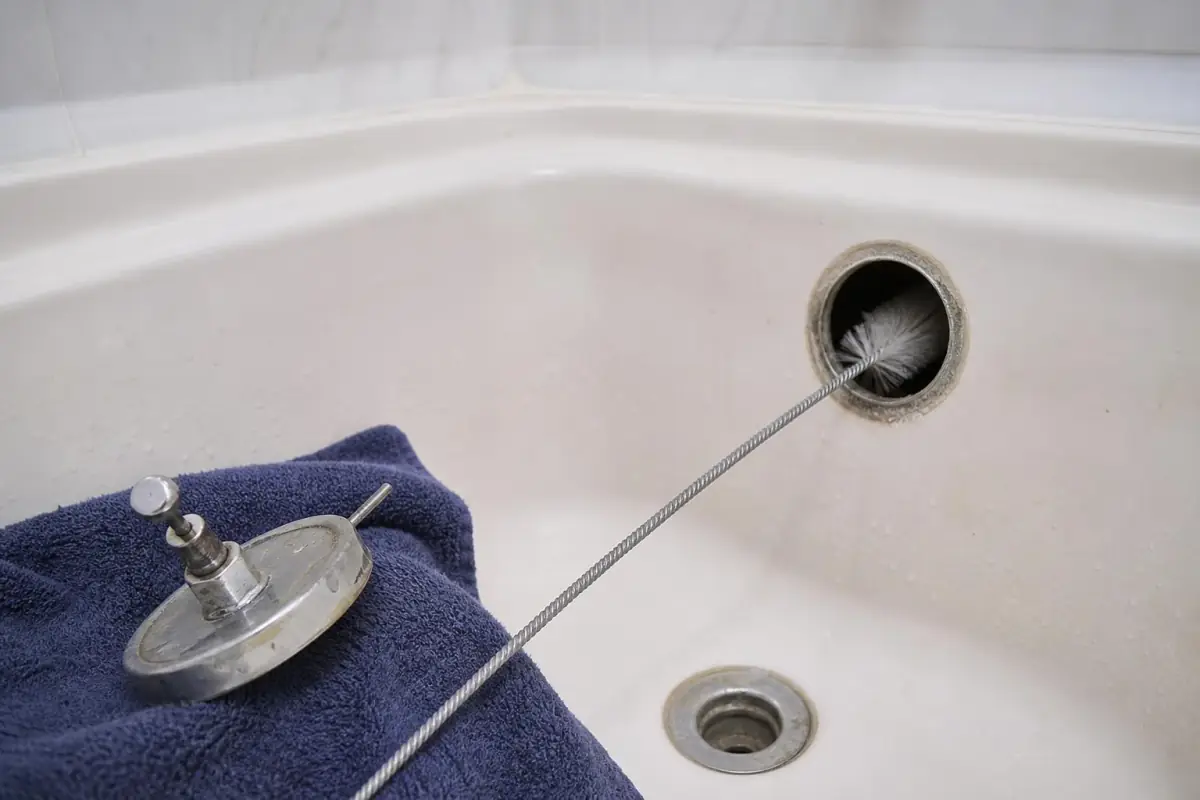
An overflow smells because hair, soap film and bacteria coat the inside of the elbow, the overflow pipe and any trip lever linkage, and that pipe is on the tub side of the trap per IPC 405.8.1, so its odor comes straight into the room. Pull the plate and linkage, scrub the elbow with a bottle brush and flush.
Standing water in the overflow pipe or a sewer smell is a different fault. Section 405.8 says water must not remain in the overflow when the tub is empty, so a pipe that holds water points at a sagging shoe or tee, and sewer gas means a dry or failed trap. If the tub also drains slowly, clear it first with our steps to unclog a bathtub drain.
Do deep-soak overflow covers work?
Deep-soak overflow covers are cups that fit over the faceplate and raise the spill height; retail listings for the SlipX Bottomless cover and similar products claim 2 to 4 inches of extra depth. They work by blocking the bottom slots of the opening, which also cuts the 4.40 GPM margin shown above, so never leave a filler running unattended with one installed.
Bathtub overflow questions
Why is water coming from my bathtub overflow?
Water comes out of the overflow plate when the 1-1/2 inch tub drain is partly blocked and water backs up the overflow pipe from the tee, or when another fixture on the same branch drains into a clog downstream. Clear the tub drain and trap first, then check the branch line if the problem continues.
Does a freestanding tub need an overflow?
No model code requires one under the 2021 IPC, and the 2019 ICC column notes that many larger tubs and whirlpools no longer have overflows. Without one, the stopper and the person filling the tub are the only flood protection, so stay in the room while it fills.
Can I seal a bathtub overflow with silicone instead of a gasket?
No. Caulk around the outside of the 1 or 2 screw faceplate does not seal the joint between the elbow and the tub wall, which is where the leak happens. The gasket is compressed between those two surfaces, and only a new gasket, or a new elbow if it is cracked, stops that water.
Is a bathtub overflow required by code?
Not under the 2021 IPC and IRC. Section 407.2 and Section P2713.1 say the overflow must be at least 1-1/2 inches in diameter where one is installed, which makes it optional. Check your local code because some jurisdictions still enforce older editions.
How long does an overflow gasket last?
None of the 5 documents we read gives a rated life. Sponge rubber dries, shrinks and cracks over years of soap and cleaner exposure, so test it when you see a stain below the tub after a deep bath, rather than replacing it on a fixed schedule.
How we sourced this
We read IPC 2021 Sections 405.8, 405.8.1, 405.9, 407.2 and 412.1.2 and IRC 2021 Sections P2702.2, P2704.1 and P2713.1 as published on UpCodes, the 2025 California Plumbing Code Section 409.3 text, Oatey’s Dearborn True Blue submittal LCS1170F (07/23) and Julius Ballanco’s May 2019 ICC Building Safety Journal column. The net-rise figures are our arithmetic from those flow ratings. We could not read the text of UPC Section 404.2 or a manufacturer test of a high-flow filler against an overflow, so neither is quoted.