Ball Valve vs Gate Valve: Which One Belongs on Your Water Line?
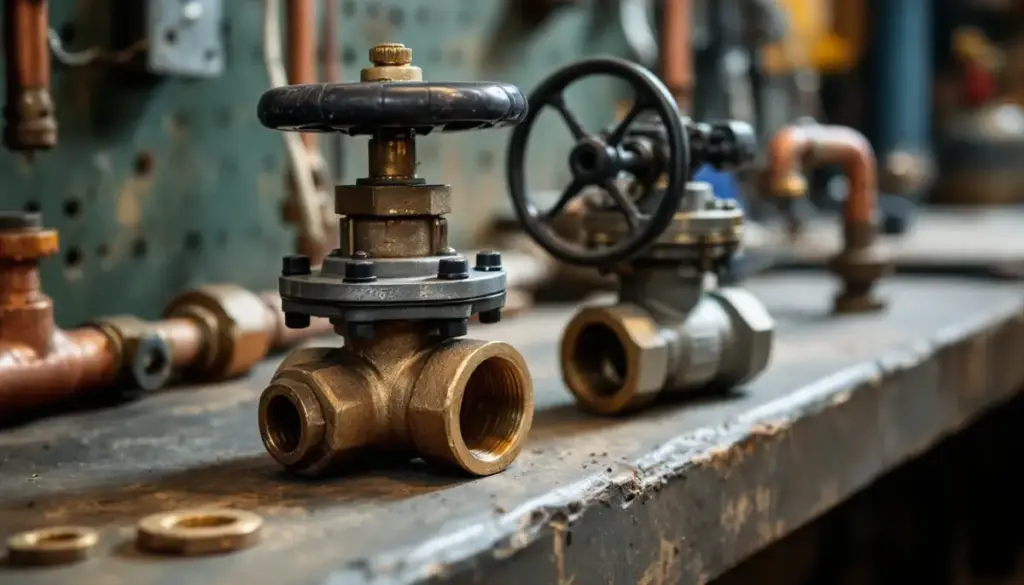
Ball valve vs gate valve: for a home main shutoff, pick a full-port lead-free ball valve, because a quarter turn gives positive shutoff while aging gate valves seize, leak at the stem, and stop sealing.
Key Takeaways
- A 3/4 inch full-port ball valve flows a Cv of 51, versus 30 for a 3/4 inch standard-port ball valve, per the Apollo Valves Cv factor table.
- A 3/4 inch bronze gate valve flows a Cv of 32 when fully open, per the Milwaukee Valve 148 spec sheet, so gate valves do not beat full-port ball valves on flow.
- The International Residential Code (IRC P2903.9.1 in the 2018 and 2021 editions) calls for a full-open main shutoff valve with a bleed orifice or separate drain.
- IRC P2903.9.2 also calls for a full-open valve on the cold supply to every water heater.
- Any valve on a drinking water line must meet the federal lead-free limit of 0.25% weighted average lead, per the EPA.
- Neither valve is built for throttling. Globe valves are, according to valve makers and the Fine Homebuilding valve guide.
What is the difference between a ball valve and a gate valve?
The ball valve vs gate valve difference is the moving part. A ball valve turns a drilled ball 90 degrees, so a quarter turn takes it from fully open to fully closed. A gate valve screws a metal wedge down into the waterway, which takes several full turns of a round handle. Both are on/off valves, and both sit wide open in normal service.
Inside a ball valve, a chrome-plated ball rests between two soft seats. Apollo uses reinforced PTFE (RPTFE) seats on its 70 series, and they press against the ball to seal.
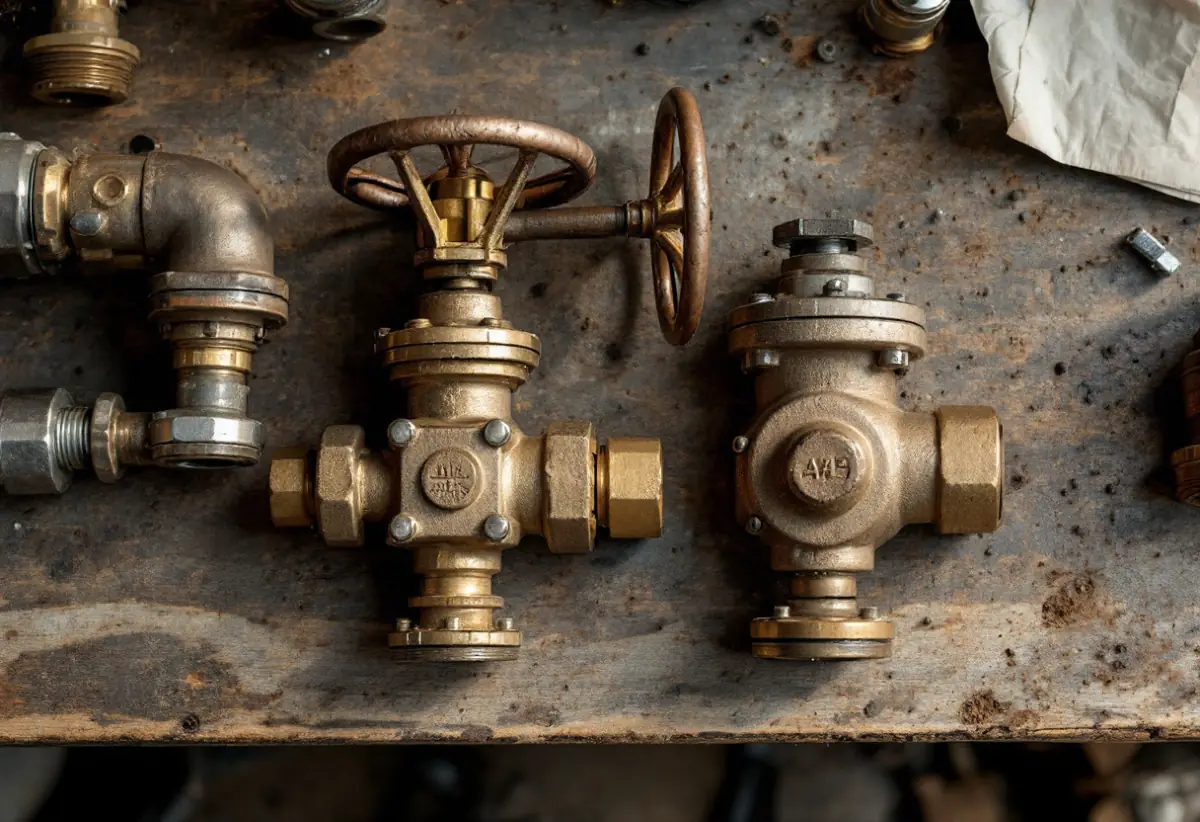
Inside a gate valve, a threaded stem lifts or lowers a solid or split wedge. The Milwaukee Valve 148 is a typical bronze design: solid wedge, rising stem, threaded bonnet, built to the MSS SP-80 standard for bronze gate valves. Ball valves of this class are built to MSS SP-110. Our guide to the types of plumbing valves covers the globe, check, and stop valves that round out a home system.
| Factor | Ball valve | Gate valve |
|---|---|---|
| How it closes | Quarter turn (90 degrees) rotates a bored ball | Multi-turn handwheel drives a wedge down |
| Shutoff quality | Positive shutoff on PTFE seats | Good when new; old wedges often pass water |
| Flow, 3/4 inch, fully open | Cv 51 full port (Apollo 77-100); Cv 30 standard port (Apollo 70 series) | Cv 32 (Milwaukee Valve 148) |
| Position at a glance | Yes, lever in line with pipe means open | No, you count turns or check stem height |
| Pressure rating example | 600 psi CWP (Apollo 70 series) | 200 psi WOG, 125 psi steam (Milwaukee 148) |
| Throttling | Not designed for it; seats erode | Not designed for it; wedge chatters and wears |
| Typical failure | Worn seats, scale-stiffened lever, stem packing weep | Seized stem, packing leak, wedge separates from stem |
| Speed of closing | Fast; close slowly to avoid water hammer | Slow, which is gentle on the piping |
| Best home use | Main shutoff, water heater, PRV isolation, irrigation, well | Existing installs that still work; large low-use lines |
Which is better for a main water shutoff, a ball valve or a gate valve?
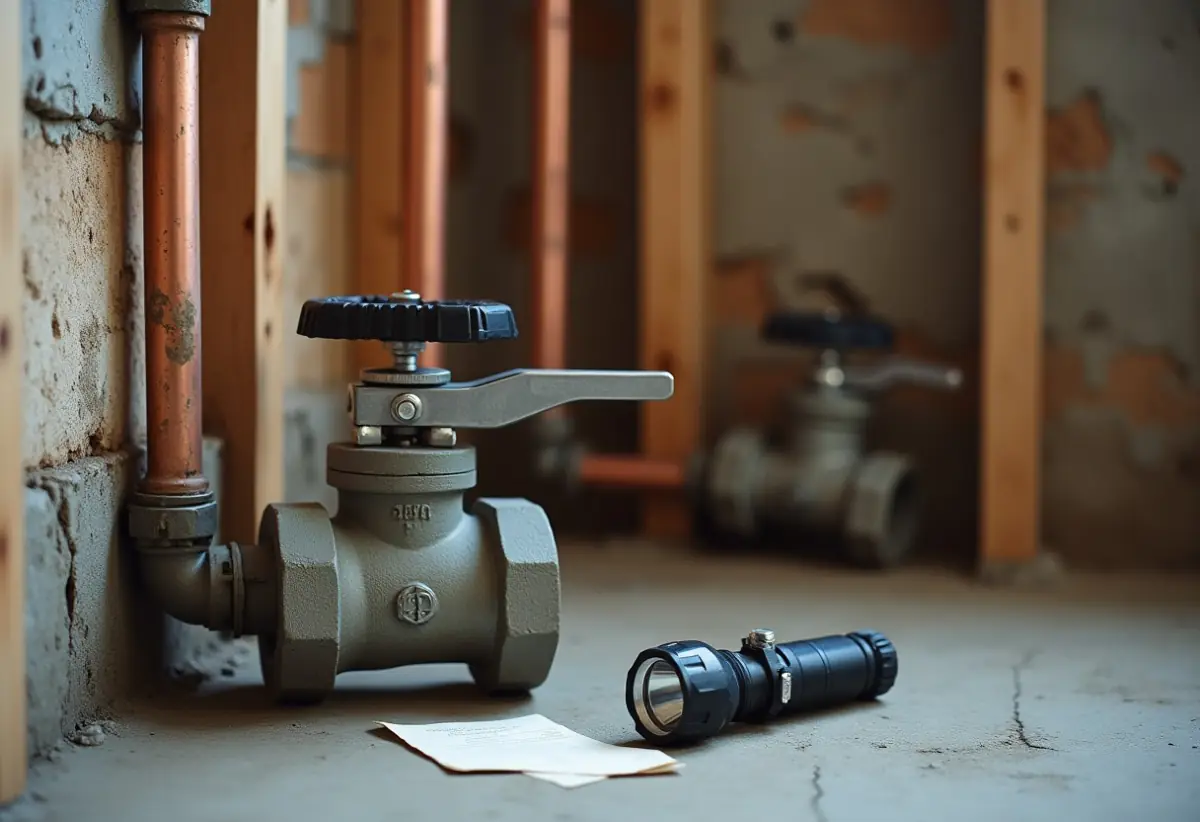
A full-port ball valve is the better main water shutoff for nearly every house. It closes in a quarter turn, the lever tells anyone in the family whether water is on, and the PTFE seats close tight. A gate valve that has not moved in a decade is the one most likely to fail during a burst pipe, when you need it most.
The code lens points the same way. The IRC text on service valves (P2903.9.1) requires “an accessible main shutoff valve near the entrance of the water service” of “a full-open type having nominal restriction to flow, with provision for drainage such as a bleed orifice or installation of a separate drain valve.” The 2024 IRC moves this to P2903.10.1. A full-port ball valve with a drain port meets that wording in one part, though your local adopted code and inspector have the final say.
Our guide to shutting off the water to your house covers finding the main and the curb stop. With a ball valve, the last step is one quarter turn, not a dozen turns on a handle that may not budge.
Full port vs standard port ball valve: does the bore size matter?
Bore size matters on paper and much less in a typical house. A full-port ball valve has a bore close to the pipe size, while a standard-port (also called conventional or reduced port) valve has a smaller hole. Apollo publishes a Cv of 51 for its 3/4 inch 77-100 full-port valve and 30 for its 3/4 inch 70 series standard-port valve.
Cv is the gallons per minute of water a valve passes with a 1 psi pressure drop across it. Apollo’s own sizing formula is flow equals Cv times the square root of the pressure drop. Its 70-200 submittal lists a 0.68 inch bore on the 3/4 inch size, which is why that valve flows less than its full-port sibling.
Sources for the chart: Apollo Valves Cv factor table (77-100 full port and 70-100/200 standard port series) and the Milwaukee Valve 148 bronze gate valve spec sheet.
Here is the part most comparisons skip. Run Apollo’s formula backward for a house drawing 10 gallons per minute through a 3/4 inch valve. The full-port valve drops about 0.04 psi, the gate valve about 0.10 psi, and the standard-port valve about 0.11 psi. All three losses are a rounding error next to household supply pressure, which runs in the tens of psi.
Full port earns its keep on long service lines, low-pressure homes, wells, and irrigation zones near the pump’s limit. On copper water lines sized at 3/4 or 1 inch, a full-port valve keeps the main at full bore, which also makes it the safer reading of the code’s “nominal restriction to flow” wording.
Why do old gate valves fail to shut off water?
Old gate valves fail because the parts that move are the parts that corrode. The bronze stem threads scale up, the packing around the stem dries out and leaks, and the wedge can separate from the stem. When that happens the handle spins freely, the wedge stays put, and water keeps running no matter how far you crank it.
Scale in the bottom of the body causes a quieter failure. The wedge lands on the scale instead of the brass, so the valve closes most of the way and still passes a trickle.
Ball valves fail too, just less often in homes. The PTFE seats wear if the valve has been used to throttle, hard water can stiffen the ball until the lever needs a wrench, and the stem packing can weep. A weeping packing nut on either valve type often stops with an eighth of a turn, while a passing seat or broken stem means replacement.
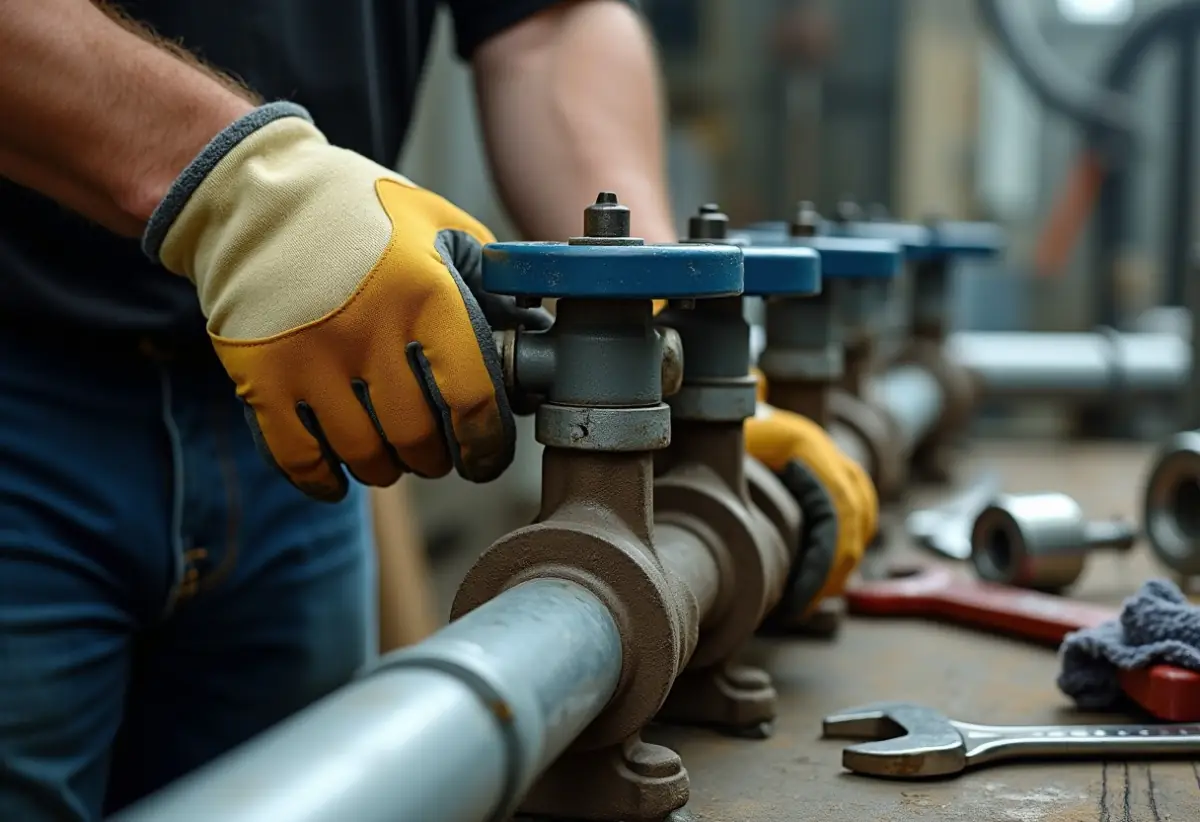
Can you use a ball valve or gate valve to throttle flow?
Neither valve is designed to throttle. A partly open gate valve leaves the wedge hanging in fast water, where it vibrates, chatters, and wears its sealing faces. A partly open ball valve pushes high-velocity water across one edge of the soft seat, which erodes it until the valve no longer seals when fully closed.
Use both valves fully open or fully closed. For flow control, plumbers use a globe valve, whose disc moves straight onto a seat and handles partial opening well, as the Fine Homebuilding guide to ball, gate, and globe valves explains. If the goal is lower house pressure rather than lower flow at one point, the right part is a pressure reducing valve, not a half-closed main. Ball valves on both sides of a PRV let you service it without draining the house.
Where should you use a ball valve vs a gate valve in a house?
For new work and replacements, use a lead-free ball valve almost everywhere a full shutoff is needed: the main, the water heater cold supply, both sides of a PRV or water softener, irrigation mainlines, and well systems. Keep an existing gate valve only if it still closes fully, does not leak at the stem, and turns without force.
- Main shutoff. Full-port ball valve with a drain port, matching the IRC P2903.9.1 wording on full-open valves and drainage.
- Water heater. IRC P2903.9.2 calls for “a readily accessible full-open valve” on the cold supply to each water heater. A full-port ball valve does that in a quarter turn.
- Irrigation and outdoor lines. Ball valves, with the zone valves doing the cycling. Bury or box them so the lever stays reachable.
- Well systems. Ball valves near the pressure tank so the tank, switch, and filters can be isolated. Full port helps where pump capacity is tight.
- Fixture stops. Small quarter-turn angle stops under sinks and toilets, not gate valves.
- Drinking water. Any valve on a potable line must be lead-free. Milwaukee Valve marks its 148 bronze gate valve as “Not intended for use in potable water,” a reminder to check the listing before you buy.
The lead-free rule comes from the Safe Drinking Water Act. The EPA lead-free requirements cap wetted surfaces at a weighted average of 0.25% lead, so look for a lead-free marking and an NSF/ANSI 61 or 372 listing on the valve or box.
How do you replace a gate valve with a ball valve?
Replacing a gate valve with a ball valve takes a shutoff upstream, a drained line, and a new valve sized to the pipe. On a main shutoff, the upstream valve is usually the curb stop or meter valve, which in many areas belongs to the water utility and may need their visit. A permit may be required depending on your local code.
- Close the curb stop or meter valve, then open the lowest faucet in the house to drain the line.
- Confirm the line is dead by opening a fixture near the valve. Have a bucket and towels ready for the water left in the pipe.
- Cut out the old gate valve with a tubing cutter, leaving straight, clean pipe on both sides.
- Fit a lead-free full-port ball valve that matches the pipe size and connection type: solder (sweat), press, threaded, or push-fit where local code allows it.
- If soldering, open the ball valve fully and keep heat moving so the PTFE seats are not cooked.
- Close the new valve, restore water slowly at the curb, and check every joint for drips.
- Open the new valve slowly to avoid water hammer, then bleed air at the faucets.
Pick a valve with a drain port or add a separate drain valve, since the IRC asks for drainage provision at the main. On corroded galvanized pipe, replace a short section rather than threading into weak steel.
What does a ball valve cost compared with a gate valve?
A ball valve usually costs somewhat more than a gate valve of the same size and material, and a full-port ball valve costs more than a standard-port one. On a main shutoff job, though, labor and the drain-down outweigh the part price, so the valve type rarely changes the total by much.
The cost that matters is the one you avoid. A main that fails during a burst pipe turns a cheap valve job into a flooded basement. Prices move with brass markets, so compare current listings for the exact size, port, and lead-free rating.
How often should you exercise a shutoff valve?
Exercise every main and water heater shutoff once or twice a year by closing it fully and reopening it. That moves the stem, breaks up early scale on the seats or wedge, and tells you whether the valve still works before an emergency tests it. A valve that will not budge or will not seal is a planned replacement, not a crisis.
On a gate valve, turn slowly and stop if it binds hard, since forcing a seized stem is how wedges snap off. On a ball valve, move the lever through the full 90 degrees and back, and snug the packing nut slightly if the stem weeps.
How we sourced this
We reviewed the top-ranking pages and People Also Ask questions, then used primary sources. Flow figures come from the Apollo Valves Cv table (derived from flow testing at its Pageland, South Carolina facility), the Apollo 70-200 submittal, and the Milwaukee Valve 148 and 149 spec sheets. Code wording is IRC P2903.9.1 and P2903.9.2 (2018 and 2021) via UpCodes. The lead limit is from the EPA. Pressure-drop examples are our math from Apollo’s formula at 10 gallons per minute. We excluded retail prices, which change daily, and lifespan figures, which no manufacturer publishes for residential service.
Frequently asked questions
Which is better for a main water shutoff, a ball valve or a gate valve?
A full-port ball valve is the better main shutoff for most homes. It closes in a quarter turn, the lever shows open or closed at a glance, and its PTFE seats give positive shutoff. Old gate valves often seize after years without use, or the wedge drops off the stem, so the handle turns but water keeps flowing.
What is the difference between a full port and a standard port ball valve?
A full port ball valve has a bore about the same size as the pipe, so it barely restricts flow. A standard port valve has a smaller bore. Apollo lists a Cv of 51 for its 3/4 inch 77-100 full port valve and 30 for its 3/4 inch 70 series standard port valve, with a 0.68 inch bore.
Do gate valves restrict flow?
A fully open gate valve restricts flow very little because the wedge lifts clear of the waterway. Milwaukee Valve rates its 3/4 inch 148 bronze gate valve at a Cv of 32, slightly above a 3/4 inch standard port ball valve and well below a full port ball valve of the same size. The trouble with gate valves is sealing, not flow.
Why do plumbers replace gate valves with ball valves?
Plumbers swap them because old gate valves fail when you need them most. The stem packing leaks, the handle seizes, or the wedge separates from the stem and the valve never fully closes. A lead-free full-port ball valve has fewer moving parts, closes in a quarter turn, and shows its position by the lever.
Can you use a ball valve or gate valve to control flow?
Neither valve is built for throttling. A half-open gate valve lets the wedge vibrate and wear, and a half-open ball valve sends fast water across the seats and erodes them. Use either one fully open or fully closed. For steady flow control, plumbers install a globe valve, which is designed to be partly open.
How can you tell if you have a ball valve or a gate valve?
Look at the handle. A ball valve has a flat lever that moves a quarter turn, lying in line with the pipe when open and across the pipe when closed. A gate valve has a round wheel handle that takes several full turns, and on rising-stem models the stem climbs out of the bonnet as it opens.
How long do ball valves and gate valves last?
Neither has a single published lifespan, since water chemistry, use, and quality drive it. Gate valves tend to fail from stem corrosion, packing leaks, and seizing after years without use. Ball valves tend to fail from worn PTFE seats or scale on the ball. Exercising either valve once or twice a year extends its working life.