Should a Sump Pit Be Sealed? Radon, Odor and Code Rules for Sump Covers, With the 254 Square Inch Math
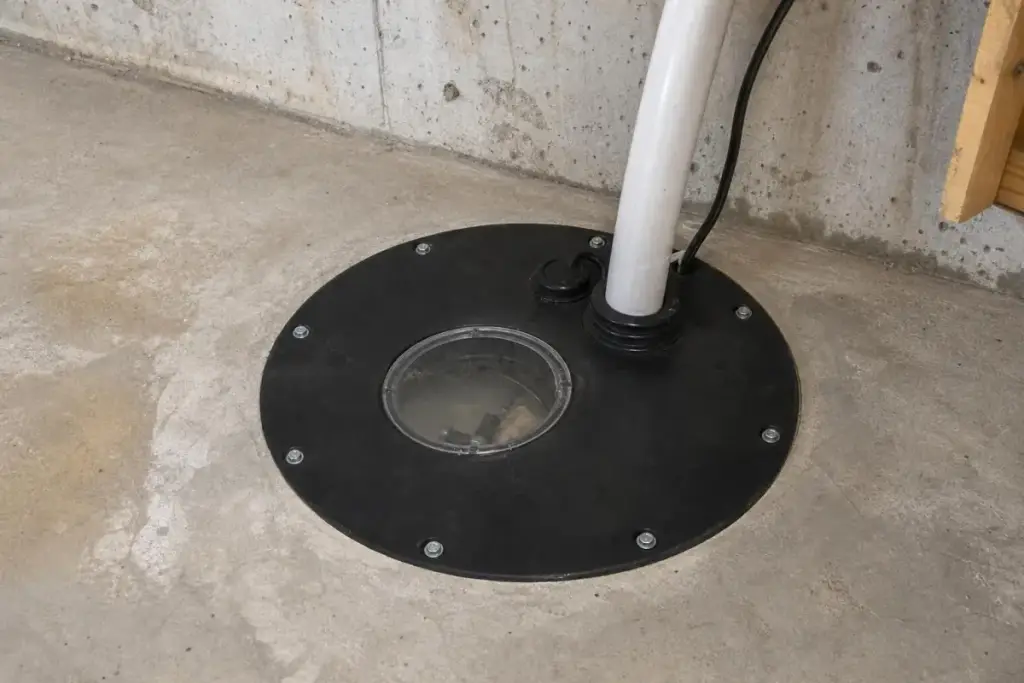
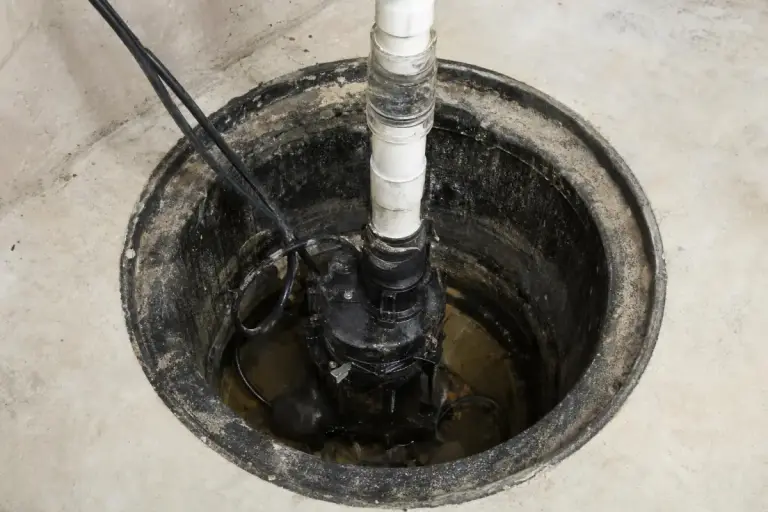
Yes, a sump pit should be sealed with a gasketed, bolted lid in almost every basement: an open 18 inch pit leaves 254 square inches of soil exposed inside the house. A sewage ejector pit must be gastight and vented by code, while a clear-water sump needs a sealed lid mainly for radon, humidity and child safety.
Which sump pits does code require to be sealed?
Code requires a gastight lid on a sewage ejector pit and leaves a clear-water foundation-drain pit to a removable cover, unless a radon standard or local amendment applies. The table sorts pit types by the document that governs each.
| Sump type | Cover requirement | Vent requirement | Source section |
|---|---|---|---|
| Clear-water pit (footing drain tile, groundwater) | Removable cover strong enough for floor loads; gastight lid not required by the plumbing code | None required | IPC Chapter 11 subsoil and storm sump sections (1111 and 1113); 18 in diameter by 24 in deep minimum pit |
| Sewage ejector pit (toilet, laundry, basement bath below the sewer) | Gastight, removable, set no more than 2 in below the floor, rated for loads | Required, sized under the plumbing code’s vent chapter | IPC 712.3.2, as adopted in Philadelphia Plumbing Code P-712.3.2; IRC Section P3007 for houses |
| Radon-mitigated or radon-ready pit | Rigid lid sealed with a gasket or non-permanent caulk, mechanically fastened, every pipe and wire penetration sealed, labeled | The radon suction pipe through the lid serves as the vent; no separate plumbing vent | ANSI/AARST RRNC 2020, Section 404.1.1 |
| Elevator pit sump | Exempt from the sealed cover rule | Not addressed | Exception to IPC 712.3.2 (Philadelphia text) |
| Any sump pit in Canada | Sealed against soil gas and designed to resist removal by children | Not addressed | National Building Code 9.14.5.2.(2) |
The sewage row is the only one where an open or loose lid is a plain code violation everywhere the IPC or IRC is adopted, because Section 712.3.2 calls for a “gastight removable cover” and says the pit “shall be vented in accordance with Chapter 9.” For a clear-water pit, the push toward a sealed lid comes from radon standards and from the Department of Energy’s Building America Solution Center, which tells builders to choose lids with built-in gaskets and grommets and to fasten them with screws so the lid, gasket and crock rim stay in contact.
How much soil does an open 18 or 24 inch pit expose?
An open 18 inch pit exposes 254 square inches of soil-connected opening, and a 24 inch pit exposes 452, which is more than a 1/8 inch crack running the full perimeter of a 30 by 40 foot basement. Radon entry rates cannot be computed from area alone, so this table compares only the size of the hole, with every input shown.
| Opening | Inputs | Open area | Share of a 1,200 sq ft slab |
|---|---|---|---|
| Uncovered 18 in pit | pi x 9 in x 9 in | 254.5 sq in (1.77 sq ft) | 0.147% |
| Uncovered 24 in pit | pi x 12 in x 12 in | 452.4 sq in (3.14 sq ft) | 0.262% |
| 1/8 in floor-wall joint around a 30 x 40 ft basement | 140 ft perimeter x 12 x 0.125 in | 210.0 sq in | 0.122% |
| Zoeller 17-0135 lid slot | 3 in x 13 in molded opening | 39.0 sq in | 0.023% |
| 1/16 in gap under a loose 18 in lid | pi x 18 in rim x 0.0625 in | 3.5 sq in | 0.002% |
| Unsealed 1-1/2 in Schedule 40 PVC in a 2 in hole | pi/4 x (2.0 squared minus 1.9 squared) | 0.31 sq in | 0.0002% |
The 1,200 square foot slab equals 172,800 square inches, so an open 18 inch pit is 1.21 times the area of that full-perimeter 1/8 inch crack and the 24 inch pit is 2.15 times. The slotted Zoeller 17-0135 lid, sold as a one-piece cover, still leaves 15% of an 18 inch pit open. The last two rows, about 3.8 square inches together, are the leaks a radon fan would pull basement air through.
Does sealing the sump lid lower radon by itself?
A sealed lid alone is not a radon fix: the EPA’s Consumer’s Guide to Radon Reduction (EPA 402/K-10/005) says it does not recommend sealing alone because sealing “has not been shown to lower radon levels significantly or consistently.” The same guide lists sump-hole suction, where the pit is capped and a fan pulls soil gas through a pipe in the lid, at a typical 50 to 99 percent reduction.
That gives a three-step decision rule. Test first with a short-term kit; the EPA action level is 4 pCi/L. If the result is under 4 pCi/L, bolt down a gasketed lid for humidity and odor, then retest, as BASC advises, to confirm the seal. If it is 4 pCi/L or higher, have a certified mitigator decide whether the sump becomes the suction point, then run the post-mitigation test the EPA guide specifies: no sooner than 24 hours after the fan starts and within 30 days of installation.
When the sump is part of a radon system, AARST RRNC Section 404.1.1.1 requires a label on the lid reading “Component of a Radon Reduction System. Do not tamper with or disconnect.” in letters at least 1/4 inch tall. Section 404.1.1 also requires the joint between the floor and the basin to be caulked with an ASTM C920 Class 25 or higher sealant, which is the gap most retrofit lids leave open.
What goes through a sealed lid without breaking the seal?
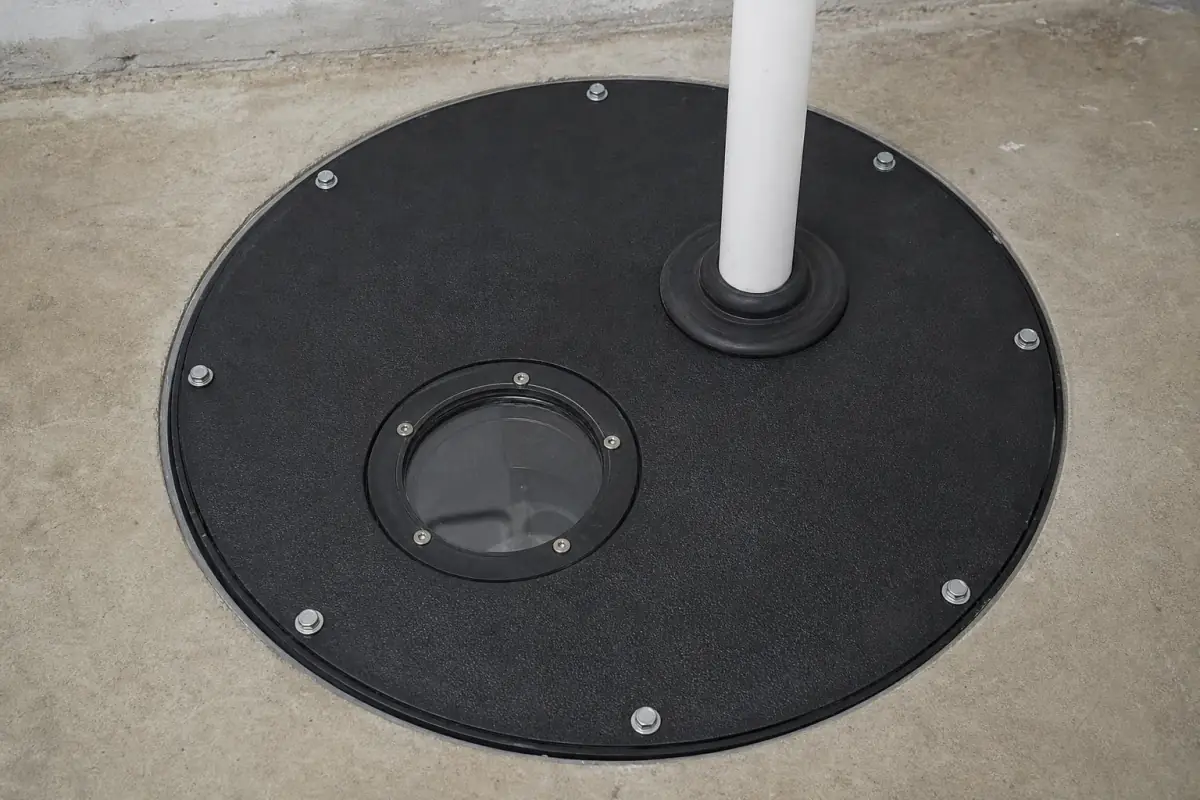
Every pipe and wire that crosses the lid needs its own grommet or sealed fitting, per AARST 404.1.1: “Pipe and wiring penetrations through the lid shall be sealed.” The diagram shows the five openings a working clear-water lid carries.
Zoeller’s own catalog shows how the factory lids differ: part 17-0131 is an 18 inch one-piece steel “Radon Lid” with a 3 inch vent opening, a 1-1/2 inch discharge opening and a cord grommet, while part 17-0294 is a one-piece polyethylene lid with a 1-1/2 inch discharge and cord grommet, according to the Zoeller basin and cover brochure.
| Lid or basin (maker part number) | Size | Openings as built | Sealed for radon? |
|---|---|---|---|
| Zoeller 17-0131 steel radon lid | 18 in | 3 in vent, 1-1/2 in discharge, cord grommet | Yes, sold as a radon lid |
| Zoeller 17-0294 polyethylene lid | 18 in | 1-1/2 in discharge, cord grommet | Gasket and seal at the rim decide it |
| Zoeller 17-0135 polyethylene lid | 18 in | Molded 3 x 13 in open slot | No, 39 sq in stays open |
| Zoeller 31-0251 radon basin | 18 x 22 in | Inlet hole, no hub | Basin built for a sealed system |
| Zoeller 31-1855 basin with blank lid | 18 x 30 in | Blank poly cover with cord seal, loose 4 in inlet grommet | Blank lid is drilled on site, then each hole is grommeted |
A battery backup pump adds a second discharge line and a second cord, so a lid bought for one pump needs two more grommeted holes or a lid drilled for both; the same rule covers a dehumidifier or furnace condensate line, which AARST 404.1.3 says “shall not allow soil gas entry.” BASC recommends piping a floor drain under the slab into the side of the pit rather than leaving an open floor grate over it, and it recommends lids “that permit observation” of the pit, which is what a clear viewing port does without unbolting the lid.
Is an open sump pit a drowning risk for toddlers?
Yes, and Canada writes it into code: the intent statement for National Building Code Sentence 9.14.5.2.(2) says sump covers must not be “easily removed, which could lead to children drowning in the water.” A second NRC intent note for the same sentence targets radon entry through unsealed covers. An 18 inch opening is 254 square inches, and a lid fastened with screws, as BASC specifies, cannot be lifted off by a child the way a loose drop-in cover can.
How do you stop a sump pit smell once it is sealed?
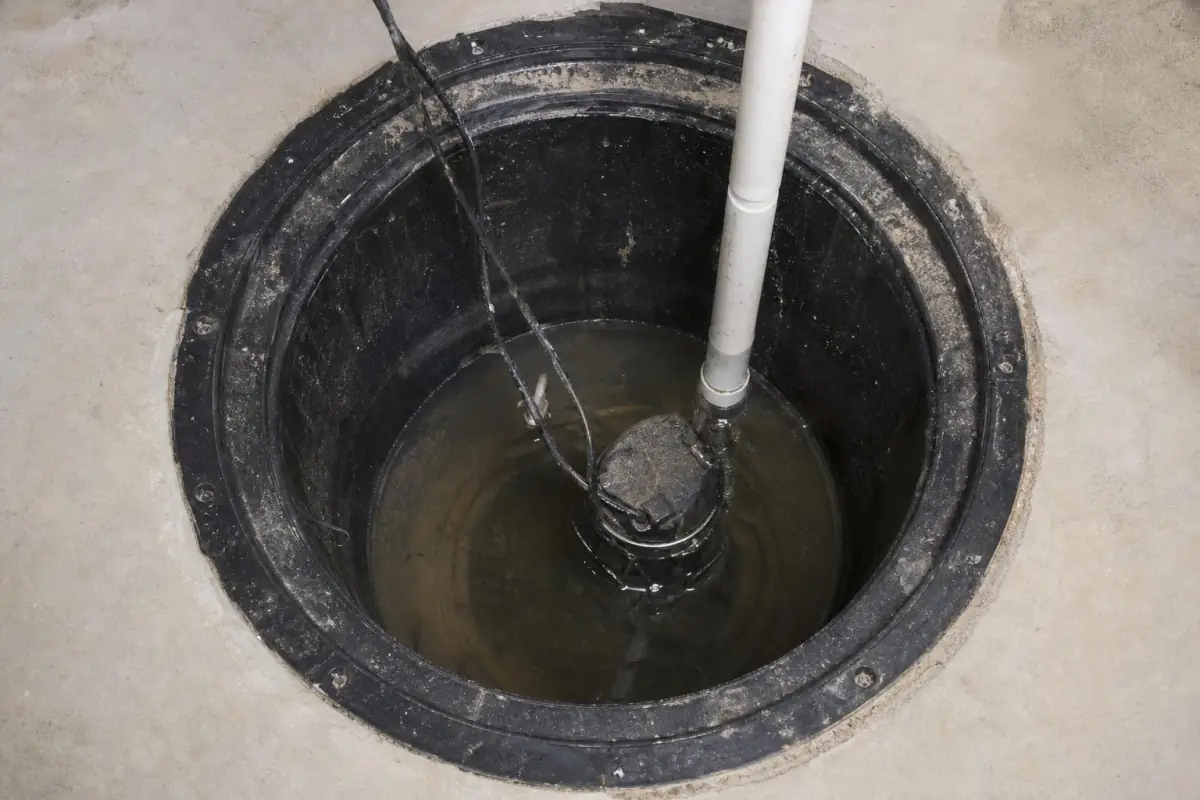
A bolted gasketed lid stops odor from reaching the room, but the source still needs fixing: our page on sump pump smell covers dry pits, bacterial slime and sewer gas from a misrouted drain. If the smell is sewage, the pit is probably receiving a laundry or fixture drain, and Section 712.3.2 then calls for a gastight vented ejector pit instead of a clear-water lid.
A sealed lid also hides the pump, so check the cycle count after installing it. A pump that still cycles every few minutes with dry weather points to a failed sump pump check valve letting the discharge column drain back, and the full list of causes is in our guide to a sump pump running constantly. Under Section 1113.1.4 a one- or two-family dwelling needs only that check valve on a storm or subsoil sump discharge. If the pit is new, the steps for setting the basin, pump and float before the lid goes on are in our guide to installing a sump pump.
Sump lid questions homeowners ask
Does a sump pit need a lid at all?
Yes. Even the plumbing code’s clear-water rule calls for a removable cover strong enough for floor loads, and a sewage pit needs a gastight lid set no more than 2 inches below the floor. An open pit also adds water vapor to basement air, which BASC links to mold and wood decay.
Can a sealed sump lid make the pump overflow?
No. Water reaches the pit through drain tile below the slab, so a solid lid does not block inflow. The pump discharges through its pipe and check valve as before. Floor water that used to fall into an open pit needs a floor drain piped into the side of the basin.
Should I test for radon after sealing the sump?
Yes. BASC advises a radon test after the cover goes on to confirm the seal, and the EPA guide sets the action level at 4 pCi/L. If a mitigation fan was added, test no sooner than 24 hours after it starts and within 30 days of installation.
Is silicone acceptable for sealing a sump lid?
Yes for the lid rim. AARST RRNC 404.1.1 allows a gasket or a non-permanent caulk such as silicone so the lid can come off for service. The joint between the basin and the slab is different and calls for an ASTM C920 Class 25 or higher sealant.
Does a radon sump lid need a warning label?
Yes, when the sump is part of a radon system built to AARST RRNC 2020. Section 404.1.1.1 requires a durable label reading Component of a Radon Reduction System, Do not tamper with or disconnect, in letters at least 1/4 inch tall that contrast with the lid color.
How we sourced this
We read the Philadelphia Plumbing Code text of IPC 712.3.2 and 1113.1.4, ANSI/AARST RRNC 2020 Section 404, the EPA Consumer’s Guide to Radon Reduction (EPA 402/K-10/005), the DOE Building America Solution Center sump cover guide, the NRC intent notes for National Building Code 9.14.5.2, and the Zoeller basin and cover brochure. The open-area table is geometry computed from pit diameters, an assumed 1/8 inch crack on a 30 by 40 foot basement and the 1.900 inch outside diameter of 1-1/2 inch Schedule 40 PVC; it measures hole size, not radon flow. Retail lid prices are left out because the retailer pages could not be read directly in November 2026. No CPSC count of sump pit drownings was found, so none is quoted.