Water Softener Salt: Which Type to Use and How Much
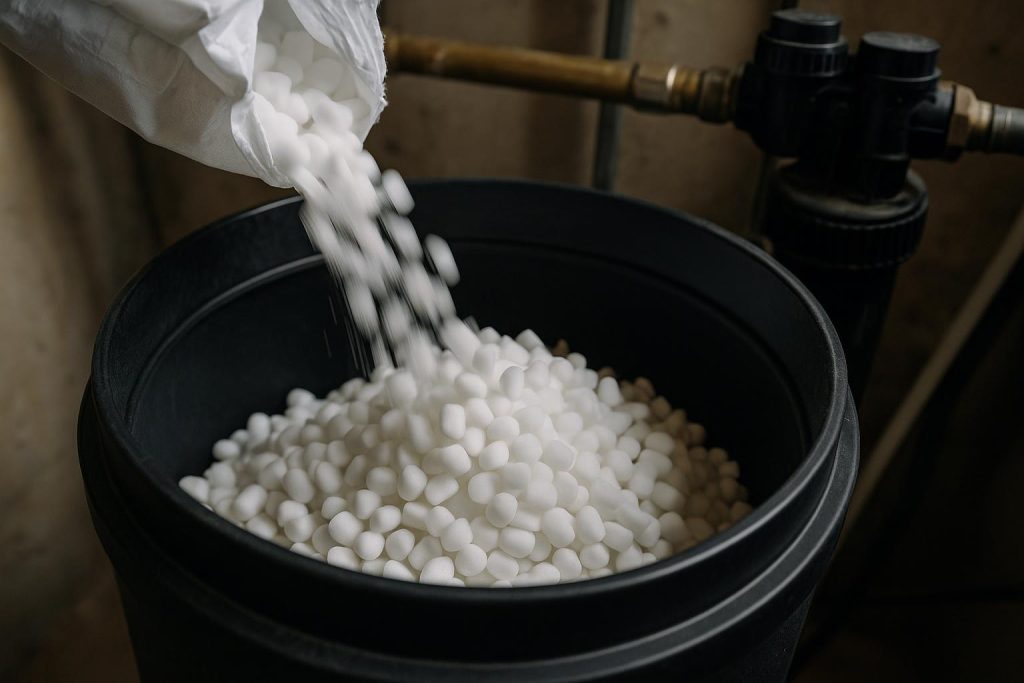
Water softener salt comes in three grades: rock, solar, and evaporated, and for most homes evaporated pellets are the safe pick because they run about 99.9% pure and rarely bridge or mush.
Key Takeaways
- Evaporated salt is roughly 99.9% pure sodium chloride, solar salt about 99.5%, and rock salt the least refined with the most insoluble impurities (Morton Salt).
- Morton recommends water softener salt that is at least 99% pure with under 1% impurities (Morton Water Softeners).
- A family of four with 7 to 10 grain hard water uses about 9 to 10 pounds of salt a week, near one 40-pound bag a month.
- Refill when the brine tank drops below about one-third full or below the water line, and check it monthly.
- Potassium chloride adds no sodium but costs about $50 to $70 per 40-pound bag versus $5 to $10 for salt, and softeners use roughly 30% more of it (Angi).
- A salt bridge is a hard crust above the water line that blocks brine formation; salt mushing is sludge at the tank bottom that blocks brine draw.
What is water softener salt, and which type should you use?
Water softener salt is the sodium chloride (or potassium chloride) that regenerates the resin inside your softener. During regeneration, a strong brine rinses the calcium and magnesium off the resin beads and flushes it to the drain, resetting the system to soften again. For a plain-English look at the minerals it fights, see what makes water hard.
The type you choose is mostly a purity decision. Higher-purity salt leaves less residue in the brine tank, dissolves more predictably, and lowers the odds of the two failures homeowners hate: bridging and mushing. Evaporated salt is the cleanest, solar salt is a solid middle ground, and rock salt is cheapest but dirtiest.
What are the salt types: rock, solar, and evaporated?
The three grades differ by how they are made, which sets their purity. Rock salt is mined from underground deposits and used with little refining. Solar salt is seawater or brine evaporated in shallow ponds by sun and wind. Evaporated salt is brine that is mechanically evaporated and refined to the highest purity of the three.
Rock salt carries the most calcium sulfate and water-insoluble matter, so it builds sediment in the brine tank and can foul the valve over time. Solar salt, produced by solar evaporation, lands around 99.5% pure. Evaporated salt reaches about 99.9% purity and is the recommended choice for softeners prone to mushing or fed by hard, iron-bearing water.
| Salt type | Typical purity | Cost per 40 lb | Residue / mushing risk | Best for |
|---|---|---|---|---|
| Rock salt | ~98 to 99%, most insolubles | ~$5 to $8 | High: builds sediment, cleans often | Budget use where you accept frequent tank cleanouts |
| Solar salt (crystals) | ~99.5% | ~$8 to $10 | Moderate: dissolves well, some residue | Typical households, moderate hardness |
| Evaporated salt (pellets) | ~99.9%, purest | ~$9 to $12 | Low: cleanest, resists bridging and mushing | Hard or iron water, high humidity, older units |
| Potassium chloride | ~99%, sodium-free | ~$50 to $70 | Low to moderate, can clump | Sodium-restricted diets, salt-sensitive plants |
Pellets, crystals, or blocks: which form is best?
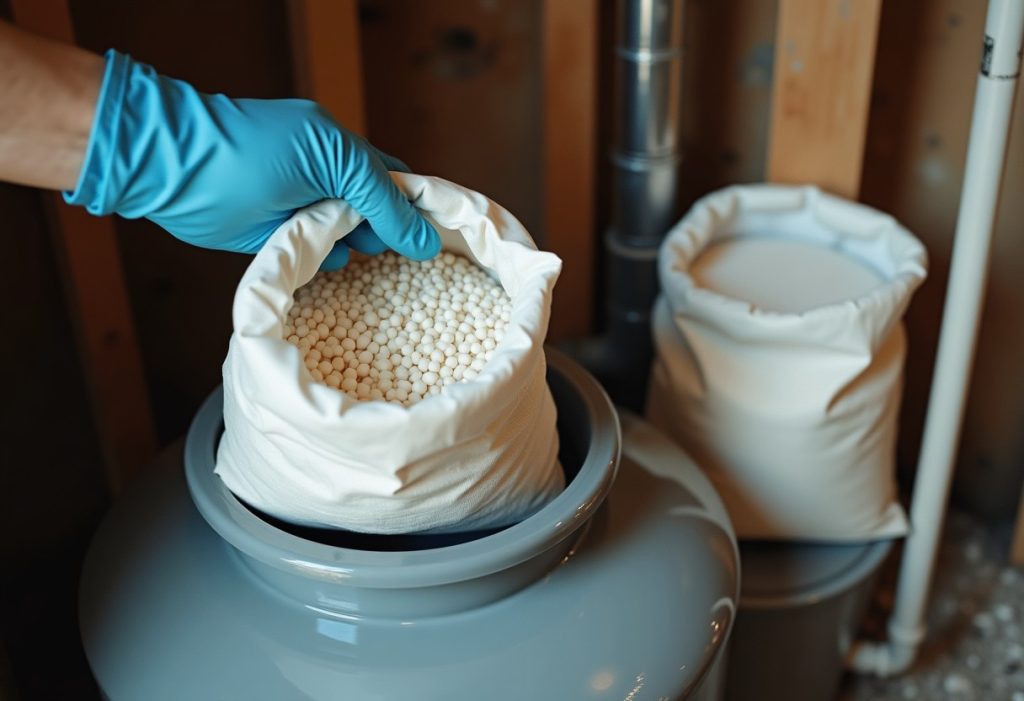
Form matters as much as grade. Crystals are loose granules of solar salt, cheap and fine for units with light to moderate use. Pellets are compressed evaporated salt shaped to resist bridging, and they are the default for high-efficiency softeners and any unit that has mushed before. Blocks are large solid slabs that suit only a few specific systems.
Match the form to your tank. Most modern softeners run best on pellets because the uniform shape dissolves evenly and stays above the water line. Crystals can pack down and mush in humid basements, so if your utility room stays damp, favor evaporated pellets. Blocks need a tank designed for them and enough water depth to keep the block submerged, so check your manual before using them.
Is potassium chloride a good salt-free alternative?
Potassium chloride is a genuine sodium-free swap that works in nearly any standard ion exchange softener. It regenerates the resin the same way salt does, but it exchanges potassium onto the beads instead of sodium, so the softened water carries no added sodium. That helps households watching sodium intake and yards or houseplants that react badly to salt in the softener discharge.
The cost is the catch. A 40-pound bag runs about $50 to $70 against $5 to $10 for sodium chloride, and softeners typically use around 30% more potassium chloride to reach the same softness, per Angi. Setting the softener to a slightly higher salt dose helps offset the efficiency gap. If avoiding added sodium entirely is the goal, a salt-free system is worth weighing too; our water softener vs conditioner guide covers that route. Before weighing salt types further, our guide on troubleshooting a softener that seems to be underperforming explains how to rule out a malfunction first.
How much salt does a water softener use, and how often do you refill?
A family of four with moderately hard water, around 7 to 10 grains per gallon, uses roughly 9 to 10 pounds of salt a week, which works out to about one 40-pound bag a month. Higher hardness, iron above 2 ppm, more people, or heavier water use all raise that figure because the softener regenerates more often.
Checking and refilling is simple:
- Look in the brine tank about once a month.
- Refill when the salt drops below roughly one-third full or below the water line.
- Keep salt a few inches above the water so the brine stays fully saturated.
- Do not overfill a tall tank, since packed salt sitting for months is more likely to bridge.
If you are sizing or plumbing a new unit and want to plan salt logistics, our guide to how to install a water softener covers tank placement and the brine drain line.
What causes salt bridges and salt mushing, and how do you fix them?
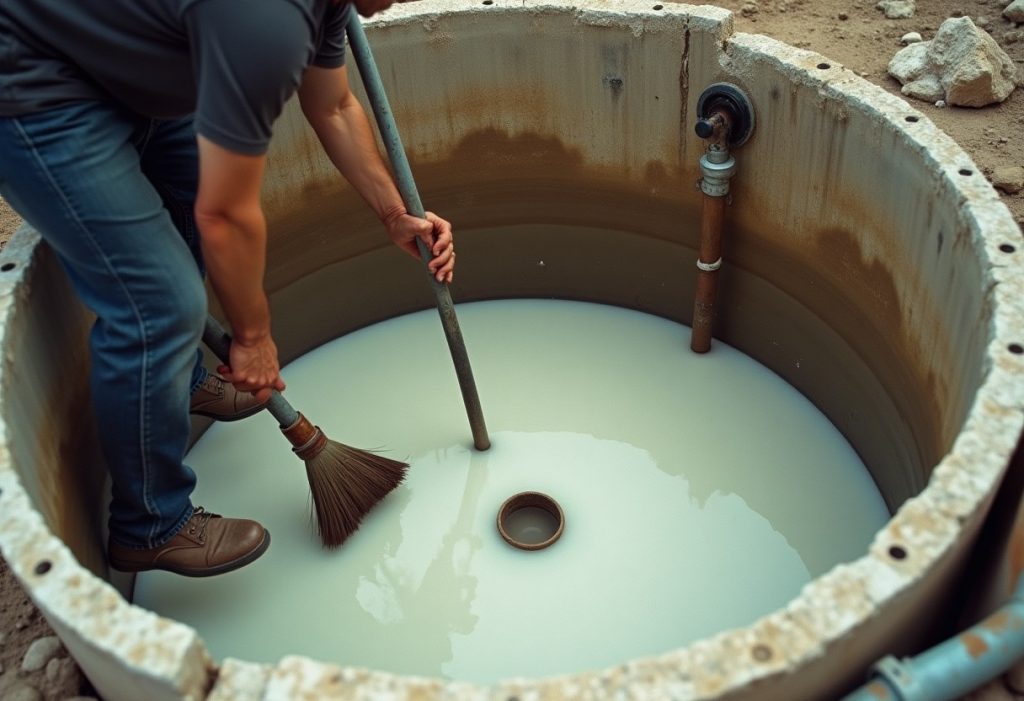
These are the two failures that quietly stop a softener from working. A salt bridge is a hard crust that forms above the water line, leaving an air gap so the salt on top never touches the water to make brine. Salt mushing is the opposite location: dissolved salt recrystallizes into a thick sludge at the bottom of the tank and blocks the brine draw.
Both are driven by humidity, overfilling, and low-purity salt. A basement above about 60% humidity is prime bridging territory, and rock salt’s impurities make mushing worse. To fix a bridge, break the crust from above with a long blunt handle like a broom until it collapses, following the kind of steps maintenance guides describe. Mushing needs a full cleanout: scoop the old salt, remove and rinse the sludge, clean the tank, and refill with fresh high-purity salt. Switching to evaporated salt is the single best prevention for both.
How much does water softener salt cost?
Sodium chloride is cheap. A 40-pound bag of rock salt runs about $5 to $8, solar salt about $8 to $10, and evaporated pellets about $9 to $12. At one bag a month, a typical household spends roughly $70 to $145 a year on salt. Potassium chloride is the outlier at about $50 to $70 a bag, which is why homeowners reserve it for a specific sodium or plant reason.
The chart below shows the spread per 40-pound bag. Salt is a small line item next to the softener itself; for the equipment and install numbers, see what a water softener costs.
How we sourced this
Purity figures (evaporated near 99.9%, solar near 99.5%, rock salt the least refined) and the 99% purity recommendation come from Morton Salt product pages, the Morton Water Softeners salt guide, and the Morton solar salt spec sheet. Consumption of about 9 to 10 pounds per week (near one 40-pound bag a month) for a family of four at 7 to 10 grains per gallon is the widely cited industry standard from softener manufacturers and water-treatment references. Salt bridge and mushing definitions, causes, and fixes draw on maintenance guides from Fresh Water Systems and Culligan. Potassium chloride pricing (about $50 to $70 per bag versus $5 to $10 for salt) and the roughly 30% higher usage come from Angi. Prices are typical U.S. retail ranges that vary by region and brand; we present them as ranges, not quotes.
Frequently asked questions
What is the best type of salt for a water softener?
Evaporated salt is the highest quality, refined to about 99.9% sodium chloride with the fewest insoluble impurities, so it dissolves cleanly and rarely mushes or bridges. Solar salt sits close behind at roughly 99.5% purity for less money. Rock salt is the cheapest but carries the most calcium sulfate and insolubles, meaning more brine tank cleanouts. Most manufacturers, including Morton, recommend salt that is 99% pure or better.
How much salt does a water softener use per month?
A family of four with hard water around 7 to 10 grains per gallon typically uses about 9 to 10 pounds of salt per week, or roughly one 40-pound bag per month. Very hard water above 10 grains per gallon, iron over 2 ppm, higher water use, or a larger household all push consumption higher because the softener regenerates more often.
How often should I add salt to my water softener?
Check the brine tank about once a month and refill when the salt level drops below roughly one-third full or falls below the water line. Keeping salt several inches above the water helps the brine stay saturated. Most households add one 40-pound bag a month, but very hard water or high usage can mean topping up every two to three weeks.
Can I use potassium chloride instead of salt in my water softener?
Yes. Potassium chloride works in almost any standard ion exchange softener and adds no sodium to your water, which suits sodium-restricted diets and lawns or plants sensitive to salt. The trade-offs are cost and efficiency: a 40-pound bag runs about $50 to $70 versus $5 to $10 for sodium chloride, and softeners generally use around 30% more potassium to reach the same result.
What is a salt bridge in a water softener?
A salt bridge is a hard crust that forms above the water line in the brine tank, leaving an air gap so salt above it never reaches the water to make brine. The softener then regenerates with weak or no brine and stops softening. High humidity, overfilling, and low-grade salt are the common causes. Break the crust with a long blunt handle to fix it.
What is salt mushing and how do I fix it?
Salt mushing is when dissolved salt recrystallizes into a thick sludge at the bottom of the brine tank, blocking brine draw so the resin never fully regenerates. Unlike a salt bridge, poking it will not clear it. You have to scoop out the old salt, remove and rinse the mush, clean the tank, and refill with fresh high-purity salt.
Does the type of salt affect how often the tank needs cleaning?
Yes. Rock salt has the most water-insoluble matter, so sediment builds in the brine tank faster and you clean it more often, sometimes yearly or more. Evaporated and solar salt are far purer, leave little residue, and can stretch cleanings to every few years. Purer salt also lowers the odds of mushing and helps the valve stay clear.


