Is Liquid-Plumr Safe for Pipes? What the Labels and Pipe Makers Say
Yes, Liquid-Plumr is safe for pipes made of PVC, ABS, copper and steel when used as the label directs, and Clorox says septic tanks too. It is a pH 13 bleach and lye solution, so it is not for rubber, toilets, dishwashers or any drain holding another cleaner.
The Liquid-Plumr FAQ states that “lab tests confirm that all Liquid-Plumr products are safe for all household plumbing,” with one exception: “we do not recommend using clog removers in rubber pipes.”
What the Liquid-Plumr safety data sheets list in each bottle
Every Liquid-Plumr clog remover below pairs sodium hypochlorite (bleach) with sodium hydroxide (lye) at about pH 13, per its Clorox safety data sheet (SDS); two Drano products are the comparators.
| Product (SDS date) | Actives per SDS, % range | pH, signal word | Pipe, septic and toilet claims |
|---|---|---|---|
| Pro-Strength Urgent Clear (6/25/2025) | Sodium hypochlorite 5 to 10, sodium hydroxide 1 to 5, amine oxide 0.1 to 1 | About 13, Danger; “mildly corrosive to most metals” | Brand FAQ covers all Liquid-Plumr bottles, so all pipes except rubber, septic safe, no toilets |
| Pro-Strength Full Clog Destroyer (17-Aug-2022) | Sodium hypochlorite 5 to 10, sodium hydroxide 1 to 5 | About 13, Danger, serious eye damage | SDS: not corrosive to SAE 1020 steel or non-clad aluminum under UN test 37.1 |
| Advanced Action (02-Feb-2023) | Sodium hydroxide 1 to 5, sodium hypochlorite 5 to 10 (by volume) | About 13, Danger, severe skin burns | Same brand FAQ claims |
| Pro-Strength Hair Eliminator Gel (15-July-2021) | Sodium hydroxide 5 to 10, sodium hypochlorite 3 to 7, amine oxide 1 to 5 | About 13, Danger; 4,000 cP gel | FAQ: safe for plastic pipes and septic; not for toilets, washers or disposals |
| Clog Destroyer plus Foaming Clog Fighter (15-July-2021) | Sodium hydroxide 1 to 5, sodium hypochlorite 1 to 5; two-part pack | 13 on the bleach side; not classified under OSHA consumer exemption | SDS: “corrosive to aluminum” |
| Maintenance Clog Remover (Canada, rev. 25-Aug-2021) | Sodium hypochlorite 3 to 7, sodium hydroxide 1 to 2.5 | About 13, Danger | Incompatible with ammonia, toilet bowl cleaners, acids and other drain openers |
| Drano Max Gel Ultra (rev. 05/20/2015) | Sodium hypochlorite 5 to 10, sodium chloride 5 to 10, sodium hydroxide 1 to 5 | 11.5 to 13.5 | Drano.com: “Safe on all pipes & septic systems”; “Do not use in toilets” |
| Drano FlowGuard Build-up Remover (product page) | Enzymes and bacteria, per drano.com | No SDS read | “Safe on all pipes, septic systems, and toilets”; “will not open clogs” |
Two readings matter for pipes. First, the 2025 Urgent Clear sheet calls the liquid “mildly corrosive to most metals,” while the 2022 Full Clog Destroyer sheet reports it passed the UN Manual of Tests and Criteria Section 37.1 metal corrosion test on SAE 1020 steel. Passing that transport test means corrosion below the dangerous-goods line, not zero corrosion. Second, one Liquid-Plumr FAQ entry lists sodium silicate as a “corrosion inhibitor,” so Clorox formulates against metal attack rather than claiming the base chemistry is harmless to metal. Our list of drain cleaners ranked by clog type matches each formula to hair, grease or soap clogs.
Does Liquid-Plumr hurt PVC, copper or old galvanized pipe?
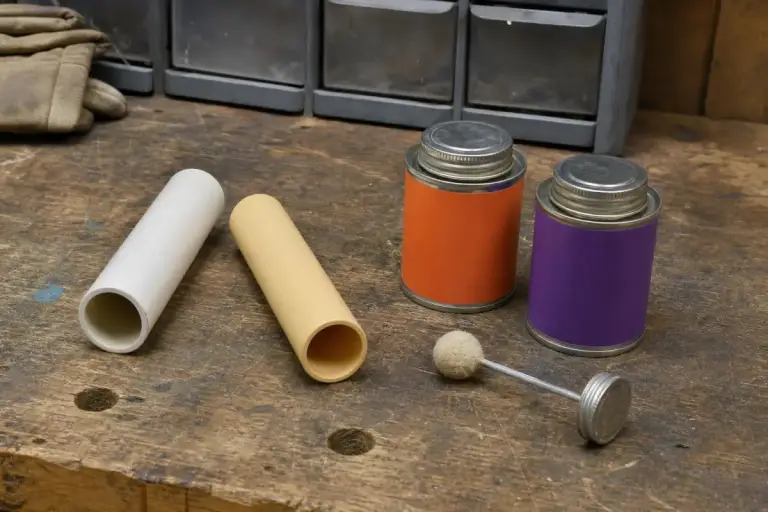
For PVC, the pipe industry’s own data backs the label. The Cantex PVC chemical resistance chart, sourced to Plastic Pipe Institute report TR-19, rates PVC “R, generally resistant” to caustic soda at both 73 and 140 degrees F, and to bleach at 5.5% and 12.5% active chlorine at both temperatures. Cantex says the chart is meant for conveying undiluted chemicals, far stronger than the 1 to 10% bands in the bottles above.
Old metal is where the label’s “all household plumbing” claim deserves a qualifier. A galvanized steel drain or cast iron stack that is already rusted thin has no wall margin left, and a sheet that says “mildly corrosive to most metals” gives no reason to soak it repeatedly. One dose that clears within the FAQ’s 15-minute wait is a short exposure; a full bottle sitting for hours in a corroded line is one no Clorox document addresses. Rubber is the stated limit: the FAQ rules out rubber pipes and dishwashers because “dishwashers frequently use rubber attachments for draining.”
Several top-ranking pages warn that the reaction “generates significant heat” that softens PVC. The Clorox sheets for Full Clog Destroyer, Advanced Action and Hair Eliminator Gel each list “no dangerous reaction known under conditions of normal use” in Section 10, and none lists a heat-of-reaction hazard, so that warning fits solid lye crystals better than these 1 to 10% liquids.
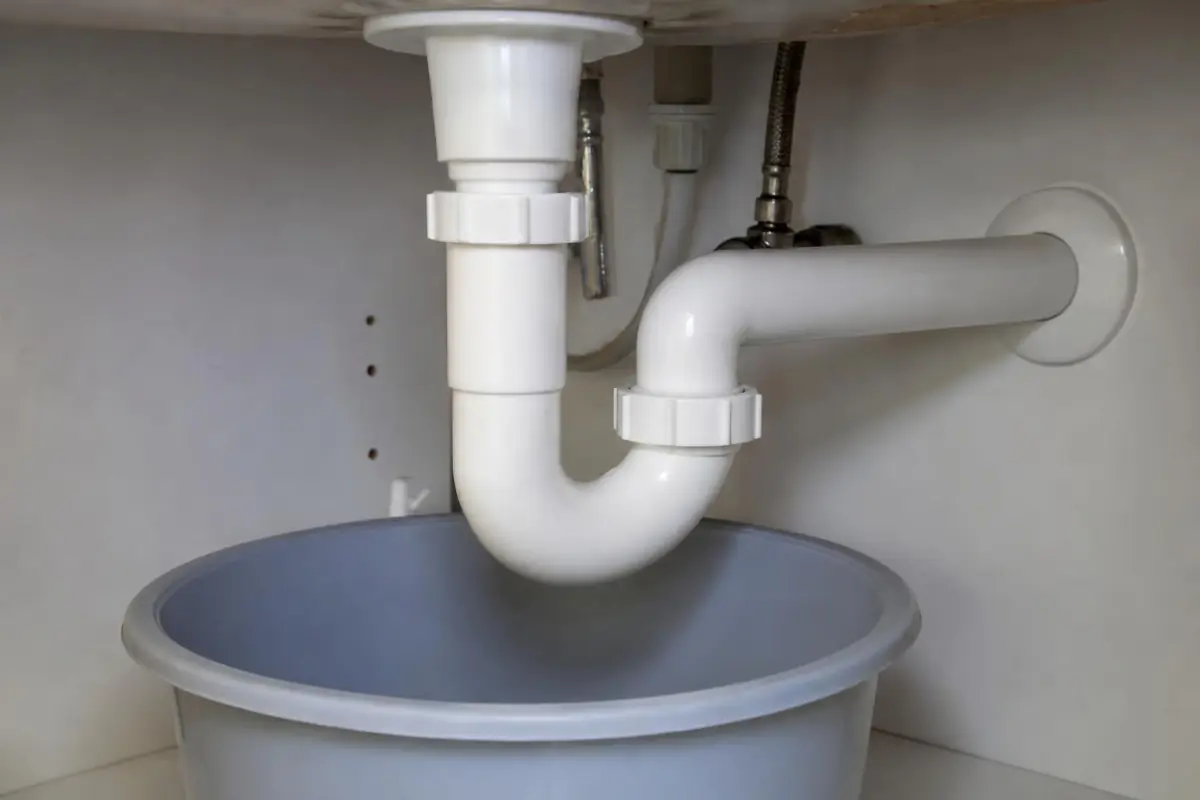
Why a fully blocked 1-1/2 in trap defeats a 16 oz dose
When water stands in the sink, most of the dose sinks into the trap’s U-bend and stays there, because five of the six Clorox sheets above list a relative density of about 1.1, heavier than water. A clog in the trap itself gets soaked; a clog in the trap arm or the wall pipe sits above the trap weir, and the product has to fill the U before any reaches it. The figure and table use stated example geometry.
| Input or result | Value | Basis |
|---|---|---|
| Inside diameter, 1-1/2 in Schedule 40 PVC | 1.610 in, so 2.036 sq in | ASTM D1785 dimensions: 1.900 in OD minus two 0.145 in walls |
| Liquid per inch of pipe | 1.13 fl oz | 2.036 cu in divided by 1.805 cu in per fl oz |
| Trap below the weir, 2 in seal | 9.8 fl oz | Two 2 in legs plus a 4.7 in bend (1.5 in centerline radius, assumed) |
| Trap below the weir, 4 in seal | 14.3 fl oz | Two 4 in legs plus the same bend; IPC 1002.4 allows 2 to 4 in |
| Label dose | 16 fl oz | Liquid-Plumr FAQ: “1/5 of the bottle (2 cups)” |
| Dose left to spill over the weir toward the clog, if it sinks as a layer | 1.7 to 6.2 fl oz | 16 fl oz minus 14.3 or 9.8 fl oz |
| Standing water in this example drain | About 130 fl oz | 8 in tailpiece (9.0), 12 in trap arm (13.5), trap (14.3), 1 in puddle over a 14 x 12 in bowl (93.1) |
| Strength if fully mixed, 16 fl oz dose | 11% of label strength | 16 divided by 146; bleach 5 to 10% becomes about 0.55 to 1.1% |
| Strength if fully mixed, whole 80 fl oz bottle | 38% of label strength | 80 divided by 210 |
Either way the product loses: as a layer, only 1.7 to 6.2 fl oz of a 16 fl oz dose can reach a trap-arm clog; mixed in, it drops to about one ninth of its label strength. A second failed dose means the clog is past the trap, where a hand auger belongs.
Mixing, splashing and the plumber who opens the trap next
A trap that still holds Liquid-Plumr is a pH 13 bath, and the main risk after a failed dose is to people, not pipes. The Urgent Clear SDS says the liquid reacts with “toilet bowl cleaners, rust removers, acids, and ammonia-containing products to produce hazardous” gases. The Children’s Hospital of Philadelphia Poison Control Center separates the two reactions: bleach plus ammonia makes chloramine gas, and bleach plus an acid, a group that includes some drain openers, makes chlorine gas with “more severe and long-lasting effects.”
That second reaction has sent a plumber to the hospital. A New Jersey Department of Health hazard alert describes a plumber who noticed a bleach odor at a clogged drain, poured in a sulfuric acid drain solvent, released chlorine gas and was taken to the emergency department with respiratory distress, coughing and wheezing. Three rules follow:
- Tell anyone who opens the trap the product name and the time you poured it, and leave the bottle out where they can read the SDS.
- Never follow Liquid-Plumr with an acid cleaner or a second brand; Clorox says only another Liquid-Plumr product is safe in the same drain.
- Wear safety glasses with side shields and rubber gloves, as Section 8 of the Full Clog Destroyer and Hair Eliminator Gel SDS specifies, and do not plunge; the FAQ warns plunging can make the product “splash back and get on you.”
Septic tanks, toilets and dishwashers: where the labels draw the line
Clorox answers yes on septic, saying the ingredients “degrade rapidly and will not harm the bacteria in your tank,” and Drano makes the same claim for its gels. The EPA SepticSmart care page takes the cautious side: “Avoid chemical drain openers for a clogged drain. Instead, use boiling water or a drain snake.” Treat an occasional 16 fl oz dose as the label’s case, not a monthly habit.
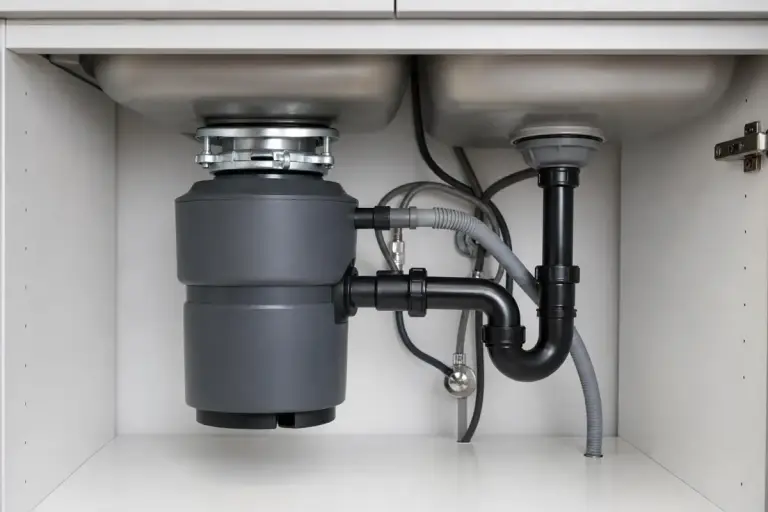
Toilets are a firm no from both brands. Liquid-Plumr says its products “are not designed to remove the waste that may be clogging your toilet,” and Drano says the toilet’s trap shape keeps product from reaching the blockage; our page on why drain cleaner fails in a toilet covers the auger route instead. Disposals split by bottle: one Liquid-Plumr FAQ entry allows use with the disposal running, while the Hair Clog Eliminator entry forbids it, and our review of drain cleaner in a garbage disposal lays out what disposal makers say.
When to skip the bottle: plunger, zip strip, snake, then enzymes
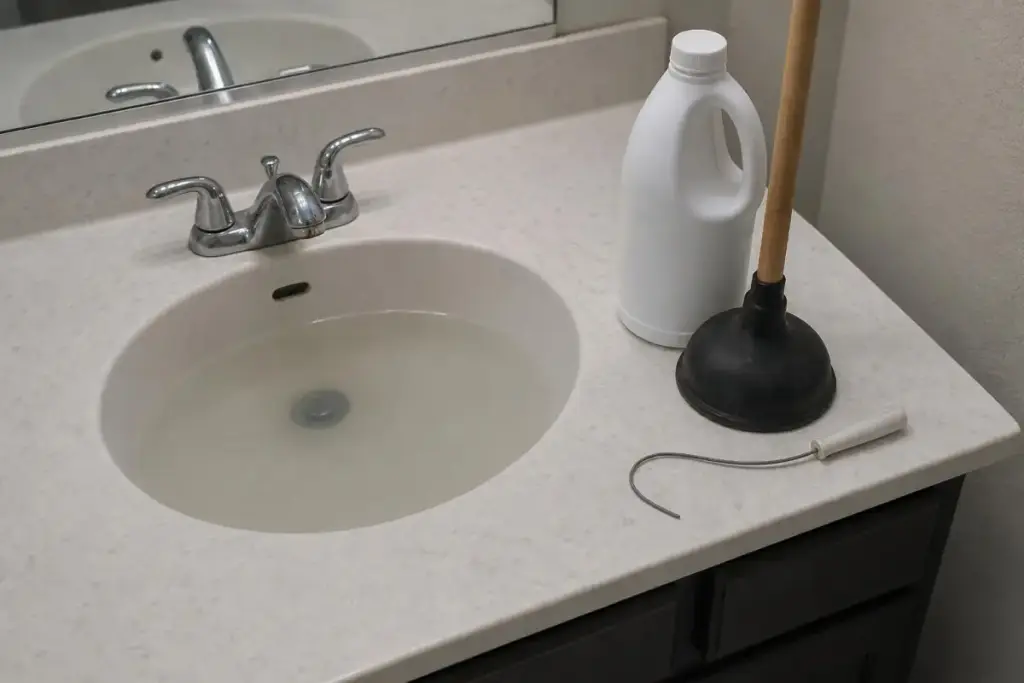
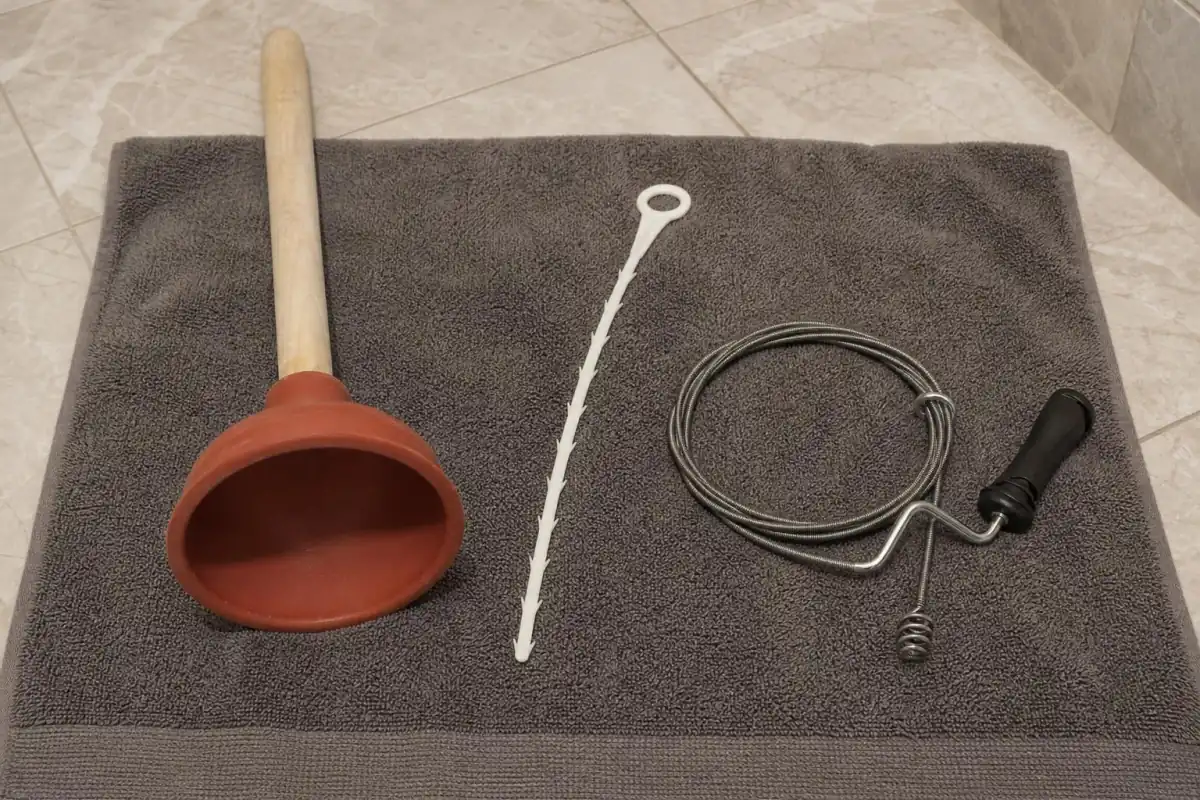
Liquid-Plumr itself says no product “can clear a foreign object or tree root,” so a ring, a toy or roots need hands and tools from the start. For a hair clog at a bathroom stopper, a plastic barbed zip strip pulled from the drain removes the mass in one pass; for a kitchen line, a cup plunger with the second bowl sealed comes first, then a hand auger fed through the trap arm after the trap is removed. Our step-by-step drain unclogging order sets those tools in sequence.
Enzyme products fit slow drains, not stopped ones. Drano’s FAQ says FlowGuard needs 6 to 8 hours before warm, not hot, water runs, and its product page says it “will not open clogs.” Its slow-drain dose is half of a 30 oz bottle, and its maintenance dose is 2 oz per drain every 2 to 4 weeks. A sink that still empties is an enzyme job; a sink holding water at the rim is a plunger or auger job, with Liquid-Plumr as the third choice rather than the first.
How we sourced this
We read six Clorox safety data sheets (Urgent Clear 2025, Full Clog Destroyer 2022, Advanced Action 2023, Hair Eliminator Gel 2021, Clog Destroyer plus Foaming Clog Fighter 2021, Maintenance Clog Remover Canada 2021), the liquidplumr.com FAQ, the Drano Max Gel Ultra SDS (2015), the drano.com FAQ and FlowGuard page, the Cantex PVC chart based on PPI TR-19, the EPA SepticSmart care page, the CHOP poison control page and the New Jersey Department of Health hazard alert. Trap volumes and dilution were computed from ASTM D1785 pipe dimensions and the IPC 1002.4 trap seal range; bend radius, pipe lengths and bowl size are stated example inputs. Retail prices per ounce could not be confirmed from a dated listing and were left out. No product was tested.
Liquid-Plumr questions people also ask
Can I leave Liquid-Plumr in the drain overnight?
The liquidplumr.com FAQ says Industrial Strength Gel and Pro-Strength Clog Destroyer will not harm pipes if left overnight, and the Hair Clog Eliminator entry says the same for very slow drains. The minimum wait printed for the standard products is 15 minutes, then a hot tap water flush once the drain runs.
Is Drano Max Gel easier on pipes than Liquid-Plumr?
The chemistry is close. The 2015 Drano Max Gel Ultra SDS lists sodium hypochlorite 5 to 10% and sodium hydroxide 1 to 5% at pH 11.5 to 13.5, the same active bands as Liquid-Plumr Full Clog Destroyer. Both brands claim all-pipe and septic safety and both forbid toilet use.
How many times can I pour Liquid-Plumr into the same clog?
Liquid-Plumr suggests one more bottle if a clog gets worse, then a plumber if it persists. A practical rule is two doses at most. After that the trap holds a pH 13 solution, so stop, ventilate, glove up and switch to a hand auger through the trap arm.
Does Liquid-Plumr dissolve PVC glue joints?
No manufacturer document read for this page says so. PVC solvent cement fuses pipe and fitting into one plastic piece, and the Cantex chart based on Plastic Pipe Institute report TR-19 rates PVC generally resistant to caustic soda and 5.5% bleach at 73 and 140 degrees F.
What should I do if Liquid-Plumr splashes in my eyes?
Liquid-Plumr says to flush the eyes with water for 15 minutes, removing contact lenses first, then call a doctor or poison control. In the US the poison help line is 1-800-222-1222. The SDS sheets warn that permanent eye damage, including blindness, could result.