Sump Pump Battery Backup: Options, Runtime, and Cost
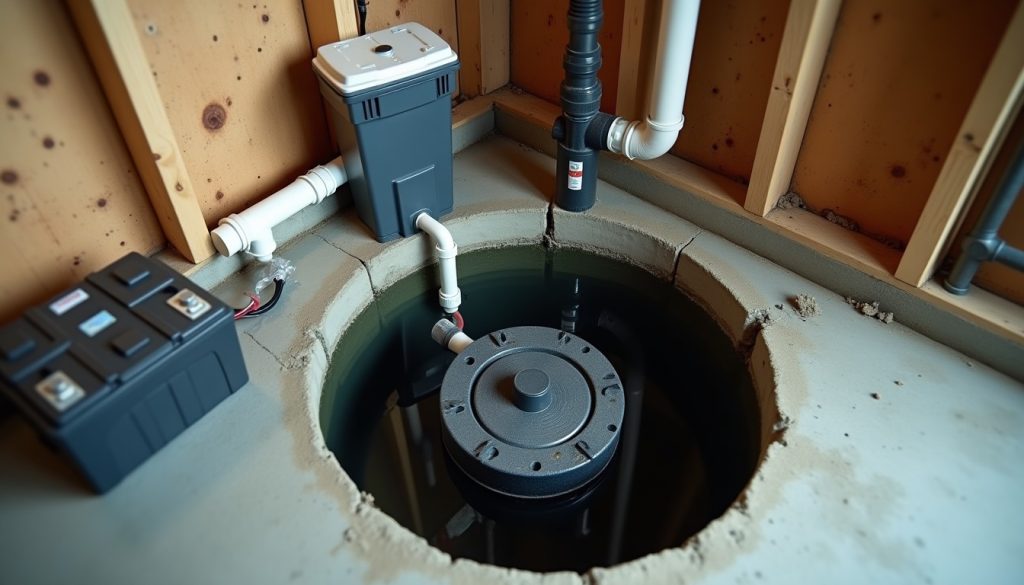
A sump pump battery backup keeps your pit draining when the storm cuts household power, which is exactly when a primary pump fails. Your choices are a DC battery pump, a water-powered pump, a generator, or an AC/DC combo.
Key Takeaways
- The storm that floods your basement is the storm most likely to knock out the grid, so a primary pump that runs on wall power fails at the worst moment.
- A fresh battery runs a backup pump about 7 to 10 hours under moderate cycling; a single group-27 AGM at a 10 percent duty cycle can reach roughly 40 hours, per Basement Watchdog ratings.
- An AGM battery is sealed and maintenance-free with about a 4 to 5 year service life, per Zoeller; a flooded lead-acid costs less but needs water checks and venting.
- A backup pump moves roughly 1,850 to 2,600 gallons per hour, close to a primary, though flow drops as the battery drains.
- A water-powered backup runs with no time limit but uses about 1 gallon of city water for every 2 gallons it removes, per Water Commander.
- Expect $150 to $1,000 installed depending on standalone pump, combo unit, and battery count, with the battery a recurring cost every 4 to 5 years.
Why does a sump pump need a battery backup?
Because the storm that fills your pit is the same storm that drops the power line. A primary sump pump runs on household electricity, so a power cut during heavy rain leaves the water rising with nothing to empty it. A battery backup switches on automatically when the grid drops or the primary quits, and it also covers a primary that jams or burns out with the power still on. That same failed primary is often paired with a French drain feeding the pit, so it helps to know how french drain costs and installation factor into the whole setup.
The stakes are money, not just inconvenience. FEMA and insurers estimate that a single inch of water can cause roughly $25,000 in damage, and industry surveys find that most basements take on water at some point. Standard homeowners policies often exclude sump pump failure unless you add an endorsement, so the backup pump is frequently the only thing standing between the storm and your floor. For the primary pump itself, see our guide to submersible and pedestal sump pump types.
What are your sump pump backup options?
Four answers cover almost every basement: a DC battery backup pump, a water-powered backup pump, a whole-house generator, and an AC/DC combination unit. The battery and water-powered options add a second pump that runs on their own power source. A generator instead keeps your existing primary pump fed. A combo bundles a primary and a battery backup in one basin.
| Option | How it powers the pump | Runtime | Needs | Typical cost | Best for |
|---|---|---|---|---|---|
| DC battery backup | Deep-cycle battery runs a second, separate pump when AC power drops | 7 to 10 hr moderate; up to ~40 hr intermittent per battery | Battery replaced every 4 to 5 yr; charger stays plugged in | $150 to $600 | Most homes; unattended protection during outages |
| Water-powered backup | City water pressure drives a Venturi that pulls pit water out; no electricity | Unlimited while city pressure holds | Municipal water (not wells); uses ~1 gal city water per 2 pumped | $150 to $350 | Long multi-day outages on city water |
| Generator | Feeds AC power to your existing primary pump | As long as fuel or a standby unit runs | Portable needs you home to start and refuel; standby needs install | $500 to $6,000+ | Whole-house coverage; owners already wanting a generator |
| AC/DC combo unit | Primary AC pump and battery DC pump preset in one basin and controller | Same as battery (7 to 10 hr+, per battery bank) | Battery upkeep; single wired system | $300 to $1,000 | New installs wanting primary plus backup in one box |
How long does a sump pump battery backup run?
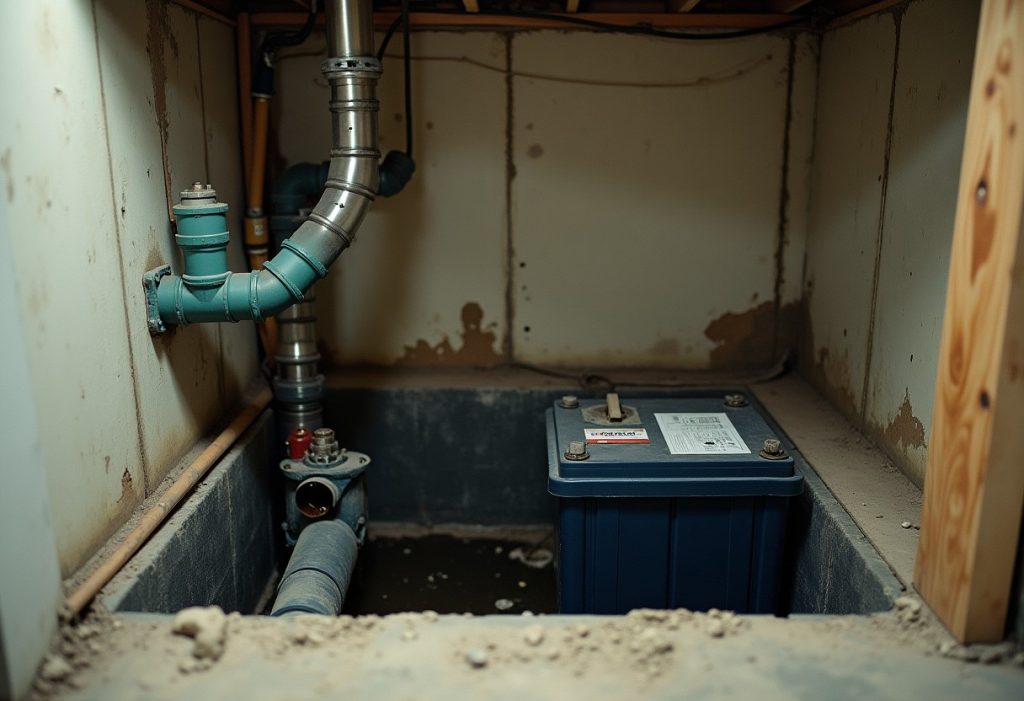
A fresh, fully charged battery runs a backup pump about 7 to 10 hours under moderate, on-and-off cycling. That number swings hard with how much water you are moving. In a heavy storm with the pump running almost nonstop, continuous runtime can drop to 4 to 5 hours, while a light, intermittent load at roughly a 10 percent duty cycle stretches a single group-27 AGM to about 40 hours.
Battery count is the real lever. A single group-27 deep-cycle battery rated 75 to 100 amp-hours covers a typical outage, and adding a second battery roughly doubles the runtime. Age matters too: a battery three or four years old holds far less charge than the label promises, which is why manufacturers push a fixed replacement schedule rather than waiting for failure.
A water-powered backup sidesteps runtime entirely. It has no battery to drain, so it runs as long as your municipal water pressure holds, which is its main advantage in a multi-day outage. The cost is water: a unit uses roughly 1 gallon of treated city water for every 2 gallons it pulls out of the pit, and it needs city pressure, so it is a nonstarter on a private well.
AGM vs lead-acid: which backup battery lasts longer?
An AGM (absorbent glass mat) battery is the low-maintenance choice, and a standard flooded lead-acid battery is the budget choice. An AGM is sealed, spill-proof, and needs no watering, with a rated service life around 4 to 5 years per Zoeller. A flooded lead-acid costs less up front but needs its electrolyte level checked and topped off, and it vents hydrogen gas, so it belongs only in a ventilated space.
Where each battery fits
Put an AGM in a finished basement, a closet, or anywhere you do not want fumes or maintenance. Choose flooded lead-acid in an open utility area if you will actually check the water level and want to save money. Some newer systems use lithium (LiFePO4) batteries rated 5 to 10 years, which cost more but hold charge longer and shrug off deep discharges. Weigh battery choice alongside your backup plan, since a dead pump invites sewer backup prevention during the next storm.
The upkeep that gets skipped
Both chemistries fail quietly. A backup that sat untested for four years may deliver a fraction of its rated runtime the night you need it. Test the system a couple of times a year by unplugging the primary and pouring water into the pit, and replace the battery on schedule rather than after it dies.
How do you size a sump pump battery backup?
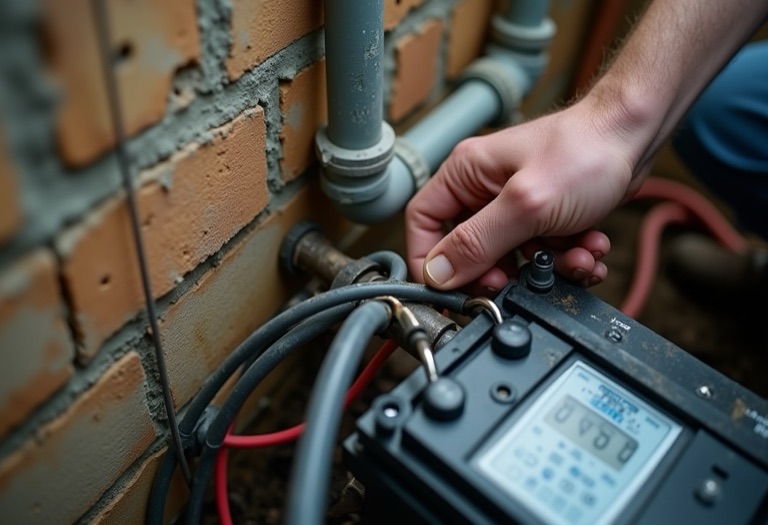
Size two things: the pump’s flow and the battery’s capacity. The backup pump should roughly match your primary’s flow so it can keep up with the same inflow, typically a 1/3 to 1/2 HP unit moving 1,850 to 2,600 gallons per hour. Capacity, measured in amp-hours, sets how long that pump can run before the battery is spent.
- Estimate your worst-case inflow. A high water table or a fast-filling pit calls for a higher-flow backup pump, not just more battery.
- Pick the battery bank. One group-27 battery at 75 to 100 amp-hours suits an average home; add a second battery for long or frequent outages.
- Match the charger. Use the charger or controller the system specifies so the battery stays topped off and reports a low charge before a storm.
- Add a water-powered unit for the extreme case. If multi-day outages are common and you are on city water, a water-powered backup covers the time a battery cannot.
Note that a groundwater backup is a different animal from a sewage backup. If your basement pump lifts wastewater rather than clear groundwater, read sump pump vs sewage ejector pump before you buy, because ejector systems have their own backup rules.
What does a sump pump battery backup cost?
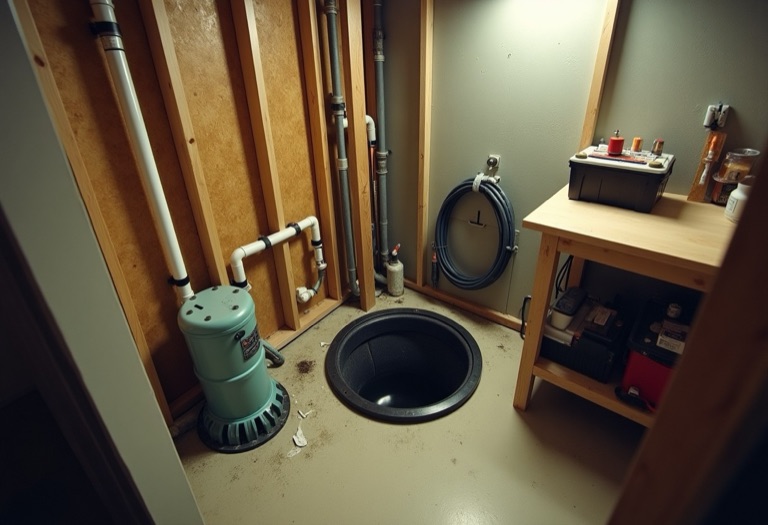
Plan on about $150 to $1,000 installed. A standalone battery backup pump runs $150 to $600 for the pump, controller, and one battery, while an AC/DC combination unit that includes a primary pump lands at $300 to $1,000. The battery itself is $100 to $250 and is a recurring expense every 4 to 5 years, which many buyers forget when they compare sticker prices.
A water-powered backup is $150 to $350 for the unit plus installation, and it adds a small ongoing water bill each time it runs. Generators span a wide range, from a $500 portable to a $6,000-plus automatic standby. For the primary pump and the whole picture, see our full sump pump cost breakdown, and the wiring and discharge steps in how to install a sump pump.
How do you choose a sump pump backup?
Match the backup to your outage pattern and your water source. Short, occasional outages point to a DC battery backup, the default for most homes because it runs unattended. Long multi-day outages on municipal water favor a water-powered backup that never runs out. A generator makes sense when you want to power the whole house, not just the pump.
- Choose a DC battery backup if you want automatic, hands-off protection and your outages are usually a few hours to a day.
- Choose a water-powered backup if you are on city water and worry about outages that outlast any battery.
- Choose an AC/DC combo if you are installing new and want a primary and backup preset in one basin.
- Add a generator if you already want whole-house coverage, but do not treat a portable as your only pump backup, since it does nothing while you are away.
How we sourced this
We compared published manufacturer specifications and product ratings from Zoeller, Basement Watchdog, and water-powered makers including Basepump and Water Commander, alongside retailer buying guides for runtime and pricing, and FEMA and insurer figures on basement water damage. Runtime, flow, battery-life, and cost figures are given as ranges because they vary by pump horsepower, battery amp-hours and age, duty cycle, water table, and region. We consulted roughly a dozen sources and cited the primary manufacturer pages and damage estimates directly. Prices are US figures as of September 2026 and include typical installation where noted. We excluded single-brand vendor pages that published no specs.
Frequently asked questions
Why does a sump pump need a battery backup?
A primary sump pump runs on household power, and the heavy storm that fills your pit is the same storm most likely to knock out the grid. A battery backup takes over automatically when the power drops or the primary pump fails, so the pit keeps draining. Without one, a single outage during heavy rain can put inches of water on a finished basement floor.
How long does a sump pump battery backup last on one charge?
A fresh, fully charged battery runs a backup pump about 7 to 10 hours under moderate, intermittent cycling. Heavy pumping in a major storm can cut continuous runtime to 4 to 5 hours, while a single group-27 AGM at a 10 percent duty cycle can stretch to roughly 40 hours. Dual-battery systems roughly double that, and the battery weakens with age.
What is the difference between a battery backup and a water-powered backup?
A DC battery backup runs a second pump off a deep-cycle battery and stops when the battery drains. A water-powered backup uses municipal water pressure and the Venturi effect, so it runs with no time limit as long as city pressure holds. The trade-off is that water-powered units move less water and use roughly 1 gallon of treated city water for every 2 gallons they remove.
Should I use an AGM or lead-acid battery for my backup?
An AGM battery is sealed, maintenance-free, spill-proof, and rated for about 4 to 5 years of service, which makes it the common choice for a finished basement. A standard flooded lead-acid battery costs less up front but needs its water level checked and topped off and vents gas, so it belongs in a ventilated utility space. Both need replacing on a schedule, not when they die.
How big a battery does my backup pump need?
Match the battery to the runtime you want and the pump’s amp draw. A single group-27 deep-cycle battery rated 75 to 100 amp-hours covers most homes for a typical outage. If your area sees multi-day outages or a high water table, step up to a dual-battery system or add a water-powered backup, since capacity, not the pump, is what runs out first.
How much does a sump pump battery backup system cost?
A battery backup system runs about $150 to $1,000 installed, depending on whether you buy a standalone backup pump, a combination unit with a primary pump built in, and how many batteries it holds. The battery itself is $100 to $250 and is a recurring cost every 4 to 5 years. A water-powered backup runs about $150 to $350 plus install.
Do I need a generator instead of a battery backup?
A generator is a backup for the whole house, not a substitute for a pump-level backup. A portable generator needs you home to start it and refuel it, so it does nothing during an outage while you are away. A battery or water-powered backup switches on by itself. Many homeowners pair an automatic standby generator with a battery backup for full coverage.


