Reverse Osmosis System: How It Works, What It Removes, and Cost
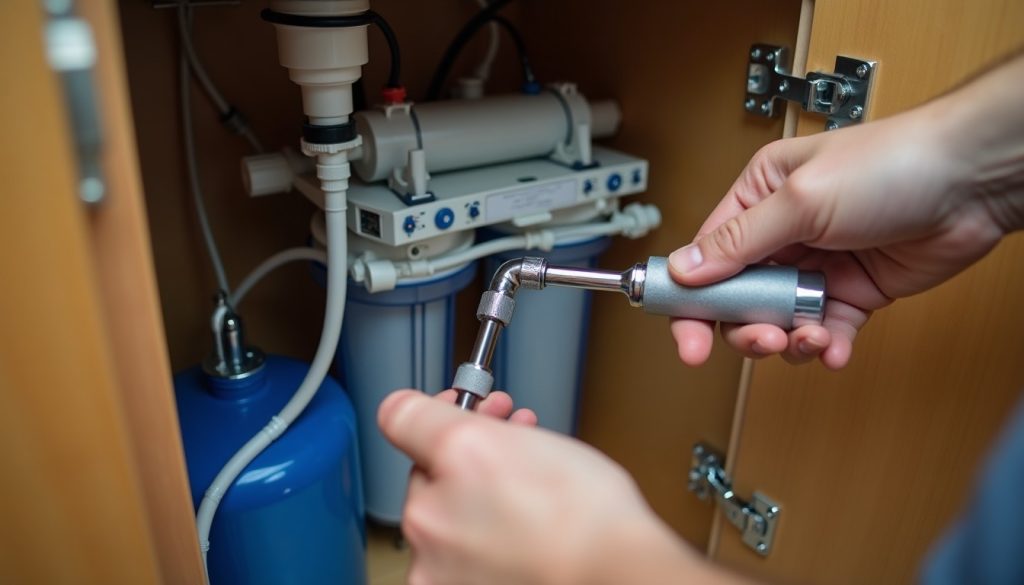
A reverse osmosis system forces water through a semipermeable membrane to strip dissolved contaminants like lead, nitrate, arsenic, and PFAS that carbon filters and softeners leave behind, usually at one drinking-water tap.
Key Takeaways
- Reverse osmosis is point-of-use polishing: water flows through a sediment pre-filter, carbon pre-filter, the RO membrane, a storage tank, and a carbon post-filter (NSF).
- Certified RO cuts total dissolved solids by about 95 to 98 percent and rejects 95 to 99 percent of lead and arsenic (NSF/ANSI 58; EPA).
- NSF/ANSI 58 sets a minimum 75 percent TDS reduction to certify a system; good membranes far exceed it (NSF).
- Traditional systems waste about 3 to 4 gallons per filtered gallon; efficient models reach roughly 1-to-1 (Angi 2026; This Old House).
- An under-sink RO system runs $150 to $1,300 installed; whole-house RO runs $1,000 to $4,800 or more (Angi 2026).
- The membrane removes minerals too, so a remineralization post-filter adds calcium and magnesium back for taste (Crystal Quest; Frizzlife).
- Replace pre and post filters every 6 months to 2 years and the membrane every 3 to 5 years (Angi 2026).
What is a reverse osmosis system and how does it work?
A reverse osmosis (RO) system is a point-of-use water treatment unit that pushes your household water pressure through a semipermeable membrane, blocking dissolved solids down to the ion level while letting purified water pass. It sits under the kitchen sink and feeds a dedicated faucet, so it polishes drinking and cooking water rather than treating the whole house.
The water runs through four stages in order. First a sediment pre-filter catches grit and rust. Then a carbon pre-filter strips chlorine, which would otherwise degrade the membrane. Next the RO membrane rejects the dissolved contaminants and sends them to the drain as reject water. Finally treated water collects in a small storage tank, and a carbon post-filter polishes taste on the way to the faucet. Before that post-filter stage does its job, it helps to know what’s actually in your water, which is where well water testing comes in.
The storage tank matters because the membrane produces water slowly. Instead of making you wait, the system fills a pressurized tank of a few gallons so a full glass pours on demand. When the tank drops, the membrane refills it. This is the same reason RO is a point-of-use tool: making whole-house volumes this way would need a very large tank and a booster pump.
What does a reverse osmosis system remove?
A reverse osmosis system removes dissolved contaminants that pass straight through carbon filters and softeners, because the membrane filters at the molecular and ion level. That includes total dissolved solids, lead, arsenic, nitrate, fluoride, chromium, and PFAS. What it does not do is disinfect, so bacteria and viruses on untreated well water need a separate UV stage.
The numbers are strong where it counts. Certified systems cut TDS by about 95 to 98 percent, and the EPA names reverse osmosis among the most effective point-of-use methods for dissolved inorganics like lead and arsenic, both rejected at 95 to 99 percent. PFAS, the forever chemicals the EPA set enforceable limits for in 2024, drop by roughly 90 to 99 percent. Nitrate reduction is a bit lower and depends on the starting level, commonly 83 to 93 percent.
Match the certification to your concern. NSF/ANSI 58 is the standard for reverse osmosis systems, and certified models can carry specific claims for lead, arsenic, nitrate, chromium-6, fluoride, and in some cases PFAS. A claim on the box means an independent lab verified it, so buy to the contaminant your water test flagged, not to a general promise of purity.
Under-sink vs whole-house reverse osmosis: which do you need?
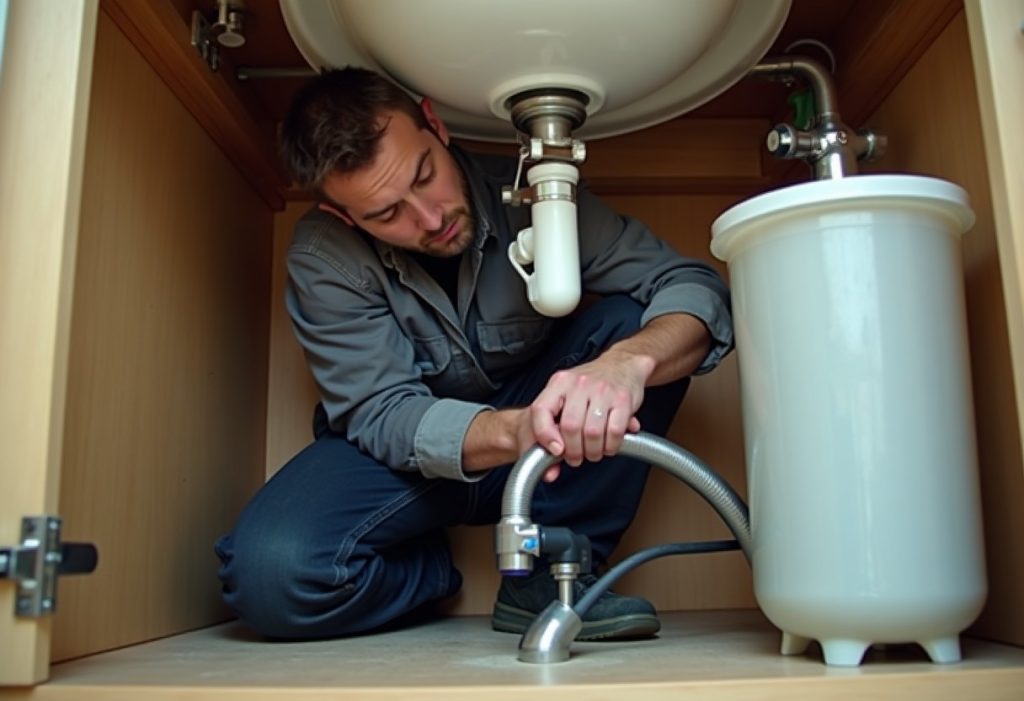
Most homes want under-sink point-of-use RO, not whole-house. A point-of-use unit treats the one tap you drink and cook from, costs the least, and fits in the sink cabinet. Whole-house (point-of-entry) RO treats every fixture but multiplies the cost, the water waste, and the equipment, and it strips minerals from water you only bathe in and flush with.
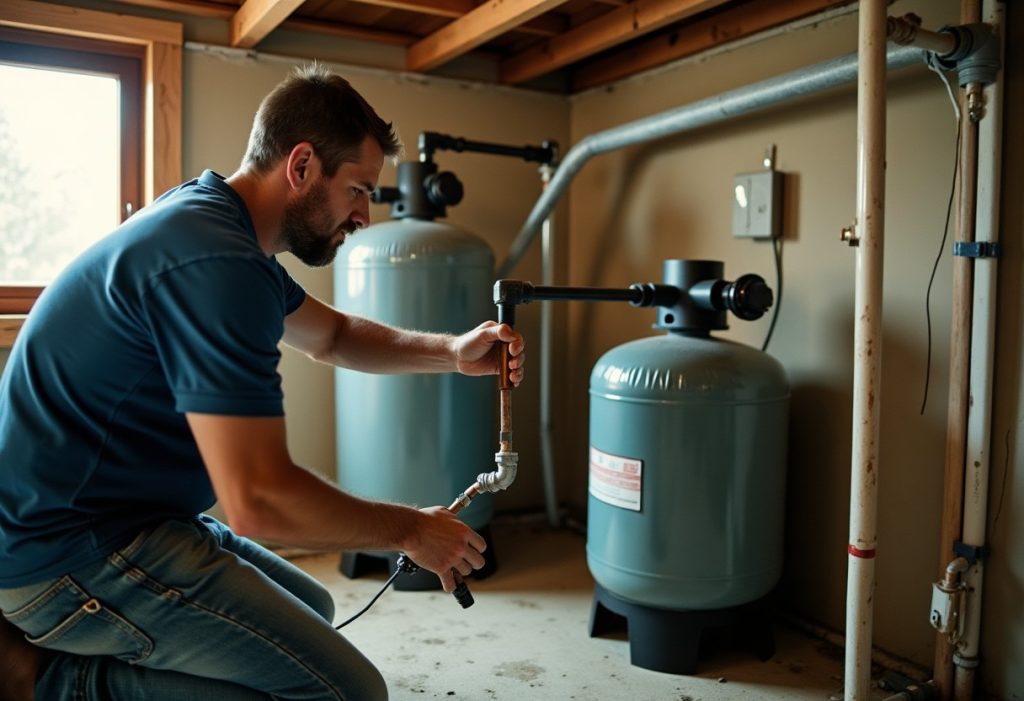
Whole-house RO earns its place in narrow cases: a private well with high dissolved solids, salinity, or arsenic across the board, where treating only the kitchen would leave a real problem at every other tap. Even then it needs a large atmospheric storage tank, a delivery pump, and a bigger drain allowance for reject water. For city water with a single concern, under-sink RO or a targeted a whole house water filter is usually the smarter buy.
| System | What it targets | Placement | Typical cost | Best for |
|---|---|---|---|---|
| Under-sink RO | Dissolved solids, lead, nitrate, arsenic, PFAS in drinking water | Point-of-use, one tap | $150-$1,300 installed | Safer drinking and cooking water at the kitchen sink |
| Whole-house RO | Same dissolved contaminants, but every fixture | Point-of-entry, main line | $1,000-$4,800+ installed | Wells with high TDS, salinity, or arsenic throughout |
| Carbon filter (whole-house) | Chlorine, taste, odor, some VOCs; not dissolved salts | Point-of-entry, main line | $1,000-$4,000 installed | City-water chlorine smell and appliance protection |
| Water softener | Calcium and magnesium hardness (scale) | Point-of-entry, main line | $1,000-$2,800 installed | Scale on fixtures, spotty glassware, poor lather |
Read the table by the job, not the label. RO polishes drinking water. A carbon filter handles chlorine taste. A softener stops scale. None substitutes for another, which is why a home can end up with a softener at the main line and an RO unit under the sink doing separate work.
How much water does reverse osmosis waste?
Traditional reverse osmosis wastes water, sending roughly 3 to 4 gallons to the drain for every gallon it filters, per Angi 2026 data. That reject stream carries the concentrated contaminants the membrane rejected, so it has a purpose, but on an older system the ratio adds up. Newer high-efficiency designs reach about a 1-to-1 ratio, wasting one gallon per filtered gallon, and cost up to $300 more.
Put in context, an under-sink unit filtering a few gallons of drinking water a day sends a modest amount down the drain, a small slice of your household water use next to showers, laundry, and toilets. It weighs more on a well with a septic system or a metered sewer bill, where every gallon counts twice. If waste is a concern, choose a system rated near 1-to-1 and confirm the ratio on the spec sheet, since makers state it plainly.
Does reverse osmosis remove healthy minerals, and do you need remineralization?
Yes, the membrane removes minerals along with contaminants, because it filters at the ion level and cannot tell calcium from lead. It strips calcium, magnesium, and other dissolved minerals, which flattens the taste and lowers the pH slightly. The health impact is minor, since food supplies far more of those minerals than water does, but many people notice the change in taste.
Remineralization fixes it. A remineralization post-filter, or an added mineral cartridge, adds calcium and magnesium back after the membrane and before the faucet, restoring taste and nudging the pH up. It does not undo the contaminant removal. Note this is different from hardness: the small dose a remineralizer adds will not cause the scale that comes from hard water and scale, which is a whole-house problem measured in far higher concentrations.
How much does a reverse osmosis system cost to buy, install, and maintain?
A reverse osmosis system averages about $2,475 across all types, but the spread is wide. Per Angi 2026 data, an under-sink point-of-use unit runs $150 to $1,300 installed, while a whole-house point-of-entry RO system runs $1,000 to $4,800 or more. The gap tracks capacity, storage, and whether the job needs a booster pump and a bigger drain connection.
Installation is the swing factor on the bill. A simple under-sink unit can be a DIY afternoon if you are comfortable tapping the cold line and drain, while professional installation for point-of-use or whole-house work ranges from about $1,000 to $4,800 depending on plumbing changes. Here is how the ongoing costs break down:
- Pre and post filters: replaced every 6 months to 2 years.
- RO membrane: replaced every 3 to 5 years.
- Annual maintenance: about $100 to $300 for filters and membrane.
- High-efficiency (1-to-1 waste) option: up to $300 more upfront.
The cheap pre-filters protect the expensive membrane, so skipping them is a false economy. Let chlorine and sediment reach the membrane and it fouls early, turning a 3-to-5-year part into a 1-year replacement. Change filters on schedule and the membrane lasts, which is where most of the real savings sit.
Is a reverse osmosis system the same as a whole-house filter or softener?
No. A reverse osmosis system is point-of-use polishing that removes dissolved contaminants like lead, nitrate, arsenic, and PFAS from drinking water at one tap. A whole-house carbon filter treats chlorine and taste at the main line. A water softener uses ion exchange to remove hardness across the house. Three different tools for three different problems.
Confusion usually comes from expecting one to cover another’s work. RO will not stop scale on your shower glass, because it never touches the water that reaches the shower. A softener will not make well water safe to drink, because it only swaps hardness ions for sodium and leaves nitrate and arsenic in place. If your goal is safer drinking water, RO is the tool; if it is scale, look at a water softener vs a conditioner instead.
The common setup in a hard-water home with contaminant concerns is layered: a softener or conditioner at the point of entry to protect plumbing and appliances, then an under-sink RO unit for drinking water. Each handles what it does best, and neither is asked to do the other’s job.
How we sourced this
Removal percentages (95 to 98 percent TDS, 95 to 99 percent lead and arsenic, 90 to 99 percent PFAS, 83 to 93 percent nitrate) come from NSF/ANSI 58 performance data, EPA guidance on point-of-use treatment for dissolved inorganics, and manufacturer and lab summaries (AMPAC, Crystal Quest, Frizzlife). The 75 percent minimum TDS reduction is the NSF/ANSI 58 certification threshold. Cost figures ($150 to $1,300 under-sink, $1,000 to $4,800-plus whole-house, roughly $2,475 average, $100 to $300 annual maintenance) and the filter and membrane replacement intervals (6 months to 2 years for filters, 3 to 5 years for the membrane) come from Angi 2026 and This Old House 2026 cost data. Wastewater ratios (3-to-4-to-1 traditional, about 1-to-1 efficient, up to $300 more for efficient models) come from Angi 2026. Remineralization behavior draws on Crystal Quest and Frizzlife. We consulted about a dozen sources and cited the standards bodies and government agencies where a claim could carry one. Percentages vary with membrane quality, water chemistry, and the starting contaminant level; costs vary by region and installer. Test your water and check for the NSF/ANSI 58 claim that matches your specific contaminant before buying.
Frequently asked questions
What does a reverse osmosis system remove?
A reverse osmosis system removes dissolved contaminants that other filters miss, including total dissolved solids, lead, arsenic, nitrate, fluoride, and PFAS. Certified systems typically cut TDS by 95 to 98 percent and reject 95 to 99 percent of lead and arsenic. It does not disinfect, so bacteria and viruses need a separate UV stage on untreated well water.
How does a reverse osmosis system work?
A reverse osmosis system pushes household water pressure through four stages: a sediment pre-filter for grit, a carbon pre-filter for chlorine that protects the membrane, the semipermeable RO membrane that blocks dissolved solids down to the ion level, and a carbon post-filter that polishes taste. Treated water collects in a small storage tank until you open the faucet.
How much water does reverse osmosis waste?
Traditional reverse osmosis systems send roughly 3 to 4 gallons to the drain for every gallon of filtered water they make, per Angi 2026 data. Newer high-efficiency systems reach about a 1-to-1 ratio, wasting one gallon per filtered gallon, though they cost up to $300 more. The reject water carries the concentrated contaminants the membrane rejected.
How much does a reverse osmosis system cost?
A point-of-use under-sink reverse osmosis system runs about $150 to $1,300 installed, while a whole-house point-of-entry RO system runs $1,000 to $4,800 or more, per Angi 2026 data. The average project lands near $2,475. Budget $100 to $300 a year for filter and membrane changes.
Does reverse osmosis remove healthy minerals?
Yes. The membrane strips calcium, magnesium, and other dissolved minerals along with the contaminants, since it filters at the ion level. The amount lost is small compared with a normal diet. If you prefer mineral taste or want to raise the pH, a remineralization post-filter adds calcium and magnesium back before the water reaches the faucet.
Under-sink or whole-house reverse osmosis, which do I need?
Most homes use under-sink point-of-use RO for drinking and cooking water at one tap, which is cheaper and simpler. Whole-house RO treats every fixture but costs far more, wastes more water, needs a large storage tank and often a pump, and strips minerals from water you only bathe in. Reserve whole-house RO for wells with high dissolved solids across the board.
Is a reverse osmosis system the same as a water softener?
No. A reverse osmosis system is point-of-use polishing that removes dissolved contaminants like lead, nitrate, and PFAS from drinking water at one tap. A water softener uses ion exchange to remove the calcium and magnesium that cause scale across the whole house. They solve different problems, and homes with hard water plus contaminant concerns often run both.
How often do you replace reverse osmosis filters?
Replace the sediment and carbon pre-filters and the carbon post-filter every 6 months to 2 years, and the RO membrane every 3 to 5 years, per Angi 2026 data. Hard water, high sediment, and heavy use shorten those intervals. Skipping pre-filter changes lets chlorine and grit reach the membrane and ruin it early, so the cheap filters protect the expensive one.


