Water Heater Thermocouple Replacement: Steps, Cost and Signs
Water heater thermocouple replacement is a $5 to $10 part and about an hour of work: test for under 18 millivolts, match the length, thread it in hand tight plus 1/4 turn, then relight and leak-check.
Key Takeaways
- A healthy universal thermocouple such as the Honeywell Q340A makes 26 to 32 millivolts open circuit, and Honeywell lists 18 mV as the lowest acceptable reading.
- Tighten the connector nut finger tight, then 1/4 turn more with a wrench, per Honeywell form 60-2087-4 and one FVIR kit instruction sheet (form AP13277-1).
- Sealed FVIR heaters need a new burner door gasket every time the door comes off, and the T20 door screws take no more than 15 inch pounds, per the AP13277-1 kit sheet.
- The part costs $5 to $10 and the job takes an hour or less (Family Handyman). A plumber charges about $150 (HomeAdvisor, 2026).
- If you smell gas, leave the house and call your gas utility or 911 from outside.
What does a water heater thermocouple do?
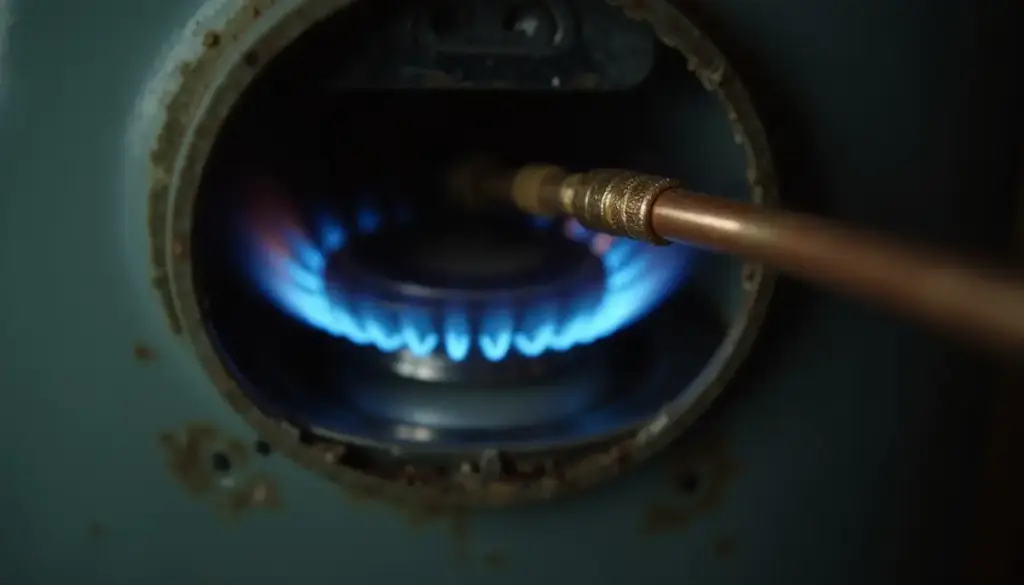
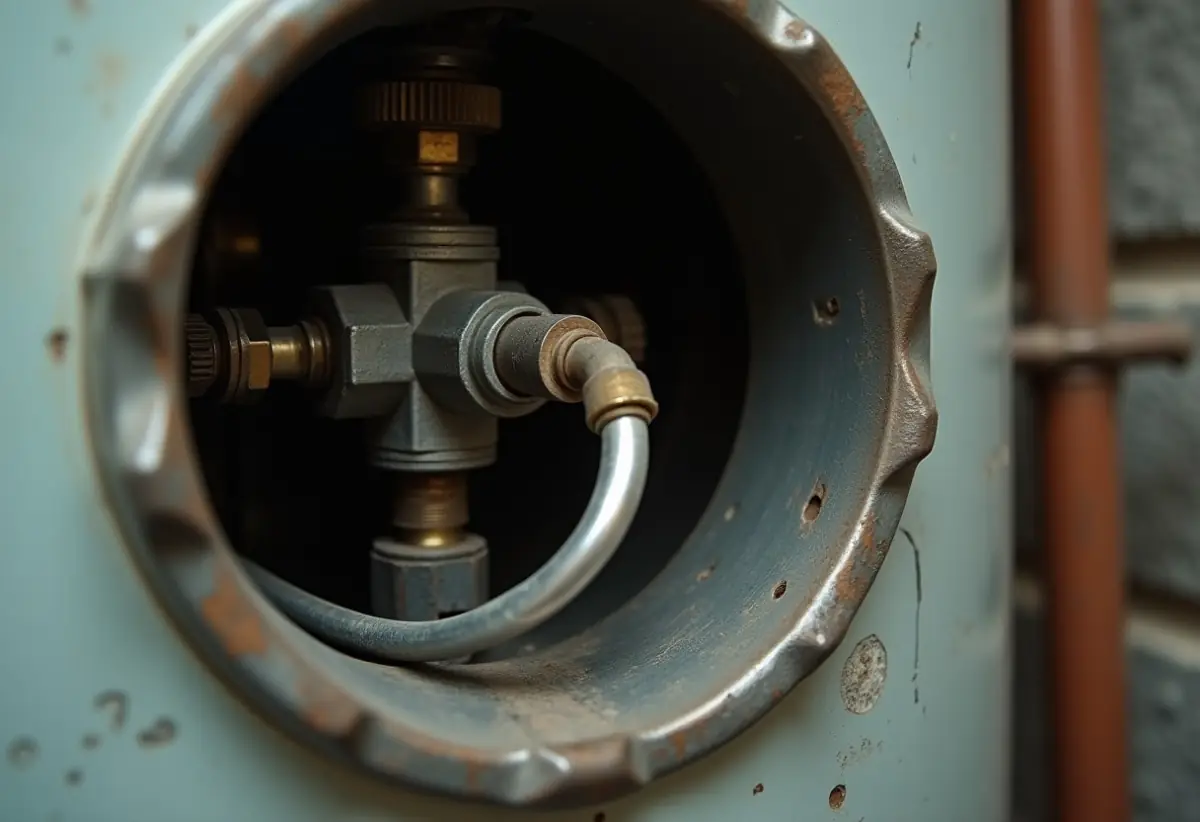
A thermocouple is a flame-sensing safety device. The pilot flame heats its tip, and the temperature difference between tip and base generates a small DC current measured in millivolts. That current holds the safety valve inside the gas control open. When the pilot goes out, the voltage collapses, the valve closes, and gas to both pilot and main burner stops. That shutoff mechanism lives inside a larger component worth understanding on its own, covered in this guide to gas control valve testing and replacement.
Honeywell’s thermocouple and thermopile product data sheet (form 60-2087-4) rates the Q340A at 26 to 32 mV open circuit, with a hot junction rated to 1,400°F and a cold junction rated to 780°F.
Only gas heaters with a standing pilot use one. If you are weighing a gas vs electric water heater, note that an electric tank has no pilot and no thermocouple at all, so this repair never comes up.
What are the signs a water heater thermocouple needs replacement?
The textbook sign is a pilot that lights while you hold the gas knob in the Pilot position but goes out within seconds of letting go. Other signs are a pilot that drops out every few days and a meter reading under 18 mV. Family Handyman calls a worn thermocouple the No. 1 cause of pilots that will not stay lit.
Not every cold tank is a thermocouple, so run our no hot water checklist if the pilot is not clearly the issue. The table maps each symptom to the likely part.
| Symptom | Likely part | Fix |
|---|---|---|
| Pilot lights, dies when you release the knob | Thermocouple (output under 18 mV) | Replace thermocouple, $5 to $10 part (Family Handyman) |
| Pilot flame small, yellow, or not touching the tip | Dirty pilot orifice or low pilot setting | Clean pilot and adjust so the flame wraps 3/8 to 1/2 in of the tip (Honeywell) |
| New thermocouple reads 26 to 32 mV, pilot still drops | Gas control valve (power unit) | Replace gas control valve, about $350 with a pro (HomeAdvisor) |
| Pilot stays lit, main burner never lights | Thermostat side of the gas control, or thermopile on millivolt valves | Test thermopile (600 to 750 mV on a Honeywell Q313) or call a pro |
| Smell of gas near the heater | Leak at a fitting or valve | Leave the house, call the gas utility or 911 from outside |
How do you test a thermocouple with a multimeter?
Set a digital multimeter to DC millivolts, unscrew the thermocouple nut from the gas valve, and clip one lead to the copper tubing and the other to the tip of the connector end. Light the pilot and hold the knob down, since the valve cannot hold itself open while the thermocouple is disconnected. Honeywell calls 26 to 32 mV normal and 18 mV the floor.
- Disconnect the thermocouple nut at the gas control and keep its threads clean.
- Set the meter to DC millivolts (the 200 mV range on most meters). Put the black probe on the copper tubing and the red probe on the center tip of the connector.
- Light the pilot, keep the knob pressed, and let the reading level off.
- Read the result. 26 to 32 mV is normal. A steady 18 to 25 mV sits below Honeywell’s normal band but above its floor, so check the flame and the connection before buying a part. Under 18 mV fails Honeywell’s lowest acceptable limit.
- Release the knob and reconnect the nut finger tight plus 1/4 turn.
Before you condemn a low reader, check that the pilot wraps 3/8 to 1/2 inch of the tip, as Honeywell specifies. On sealed FVIR heaters the valve end of the thermocouple sits outside the burner chamber, so test there and leave the burner door shut, since opening it means a new gasket.
Thermocouple vs thermopile: which one does your water heater use?
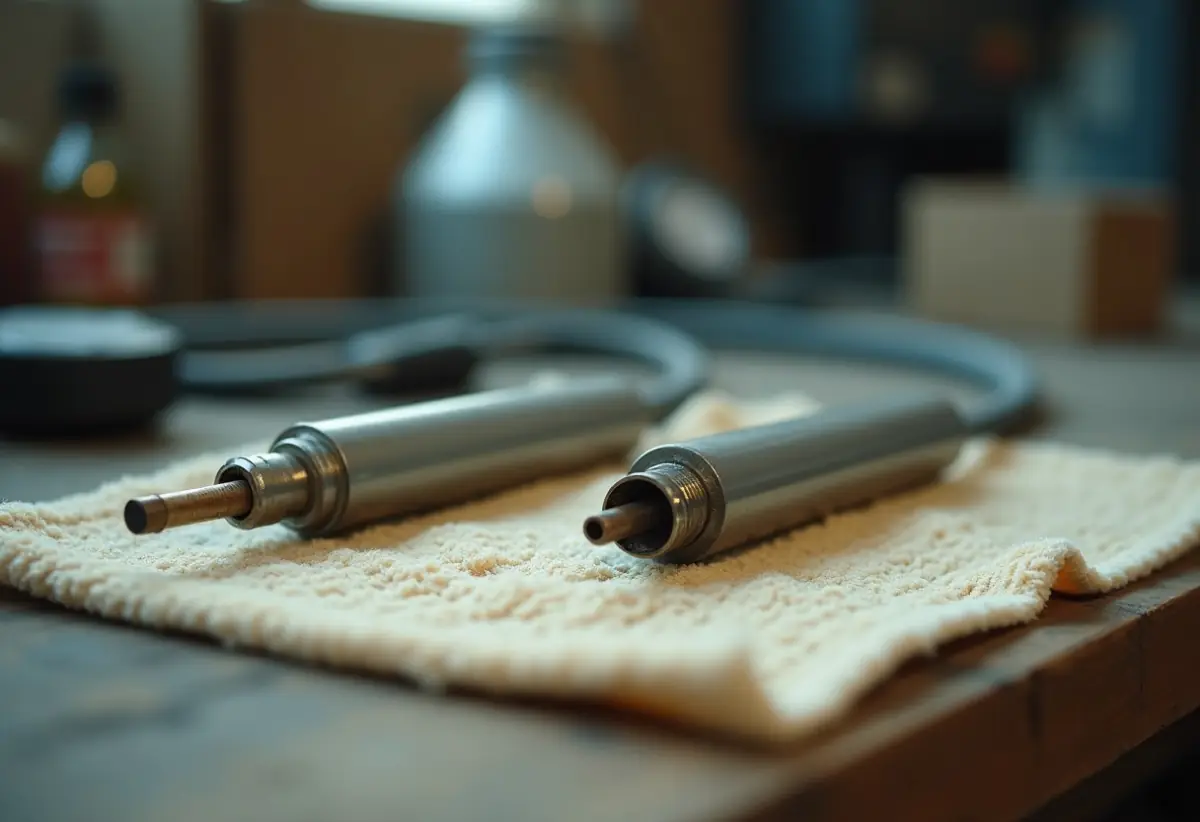
Most standard tank heaters with a standing pilot use a single thermocouple. A thermopile is several thermocouples wired in series, and it appears on heaters whose gas valve needs more power, such as some Rheem models with a pilot thermopile assembly. Honeywell rates a thermopile at 600 to 750 mV, roughly 20 times a thermocouple, so the two are never swapped for each other.
| Spec | Thermocouple (Honeywell Q340A) | Thermopile (Honeywell Q313) |
|---|---|---|
| Normal open-circuit output | 26 to 32 mV | 600 to 750 mV |
| Lowest acceptable output | 18 mV | 540 mV |
| Job | Holds the safety valve open while the pilot burns | Powers the whole millivolt gas valve with no outside electricity |
| Standard lead lengths | 18, 24, 30, 36 in (48 in optional) | 15, 23, 35 in (47 in optional) |
The field check is the wiring. A thermocouple ends in one threaded nut at the valve, while a thermopile ends in two leads to terminals marked PP. Rheem sells its pilot and thermopile as one assembly for some models, for example kit SP20799, an Ultra Low NOx pilot thermopile assembly for Rheem Performance Series natural gas heaters.
Which replacement thermocouple fits your water heater?
Match length first. Honeywell’s Q340A universal thermocouple comes in standard 18, 24, 30 and 36 inch leads, with a 48 inch lead as an option, and a short lead will not reach the valve without a kink. Measure the old one end to end and take it to the store.
Honeywell says the Q340A replaces Robertshaw 1980, Baso K15 and White Rodgers H0 series thermocouples. Carded part numbers include Q340A1082 (30 inch) and Q340A1108 (48 inch).
Sealed FVIR heaters are different. A.O. Smith sells length-specific kits such as part 100108462, an 18 inch thermocouple kit (model TC-K18), and complete FV pilot assemblies such as 100109290 for natural gas and 100109298 for propane. The thermocouple threads through a grommet in the burner door, so buy the kit listed for your model number.
How do you do a water heater thermocouple replacement step by step?
On an older open-burner heater, Family Handyman lays it out in three steps. Undo the three nuts at the gas valve, slide the burner assembly out, and swap the thermocouple. Sealed FVIR heaters add a burner access door held by four T20 Torx screws and a gasket that must be replaced. Both paths start with the gas off and the burner cool.
Open-burner (pre-FVIR) heater
- Turn the dial to its lowest setting, the gas knob to Off, and close the supply-line shutoff. Let the burner cool.
- Unscrew the thermocouple nut and the two gas tubes (pilot and burner supply) at the valve with an adjustable wrench.
- Slide the burner assembly out. Family Handyman notes it usually sits loose or under clips.
- Vacuum the compartment and clear the burner ports.
- Pull the old thermocouple from the pilot bracket and push the new one in until the clip locks. Do not bend the lead within 1/2 inch of either end (Honeywell).
- Reinstall the burner and thread the thermocouple nut in straight, finger tight, then 1/4 turn with a wrench.
- Reconnect both gas tubes and snug them with a wrench.
Sealed FVIR heater (kit sheet AP13277-1)
- Dial to lowest, gas knob to Off, main gas shutoff closed, then pop off the outer jacket door.
- Unscrew the pilot supply tube, thermocouple and burner supply tube at the valve, and unplug the igniter wire from the piezo striker.
- Remove the four T20 Torx screws and pull the burner access door out by the burner supply tube.
- Cut the old thermocouple wire, pull it back through the orange grommet, and remove the rest from the bracket.
- Push the new thermocouple through the grommet and seat it fully in the bracket. Do not bend it within 1 inch of the tip, and keep at least 1 inch straight from the bracket.
- Scrape off the old gasket, clean the metal with mild soap and water (never solvents), and stick on the new gasket.
- Refit the door and drive the T20 screws by hand to no more than 15 inch pounds. The sheet says not to use power tools.
- Reconnect the tubes and igniter wire. Thread the thermocouple straight, no more than 1/4 turn past hand tight.
That AP13277-1 FVIR thermocouple kit instruction sheet says the door work should be done by a qualified service technician, and warns that a badly installed door could cause death or serious injury.
How do you relight and leak-check after replacing the thermocouple?
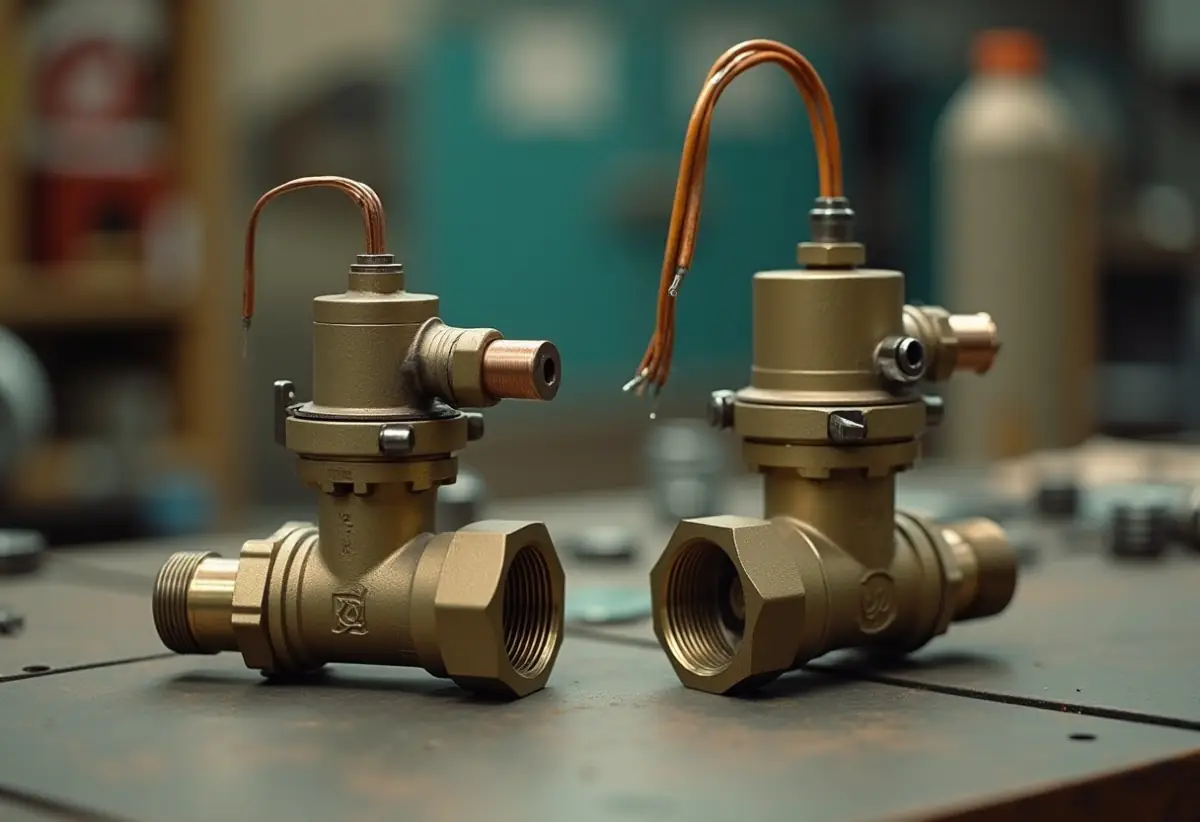
Open the main gas, set the knob to Pilot, and light it following the label on the tank. Look through the sight glass to confirm the flame wraps 3/8 to 1/2 inch of the tip, then turn the knob to On and watch the main burner light. Finish with a soap and water test on every fitting you touched. Bubbles mean a leak.
Our guide to relighting a water heater pilot light covers the knob sequence. Honeywell’s checkout adds two pro tests. Once the pilot is put out, pilot gas must stop within 2 1/2 minutes, and the pilot should light the main burner within four seconds of gas reaching it.
- Leak-check the pilot and burner supply tubes at the valve while the main burner fires. Tighten and retest any joint that bubbles.
- Reset the dial. The AP13277-1 sheet recommends 120°F as the starting point.
- If you smell gas, touch no switches. Leave and call the utility from outside.
How much does water heater thermocouple replacement cost?
Family Handyman puts a new thermocouple at $5 to $10 and the job at an hour or less. HomeAdvisor’s June 2026 data puts a plumber’s thermocouple replacement at about $150. A service call just to relight a pilot runs $50 to $150, so if the thermocouple is failing, having it swapped on the same visit costs little more.
Sources: Family Handyman for the part price, and HomeAdvisor’s water heater repair cost guide for the rest, including a $616 national average repair ($228 to $1,017 typical) and $150 to $500 for gas heater repairs.
Sealed FVIR heaters cost more because they need a model kit with a new door gasket. If a new thermocouple does not cure the problem, the gas control valve is next, at about $350. On a tank already 10 to 15 years old, weigh that against a new heater at $875 to $1,800, per HomeAdvisor. Our water heater repair guide covers that repair or replace call.
How we sourced this
We read Honeywell’s thermocouple and thermopile product data sheet (form 60-2087-4) for output, length, tightening and flame specs; FVIR kit sheet AP13277-1 for the sealed-burner steps, torque limit and gasket rule; Family Handyman for part price and time; and HomeAdvisor’s repair cost guide (updated June 2026) for pro prices. Part numbers come from Honeywell, A.O. Smith and Rheem distributor listings. We reviewed the top Google results and People Also Ask in October 2026, and left out closed-circuit millivolt figures, lifespans and cost-site prices we could not verify in a primary source.
Frequently asked questions
How do I know if my thermocouple is bad on my water heater?
The classic sign is a pilot that lights while you hold the knob down and dies when you let go. Confirm it with a multimeter set to millivolts. Honeywell rates its Q340A thermocouple at 26 to 32 mV open circuit with the pilot lit and lists 18 mV as the lowest acceptable reading. Anything under 18 mV means replace it.
How much should it cost to replace a thermocouple on a water heater?
A universal thermocouple costs about $5 to $10 at a home center, according to Family Handyman, so a DIY swap on an older open-burner heater is cheap. Hiring a plumber typically runs about $150, per HomeAdvisor’s 2026 cost data. Sealed FVIR heaters cost more because they need a model-specific kit.
How do I know which thermocouple to buy for a water heater?
Match three things. First the length, since Honeywell sells the Q340A in standard 18, 24, 30 and 36 inch leads plus a 48 inch option. Second the fitting, a push-in clip or split nut at the pilot end. Third the heater type, because sealed FVIR heaters usually need the maker’s own kit. Bring the old part along.
How long does a water heater thermocouple last?
Honeywell’s product data sheet does not publish a service life, and age alone is a poor guide. What matters is output. One reading 26 to 32 mV open circuit is healthy, while one under 18 mV has failed whatever its age. A badly adjusted pilot flame also cuts output, per Honeywell’s service notes, so fix the flame before blaming the part.
Can I replace a water heater thermocouple myself?
On an older heater with an open burner, yes. Family Handyman rates it a beginner job that takes an hour or less with an adjustable wrench. On a sealed FVIR heater, one maker’s kit sheet says the burner door job should be done by a qualified technician, because the door gasket must be replaced and the screws torqued to 15 inch pounds or less.
Why won’t my pilot stay lit after replacing the thermocouple?
The thermocouple nut may be loose at the gas valve, the tip may sit outside the flame, or the pilot may be too weak to wrap 3/8 to 1/2 inch of the tip as Honeywell specifies. If a new thermocouple reads 26 to 32 mV and the pilot still drops, the gas control valve is the likely fault.
What is the difference between a thermocouple and a thermopile?
A thermocouple is a single junction that makes about 30 mV to hold the safety valve open. A thermopile stacks many thermocouples in series, and Honeywell rates its Q313 thermopile at 600 to 750 mV, enough to run a millivolt gas valve with no outside power. Replace like with like.