Water Pressure Booster Pump: When You Need One
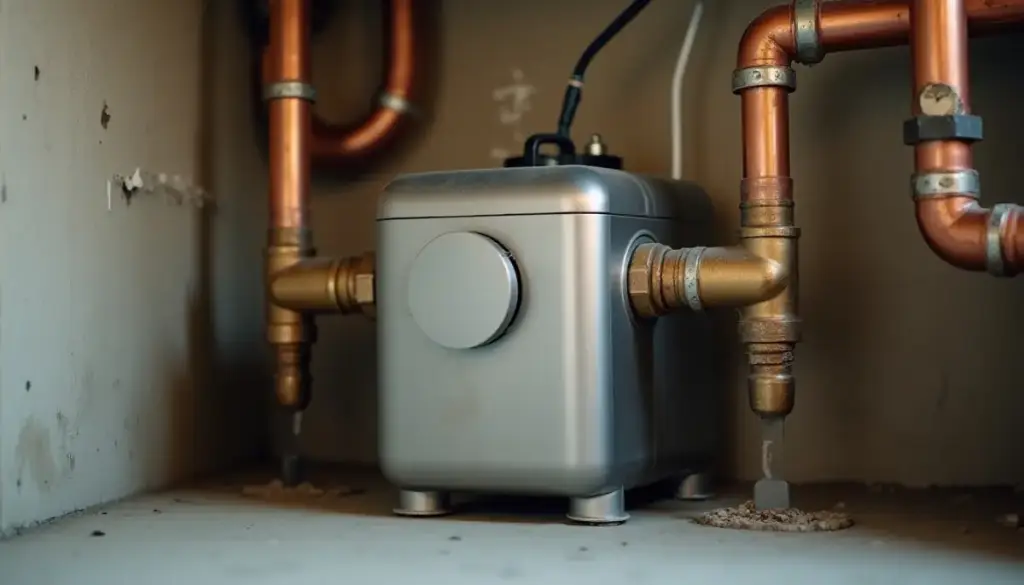
A water pressure booster pump is worth buying only when a gauge shows weak supply pressure, usually under about 40 psi, after you rule out a closed valve, a failing PRV, clogged aerators and corroded pipe.
Key Takeaways
- Test first with a hose-bib gauge. Closed valves, failing PRVs, clogged aerators and old galvanized pipe all mimic low supply pressure, and a pump fixes none of them.
- The International Plumbing Code (IPC 604.8) and International Residential Code (IRC P2903.3.2) cap static house pressure at 80 psi.
- IPC 606.5.5 requires a low-pressure cutoff that stops any booster when suction pressure falls to 10 psi or less.
- Southington Water Works in Connecticut allows a home booster in set cases, such as main pressure of 25 to 35 psi, with prior approval and a backflow preventer.
- Grundfos designs its SCALA2 constant-pressure booster for homes with up to 3 floors and 8 taps, at 47 dB(A) in typical use.
- HomeServe prices a quality booster pump at $800 to $1,500 before labor, with plumbers billing $45 to $150 an hour.
What causes low water pressure that a booster pump will not fix?
A water pressure booster pump fixes only one problem, which is too little pressure arriving at the house. It does nothing for a half-closed main valve, a failing pressure-reducing valve, scaled aerators, corroded galvanized pipe or a hidden leak. A pump pushing into a choked pipe mostly makes noise.
Work through the cheap suspects first, using the table below and our guide to the common causes of low water pressure. A valve left a quarter turn shy of open, a worn pressure-reducing valve stuck low, or galvanized pipe closed up with rust will all read as weak pressure, and none of them gets better with a pump. If only one or two fixtures are weak, pull the aerator before you blame the supply.
How do you test water pressure before buying a booster pump?
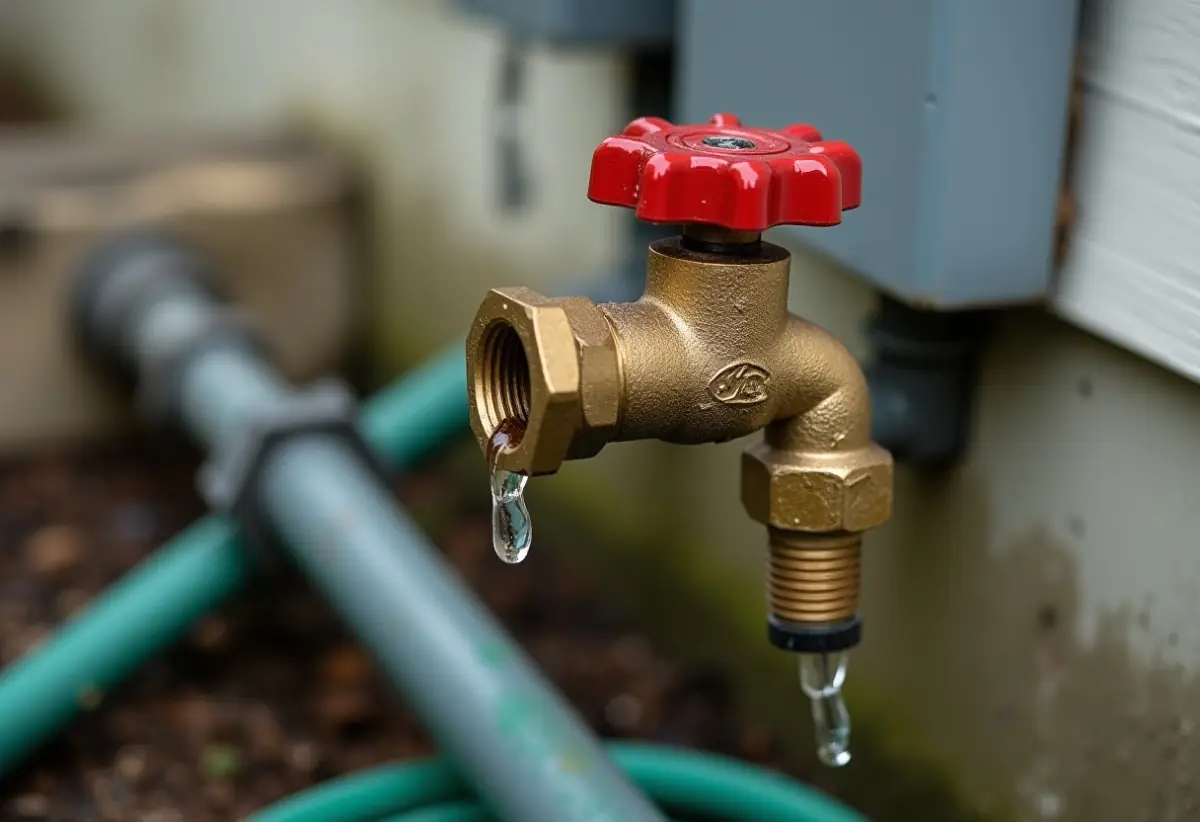
Thread a pressure gauge onto the hose bib closest to where the water enters the house, close every tap, and read the static pressure. Then open a tub faucet and watch the drop, and repeat at the morning and evening peaks. If static pressure reads normal near the meter but fixtures are weak, the problem is inside the house, not at the street.
What counts as normal? The codes set no comfort number. The IRC’s Table P2903.1 lists minimum flow pressures as low as 8 psi for a lavatory and 20 psi for a shower mixing valve, and both codes cap static pressure at 80 psi. Most plumbers aim for 40 to 60 psi, the range we explain in our guide to normal water pressure for a house.
- Read static pressure at the hose bib nearest the meter with all fixtures off.
- Open one tub and one sink at once and note the dynamic drop.
- Ask your utility what pressure it delivers to your zone.
- Check the water meter with all fixtures closed to rule out a leak.
Height counts too. Water loses about 0.43 psi per foot of climb, the standard hydrostatic figure, so a shower 20 feet above the meter starts roughly 9 psi behind.
When does a whole house water pressure booster make sense?
A whole house water pressure booster makes sense when the supply itself is weak and nothing inside the house is to blame. The classic cases are city pressure below about 40 psi at the meter, a home far from or uphill of the main, upper floors losing pressure to height, and tank-fed or well systems that cannot pressurize on their own.
Codes name the booster as a fix for exactly this. IRC Section P2903.3 says that where the supply is insufficient for the fixtures, pressure shall be increased by a hydropneumatic pressure booster system, a water pressure booster pump or a raised storage tank. The IPC says the same in Section 606.5.1.
Utilities draw their own lines. Southington Water Works’ booster pump specifications keep its system between 25 and 125 psi and allow a home booster as a special case, such as a building too far or too high for adequate pressure with at least 25 psi in the main, or main pressure between 25 and 35 psi.
| Cause of low pressure | Booster fixes it? | Right fix |
|---|---|---|
| Main shutoff or meter valve partly closed | No | Open the valve fully; replace a failing gate valve |
| Failing or misadjusted PRV | No | Adjust or replace the pressure-reducing valve |
| Clogged aerators or showerheads | No | Clean or replace the aerator or head |
| Corroded galvanized steel pipe | No | Repipe the restricted runs |
| Hidden leak | No | Find and repair the leak |
| City pressure under about 40 psi at the meter | Yes, with utility approval | Booster pump with low-pressure cutoff and backflow protection |
| Upper floors or a house far uphill | Often | Booster sized for the height; check pipe size first |
| Well pressure switch set low | No | Reset the switch and tank pre-charge |
| Low-yield well feeding a storage tank | Yes | Booster drawing from the tank |
What types of water pressure booster pump are there?
Home boosters come in two families. A fixed-speed pump runs flat out whenever a pressure switch calls for it and leans on a pressure tank to keep from short cycling. A constant-pressure, variable-speed pump changes motor speed to hold one setpoint as taps open and close. It costs more but gives steadier showers and fewer starts.
Constant-pressure, variable-speed boosters
The Grundfos SCALA2 data sheet describes an all-in-one unit with pump, motor, tank, sensor, drive and non-return valve in one housing. Grundfos rates it for up to 3 floors and 8 taps, 10 bar (about 145 psi) maximum system pressure and dry-running protection, with suction lift up to 8 meters. Its performance curve runs to roughly 45 meters of head at no flow, about 64 psi.
Davey’s take is its HM Series with the Torrium2 controller. The Davey HM Series data sheet says the Torrium2 is adaptive and eliminates cycling, adds loss-of-prime protection and an over-temperature cutout, and lets you add a pressure tank where a site needs more draw-off. Davey sells this line mainly outside the US.
Fixed-speed boosters with a pressure tank
A fixed-speed booster behaves like a well pump. It runs at full speed from cut-in to cut-out while the tank carries the house in between. Davey offers pressure-switch versions of the same HM pump (HM270-19P and HM270-25P). They are simple to service, but pressure swings through the switch band and an undersized tank means constant starts.
How do you size a water pressure booster pump?
Size a water pressure booster pump on two numbers: the peak flow your house draws in gallons per minute, and the pressure you need to add in psi. Flow comes from the fixtures that run at once. The boost is your target pressure minus the lowest incoming pressure you measured. A pump that meets both at its rated point is the right size.
The IRC’s Table P2903.1 gives design flows you can add up. It lists 2.5 gpm for a shower, 0.8 gpm for a lavatory and 3 gpm for a close-coupled tank toilet. Two showers, a toilet refilling and a bathroom sink at once comes to about 8.8 gpm. Davey’s HM60-08T, rated at 60 liters per minute (about 15.9 gpm), covers that.
For the boost, remember that a fixed-speed pump adds to whatever pressure enters it. FreshWaterSystems gives the example of a 25 psi supply and a pump adding 40 psi, which yields about 65 psi. Target 50 to 60 psi, subtract your lowest reading, and match that boost on the pump curve at peak flow.
- Measured incoming low: 30 psi.
- Target at the top floor: 55 psi, plus 20 feet of lift (about 9 psi).
- Boost needed: about 34 psi at 8 to 10 gpm.
What rules apply to a booster pump on city water?
A booster on a public main is a cross-connection risk, so codes and utilities attach conditions. The IPC requires a low-pressure cutoff on every booster that stops the pump when suction pressure falls to 10 psi or less. Many utilities also require approval before installation and a backflow preventer, and a few states restrict boosters on public mains outright.
The cutoff rule sits in IPC Section 606.5.5, shown here in Maryland’s adopted 2024 code. It keeps a running pump from dragging the street main toward a vacuum and pulling contaminated water back into it. Local ordinances can set a stricter cutoff, so read your own utility’s rules.
Southington Water Works shows a typical utility list: prior approval, an air vent type backflow preventer (or a reduced pressure assembly if the utility requires it), low water cutoff switches, and pressure no higher than 80 psi.
Utah goes further. Its amended residential code says a water pressure booster pump may not be connected to a public water main unless state rule R309-540 allows it. Where a direct connection is barred, the usual fallback is a break tank the pump draws from instead.
What is the 80 psi limit, and how do you stay under it?
Both model codes cap static water pressure in a home at 80 psi. IPC Section 604.8 and IRC P2903.3.2 require a pressure-reducing valve where pressure exceeds 80 psi, set to deliver 80 psi or less. A booster that pushes the house past that line puts fixtures, supply hoses and the water heater at risk.
Fixed-speed pumps are the risk, because boost stacks on incoming pressure. City pressure of 30 psi at dinner and 55 psi overnight, plus a 35 psi boost, swings the house from 65 to 90 psi. Use a constant-pressure unit or a PRV after the pump.
A backflow device or check valve also closes the system, so many jurisdictions then require a thermal expansion tank on the water heater.
How is a booster pump installed, and how loud is it?
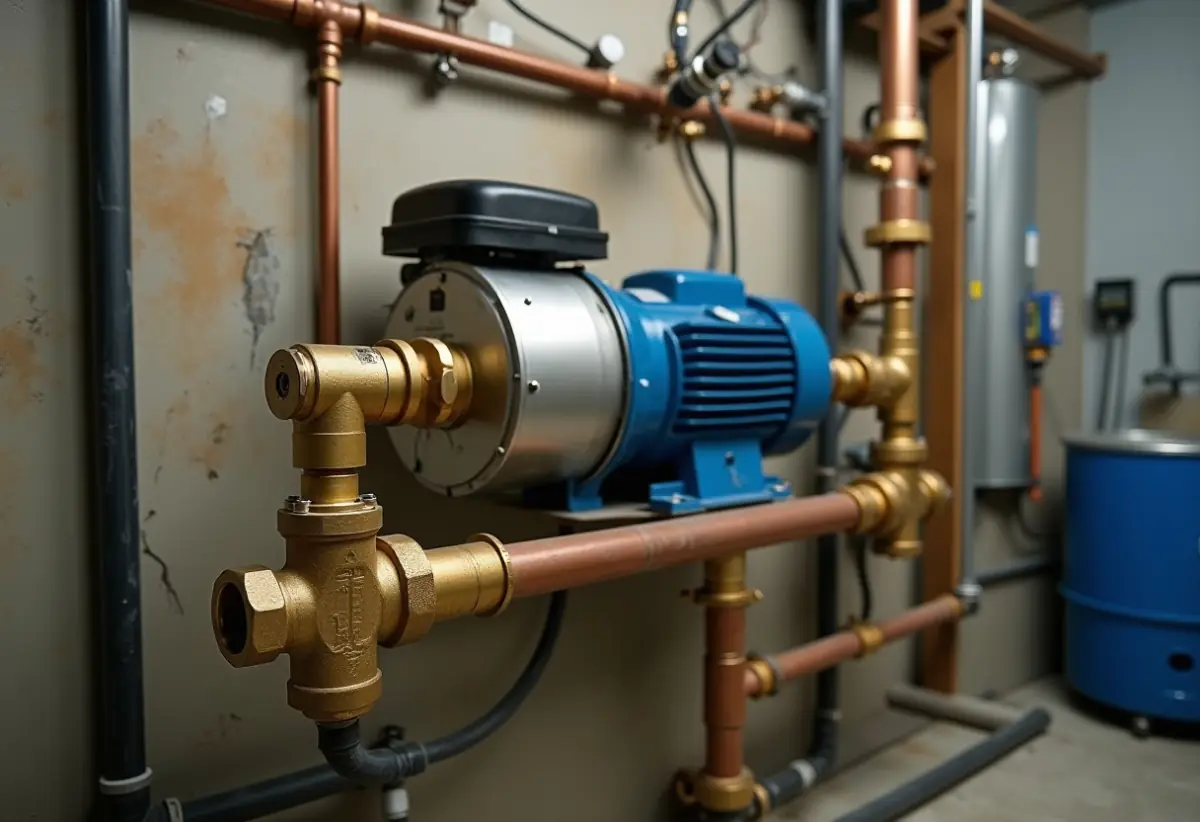
A licensed plumber usually installs a booster on the main line just after the meter, the main shutoff and any required backflow preventer, and ahead of the water heater and branch lines. It needs valves, a bypass, a suction-side cutoff and power.
- Confirm the cause with gauge readings and get any utility approval in writing.
- Pull the plumbing permit, plus an electrical permit for a new circuit, where required.
- Mount the pump on a solid base in a frost-free spot away from bedroom walls.
- Add isolation valves, a bypass loop, the suction-side low-pressure cutoff and any required backflow device.
- Wire to the nameplate voltage. The US SCALA2 3-45 sold by FreshWaterSystems is a 230 volt model.
- Set the target pressure and confirm static pressure stays at or under 80 psi.
On noise, Grundfos rates the SCALA2 at 47 dB(A) in typical use, and FreshWaterSystems lists 53 dB(A) at full load. Fixed-speed pumps start more often, so pads and a properly sized tank matter more on those.
How much does a water pressure booster pump cost?
Expect $800 to $1,500 for a quality water pressure booster pump, according to HomeServe, with budget units from about $600. Installation runs $45 to $150 an hour for a plumber, and HomeServe says some installs take as little as an hour. Most home units run 1/4 to 1 horsepower.
For scale, FreshWaterSystems listed the Grundfos SCALA2 3-45 at $954 (MSRP $1,509) in October 2026. At HomeServe’s top numbers, a $1,500 pump and one hour at $150 come to $1,650 before extras.
Extras can rival the labor: a permit, a new circuit, valves, a backflow assembly if required, and an expansion tank on the water heater. If your low pressure turns out to be a well issue, start with the well pressure tank and switch settings, which cost far less to correct.
How we sourced this
We consulted 14 sources in October 2026 and cite 9: Grundfos and Davey data sheets, Southington Water Works’ booster rules, IPC 604.8 and 606.5, the Utah-amended 2021 IRC on UpCodes, FreshWaterSystems’ listing and guide, and HomeServe’s cost guide. Metric figures were converted at 6.895 kPa per psi and 3.785 liters per gallon. We excluded UK and Australian pricing and cost figures we could not trace to a named source.
Frequently asked questions
Where should a water pressure booster pump be installed?
On the main cold line inside the house, after the meter, the main shutoff and any required backflow preventer, and before the water heater and branch lines. Add isolation valves and a bypass. IPC-based codes also require a suction-side low-pressure cutoff that stops the pump at 10 psi or less.
What is the best booster pump for increasing water pressure?
For most homes, a constant-pressure, variable-speed booster that holds one setpoint, such as the Grundfos SCALA2, rated for up to 3 floors and 8 taps. Fixed-speed pumps with a pressure tank cost less and suit outbuildings. Choose by the gpm your fixtures need and the psi you must add, not horsepower alone.
How much does it cost to install a water pressure booster pump?
HomeServe puts a quality booster pump at $800 to $1,500, with budget units from about $600, and plumber labor at $45 to $150 an hour. FreshWaterSystems listed a Grundfos SCALA2 at $954 in October 2026. Add a permit, wiring, valves and any backflow device your utility requires.
How long do water pressure booster pumps last?
No maker we checked publishes a rated service life. Life depends on run hours, water quality, sediment and how often the pump starts. Constant-pressure models with soft start and dry-run protection, like the Grundfos SCALA2 and Davey Torrium2 units, avoid the short cycling that wears out fixed-speed pumps fastest.
Will a booster pump fix low water pressure from a well?
Sometimes. First check the well pressure switch setting and the tank pre-charge, which should sit about 2 psi below cut-in. A booster fits when a low-yield well fills a storage tank that then needs repressurizing, or when the house sits far uphill from the well tank.
Is a water pressure booster pump allowed on city water?
Often, but with conditions. Utah’s amended residential code bars a booster on a public main unless state rule R309-540 allows it. Southington Water Works in Connecticut requires prior approval, a backflow preventer, low water cutoff switches and pressure no higher than 80 psi. Call your utility before you buy.
Can a booster pump make water pressure too high?
Yes. A fixed-speed pump adds its boost on top of incoming pressure, so adding 40 psi to a 50 psi supply gives about 90 psi. The IPC and IRC cap static pressure at 80 psi and require a pressure-reducing valve above that. Constant-pressure boosters avoid this by holding a setpoint you choose.