Aerobic Septic System: How It Works, Cost and Maintenance
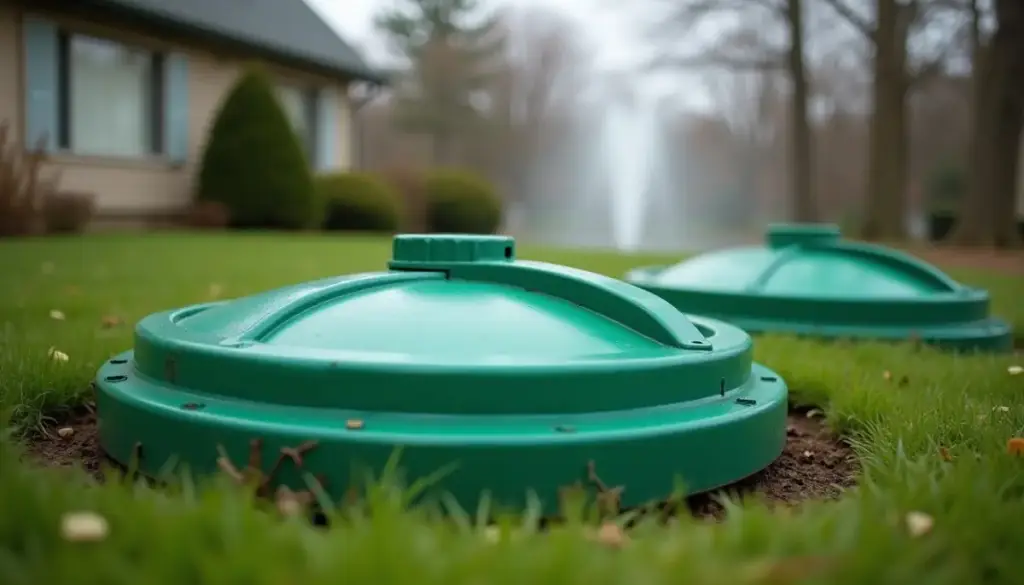
An aerobic septic system pumps air into a treatment tank so oxygen-loving bacteria clean wastewater far better than a conventional tank, at roughly $10,000 to $20,000 installed plus power, chlorine and required service visits.
Key Takeaways
- Aerobic treatment units remove 85 to 98 percent of organic matter and solids, according to Texas A&M AgriLife Extension, leaving effluent cleaner than a conventional septic tank produces.
- HomeAdvisor’s June 2026 guide prices an aerobic system at $10,000 to $20,000 installed, against $3,000 to $8,000 for an anaerobic (conventional) system.
- Units sold as Class I aerobic systems in Texas must pass NSF/ANSI Standard 40, a six-month performance test run by NSF.
- The Texas Commission on Environmental Quality (TCEQ) requires a maintenance contract and a service report at least once every four months, or every six months with an electronic monitor.
- University of Maryland Extension puts average electricity for advanced treatment units at $3.24 to $18.86 a month.
- Disinfect only with calcium hypochlorite tablets made for wastewater. TCEQ specifically warns against swimming pool tablets.
What is an aerobic septic system?
An aerobic septic system, also called an aerobic treatment unit or ATU, is an onsite wastewater system that injects air into a treatment tank so bacteria that need oxygen break down the waste. The EPA describes ATUs as using many of the same processes as a municipal sewage plant, only on a smaller scale.
A conventional tank relies on slower anaerobic bacteria and leaves the soil under the drain field to finish treatment. For that baseline, see how a conventional septic system works.
How does an aerobic septic system work?
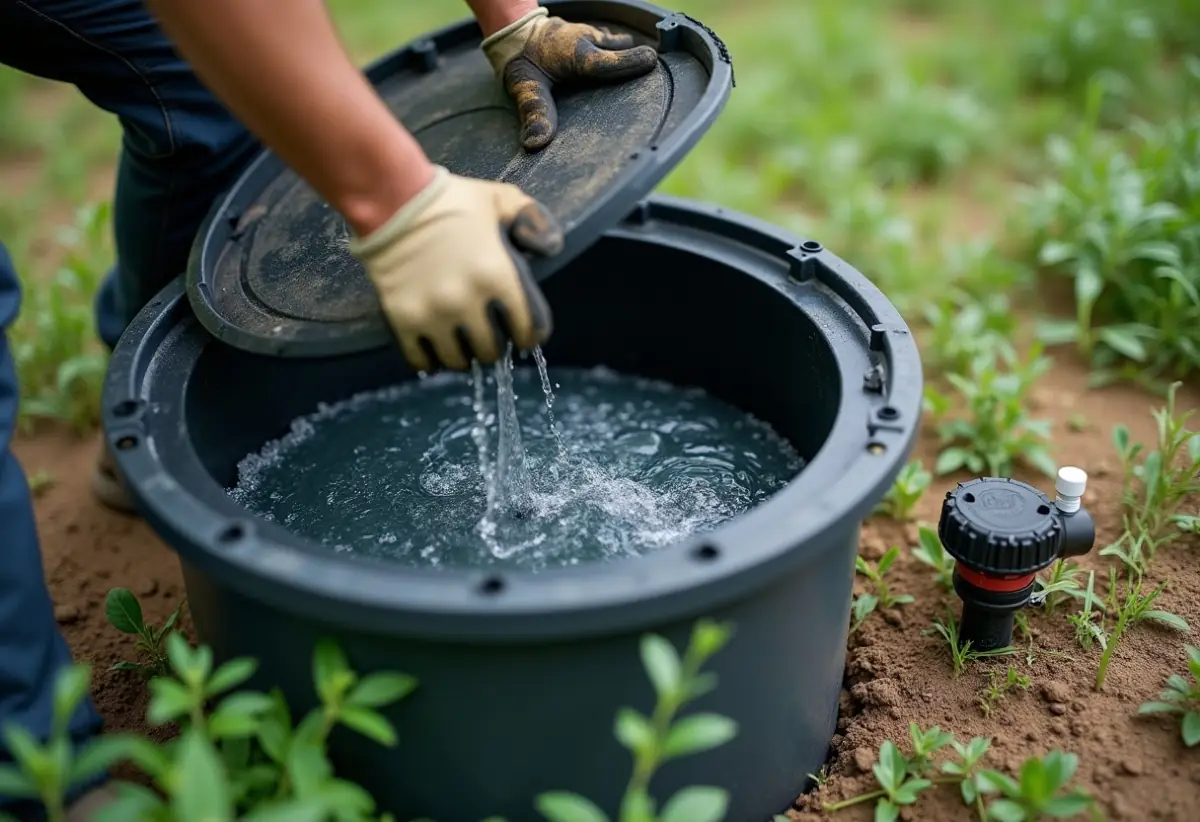
An aerobic septic system works as a short treatment train. Wastewater settles in a trash tank, gets aerated by an air pump so microbes digest it, settles again in a clarifier, is disinfected by chlorine or UV light, and is then pumped to spray heads or drip lines. Texas A&M AgriLife Extension lists these same stages in its homeowner guides.
- Pretreatment (trash tank). Wastewater leaves the house and enters a trash or septic tank, where plastics, grease and heavy solids float or sink instead of reaching the aerator.
- Aeration chamber. An air pump pushes air through drop lines to diffusers. The rising bubbles feed oxygen to the microbes and keep the wastewater mixed. AgriLife says dissolved oxygen should stay above 1 milligram per liter, preferably 2.
- Clarifier. Treated water moves to a settling chamber where microbial cells and leftover solids drop out. Settled sludge is returned to an earlier chamber for more treatment.
- Disinfection. A tablet chlorinator, liquid chlorinator or UV lamp kills or inactivates most disease-causing organisms. AgriLife notes the water is disinfected, not sterilized.
- Pump tank and dispersal. A pump tank doses the clear effluent to spray heads on a lawn or to buried drip lines, depending on the design your county approved.
Capacity has a catch most guides skip. AgriLife says most residential units treat 500 gallons a day but only about 60 gallons an hour, while one washer load uses 30 to 40 gallons. Spread laundry across the week or ask about a flow equalization tank.
What does NSF/ANSI 40 certification mean for an aerobic unit?
NSF/ANSI 40 is the national performance standard for residential wastewater treatment units rated from 400 to 1,500 gallons a day. During a six-month test, a Class I unit must hold a 30-day average of 25 mg/L or less of CBOD5 and 30 mg/L of suspended solids, with no servicing allowed, according to NSF’s onsite wastewater program.
NSF’s stress sequences simulate wash days, vacations and power outages, so a listed unit has shown it can recover from those swings.
States lean on the listing. Texas A&M AgriLife notes that units marketed in Texas as Class I aerobic treatment units must be tested and certified under Standard 40, and TCEQ keeps a list of approved models by maker, model number and rated capacity. If no local provider services your unit, AgriLife says the manufacturer, then the certifier, can help you find one.
When is an aerobic septic system required?
An aerobic septic system is usually required when a site cannot treat septic tank effluent safely in the soil. The EPA lists small lots, inadequate soil, a high water table and homes close to nutrient-sensitive surface water as typical cases. Your county decides after a soil evaluation, and rules vary by state.
In practice, the trigger is often a failed perc test or a lot too small for the setbacks a full drain field needs. Clay, shallow bedrock and seasonal groundwater all leave too little unsaturated soil to finish treatment.
Water quality rules are the other driver. University of Maryland Extension reports that a conventional septic tank removes only about 5 to 10 percent of nitrogen, while Maryland requires Class I Best Available Technology units to remove at least 50 percent, and current units reach 54 to 77 percent. Maryland’s Bay Restoration Fund can cover up to 100 percent of the unit and installation cost for qualifying owners.
In Texas, AgriLife calls aerobic units the most common way to treat wastewater for spray dispersal systems.
How much does an aerobic septic system cost to install and run?
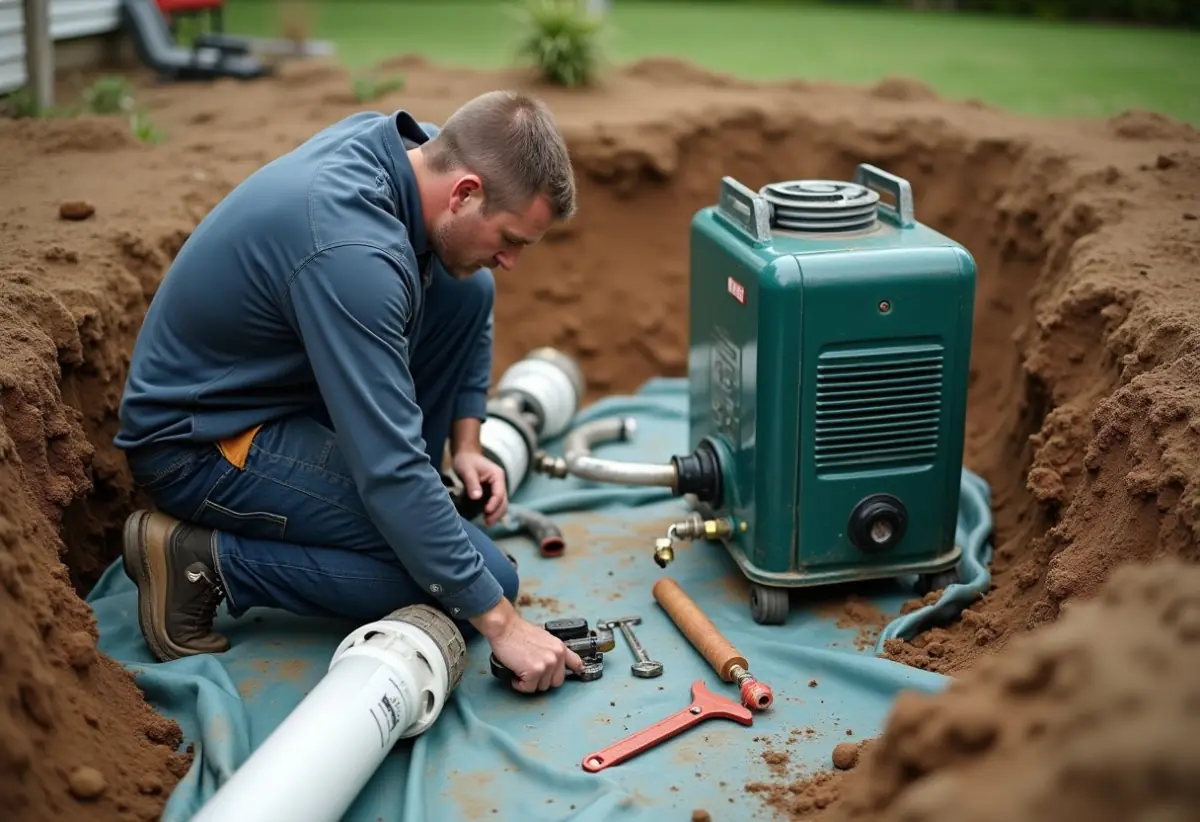
An aerobic septic system costs $10,000 to $20,000 to install, according to HomeAdvisor’s guide updated June 2026, compared with $3,000 to $8,000 for an anaerobic system. Running costs add electricity for the air pump, chlorine tablets, the service contract and periodic pumping, so expect a yearly bill that a conventional tank never generates.
The installed price moves with daily flow, tank material, dispersal type, soil work and permit fees. For mound, drip and conventional prices, see our breakdown of septic system installation cost by type.
Chart values come from HomeAdvisor’s septic installation cost guide, updated June 20, 2026.
Running costs:
- Electricity. University of Maryland Extension reports $3.24 to $18.86 a month for Maryland-approved units, about $39 to $226 a year by our arithmetic.
- Chlorine. Tablet chlorinators need wastewater-grade calcium hypochlorite tablets refilled as they dissolve. UV systems swap tablets for periodic lamp replacement.
- Service contract. Required in Texas for at least the first two years. Prices vary by provider and county, so compare what the base price covers, as AgriLife advises.
- Pumping. HomeAdvisor puts a standard pump-out at $300 to $600. Our guide to septic tank pumping cost breaks that down by tank size.
How does an aerobic septic system compare with a conventional one?
An aerobic septic system cleans wastewater more completely and fits tougher sites, while a conventional system costs less, runs without power and needs far less attention. Aerobic vs anaerobic septic system choices are usually made for you by the soil test. Where the soil allows either, the conventional system wins on lifetime cost.
| Factor | Aerobic (ATU) | Conventional (anaerobic) |
|---|---|---|
| Treatment process | Air pump feeds oxygen to aerobic microbes in the tank | Tank settles solids, soil finishes treatment |
| Effluent quality | 85 to 98% of organics and solids removed (Texas A&M AgriLife) | Partially treated, relies on the drain field |
| Installed cost | $10,000 to $20,000 (HomeAdvisor, 2026) | $3,000 to $8,000 (HomeAdvisor, 2026) |
| Power needed | Yes, continuous for the aerator, $3.24 to $18.86/month in Maryland (UMD) | No, unless the site needs an effluent pump |
| Nitrogen removal | 54 to 77% for Maryland BAT units (UMD) | About 5 to 10% (UMD) |
| Dispersal | Spray field, drip lines or reduced drain field | Gravel or chamber drain field |
| Disinfection | Chlorine tablets or UV, required for spray | None |
| Required service | Contract with reports every 4 months in Texas (TCEQ); yearly O&M in Maryland | Inspection and pumping every 3 to 5 years (TCEQ, UMD) |
| Best fit | Small lots, poor soil, high water table, near surface water (EPA) | Deep, well-drained soil with room for a field |
What does aerobic septic system maintenance involve?
Aerobic septic system maintenance means routine visits by a licensed provider, usually every four months, to check the air pump, test the effluent and refill disinfectant, plus trash tank pumping every 2 to 3 years. Texas requires a maintenance contract, and Maryland requires at least yearly service by a certified provider for its advanced units.
The TCEQ maintenance rules spell out the Texas version. The contract must list what is covered, the response time for complaints, the technician and the testing frequency. The provider must send a report to the permitting authority and the owner at least every four months, within 14 days of each test, or every six months if the system has an electronic monitor that flags failures and tracks disinfectant.
Two years after installation, TCEQ allows homeowners to maintain certain system types themselves, but some counties are stricter. Fort Bend County bars owners from servicing their own unit unless they are certified for it.
| Task | How often | Who | Source |
|---|---|---|---|
| Inspect aerator, alarms, chlorinator and spray heads | About every 4 months | Licensed provider (Texas) | TCEQ, Texas A&M AgriLife |
| Refill chlorine tablets | As tablets dissolve, check at each visit | Owner or provider | Texas A&M AgriLife |
| Clean air pump intake filter or screen | Each service visit | Provider | Texas A&M AgriLife |
| 30-minute settleability test on aeration chamber | Each service visit | Provider | Texas A&M AgriLife |
| Pump trash tank | Every 2 to 3 years | Licensed pumper | Texas A&M AgriLife |
| Full operation and maintenance check | At least once a year | Certified provider (Maryland BAT) | University of Maryland Extension |
Habits matter as much as the contract. AgriLife flags grease, heavy disposal use, excess paper and cleaning products, and warns that ten loads of laundry after a two-week vacation can flush out the starved microbes.
- Keep grass growing over the spray field so it uses the water and nutrients.
- Never plant a vegetable garden in the spray area. Texas rules prohibit applying effluent to vegetable gardens.
What do aerobic septic alarms and common problems mean?
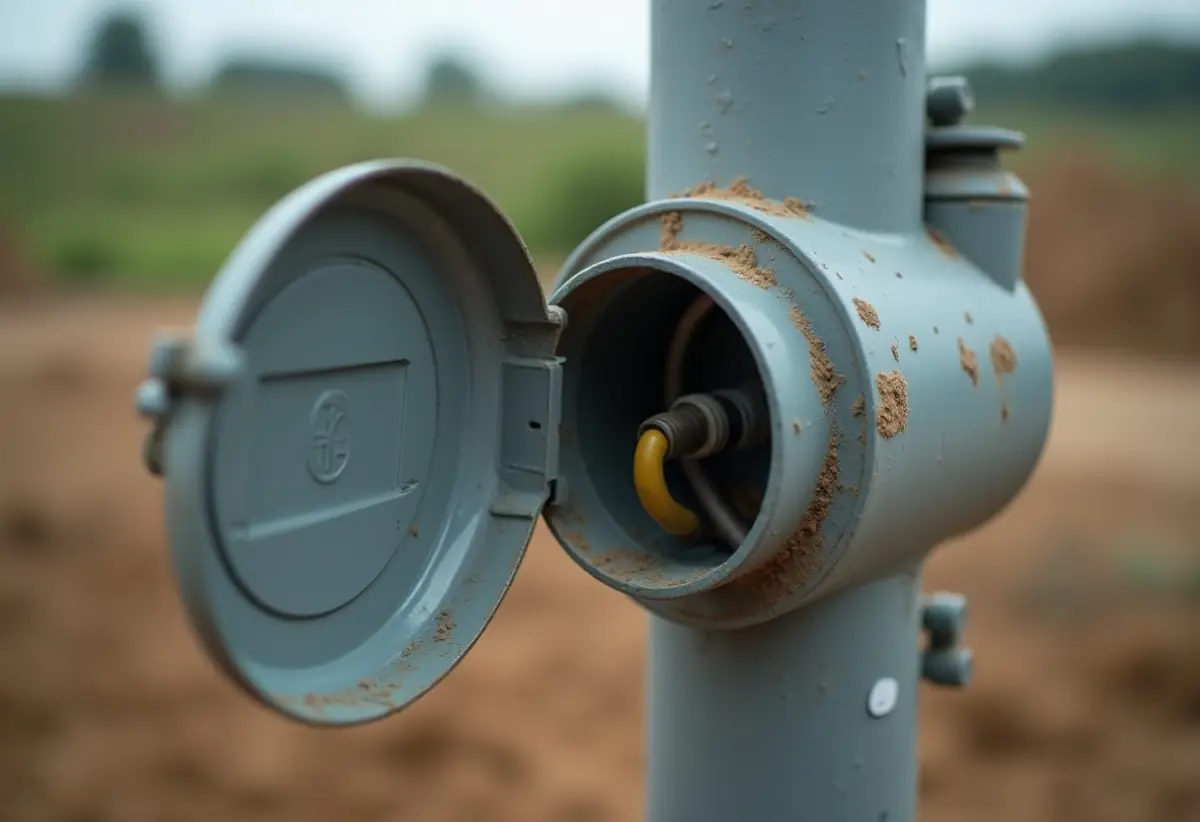
An aerobic septic alarm usually signals either high water or low air pressure. Texas A&M AgriLife says high water can come from plugged spray heads or filters, a failed pump, heavy water use or leaking fixtures, while low air pressure points to a broken air pump, a cracked air line or a low water level in the aeration chamber.
When the alarm sounds, call your maintenance provider and cut nonessential water use until the system is fixed. For a step-by-step on panel types and float switches, read what a septic tank alarm means.
Other common problems and their usual causes:
- Sewage odor during spraying. Often low oxygen from a weak aerator, or an organic overload from grease and food waste.
- Cloudy or foamy effluent. Microbes knocked back by harsh cleaners or a long power outage, both of which AgriLife flags.
- Soggy spray field in wet months. AgriLife says a field putting out more water than usual during wet seasons can mean the tanks are not watertight.
Is an aerobic septic system worth it?
An aerobic septic system is worth it when the soil, lot size or water table rules out a conventional field, because the alternative may be no permit at all. On a site that passes for a conventional system, the extra upfront cost (roughly $7,000 to $12,000 by HomeAdvisor’s ranges) plus power, chlorine and contracts rarely pays back for a typical household.
Buying a home with an ATU? Ask for the maintenance contract, recent service reports and the model’s NSF/ANSI 40 listing.
How we sourced this
We consulted 14 sources and cited 6: the EPA septic system types page, NSF’s onsite wastewater program page, the TCEQ OSSF maintenance page, Texas A&M AgriLife Extension publications L-5302 and B-6234, University of Maryland Extension fact sheet FS-1110 and HomeAdvisor’s septic cost guide (updated June 20, 2026). We excluded undated cost pages with conflicting figures and quote no maintenance contract price, because no primary source we found publishes one. The yearly electricity range is our own arithmetic from the Maryland monthly figures. Research was completed in October 2026.
Frequently asked questions
How often does an aerobic septic system need to be pumped?
Texas A&M AgriLife Extension advises pumping the trash tank on a schedule similar to a septic tank, roughly every 2 to 3 years, and removing settled solids from the aeration chamber when a 30-minute settleability test shows they have built up. Homes with garbage disposals or water-saving fixtures that make the wastewater stronger may need pumping more often.
What kind of chlorine goes in an aerobic septic system?
Use calcium hypochlorite tablets that are EPA-registered for wastewater disinfection. The Texas Commission on Environmental Quality warns owners not to use swimming pool chlorine tablets, which are not approved for treating wastewater effluent. Store tablets outside the house and garage, because AgriLife notes they can release chlorine gas that can harm your lungs.
Can I maintain my own aerobic septic system in Texas?
Sometimes. TCEQ says homeowners may take over maintenance of certain system types two years after the aerobic unit was first installed, but some counties have stricter rules. Fort Bend County, for example, bars owners from servicing their own unit unless they are a certified maintenance provider for it. Check with your local permitting authority before dropping a contract.
What happens to an aerobic septic system when the power goes out?
The air pump stops, so oxygen stops reaching the microbes that do the treatment. Texas A&M AgriLife says the unit needs a continuous supply of power because the aerobic microbes need that air to survive. During an outage, cut water use to the essentials, and after a long outage ask your provider to check the unit before heavy laundry days.
Is an aerobic septic system better than a conventional septic system?
It treats wastewater more thoroughly, removing 85 to 98 percent of organic matter and solids per Texas A&M AgriLife, and it works on lots where a conventional drain field cannot. A conventional system costs far less, $3,000 to $8,000 versus $10,000 to $20,000 per HomeAdvisor, and needs no power. Good soil and room usually favor conventional.
How much electricity does an aerobic septic system use?
University of Maryland Extension reports average electric costs of $3.24 to $18.86 a month for Maryland-approved advanced treatment units, or about $39 to $226 a year. Your bill depends on the aerator motor, how long it runs each day and local power rates. Units that aerate in timed cycles generally draw less than units that run continuously.
Why does my aerobic septic system smell?
A healthy aerobic unit should have little odor, so a sewage smell during spraying signals trouble. Texas A&M AgriLife suggests having your provider check every component first. If the hardware is fine, the cause is usually household habits, such as grease down the drain, heavy garbage disposal use, too much paper, or harsh cleaners that kill the microbes.