Slab Leak Repair Cost: Detection, Tunneling, Reroute and Repipe Prices
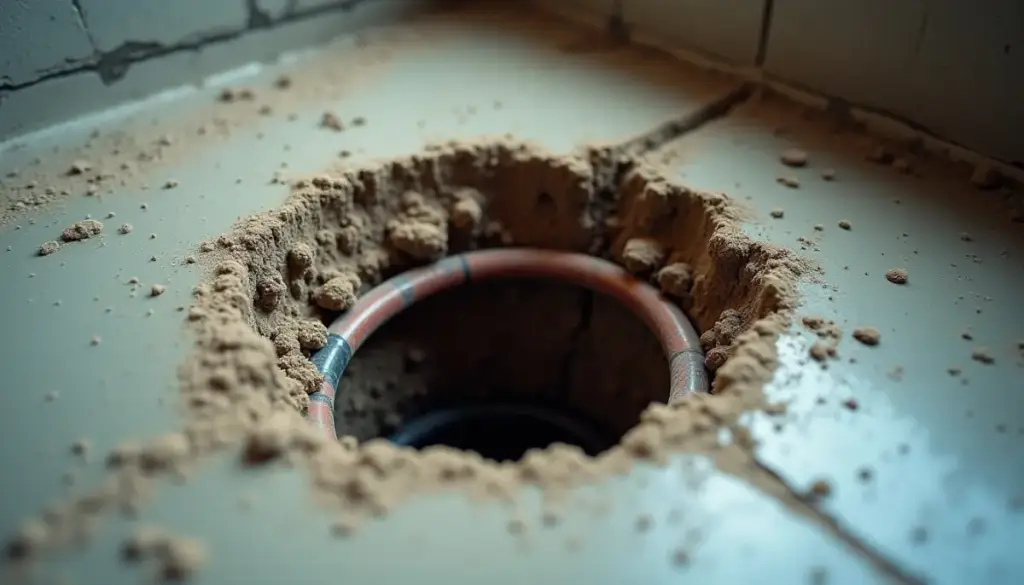
Slab leak repair cost averages $2,280 nationally in 2026, detection included, and most homeowners pay $630 to $4,400 (Angi), though rerouting lines or repiping the house can push the bill past $7,500.
Key Takeaways
- Angi (2026) puts the national average slab leak repair at $2,280 including detection, with most homeowners paying $630 to $4,400. HomeAdvisor publishes the same figures.
- Leak detection averages $280 and usually runs $150 to $400 (Angi, 2026). Fixr (2025) quotes $100 to $400.
- Rerouting runs $600 to $4,000 per Angi (2026) and $3,900 to $7,500 per HomeGuide (2026), while Fixr (2025) puts a full under-slab reroute at $4,000 to $15,000.
- Build-back of floors and finishes averages about $2,000 and can pass $10,000 under hardwood or cabinets (Angi, 2026).
- Allstate says dwelling coverage may pay to remove and replace the slab after a covered loss, but probably not to fix the plumbing itself.
- The Texas Department of Insurance lists damage to foundations or slabs as an optional endorsement and says most policies do not cover a continuous water leak.
How much does slab leak repair cost in 2026?
Slab leak repair costs $630 to $4,400 for most homeowners in 2026, with a national average of $2,280 that includes leak detection, according to Angi’s slab leak cost guide. HomeGuide (2026) prices the two most common fixes separately, at $500 to $3,500 for pipe lining and $700 to $5,000 for digging into the foundation and replacing the damaged pipe.
Those averages describe one leak in one spot. Fixr’s slab leak guide (2025) sets the low end at $600 for detection plus a small epoxy repair and the high end at $15,000 for moving every line from under the slab into the attic.
Labor is most of the bill. Angi (2026) puts slab leak labor at $500 to $4,000, or $75 to $150 an hour, and says materials for most repairs cost under $100.
What a single direct-access repair can really total
The headline average rarely includes the floor you put back. Stacking published ranges for one leak reached by breaking the slab:
- Detection: $150 to $400 (Angi, 2026)
- Breaking the slab and digging to the pipe: $500 to $3,000 (HomeGuide, 2026)
- Replacing the damaged pipe section: $200 to $2,000 (HomeGuide, 2026)
- Patching the concrete: $250 to $800 (HomeGuide, 2026)
- Build-back of flooring and finishes: about $2,000 on average (Angi, 2026)
- Permit: $75 to $200 (Angi, 2026)
By our arithmetic, that is roughly $3,175 to $8,400 once an average build-back is added. A kitchen leak under tile lands near the top.
How much does slab leak detection cost, and how do plumbers find the leak?
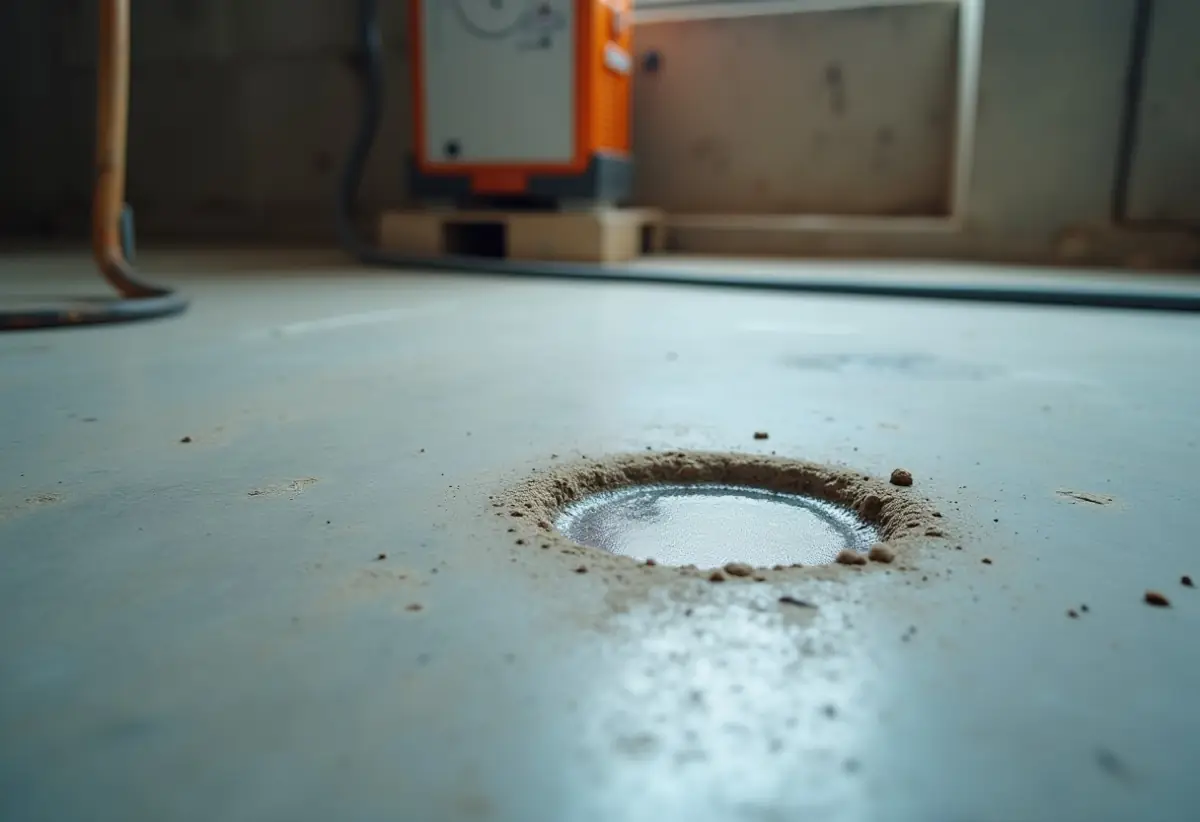
Slab leak detection averages $280 in 2026, and most homeowners pay $150 to $400, according to Angi. Fixr (2025) quotes $100 to $400 depending on how invasive the search gets, and emergency calls push toward the top. Precise detection keeps the access hole small.
If you are not yet sure you have a problem, start with the warning signs of a slab leak, such as warm floor spots and a meter that spins with every tap closed. Then a technician confirms and locates the leak, usually in this order:
- Pressure testing. The plumber isolates the hot and cold sides and watches a gauge for pressure loss. Fixr describes pressure checks as a standard part of slab leak detection, and the result tells the crew which line to chase.
- Thermal imaging. A leaking hot line warms the concrete above it, and an infrared camera maps that heat. HomeGuide lists a warm floor area over hot water pipes as a classic sign.
- Acoustic listening. Ground microphones amplify the hiss of pressurized water escaping under the slab. Angi lists acoustic listening and leak noise correlation among the tools pros use.
- Tracer gas. For leaks too quiet to hear, Angi notes technicians can push a trace gas through the line and sniff for it at the surface.
Our breakdown of how professional plumbing leak detection works compares each tool, what it finds and where it falls short.
What does each slab leak repair method cost?
The slab leak repair method sets most of the price. HomeGuide (2026) puts breaking the slab at $500 to $3,000 and pipe lining at $500 to $3,500. Fixr (2025) prices tunneling at $900 to $2,000. Rerouting runs $600 to $4,000 per Angi (2026) or $3,900 to $7,500 per HomeGuide (2026), and a whole-house repipe averages $7,500 (Angi, 2026).
| Repair method | Typical cost | Pros | Cons |
|---|---|---|---|
| Electronic leak detection (acoustic, thermal, pressure test) | $150 to $400, average $280 (Angi, 2026) | Pinpoints the leak so only one small spot gets opened | Paid before any repair starts; finds the leak but does not fix it |
| Direct access (jackhammer through the slab, repair, patch) | $500 to $3,000 to break the slab, plus $250 to $800 to patch (HomeGuide, 2026) | Fast; Angi notes it allows a quick repair with the pipe in plain view | Destroys the flooring above; dust and noise; build-back is extra |
| Tunneling under the slab | $900 to $2,000 (Fixr, 2025) | Leaves interior floors intact; Fixr recommends it under expensive flooring | Needs stable soil; Fixr says expansive-soil homes are poor candidates; excavation and grading add cost (Angi) |
| Reroute through walls or attic | $600 to $4,000 (Angi, 2026); $3,900 to $7,500 (HomeGuide, 2026) | No slab work; abandons the failing line; Fixr says reroutes may carry a warranty | Opens walls and ceilings; Angi says extensive reroutes can pass $10,000 |
| Epoxy pipe lining | $500 to $3,500 (HomeGuide, 2026); $80 to $250 per linear foot for cured-in-place (Angi, 2026) | No digging or excavation (HomeGuide); keeps the original pipe | Not always possible under a slab (Fixr); the pipe must be wide enough for the liner (Angi) |
| Whole-house repipe | $1,500 to $15,000, average $7,500 (Angi, 2026) | Replaces every aging line at once and ends repeat leaks | Highest upfront cost; several days of work plus drywall repair |
Bars show the high end of each range. Sources: Angi 2026, Fixr 2025, HomeGuide 2026.
What drives slab leak repair cost up or down?
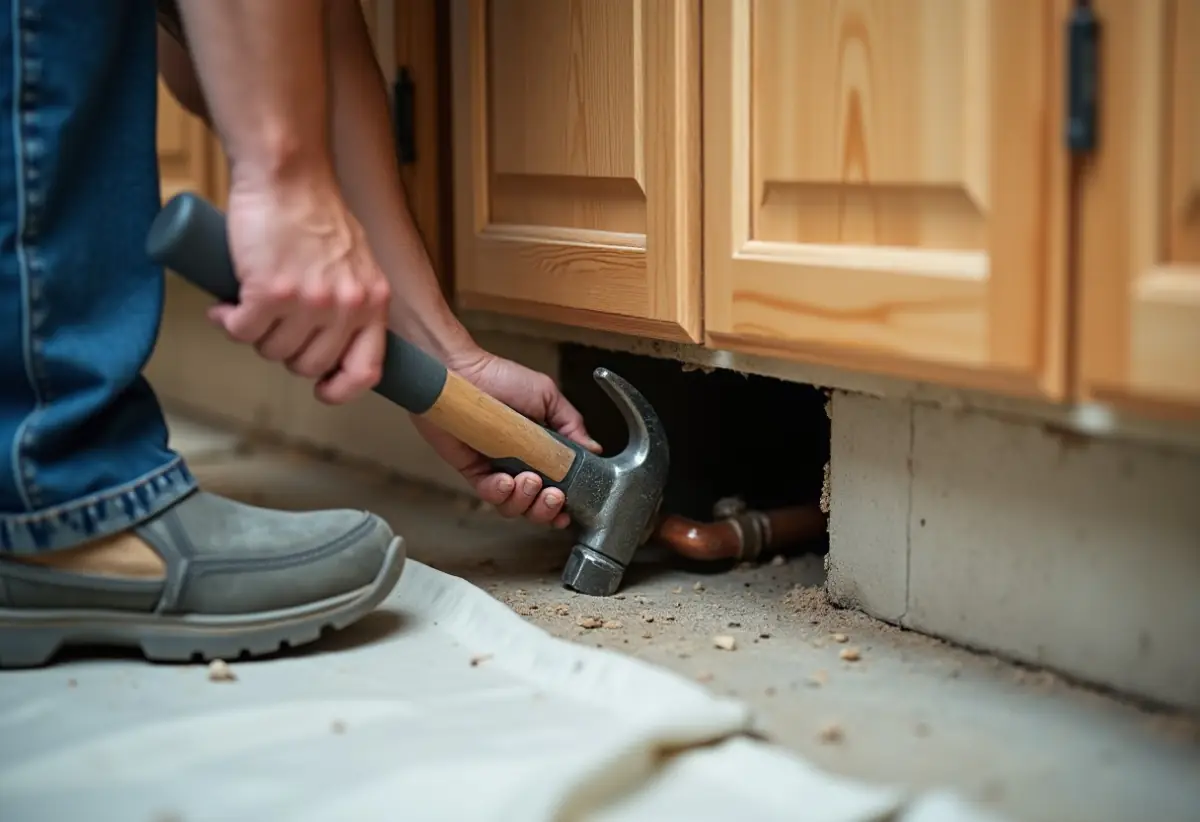
Leak location drives slab leak repair cost more than anything else. Angi (2026) prices an easy leak under an unfinished utility closet near $630 and a hard-to-reach leak under kitchen cabinets near $4,400. Flooring type, the number of leaks, pipe material, soil conditions and permits move the total from there.
- Location. HomeGuide (2026) confirms that a leak in a garage or utility closet costs less than one under a kitchen or bathroom.
- Flooring type. Angi (2026) says finished floors or hardwood cabinets over the access point can push build-back past $10,000. Engineered hardwood starts near $2.50 per square foot, while solid hardwood often runs above $8.
- Number of leaks. Fixr (2025) says rerouting is often the answer once more than one pipe problem sits under the slab, which moves the job into a higher price band.
- Pipe material. Fixr notes galvanized steel and cast iron were common under pre-1960s slabs and corrode with acidic water. Replacement pipe costs $0.40 to $8.00 per linear foot depending on material (HomeGuide, 2026).
- Structural extras. A structural engineer runs about $150 an hour, and underpinning a settled slab costs about $2,500 per pier, or $5,000 to $10,000 in total (Angi, 2026).
- Permits. Angi (2026) puts permits at $75 to $200 and warns that the plumber and the foundation contractor may each pull one.
How much do flooring, drywall and slab restoration add?
Restoration can cost as much as the plumbing. Angi (2026) puts build-back at about $2,000 on average, ranging from roughly $300 for a cold pour in a utility closet to $10,000 or more under finished floors or cabinets. Concrete repair alone runs $300 to $6,750, and water damage repair runs $500 to $15,000 or more (HomeAdvisor, 2025).
The restoration bill depends on which route the plumber took. Breaking the slab means flooring and concrete. Rerouting means drywall, and HomeGuide (2026) prices drywall patches for larger holes at $500 to $800 or more, ceiling repairs at $350 to $1,500 or more, with many drywall contractors charging a $350 to $650 minimum job fee.
- Subfloor. Replacing a water-damaged subfloor over the slab costs $500 to $1,000 (Fixr, 2025).
- Slab section replacement. Fixr (2025) prices slab replacement at $4,000 to $8,000, and HomeGuide (2026) at $6 to $12 per square foot, or $5,400 to $10,800.
- Mold. Remediation averages $1,500 to $6,000 (HomeGuide, 2026).
Ask every bidder whether build-back is in the quote, since many stop at a rough concrete patch.
Does homeowners insurance cover slab leak repair?
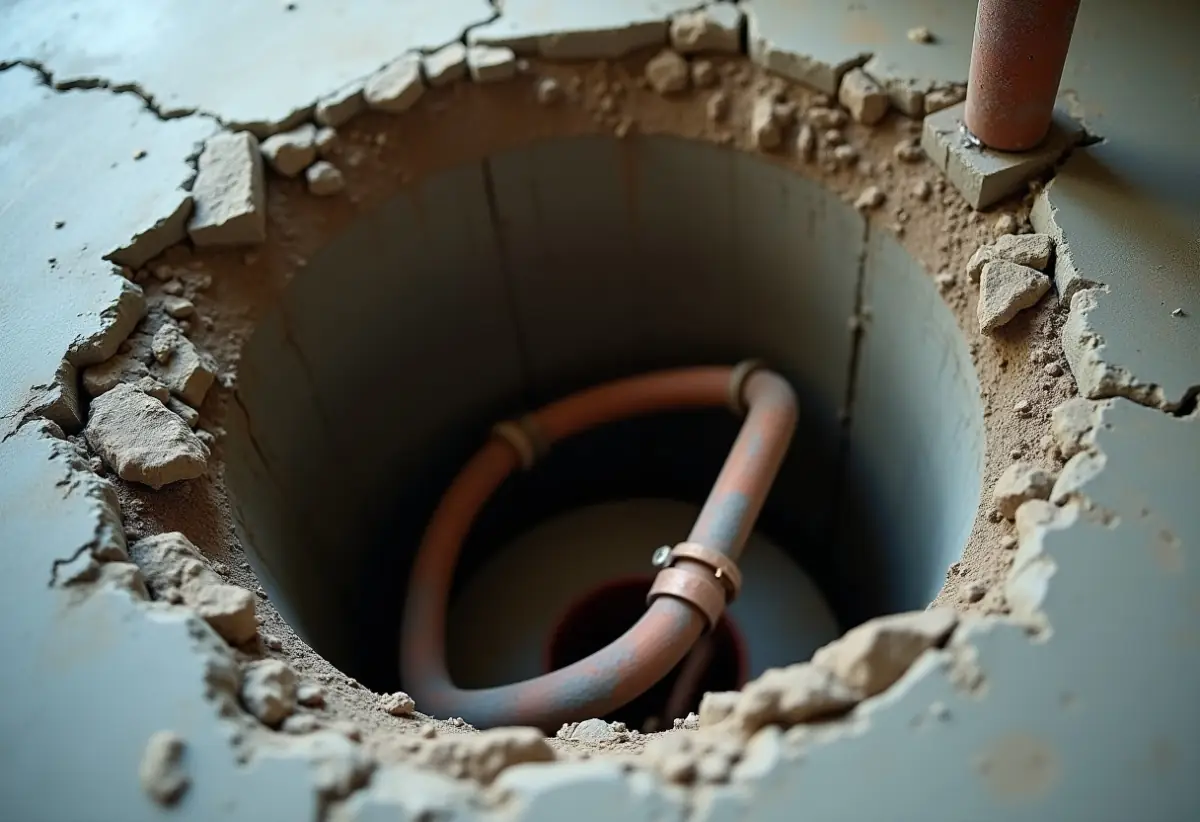
Homeowners insurance covers slab leak repair only in part, and only when a covered peril caused the leak. Allstate says dwelling coverage may pay to remove and replace the slab after the plumbing is fixed but probably will not pay to fix the plumbing itself. Leaks from old pipes, wear and tear or tree roots are generally excluded.
State regulators draw the same line. The Texas Department of Insurance home insurance guide says most policies cover sudden and accidental release of water but not a continuous water leak, and cover mold only when a covered risk caused it. It also lists damage to foundations or slabs among the optional endorsements some insurers sell.
| Slab leak cost item | Usually covered? | Source |
|---|---|---|
| Repairing the leaking pipe itself | Usually not | Allstate |
| Tearing out and replacing the slab | May be covered after a covered peril | Allstate |
| Damaged belongings such as furniture | May be covered under personal property | Allstate |
| Damage from a slow, continuous leak | Usually not | Texas Department of Insurance |
| Mold removal | Only if a covered risk caused it | Texas Department of Insurance |
| Foundation or slab damage | Often only with an added endorsement | Texas Department of Insurance |
Fixr (2025) is blunter, saying slab leaks are not covered in most cases and that claims filed after the repair usually get denied. Angi adds that most insurers will not reimburse unlicensed work. For the full picture beyond slabs, see our guide to what homeowners insurance covers for plumbing.
Claim order matters:
- Shut off the main water valve to stop the damage.
- Photograph the damage before anything is moved.
- Call your insurer before any concrete is broken, as Fixr advises.
- Get the leak detection report in writing, with location and suspected cause.
- Ask the adjuster which items (access, pipe, slab, build-back, contents) the policy pays for.
- Hire licensed contractors and keep invoices.
When should you repipe instead of repairing another slab leak?
Get a reroute or repipe quote once a second slab leak shows up, or sooner if the lines are old galvanized steel, cast iron or corroding copper. Fixr (2025) says rerouting is often the answer when more than one pipe problem sits under the slab, and HomeAdvisor warns that leaving the root cause in place sets you up for repeat repairs.
The math turns fast. Two average spot repairs at Angi’s $2,280 come to $4,560, already inside HomeGuide’s $3,900 to $7,500 reroute range, and that is before two rounds of build-back.
Angi recommends repiping or rerouting in climates where shifting soil keeps causing leaks. A full repipe averages $7,500 (Angi, 2026), and our guide to the cost to repipe a house breaks that down by home size and PEX versus copper. Whatever you choose, fix the cause too. Angi (2026) puts drainage fixes such as a French drain at up to $15,000 and targeted waterproofing at around $200 for a small area.
How we sourced this
We reviewed national cost guides from Angi (2026 data), HomeAdvisor (2025 data), HomeGuide (2026) and Fixr (updated May 2025), plus insurance guidance from Allstate and the Texas Department of Insurance. Sources are dated May 2025 through 2026 and were checked in October 2026. Every dollar figure is reported as the source published it, with its year. The direct-access total and the two-leak comparison are our own arithmetic from those published ranges. We excluded local-only contractor pricing and unverifiable mirror pages. Costs are national ranges and vary by region and home.
Frequently asked questions
Does homeowners insurance cover slab leak repair?
Partly, and only when a covered peril caused the leak. Allstate says dwelling coverage may pay to remove and replace the slab after the plumbing is fixed, but probably not the plumbing repair itself. The Texas Department of Insurance says most policies exclude a continuous water leak. Leaks from old pipes, wear and tear or tree roots are generally not covered.
How much does slab leak detection cost?
Slab leak detection averages $280 in 2026, and most homeowners pay $150 to $400, according to Angi. Fixr (2025) quotes $100 to $400 depending on how invasive the search needs to be. Emergency calls cost more. Precise detection is money well spent because it lets the plumber open one small spot instead of several exploratory holes.
Is it cheaper to reroute or repair a slab leak?
For a single leak, a spot repair is usually cheaper. Angi (2026) puts the average slab leak repair at $2,280, while HomeGuide (2026) prices rerouting at $3,900 to $7,500. Once a second leak appears, two average spot repairs ($4,560) already land inside that reroute range, and a reroute abandons the failing pipe instead of patching it again.
How long does it take to fix a slab leak?
A minor, easy-to-reach leak takes about three hours, while a large or hard-to-reach leak can take up to three days, according to HomeAdvisor. Fixr (2025) says tunneling takes 4 to 6 hours and breaking the slab 1 to 2 days. Rebuilding floors or cabinets afterward can add several weeks while materials arrive.
What happens if you ignore a slab leak?
The water keeps going somewhere. Fixr (2025) warns that undetected slab leaks can erode soil under the foundation and cause the house to sink, along with mold and water damage in the rooms above. HomeAdvisor (2025) puts water damage repair at $500 to $15,000 or more, and underpinning a settled slab can run $5,000 to $10,000.
Does epoxy pipe lining work for slab leaks?
Sometimes. HomeGuide (2026) prices pipe lining at $500 to $3,500 and notes it needs no digging or excavation. Fixr (2025) cautions that lining is not always an option for pipes under a slab, and Angi says the existing pipe must be large enough for the liner to fit. It suits an isolated weak run, not a system with many failures.
Do you need a permit to repair a slab leak?
Often yes, depending on your city. Angi (2026) puts slab leak permits at $75 to $200 and notes that the plumber and the foundation contractor may each need their own permit. HomeGuide (2026) cites $30 to $500 for plumbing permits. Many contractors fold the permit into their quote, so ask whether yours does.