Elongated vs Round Toilet: Size, Comfort and Fit
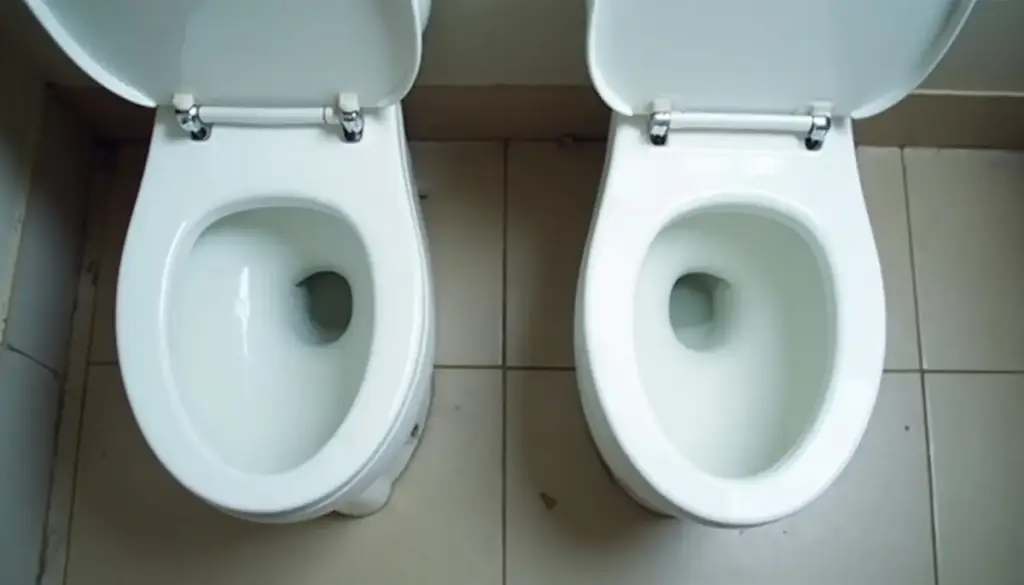
Elongated vs round toilet comes down to about 2 inches of bowl: elongated bowls run roughly 18-1/2 inches from the outlet to the rim and add comfort, while round bowls run about 16-1/2 inches and save floor space.
Key Takeaways
- TOTO’s Drake spec sheets list a 16-1/2 inch front bowl dimension on the round CST743S and 18-1/2 inches on the elongated CST744S.
- Overall depth on the same Drake pair is 26-3/8 inches round vs 28 inches elongated, a 1-5/8 inch gap, per TOTO’s drawings.
- Kohler’s Santa Rosa K-30810 compact elongated measures 27-3/4 inches deep, and Kohler says it occupies the same space as a round-front bowl.
- The International Plumbing Code (section 405.3.1) requires at least 21 inches of clearance in front of a toilet; UPC-based codes such as California’s (402.5) require 24 inches.
- The 2010 ADA Standards (section 604) set seat height at 17 to 19 inches but say nothing about bowl shape; Kohler notes plumbing codes may require elongated bowls in public restrooms.
- Fixr prices a classic two-piece round toilet near $180 and the elongated version near $230, or $225 to $310 vs $275 to $360 installed.
What is the difference between an elongated and a round toilet?
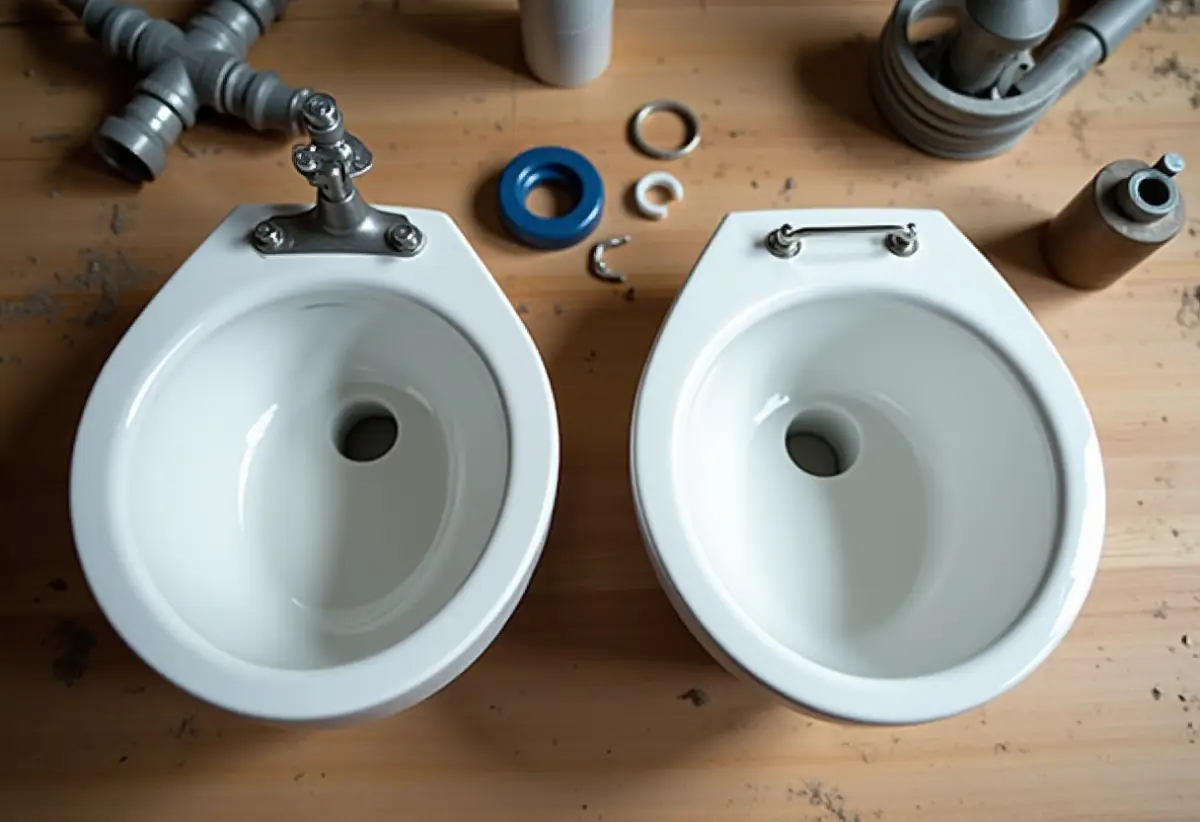
The difference between an elongated and a round toilet is the shape and length of the bowl. A round bowl is close to a circle and measures about 16-1/2 inches from the outlet to the front rim. An elongated bowl is an oval that runs about 18-1/2 inches. The tank, rough-in, flush and height are usually identical, so the bowl is the only thing that changes. Once you know the bowl shape, our guide on how to replace a toilet seat covers seat lengths, hinge bolts and the swap itself.
TOTO’s Drake family shows this clearly. The round CST743S spec sheet and the elongated CST744S spec sheet both use the same ST743S tank, a 12-inch rough-in, a 2-1/8 inch trapway and a 28-1/2 inch overall height. Only the bowl casting changes.
So you can often keep a flush system you like and just pick the bowl. For a wider look at one-piece, wall-hung and other styles, our guide to the main toilet types and how they differ covers the rest of the family.
What are elongated vs round toilet dimensions?
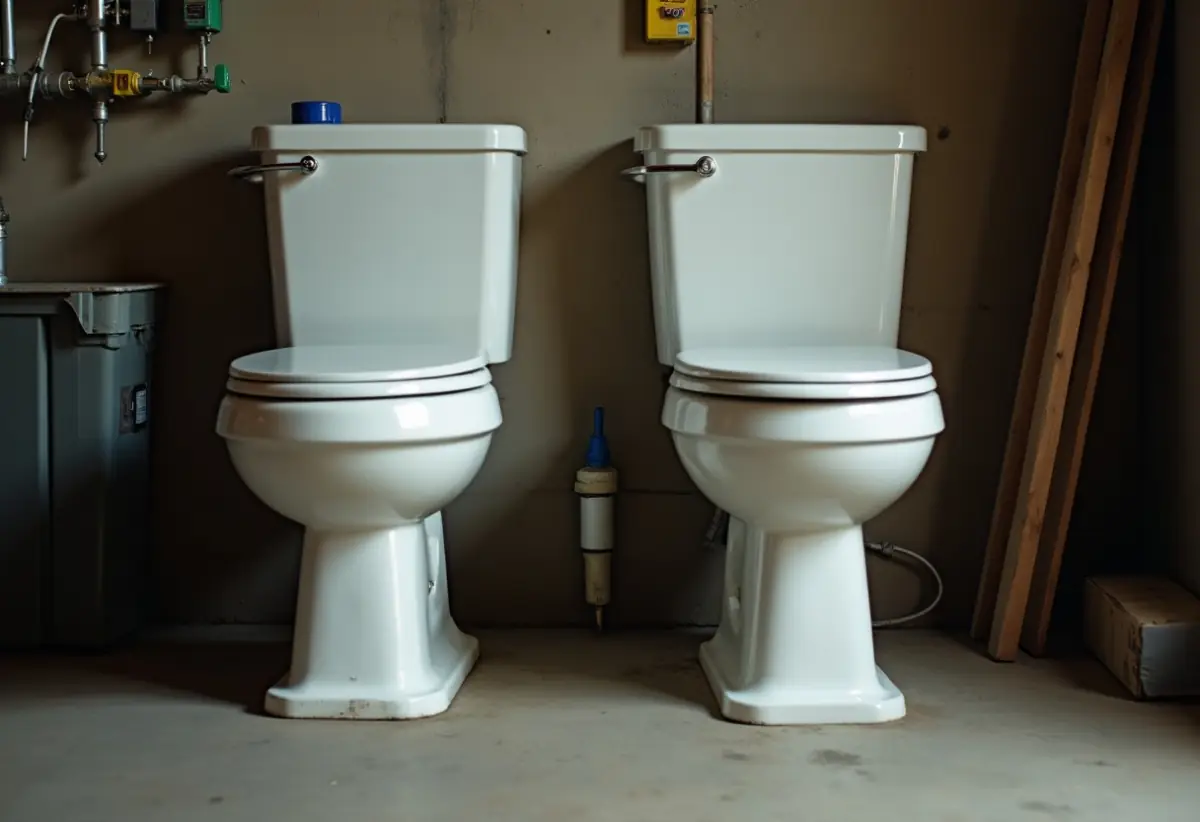
Elongated vs round toilet dimensions differ mainly in depth. On TOTO’s Drake pair, the round model measures 26-3/8 inches from the back of the tank to the front of the bowl and the elongated model measures 28 inches. Width and height stay the same. Compact elongated bowls, such as Kohler’s 27-3/4 inch Santa Rosa, land in between.
Many shopping guides round the difference up to “about 2 inches.” The bowl itself does grow by 2 inches on TOTO’s drawings (16-1/2 to 18-1/2), but the full fixture only grew 1-5/8 inches on this pair because the tank and rear of the bowl stay put. Always check the overall depth on the exact model’s spec sheet, not a rule of thumb.
The table below lines up the factors buyers ask about most. Dimensions come from the TOTO and Kohler spec sheets cited above; prices come from Fixr’s comparison.
| Factor | Round | Elongated |
|---|---|---|
| Front bowl dimension (TOTO Drake) | 16-1/2 in | 18-1/2 in |
| Overall depth (TOTO Drake) | 26-3/8 in | 28 in (compact elongated: 27-3/4 in, Kohler Santa Rosa) |
| Rough-in and height (TOTO Drake) | 12 in rough-in, 28-1/2 in tall | 12 in rough-in, 28-1/2 in tall |
| Seat needed | Round seat (TOTO SS113 on Drake) | Elongated seat (TOTO SS114 on Drake) |
| Comfort for most adults | Shorter seating surface | Longer, roomier opening |
| Public and commercial restrooms | Often not allowed | May be required by plumbing code (Kohler note) |
| Typical unit price (Fixr) | About $180 | About $230 |
| Best fit | Powder rooms, tight closets, kids’ baths | Primary baths, rooms with depth to spare |
Will an elongated toilet fit my bathroom?
An elongated toilet will fit your bathroom if the distance from the finished back wall to the nearest obstruction equals the toilet’s overall depth plus your local front clearance. With a 28-inch elongated model, that means at least 49 inches under the IPC’s 21-inch rule, or 52 inches under the UPC’s 24-inch rule. Doors, vanities and tubs all count as obstructions.
The International Code Council’s text for IPC section 405.3.1 requires not less than 21 inches of clearance in front of a water closet “to any wall, fixture or door,” and at least 15 inches from the toilet’s center to any side wall, partition or vanity. Jurisdictions on the Uniform Plumbing Code use 24 inches of front clear space; the California Plumbing Code section 402.5 is one example. Your city may adopt either code with local amendments, so check with the building department before you buy.
Here is how the math works on the Drake pair:
- Round (26-3/8 in deep): 47-3/8 in wall to obstruction under the IPC, 50-3/8 in under the UPC.
- Compact elongated (27-3/4 in deep): 48-3/4 in under the IPC, 51-3/4 in under the UPC.
- Elongated (28 in deep): 49 in under the IPC, 52 in under the UPC.
Separate toilet rooms add one more test. The same IPC section sets a minimum compartment of 30 inches wide by 60 inches deep for a floor-mounted toilet, so a narrow water closet room may pass on paper and still feel cramped if the door swings in.
How do you measure your space before choosing a bowl shape?
Measure your space by confirming the rough-in first, then the depth to the nearest obstruction, then side clearance and door swing. The rough-in tells you which models fit the drain; the depth tells you whether round, compact elongated or full elongated leaves the clearance your code requires. Measure from finished surfaces, not studs or bare subfloor.
- Find the rough-in. Measure from the finished back wall (not the baseboard) to the center of the closet bolts. Most homes are 12 inches; 10 and 14 inches also exist. Our guide to measuring toilet rough-in correctly walks through baseboard and tile quirks.
- Measure wall to obstruction. Run a tape straight out from the back wall along the toilet’s centerline to the nearest door, vanity edge, tub or opposite wall.
- Subtract the model’s overall depth. Use the number on the manufacturer’s spec sheet. What is left is your front clearance.
- Compare to code. You want 21 inches or more in IPC areas and 24 inches or more in UPC areas.
- Check the door. Swing the door fully. If it hits the front of the bowl or crowds the clear space, a round or compact elongated bowl may solve it.
- Check the sides. Confirm at least 15 inches from the drain center to each side wall or vanity.
Is an elongated toilet more comfortable than a round one?
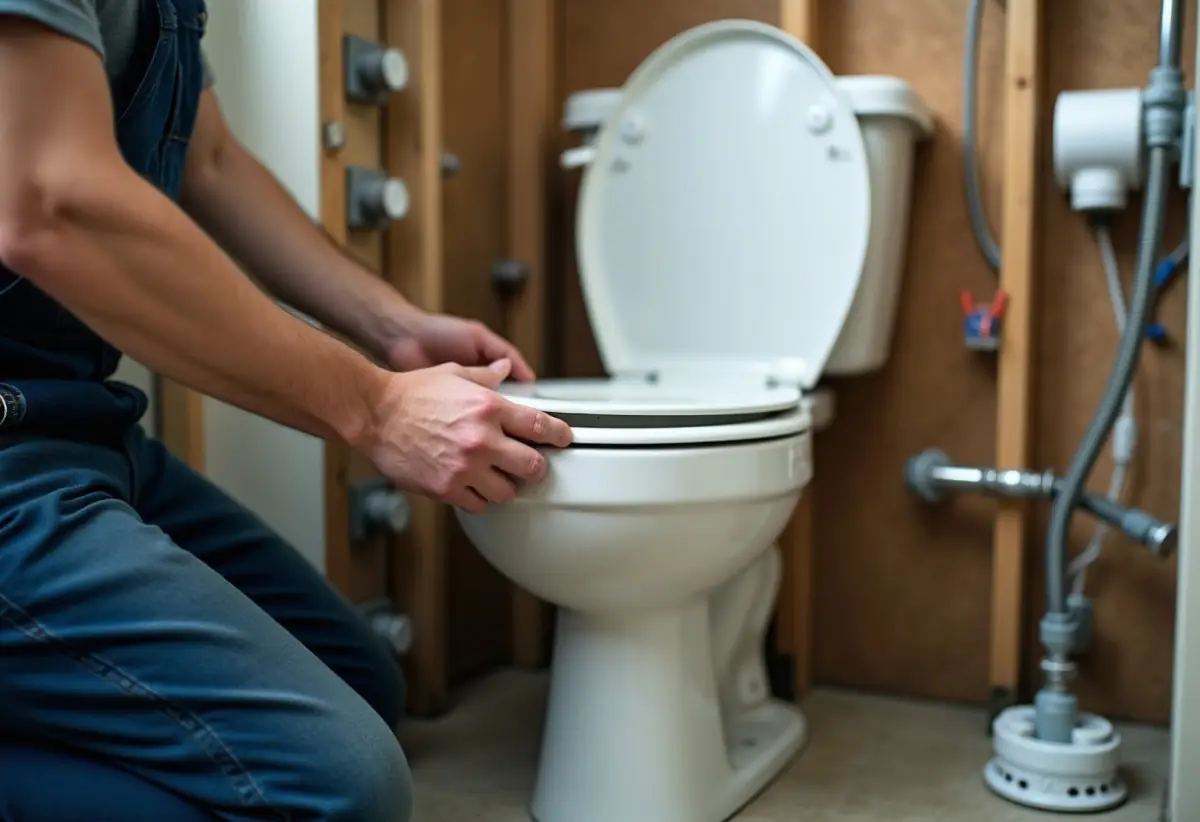
An elongated toilet is more comfortable for most adults because the longer opening gives more room to sit and more support under the thighs. Kohler’s spec sheet for the Santa Rosa describes its compact elongated bowl as offering “added comfort while occupying the same space as a round-front bowl.” Round bowls can suit small children, who may find a shorter opening easier to sit on.
The extra length also gives more room inside the bowl opening, which is one reason plumbing codes lean on elongated bowls in public restrooms. Kohler’s K-30810 spec sheet notes that “plumbing codes may require elongated toilets and elongated, open-front seats in public bathrooms.”
Comfort also depends on height, which is a separate choice from bowl shape. Kohler’s Santa Rosa, for example, pairs its compact elongated bowl with Comfort Height seating, and our explainer on whether a comfort height toilet suits your household covers who benefits from the taller seat.
Which bowl shape is easier to keep clean?
Neither shape is clearly easier to clean, and sources disagree. A round bowl has less rim and less exterior china to wipe, while an elongated bowl gives a brush more room inside. Glaze matters more than shape; TOTO offers its SanaGloss glaze on the elongated CST744SG, and Kohler applies CleanCoat to the Santa Rosa, according to their spec sheets.
Does ADA require an elongated toilet?
The 2010 ADA Standards do not mention bowl shape. Section 604 sets the toilet centerline at 16 to 18 inches from the side wall, the seat height at 17 to 19 inches to the top of the seat, and a clear floor space 60 inches wide by 56 inches deep. Elongated bowls are common in accessible restrooms because plumbing codes may require them in public facilities, not because ADA does.
The U.S. Access Board’s text of the ADA Standards lists those 604 dimensions. Many manufacturers label specific models “ADA compliant when installed to the specific requirements,” as Kohler does for the Santa Rosa. That label describes the seat height and controls, so you still need to place the fixture correctly.
In a private home, none of this is mandatory unless a local program or project spec calls for it.
Do round and elongated toilets use the same seat?
No. Round and elongated toilets need seats that match the bowl shape. A round seat on an elongated bowl leaves the front rim exposed, and an elongated seat on a round bowl hangs past the front. The good news is that the two rear bolt holes usually sit 5-1/2 inches apart on both shapes, so any seat in the right shape will bolt on.
Both spec sheets we reviewed show the 5-1/2 inch seat-mounting hole spacing: TOTO’s Drake drawings and Kohler’s Santa Rosa sheet. TOTO pairs the round Drake with its SS113 SoftClose seat and the elongated Drake with the SS114. Kohler lists an elongated bidet seat, the K-8298, as a matching accessory for the Santa Rosa.
Compact elongated bowls are the tricky case. Their shape is elongated but slightly shorter, so a standard elongated seat may overhang the front a little. Check the manufacturer’s list of compatible seats before buying a bidet seat or a heated seat for a compact bowl.
How much more does an elongated toilet cost than a round one?
An elongated toilet usually costs a little more than the same model in a round bowl. Fixr’s comparison prices a classic two-piece 1.28-gallon round toilet at about $180 and the elongated version at about $230, or $225 to $310 vs $275 to $360 installed, with labor of $45 to $130. Premium lines can widen or erase the gap.
The bowl shape rarely changes the labor. A plumber sets an elongated toilet the same way as a round one, on the same flange and wax ring. Labor climbs when a flange is broken, the floor is soft or the supply valve needs replacing. Our breakdown of what it costs to install a toilet covers those add-ons.
Should you choose a round, compact elongated or elongated toilet?
Choose elongated if you have 49 inches or more from the back wall to the nearest obstruction in an IPC area, or 52 inches in a UPC area. Choose round for tight powder rooms, closets and kids’ baths. Choose compact elongated when you want the longer opening but your measurements land within an inch or two of the limit.
Compact elongated bowls are the middle path most guides skip. Kohler’s Santa Rosa is 27-3/4 inches deep, only 1/4 inch shorter than the full elongated Drake but 1-3/8 inches longer than the round Drake. In practice, compare the exact spec sheet numbers for the models on your shortlist; “compact” is a marketing label, not a standard size.
How we sourced this
We pulled bowl and overall depth figures directly from manufacturer spec sheet drawings: TOTO Drake CST743S (round) and CST744S (elongated), and Kohler Santa Rosa K-30810 (compact elongated, dated November 2023). Code clearances come from the ICC’s published text of IPC 405.3.1 (2018 edition) and the California Plumbing Code’s section 402.5 (UPC-based). ADA dimensions come from the U.S. Access Board’s 2010 ADA Standards, section 604. Prices come from Fixr’s round vs elongated comparison and were not independently tested. We also reviewed top-ranking guides from Geberit, Fixr and retailer blogs for coverage, but cited only primary or named sources. We excluded retailer dimension listings that mislabeled depth and height. Codes vary by jurisdiction and edition; confirm with your local building department.
Frequently asked questions
How much longer is an elongated toilet than a round one?
The bowl is about 2 inches longer. TOTO’s Drake spec sheets list a front bowl dimension of 16-1/2 inches on the round model and 18-1/2 inches on the elongated model. The full fixture grew less, from 26-3/8 to 28 inches deep, a 1-5/8 inch difference, because the tank and rear of the bowl stay the same.
How much space do you need for an elongated toilet?
Add the toilet’s overall depth to your code’s front clearance. A 28-inch elongated toilet needs about 49 inches from the finished back wall to the nearest obstruction where the IPC applies, with its 21-inch rule, and about 52 inches under UPC-based codes that require 24 inches. You also need 15 inches from the drain center to each side wall.
Is an elongated or round toilet better for a small bathroom?
A round toilet is usually better for a small bathroom because it projects less into the room, about 1-5/8 inches less on the TOTO Drake pair. If you want the longer seat, a compact elongated model such as Kohler’s 27-3/4 inch Santa Rosa can fit spaces that a full elongated bowl would crowd.
Does ADA require an elongated toilet bowl?
The 2010 ADA Standards, section 604, set seat height at 17 to 19 inches and the centerline at 16 to 18 inches from the side wall but do not specify bowl shape. Plumbing codes may require elongated bowls and open-front seats in public restrooms, so most accessible commercial installs use elongated toilets anyway.
Can I put an elongated seat on a round toilet?
You can bolt it on, since both shapes typically use seat holes spaced 5-1/2 inches apart, but it will not fit right. An elongated seat hangs past the front of a round bowl, so the seat edge has no china under it. Buy a seat that matches the bowl shape, and check compatibility lists for compact elongated bowls.
Why are elongated toilets more popular?
Most adults find the longer opening more comfortable, and lines such as Kohler’s Santa Rosa pair an elongated bowl with chair-height seating. Elongated bowls are also common in commercial work because plumbing codes may require them in public restrooms. Round bowls remain the practical pick for tight spaces and children’s bathrooms.
Is an elongated toilet more expensive than a round one?
Usually by a small margin. Fixr prices a classic two-piece round toilet at about $180 and the matching elongated model at about $230, or $225 to $310 vs $275 to $360 installed. The installation labor is generally the same for both shapes, so the bowl itself drives most of the difference.