Black Specks in Water: What They Are and How to Fix It
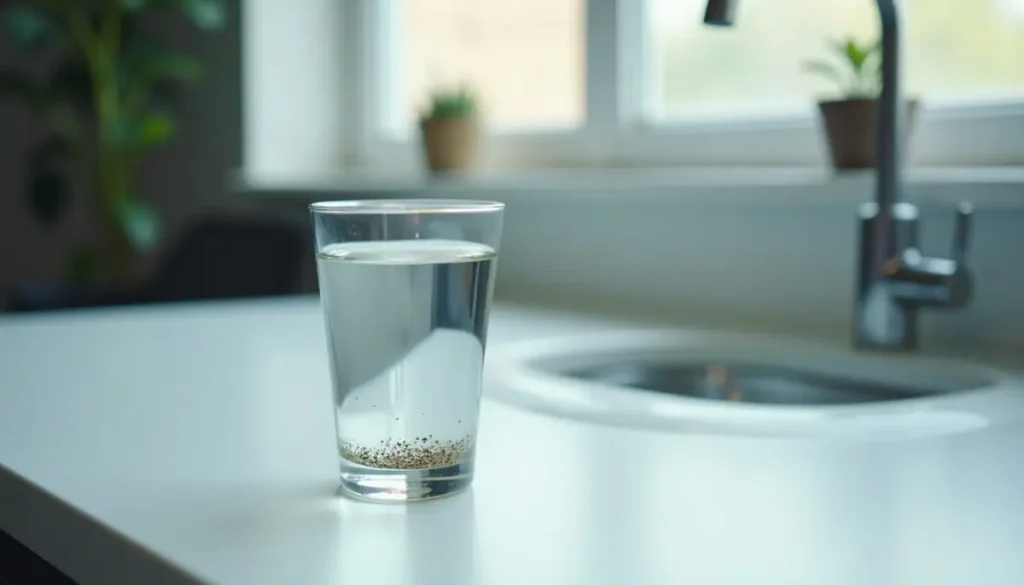
Black specks in water usually come from crumbling rubber in a hose or faucet part, manganese, a water heater, or a new carbon filter, and a hot-versus-cold tap test tells you which one you have.
Key Takeaways
- EPA’s secondary standard for manganese is 0.05 mg/L, the level where EPA lists black to brown color and black staining as the telltale effects.
- EPA’s 2004 health advisory puts manganese at 0.3 mg/L for lifetime drinking and 1 mg/L for a 10-day exposure in children.
- The Minnesota Department of Health advises 100 micrograms per liter or less of manganese for infants who drink tap water or formula made with it.
- MDH estimates about 3% of Minnesotans on community water systems get manganese above 300 micrograms per liter.
- Pentair’s submittal sheet for its carbon cartridges warns they may release a very small amount of carbon fines and tells users to flush after installation.
- Specks only in hot water point to the water heater. Specks in cold water at every tap point to the street main or the source water.
What are black specks in water?
Black specks in water are small solid particles, most often bits of degraded rubber, manganese oxide, iron sulfide from a water heater, activated carbon from a filter, or sediment knocked loose in a water main. Most are a nuisance rather than a health threat. Manganese is the one worth a lab test, because EPA sets a lifetime health advisory for it.
The color tells you less than the location. Two homes can see identical pepper-like grains for completely different reasons, so the fastest diagnosis comes from noting which taps show the specks, whether hot or cold, and when they started.
The table below matches what you see to the likely cause and the fix. If your water is tinted rather than speckled, the guide to brown water from the faucet covers rust and main flushing in more depth.
| What you see, and where | Likely cause | Fix |
|---|---|---|
| Soft, rubbery bits that smear black on a tissue; one fixture, or only hot or only cold at one spot | Rubber liner of a flexible supply hose, faucet washer or O-ring, toilet flapper, expansion tank bladder | Replace the failing hose or part; clean the aerator screen |
| Fine dark powder, brownish-black stains in toilets, tubs and laundry; hot and cold, whole house | Manganese (often with iron), common on private wells | Lab test; water softener or oxidizing filter sized to the result |
| Black flakes or slime only in hot water, often a rotten egg smell | Iron sulfide from sulfur bacteria in the water heater | Flush the tank, swap the anode type, disinfect the heater |
| Hard black grains right after a new cartridge, only at the filtered tap | Carbon fines from the activated carbon media | Flush the cartridge as the maker directs |
| Sudden grit in cold water at every tap after hydrant flushing or street work | Iron and manganese sediment stirred up in the main | Run the cold tap, clean aerators, call the utility if it lasts |
| White or gray plastic chips, only in hot water | Broken water heater dip tube (not a black speck) | Replace the dip tube, clear screens |
| Black ring or dots at the toilet waterline that come back after cleaning | Mold or bacterial film, or manganese deposits | Scrub and disinfect; test water if staining is widespread |

How do you find where black specks in water come from?
Find the source of black specks in water by testing taps in order: hot versus cold at one faucet, then the same water at other fixtures, then outdoor spigots that skip the water heater and any filter. The pattern narrows the cause to a single part, the water heater, a filter, or the supply before it reaches your house, usually within 15 minutes.
- Collect a sample. Run cold water into a clear glass or white bucket, wait a few minutes, and look at what settles. Repeat with hot only.
- Do the smear test. Pinch a speck on a white paper towel. Rubber feels soft and leaves a sooty streak. Carbon is hard and gritty. Manganese tends to leave a brown-black stain.
- Compare hot and cold. Hot only means the water heater or a hot-side hose. Cold only at one tap means that fixture’s cold hose or cartridge.
- Check other fixtures. One fixture points to its own hoses, washers or aerator. Every fixture points to the heater (if hot) or the supply (if cold).
- Try an outdoor spigot. Hose bibs usually bypass the heater and many filters. Specks there point to the well or city main.
- Ask the neighbors and the utility. If the street is having hydrant flushing or main repairs, the specks are likely from the main and should clear.
Are the black specks rubber from a hose, washer or flapper?
Rubbery black specks that smear are the most common single-fixture cause. They come from the inner liner of a braided flexible supply hose, a faucet washer or O-ring, a toilet flapper or fill valve seal, or the bladder in a thermal expansion tank. Heat speeds the breakdown, so hot-side hoses often fail first.
Utility FAQs on black particles list these same parts: toilet flappers, rubber faucet washers, O-rings, expansion tank membranes and flexible hose liners. Some utilities that disinfect with chloramine also say it can wear certain rubber compounds faster than chlorine, so homes on chloramine may see this more often.
The fix is cheap. Shut the stop valve, unscrew the hose, and look inside the hose end with a flashlight. A liner that looks pitted or leaves black residue on your finger needs replacing. Replace both hot and cold hoses at that fixture at the same time, then remove and rinse the aerator, which usually traps the last of the debris.
A bladder that fails inside an expansion tank can shed rubber into the whole hot side. Tap the tank. If it sounds full of water all the way up, the bladder has likely failed and the tank should be replaced.
Can manganese cause black specks in water, and is it safe?
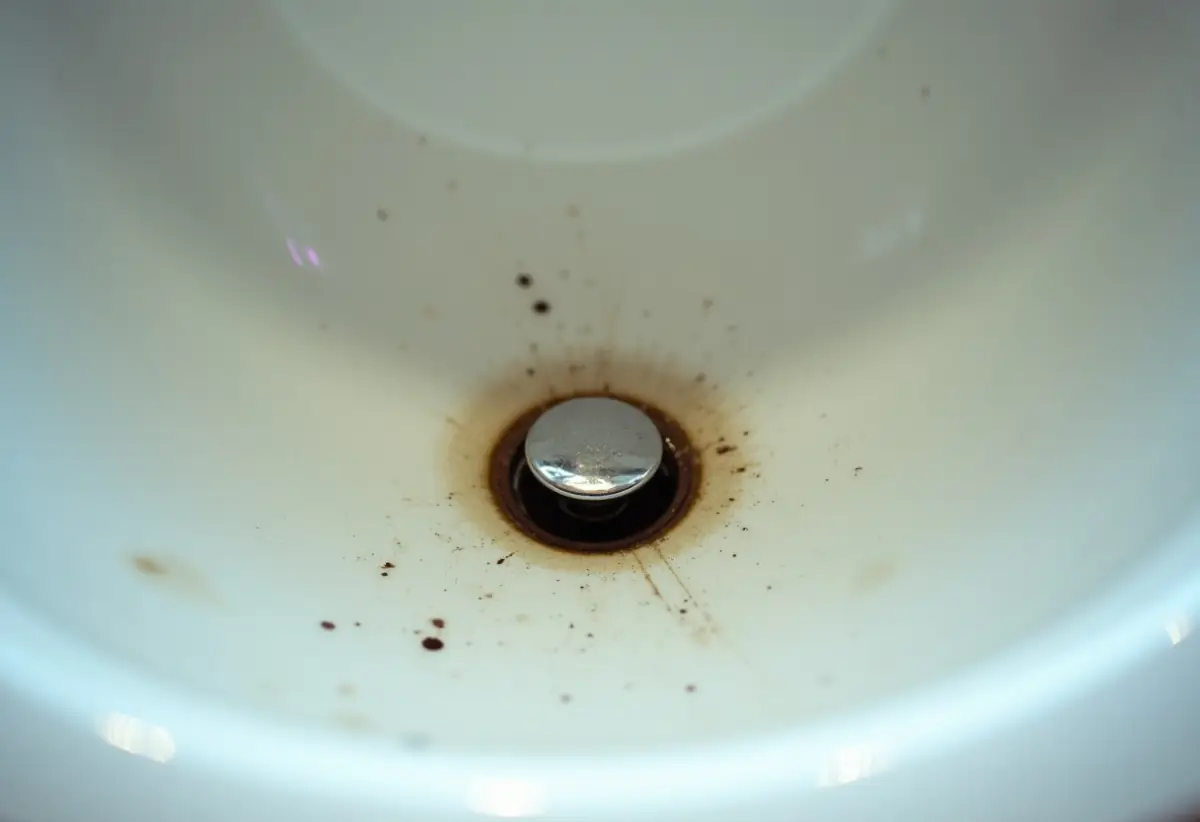
Yes. Manganese is the leading mineral cause of black specks in water and black staining. EPA’s secondary standard is 0.05 mg/L, and at higher levels EPA lists black to brown color, black staining and a bitter metallic taste. It occurs naturally in groundwater, so private wells see it most, though some public systems carry it too.
The health numbers sit well above the staining threshold. EPA’s 2004 drinking water health advisory for manganese sets a lifetime advisory of 0.3 mg/L and a 10-day advisory of 1 mg/L, and advises using 0.3 mg/L even for 10-day exposures in infants younger than 6 months. These are advisories, not enforceable limits.
Minnesota goes further for babies. The Minnesota Department of Health says a safe level is 100 micrograms per liter or less if an infant drinks tap water or formula made with it, and 300 or less for everyone over 1 year. MDH says long-term high exposure may affect memory, attention and motor skills, and that public systems are not required to test for manganese.
Testing is the only way to know your level. On a private well, send a sample to a state certified lab and ask for manganese, iron and hardness together, since treatment depends on all three. MDH cites a Dakota County study finding that water softeners can reduce manganese. Higher levels, or manganese paired with iron, often call for an oxidizing filter or a whole-house water filter rated for the specific metal.
Why are there black specks only in the hot water?
Black specks only in hot water mean the water heater or a hot-side hose is the source, not the city or the well. The usual tank culprit is iron sulfide, a black solid that forms when sulfur-reducing bacteria in warm, stagnant water produce hydrogen sulfide that reacts with iron. A rotten egg smell from the hot tap confirms it.
The anode rod plays a part. Magnesium anodes can feed the reaction that creates hydrogen sulfide in some well water, and a rod near the end of its life sheds corrosion debris along with scale. The standard fix is flushing the tank, disinfecting it per the maker’s instructions, and swapping the water heater anode rod for an aluminum-zinc or powered type.
Sediment adds to it. Minerals that settle at the bottom of the tank can bake into dark crusty grains, especially in hard water. Draining a few gallons from the drain valve into a white bucket shows you what is inside.
Do not confuse a dip tube with an anode. A broken dip tube sheds white or gray plastic chips, not black ones, so white flakes in the aerator point to the tube rather than any of the causes above.
Can a new filter or city main work cause black particles in water?
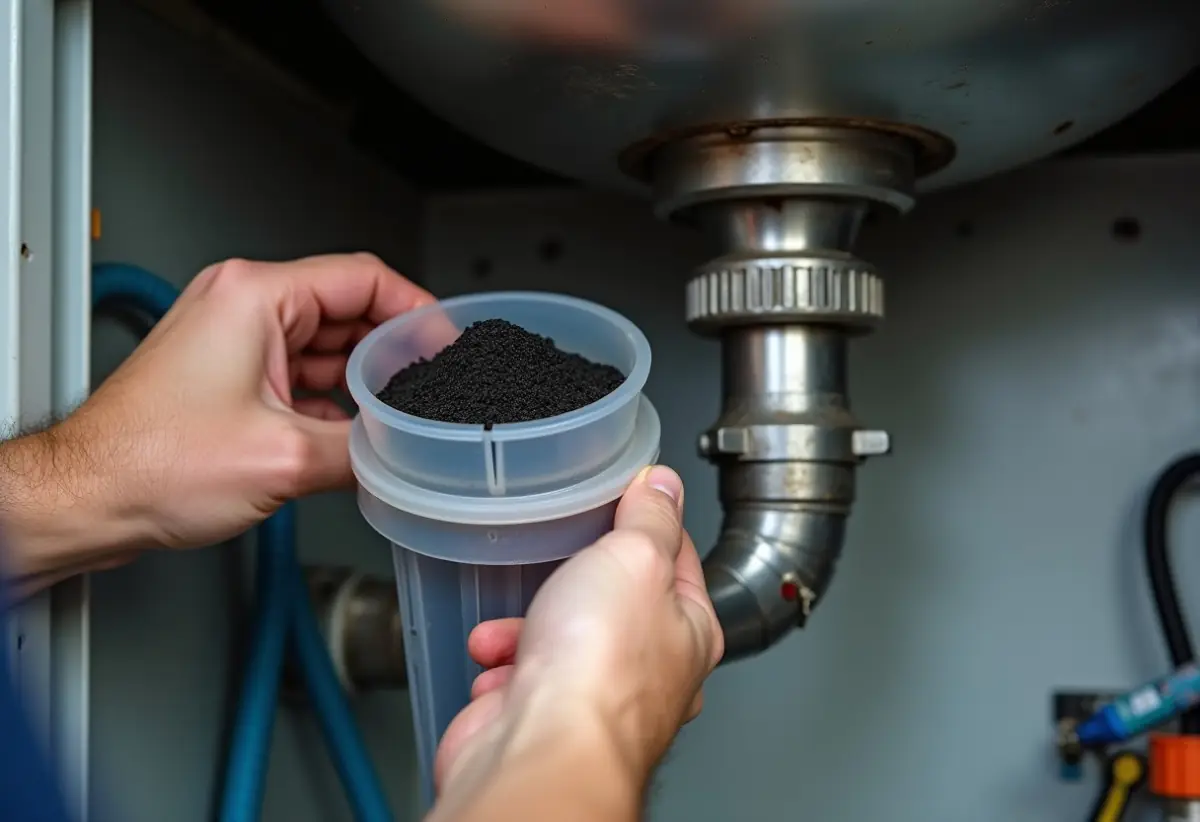
Yes, both can. A new activated carbon cartridge can release loose carbon fines for the first few gallons, and hydrant flushing or main repairs can stir up iron and manganese sediment that has settled in city pipes. Filter specks show only at the filtered tap. Main specks show in cold water at every tap and often at the neighbors too.
Carbon fines are expected with new media. Pentair’s submittal sheet says its cartridges “may contain a very small amount of carbon fines (very fine black powder)” and tells users to flush the cartridge after installation. It also says to flush the tap at least 20 seconds before drinking, especially if the tap was not used daily.
Main sediment usually clears on its own. Run the cold tap nearest the water meter until it runs clear, avoid running hot water so the debris does not settle in the heater, and skip laundry until it clears. If it lasts past a day, call the utility and ask whether flushing is under way.
EPA sets a 0.3 mg/L secondary standard for iron alongside the manganese limit, and the two often travel together in main sediment. If the problem is a milky haze rather than solid specks, the cause is usually air or minerals, which the guide to cloudy tap water covers.
Why are there black specks in the toilet bowl?
Black specks in a toilet bowl usually come from the tank, not the supply. A crumbling rubber flapper or fill valve seal sheds bits into each refill. A black ring or spots at the waterline that return after cleaning are more often mold or bacterial film, or manganese deposits if your water carries it.
Lift the tank lid and rub the flapper. If black residue comes off on your fingers, replace it, which is a cheap part in most toilets. Check the fill valve seal while the lid is off.
Recurring rings are a different problem. Mold and bacterial film grow where water sits still, so guest toilets are worst. Scrub with a disinfecting cleaner and flush unused toilets weekly. If the same brownish-black stain shows up in tubs, sinks and laundry, it is likely manganese rather than mold, and that calls for a water test.
How we sourced this
We reviewed the top-ranking pages for black specks in water and related searches in October 2026, along with utility FAQ pages on black particles. We cited only primary sources. These were the EPA secondary drinking water standards, EPA’s 2004 drinking water health advisory for manganese, the Minnesota Department of Health manganese page, and a Pentair filter cartridge submittal sheet. Health advisory levels are federal guidance, not enforceable limits, and state guidance varies. We excluded vendor claims about specific treatment removal rates.
Frequently asked questions
Are black specks in water harmful?
Usually not. Rubber bits, carbon fines and main sediment are a nuisance, not a poison. Manganese is the exception worth testing for. EPA set a lifetime health advisory of 0.3 mg/L, and the Minnesota Department of Health advises 100 micrograms per liter or less for infants who drink tap water or formula made with it.
Why are there black specks in my water all of a sudden?
A sudden start usually points to something that just changed. Common triggers are a new carbon filter cartridge, hydrant flushing or a main repair on your street, a supply hose or toilet flapper that finally began to crumble, or recent work that shut your water off. Check which taps are affected before you call anyone.
How do I get rid of black specks in my water?
Match the fix to the source. Replace the rubber hose, washer or flapper if specks show at one fixture. Flush and treat the water heater if they show only in hot water. Flush a new filter as the maker directs. For manganese, get a lab test, then add a softener or oxidizing filter sized to the result.
Can a water heater cause black specks in water?
Yes. Sulfur bacteria in a tank can react with the anode and iron to form black iron sulfide flakes, often with a rotten egg smell. Sediment and scale also collect at the bottom and break loose. If the specks appear only in hot water, flush the tank and inspect the anode rod before blaming the city supply.
What are the black specks in my toilet bowl?
Specks in fresh tank water usually come from a crumbling rubber flapper or fill valve seal. A black ring or spots at the waterline that return after cleaning are more often mold or bacterial film, or manganese deposits if your water carries it. Look inside the tank first, since a worn flapper shows up quickly.
Are black particles from a new water filter safe?
Generally yes. They are loose activated carbon fines from the filter media. Pentair notes its cartridges may contain a very small amount of carbon fines and tells users to flush the cartridge after installation. Run water through a new cartridge for the time the maker lists, and contact them if specks persist after that.
What are black specks in well water?
On a private well, black or dark brown specks plus staining on fixtures most often mean manganese, sometimes with iron. Iron bacteria can add black slime. No utility tests a private well for you, so send a sample to a state certified lab and ask for manganese, iron and hardness before buying treatment.
What are the black flakes in my faucet water?
Black flakes at a faucet usually come from crumbling rubber in a flexible supply hose, faucet washer or O-ring, or a toilet flapper seal. They can also be manganese oxide, iron sulfide from a water heater, carbon fines from a new filter, or sediment stirred loose in the main. A smear test and checking hot versus cold taps narrows down which source applies.


