What Is a Fatberg? How Grease and Wipes Block Sewers
A fatberg is a hardened mass of sewer grease, turned into calcium soap and bound with flushed wipes, that can grow long and heavy enough to block a city sewer.
Key Takeaways
- The record fatberg, found by Thames Water in Whitechapel, London, in September 2017, measured 250 metres and about 130 tonnes, per Guinness World Records.
- NC State University researchers showed in 2011 (Environmental Science & Technology) that fatbergs are mostly calcium soap formed when free fatty acids from grease react with calcium in sewers.
- Wipes are the skeleton. The National Association of Clean Water Agencies (NACWA) put the wipes bill for US utilities at about $441 million a year in its 2019 study.
- Macomb County, Michigan, paid about $100,000 in 2018 to remove a 19-ton, 100-foot fatberg, according to county Public Works.
- South West Water said its 64-metre Sidmouth fatberg, found in January 2019, would take a crew about eight weeks to cut out.
- Most cities fight back with FOG ordinances that require grease interceptors in restaurants, but home kitchens and toilets still feed the problem.
What is a fatberg?
A fatberg is a solid lump of congealed fat, oil, and grease (FOG) mixed with wet wipes and other items that do not break down, lodged inside a sewer pipe. It forms slowly, sticks to the pipe wall, and can harden until it behaves more like wet concrete than food waste. Large ones block flow and force sewage back up into homes and streets.
The word is a mash-up of “fat” and “iceberg.” The Oxford English Dictionary added it in 2015. Like an iceberg, what a crew sees at a manhole is usually a small part of the mass.
Fatbergs live in the public sewer mains and pump stations downstream of your house, not inside the house itself. If you want the full route your drain water takes, from the kitchen sink to the street main and on to treatment, our guide to how a municipal sewer system works walks through each section and who owns it.
How do fatbergs form in sewers?
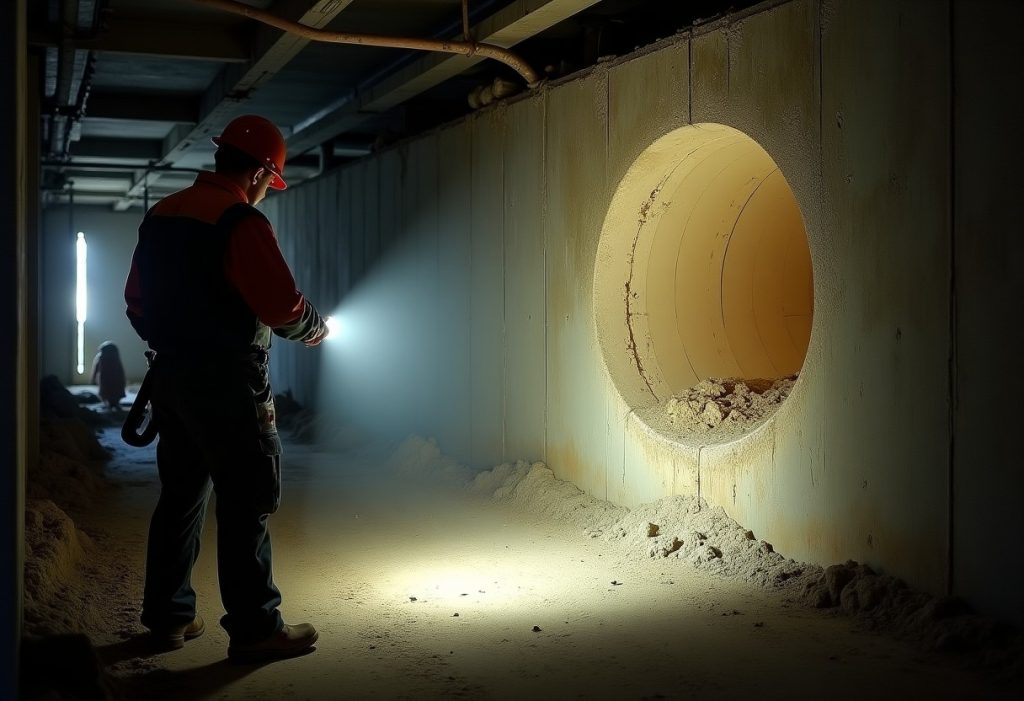
Fatbergs form through a slow chemical reaction called saponification. Grease washed down drains breaks down into free fatty acids, and those acids react with calcium in the sewer to make a hard, waxy calcium soap. The soap sticks to rough pipe walls, catches wipes and debris, and grows layer by layer until it chokes the pipe.
For years, engineers assumed grease just cooled and stuck. A team at North Carolina State University led by Joel Ducoste and Francis de los Reyes tested that idea. Using infrared spectroscopy, they found that hardened sewer deposits were made of calcium-based fatty acid salts, which is to say soap. Their paper, “Evidence for Fat, Oil, and Grease (FOG) Deposit Formation Mechanisms in Sewer Lines,” appeared in Environmental Science & Technology in 2011, as NC State reported at the time. Earlier work by Kevin Keener and Ducoste had already linked deposits to high calcium levels.
The NC State team found that saturated fatty acids, the kind in bacon fat, butter, lard, and palm oil, react most readily. Later work from the same group reported that a higher palmitic acid content in the source fat, a higher pH, and temperature all speed up deposit formation.
Where does the calcium come from?
Calcium enters the sewer from several directions. Concrete pipe and manholes release calcium as they corrode, hard water carries dissolved calcium from every tap, and some food waste adds more. That is why fatbergs tend to grow fastest in older concrete or brick sewers in hard-water areas, and at rough joints where turbulent flow slows and drops solids.
- Warm grease goes down a sink and cools as it travels, clinging to the pipe wall.
- Bacteria and water split some of the fat into free fatty acids.
- Those acids react with calcium in the sewer and form calcium soap.
- Wipes, cotton swabs, and hair snag on the sticky soap and act like rebar.
- More grease coats the new surface, and the mass grows until flow is restricted.
What is a fatberg made of?
A fatberg is mostly fat, oil, and grease that has turned into soap, reinforced with things that should never have been flushed. Guinness World Records lists the Whitechapel contents as congealed fat, cooking oil, nappies, wet wipes, and other personal hygiene products. Cotton swabs, condoms, sanitary products, and food scraps turn up in most others.
Wipes do the structural work. Baby wipes, cleaning wipes, and makeup wipes keep their shape in water far longer than toilet paper, so they knit together into ropes that grease can coat. Many products sold as “flushable” behave the same way in a sewer, a gap our test of whether flushable wipes are really flushable covers in detail.
Pieces of the Whitechapel fatberg went on display at the Museum of London in 2018, sealed behind glass. Fatberg material carries sewage bacteria, and the sewers around it hold hydrogen sulfide, which is why removal crews work in protective suits and often in breathing apparatus.
What is the largest fatberg ever found?
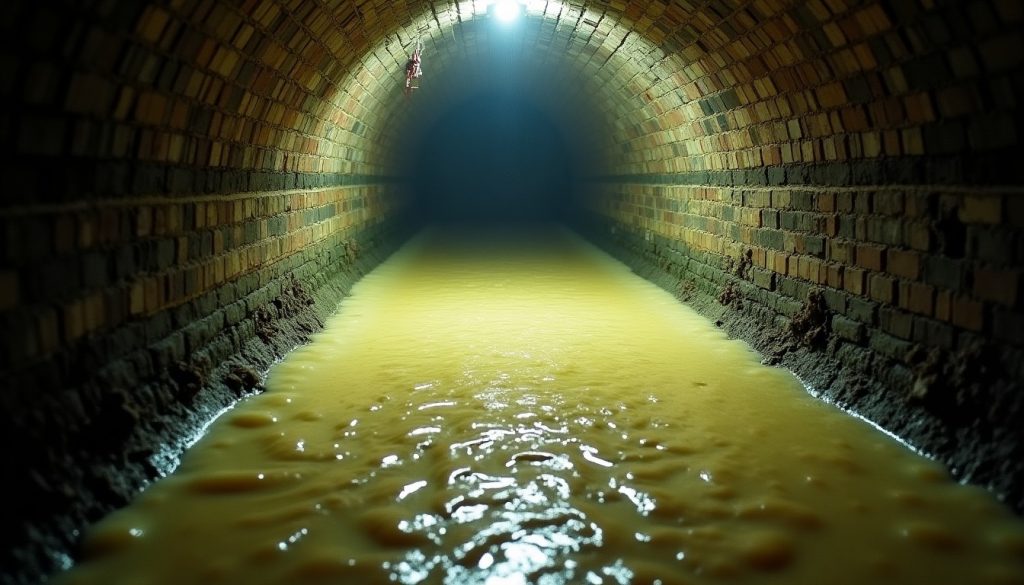
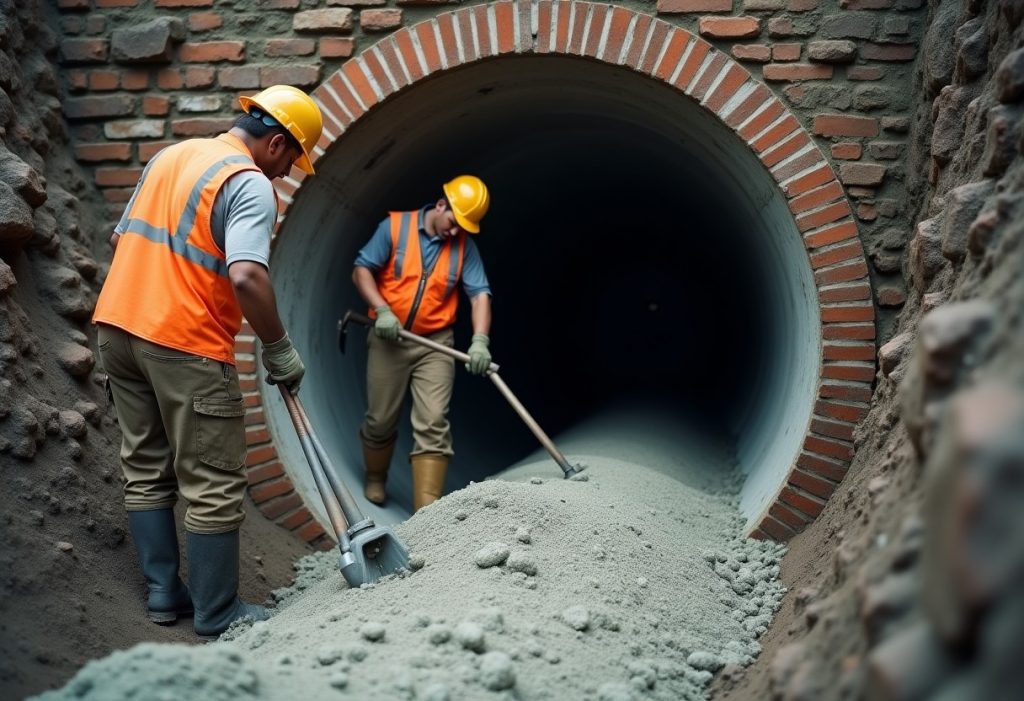
The largest fatberg on record is the Whitechapel fatberg, found by Thames Water inspectors in East London in September 2017. Guinness World Records lists it at 250 metres (820 feet) long and about 130 tonnes, or 286,601 pounds. It filled a stretch of Victorian brick sewer under a busy street.
The table below lists notable cases where a utility or public works agency published the size. We left out cases where the only figures came from social media or unattributed reports.
| Case | City | Year | Size | Source |
|---|---|---|---|---|
| Whitechapel fatberg | London, UK | 2017 | 250 m long, about 130 tonnes | Thames Water; Guinness World Records |
| Sidmouth fatberg | Sidmouth, Devon, UK | 2019 | 64 m long, about 8 weeks to remove | South West Water |
| Macomb County fatberg | Macomb County, Michigan | 2018 | 100 ft long, 11 ft wide, 6 ft tall, 19 tons | Macomb County Public Works |
| Jones Falls overflow | Baltimore, Maryland | 2017 | Size not published; about 1.2 million gallons of sewage overflowed | Baltimore Department of Public Works, as reported |
Length is the only measure all three sized cases share, so the chart uses it. Weights are not directly comparable, because Thames Water reported metric tonnes while Macomb County reported tons.
How much does it cost to remove a fatberg?
Removing a large fatberg costs a utility tens to hundreds of thousands of dollars per job, and the ongoing bill for grease and wipes runs far higher. Macomb County spent about $100,000 on one 2018 fatberg. Thames Water said in 2017 that it spends about £1 million a month clearing blockages, and NACWA estimates wipes alone cost US utilities $441 million a year.
The NACWA figure comes from a 2019 study of 25 utilities in 19 states, scaled to the national level, and covers extra labor, equipment repair, and screening. Its executive summary on the cost of wipes treats it as a conservative estimate. Those costs land on sewer bills, because utilities pass operating expenses through to ratepayers.
Removal itself is slow, dirty work. Thames Water described its Whitechapel crew breaking the mass with high-powered jet hoses and sucking it out with tankers. Some of that waste was later processed into biodiesel, and some utilities send recovered grease to anaerobic digesters to make biogas.
How do household habits feed a fatberg?
Most fatbergs start with ordinary kitchen and bathroom habits repeated across thousands of homes. Pouring pan grease, bacon fat, or used cooking oil down the sink sends FOG into the sewer, and flushing wipes, cotton swabs, or paper towels gives that grease something to grab. Neither habit seems harmful from one sink, which is the trap.
Hot water and dish soap do not solve the problem. They move grease a few feet farther before it cools and settles, often into your own lateral or the street main. Our breakdown of what happens when you pour grease down the drain explains why the “run hot water” advice fails and what to do instead.
- Pan drippings, bacon fat, and leftover frying oil poured into the sink.
- Sauces, gravies, dairy, and salad dressings rinsed off plates without scraping.
- Food scraps sent through a garbage disposal, which grinds them but does not remove the fat.
- Wipes of every kind, including those labeled flushable, sent down the toilet.
- Cotton swabs, dental floss, paper towels, and sanitary products flushed instead of binned.
What do cities do to prevent fatbergs?
Cities fight fatbergs at the source with FOG control programs that target restaurants, plus public outreach and, increasingly, labeling laws for wipes. Under the EPA National Pretreatment Program, local sewer authorities can limit what businesses discharge, and many use that power to require grease interceptors, set pumping schedules, and inspect and fine kitchens that skip maintenance.
Restaurant kitchens are the biggest single target. A typical local ordinance requires a food service establishment to install a grease trap or larger in-ground interceptor, keep pumping records, and clean it before grease and solids fill a set share of its capacity. Our guide to how a grease trap works and how often to pump it covers sizing and maintenance for commercial and home kitchens.
- FOG ordinances: interceptor requirements, pumping logs, and inspections for food service businesses, with fines for violations.
- Sewer cleaning programs: scheduled jetting of known grease hot spots and camera inspection of mains.
- Grease recycling: drop-off sites where residents can leave used cooking oil for rendering or biofuel.
- Wipes labeling laws: California and Washington require “Do Not Flush” labels on many non-flushable wipes, and Michigan restricted the word “flushable” in 2024.
- Federal labeling bill: the WIPPES Act, which would set a national “Do Not Flush” label, has been reported out by House and Senate committees in the 119th Congress.
Interceptor size and pumping intervals vary by city, so check your local code.
What can homeowners do to stop fatbergs?
Homeowners can stop feeding fatbergs with two habits: keep grease out of the sink and keep everything but toilet paper out of the toilet. Let fat cool, scrape it into a can or the trash, wipe greasy pans with a paper towel before washing, and put every wipe in a bin. Those steps also protect your own drain line.
- Pour cooled cooking grease into a lidded can or jar, then throw it away or take it to a grease recycling site.
- Scrape plates and wipe pans into the trash before rinsing or loading the dishwasher.
- Fit a mesh strainer in the kitchen sink to catch food scraps.
- Follow the “3 Ps” rule many utilities use: flush only pee, poo, and toilet paper.
- Keep a lidded bin in every bathroom so wipes, swabs, and floss have an easy place to go.
- Call a plumber at the first sign of a slow kitchen drain, because grease clogs in a lateral get harder to clear over time.
Your sewer lateral, the pipe from the house to the main, is usually your responsibility in most US cities. A grease clog there can mean snaking or jetting at your expense, and a backup into a basement can be costly, so prevention is cheaper than the fix.
How we sourced this
We consulted 14 sources and cited 9, including Guinness World Records, NC State University’s 2011 release on the Environmental Science & Technology study, NACWA’s 2019 cost-of-wipes executive summary, Thames Water statements reported by The Construction Index, South West Water statements, Macomb County Public Works figures, and Michigan EGLE. Case figures span 2017 to 2019. We excluded fatberg sizes that appeared only in secondary summaries without a utility or agency source, and we did not convert or combine metric tonnes and US tons. Baltimore overflow volume is as reported in news coverage of Baltimore DPW statements. Search results reviewed October 2026.
Frequently asked questions
What is a fatberg made of?
A fatberg is mostly fat, oil, and grease that has hardened into calcium soap, bound together with wet wipes, paper towels, cotton swabs, and other items that never break down in water. Guinness World Records describes the Whitechapel mass as congealed fat, cooking oil, nappies, wet wipes, and personal hygiene products flushed down toilets and poured down sinks.
What is the largest fatberg ever found?
The largest documented fatberg is the Whitechapel fatberg found by Thames Water in East London in September 2017. Guinness World Records lists it at 250 metres (820 feet) long and 130 tonnes, or about 286,600 pounds. It blocked a Victorian brick sewer, and crews spent weeks breaking it apart with high-pressure jets and vacuum tankers.
How do fatbergs form?
Fatbergs form when grease poured down drains cools and sticks to rough spots in a sewer. Free fatty acids in that grease react with calcium from concrete pipe and hard water and turn into a hard soap, a process NC State researchers confirmed in 2011. Flushed wipes snag on the deposit and give it a frame to keep growing.
Are fatbergs dangerous?
They can be. A fatberg narrows or seals a sewer, so wastewater backs up into basements or spills into streets and streams. In 2017 a blockage in Baltimore was reported to have pushed about 1.2 million gallons of sewage into the Jones Falls. Crews who remove fatbergs work in confined space with hydrogen sulfide risk and often wear breathing apparatus.
How do you get rid of a fatberg?
Utilities break fatbergs apart with high-pressure water jets, then pull the loose pieces out with vacuum tankers, and finish stubborn sections by hand with shovels. Thames Water said its eight-person Whitechapel crew removed about 20 to 30 tonnes a day. Some of that waste was later processed into biodiesel instead of going to landfill.
Can a fatberg form in my house pipes?
Yes, on a smaller scale. The same grease and wipes that build city fatbergs can coat a kitchen drain or the private sewer lateral between your house and the street main. Those clogs are usually the homeowner’s problem to fix, and a plumber may need to snake or jet the line. A slow kitchen sink is often the first warning sign.
Are flushable wipes a cause of fatbergs?
Wipes are a main ingredient. Wipes sold as flushable often keep their shape far longer than toilet paper, so they catch grease and tangle into ropes. The National Association of Clean Water Agencies estimated in 2019 that wipes add about 441 million dollars a year to US utility operating costs. Michigan and several other states now regulate flushable claims.
What dissolves fatberg?
Nothing a homeowner can pour breaks up a fatberg once it has hardened. Utilities cut it apart with high-pressure water jets, pull the loose pieces out with vacuum tankers, and finish stubborn sections by hand with shovels. Thames Water said its Whitechapel crew removed about 20 to 30 tonnes a day, and the job still took weeks.