How Long Do Pipes Last? Lifespan by Material
How long do pipes last? It depends on material: copper supply lines commonly run 50 to 70 years, PEX 40 to 50, galvanized steel 20 to 50, cast iron drains up to 100, and polybutylene often fails near 26.
Key Takeaways
- The NAHB 2007 Study of Life Expectancy of Home Components lists cast iron waste pipe at 100 years, one of the few pipe figures in that study.
- Uponor backs AquaPEX tubing with a 25-year transferable limited warranty, which is a warranty term, not a lifespan estimate.
- SageWater, a national repipe contractor, reports polybutylene failing at an average of 26 years and galvanized steel at about 50.
- Copper is usually rated 50 to 70 years (Bailey Line Road), yet SageWater has seen pinhole leaks in 10-year-old copper on aggressive water.
- Ben’s Plumbing in Seattle rates clay sewer laterals at 50 to 75 years and Orangeburg at 30 to 50, often less.
- EPA estimated 9.2 million lead service lines nationwide in its 2023 needs survey, and its 2024 rule sets a 10-year replacement deadline.
How long do pipes last, material by material?
How long pipes last ranges from about 20 years for early-failing galvanized and polybutylene to 100 years for cast iron drains, based on the NAHB 2007 study, manufacturer warranties and contractor field data. Supply pipes under pressure wear out faster than drains. Water chemistry, soil and installation quality can cut any figure below in half.
The table separates study figures, warranties and field estimates. A warranty is a legal promise, always shorter than expected life.
| Material | Typical lifespan | Source (type) | Common failure |
|---|---|---|---|
| Copper (supply) | 50-70 years | Bailey Line Road (field estimate); Ace Hardware Home Services lists 40-50 | Pinhole leaks from pitting, erosion at elbows |
| PEX (supply) | 40-50+ years | Bailey Line Road (field estimate); Uponor 25-year warranty | Fitting leaks, UV damage, chlorine attack |
| CPVC (supply) | No verified figure | No independent study found | Brittle cracking at fittings with age |
| Galvanized steel (supply) | 20-50 years | Bailey Line Road; SageWater (50-year national average) | Internal rust, low pressure, brown water |
| Polybutylene (supply) | About 26 years | SageWater (field average) | Fitting and pipe failure from chlorine |
| Cast iron (DWV) | 50-100 years | NAHB 2007 (100, study); Ben’s Plumbing (50-75 in practice) | Rust-through, cracked bottoms, scale |
| PVC / ABS (DWV) | 50-100+ years | Ben’s Plumbing (PVC 100+, ABS 50-80+) | Joint failure, ABS seam issues, UV exposure |
| Clay (sewer lateral) | 50-75 years | Ben’s Plumbing (field estimate) | Root intrusion at joints, offsets |
| Orangeburg (sewer lateral) | 30-50 years, often less | Ben’s Plumbing (field estimate) | Blistering, collapse into an oval |
| Lead (service line) | Can exceed 100 years | EPA (replacement required regardless of age) | Lead leaching into drinking water |
Chart note: each bar spans the low and high estimate on a 0 to 100 year scale. Sources are SageWater (polybutylene), Bailey Line Road (galvanized, PEX, copper, cast iron low), Ben’s Plumbing (clay) and NAHB 2007 (cast iron high).
Why do pipe lifespan estimates disagree so much?
Pipe lifespan estimates disagree because publishers mix three different things: survey figures, warranty terms and field observations from one region. A contractor in California sees galvanized fail at 18 years while a national average sits near 50. Some published charts also contain plain errors, so a single number without a named source is worth very little.
The spread is wide. Ace Hardware Home Services lists galvanized steel at 80 to 100 years and copper at 40 to 50, which runs opposite to most other contractor data. SageWater, which repipes occupied homes nationwide, reports galvanized at a 50-year national average and as few as 18 years in California.
The NAHB study is the most cited source and the most misquoted. It was a 2007 telephone survey of manufacturers, trade associations and researchers, and its plumbing section lists only concrete and cast iron waste pipe, both at 100 years. It gives no figure for copper or PEX supply pipe, so any chart quoting NAHB for those numbers is borrowing the name.
How long do copper pipes last?
Copper pipes commonly last 50 to 70 years, per contractor estimates such as Bailey Line Road’s, and some outlive the house. The range is wide because copper fails from the water side. SageWater reports copper still sound at 75 years in some homes and pinholing at only 10 years in others, depending mostly on water chemistry and flow speed.
Pitting starts on the inside wall and works outward, so the outside looks fine until it weeps. Low pH water below the EPA’s secondary range of 6.5 to 8.5 is a known driver, along with high velocity that scours the protective oxide layer.
The Copper Development Association’s design guidance caps velocity at about 8 feet per second for cold water and 5 feet per second for hot water up to roughly 140°F. Undersized lines and oversized recirculation pumps break that rule. Unreamed cut ends add turbulence right at the joint, which is why erosion often shows up just past a fitting or elbow.
How long does PEX last, and how does CPVC compare?
PEX commonly lasts 40 to 50 years or more by contractor estimates, though the material has only about 50 years of total field history, per the Plastics Pipe Institute’s TR-56 report. Uponor’s warranty runs 25 years. CPVC has no independent lifespan figure we could verify, and its weak point is brittleness at fittings as it ages.
Read warranties carefully. Uponor’s 25-year transferable limited warranty covers AquaPEX tubing only when installed with ProPEX fittings and rings, and Uponor separately claims more than a century of life expectancy for its PEX-a. That is a manufacturer projection, since no PEX system has been in service that long.
Chlorine is the variable that matters most for PEX. ASTM F876 tubing carries a chlorine rating in its print line, and a code of 1 means rated for 25% of the time at 140°F. The top rating, 5, covers continuous hot use. Check for something like “PEX 5306” before installing on a recirculating hot water loop.
CPVC handles chlorine well but can crack from contact with incompatible caulks, firestop products and some pest sprays, so installation practice matters as much as the pipe.
How long do drain and sewer pipes last?
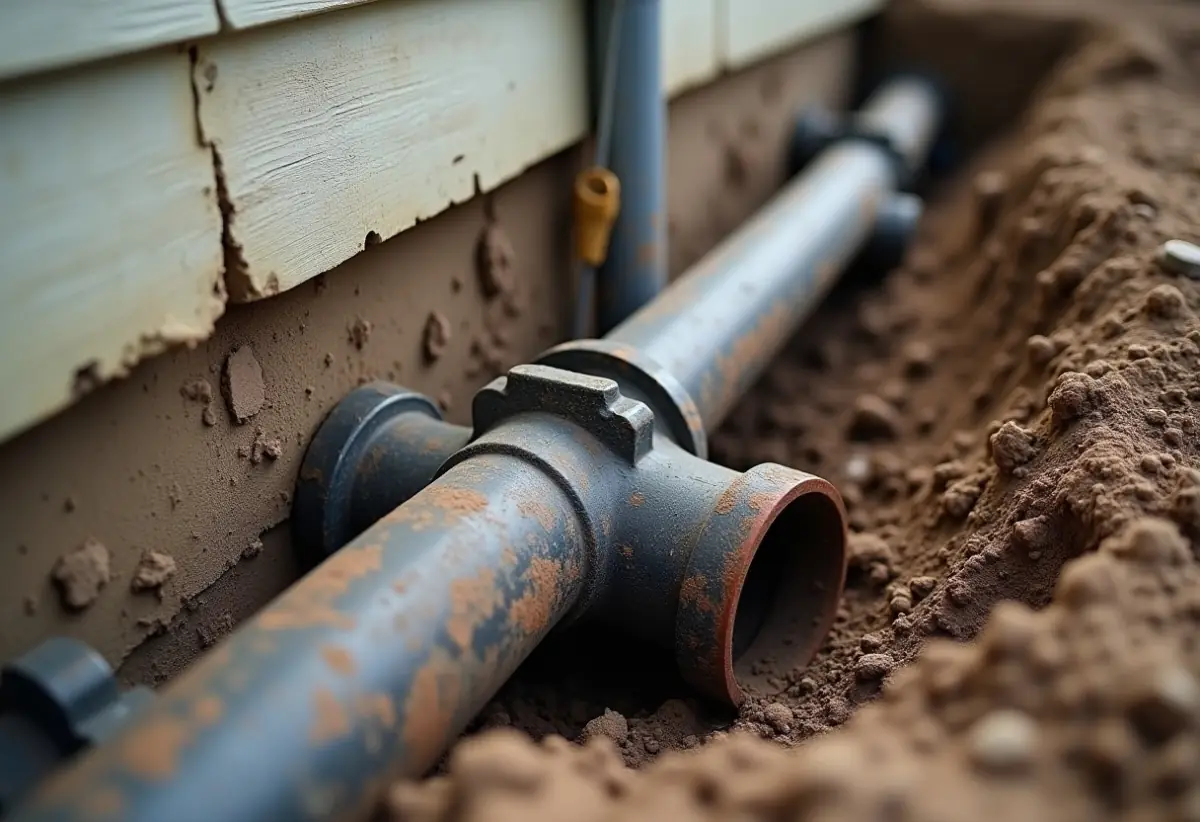
Drain and sewer pipes usually last 50 to 100 years for cast iron and PVC, 50 to 75 for clay laterals and 30 to 50 for Orangeburg. The NAHB 2007 study lists cast iron waste pipe at 100 years. Ben’s Plumbing, a Seattle sewer contractor, rates cast iron at 75 to 100 but sees 50 to 75 in practice.
Cast iron rusts from the inside, where sewer gases and standing water attack the bottom of horizontal runs first. The pipe can look solid outside while its floor has rotted through under a slab. If a camera finds that kind of damage, our breakdown of cast iron pipe replacement costs covers spot repair, lining and full replacement.
Clay pipe itself barely ages, but its joints do. Roots find the gaps, grow inside and crack or offset the sections, which is why Ben’s Plumbing’s sewer data puts clay at 50 to 75 years, up to 100 in ideal soil. Orangeburg, a tar-soaked wood fiber pipe, softens and sags into an oval and is rated 30 to 50 years, often less.
Plastic drains carry the longest estimates. Ben’s Plumbing rates buried PVC sewer pipe at 100 years or more and ABS at 50 to 80 or more. The NAHB study lists underground PVC piping at 25 years, but that line sits in its site and landscaping section, which covers irrigation lines, not house drains.
Which pipes need replacing regardless of age?
Three materials justify replacement whatever their age: polybutylene, lead and old galvanized steel. Polybutylene fails without warning, averaging 26 years per SageWater. Lead is a health hazard, not a durability problem. Galvanized steel corrodes inside and can trap lead from upstream pipe, which is why EPA’s 2024 rule treats some galvanized lines like lead.
Polybutylene was installed in millions of homes from roughly the late 1970s to the mid-1990s and became the subject of the Cox v. Shell Oil class action settled in 1995. SageWater reports it failing about 10 years earlier than average in North Carolina and Virginia. Our polybutylene pipe guide covers how to spot it and what insurers ask.
Lead pipe can physically last more than a century, which is the problem. Congress banned lead pipe in new plumbing with the 1986 Safe Drinking Water Act amendments, but lines laid earlier remain. EPA’s Lead and Copper Rule Improvements, finalized in October 2024, require most water systems to replace lead service lines within 10 years, though compliance dates may change.
Galvanized steel narrows from the inside as zinc wears off and rust builds. SageWater’s field data puts the national average at 50 years.
What shortens the life expectancy of plumbing pipes?
The life expectancy of plumbing pipes drops most from aggressive water chemistry, high flow velocity, chlorine and chloramine, poor installation and corrosive or shifting soil. Any one of these can turn a 50-year pipe into a 15-year pipe. Most early failures trace to the water inside the pipe.
- Water pH and chemistry. Water below pH 6.5, the bottom of EPA’s secondary range, attacks copper. Hard water scales galvanized and cast iron.
- Velocity. Flow above the Copper Development Association’s limits of about 8 feet per second cold and 5 feet per second hot erodes copper at bends.
- Chlorine and chloramine. Disinfectants oxidize PEX and polybutylene over time, faster at high temperature. That is why the ASTM F876 chlorine rating matters on hot lines.
- Installation quality. Burrs left inside copper, overcrimped PEX rings, missing support straps and PEX exposed to sunlight all cut service life.
- Soil and roots. Acidic or wet soils corrode buried copper and cast iron, and tree roots break into clay and Orangeburg joints.
How can you tell what pipes you have and whether they are failing?
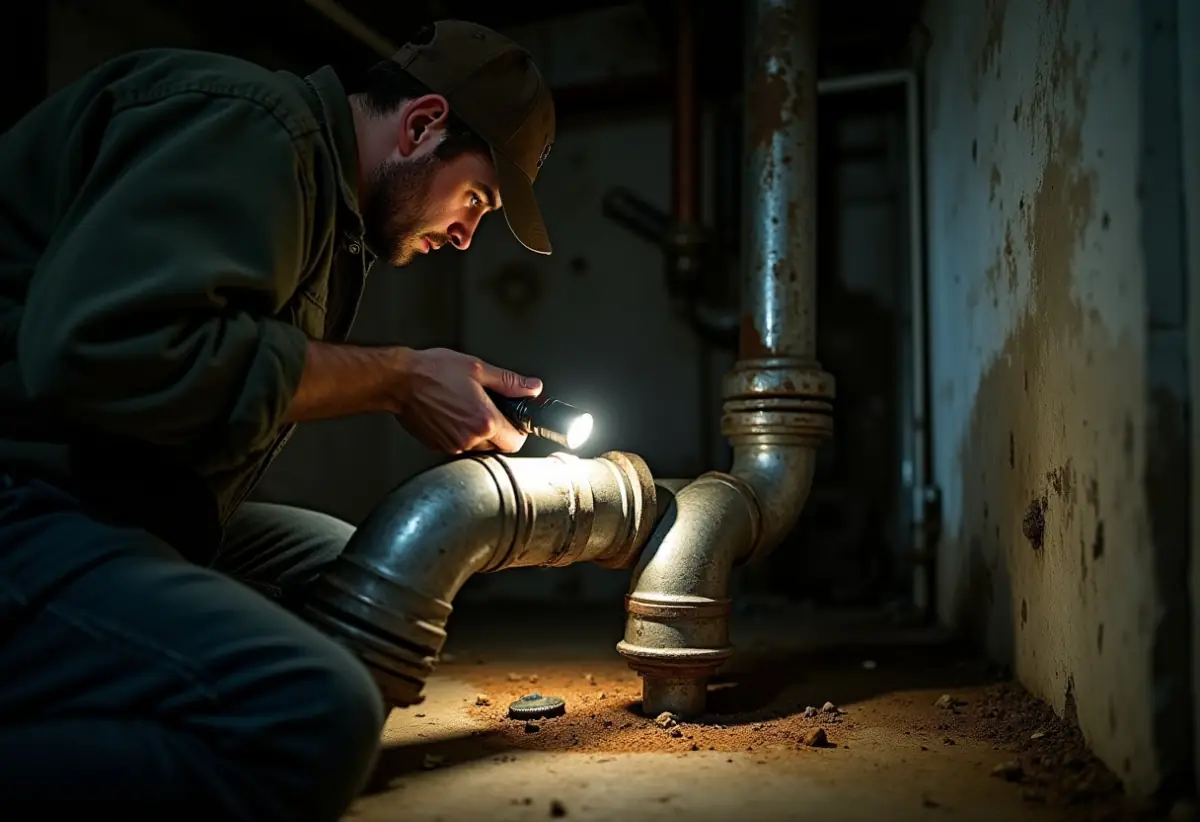
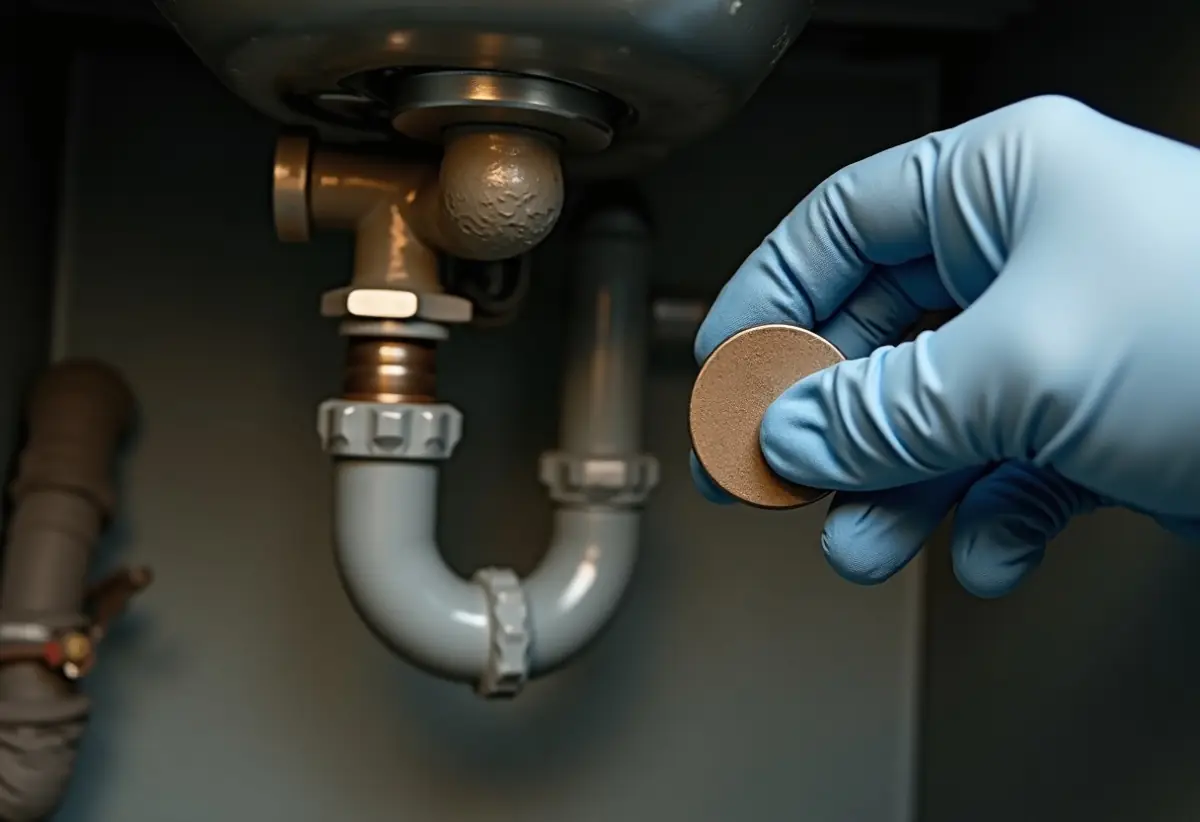
You can identify most pipe materials in five minutes with a flashlight, a magnet and a coin. Check where the water line enters the house, under sinks and in the basement or crawlspace. Steel and cast iron attract a magnet, while copper, lead and brass do not. Plastic pipe usually carries a printed material code.
- Find the main line where it enters the house, near the meter or main shutoff valve.
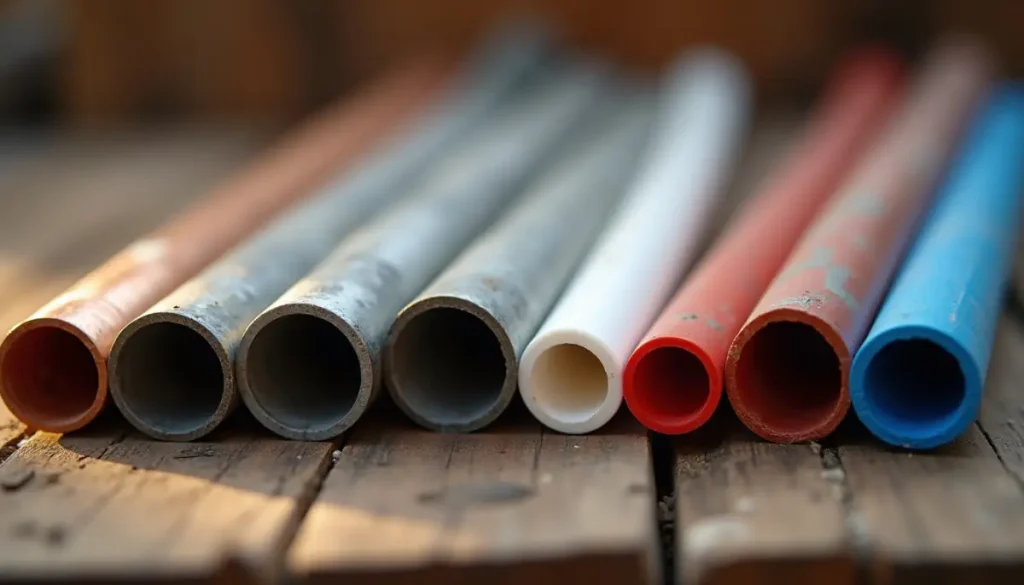
- Look at the color. Copper looks like a penny or green with age, galvanized is dull gray with threaded joints, PEX is flexible red, blue or white, and CPVC is rigid and cream colored.
- Try a magnet. If it sticks, the pipe is galvanized steel or cast iron.
- Scratch gently with a coin. Lead is soft and scratches to a shiny silver. Galvanized stays hard and dull.
- Read the print line. Gray, blue or black flexible pipe stamped PB2110 is polybutylene. Black drain pipe is ABS, white is PVC.
For photos of each material and where each is used, see our guide to the types of plumbing pipes. Failure signs differ by material. Copper shows green crust at joints and pinhole drips. Galvanized brings brown water and falling pressure. Cast iron shows rust stains, sewer smell and repeat clogs. Clay and Orangeburg laterals show slow drains that keep coming back.
When should you plan pipe replacement based on home age?
Plan pipe replacement by the decade your home was built, because build era predicts the materials inside the walls. Homes from before 1960 often have galvanized supply and cast iron or clay drains near or past their expected life. Homes from about 1978 to 1995 may hold polybutylene. Newer homes with copper or PEX usually have decades left.
| Home built | Likely materials | What to check first |
|---|---|---|
| Before 1960 | Galvanized supply, cast iron drains, clay or Orangeburg lateral, possible lead service line | Water pressure, service line material, sewer camera |
| 1960 to 1977 | Copper or galvanized supply, cast iron or early plastic drains | Copper pinholes, cast iron under slab |
| 1978 to 1995 | Copper, polybutylene, PVC and ABS drains | Gray PB2110 pipe at the water heater and shutoffs |
| 1996 to today | Copper, CPVC, PEX, PVC drains | PEX fittings, exposed tubing, water pH |
Budget before a failure forces the decision. A planned repipe lets you pick the material and compare bids, and our breakdown of what it costs to repipe a house shows PEX and copper pricing by home size.
How we sourced this
We read the NAHB and Bank of America Home Equity Study of Life Expectancy of Home Components (February 2007) in full and cite only the pipe rows it contains. Warranty terms come from Uponor, PEX history from the Plastics Pipe Institute’s TR-56, and lead figures from EPA. Field estimates come from named contractors (SageWater, Ben’s Plumbing, Bailey Line Road, Ace Hardware Home Services) and are labeled as estimates. We consulted the InterNACHI life expectancy chart but could not access it to verify, so it is not cited. We found no independent CPVC lifespan figure and report none.
Frequently asked questions
How long does PEX pipe last?
Contractor estimates such as Bailey Line Road’s put PEX at 40 to 50 years or more. Uponor backs its AquaPEX tubing with a 25-year transferable limited warranty when installed with its own fittings, and the Plastics Pipe Institute documents about 50 years of PEX use. Sunlight, very hot water and high chlorine shorten that life.
How long do copper pipes last in a house?
Copper supply pipe commonly lasts 50 to 70 years, per contractor estimates such as Bailey Line Road’s, while Ace Hardware Home Services lists 40 to 50. Water chemistry decides the outcome. SageWater reports copper still sound at 75 years in some homes and pinholing at only 10 years in others with aggressive water.
How long do cast iron drain pipes last?
The 2007 NAHB life expectancy study lists cast iron waste pipe at 100 years. Field reality is often shorter. Ben’s Plumbing in Seattle rates cast iron sewer pipe at 75 to 100 years but sees 50 to 75 in practice, because the pipe rusts from the inside and cracks where it sits in wet or shifting soil.
How long do PVC pipes last?
Buried PVC sewer pipe is rated 100 years or more by Ben’s Plumbing, and contractor guides commonly say 50 years or more for PVC drains. The NAHB 2007 study lists underground PVC piping at 25 years, but that figure sits in its landscaping and irrigation section, not house drains, so read it with that context.
What pipe lasts the longest?
For drains, cast iron and PVC carry the longest estimates, with NAHB listing cast iron waste pipe at 100 years and Ben’s Plumbing rating buried PVC at 100 or more. For supply lines, copper has the longest proven record in typical municipal water. Lead lasts a century physically but must come out for health reasons.
How often should you replace the pipes in your house?
There is no fixed schedule. Replace by material and condition instead. Polybutylene and lead should go regardless of age, galvanized steel past about 50 years is usually near the end per SageWater’s field data, and copper or PEX in good water may need nothing for decades. A camera inspection settles drain and sewer questions.
How do I know if my pipes need replacing?
Look for repeat leaks in the same run, rusty or brown water, falling pressure on hot and cold together, green or white crust at copper joints, gray pipe stamped PB2110, and slow drains that return after clearing. Two or more pinhole leaks in a year on copper usually signal a water chemistry problem, not bad luck.
Should I replace 50-year-old pipes?
It depends on what they are. A home built around 1976 may have copper supply lines with decades left, or galvanized lines that SageWater’s data says are at their national average life of 50 years. Identify the material first, then check pressure, water color and leak history before paying for a full repipe.