Are Flushable Wipes Really Flushable?
Are flushable wipes really flushable? No: a 2019 Ryerson University test of 101 single-use wipes, 23 of them labeled flushable, found that not one broke apart safely in a simulated home drain and sewer.
Key Takeaways
- Ryerson University’s Flushability Lab tested 101 single-use wipes in 2019, including 23 sold as flushable, and none passed its sewer test.
- The National Association of Clean Water Agencies (NACWA) estimates wipes add about $441 million a year in operating costs at US clean water utilities.
- Two definitions of flushable compete: the industry’s INDA/EDANA GD4 guidelines and the utility-written IWSFG specifications, including the PAS 3 disintegration test.
- Kimberly-Clark settled with Charleston Water System and agreed that Cottonelle flushable wipes would meet the wastewater industry standards by May 2022, per NACWA.
- INDA lists seven states with Do Not Flush labeling laws: California, Colorado, Illinois, Michigan, New Jersey, Oregon and Washington.
- Michigan State University Extension says flushable products are not safe for septic systems, where nothing shreds them.
Are flushable wipes really flushable, according to the testing?
No. The largest public test so far, the 2019 Ryerson University study (Ryerson is now Toronto Metropolitan University), ran 101 single-use products through a working model of a home toilet, drain line and sewer. Twenty-three were labeled flushable by their makers. Not one wipe fell apart or dispersed enough to pass safely, so every product failed.
The lab built its rig with real bends, real slope and the water pressure typical of an urban system. Each wipe faced the wastewater industry’s checks for toilet clearance, drain line clearance and disintegration. Report lead Barry Orr, a 25-year sewer inspector with the City of London, Ontario, said the results confirm that wipes “cannot be safely flushed, even those labelled as flushable.”
The chart below lays out what the lab tested and what passed. The bar for passing products is empty because the count was zero.
Earlier consumer testing pointed the same way. Consumer Reports, in a test covered by ABC13, found toilet paper broke down quickly in its standard agitation test while flushable wipes did not; after a long soak, Cottonelle and Scott wipes broke down but Charmin and Equate still held together. Formulas have changed since, which is why the newer utility standard matters.
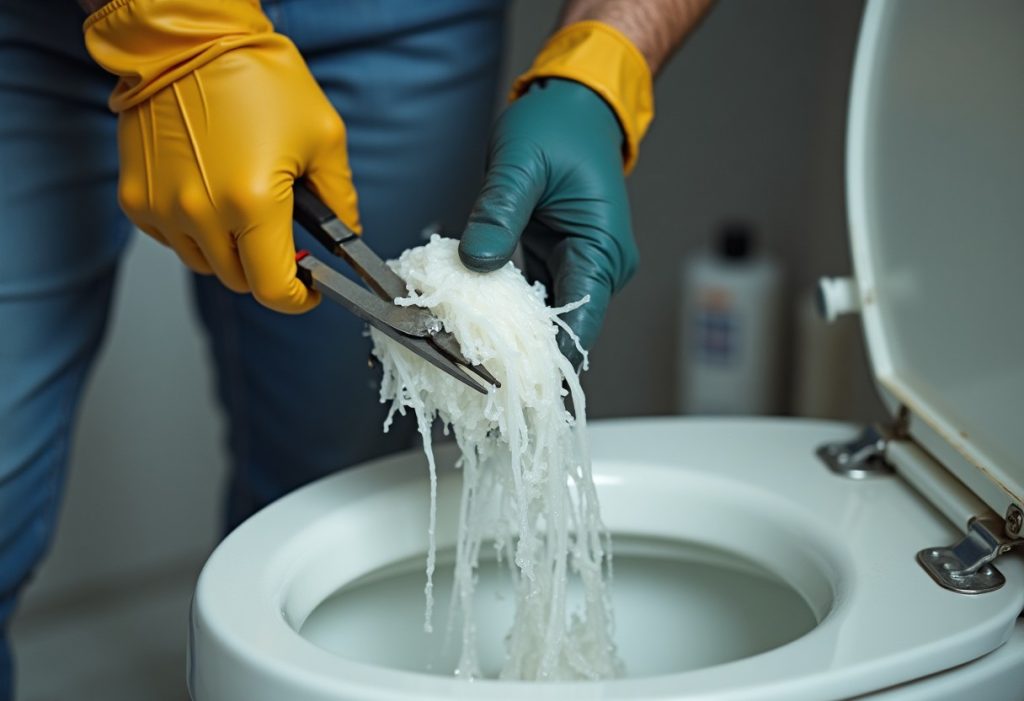
Why don’t flushable wipes break down like toilet paper?
Toilet paper is short wood-pulp fiber held together by weak bonds that let go within seconds of agitation in water. A wipe has to survive being pulled wet from a pack and scrubbed across skin, so it is built to hold together when wet. That wet strength is exactly what makes it hang together in a pipe.
Many wipes also contain synthetic fibers, including plastics, according to the Ryerson release. Synthetic fibers do not soften the way pulp does, and they can end up in rivers when clogged sewers overflow. Even all-cellulose wipes can stay intact long enough to reach a pump or a snag point.
A wipe that “clears the bowl” has only passed the first 3 feet of its trip. The real test sits downstream: a cast iron joint, a root, a sag in the line or a lift station pump. That gap between the toilet and the treatment plant is where the marketing claim and the plumbing reality part ways.
| Wipe or paper type | Labeled flushable? | Breaks down like toilet paper? | Evidence |
|---|---|---|---|
| Standard toilet paper | Not needed | Yes, the benchmark | Breaks apart quickly in Consumer Reports’ agitation test (via ABC13) |
| Moist toilet wipes sold as flushable (Cottonelle, Charmin, Scott, store brands) | Yes | No, in published tests to date | All 23 flushable-labeled products failed Ryerson 2019; Charmin and Equate stayed intact after a soak in Consumer Reports testing |
| Cottonelle flushable wipes after settlement | Yes | Claimed to meet utility specs | Kimberly-Clark agreed to meet IWSFG standards by May 2022 (Charleston settlement); little independent public retesting since |
| Baby wipes | No | No | Failed Ryerson 2019; Do Not Flush label required in seven states (INDA) |
| Makeup remover and facial wipes | No | No | Among the single-use products that failed Ryerson 2019 |
| Disinfecting and cleaning wipes | No | No | Not designed to disperse; a core target of state Do Not Flush labeling laws |
| Paper towels and facial tissue | No | No, built for wet strength | Built to hold together when wet; utilities such as King County, Washington, run “no wipes in the pipes” campaigns that tell residents to flush only toilet paper |
Who decides what counts as flushable?
Nobody in the US has a legal definition yet, so two private rulebooks compete. The wipes industry, through INDA and its European counterpart EDANA, publishes the GD4 flushability guidelines (fourth edition, 2018). Wastewater utilities worldwide formed the International Water Services Flushability Group (IWSFG), which publishes its own specifications, including PAS 3, a slosh box disintegration test.
The split matters because the two groups test for different things. GD4 was written by the companies that sell wipes. The IWSFG specifications were written by the people who pull wipes out of pumps, and they set a tougher bar for how fast and how completely a product must break into small pieces under sewer-like agitation.
- INDA/EDANA GD4: industry guidance, used to support flushable claims on many US packages.
- IWSFG PAS 1 to PAS 5: utility-backed specifications covering composition, toilet and drain clearance, and the PAS 3 slosh box disintegration test.
- Ryerson 2019: tested products against the wastewater industry’s criteria, which is why every product failed.
When Charleston Water System settled with Kimberly-Clark, the yardstick was the utility standard, not GD4. Charleston Water System’s Michael Saia told Treatment Plant Operator magazine that Cottonelle was “already about 10% away” from meeting the Specification 3 disintegration test at the time of the 2021 settlement.
What do flushable wipes cost sewer utilities?
A lot, and ratepayers cover it. NACWA estimates wipes add about $441 million a year in operating costs at US clean water utilities. In Canada, the Municipal Enforcement Sewer Use Group estimated $250 million a year for removing blockages caused by wipes and other non-flushable materials, as cited in the Ryerson release.
The damage shows up at pump stations. Wipes wrap around impellers, rope together into rags and trip pumps offline, which can push raw sewage out of manholes. Charleston Water System traced sanitary sewer overflows in October 2018 to wipes blockages, the event that later led to its lawsuit. When wipes meet cooking grease in the pipe, they bind into the masses utilities call fatbergs. For a closer look at how these masses form and grow, see fatberg formation.
Homeowners pay twice: once through sewer rates and again when the clog sits on their side of the property line. The building sewer from the house to the street is usually the owner’s responsibility, and wipes are a frequent find when plumbers clear signs of a main sewer line clog such as gurgling drains and backups in the lowest fixture.
Are flushable wipes safe for septic systems?
No. Michigan State University Extension advises that flushable bathroom products are not safe for sewer or septic systems. A septic tank has no pumps, grinders or strong currents to tear fibers apart. Wipes settle into the sludge or float in the scum layer, where bacteria break them down far slower than toilet paper, if at all.
Over time that extra solid material takes up tank volume, so the tank needs pumping sooner. Wipes that drift to the outlet can foul the baffle or the effluent filter, and any fibers that escape into the drain field add to clogging of the soil. Septic pumpers commonly report pulling wads of wipes out of tanks.
A “septic safe” claim on a package is a marketing statement, not a certification by any septic authority. If you are on a septic system, treat every wipe as trash. Tanks loaded with wipes often need pumping on a shorter cycle, so check what septic tank pumping costs in your area before you decide the convenience is worth it.
What did the flushable wipes lawsuits change?
The most important flushable wipes lawsuit came from a utility, not a consumer. Charleston Water System in South Carolina filed suit in January 2021 against several manufacturers and sellers of wipes. Its goal, per NACWA, was making sure wipes labeled flushable actually disperse in the sewer in a time and manner that does not cause blockages.
Kimberly-Clark settled first. The company agreed that its Cottonelle flushable wipes would meet the wastewater industry flushability standards by May 2022, that it would improve labeling about what is safe to flush, and that it would make the Do Not Flush symbol larger, put it on the front of packages and use contrasting colors on its non-flushable wipes. The US District Court for the District of South Carolina approved the settlement in February 2022, according to NACWA.
The settlement mattered because it tied a flushable claim to the utility standard for the first time in a court-approved agreement. It also showed a major manufacturer could meet that bar. What the settlement did not do is set a legal definition of flushable for every brand.
Which states require Do Not Flush labels on wipes?
Seven states require Do Not Flush labeling on non-flushable wipes, according to INDA: California, Colorado, Illinois, Michigan, New Jersey, Oregon and Washington. Washington passed the first such law in 2020, and California followed with AB 1672 in 2021. These laws target baby wipes, cleaning wipes and other products never meant for a toilet.
Note what the state laws do and do not cover. They force a clear symbol and wording on wipes that should not be flushed. They generally do not certify that a wipe labeled flushable is truly safe to flush. Details such as label size, placement and enforcement vary by state, so check your state’s statute for specifics.
At the federal level, the WIPPES Act would have the Federal Trade Commission, with guidance from EPA, set national Do Not Flush labeling rules. The House passed its version (H.R. 2269) in June 2025, and INDA reports the Senate passed S. 1092 in March 2026. We could not confirm that a final bill has been signed into law as of October 2026, so check congress.gov for current status.
What should you use instead of flushing wipes?
Bin the wipe and flush only the three Ps: pee, poop and toilet paper. That is the standard advice from many US and Canadian utilities. If you like the feel of a wipe, there are cheaper and safer ways to get it without sending fabric down the drain.
- Put a lidded trash can next to the toilet. Most people flush wipes because there is no bin within reach.
- Try a bidet seat or attachment. Basic models are inexpensive and reduce the need for wipes.
- Moisten toilet paper. Plain toilet paper dampened with water still breaks down normally.
- Never flush baby, makeup, cleaning or disinfecting wipes. These are the products state laws require to carry the Do Not Flush symbol.
- Skip paper towels and facial tissue in the toilet. Both are built to hold together when wet.
If wipes have already caused trouble, start at the toilet with a flange plunger or a closet auger, and skip chemical drain openers, which do little to woven fibers. A toilet that backs up week after week often has a partial blockage downstream, and our guide on why a toilet keeps clogging walks through the causes in order.
Older homes are the most at risk. Cast iron pipes build up rough scale, clay pipes let roots in at the joints, and settled lines form low spots, and each gives a wipe something to grab. A sewer camera inspection shows whether wipes are hanging on one of these common sewer line problems before the next backup reaches the basement floor.
How we sourced this
We reviewed the top-ranking pages for “are flushable wipes really flushable” and related septic and lawsuit searches in October 2026, then went to primary sources: the April 2019 Ryerson University (now Toronto Metropolitan University) release on its 101-product flushability study, NACWA statements on wipes costs and the Charleston Water System settlement, INDA’s wipes policy page, the Senate Commerce Committee report on S. 1092, Michigan State University Extension guidance and King County public health guidance. Settlement details on labeling come from Treatment Plant Operator magazine’s June 2021 report. Consumer Reports soak results come from news coverage, not the original test, and predate later reformulations. We did not cite IWSFG or GD4 numeric pass thresholds because we could not read the full specification text. Costs are as reported by each source and were not adjusted for inflation.
Frequently asked questions
Are flushable wipes really flushable?
Not by the wastewater industry’s definition. In a 2019 Ryerson University study, researchers ran 101 single-use wipes, 23 of them labeled flushable, through a model toilet and sewer line and a disintegration test, and none broke apart safely. A flushable label usually means the wipe clears the bowl and the first few feet of drain, not that it breaks down in the sewer.
Are flushable wipes safe for septic systems?
No. Michigan State University Extension advises that flushable products are not safe for septic systems, and many septic pumpers say the same. A septic tank has no pumps or agitation to shred fibers, so wipes tend to collect in the scum and sludge layers, crowd the tank, foul the outlet baffle or effluent filter, and can shorten the time between pumpings.
Can flushable wipes clog your pipes?
Yes. Wipes snag on rough cast iron, root intrusions, offset joints and sagging sections of a building sewer, then catch paper and grease behind them. Ryerson’s 2019 press release noted the City of Toronto logged about 10,000 resident calls a year in 2017 and 2018 for sewer service line blockages tied partly to flushing non-flushable materials.
How long does it take for flushable wipes to dissolve?
There is no single answer, because results vary by brand, formula and water movement. Toilet paper starts falling apart within seconds of agitation. In Consumer Reports testing covered by ABC13, Charmin and Equate flushable wipes still held together after a long soak. Ryerson’s 2019 lab test found no wipe dispersed enough to pass its sewer simulation safely.
Was there a lawsuit over flushable wipes?
Yes. Charleston Water System in South Carolina sued wipe makers and sellers in January 2021 after wipes clogged its pumps. Kimberly-Clark settled, agreeing that Cottonelle flushable wipes would meet the wastewater industry flushability standards by May 2022. A federal court in South Carolina approved the settlement in February 2022, according to NACWA.
Do wipes have to say Do Not Flush on the package?
In several states, yes. INDA, the nonwovens trade group, lists California, Colorado, Illinois, Michigan, New Jersey, Oregon and Washington as states with Do Not Flush labeling laws for non-flushable wipes such as baby wipes. A federal bill, the WIPPES Act, would set one national labeling rule, so check congress.gov for its current status.
What should I do if I already flushed a wipe?
One wipe often makes it to the street sewer, but it can lodge farther down. Stop flushing wipes now, watch for slow drains or gurgling, and use a plunger or a closet auger on a toilet clog. Skip chemical drain openers, which do little to woven fibers. Repeated backups in several fixtures point to the main line and a plumber with a camera.
Are any wipes truly flushable?
A few products are now built and tested to the utility-written IWSFG specifications, and Kimberly-Clark agreed to meet them for Cottonelle in its 2021 Charleston settlement. Independent public testing of current formulas is limited, so the safe choice is still to bin every wipe, and to never flush baby, makeup, cleaning or disinfecting wipes.
Is it actually okay to flush flushable wipes?
No. A 2019 Ryerson University test ran 101 single-use wipes, including 23 labeled flushable, through a model toilet, drain line and sewer, and none dispersed enough to pass. Every labeled flushable product failed the disintegration test. Michigan State University Extension also says flushable products are not safe for septic systems, so wipes should be treated as trash rather than flushed.
What do plumbers think of flushable wipes?
The article notes wipes are a frequent find when plumbers clear signs of a main sewer line clog, such as gurgling drains and backups in the lowest fixture. It also advises using a flange plunger or closet auger on toilet clogs caused by wipes, skipping chemical drain openers, and running a sewer camera inspection to check whether wipes are hanging on pipe problems.
Why are they called flushable wipes if you can't flush them?
Wipes need wet strength so they hold together when pulled from a pack and scrubbed across skin, and that same strength keeps them from breaking apart in pipes like toilet paper does. Manufacturers also rely on the industry written INDA or EDANA GD4 guidelines to support flushable claims, while utilities use tougher IWSFG specifications, so a label can pass one standard but fail the sewer test.