Cost to Run a Gas Line for a Stove: 2026 Prices, Per-Foot Rates and Safety Rules
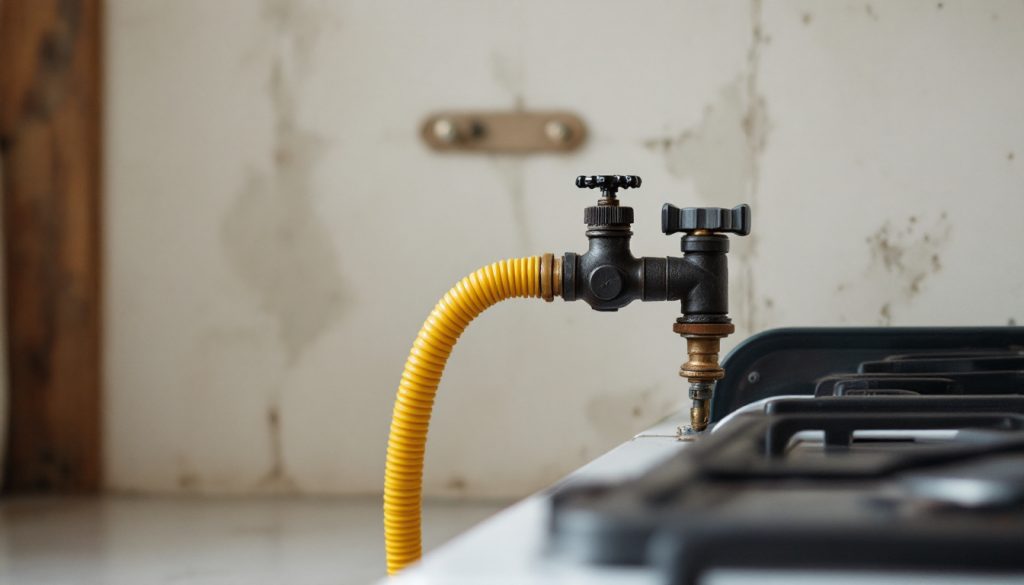
The cost to run gas line for stove hookups usually lands between $200 and $900 for a 10 to 30 foot run off an existing line, plus permit and test fees. No-gas homes need a meter.
Key Takeaways
- HomeAdvisor prices a kitchen stove gas line at about $20 per linear foot, or roughly $600 for the 20 to 30 feet most kitchens need.
- Fixr lists stove and range runs at $10 to $15 per foot and a national gas line average of $800, with most jobs between $500 and $2,000.
- Installed CSST runs $11 to $20 per foot and black iron $15 to $30 per foot, according to Fixr; CSST must be bonded under IFGC Section 310.1.1.
- Permits cost $50 to $300 (Fixr) or $100 to $300 (HomeAdvisor); a pressure test adds $75 to $100 per Fixr.
- IFGC Section 409.5 requires a shutoff valve in the same room as the stove and within 6 feet of it.
- A home with no gas service needs a meter first, at $250 to $425 (Fixr) or $300 to $600 (HomeAdvisor), and a long service extension can reach $5,000.
How much does it cost to run a gas line for a stove?
Most homeowners pay $200 to $900 to run a gas line for a stove when an existing gas line sits within 10 to 30 feet of the kitchen. HomeAdvisor reports an average gas line installation of $598, with a typical range of $272 to $936. Permits, testing and wall repair are the usual extras.
Fixr puts a 10-foot extension at about $200, the bottom of its data. The high end is a house with no gas service, where the utility must set a meter first.
Every figure below comes from HomeAdvisor or Fixr; multiplied per-foot rates are flagged in the notes.
| Scenario | Typical cost | Notes |
|---|---|---|
| Short extension, line already under the kitchen (about 10 ft) | About $200 | Fixr low-end figure for a 10-foot extension |
| Standard stove run, 20 to 30 ft | $400 to $600 | HomeAdvisor kitchen stove rate of $20 per foot, multiplied by run length |
| Range-specific run, 20 to 30 ft (Fixr rate) | $200 to $450 | Fixr stove and range rate of $10 to $15 per foot, multiplied by run length |
| Moving the stove line across the kitchen, 10 to 20 ft | $150 to $500 | HomeAdvisor relocation rate of $15 to $25 per foot; drywall and cabinet repair extra |
| 30 ft of black iron through finished walls | $450 to $900 | Fixr installed black iron rate of $15 to $30 per foot |
| 30 ft of CSST | $330 to $600 | Fixr installed CSST rate of $11 to $20 per foot, plus bonding |
| No gas service: new meter plus a 30 ft run | About $850 to $1,200 | Meter $250 to $425 (Fixr) or $300 to $600 (HomeAdvisor), plus the standard run |
| Long service line extension from the street | Up to $5,000 | Fixr high-end figure for extensive service line work |
The chart shows the top of each HomeAdvisor or Fixr range; the meter bar adds a $600 meter to a $600 run.
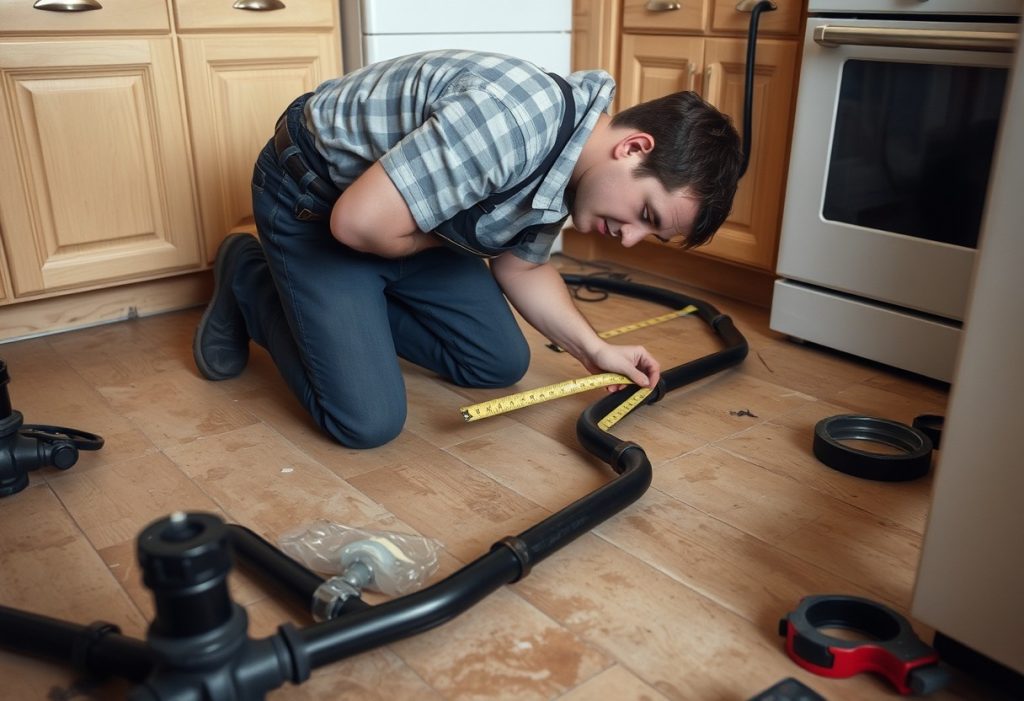
What does it cost per foot to install a gas line for a stove?
Expect $10 to $30 per linear foot installed for a stove line, depending on the pipe and how hard the route is. Fixr lists stove and range runs at $10 to $15 per foot and new gas line installation at $15 to $25. HomeAdvisor uses $20 per foot for a kitchen stove and $15 to $30 per foot for any new gas line.
Per-foot pricing is shorthand, not a quote; minimum service charges make a 6-foot stub cost close to a 15-foot run. Fixr lists gas line labor at $75 to $130 an hour, and our breakdown of what a plumber charges per hour shows how call-out minimums push short jobs up.
What drives the cost to run a gas line for a stove?
Six things set the price: distance from the meter or nearest gas line, pipe material, wall and floor access, fuel type, permit and inspection fees, and any utility work. Distance and access matter most, because labor, not pipe, is the bulk of the bill on a short kitchen run.
- Distance. A range directly above a basement gas main may need a 10-foot drop. A kitchen on a slab, far from the meter, may need 40 feet or more through an attic or exterior wall.
- Pipe material. Fixr prices installed CSST at $11 to $20 per foot and black iron at $15 to $30. HomeAdvisor lists raw iron pipe at $5 to $9 per foot before labor.
- Access. An open basement ceiling or crawlspace is cheap. Fishing pipe through finished drywall, tile backsplash or a slab means demolition and patching.
- Fuel type. Fixr says natural gas and propane lines carry similar installed costs of $15 to $25 per foot. Propane adds tank and regulator questions, covered below.
- Permit and inspection. Fixr lists permits at $50 to $300, a gas line inspection at $50 to $75 and a pressure test at $75 to $100.
- Utility fees. A home without gas service needs a meter, priced at $250 to $425 by Fixr and $300 to $600 by HomeAdvisor.
Top-ranking guides skip pipe sizing. A range added to a line already feeding a furnace and water heater can overload an undersized trunk. Installers size pipe from the total connected load and the run length using the tables in IFGC Chapter 4, and an undersized branch may have to be upsized back toward the meter.
Black iron or CSST: which pipe should feed your stove?
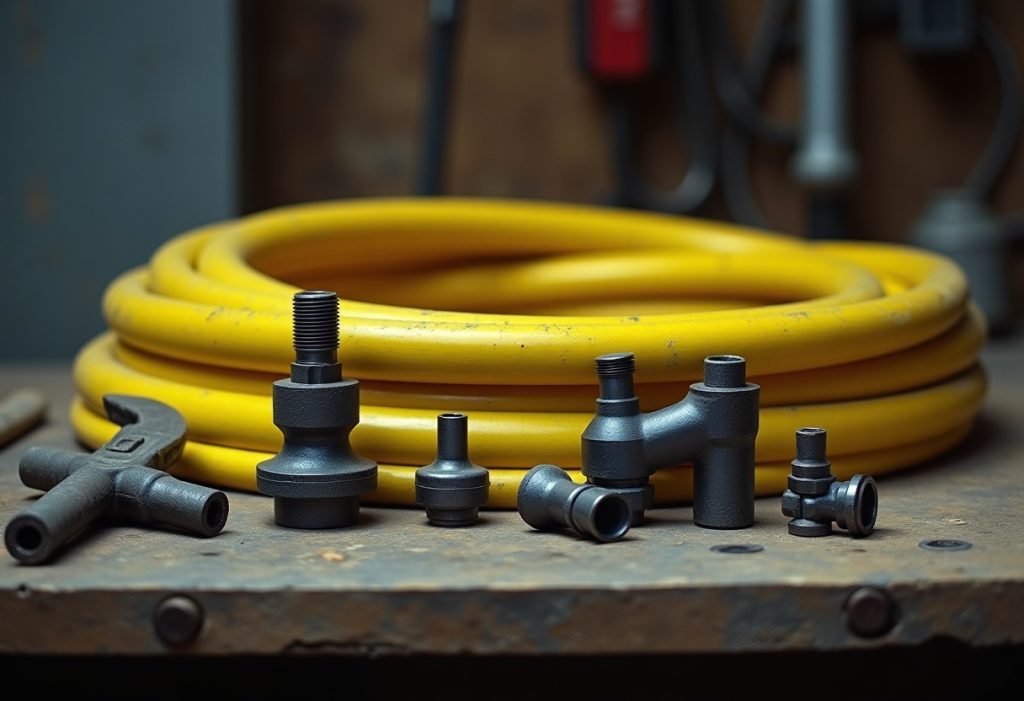
Both are code-approved for a stove. Black iron is rigid, cheap per foot and needs no special bonding, but threading and fitting it takes time. CSST (corrugated stainless steel tubing) bends around framing in one continuous length, which can cut labor, yet it must be bonded to the home’s electrical grounding system.
| Factor | Black iron | CSST |
|---|---|---|
| Installed cost (Fixr) | $15 to $30 per ft | $11 to $20 per ft |
| Joints | Threaded joints at every turn | Fittings mostly at the ends |
| Best for | Exposed basement runs, short straight drops | Long runs fished through finished walls |
| Bonding | Covered by normal gas piping bonding | Bonding jumper of at least 6 AWG copper (IFGC 310.1.1) |
| Installer | Licensed plumber or gas fitter | Many CSST makers also require their own installer training |
The CSST bonding rule is a safety item, not paperwork. IFGC Section 310.1.1 requires CSST systems to be bonded to the electrical service grounding electrode system, with the jumper attached to metal pipe or a fitting between the meter and the first CSST fitting. The jumper must be no smaller than 6 AWG copper. CSST makers publish their own bonding instructions, and inspectors check them.
Our guide to how residential gas line plumbing works covers flexible connectors, sediment traps and the other fittings between the pipe and the appliance.
How much does it cost to move a gas line in the kitchen?
Moving a stove gas line usually costs $150 to $500 for a 10 to 20 foot relocation, based on HomeAdvisor’s $15 to $25 per foot relocation rate. Remodels that move the range to an island cost more, because the line must run under the floor or through the slab and come up inside the cabinet base.
On a slab, an island line may mean cutting and trenching the floor; HomeAdvisor lists trenching labor at $5 to $12 per foot plus concrete patching at $75 to $125 per cubic yard.
The old branch should be capped at a fitting, and the relocated line needs its own shutoff within 6 feet of the range plus a fresh pressure test.
Who is allowed to install a gas line for a stove?
In most of the US, gas piping is licensed work done by a licensed plumber or a licensed gas fitter under a permit. States and cities decide who qualifies. Massachusetts, for example, licenses gas fitters through a dedicated state board, while many other states fold gas work into the plumbing or mechanical license.
Homeowner exemptions exist in some jurisdictions for work on an owner-occupied single-family home, but they still require a permit, a pressure test and inspection. Check when a plumbing or gas permit is required in your area before hiring or doing anything yourself.
Ask any contractor three things before work starts:
- Show your state or local gas or plumbing license number, and confirm it covers fuel gas piping.
- Confirm you will pull the permit in your name and schedule the inspection.
- If you install CSST, show your manufacturer training card and explain who handles the bonding.
How long does the job take?
A short interior run off an accessible line is often a one-day job. The IFGC sets a minimum pressure test of half an hour, which a building official may cut to 10 minutes for a single-family home. Permit approval and inspection scheduling usually add days, and a new utility meter can add weeks.
What safety checks should a new stove gas line pass?
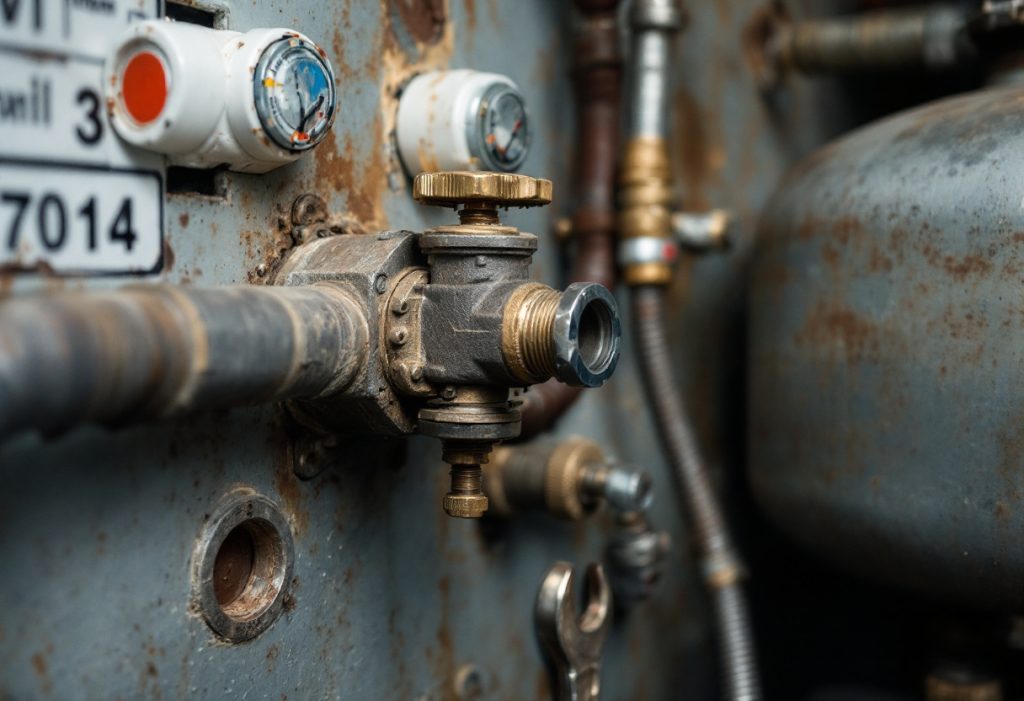
A finished stove line should have an accessible shutoff valve within 6 feet of the range, pass a pressure test of at least 3 psig, show no leaks at the connector, and be backed by a working carbon monoxide alarm. These four checks catch most of the failures that cause gas odors, fires and CO exposure.
- Shutoff valve. IFGC Section 409.5 requires the appliance shutoff valve in the same room as the stove, within 6 feet, upstream of the connector, and accessible. Behind the range or in the next base cabinet is typical.
- Pressure test. Under IFGC Section 406.4.1, new piping is tested at no less than 1.5 times the working pressure and never below 3 psig, before the appliance is connected.
- Leak check at the connector. After the range is hooked up, the installer checks each joint with leak-detection solution or an electronic sniffer. Use a new flexible connector rather than reusing an old one.
- Burner check. Every burner and the oven should light cleanly with a steady blue flame. Yellow, lazy flames point to an orifice or air-shutter problem, often on propane units that were never converted.
- Carbon monoxide alarm. The US Consumer Product Safety Commission recommends CO alarms on every level of the home and outside sleeping areas. Many codes require them when fuel-burning appliances are added under a permit.
A CO alarm does not detect a raw gas leak. Gas is odorized, but a sleeping household can miss it, so some homeowners add a plug-in gas leak detector near the kitchen. If you ever smell gas, leave the house first and call the utility from outside.
What does converting an electric kitchen to gas involve?
Converting an electric kitchen to gas means adding a gas line and shutoff valve, a 120-volt outlet for the range’s igniters and controls, and often new ventilation. If the house already has gas for a furnace or water heater, the job is mostly a stove gas line. If not, the meter or service line becomes the largest cost.
- Gas supply. Budget the stove run from the scenarios above, plus a meter at $250 to $600 if there is no service (Fixr, HomeAdvisor).
- Electrical. Most gas ranges plug into a standard 120-volt outlet. The old 240-volt range circuit is no longer needed, though some owners keep it for resale flexibility.
- Propane homes. Many ranges ship set for natural gas. Running them on propane requires the manufacturer’s LP conversion (orifices and regulator setting), done by a qualified installer.
- Ventilation. Gas burners release combustion byproducts, so plan an outdoor-vented range hood alongside the line.
Before committing, ask the utility whether your street has gas service and what connection costs, and confirm the meter can carry the added range load.
How we sourced this
We reviewed top-ranking cost guides and code references in October 2026. Cost figures come from the HomeAdvisor gas line cost guide (2025 to 2026 data) and the Fixr gas line installation guide. Code requirements come from the International Fuel Gas Code (IFGC) Sections 310.1.1, 406.4.1, 406.4.2 and 409.5, and CO alarm guidance from the CPSC. Where we multiplied a per-foot rate by a run length, the table says so. We excluded pricing from aggregator pages that did not name a data source. Local codes, licensing rules and prices vary, so treat these figures as a planning range and get written quotes.
Frequently asked questions
How much does it cost to run a gas line for a stove?
Most stove gas lines cost $200 to $900 when an existing gas line is within 10 to 30 feet. HomeAdvisor prices a kitchen stove line at about $20 per linear foot, or roughly $600 for a typical 20 to 30 foot run. Permits ($50 to $300 per Fixr) and a pressure test are often added on top, and homes with no gas service pay far more.
Can I run a gas line to my stove myself?
In many areas you should not, and in some you legally cannot. States and cities set who may do gas piping, and many limit it to licensed plumbers or gas fitters. A few jurisdictions let homeowners pull a permit for their own house, but the work still has to pass a pressure test and inspection. A bad joint can leak gas into the kitchen.
How much does it cost to move a gas line in the kitchen?
HomeAdvisor puts gas line relocation at $15 to $25 per linear foot, so moving a stove connection 10 to 20 feet often runs $150 to $500 in pipe and labor. Opening and patching drywall, cabinets or a finished ceiling adds to that, and the relocated line still needs a permit, a pressure test and a new shutoff valve near the range.
Does a gas stove need a permit?
Running new gas piping or extending a line to a stove usually needs a permit in most US jurisdictions, along with an inspection and a pressure test. Fixr lists permit fees of $50 to $300 and HomeAdvisor lists $100 to $300. Swapping one range for another on an existing valve often needs no permit, but rules vary by city and county.
Is CSST or black iron better for a gas stove?
Both are code-approved. Black iron is rigid, durable and needs no special bonding, but threading it through finished walls takes more labor. CSST is flexible and faster to pull through framing, which can lower labor cost, yet IFGC Section 310.1.1 requires it to be bonded to the electrical grounding system with a jumper no smaller than 6 AWG copper.
How far can a gas stove be from the shutoff valve?
Under IFGC Section 409.5, the appliance shutoff valve must be in the same room as the stove, within 6 feet of it, upstream of the flexible connector, and accessible. For a range, installers usually place it behind the appliance or in an adjacent base cabinet so it can be reached by pulling the range out or opening a cabinet door.
Does a gas stove need an electrical outlet?
Most modern gas ranges need a standard 120-volt outlet to power the electronic igniters, clock, oven controls and any convection fan. They do not need the 240-volt circuit an electric range uses. When converting an electric kitchen to gas, check the manufacturer installation manual for the outlet location so the plug and gas connector fit behind the range.
How long does it take to install a gas line for a stove?
A short interior run off an accessible line is often finished in a single workday. The IFGC calls for a pressure test of at least half an hour, or 10 minutes in a single-family home with building official approval. Permit approval and inspection scheduling often add days or weeks, and a new utility meter can add several weeks more.


