Cast Iron Pipe Replacement Cost: Prices by Foot and by Scope
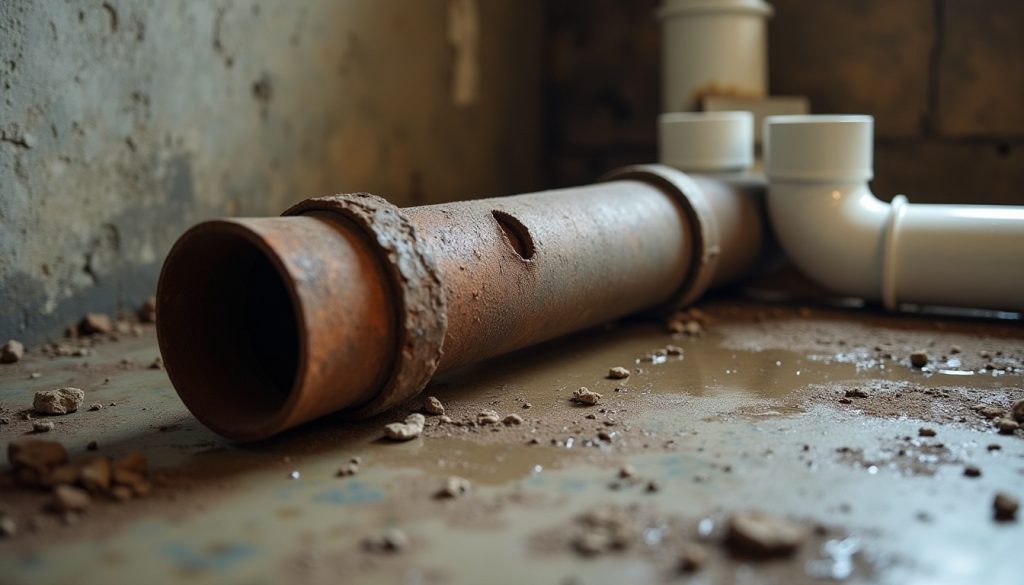
Cast iron pipe replacement cost runs about $12.50 to $30 per linear foot on an open run, but scope sets the bill: $3,000 to $9,000 for a main stack and $3,000 to $20,000 under a slab (Angi, HomeAdvisor).
Key Takeaways
- Angi puts the average cast iron pipe replacement at $650, with most jobs between $375 and $900 for a typical 30-foot accessible run.
- Installed price runs $12.50 to $30 per linear foot on open runs (Angi), while buried drain replacement climbs to $100 to $650 per foot (Fixr).
- HomeAdvisor’s June 2026 data puts a plumbing stack replacement at $6,500 on average, with a normal range of $3,000 to $9,000.
- Under-slab drain work spans $3,000 to $20,000 per Angi, and Texas contractor Replace Cast Iron Pipe quotes $15,000 to $30,000 for whole-house under-slab jobs.
- InterNACHI rates cast iron waste pipe at 60 years above ground and 50 to 60 years below ground, versus 50 to 80 years for ABS and PVC.
- Cured-in-place lining costs $80 to $250 per foot (Fixr) and skips most demolition, but only works while the old pipe still holds its shape.
- Standard homeowners policies typically pay for sudden water damage, not for the worn-out pipe, so check your wear and deterioration exclusions.
How much does cast iron pipe replacement cost per linear foot?
Cast iron pipe replacement cost runs $12.50 to $30 per linear foot installed on an accessible run, according to Angi’s cast iron cost guide, with the pipe itself at $10 to $20 per foot. That assumes open framing or an unfinished basement. Once a plumber has to cut concrete or dig, Fixr’s data puts drain pipe replacement at $100 to $650 per foot. Excavation costs climb even higher when the line in question turns out to be orangeburg pipe rather than cast iron.
Angi’s length breakdown shows how fast a simple job scales. A 10-foot section runs $125 to $300, a 30-foot run $375 to $900, and a 60-foot run $750 to $1,800, all with labor. Those numbers describe pipe you can reach without demolition.
The replacement material is rarely cast iron. Fixr’s drain line repair guide lists PVC at $0.50 to $8 per foot for material versus $10 to $30 for cast iron, so the switch to plastic trims the parts bill. Labor is the bigger line item. Angi’s drain pipe guide puts plumber rates at $45 to $200 per hour, with minimum service fees of $150 to $300.
What does cast iron pipe replacement cost by scope?
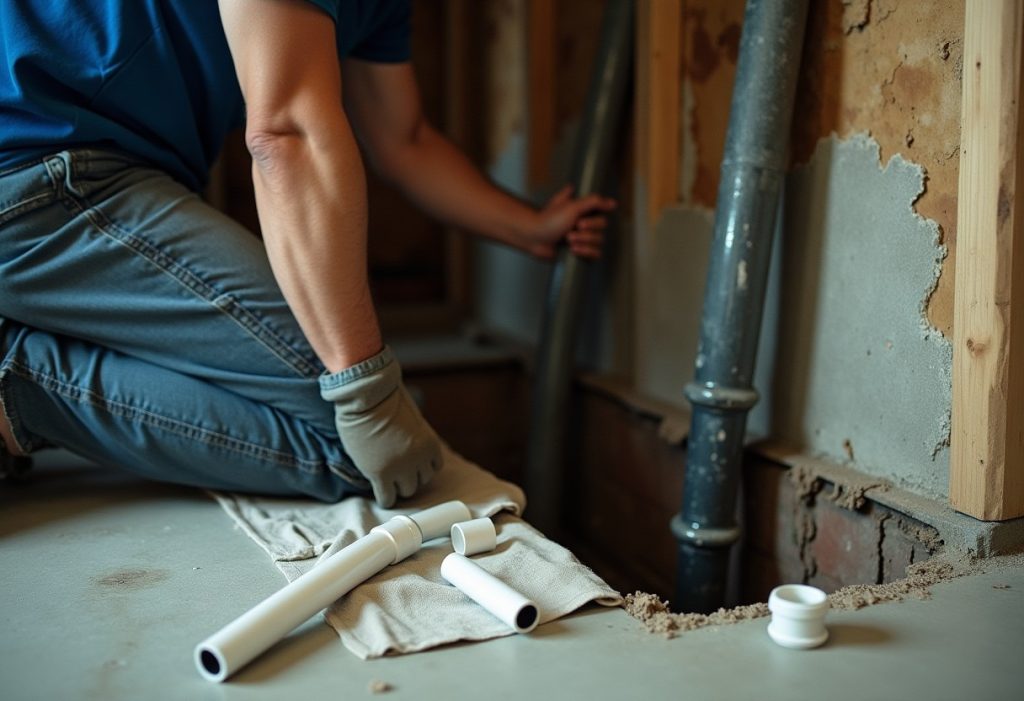
Scope matters more than footage. Angi prices a short accessible section at $375 to $900 and a sewer trap at $1,500 to $3,000, HomeAdvisor puts a full stack at $3,000 to $9,000, and Angi lists under-slab drain work at $3,000 to $20,000. Whole-house jobs that tunnel or trench under a slab reach $15,000 to $30,000 in published contractor quotes.
| Scope | Typical cost | Notes |
|---|---|---|
| Single section, 10 to 60 ft, open access | $125 to $1,800 | Angi; $375 to $900 for a 30-foot run. Basement or crawlspace work with no finishes to rebuild. |
| Kitchen sink drain | $150 to $500 | Angi. Short branch line, usually inside one cabinet wall. |
| Bathroom sink drain | $200 to $800 | Angi. Rises if tile or a vanity wall has to come open. |
| Sewer trap (house trap) | $1,500 to $3,000 | Angi. Found in many older homes as a running trap near the foundation wall. |
| Main stack, full height | $3,000 to $9,000 | HomeAdvisor average $6,500; full range $1,500 to $15,000. Wall and ceiling repair often extra. |
| Basement overhead sewer line | $8,000 to $10,000 | Angi. Overhead sewers usually rely on an ejector pump, which can add to the job. |
| Drains under a slab | $3,000 to $20,000 | Angi. Fixr puts a single under-slab break repair at $500 to $4,500 before full replacement. |
| Whole house, under-slab drains | $15,000 to $30,000 | Replace Cast Iron Pipe (Texas contractor); its broad planning range is $8,000 to $25,000. Restore Pipe Systems cites $10,000 to $30,000 or more. |
| Lining instead of replacing | $80 to $250 per ft | Fixr, cured-in-place. Restore Pipe Systems quotes $125 to $175 per foot, about $8,500 to $15,000 total. |
Drain replacement is a different job from a supply repipe. Swapping the pressurized water lines inside the walls is priced on its own terms, and our breakdown of the cost to repipe a house covers that work. Many older homes need both, and doing them in one open-wall window saves on drywall twice.
What drives the cost of replacing cast iron pipe?
Access drives most of the price. The same 20 feet of drain can cost a few hundred dollars in an open basement and several thousand under a finished slab, because concrete cutting, tunneling, finish repair, and permits stack on top of the plumbing. Pipe diameter, stack height, fixture count, and local labor rates set the rest.
- Slab cutting and foundation work. HomeAdvisor puts foundation repair after under-slab drain work at $2,150 to $7,500. Replace Cast Iron Pipe lists concrete cutting and repair at $1,500 to $5,000.
- Finishes. Angi lists drywall repair at $300 to $925, ceiling repair at $450 to $1,700, and trenching at $400 to $1,200. Tile, cabinets, and flooring cost more again.
- Permits and inspection. Angi puts plumbing permits at $50 to $500; Fixr cites a $75 average. Some cities add separate inspection fees of $50 to $200 each, per Angi.
- Camera inspection. Angi lists sewer camera inspection at $250 to $1,600, and Fixr says video inspection adds $200 to $400 to a repair.
- Region. HomeAdvisor’s stack data shows $6,000 to $15,000 or more in high-cost urban areas versus $1,500 to $4,000 in lower-cost and rural markets.
- Disposal. Cast iron is heavy. Angi puts junk removal at $60 to $700 depending on how much pipe comes out.
Quotes that look far apart often differ on restoration. One plumber may include patching the slab and walls, while another stops at the pipe and leaves the concrete, drywall, and paint to you.
How do you know cast iron pipe is failing?
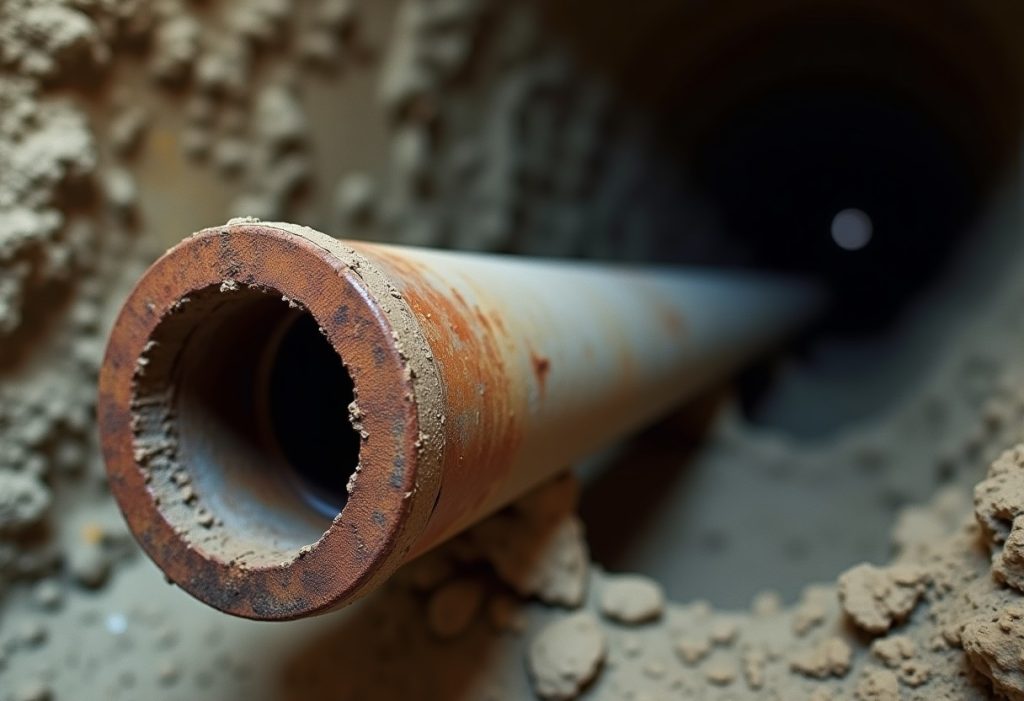
Failing cast iron usually shows rust, weeping joints, cracks, slow drains at several fixtures, or a sewer smell indoors. Corrosion often starts along the bottom of horizontal runs, where waste sits, so a pipe can look sound from above while the floor of the pipe is thin. A camera inspection confirms what the symptoms suggest.
- Rust and weeping. Orange flaking, damp spots, or mineral crust at hubs and joints mean water is getting through.
- Visible cracks or splits. Lengthwise cracks on horizontal pipe are a common failure point in older homes.
- Slow drains and repeat clogs. Rust scale narrows the bore, so several fixtures slow down together and clogs return weeks after cleaning.
- Sewer smell. A crack or failed joint lets sewer gas into the house even when traps hold water.
- Stains and mold. Ceiling stains or mold below a bathroom often trace back to a weeping stack or branch.
- Slab clues. Damp carpet, new floor cracks, or a soft spot on a slab-on-grade floor can signal a broken drain underneath.
Age is a signal too. HomeAdvisor notes that cast iron in homes built in the 1960s or earlier will likely need replacement soon, and Fixr calls cast iron the standard drain material up until the 1960s.
How long does cast iron drain pipe last?
Cast iron drain pipe usually lasts 50 to 75 years. The InterNACHI life expectancy chart lists cast iron waste pipe at 60 years above ground and 50 to 60 years below ground, and Angi cites 50 to 75 years. Buried and under-slab runs tend to fail first, because soil moisture works on the outside while waste works on the inside.
The same InterNACHI chart rates ABS and PVC waste pipe at 50 to 80 years, which is why most replacements go to plastic. For a side-by-side view of how cast iron stacks up against clay, Orangeburg, and plastic below grade, see our guide to sewer pipe materials.
Lifespan is an average, not a deadline. Plumbers commonly see harsh chemical drain cleaners, sewer gas in poorly vented lines, and flat or bellied runs shorten it, while dry, well-sloped, above-ground pipe can run well past 60 years. A camera beats a calendar.
Should you repair, line, or replace cast iron pipe?
Repair a single failed joint or short cracked section, line pipe that is corroded but still round and hard to reach, and replace pipe that is collapsed, badly scaled, or already open for a remodel. Fixr puts a typical drain line repair at $400 to $1,500, lining at $80 to $250 per foot, and replacement at $100 to $650 per foot.
| Option | Cost (source) | Best fit | Limits |
|---|---|---|---|
| Spot repair with no-hub couplings | $400 to $1,500, $600 average (Fixr) | One cracked section or bad joint in otherwise sound pipe | Leaves the rest of the aging system in place |
| Cured-in-place lining | $80 to $250 per ft (Fixr) | Under slabs and finished floors, pipe still holds its shape | Not for collapsed or badly bellied pipe; slightly smaller bore |
| Pipe bursting | $50 to $200 per ft (Fixr) | Buried building sewer out to the street | Needs access pits; rarely used inside the house |
| Full replacement with PVC or ABS | $12.50 to $30 per ft open (Angi); $100 to $650 per ft buried (Fixr) | Collapsed or scaled pipe, or walls already open | Most demolition and restoration |
Replacement in a house almost always means plastic. Our cast iron vs PVC pipe comparison covers the trade-offs, the biggest being noise: PVC is louder, so some owners keep cast iron in the wall next to a bedroom. Between the two plastics, local code and regional supply usually decide, which our PVC vs ABS pipe guide explains. New plastic ties into remaining cast iron with shielded no-hub transition couplings.
Partial replacement is common and often smart. Replacing the worst horizontal runs and the slab section while leaving a sound vertical stack can cut the bill sharply, as long as the camera shows the remaining pipe is in good shape.
Does homeowners insurance cover cast iron pipe replacement?
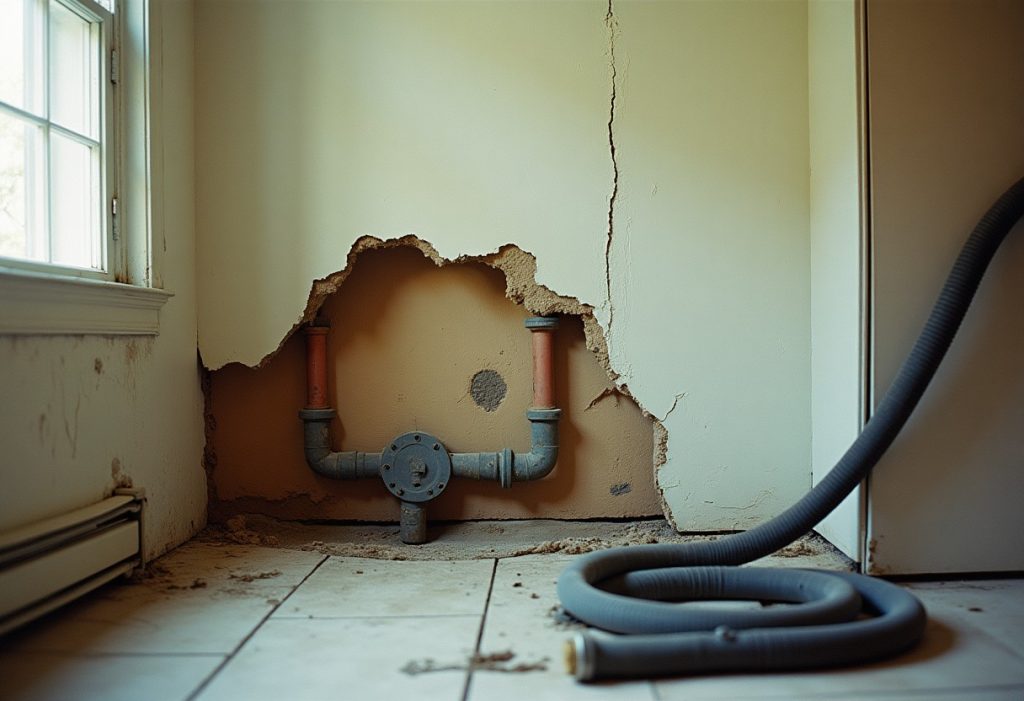
Homeowners insurance rarely covers cast iron pipe replacement itself. Standard policies typically exclude wear and tear, rust, corrosion, and gradual deterioration, which describes most failing cast iron. Many policies do pay for sudden water damage a break causes, and some versions pay to tear out and restore the wall or floor needed to reach the leak.
The distinction is sudden versus slow. A pipe that splits and floods a finished basement may produce a covered water damage claim, while a stack that has wept for years usually will not, and the pipe repair stays your cost either way.
Two endorsements are worth asking an agent about. Service line coverage can apply to buried lines outside the foundation, and water backup coverage can apply when sewage backs up through a floor drain. Terms, limits, and exclusions vary by insurer and state, so read your declarations page and exclusions before you file.
How do you get an accurate cast iron replacement quote?
Get a recorded camera inspection first, then collect at least three written quotes that list linear footage, pipe diameter, replacement material, access method, and whether restoration and permits are included. Without the camera footage, a plumber is pricing a guess, and quotes on the same house can differ by thousands of dollars.
- Book a sewer camera inspection and ask for the video file plus a marked footage log of each defect.
- Ask each plumber whether spot repair, lining, partial replacement, or full replacement fits each defect, and why.
- Require a written scope with linear feet, diameter, material (PVC or ABS DWV), and the coupling type at every tie-in.
- Confirm who handles slab patching, drywall, flooring, and haul-away, and what each costs.
- Confirm the permit and final inspection are in the price, since many areas require both for drain work.
- Compare warranties on both labor and any lining product before you sign.
How we sourced this
We cited eight sources: Angi’s cast iron replacement guide and drain pipe replacement guide, HomeAdvisor’s plumbing stack and drain line pages (stack data updated June 2026), Fixr’s drain line breakage repair guide (updated January 2025), and the InterNACHI Standard Estimated Life Expectancy Chart. Whole-house under-slab figures come from two contractor-published pages, Replace Cast Iron Pipe (Texas) and Restore Pipe Systems (Utah), and are labeled as contractor quotes because sellers may price high. We excluded dozens of search results from scraped aggregator sites that repeat unattributed numbers. All figures are national ranges in US dollars and vary by region, access, and local code. Insurance guidance is general and not a reading of any specific policy.
Frequently asked questions
How much does it cost to replace cast iron pipes in a house?
Angi puts the average at $650 for a typical 30-foot accessible run, with most homeowners paying $375 to $900. Bigger scopes cost far more. HomeAdvisor prices a full plumbing stack at $3,000 to $9,000, Angi lists under-slab drains at $3,000 to $20,000, and contractor quotes for whole-house under-slab jobs can reach $15,000 to $30,000, depending on access and region.
Is it worth replacing cast iron pipes?
It is worth it when a camera inspection shows cracks, heavy scale, or channeling along the bottom of horizontal runs, or when backups keep coming back. Sound cast iron with a single bad joint usually only needs a spot repair. InterNACHI rates cast iron waste pipe at about 60 years above ground, so original pipe in a pre-1970 home deserves a closer look.
How long do cast iron drain pipes last?
InterNACHI’s life expectancy chart lists cast iron waste pipe at 60 years above ground and 50 to 60 years below ground, and Angi cites 50 to 75 years. Lifespan shortens with harsh drain cleaners, sewer gas, wet soil, and poor slope. Buried horizontal runs under a slab often fail first because waste sits along the bottom of the pipe.
Does homeowners insurance cover cast iron pipe replacement?
Usually not for the pipe itself. Standard homeowners policies typically exclude wear, tear, rust, corrosion, and gradual deterioration, which describes most failing cast iron. Many policies do pay for sudden water damage a break causes, and some versions cover tearing out a wall or floor to reach the leak. Read your exclusions and ask your agent about service line or water backup endorsements.
Is pipe lining cheaper than replacing cast iron?
Often, but not always. Fixr puts cured-in-place lining at $80 to $250 per foot, while dig-and-replace drain work runs $100 to $650 per foot depending on access. Lining saves the most under finished floors and slabs, where it avoids concrete cutting and restoration. On an open basement run, plain replacement with PVC is usually the cheaper choice.
Can you replace cast iron pipe with PVC?
Yes. Most cast iron replacements in houses switch to PVC or ABS drain, waste, and vent pipe, joined to remaining cast iron with shielded no-hub transition couplings. Fixr lists PVC material at $0.50 to $8 per foot versus $10 to $30 for cast iron. PVC is louder than cast iron, so some owners keep cast iron or wrap plastic pipe near bedrooms.
How do I know if my cast iron pipes are bad?
Look for rust flakes or orange weeping at joints, visible cracks, ceiling stains below the stack, a sewer smell inside, and slow drains or repeat clogs at several fixtures at once. Wet spots or new cracks in a slab floor can point to a buried break. A sewer camera inspection, which Angi prices at $250 to $1,600, confirms the condition before you price any work.
How much does it cost to replace a cast iron stack?
HomeAdvisor’s June 2026 data puts the average plumbing stack replacement at $6,500, with a normal range of $3,000 to $9,000 and a full range of $1,500 to $15,000. High-cost urban areas run $6,000 to $15,000 or more. Wall and ceiling repair after the stack comes out is often extra, and Angi lists drywall repair at $300 to $925.


