French Drain: What It Is, When You Need One, and What It Costs
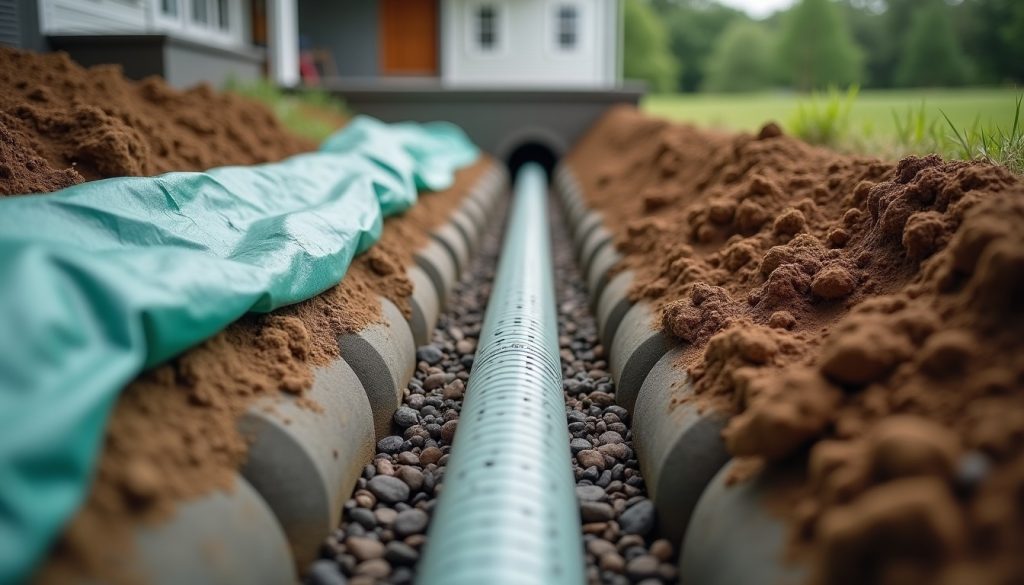
A French drain is a gravel-filled trench with a perforated pipe that catches groundwater and carries it, on about a 1 percent slope, to daylight, a dry well, or a sump pump.
Key Takeaways
- Installed French drains run $10 to $100 per linear foot, about $45 on average, per HomeAdvisor; its national average project lands near $9,250.
- Location drives price: Fixr puts a 100-foot exterior drain at $3,500 to $4,000 and a 100-foot interior basement drain at $5,000 to $6,000.
- The International Residential Code (IRC R401.3) wants the ground to fall at least 6 inches in the first 10 feet from the foundation, so fix grading and downspouts before you dig.
- For foundation drains, IRC R405.1 calls for at least 2 inches of washed gravel under the pipe and 6 inches over it, wrapped in filter fabric.
- NDS, a drainage manufacturer, describes a typical yard trench as 6 to 12 inches wide and 18 to 24 inches deep, with a 30-plus-year life when maintained.
- Permits often run $50 to $200 where required (HomeAdvisor), and most states require a free 811 call to mark buried utilities before you dig.
What is a French drain and how does it work?
A French drain is a buried trench lined with filter fabric, filled with washed gravel, and fitted with a perforated pipe. Groundwater and surface water seep into the gravel, drop into the pipe through its holes, and flow by gravity on a slight slope to an outlet: daylight at a lower spot, a dry well, a storm connection where allowed, or a sump pit. When a French drain’s outlet ties into a sump pit rather than daylight, pairing it correctly with a sump pump becomes the next decision.
The name comes from Henry Flagg French, an American lawyer and farmer who promoted the design in his 1859 book on farm drainage. Contractors also call it drain tile, weeping tile, or a perimeter drain.
The four parts that make it work
- Perforated pipe. Usually 4-inch corrugated or rigid PVC with rows of holes. Most installers lay the holes facing down so water rises into the pipe and sediment settles below it.
- Washed gravel. Clean stone with no fines. IRC R405.1 requires stone at least one sieve size larger than the pipe perforations so it cannot wash into the holes.
- Filter fabric. A nonwoven geotextile that lets water through and keeps silt out. Skip it and clay or fine soil fills the gravel within a few seasons.
- Slope and outlet. About 1 percent fall (roughly 1 inch of drop for every 8 feet of run, or 1 foot over 100 feet) carried to a point lower than the drain.
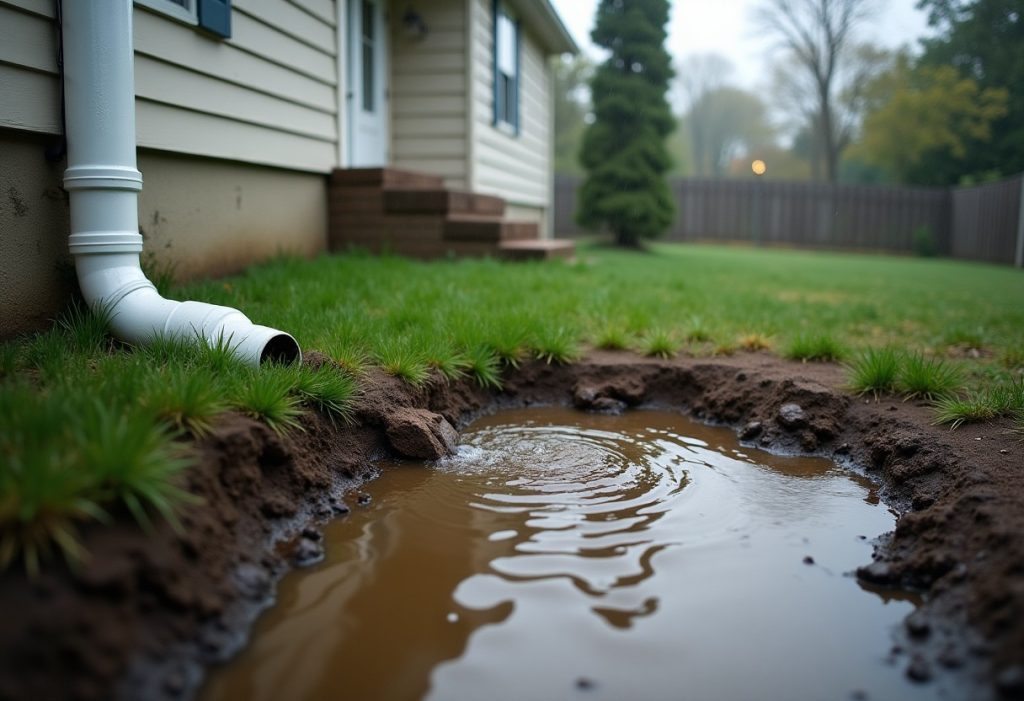
Do you need a French drain, or will gutters, grading, or a sump fix it?
You need a French drain when water moves through the soil, not just across it: a yard that stays soggy days after rain, water seeping at the base of a basement wall, or runoff from an uphill neighbor. If the water comes from your own roof or from soil that slopes toward the house, cheaper fixes usually come first.
Start at the roof. Clogged gutters and short downspouts dump the whole roof’s runoff right beside the foundation. Extend the downspouts away from the house before spending thousands on a trench.
Next, check the grade. IRC Section R401.3 requires the ground to fall at least 6 inches within the first 10 feet of the foundation, and where lot lines prevent that, a 5 percent slope toward drains or swales. Many older homes have settled backfill that now tilts toward the wall.
| What you see | Likely cause | Try first | When a French drain fits |
|---|---|---|---|
| Water at the wall only during heavy rain | Gutter overflow, short downspouts | Clean gutters, extend downspouts | Rarely needed if the roof water is handled |
| Puddles against the foundation | Negative grade (soil slopes toward house) | Regrade to IRC R401.3 fall | When the lot is too tight to regrade |
| Soggy lawn for days after rain | Clay soil, high water table, low spot | Swale if surface water only | Yes: a yard or curtain drain |
| Runoff from an uphill lot | Groundwater moving downhill | None cheaper that holds | Yes: a curtain drain across the slope |
| Seepage where basement wall meets floor | Hydrostatic pressure under the slab | Exterior grade and gutter fixes | Yes: interior drain to a sump |
A sump pump and a French drain are partners, not rivals. The drain collects water, and the pump lifts it out when there is no lower ground to drain to. If your lot is flat, the French drain will almost certainly end in a pit, so read up on submersible and pedestal sump pump types before you price the job.
Interior vs exterior French drain: which one fits your problem?
An exterior French drain intercepts water in the soil before it reaches the house, and it costs less per foot because it is just digging and gravel. An interior French drain sits under the basement slab along the walls, catches water already pushing in, and pipes it to a sump. Interior work costs more because crews cut and replace concrete.
| Drain type | Where it goes | Cost per linear foot | Outlet | Best for |
|---|---|---|---|---|
| Curtain drain | Shallow trench across a slope, uphill of the house | $10 to $25 (HomeAdvisor, Fixr) | Daylight or dry well | Runoff from higher ground |
| Exterior perimeter drain | Around the house, near the surface | $10 to $50 (HomeAdvisor) | Daylight, dry well, or sump | Soggy soil next to the foundation |
| Deep French drain | Deeper exterior trench | $30 to $70 (HomeAdvisor) | Daylight or sump | Wet soil below the topsoil layer |
| Footing drain | At the footing, outside the foundation wall | $80 to $100 (Fixr) | Daylight or sump | New builds, full excavation repairs |
| Interior basement drain | Under the slab, along the inside of the walls | $40 to $100 (HomeAdvisor, Fixr) | Sump pump | Finished or occupied basements with seepage |
Exterior footing drains are the textbook fix, but on an existing house they mean excavating all the way down to the footing, past decks, walks, and landscaping. That is why most basement waterproofing crews install interior drains instead.
Interior drains do work. HomeAdvisor lists “Are interior French drains effective?” among its top questions, and the answer depends on the pump. An interior drain is only as good as the pump at the end of it, which is why a sump pump battery backup belongs in the same budget. The storm that fills the drain is often the one that cuts the power.
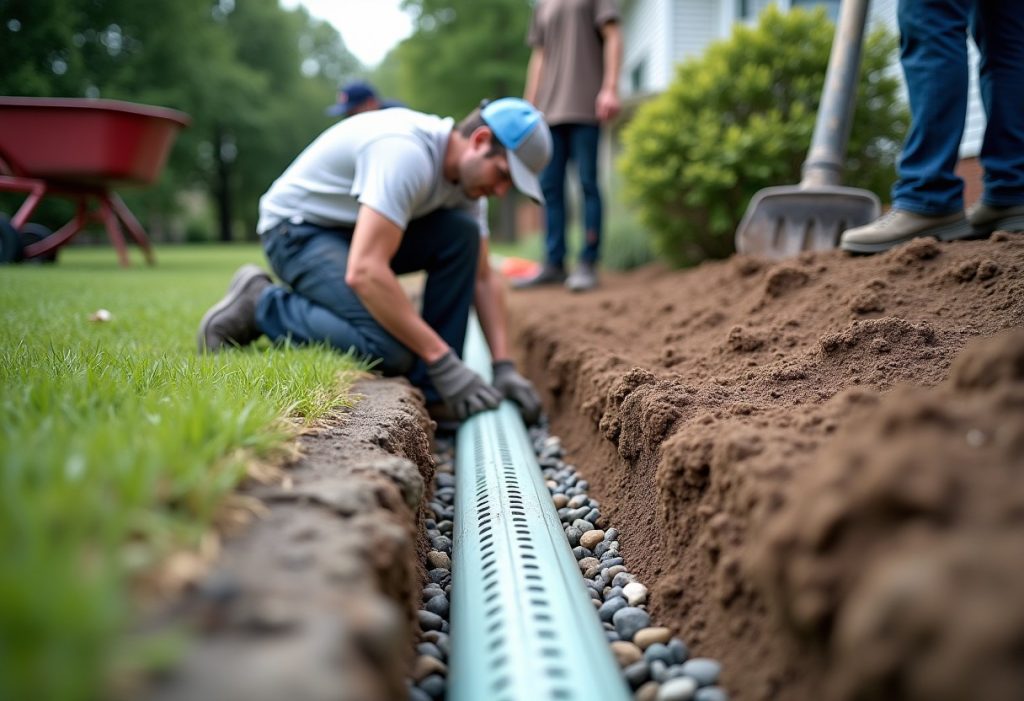
How much does a French drain cost per linear foot?
Expect $10 to $100 per linear foot installed, with HomeAdvisor’s average near $45. Shallow exterior and curtain drains sit at the low end, around $10 to $50. Interior basement drains run $40 to $100 because the crew breaks and repours concrete. A typical 100-foot job lands between $3,500 and $6,000, per Fixr.
Bars show the top of each installed range per linear foot. Installed ranges from HomeAdvisor; pipe material from Fixr.
DIY vs hiring a pro
Doing it yourself removes the labor line, which Fixr puts at $20 to $25 per linear foot for exterior drains and $35 to $40 for interior drains. Perforated pipe itself is cheap, about $0.70 to $3 per foot. You still buy gravel, fabric, and a trencher rental, and you supply the digging.
DIY makes sense for a shallow yard or curtain drain with an obvious low outlet. Hire out interior drains, footing drains, and anything that ties into a sump or storm system. Fixr flags that French drains generally should not go in without professional help, and a slope mistake on a 100-foot run is expensive to dig up.
What moves the price
- Length and depth. A footing drain dug down to the base of the foundation costs far more per foot than a shallow 18-inch yard trench.
- Concrete. Interior jobs include saw-cutting, jackhammering, and repouring the slab.
- Sump add-on. HomeAdvisor lists $500 to $2,000 to add a sump pump to a drain system.
How do you install a French drain, step by step?
Installing a French drain means planning the fall to an outlet, digging a lined trench, bedding gravel, laying perforated pipe holes down, covering it with more gravel, and folding the fabric over the top. The slope check is the step that decides whether it works.
- Call 811. Call 811 or file online a few business days before digging. The utility locate service is free, and striking a gas or electric line is dangerous and may leave you liable for the repair.
- Pick the outlet first. The outlet must sit lower than every point of the pipe. Options are daylight on a lower part of your lot, a dry well, a sump pit, or a storm connection where your city allows it. Never aim it at a neighbor’s lot.
- Stake and string the route. Run a string line and a line level from the high end to the outlet. At about 1 percent, drop roughly 1 inch for every 8 feet, or 1 foot over 100 feet.
- Dig the trench. NDS describes a typical yard drain at 6 to 12 inches wide and 18 to 24 inches deep. Foundation drains go at or below the area they protect, per IRC R405.1.
- Line it with fabric. Lay nonwoven filter fabric in the trench with enough extra on both sides to fold over the top later.
- Bed the gravel. Spread at least 2 inches of washed gravel on the bottom, the IRC minimum for foundation drains, and check the fall with a level.
- Lay the pipe holes down. Set the perforated pipe on the gravel bed, holes facing down, and add a solid (non-perforated) section where the pipe exits to the outlet.
- Cover with gravel. Add at least 6 inches of the same washed gravel over the pipe, again per IRC R405.1, then wrap the fabric over the top.
- Add a cleanout. Put a capped riser at the high end so you can flush or snake the line later.
- Backfill and test. Top with soil and sod or leave decorative stone, then run a garden hose into the high end and confirm water reaches the outlet.
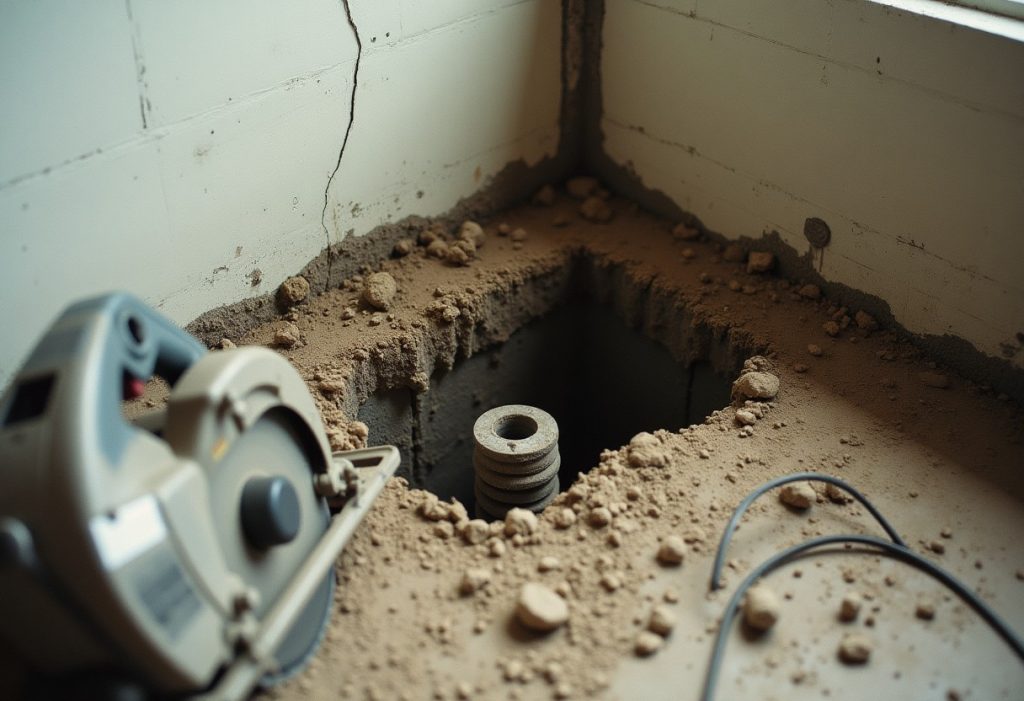
For an interior drain, steps 4 through 9 happen inside a channel cut in the slab, and the pipe slopes to a sump pit instead of daylight. Setting that pit, the check valve, and the discharge line is its own job, covered in our guide on how to install a sump pump.
Do you need a permit to install a French drain?
Often not for a shallow yard drain on your own land, but many cities require one when the drain connects to a storm sewer, discharges near a property line, changes grading, or involves cutting a basement slab. Where permits apply, HomeAdvisor lists $50 to $200 and Fixr lists $50 to $100. Check with your local building department first.
Three rules catch homeowners most often:
- Discharge. In many areas you may not route collected water onto a neighbor’s property or the public sidewalk, and connecting to a sanitary sewer is commonly prohibited.
- Foundation drains on new work. IRC R405.1 requires drains around concrete and masonry foundations that enclose habitable space below grade, except where the soil is well-drained, and sets the gravel and fabric specs for them.
- HOAs and easements. Utility easements and HOA rules may limit where you can trench, even when the city does not need a permit.
How do you maintain a French drain so it lasts?
Keep the outlet clear, flush the line through a cleanout once a year, and watch for slow drainage or new wet spots. A well-built French drain with filter fabric lasts 30 years or more, per NDS. Fixr’s lifespan range runs from 3 to 40 years, and the low end is usually a drain built without fabric that silted up.
- Outlet check. Clear leaves, mulch, and critter nests from the daylight grate or pop-up emitter each spring and fall.
- Annual flush. Run a hose into the cleanout and confirm strong flow at the outlet. Fixr puts professional cleaning at $75 to $500.
- Roots. Keep trees and large shrubs away from the trench line.
- Pump check. For interior drains, test the sump pump by pouring water into the pit.
Put the outlet check and pump test on the same calendar as your other seasonal tasks. Our home plumbing maintenance checklist gives you a spring and fall routine that covers both.
How we sourced this
We reviewed 12 pages: national cost guides (HomeAdvisor, Fixr, Bob Vila, Lawn Love, Thumbtack), drainage maker NDS, installer how-to guides, and IRC Sections R401.3 and R405.1. We cite six: HomeAdvisor, Fixr, NDS, the ICC IRC, Call 811, and the published history of Henry Flagg French’s 1859 drainage book. Cost guides were current as of 2025 to 2026; figures are national ranges and vary by region, soil, depth, and access. We excluded unattributed cost pages and contractor sales pages. The 1 percent slope is a common installer rule of thumb, not a code minimum.
Frequently asked questions
How long do French drains last?
A well-built French drain often lasts 30 years or more. NDS, a drainage manufacturer, cites 30-plus years with proper maintenance, while Fixr’s range runs from 3 to 40 years. The short-lived ones are usually built without filter fabric, so silt fills the gravel, or with too little slope, so sediment settles in the pipe. A yearly flush and a clear outlet keep it near the top of that range.
How deep should a French drain be?
A typical yard French drain is 18 to 24 inches deep and 6 to 12 inches wide, per NDS. A curtain drain can be shallower. A foundation or footing drain goes at or below the area it protects, which under IRC R405.1 means down at the footing, with at least 2 inches of washed gravel under the pipe and 6 inches over it. Depth must also let the pipe keep falling toward its outlet.
Are interior French drains effective?
Yes, when the problem is water seeping in where the basement wall meets the floor. An interior drain under the slab relieves the water pressure and carries seepage to a sump pit. It does not stop water from soaking the wall itself, and it only works as long as the sump pump runs, so most installers pair it with a battery or water-powered backup pump.
Does a French drain need an outlet?
Yes. Collected water has to go somewhere lower than the pipe: daylight on a downhill part of the lot, a dry well, a sump pit, or a storm connection where your city allows it. Fixr notes a drain does not always need a visible exit because a dry well can absorb the water, but a drain with no low point to empty into simply fills and stops working.
Do you need a permit for a French drain?
Often not for a shallow drain on your own land, but many cities require one when the drain ties into a storm sewer, discharges near a property line, changes grading, or involves cutting a basement slab. Where a permit applies, HomeAdvisor lists $50 to $200 and Fixr lists $50 to $100. Rules vary by city and state, so call your building department before you dig.
What is the difference between a French drain and a curtain drain?
A curtain drain is a type of French drain. It is a shallow trench dug across a slope, uphill of the house, to intercept groundwater and runoff before it reaches the foundation. A perimeter or footing French drain wraps the house itself. Curtain drains are usually the cheapest version, around $10 to $25 per linear foot installed, according to HomeAdvisor and Fixr.
Does homeowners insurance cover a French drain?
Usually not. Fixr reports that most homeowners policies will not cover French drains unless that coverage is added to the policy. Water that seeps through soil or foundation walls is typically excluded too. Ask your agent about water backup and drainage endorsements, which may cover sump failure or backup damage, and expect a gradual leak or a clogged drain to be treated as maintenance.
Can I tie my French drain into my sewer line?
No. The article states that connecting a French drain to a sanitary sewer is commonly prohibited. In many areas you also may not route collected water onto a neighbor's property or the public sidewalk. Discharge rules vary by city, so check with your local building department before connecting to any sewer or storm system.


