Water Heater Earthquake Straps: Code Rules and How to Install Them
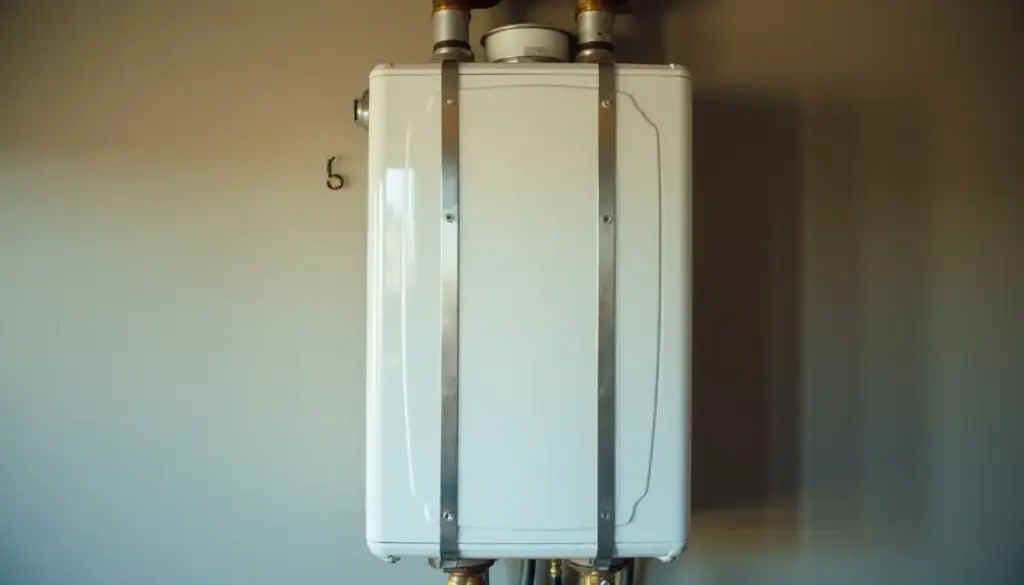
Water heater earthquake straps are required by California law on every residential tank, with at least one strap in the upper third and one in the lower third, the lower strap at least 4 inches above the controls.
Key Takeaways
- California Health and Safety Code 19211 covers all new, replacement and existing residential water heaters up to 120 gallons, and sellers must certify compliance in writing.
- California Plumbing Code 507.2 places straps in the upper and lower one-third of the tank, with a minimum 4 inch (102 mm) gap above the controls at the lower strap.
- Division of the State Architect (DSA) guidelines use two strap sets up to 52 gallons and a third set at mid-height for tanks up to 75 gallons.
- A Golden Gate ASHI survey of Bay Area homes found 52% of water heaters were not adequately strapped, and 38% had too much gap between tank and wall.
- Washington’s WAC 51-51-1307 sends water heater strapping to Section 507.2 of the state plumbing code.
What does California law require for water heater earthquake straps?
California requires every new and replacement water heater, and every existing residential water heater, to be braced, anchored or strapped so it cannot fall or slide during an earthquake. Health and Safety Code 19211 sets the minimum as the California Plumbing Code or a stricter local amendment, and it applies to standard heaters up to 120 gallons.
Subdivision (b) makes sellers certify compliance to the buyer in writing. Subdivision (c) bars evicting a tenant to do the strapping work, and subdivision (f) deems a building in violation a nuisance. Strapping sits alongside the T&P valve, drip pan and venting rules covered in our full set of water heater code requirements.
| Requirement | Rule | Source |
|---|---|---|
| Who must comply | All new and replacement water heaters, plus all existing residential water heaters | Cal. HSC 19211(a) |
| Home sale | Seller certifies compliance to the buyer in writing | Cal. HSC 19211(b) |
| Tank size covered | Standard heaters of 120 gallons or less with a preengineered kit readily available | Cal. HSC 19211(d) |
| Strap locations | Within the upper one-third and lower one-third of the vertical dimension | CPC 507.2 |
| Control clearance | Minimum 4 inches (102 mm) above the controls at the lower strap | CPC 507.2 |
| 53 to 75 gallon tanks | Add a third strap set at mid-height | DSA guidelines |
| Over 75 gallons | Bracing details approved by the local building department first | DSA guidelines |
| Water connectors | Copper or stainless flex connectors no longer than 24 inches, listed to ASME A112.18.6/CSA B125.6 | CPC 604.13 |
| Washington | Water heater strapping per Section 507.2 of the state plumbing code | WAC 51-51-1307 |
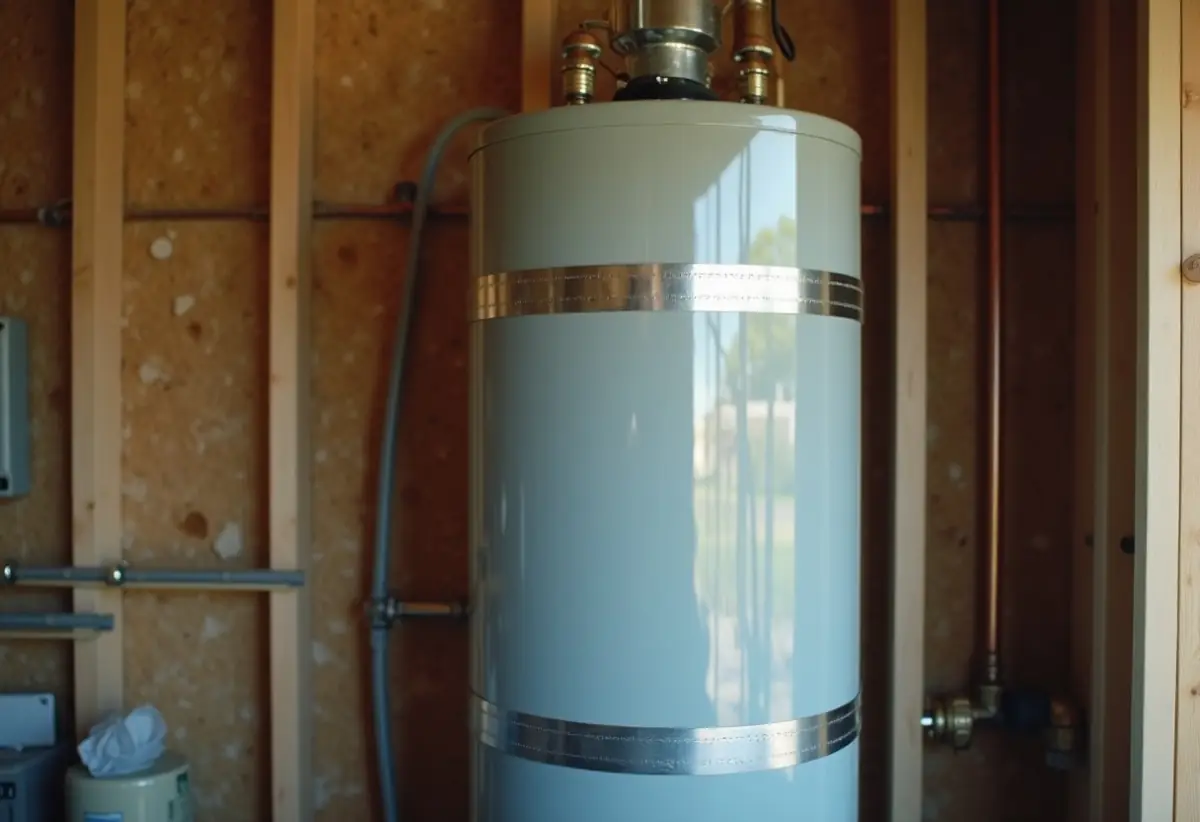
Where do water heater earthquake straps go under CPC 507.2?
One strap goes in the upper third of the tank’s height and one in the lower third, and the lower strap must clear the gas control or thermostat by at least 4 inches. That is the wording of California Plumbing Code 507.2 as quoted in San Bernardino County’s self-inspection checklist, which also requires anchoring “to resist horizontal displacement due to earthquake motion.”
The DSA guidelines turn that into marks you can measure. Put the upper strap about 9 inches below the top of the tank and the lower strap 4 inches above the top of the controls. Check both marks against the tank’s height so each one still falls inside its third.
Bigger tanks need more straps. The DSA details were built for 52 gallons or less and allow tanks up to 75 gallons with a third set at mid-height. The Town of Los Gatos requires 3 straps on 75 gallon heaters and 4 on 100 gallon heaters, so local rules can run stricter than the state minimum.
Which strap kits and materials meet the rules?
You have three common routes. A DSA-approved commercial kit, a DSA plumber’s tape detail, or a DSA EMT conduit detail. The DSA method uses 3/4 inch wide, 24 gauge perforated steel tape, while the EMT method pairs 1/2 inch diameter EMT conduit with the same tape.
The HoldRite Quick Strap QS-50-D spec sheet lists a 1-1/2 inch wide, 38 inch long, 24 gauge galvanized strap, rated for tanks up to 80 gallons, with DSA approval #97-010 and UPC/IPC/IAPMO listing. The box holds 4 straps, 4 J-clips, 4 lag bolts (1/4 by 2-1/2 inch), 2 carriage bolts (3/8-16 by 3 inch), 2 caps and 2 hex nuts.
How do you attach straps to studs, masonry or concrete?
Into wood studs, use 1/4 inch diameter by 3 inch lag screws with flat washers, screwed (never hammered) into pre-drilled pilot holes centered on the stud. Into concrete or gray block, the DSA guidelines call for expansion or epoxy anchor bolts at least 3/8 inch in diameter with 2 inches of embedment, installed per the anchor maker’s instructions.
- Wood studs. DSA specifies 3/16 inch by 3 inch deep pilot holes. Golden Gate ASHI says 1/4 by 3 inch or longer lag screws with oversized washers, and never drywall or deck screws, which are brittle.
- No stud behind the tank. Yorba Linda’s handout calls for a 2x backer block top and bottom. The DSA straight-wall detail uses 2×4 ledgers held with 1/4 by 5 inch lag screws, with holes drilled 2 inches from each ledger end.
- Concrete or block. The wall must be sound, with no cracks 1/16 inch or wider, and anchors cannot go into ungrouted hollow cells of a block wall.
- Gap to the wall. The DSA straight-wall method needs at least 2-1/2 inches between tank and wall. In a corner, the string between the two support studs must sit at least 7 inches from the tank face, or you add a 1-1/4 by 1-1/4 by 1/8 inch steel ledger angle.
Check the rating plate too. HoldRite’s instructions say a tank that is not a zero-clearance unit needs a spacer.
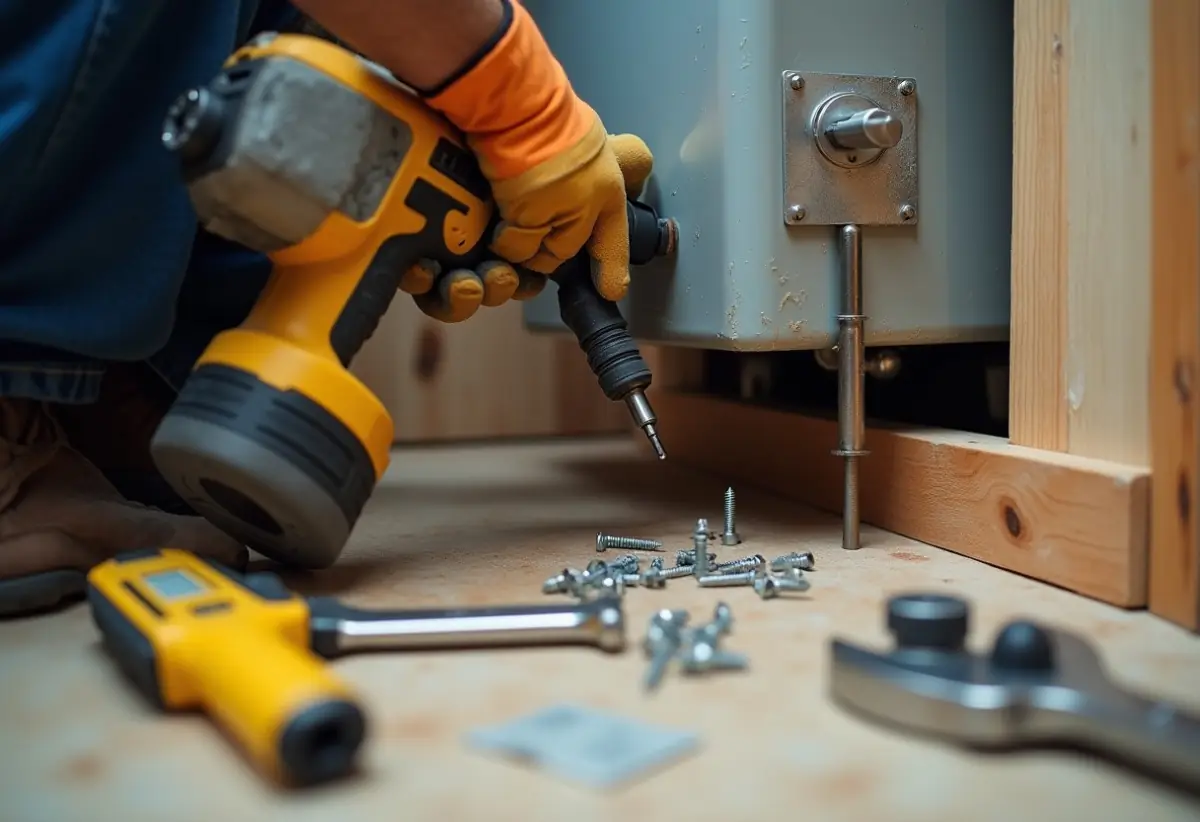
How do you strap a water heater step by step?
Plan on 8 steps with a DSA plumber’s tape corner install, using a power drill, a 3/16 inch bit, a stud finder, an adjustable wrench, 4 lengths of 3/4 inch 24 gauge tape and 8 lag screws (1/4 by 3 inch) with washers. If you are swapping the tank at the same time, strap it as part of the job when you install a water heater.
- Remove any insulation blanket. DSA says to reinstall it after the bracing is done.
- Mark the tank about 9 inches below the top for the upper strap and 4 inches above the top of the controls for the lower strap.
- Find the nearest stud on each wall that is not directly behind the heater.
- Stretch a string between the two support studs and confirm at least 7 inches from string to tank face.
- Transfer the marks horizontally onto the walls at those studs.
- Drill 3/16 inch by 3 inch deep pilot holes at each lag screw location.
- Lag one end of each of the 4 tape lengths to a stud, wrap the tape around the tank, and pull it tight to the opposite stud.
- Lag the other end, cut off the excess, and re-drive into a different tape hole if any strap is slack.
A HoldRite Quick Strap install takes 5 steps. Lag strap A to the stud with a 1/4 by 2-1/2 inch lag and washer, set strap B so the J-clips sit about 3 inches apart, and bolt them with the 3/8 inch carriage bolt, using a 3/8 inch socket and a 9/16 inch wrench. If a 10 foot tape coil runs short, DSA allows a splice with a 1/4 inch bolt, washers and a nut.
Do you need a flexible gas connector with earthquake straps?
California’s strapping statute does not name gas connectors, but the DSA guidelines strongly recommend code-compliant flexible connectors between the heater and its water, gas and electrical lines. Golden Gate ASHI also recommends replacing rigid gas and water piping at the heater, because even a strapped tank shifts slightly and a rigid pipe can crack at the joint.
On the water side, CPC 604.13 caps copper, copper alloy and stainless flexible water connectors at 24 inches and requires listing to ASME A112.18.6/CSA B125.6. The DSA bracing drawings show flexible connections on both the water lines and the gas line.
CPC 1212.9 also requires a sediment trap downstream of the gas shutoff and ahead of the flex connector. Our guide to gas line plumbing covers connector sizing and leak testing.
Which other states require water heater strapping?
Washington is the clearest case outside California. WAC 51-51-1307 amends the residential code so thermal storage units are strapped either to resist a horizontal force equal to one-third of the tank’s operating weight or per the maker’s recommendations, and it sends water heater strapping to Section 507.2 of the state plumbing code.
Elsewhere, the rule usually arrives through the model codes your city adopts. The National Fire Sprinkler Association reports that the 2024 International Residential Code moved seismic anchorage to Section R301.2.2.10, covering dwellings in Seismic Design Categories D0, D1 and D2 plus townhouses in Category C. We could not verify statewide statute text for Oregon, Utah or Alaska, so homeowners there should ask the local building department which code edition and seismic category apply.
How much does strapping a water heater cost?
Strapping is usually a small line item inside a bigger job. HomeGuide figures cited by Utopia Property Management (October 2026) put a standard 40 to 50 gallon tank at $600 to $3,100 installed, permit and inspection fees for gas or electrical work at $50 to $200, and bringing existing plumbing up to code at $75 to $500 or more.
A DIY retrofit needs only 4 lengths of plumber’s tape and 8 lag screws with washers under the DSA corner method. Compare a kit’s rated gallons and DSA approval number, not just the price. For the full swap, see our breakdown of water heater replacement cost.
Los Gatos requires a plumbing permit for a water heater replacement, and Utopia notes the inspector will check the straps.
What do home inspectors flag on water heater earthquake straps?
Inspectors look for loose straps, too few straps, no straps at all, the wrong strapping material and weak wall attachment. The Golden Gate ASHI survey found the most common defect, in 38% of installs, was too much space between tank and wall, letting the tank rock and loosen its straps.
You can run the same two tests yourself. Grab the tank near the top and give it a gentle shove, because any movement means it is not properly braced. Then pull hard on each strap near the wall, since lag screws that pull free are usually only in drywall, not studs.
- Lower strap closer than 4 inches to the gas control or thermostat.
- Only two straps on a 75 or 100 gallon tank where local rules want 3 or 4.
- Gas heaters in a garage with burners under the 18 inch minimum height DSA cites from the plumbing code, or a platform not secured to the floor or walls.
How we sourced this
We read the text of California HSC 19211, CPC 507.2, 604.13 and 1212.9 as quoted in San Bernardino County and Yorba Linda handouts, the DSA bracing guidelines (rev. 11-30-05), WAC 51-51-1307, the Los Gatos handout, HoldRite’s QS-50-D spec sheet and instructions, and the Golden Gate ASHI survey. Costs are HomeGuide data cited by Utopia Property Management (October 2026). We left out kit prices and tape limits we could not confirm in a primary document, and did not verify Oregon, Utah or Alaska rules.
Frequently asked questions
Are water heater earthquake straps required in California?
Yes. California Health and Safety Code 19211 requires all new and replacement water heaters, and all existing residential water heaters, to be braced, anchored or strapped against earthquake motion. The statute covers standard heaters up to 120 gallons for which a preengineered strapping kit is readily available, and sellers must certify compliance to the buyer in writing.
How many straps does a water heater need?
California plumbing code calls for strapping in the upper third and lower third of the tank, so two straps is the floor. The Division of the State Architect guidelines cover tanks of 52 gallons or less with two sets and add a third set at mid-height for tanks up to 75 gallons. Los Gatos requires 3 straps at 75 gallons and 4 at 100 gallons.
How far above the controls does the bottom strap go?
At least 4 inches. California Plumbing Code 507.2 requires a minimum distance of four inches (102 mm) between the controls and the lower strapping point. The DSA guidelines tell you to mark the tank 4 inches above the top of the controls for the lower strap and about 9 inches below the top of the tank for the upper strap.
What size lag screws do water heater straps need?
The DSA plumber’s tape details use a 1/4 inch diameter by 3 inch lag screw with a flat washer, driven into a 3/16 inch by 3 inch deep pilot hole in a wood stud. Kits differ, and the HoldRite QS-50-D ships with 1/4 by 2-1/2 inch self-drilling lag bolts. Drywall and deck screws should never be used, per Golden Gate ASHI.
Can I use plumber’s tape to strap a water heater?
Often yes, if you follow the DSA method. The DSA guidelines use 3/4 inch wide, 24 gauge perforated steel plumber’s tape, four lengths per tank, each lagged to a stud and pulled taut. Some building departments restrict tape on larger tanks or require a listed kit, so confirm with your local building department before you buy materials.
Do I need a flexible gas connector on a strapped water heater?
The Division of the State Architect strongly recommends code-compliant flexible connectors between the water heater and its water, gas and electrical lines, and Golden Gate ASHI recommends replacing rigid gas and water piping with flexible connectors. A strapped tank still shifts a little in a quake, and a rigid gas pipe can crack where a flex line would bend.
Do you have to strap a water heater to sell a house in California?
Yes. Under Health and Safety Code 19211(b), the seller of any real property containing a water heater must certify in writing to the prospective buyer that the heater is braced, anchored or strapped. The certification can sit in the transfer disclosure statement, the purchase contract or the Homeowner’s Guide to Earthquake Safety.