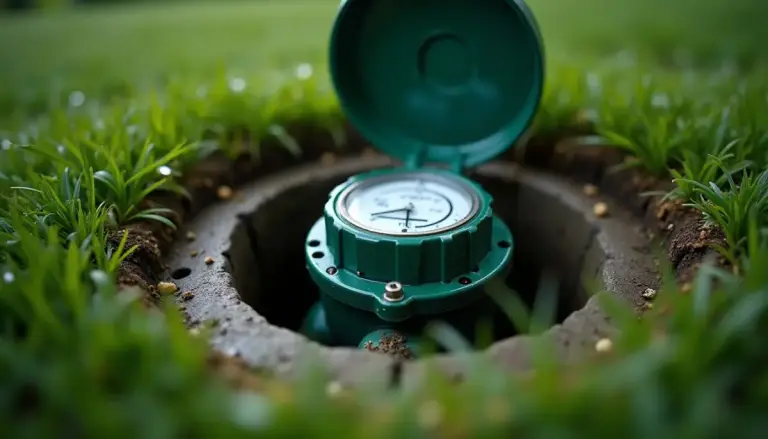
Septic Smell in Yard: Causes and What to Do

A septic smell in yard areas usually means gas or effluent is escaping from one of four places: a loose tank lid, a saturated drain field, the roof vent, or a broken sewer line.
Key Takeaways
- EPA lists sewage odors, standing water and bright green, spongy grass over the tank or drain field as warning signs of a malfunctioning system.
- Where you smell it narrows the cause. Tank odors point to a lid seal or full tank, field odors to saturation or failure, roof line odors to the plumbing vent.
- OSHA puts the hydrogen sulfide odor threshold at 0.01 to 1.5 ppm, and at 100 to 150 ppm the gas knocks out your sense of smell. Never enter a septic tank.
- Fixr’s January 2025 data puts the cost of fixing a septic smell at $250 to $5,000, from a $150 lid repair up to a $20,000 leach field replacement.
- EPA says household tanks are typically pumped every 3 to 5 years and inspected at least every 3 years.
Why does my yard smell like septic?
Your yard smells like septic because gas or partly treated wastewater is reaching the surface somewhere it should not. The usual sources are a loose or cracked tank lid, a full tank, a saturated or failing drain field, a roof vent whose gas drifts down into the yard, or a cracked sewer pipe. Where the smell is strongest is the fastest clue to which one you have.
The tank holds wastewater so solids sink and grease floats, then sends the liquid to perforated pipes in the drain field, per EPA’s description of a conventional system. A healthy system keeps the gases it makes sealed in or sends them up the roof vent. Our explainer on how a septic system works walks through each part. Note where the odor peaks and match it below.
| Where you smell it | Likely cause | What to do |
|---|---|---|
| Over the septic tank lid or riser | Loose, cracked or unsealed lid; overdue pumping | Check the lid seat and gasket, keep people off it, book pumping if overdue |
| Over the drain field, with soggy or extra green grass | Saturated or failing drain field; surfacing effluent | Cut water use, keep kids and pets off, call a septic pro |
| Between the house and the tank | Cracked inlet pipe or a clog backing effluent up | Watch for slow drains and gurgling; a camera finds the break |
| Near the roof line, deck or patio | Plumbing vent gas pushed down by wind | Extend the vent pipe or add a carbon filter vent cap |
| All over the yard after heavy rain | Saturated soil, high water table, groundwater in the tank | Divert gutters and sump discharge; recheck after dry weather |
| Near a cleanout pipe (sewer homes) | Missing cleanout cap or broken sewer lateral | Replace the cap; have a plumber camera the lateral |
| Near the gas meter or a gas appliance vent | Possible natural gas leak | Leave the area and call the gas utility first |
What does a septic smell near the tank mean?
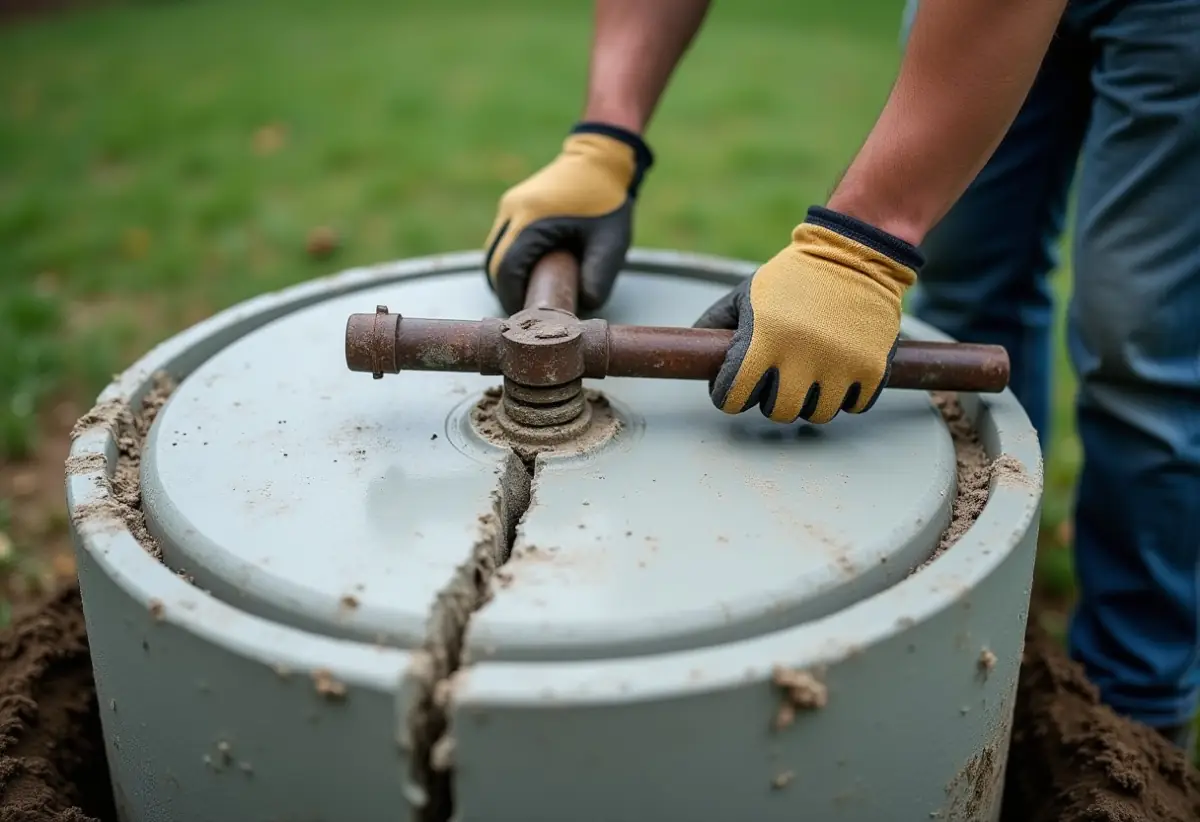
A septic smell concentrated over the tank almost always means gas is escaping through the lid, the riser joint or a crack in the tank top. The other common cause is a tank overdue for pumping, where built-up sludge and scum push gas toward every weak seal. Both are among the cheapest septic problems to fix if you catch them early.
A concrete lid that rocks underfoot is both an odor leak and a fall hazard, so rope it off until it is fixed. If the lid is sound, check the pumping date. EPA’s septic care guidance says household tanks are typically pumped every three to five years, and EPA warns that an overfull tank can push solids into the drain field. Our breakdown of what septic tank pumping costs covers tank size and regional prices.
What does a septic smell over the drain field mean?
A septic smell over the drain field means effluent is not soaking into the soil fast enough and is sitting near or on the surface. The field may be temporarily flooded by rain or heavy water use, or it may be failing because its pipes or soil are clogged. Soggy ground, standing water and unusually lush grass over the field confirm it.
EPA lists “bright green, spongy lush grass over the septic tank or drainfield, even during dry weather” among the warning signs on its septic malfunction page. EPA also says that once a field passes 25 to 30 years, the biomat at the bottom of the trenches can thicken until wastewater no longer drains well. Our guide to how a septic drain field works and fails covers rejuvenation versus replacement.
Common triggers are overload (EPA says one leaky toilet can add as much as 200 gallons a day), solids escaping an overdue tank, and pipes crushed by vehicles or roots.
Why does the smell come from the roof vent or drift across the patio?
A sewer smell near the roof line, deck or patio usually comes from the plumbing vent stack, which releases tank gases above the house. On calm, damp days or when wind rolls over the roof, those gases sink into the yard instead of rising away. EPA names both the roof vent and downdrafts as causes of odor inside or outside a septic home.
A low roof, a taller roof nearby or trees that block wind can trap vent gas near the ground. The fixes are cheap.
- Extend the vent: the University of Minnesota Onsite Sewage Treatment Program suggests extending the vent, on your house or a neighbor’s, when the whole yard smells of septic gas.
- Add a carbon filter cap: EPA notes that charcoal filters made for roof vents may reduce the odor. Replace the carbon on the maker’s schedule.

Why is the septic smell in the yard worse after rain?
A septic smell in the yard gets worse after rain because saturated soil cannot accept effluent, so wastewater backs up toward the surface. Rain can also raise the water table around the tank and let groundwater seep in through cracks or a poorly sealed riser.
Timing tells you a lot. A smell that fades after a few dry days points to an overloaded but working field. EPA says soft, wet soil over the field “especially when there have been no significant rainfall events” is a good indication of failure. EPA also notes some fields sit on poor soils or high water tables, so keep downspouts and sump discharge away from the tank and field, and spread out laundry during wet stretches.
Why does my yard smell like sewage with no septic tank?
A sewage smell in a yard with no septic tank usually comes from the sewer lateral, the private pipe from your house to the city main. A missing or cracked cleanout cap, a root-split lateral, or a dry trap in an outdoor drain can all release sewer gas. The odor can also drift over from a neighbor’s septic system or a street manhole.
- Find the cleanout. It is a capped pipe, usually 3 or 4 inches across, near the foundation or toward the street. A missing cap is a cheap fix.
- Refill outdoor drains. Pour a few gallons into yard or stairwell drains to reseal dry traps.
- Look for a wet stripe. A sunken, soggy or extra green line between house and street can trace a broken lateral.
- Check beyond your lot. If the smell peaks at the property line or a manhole, call the neighbor or your sewer utility.
Rule out natural gas first if the smell is sharp and sulfur-like near the meter. Gas utilities add a rotten egg odorant to natural gas, and the two smells are easy to confuse.
Is septic smell outside the house dangerous?
A septic smell outside the house is usually a nuisance and a warning sign rather than a poisoning risk, because hydrogen sulfide disperses quickly in open air. The danger rises sharply in enclosed spaces such as an open tank, pump chamber or manhole, where gases can reach toxic levels and methane can push out oxygen.
OSHA’s hydrogen sulfide hazard page puts the odor threshold at 0.01 to 1.5 ppm. It lists nausea, headaches or lost sleep with prolonged exposure at 2 to 5 ppm, loss of smell at 100 to 150 ppm, and rapid collapse at 700 to 1,000 ppm. A smell that suddenly vanishes near an open tank means back away.
Methane is odorless and flammable, and in a closed tank it can displace oxygen. NIOSH has documented deaths of workers who entered manure pits and similar waste tanks, from hydrogen sulfide and oxygen-poor air.
- Never climb into, reach into or lean over an open septic tank. Leave that to crews with gas meters.
- Keep children and pets off wet, smelly ground and away from any loose lid.
- For areas exposed to sewage, EPA recommends disinfecting with 90 percent water and 10 percent household bleach.
What should you do first, and how will a pro find the cause?
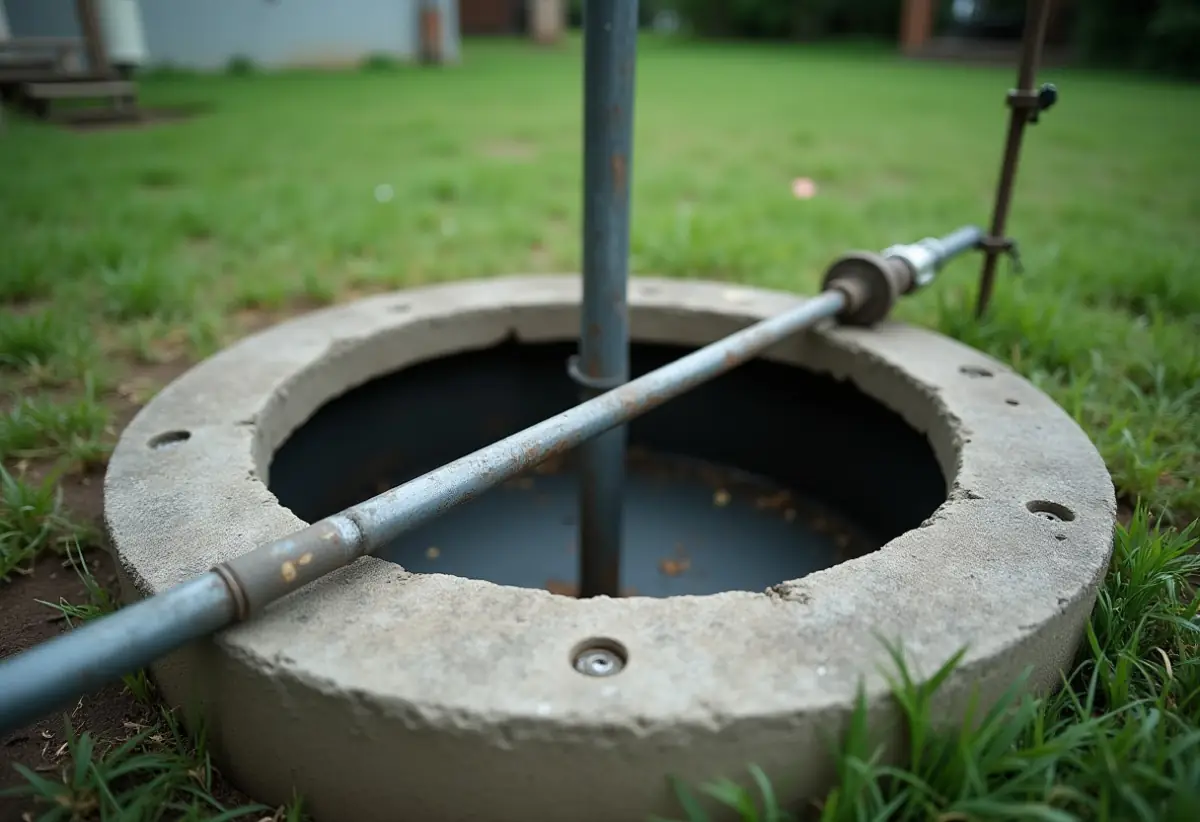
Start by locating the smell, checking the tank lid and cutting water use, then call a septic professional if the odor sits over the tank or field. A pro will open the tank, measure sludge and scum, check baffles and the effluent filter, probe the drain field, and may run a dye test or a camera to find a broken or blocked pipe.
- Locate it with the table above, and rule out natural gas at the meter.
- Check the lid and cleanout without lifting a heavy concrete lid yourself.
- Cut water use. Spread out laundry, fix running toilets, shut off irrigation near the field.
- Fence off wet ground from people, pets and vehicles.
- Call the right pro. A septic company for tank and field odors, a plumber for vents, cleanouts and laterals.
EPA’s inspection checklist includes opening all tanks, checking for staining above the outlet that signals backups, examining the distribution box, and possibly using a camera on pipes and leach lines. A dye test, where tracer dye is flushed and watched for in the yard, shows where effluent escapes.
How much does it cost to fix a septic smell in the yard?
Fixing a septic smell in the yard costs from about $150 for a lid repair to $20,000 for a leach field replacement, according to Fixr’s septic repair cost data updated January 2025. Fixr puts the typical cost of repairing a system that causes septic smells at $250 to $5,000. Catching the problem at the tank keeps you near the low end.
Bars show the top of each Fixr range, drawn to scale. A failed lid or baffle runs a few hundred dollars, while letting effluent surface until the field clogs can cost 40 times as much. EPA makes the same point, putting maintenance at $250 to $500 every three to five years against $5,000 to $15,000 to repair or replace a failed conventional system. Our full septic system repair cost guide breaks these jobs down further.
How to keep the smell from coming back
- Pump and inspect on schedule. Every 3 to 5 years for pumping per EPA, and yearly inspections for systems with pumps or floats.
- Control water use. EPA says indoor use can reach 70 gallons per person per day. Fix leaks and use toilets of 1.6 gallons per flush or less.
- Flush only waste and toilet paper, and keep cars, paving and trees off the field, per EPA.
How we sourced this
We reviewed top-ranking pages and People Also Ask questions for “septic smell in yard,” “septic smell outside house,” “septic smell after rain” and “sewage smell in yard no septic” in October 2026, then went to primary sources. We consulted 12 sources and cited 7, including EPA’s septic pages, OSHA’s hydrogen sulfide hazard table, the University of Minnesota Onsite Sewage Treatment Program and NIOSH. Repair prices come from Fixr’s septic repair data, updated January 31, 2025. They are national ranges, not quotes. We excluded contractor blog figures we could not trace to a named source.
Frequently asked questions
Is it normal to smell septic outside?
A brief whiff near the roof line on a still, damp day can be normal, because the plumbing vent releases tank gases by design and EPA notes that downdrafts can push them into the yard. A steady odor at the tank, over the drain field, or in soggy ground is not normal and usually points to a loose lid, a full tank or a struggling drain field.
Why does my yard smell like sewage after it rains?
Heavy rain saturates the soil over the drain field, so it cannot accept effluent and wastewater sits near the surface. Groundwater can also seep into a cracked tank or riser. If the smell fades after a few dry days, saturation is the likely cause. If soggy, smelly ground persists in dry weather, EPA treats that as a sign the field is failing.
Is septic smell harmful to breathe?
In open air the gas usually disperses, and the main effects are nausea, headaches and irritation, which OSHA lists for prolonged exposure at 2 to 5 ppm of hydrogen sulfide. The real danger is in enclosed spaces. At 100 to 150 ppm the gas deadens your sense of smell, so never lean into an open tank, pit or manhole.
How do I get rid of septic smell in my yard?
Match the fix to the location. Reseat or replace a loose tank lid, schedule pumping if the tank is overdue, add a taller vent pipe or a carbon filter cap for roof line odors, and cut water use while a soggy drain field dries out. Masking sprays and lime only hide the problem, so have a septic pro inspect any wet, smelly ground.
Why does my yard smell like sewage when I don’t have a septic tank?
On public sewer, the usual causes are a missing or cracked cleanout cap, a broken sewer lateral leaking under the lawn, a dry trap in an outdoor drain, or odor from a nearby municipal manhole or a neighbor’s septic system. Check the cleanout cap first. A plumber with a sewer camera can confirm a broken lateral before anyone digs.
Why does my yard smell like rotten eggs?
Hydrogen sulfide from sewage smells like rotten eggs, but so does the odorant gas utilities add to natural gas. If the smell is strongest near the gas meter, a gas line or an appliance vent, leave the area, avoid switches and flames, and call your gas utility from a safe distance. Treat it as a sewage problem only after gas is ruled out.