RV Antifreeze in Plumbing: Where It Goes in a House, How Much per Trap, and What the SDS Sheets Say
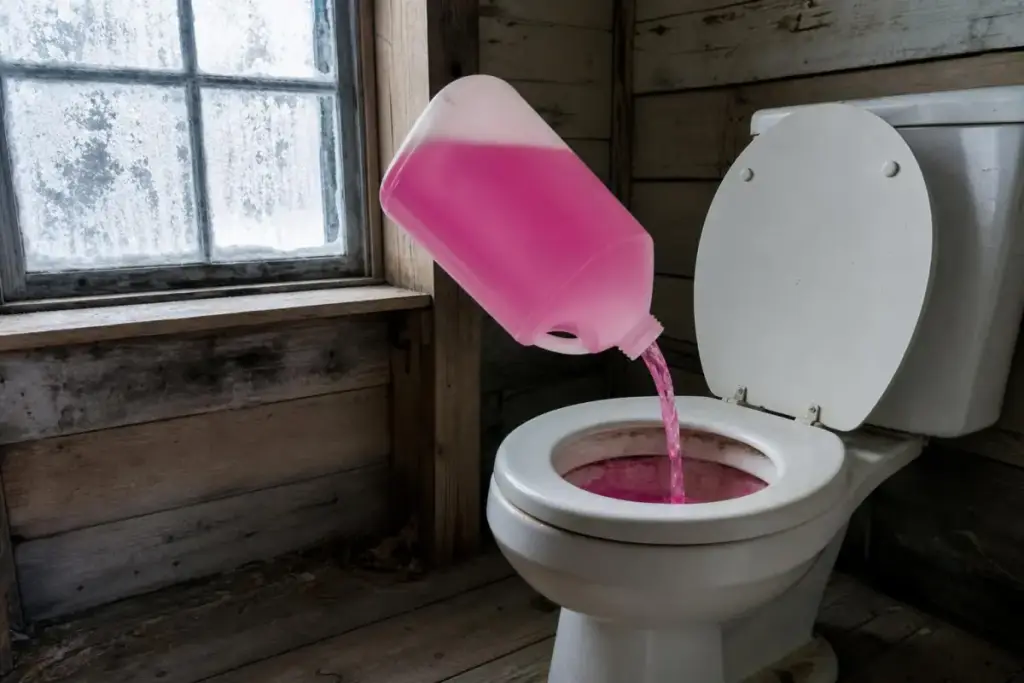
RV antifreeze in plumbing belongs only in drain traps, toilet bowls, floor drains and sump pits, after the supply lines and water heater are drained. Purdue Extension sets the dose at 1 pint to 1 quart per trap, so a 2 bath house needs about 1.1 to 2.3 gallons of propylene glycol antifreeze.
Where does RV antifreeze go in a house, and where must it stay out?
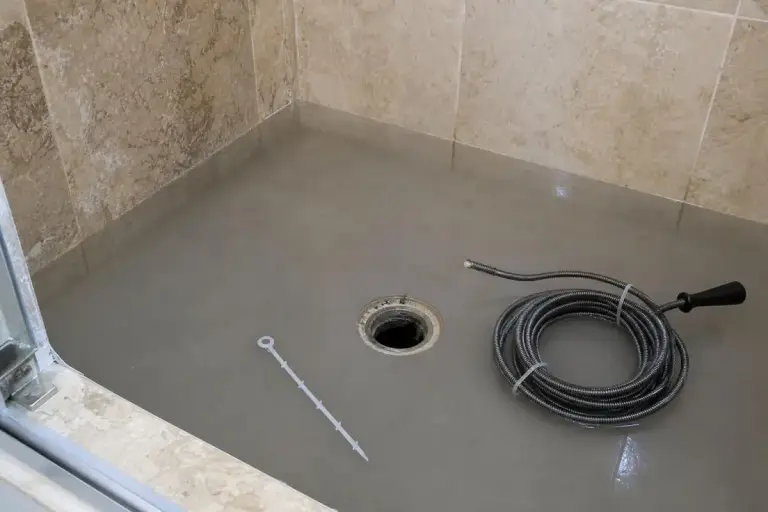
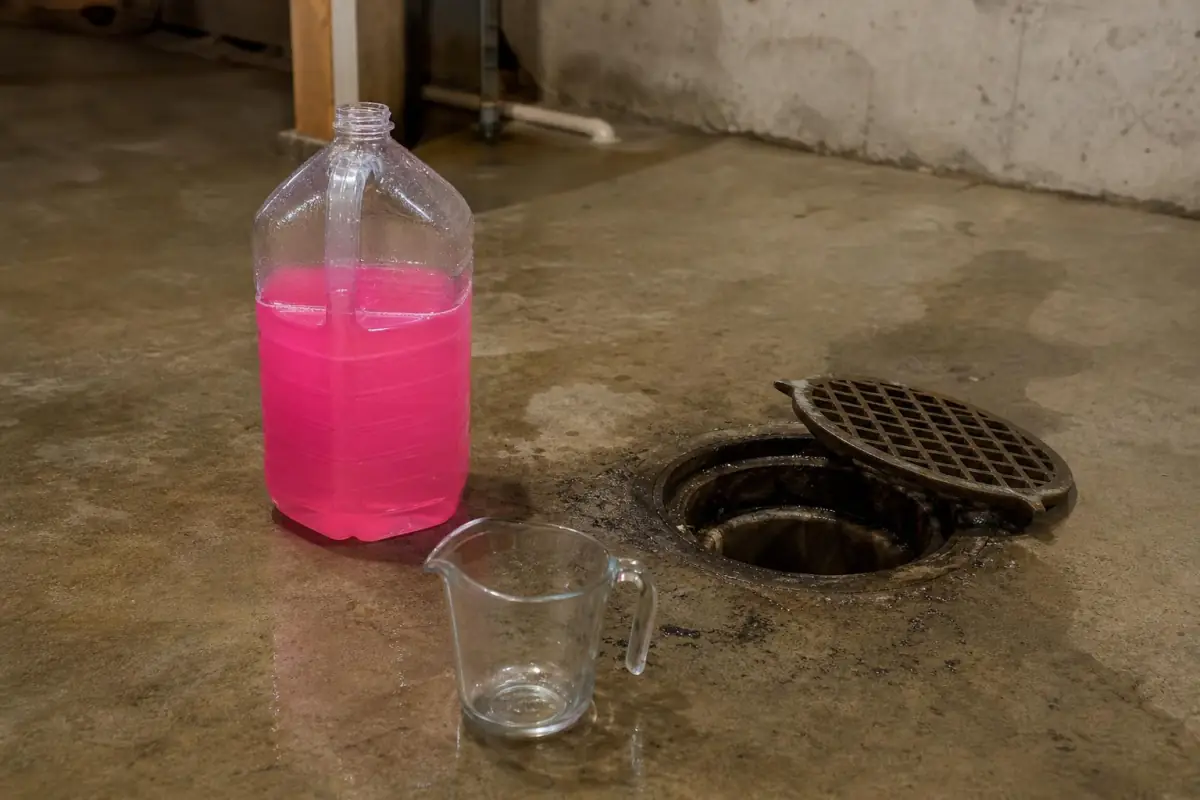
Antifreeze goes into every water seal that stays in the drain system after the house is drained: sink, tub and shower traps, toilet bowls, the laundry standpipe or washtub trap, floor drains and the sump pit. The University of Minnesota’s Onsite Sewage Treatment Program lists exactly that set, “sinks, bathtub and shower drains, washtubs, floor drains and sump pumps,” in its seasonal septic winterizing guidance, and adds toilet tanks.
Three places get drained, never dosed. Purdue Extension’s PREPnote on protecting plumbing in a winter power failure names the water heater, washing machine and dishwasher, tells you to drain the pumps on the washer and dishwasher, and says “Do not put antifreeze in these appliances.” The dishwasher still drains through the kitchen sink trap, so that trap gets its dose like any other.
How much RV antifreeze per trap? Purdue’s 1 pint to 1 quart rule
Purdue Extension says to add propylene glycol antifreeze “in an amount equal to the water in the trap,” and puts that at 1 pint to 1 quart depending on trap size. The other choice in the same document is to blow the trap out with compressed air or pull the cleanout plug, which leaves nothing to freeze and needs no antifreeze at all.
The popular “about a cup per drain” advice on RV sites falls short of that. One cup is half a pint, so it replaces 50 percent of the water in a 1 pint trap and 25 percent in a 1 quart trap. A Recochem product sheet for its Econo Plumbing Antifreeze warns that water left in traps dilutes the product and “will reduce the level of burst protection,” so the cup rule only works on a trap you have already emptied.
| House | Traps counted | At 1 pint each | At 1 quart each | 1 gallon jugs to buy |
|---|---|---|---|---|
| 1 bath | 6: kitchen sink, bath sink, tub, toilet, laundry standpipe, floor drain | 0.75 gal | 1.5 gal | 2 |
| 2 bath | 9: adds a second sink, shower and toilet | 1.13 gal | 2.25 gal | 3 |
| 3 bath | 12: adds a third sink, shower and toilet | 1.5 gal | 3.0 gal | 3 |
| Same 1 bath house, “1 cup per drain” rule | 6 | 0.375 gal, half of Purdue’s minimum | 1 | |
The math: 8 pints or 4 quarts make a gallon, so 6 traps at 1 pint is 6 divided by 8, or 0.75 gallon, and 9 traps at 1 quart is 9 divided by 4, or 2.25 gallons. Buy to the quart column and round up, because a sealed jug keeps for next season and a short jug leaves the last trap undosed. Add a sump pit, a second floor drain or a wet bar sink and each one adds another 1 pint to 1 quart. For the toilet, Purdue’s dose covers the bowl trap after the tank is drained and the bowl is emptied; Oatey and the University of Minnesota also add antifreeze to the tank to keep the flapper seal wet, and neither publishes a tank volume.
Drain the supply lines and water heater before any antifreeze goes in
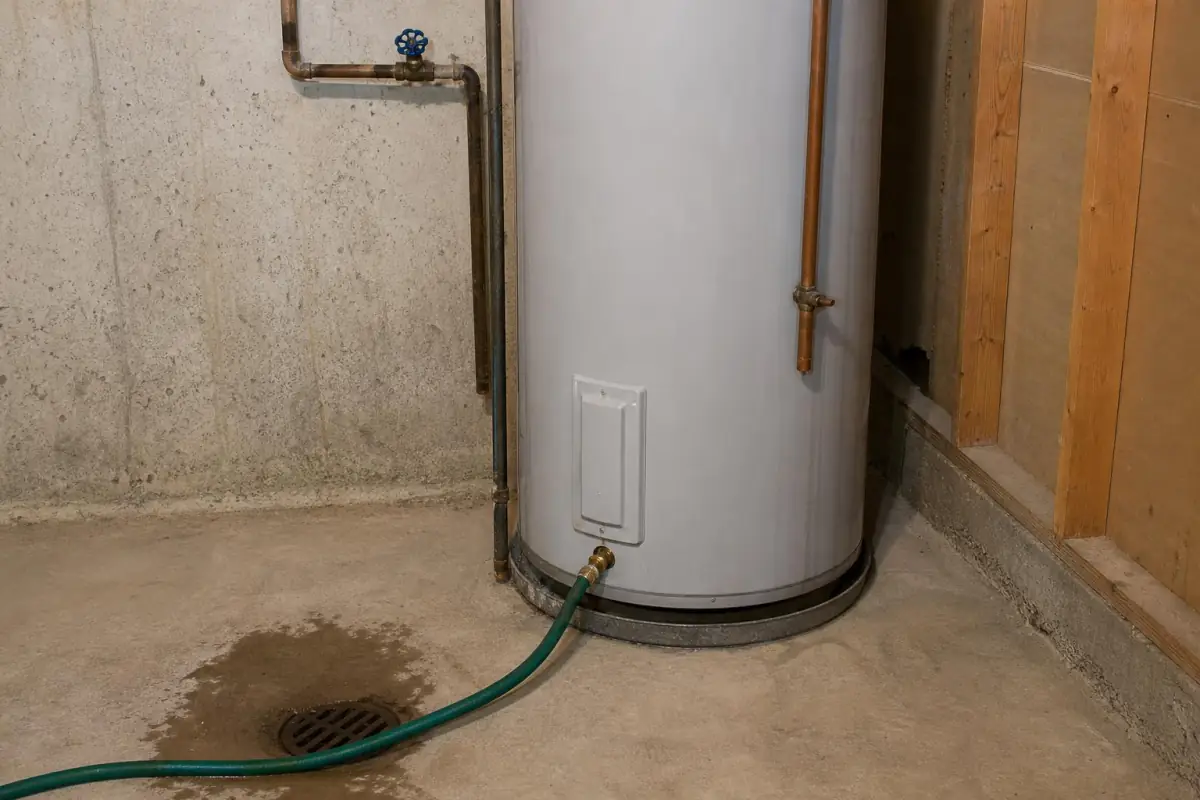
A house is not winterized like an RV: Purdue Extension says propylene glycol “is still not recommended for use in water supply systems,” so the pressure side gets emptied, not filled. The City of Hopkins, Minnesota vacant home winterizing checklist gives the order in 12 steps; the plumbing ones run like this:
- Close the main shutoff; Hopkins also has residents call Public Works at 952-939-1382 to shut water at the curb.
- Turn the water heater off (gas control to Off and gas valve closed, or the electric breaker off), then drain it with a faucet open so air can enter. Our drain-valve and hose steps for emptying a tank water heater cover the hookup.
- Open every faucet and fixture shutoff, and drain the pressure tank on a well.
- Blow the supply lines out with an air compressor. Hopkins notes gravity leaves standing water in some runs and that CPVC, unlike PEX, is prone to cracking.
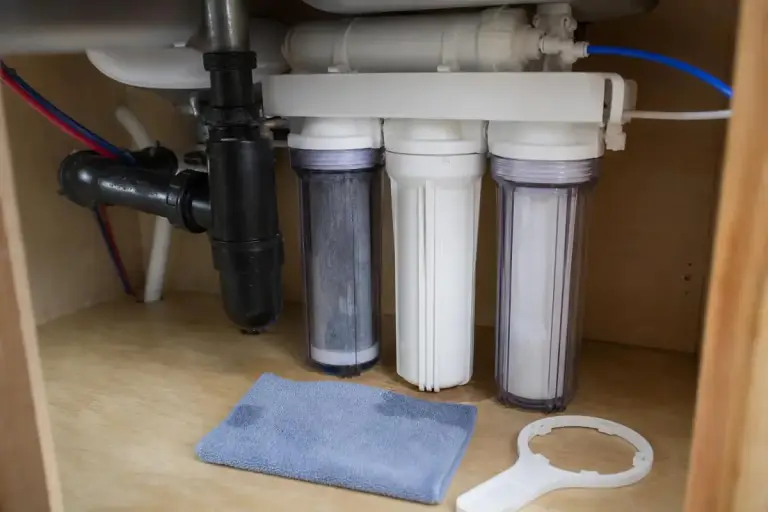
- Drain the water softener, filters, ice maker line, washer and dishwasher.
- Flush the toilets empty, then dose the toilets and every trap with pink non-toxic RV antifreeze.
- Post the “Winterized – Do Not use Plumbing” signs Hopkins calls for, and a note at the electric panel so nobody powers an empty water heater.
Pick the date from the first hard freeze date for your city, not the calendar. In a manufactured home plumbing layout, the same trap list applies, plus the supply runs under the floor that Hopkins’ compressor step is meant to clear. If one section, such as a well line in a crawl space, cannot be drained, the Purdue PREPnote’s answer is insulation, and heat tape on the pipes that cannot be drained is the powered option while the electric service stays on.
Which RV antifreeze: what four Camco, Splash and Star brite SDS sheets list
The “-50” on the front of a jug says nothing about chemistry: the four safety data sheets below cover two ethanol formulas and two propylene glycol formulas. Section 3 of each SDS names the ingredient by CAS number, 57-55-6 for propylene glycol and 64-17-5 for ethanol.
| Product, codes | SDS date | Main ingredient (Section 3) | Flash point | Other SDS facts |
|---|---|---|---|---|
| Camco Arctic Ban -50, 30806, 30807, 30808 | March 17, 2015 | Ethyl alcohol, 15 to 25% by volume | 110 F (TCC) | GHS Flammable Liquid Category 3; H373, may damage organs through repeated exposure |
| Splash RV and Marine -50 F, PN 619527 | July 16, 2015, version 2a | Ethanol, 13 to 15% | 51 C (124 F) | Flammable Liquid Category 3; ethanol oral LD50 7,000 mg/kg (rat) |
| WinterSafe -50 F / -46 C (Star brite line), 312XX | September 24, 2014 | 1,2-propylene glycol, 5 to 10% | Above 212 F | GHS not classified; “Not flammable”; pH 8; responsible party Kinpak Inc., Montgomery, Alabama |
| Camco Premium Ban Frost 2000, 30626, 30625 | September 18, 2017 | Propylene glycol, about 100% | 228.2 F (PMCC) | Not hazardous under OSHA HazCom; freeze point -76 F; oral LD50 22,000 mg/kg (rat) |
For a house with pets, a gas water heater nearby or a septic tank, the propylene glycol rows win: the two ethanol sheets carry a flammable liquid classification and a 3 to 1 lower oral LD50 for their active ingredient (7,000 versus 22,000 mg/kg). Splash sells more than one -50 formula, so match the PN on your jug to its SDS. Automotive antifreeze is a separate product class: Purdue Extension calls ethylene glycol “NOT safe to use in any part of a home water system,” and the University of Minnesota guidance bans it from plumbing on septic homes.
What “-50 F burst protection” means, and why it is not the freeze point
Burst protection is the temperature the fluid can reach without expanding enough to split pipe; the freeze point is where ice crystals start, and it is far warmer. Star brite’s product copy for part 31400R, as listed by Wholesale Marine, rates it to -50 F burst while a refractometer reads its freeze point at +12 F to +16 F on the propylene glycol scale. Recochem describes the same behavior: plumbing antifreeze “will turn thick and viscous” and “will not expand as water does.”
Star brite’s copy gives the decision rule: PVC drinking water pipe bursts at about -10 F, and below -10 F it recommends its -100 F product. Both ratings assume the product goes in undiluted (“ready-to-use; do not dilute it”), which is the second reason to empty each trap before pouring.
Toilets, pets and the spring flush
A dosed toilet bowl is the one spot an animal can drink from, so close every lid and tape a do-not-use sign to the seat. Propylene glycol is the lower-risk choice by the SDS numbers above, but cats are a stated exception: 21 CFR 589.1001 records the FDA finding that propylene glycol in cat food “has not been shown by adequate scientific data to be safe.” In a camper toilet, Dometic and Thetford both ban automotive ethylene glycol, and silicone is the only spray either maker approves for the seal, a rule spelled out in our notes on keeping an RV toilet seal tight.
In spring, Hopkins says to close every faucet and fixture shutoff before reopening the main or restarting the well pump, then refill the water heater before its breaker or gas goes back on. Running each fixture until the pink color clears pushes the 0.75 to 3 gallons from the table above into the sewer or septic tank; on a 1,000 gallon tank, 3 gallons is 0.3 percent of its volume. The Camco Ban Frost SDS says “Dilute aqueous waste may biodegrade,” and the University of Minnesota program, which advises pumping a seasonal tank before a long shutdown, treats RV antifreeze in traps as acceptable on septic.
RV antifreeze in house plumbing: quick answers
Is RV antifreeze safe for a septic system?
The University of Minnesota Onsite Sewage Treatment Program says RV antifreeze can go into sink, tub, shower, washtub and floor drain traps on a septic home, and bans automotive antifreeze. The 3 gallons a 3 bath house needs at most equals 0.3 percent of a 1,000 gallon tank. The Camco Ban Frost SDS says dilute aqueous waste may biodegrade.
Can I pump RV antifreeze through a house’s water supply lines like an RV?
Purdue Extension says propylene glycol is not recommended for water supply systems in buildings. Houses are winterized by shutting the main, opening every faucet, draining low points and blowing the lines out with compressed air, as the City of Hopkins, Minnesota checklist directs. Antifreeze goes in the drain side only.
Is RV antifreeze the same as car antifreeze?
No. Automotive coolant is ethylene glycol, which Purdue Extension says is not safe in any part of a home water system. RV antifreeze is propylene glycol, ethanol, or a blend, sold ready to use. Pink color is not proof of type, so read Section 3 of the jug’s safety data sheet for CAS 57-55-6 or 64-17-5.
Will one gallon of RV antifreeze winterize a whole house?
Only a small one. At Purdue Extension’s 1 pint per trap minimum, a gallon covers 8 traps, and at the 1 quart maximum it covers 4. A 1 bath house with 6 traps needs 0.75 to 1.5 gallons, a 2 bath house with 9 traps needs 1.1 to 2.3 gallons.
How we sourced this
Quantities come from Purdue Extension’s PREPnote 3 (reviewed November 2019), which gives 1 pint to 1 quart per trap and bars antifreeze from the water heater, washer and dishwasher. Placement and septic guidance come from Sara Heger of the University of Minnesota Onsite Sewage Treatment Program (Onsite Installer, October 2018) and the City of Hopkins, Minnesota checklist. Product data come from four SDS documents (Camco 2015 and 2017, Splash 2015, WinterSafe 2014), Star brite’s 31400R product copy, Recochem’s Econo Plumbing Antifreeze page and 21 CFR 589.1001. The house totals are our arithmetic on Purdue’s range with the trap counts shown; real trap volumes vary. No published maker or extension figure for toilet tank volume was found, so none is given, and no study measuring propylene glycol effects inside residential septic tanks was found, so no septic percentage beyond the dilution arithmetic is stated.