PFAS in Drinking Water: Limits, Testing and Filters
PFAS in drinking water is common: USGS estimates at least 45% of US tap water carries one or more, and EPA’s enforceable 4.0 ppt limits for PFOA and PFOS still stand while a 2031 deadline is proposed.
Key Takeaways
- USGS estimated in July 2023 that at least 45% of US tap water contains one or more PFAS.
- The EPA rule finalized April 10, 2024 set enforceable limits of 4.0 ppt for PFOA and PFOS, 10 ppt for PFHxS, PFNA and HFPO-DA (GenX), and a Hazard Index of 1 for mixtures.
- On May 18, 2026 EPA proposed keeping the PFOA and PFOS limits with an optional extension to 2031, and rescinding the other four. As of October 2026 neither proposal is final.
- EPA’s final UCMR 5 data summary (July 2026) estimates 7.8% of US public water systems had an average above at least one April 2024 PFAS limit, rising to 15.5% of large systems.
- ATSDR links certain PFAS to higher cholesterol, lower vaccine response and, for PFOA, kidney and testicular cancer, as associations rather than proven causes.
- EPA says activated carbon, reverse osmosis and ion exchange can reduce PFAS, and tells buyers to look for NSF/ANSI 53 or 58 certification for PFAS reduction.
What is PFAS in drinking water, and how common is it?
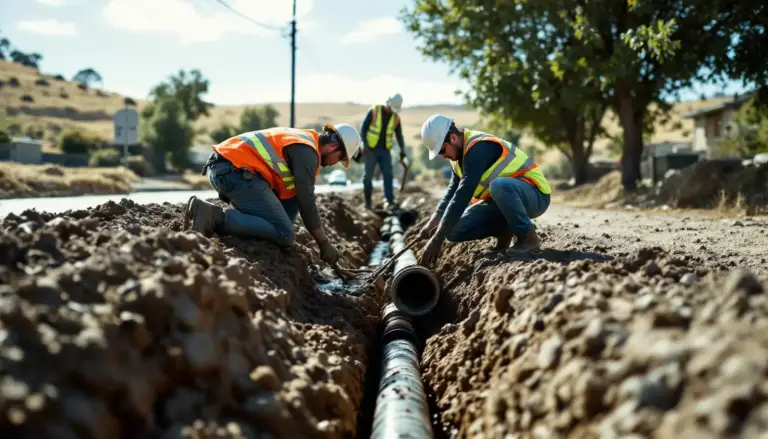
PFAS in drinking water means per- and polyfluoroalkyl substances, a family of more than 12,000 human-made chemicals by the USGS count, that have leached into rivers, aquifers and wells. They resist heat, grease and water and break down extremely slowly, which is why people call them forever chemicals.
The best national snapshot of taps comes from the US Geological Survey. In a study released July 5, 2023, USGS scientists tested water from 716 kitchen faucets, both private wells and public supplies, for 32 PFAS. The USGS tap water study estimated that at least 45% of the nation’s tap water has one or more of them.
Location mattered more than the type of supply. USGS estimated the chance of finding no PFAS at about 75% in rural areas versus about 25% in urban areas, and PFBS, PFHxS and PFOA were detected most often.
What is the EPA limit for PFAS in drinking water?
The EPA limit for PFAS in drinking water is 4.0 parts per trillion each for PFOA and PFOS, set in the National Primary Drinking Water Regulation announced April 10, 2024 and published in the Federal Register on April 26, 2024. The same rule set 10 ppt limits for PFHxS, PFNA and HFPO-DA (sold as GenX) and a Hazard Index of 1 for mixtures.
The Hazard Index is a unitless score for when two or more of PFHxS, PFNA, HFPO-DA and PFBS show up together. PFBS has no limit of its own and counts only inside that mixture math.
EPA also set non-enforceable health goals of zero for PFOA and PFOS, meaning the agency found no level of those two without some risk. EPA set the enforceable figure at 4.0 ppt, the lowest level it judged labs could reliably measure. Compliance is judged on a running annual average at each sampling point.
| PFAS | April 2024 enforceable limit | Health goal (MCLG) | Status as of October 2026 |
|---|---|---|---|
| PFOA | 4.0 ppt | Zero | In force; May 2026 proposal keeps it, with optional extension to 2031 |
| PFOS | 4.0 ppt | Zero | In force; May 2026 proposal keeps it, with optional extension to 2031 |
| PFHxS | 10 ppt | 10 ppt | In force; proposed for rescission May 2026 |
| PFNA | 10 ppt | 10 ppt | In force; proposed for rescission May 2026 |
| HFPO-DA (GenX) | 10 ppt | 10 ppt | In force; proposed for rescission May 2026 |
| Mixture of PFHxS, PFNA, HFPO-DA, PFBS | Hazard Index of 1 | Hazard Index of 1 | In force; proposed for rescission May 2026 |
What changed in the PFAS drinking water rule in 2025 and 2026?
EPA kept the PFOA and PFOS limits but moved to loosen the rest. On May 14, 2025 the agency said it would keep the 4.0 ppt limits, give utilities until 2031, and revisit the other four. On May 18, 2026 it proposed two rules to do that. Neither was final as of October 2026, so the April 2024 rule, including its 2029 deadline, still governs.
The timeline, from EPA’s PFAS regulation page and the Federal Register:
- April 10, 2024: EPA announces the final rule with six limits. Initial monitoring is due by 2027 and compliance by 2029.
- May 14, 2025: EPA announces it will keep the PFOA and PFOS limits, extend their compliance date to 2031, and reconsider PFHxS, PFNA, HFPO-DA and the Hazard Index.
- September 11, 2025: In the industry lawsuit AWWA v. EPA (D.C. Circuit, No. 24-1188), EPA asks the court to vacate the four limits it plans to drop.
- January 12, 2026: The court denies that request, finding the merits not clear enough for summary action.
- May 18, 2026: EPA proposes two rules. One upholds the PFOA and PFOS limits and lets systems request two more years, to 2031. The rescission proposal published May 20, 2026 would remove the PFHxS, PFNA, HFPO-DA and Hazard Index standards.
- July 20, 2026: Public comment closes on both proposals, after a July 7 public hearing.
As of mid-October 2026, EPA’s rule page still lists both as proposals, and the Harvard Environmental and Energy Law Program tracker (updated September 18, 2026) reports no final rule and the court case still pending. The 2031 option and the rescission would apply only once EPA finalizes them. Some states set their own, sometimes stricter, PFAS limits.
Is PFAS in drinking water harmful to your health?
Long-term exposure to some PFAS is linked to health effects, but the evidence shows associations, not proven cause and effect at the levels in most taps. The CDC’s Agency for Toxic Substances and Disease Registry lists higher cholesterol, lower antibody response to some vaccines, liver enzyme changes, pregnancy-induced high blood pressure, small decreases in birth weight, and kidney and testicular cancer for PFOA.
Each effect on the ATSDR health effects page is tied to specific compounds, and the cancer link is to PFOA alone. ATSDR notes that many animal studies used doses higher than people normally get.
Pregnant people, infants on formula mixed with tap water and anyone near a known contamination source have the most reason to check. A single glass of water above 4.0 ppt is not an emergency, and EPA’s drinking water limits are designed around long-term, daily exposure.
How do you find PFAS results for your water utility?
Start with EPA’s UCMR 5 Data Finder, which holds PFAS results for about 10,130 public water systems that tested for 29 PFAS between 2023 and 2025. Search by system or state and compare PFOA and PFOS to 4.0 ppt. Your utility’s annual water quality report is the next stop.
UCMR 5 covered every community and non-transient non-community system serving more than 3,300 people plus a random sample of 800 smaller ones. The final UCMR 5 data summary, dated July 2026, compared each system’s averages with the April 2024 limits. EPA stresses that these results do not decide compliance.
Among large systems, PFOS and PFOA averages topped 4.0 ppt roughly ten times as often as the most-exceeded of the other four limits.
For a wider read on your water, our guide to whether your tap water is safe to drink covers lead, bacteria and other contaminants. Our map of drinking water violations by state shows where systems already struggle.
How do you test for PFAS in water at home?
To test for PFAS in water at home, order a sampling kit from a state-certified or accredited lab, fill the bottles exactly as instructed, and ship them back for analysis by an EPA method. Penn State Extension puts the price at about $250 to $500 per sample. Cheap dip strips and general water test kits do not measure PFAS at parts-per-trillion levels.
Connecticut’s environmental agency says a sample typically costs $300 or more and warns that the field blank, a bottle of PFAS-free water that travels with your sample, may be billed as a second analysis. Ask for the price of both before you order.
- Check your utility’s UCMR 5 results first. If you are on city water and PFOA and PFOS were not detected, a private test may add little.
- Get your state’s certified lab list and ask about free or subsidized PFAS testing.
- Avoid PFAS sources while sampling, as lab kits typically instruct. Skip waterproof jackets, stain-treated clothing and fast-food wrappers, and wash your hands with plain soap.
- Sample the cold kitchen tap, with any filter bypassed unless you are testing that filter.
- Ship it on the lab’s schedule. Labs set holding times and temperatures, and a late or warm sample may need a redo.
- Compare PFOA and PFOS results to 4.0 ppt and the rest to the 2024 limits.
Which PFAS water filter types actually work?
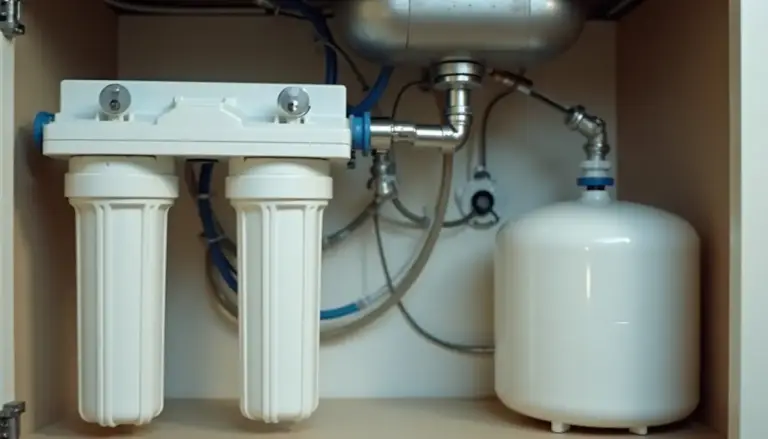
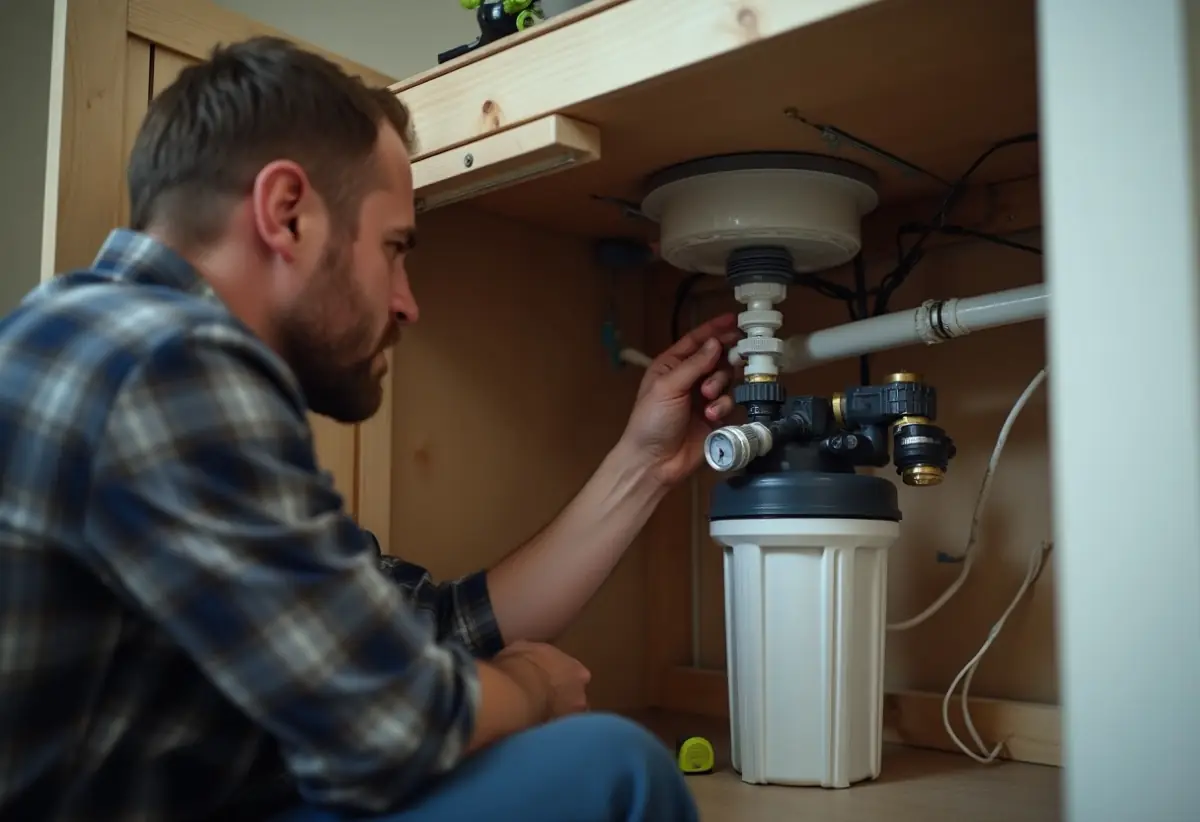
A PFAS water filter needs one of three technologies EPA names: granular activated carbon, reverse osmosis or ion exchange resin. The certification on the box matters more than the type. EPA tells buyers to look for NSF/ANSI 53 or NSF/ANSI 58 certification for PFAS reduction, issued by an accredited certifier such as NSF, WQA, IAPMO, UL or CSA Group.
The PFOA and PFOS reduction claim was added to NSF/ANSI 53 in its 2018 edition and was built around the old 70 ppt federal health advisory, according to NSF. EPA’s home filter guidance said in April 2024 that certifications did not yet show removal down to the new 4.0 ppt limits and that it is working with standards bodies to update them.
| Filter type | PFAS reduction evidence | Certification to look for | Typical cost |
|---|---|---|---|
| Under-sink reverse osmosis | Listed by EPA as effective; membrane blocks PFAS at one tap, usually after a carbon prefilter | NSF/ANSI 58 with PFOA/PFOS reduction claim | $150 to $1,300 installed; $100 to $300 a year upkeep (Angi 2026) |
| Activated carbon pitcher or faucet mount | Listed by EPA; results vary widely by model and cartridge age | NSF/ANSI 53 with PFOA/PFOS reduction claim | Low end of EPA’s $20 to $1,000-plus filter range |
| Under-sink carbon block | Listed by EPA; more carbon contact time than a pitcher | NSF/ANSI 53 with PFOA/PFOS reduction claim | Within EPA’s $20 to $1,000-plus range, plus cartridges |
| Whole-house carbon (point of entry) | Treats all taps; large carbon beds used by utilities for PFAS | Check the listing; many whole-house units carry no PFAS claim | $1,500 to $4,000 installed for multi-stage carbon systems (Angi 2026) |
| Ion exchange resin | Listed by EPA for home use; utilities use it for PFAS too | Look for a PFAS reduction claim on the listing | Varies; usually specified by a water treatment dealer |
| Boiling, softeners, sediment filters | Do not reduce PFAS; EPA says boiling does not remove them | None | Not a PFAS fix |
For drinking and cooking, a certified under-sink reverse osmosis system is the usual pick, because exposure comes mostly from swallowing water. A whole house water filter fits when levels are high or you want every tap treated, but confirm its PFAS listing first.
Change cartridges on schedule. EPA warns that a filter left past its replacement date can increase your PFAS exposure rather than cut it.
What should private well owners do about PFAS?
Private well owners should test, because no one else will. EPA states that it does not regulate or set recommended standards for private wells, so the 4.0 ppt limits apply only to public systems. USGS found PFAS concentrations in private wells similar to public supplies, so being on a well is no guarantee of clean water.
Wells near military bases, airports, fire training sites, landfills or chemical plants carry the most risk. Your state agency may already have sampled nearby wells.
If results come back high, EPA’s well guidance suggests a certified filter or an alternate source for drinking, cooking and baby formula. Retest after installing treatment to confirm it works.
How we sourced this
We consulted 17 sources and cited 14. Regulatory status comes from EPA’s PFAS NPDWR page (last updated May 18, 2026), the May 20, 2026 Federal Register rescission proposal, and the Harvard Environmental and Energy Law Program tracker (updated September 18, 2026), checked October 18, 2026. Occurrence data comes from the USGS July 2023 tap water study and EPA’s final UCMR 5 Data Summary (July 2026, EPA 815-S-26-007). Health effects come from ATSDR, treatment guidance from EPA’s home filter and private well pages and a MassDEP fact sheet, test prices from Penn State Extension and the Connecticut DEEP, and filter installed costs from Angi 2026 data. We excluded vendor claims and advocacy-group tap studies.
Frequently asked questions
What is the EPA limit for PFAS in drinking water?
The April 2024 EPA rule set enforceable limits of 4.0 parts per trillion each for PFOA and PFOS, 10 ppt each for PFHxS, PFNA and HFPO-DA (GenX), and a Hazard Index of 1 for mixtures. In May 2026 EPA proposed keeping the PFOA and PFOS limits and rescinding the other four. As of October 2026 neither proposal is final, so the 2024 rule still stands.
When do water utilities have to meet the PFAS limits?
Under the April 2024 rule, public water systems finish initial monitoring by 2027 and must meet the limits by 2029. EPA’s May 2026 proposal would let systems request two more years, to 2031, for PFOA and PFOS. Public comments closed July 20, 2026, and EPA had not issued a final rule as of October 2026, so the 2029 date remains the legal deadline for now.
Does boiling water remove PFAS?
No. EPA says PFAS cannot be removed by heating or boiling water, and the Massachusetts Department of Environmental Protection adds that boiling can raise PFAS levels slightly because some water evaporates. Boiling kills germs, not chemicals. Use a filter certified to NSF/ANSI 53 or 58 for PFAS reduction, or an alternate water source, for drinking, cooking and baby formula.
Does reverse osmosis remove PFAS?
Reverse osmosis is one of three home treatment types EPA lists for reducing PFAS, along with activated carbon and ion exchange resins. Buy a unit certified to NSF/ANSI 58 with a PFOA and PFOS reduction claim, and change the prefilters and membrane on the maker’s schedule. EPA warns that a neglected filter can raise your exposure instead of lowering it.
How much does a PFAS water test cost?
Expect about $250 to $500 per sample at an accredited lab, per Penn State Extension, and Connecticut’s environmental agency says $300 or more is typical. Ask whether the price covers the field blank sample, since some labs bill it as a second analysis. Many labs mail a kit with special bottles and step-by-step sampling instructions, and a state-certified lab running an EPA method is what regulators accept.
Is it safe to shower in water that contains PFAS?
For most households, yes. Penn State Extension notes that the evidence points to most PFAS exposure coming from drinking or swallowing water rather than skin contact. That is why EPA and state agencies focus on the water you drink, cook with and mix into baby formula, and why a single filtered tap in the kitchen covers most of the risk.
Do pitcher filters remove PFAS?
Some do and many do not. Look on the box for certification to NSF/ANSI 53 with a PFOA and PFOS reduction claim, then confirm the exact model in the certifier’s online directory. EPA notes that, as of April 2024, filter certifications did not yet show removal all the way down to the new 4.0 ppt limits, so treat a pitcher as a partial fix.
What happens if you drink water with PFAS in it?
Long term exposure to some PFAS is linked to health effects, though the evidence shows associations rather than proven cause and effect at levels found in most taps. ATSDR lists higher cholesterol, lower vaccine antibody response, liver enzyme changes, pregnancy related high blood pressure, lower birth weight, and for PFOA, kidney and testicular cancer. A single glass above the limit is not an emergency, since EPA limits target long-term, daily exposure.