Dishwasher vs Hand Washing: Water, Energy and Cost per Load
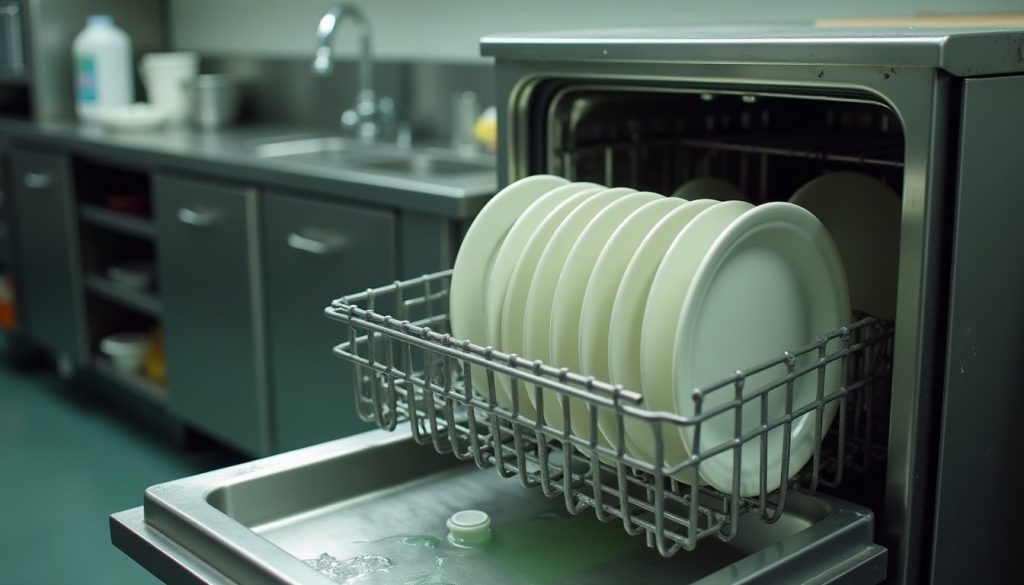
Dishwasher vs hand washing water usage is not close: an ENERGY STAR dishwasher uses at most 3.2 gallons per load, while the average hand washer in a University of Bonn study used about 27 gallons.
Key Takeaways
- ENERGY STAR caps certified standard dishwashers at 3.2 gallons and 240 kWh per year, about 1.12 kWh per cycle (ENERGY STAR criteria, effective July 19, 2023).
- In a University of Bonn lab study of 113 volunteers from 7 European countries, hand washing 12 place settings averaged about 27 gallons (103 liters) and 2.5 kWh, as reported by Rainer Stamminger in 2004.
- At the EIA 2026 forecast of 18.2 cents per kWh, energy for an ENERGY STAR load costs about $0.20, against about $0.46 for the average Bonn hand washer.
- The University of Michigan 2020 life-cycle study found the two-basin hand method had the lowest emissions of every method tested, 18% below a machine run with best practices.
- Two minutes of pre-rinsing at the federal faucet cap of 2.2 gallons per minute uses 4.4 gallons, more than a full ENERGY STAR cycle.
Dishwasher vs hand washing water usage: how many gallons per load?
A modern dishwasher uses 2 to 5 gallons per load, while typical hand washing uses roughly 16 to 27 gallons for a comparable stack of dishes. ENERGY STAR caps certified standard models at 3.2 gallons, federal law caps all standard models at 5.0 gallons, and lab tests of real people washing by hand averaged about 27 gallons for 12 place settings.
The machine numbers are regulatory ceilings. ENERGY STAR criteria effective July 19, 2023 allow a standard model 3.2 gallons per cycle and a compact 2.0 gallons. The federal minimum in 10 CFR 430.32 allows 5.0 gallons for a standard machine and 3.5 gallons for a compact.
The hand washing numbers come from measured studies, and they swing widely. In the University of Bonn lab, the average volunteer used about 27 gallons for 12 place settings and the worst used 53. Which?, the UK consumer testing group, measured 63 liters (16.6 gallons) for a 14-setting load.
Chart sources: University of Bonn (2004), Which? (2020), DOE 10 CFR 430.32 and ENERGY STAR. The running-tap bar is our arithmetic at the 2.2 gpm federal faucet cap.
What did the Bonn and Michigan dishwashing studies find?
Both studies found that a full dishwasher beats typical hand washing on water and energy, but they differ on the best hand method. Bonn measured 113 people and found machines used about one-sixth the water and half the energy. Michigan modeled full life-cycle emissions and found careful two-basin hand washing edged out even a well-run machine.
University of Bonn (Stamminger, 2004)
Rainer Stamminger, a professor of household and appliance technology at the University of Bonn, had 113 volunteers from 7 European countries each wash 12 place settings, about 140 pieces, in a metered lab. Results were reported in Home Energy magazine in 2004.
The average hand washer used about 103 liters (27 gallons) and 2.5 kWh. The test dishwashers averaged about 4 gallons and 1 kWh per cycle. Roughly half of the hand washers did not reach acceptable cleanliness.
University of Michigan (Porras and Keoleian, 2020)
The University of Michigan Center for Sustainable Systems study, published February 12, 2020 in Environmental Research Communications, by Gabriela Porras and Greg Keoleian, was run with Whirlpool and observed 38 Whirlpool employees.
- The running-tap method used more energy and water than any other method tested.
- The two-basin method produced the lowest emissions of all, 18% below a machine run with recommended best practices.
- Skipping the pre-rinse and turning off heated dry significantly cut machine emissions.
- The model assumed a natural gas water heater; emissions rose significantly with an electric one.
How much energy does each dishwashing method use per load?
An ENERGY STAR standard dishwasher is limited to about 1.12 kWh per cycle, while the average Bonn hand washer used 2.5 kWh for the same 12 place settings. Most of the energy in either method goes to heating water, so the method that uses less hot water almost always uses less energy, regardless of what the appliance draws itself.
The per-cycle figure is the ENERGY STAR cap of 240 kWh per year divided by the 215 cycles per year the DOE test assumes, and it includes heating the water the machine uses. A federal-minimum machine, capped at 307 kWh, works out to about 1.43 kWh per cycle.
Hand washing energy tracks hot water volume. Heating one gallon from the 58 degree F inlet used in DOE water heater testing to 125 degrees F takes about 559 BTU (8.34 BTU per degree), roughly 0.16 kWh before heater losses. Every 6 gallons of hot water is about 1 kWh.
| Method | Gallons per load | Energy per load | Energy cost per load at 18.2¢/kWh | Source |
|---|---|---|---|---|
| ENERGY STAR standard dishwasher (cap) | 3.2 | 1.12 kWh (240 kWh / 215 cycles) | $0.20 | ENERGY STAR criteria, 2023 |
| ENERGY STAR compact dishwasher (cap) | 2.0 | 0.72 kWh (155 kWh / 215 cycles) | $0.13 | ENERGY STAR criteria, 2023 |
| Federal minimum standard dishwasher (cap) | 5.0 | 1.43 kWh (307 kWh / 215 cycles) | $0.26 | DOE, 10 CFR 430.32 |
| Dishwashers in the Bonn study (average) | About 4 | About 1 kWh | $0.18 | Stamminger, 2004 |
| Hand washing, Bonn average (12 settings) | About 27 (103 L) | 2.5 kWh | $0.46 | Stamminger, 2004 |
| Hand washing, Which? test (14 settings) | 16.6 (63 L) | Not reported | Not calculated | Which?, 2020 |
| Running tap, 10 minutes | 22 | About 1.8 kWh if half the flow is hot | $0.33 | Our math from the DOE 2.2 gpm faucet cap |
| Two-basin hand washing | Depends on basin fill | Lowest emissions of all methods tested | Lowest when only the wash basin is hot | University of Michigan, 2020 |
Is it cheaper to use a dishwasher than to wash dishes by hand?
Yes, a full dishwasher is cheaper in most US homes. At the EIA 2026 forecast of 18.2 cents per kWh, a load at the ENERGY STAR energy cap costs about $0.20 in electricity, while the 2.5 kWh the average Bonn hand washer used costs about $0.46. Water and sewer charges widen that gap further.
Here is the arithmetic, so you can swap in your own rate from your utility bill:
- Price assumption: 18.2 cents per kWh, the EIA Short-Term Energy Outlook forecast for the 2026 US residential average.
- Dishwasher energy: 240 kWh per year divided by 215 cycles equals 1.116 kWh per cycle. Multiply by $0.182 to get $0.203, or about $0.20 per load.
- Hand washing energy: 2.5 kWh (Bonn average) multiplied by $0.182 equals $0.455, or about $0.46 per load.
- Annual energy: 215 loads at $0.203 is about $44 a year for the machine. The same 215 loads by hand at $0.455 is about $98 a year, a gap of roughly $54.
- Annual water: 215 loads at 3.2 gallons is 688 gallons. At the Bonn average of 27 gallons, the same loads take 5,805 gallons, about 5,100 gallons more.
- Water cost: multiply the gallon gap by the combined water and sewer rate on your bill.
ENERGY STAR publishes a larger estimate on its dishwasher product page: a certified model can cut utility bills by about $220 a year and save 8,400 gallons of water compared with hand washing. Its hand washing assumptions use more water than the Bonn average.
A gas water heater lowers the cost of hot water for both methods, and the Michigan model assumed gas. Higher local electricity prices make every extra gallon of hot water by hand more expensive.
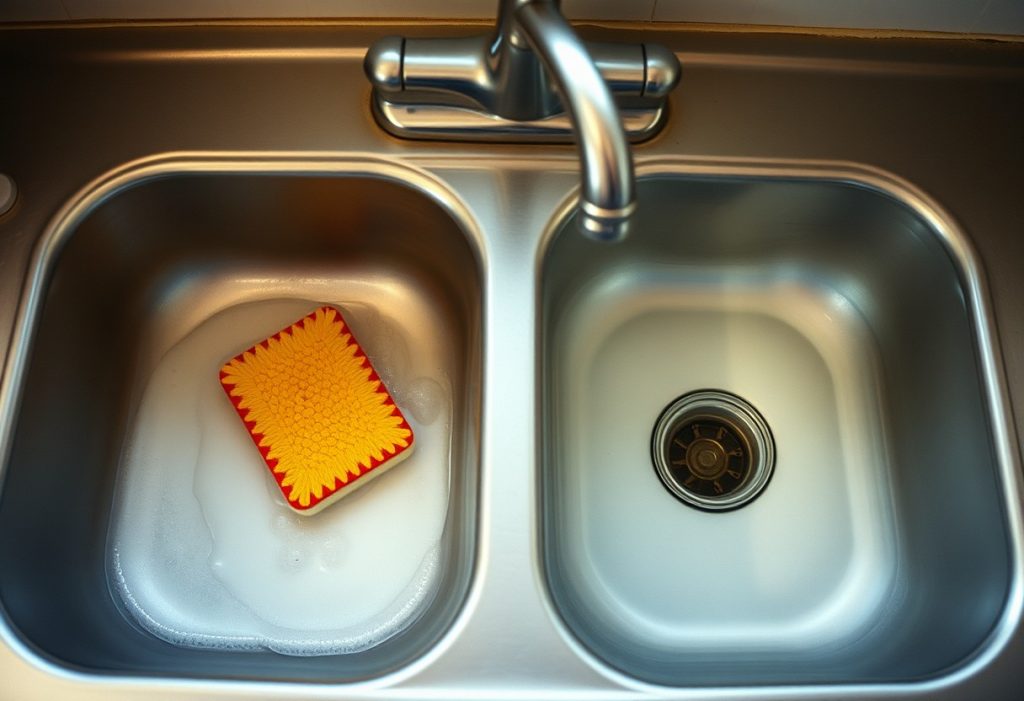
When can hand washing match a dishwasher on water and energy?
Hand washing can match or beat a dishwasher when you use the two-basin method: one basin of hot soapy water for scrubbing and one of cold water for rinsing, with the tap off. The University of Michigan 2020 study found this method had the lowest emissions of every method it tested, 18% below a well-run machine.
To beat an ENERGY STAR machine on water, the two basins plus any final rinse must total 3.2 gallons or less. Against a 5.0 gallon federal-minimum machine, you have 5 gallons. Measure one basin fill with a bucket to see where you land.
- Scrape food into the trash or compost instead of rinsing it down the drain.
- Fill one basin with hot soapy water and the other with cold rinse water.
- Wash glasses first and pots last, then dip each item in the cold basin and air dry.
The running tap is the method that loses. A kitchen faucet at the 2.2 gallon per minute federal cap uses 22 gallons in 10 minutes, nearly 7 times the ENERGY STAR cap. Switching from running tap to two basins cut emissions by about two-thirds in the Michigan analysis.
Which method gets dishes cleaner and more sanitary?
A dishwasher usually gets dishes cleaner and more sanitary than hand washing. Machines certified to NSF/ANSI 184 must reach a final rinse of at least 150 degrees F and reduce bacteria by 99.999%. Hand washing water is limited to what skin can tolerate, and about half of Bonn’s volunteers did not reach acceptable cleanliness.
Temperature is the reason. The Department of Energy recommends setting a home water heater to 120 degrees F, and many dishwashers boost water above that with an internal heater. A sink cannot do that.
A machine only sanitizes if it drains and fills properly. A dishwasher that is not draining leaves dirty water sitting in the tub, which defeats the purpose and often points to a clogged filter, a kinked drain hose or a blocked air gap.
Does pre-rinsing dishes waste water before a dishwasher load?
Yes. Pre-rinsing can use more water than the dishwasher itself. A faucet running at the 2.2 gallon per minute federal cap uses 4.4 gallons in two minutes, more than the 3.2 gallons an ENERGY STAR machine uses for the whole cycle. Michigan found skipping the pre-rinse significantly cut machine dishwashing emissions.
Modern enzyme detergents need food soil to act on, and many machines sense soil and adjust water to match. Scraping solids into the trash protects the filter and drain line.
If your machine leaves residue on full loads, check the plumbing first. Low supply pressure or a drain loop installed too low can hurt results. Our guide to supply, drain and air gap connections covers what a correct install looks like.
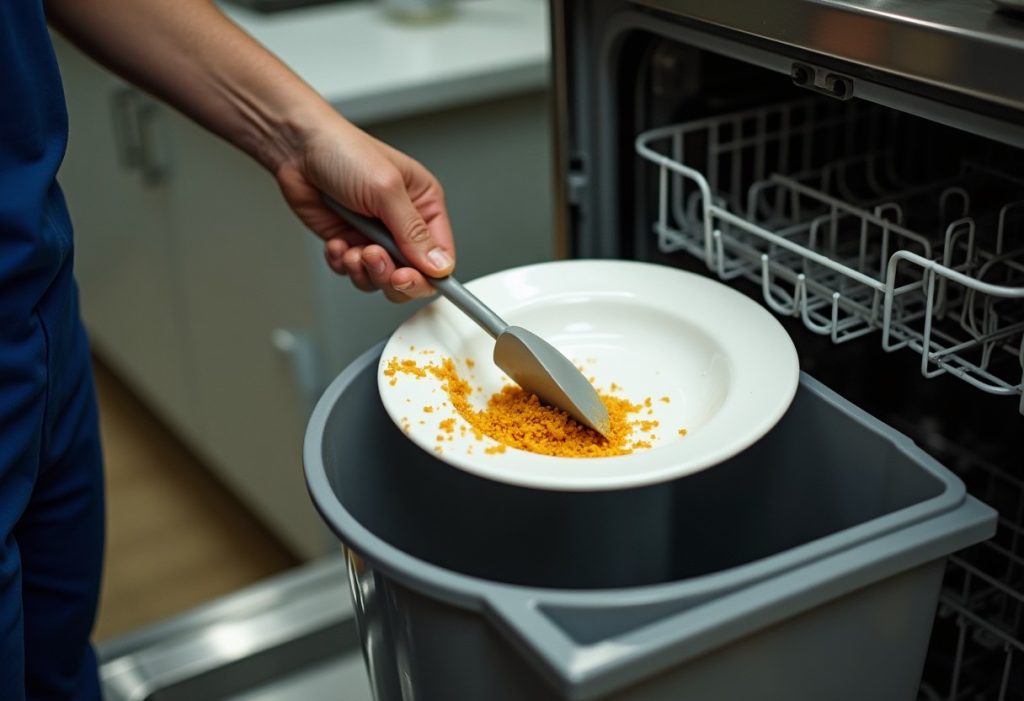
How do you get the lowest dishwasher vs hand washing water usage at home?
Run the dishwasher only when it is full, scrape instead of rinsing, choose the eco cycle and turn off heated dry. Those four habits match the best practices in the Michigan study and keep a machine near its rated 3.2 gallons or less. For the odd pot or small batch, use two basins instead of a running tap.
- Full loads only. Many machines use close to the same water whether they hold 4 plates or 12 place settings, so half loads can double the per-dish cost.
- Eco cycle. Eco settings run longer at lower temperatures, cutting water heating energy.
- No heated dry. Michigan flagged heated dry as a controllable source of machine emissions. Air dry instead.
- Check the label. ENERGY STAR means 3.2 gallons or less, versus 5.0 for a federal-minimum machine.
Dishwashing is a small share of indoor use. Our breakdown of how much water a household uses shows toilets, showers and faucets ahead of dishwashers, and our residential water use report tracks those end uses across US homes.
Does a dishwasher make sense for a one- or two-person household?
Often yes, if you wait for a full rack. A small household that runs a full load every two or three days still uses less water than daily hand washing under a running tap. If you cannot fill the rack within a few days, a compact ENERGY STAR model, capped at 2.0 gallons, or disciplined two-basin washing are the better fits.
The trap for small homes is the daily half load. Adding a dishwasher where none existed may also require a hot supply line, a dedicated circuit, a drain connection and, in some areas, an air gap, depending on local code.
How we sourced this
We consulted 15 sources and cited 9: the ENERGY STAR dishwasher criteria (effective July 19, 2023) and product page, the federal efficiency standards in 10 CFR 430.32, the University of Michigan 2020 study in Environmental Research Communications, the University of Bonn hand washing study as reported in 2004, the Which? 2020 water test, the EIA Short-Term Energy Outlook 2026 residential price forecast, the NSF/ANSI 184 residential dishwasher standard and DOE Energy Saver water heater guidance. Per-load costs are our arithmetic, electricity only, assuming an electric water heater, 215 cycles a year (the DOE test basis) and 18.2 cents per kWh. Water and sewer costs are excluded because rates vary by utility. The running-tap row assumes 10 minutes at 2.2 gpm with half the flow hot, an illustration rather than a measurement. Bonn and Which? loads differ (12 vs 14 settings), and the Michigan study was run with Whirlpool. We excluded vendor and blog figures we could not trace to a primary measurement.
Frequently asked questions
Does a dishwasher use less water than washing by hand?
Yes, in almost every measured case. An ENERGY STAR standard dishwasher is capped at 3.2 gallons per cycle, while the average volunteer in a University of Bonn lab study used about 27 gallons to wash 12 place settings by hand. A consumer test by Which? measured 63 liters, about 16.6 gallons, for 14 place settings washed by hand.
Is it cheaper to run a dishwasher or wash dishes by hand?
A full dishwasher is usually cheaper. At the EIA 2026 forecast of 18.2 cents per kWh, a load at the ENERGY STAR energy cap costs about 20 cents, versus about 46 cents for the 2.5 kWh the average Bonn hand washer used. Water and sewer charges widen the gap, because hand washing used roughly eight times more water.
How much water does a dishwasher use per cycle?
Federal rules cap a standard dishwasher at 5.0 gallons per cycle and a compact model at 3.5 gallons. ENERGY STAR certified standard models must use 3.2 gallons or less, and certified compact models 2.0 gallons or less, under the criteria in effect since July 2023. Many current models test below those caps.
Should you rinse dishes before putting them in the dishwasher?
No, scrape instead. A faucet at the federal cap of 2.2 gallons per minute uses 4.4 gallons in two minutes of rinsing, which is more than an entire ENERGY STAR cycle. The University of Michigan 2020 study found skipping the pre-rinse significantly cuts the emissions tied to machine dishwashing.
Is hand washing dishes more sanitary than a dishwasher?
Usually not. Dishwashers certified to NSF/ANSI 184 must reach a final rinse of at least 150 degrees F and cut bacteria by 99.999 percent. Hand washing water is limited to what skin can tolerate. In the Bonn study, about half of the hand washers did not reach an acceptable level of cleanliness.
Is it bad to run a dishwasher half full?
It wastes most of the advantage. Many dishwashers use close to the same water and energy whether they hold 4 plates or 12 place settings, so a half load can double the per-dish cost. If you cannot fill the rack in a day or two, a half-load or quick setting helps, and two-basin hand washing may compete on small batches.
When does hand washing beat a dishwasher?
Hand washing can beat a machine when you use the two-basin method, with one basin of hot soapy water and one of cold rinse water. The University of Michigan 2020 life-cycle study found this method had the lowest greenhouse gas emissions of all methods tested, about 18 percent below machine washing with best practices.
Is it better to handwash or use a dishwasher?
A dishwasher usually wins on water, energy, and cost. ENERGY STAR caps a standard cycle at 3.2 gallons and about 1.12 kWh, while the Bonn average hand washer used 27 gallons and 2.5 kWh. Machines also clean better, reaching 150 degrees F and cutting bacteria 99.999 percent, while about half of Bonn hand washers failed cleanliness. Only careful two-basin hand washing can match or beat a machine.