Drain Field Not Accepting Water: Causes, Tests and Fixes Before Replacement
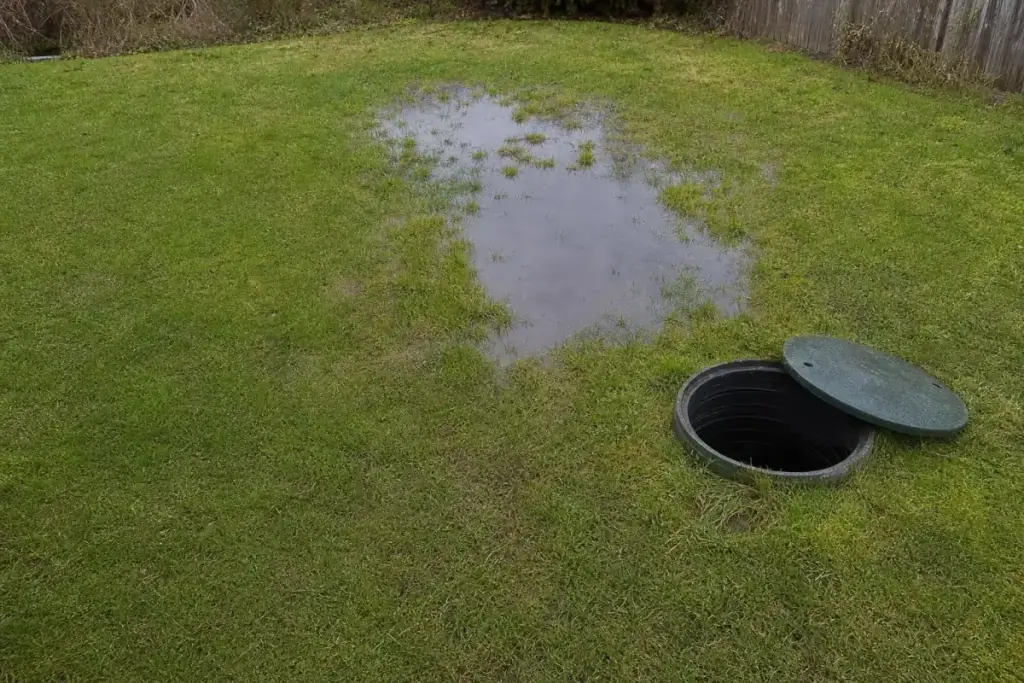
A drain field not accepting water is usually overloaded with water or sealed by biomat, the black, jelly-like layer that grows on trench bottoms. Cut household water use about 30 percent, pump the tank, and rule out roots, a tilted distribution box and a high water table before you price a replacement.
What makes a drain field stop accepting water?
A drain field stops accepting water when effluent arrives faster than the soil under the trenches can absorb it. The Winter 2005 Pipeline issue on drainfield rehabilitation, from West Virginia University’s National Environmental Services Center, names hydraulic and biological overloading as the two most common causes.
Pipeline describes the biomat as a black, jelly-like layer of anaerobic microbes, under 1 centimeter to several centimeters thick, that forms on the trench bottom and then climbs the sidewalls. It filters out viruses and pathogens, so it cannot and should not be prevented, but as it thickens the soil infiltration rate falls.
Once the hydraulic loading rate exceeds that infiltration rate, effluent ponds in the trench, then backs into the house, rises to the surface or blows out at the end of the last trench. That is often when owners first notice a septic smell in the yard.
Is your household sending more water than the field was sized for?
Rule out overload first: Oregon State University Extension publication EC 1340 calls using more water than the soil can absorb the most common reason for failure. The arithmetic below uses Minnesota’s code because it publishes both a design flow and a soil loading rate.
Inputs: 70 gallons per person per day, the EPA’s figure on its septic care page; Classification I design flows of 300 gpd for 2 bedrooms and 450 gpd for 3 (Minn. R. 7080.1860, Table IV); and septic tank effluent loading rates of 1.2 gpd per square foot for sand, 0.6 for blocky loam and 0.45 for clay loam (Minn. R. 7080.2150, Table IX). Trench bottom area is design flow divided by loading rate (Minn. R. 7080.2210, subp. 3).
| Field size (Minnesota Class I) | Sand, 1.2 | Loam, 0.6 | Clay loam, 0.45 |
|---|---|---|---|
| 2 bedrooms, 300 gpd | 250 sq ft | 500 sq ft | 667 sq ft |
| 3 bedrooms, 450 gpd | 375 sq ft | 750 sq ft | 1,000 sq ft |
| People | Flow at 70 gal each | Share of 2-bedroom design | Share of 3-bedroom design | 3-bedroom plus one running toilet (+200 gpd) |
|---|---|---|---|---|
| 2 | 140 gal | 47% | 31% | 76% |
| 3 | 210 gal | 70% | 47% | 91% |
| 4 | 280 gal | 93% | 62% | 107% |
| 5 | 350 gal | 117% | 78% | 122% |
| 6 | 420 gal | 140% | 93% | 138% |
The percentages hold in every soil, because each field was sized to its soil: 420 gallons on a 500 square foot loam field is 0.84 gpd per square foot against a 0.6 limit, the same 140 percent as on 250 square feet of sand. Five people in a 2-bedroom house are over design before any leak.
The 200 gallons is the EPA’s figure for one running toilet, enough to push 4 people past a 3-bedroom field’s 450 gpd. A 50-gallon softener recharge lifts 4 people on a 2-bedroom field from 93 to 110 percent that day.
Which of six causes is it, and what test separates them?
The first two rows are the causes Pipeline calls most common; the rest run from owner checks to jobs for a pumper or installer with a shovel.
| Cause | Clue | Test that separates it |
|---|---|---|
| 1. Hydraulic overload | More occupants, a hot tub drain, a sump pump tie-in, a running toilet | Log the water meter for a week against the design flow on the original permit, as Pipeline advises; a meter that turns with every fixture off is a leak |
| 2. Solids carryover | No pumping record, a garbage disposal, a missing outlet baffle | Pump and inspect the tank; Penn State’s table in Pipeline sets a 1,000-gallon tank for 4 people at 2.6 years, for 6 people at 1.5 |
| 3. Tree roots | Trees or shrubs near the trenches | Camera the laterals; EC 1340 says keep the field in grass only |
| 4. Compaction or crushed pipe | Vehicles on the field, sunken soil | Dig at the low spot; Pipeline lists soil sinking over any part of the system as a failure sign |
| 5. Seasonal high water table | Backups only in spring or after long rain | Recheck in dry weather; NDSU Extension says plumbing still misbehaving after the water table drops points to damage |
| 6. Tilted or broken distribution box | Surfacing over part of the field | Uncover the box and check each outlet sits level and carries flow; Pipeline says leveling the box may be the whole fix |
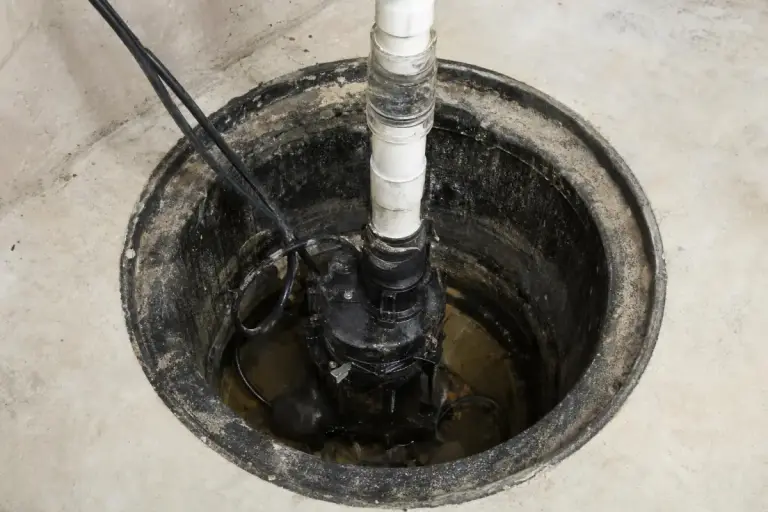
Backups in the lowest drain, sluggish toilets and ponding all sit on Pipeline’s list of failure signs without naming a cause. On a pressure distribution system, the high-water alarm float trips when effluent rises above the pump “on” float, and on timer-controlled pumps it also warns of excessive water use, per Washington State Department of Health publication 337-087 (January 2025).
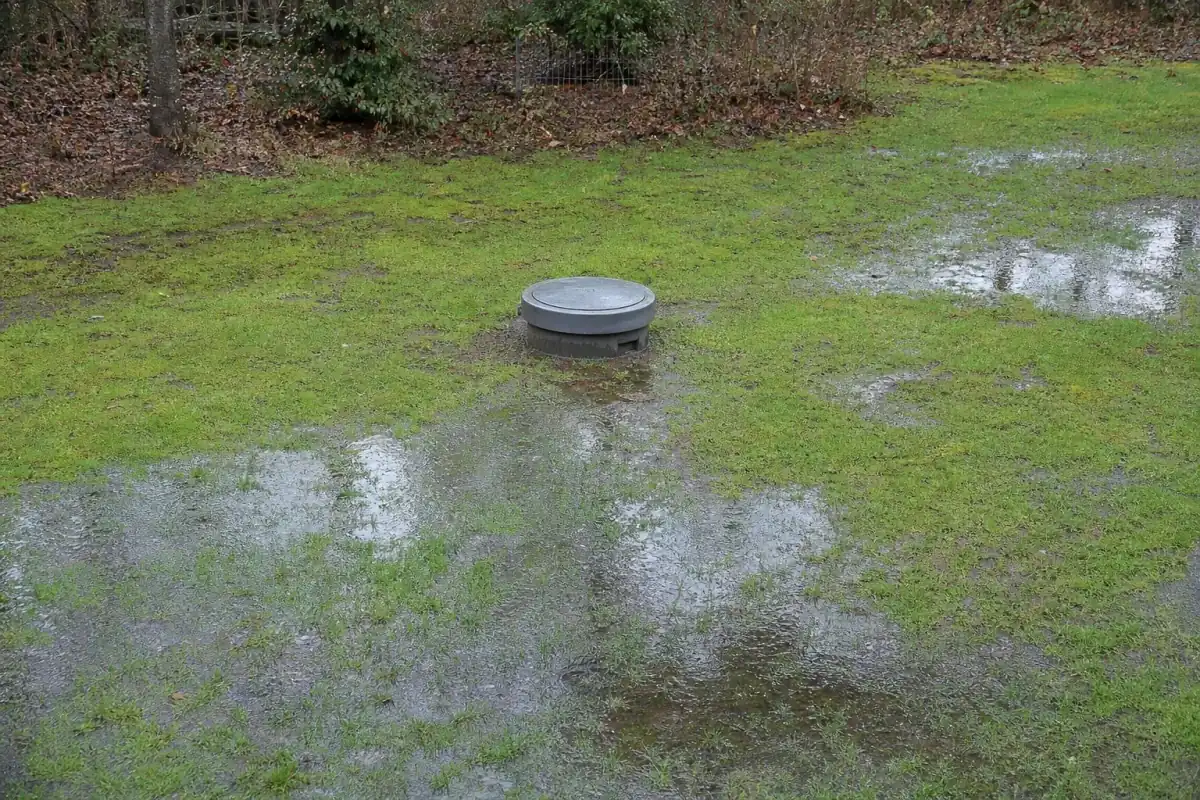
Seasonal high water table or failed field: what does the calendar show?
The calendar decides it: Pipeline says a seasonal failure points to wet weather, and EC 1340 says soil saturated with clean water, even seasonally, cannot accept more wastewater. Log each backup date against rainfall for a full season before pricing a new field.
While the water table is up, NDSU Extension says water can flow from the drainfield back into the tank, which may have to be run as a holding tank. Never pump out more than half its volume, or the tank can float out of the ground.
Minnesota requires 3 feet of separation to periodically saturated soil for systems built after March 31, 1996, and 2 feet for many older ones (Minn. R. 7080.1500, subp. 4). Pipeline’s correction procedure calls for new soil samples when the permit holds no soil test, which is how that separation gets measured.
What fixes work before replacement, and what do they cost?
Most fixes cut the load or let the soil dry, and Pipeline says it usually takes a 30 percent cut in water use for an overloaded field to recover. Costs come from the named national guides and dates.
| Fix | What it solves | Cost and source |
|---|---|---|
| Rest and water reduction | Overload. Fix running toilets, spread laundry over the week instead of a 24 to 48 hour wash day, drain hot tubs elsewhere (Pipeline) | No contractor cost |
| Pump the tank, add an effluent filter | Solids carryover; filters slow biomat growth and can be retrofitted (Pipeline) | Pumping $400 average, or $0.30 per gallon (Angi, Dec. 28, 2025); filter replacement $200 to $300 (Fixr, Jan. 31, 2025) |
| Level or replace the distribution box | Uneven flow overloading one trench | $500 to $1,500, average $1,000 (Angi, Dec. 28, 2025) |
| Jet the laterals | Silt and solids in the pipes; Pipeline calls it temporary relief | $350 to $1,900, average $900 (Angi, Mar. 5, 2025) |
| Rejuvenation, including soil fracturing | Compacted soil; probes 3 to 6 feet deep, mixed results, approved only in certain states (Pipeline) | $1,000 to $5,000 (Fixr, Jan. 31, 2025) |
| Add a second field with a diversion valve | Biomat; the rested field rejuvenates in about 2 years, then alternate yearly. Interlaced trenches need 6 feet of undisturbed soil between old ones (Pipeline) | About $7,000 to replace a drain field, permits $450 to $2,000, perc test about $1,300 (Angi, Mar. 10, 2025) |
| Full replacement | Too little separation, collapsed trenches, or a field past its 20 to 30 year design life | $2,000 to $20,000 (Fixr, Jan. 31, 2025) |
A third route treats the effluent instead of the soil: Pipeline reports an aerobic treatment unit or sand filter cuts suspended solids to under 10 to 15 mg/L, against 100 to 250 mg/L for typical septic tank effluent, and several states allow biomat-clogged fields to be renovated this way. Our guide to how a septic drain field treats effluent covers the soil side.
If the tests point to replacement, budget against the full drain field replacement cost by field type, and line up the septic tank pumping cost first, since Pipeline’s correction procedure starts by inspecting every component, tank included.
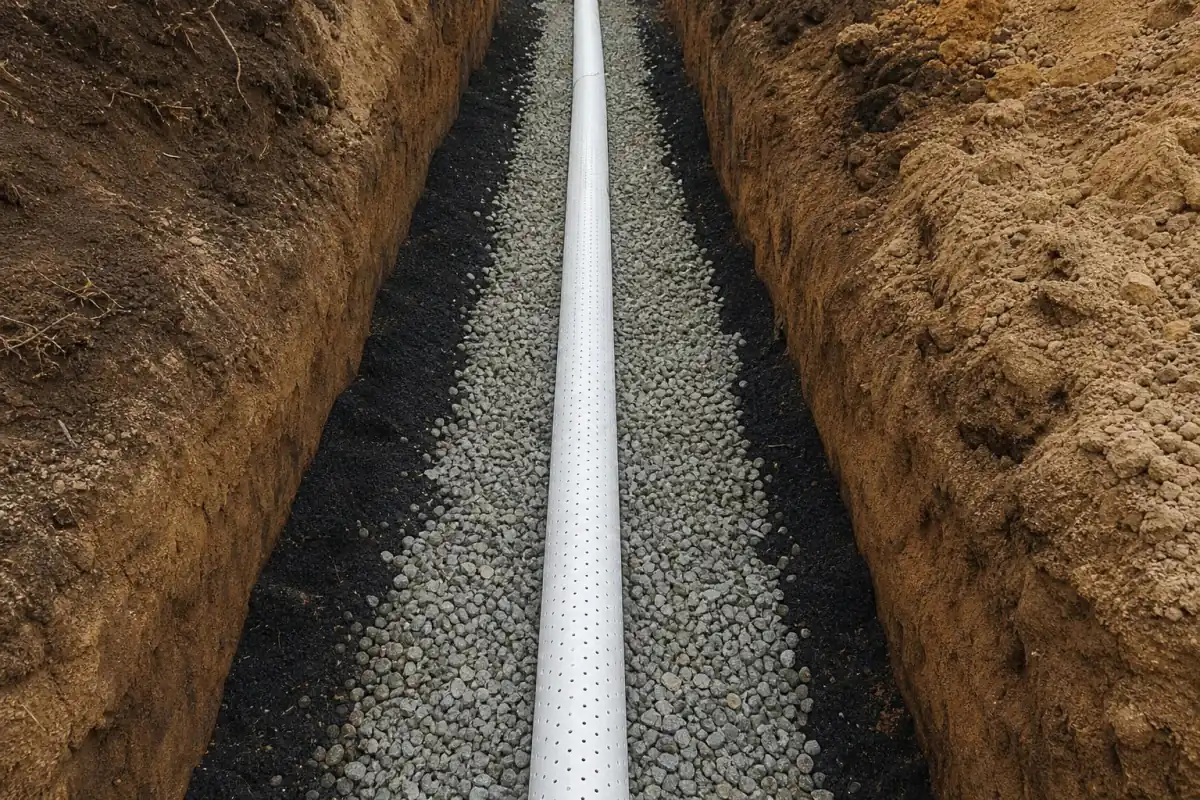
Why do additives and extra fill not reopen a sealed field?
The EPA’s Septic Tank Additives Fact Sheet, EPA 830-F-24-003 (updated 2024) does not recommend bacterial or chemical additives, says systems already hold the bacteria, enzymes, yeasts and fungi they need, and warns some products contribute to clogging. The biomat feeds on organic matter in the effluent; Pipeline says tank filters, proper organic loading and tank maintenance slow it.
EC 1340 says more soil over a surfacing field will not fix it and the effluent will soon surface again. The EPA’s care page names what to remove instead: roof drains and sump pumps discharging near the drainfield, and any parking or driving on it.
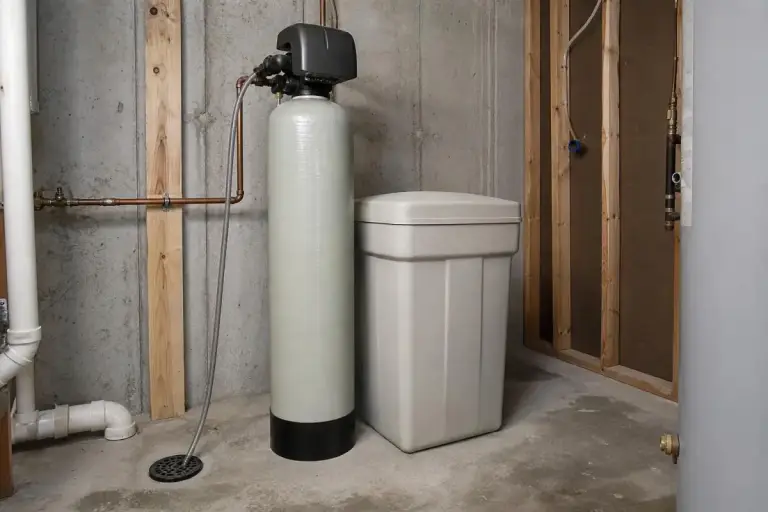
Softener recharge is a smaller load than often claimed. An onsite fact sheet on water softeners (Special Issues Fact Sheet 3) cites University of Wisconsin and NSF studies finding about 50 gallons per recharge and no hydraulic overload in properly designed systems, while the Minnesota Department of Health says it could overload an undersized or aging system.
Who has to approve a drain field repair?
The local health department: EC 1340 says it issues the permit and the local sanitarian must approve any repair, and Pipeline says repair permits may be required before corrective work begins. Ask first for the original permit, which Pipeline says holds the layout, design loading rate and soil tests used in the table above.
Drain field recovery questions
How long does a saturated drain field take to recover?
West Virginia University’s National Environmental Services Center puts natural biomat rejuvenation at about two years when all flow goes to a second field. For a field still in use, the same source says recovery usually takes about a 30 percent cut in household water use, with no fixed timeline.
Will pumping the septic tank fix a drain field that will not drain?
Pumping removes sludge and scum that would otherwise wash into the trenches, and a pumper can draw ponded wastewater out of a resting field, but pumping does not reopen soil sealed by biomat. NDSU Extension warns against pumping more than half the tank when the water table is high, because the tank can float.
Does a water softener ruin a septic drain field?
Studies by the University of Wisconsin and NSF found softener recharge water, typically about 50 gallons per cycle, does not harm a correctly sized system. The Minnesota Department of Health says the same water could overload a system that is undersized or near the end of its life.
Can I add more dirt over a wet drain field?
No. Oregon State University Extension publication EC 1340 says placing more soil over a surfacing absorption field does not fix the system and the effluent will soon surface again. Find the cause instead, starting with the water meter, the tank and the distribution box.
How we sourced this
We read Minnesota Rules 7080.1500, 7080.1860, 7080.2150 and 7080.2210; EPA’s septic care page and fact sheet 830-F-24-003; WVU’s Pipeline on drainfield rehabilitation (Winter 2005); Oregon State EC 1340; NDSU Extension; Washington DOH 337-087; the Minnesota Department of Health softener sheet; and Angi and Fixr cost guides. The loading tables are our arithmetic. Gurgling drains are left off the sign list because no primary source we read names them.