Can You Use SharkBite Fittings Behind Walls? What Codes Say
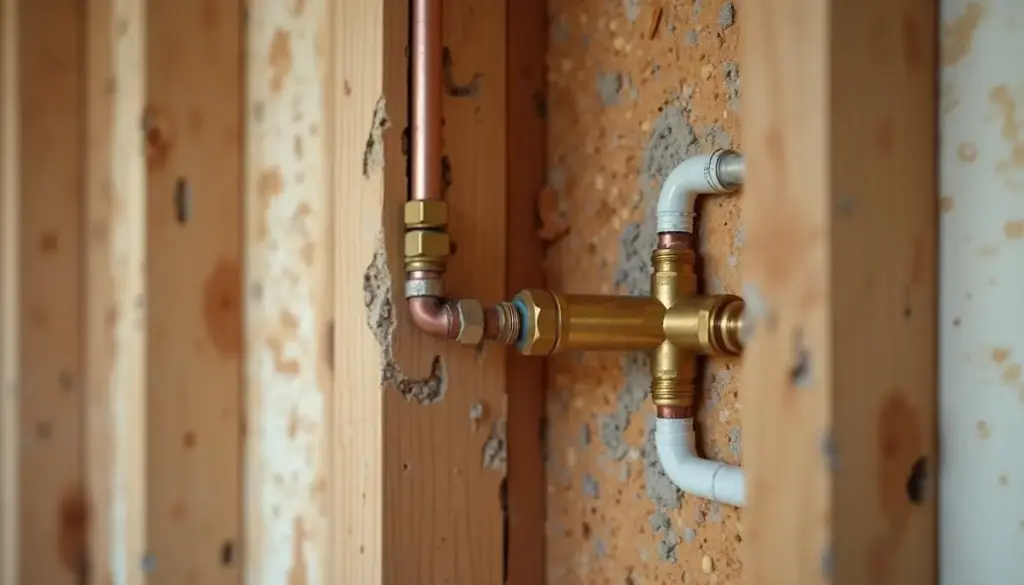
Yes, you can use SharkBite fittings behind walls: SharkBite’s installation guide approves Universal brass fittings behind the wall without access panels, and the 2021 IPC accepts ASSE 1061 push-fit joints installed to the maker’s instructions. Concrete, unwrapped burial and gas lines are the exceptions.
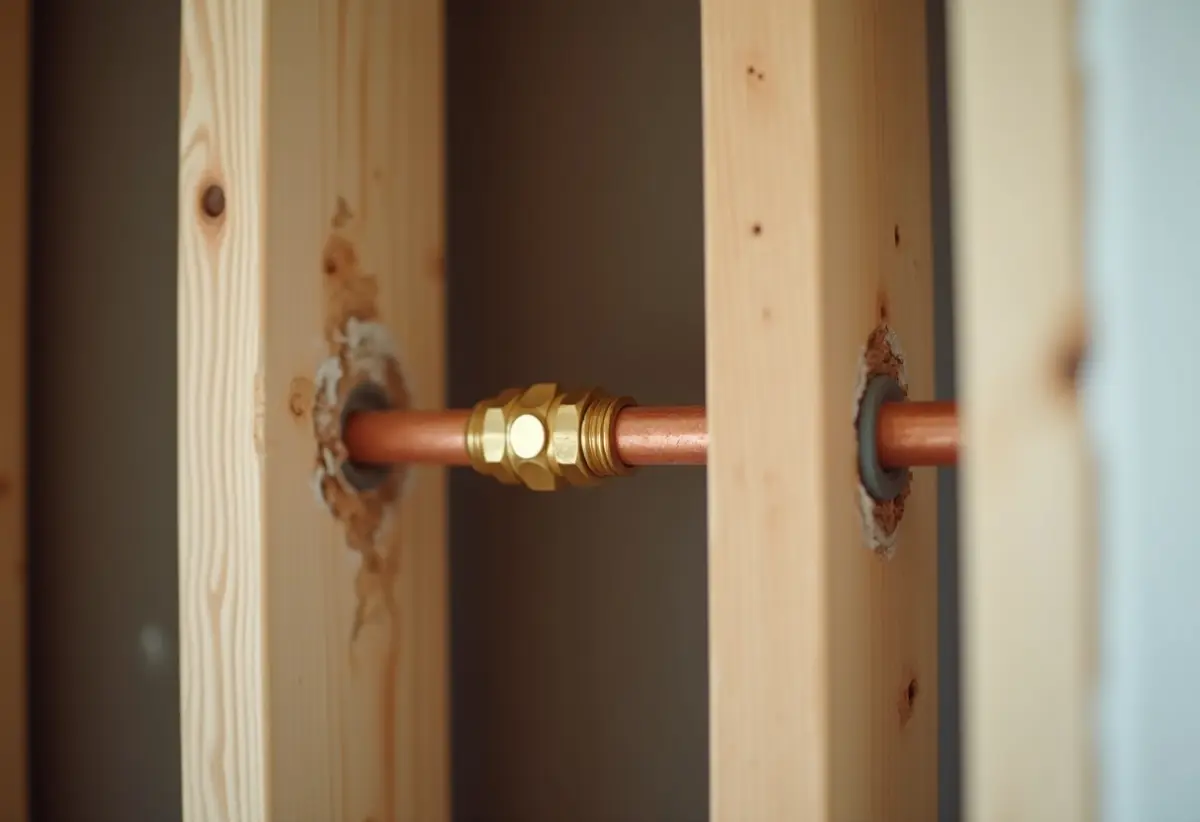
Does SharkBite say its fittings can go behind a wall with no access panel?
Yes, in writing, in three separate documents. The SharkBite New Construction System Installation Guide says “Approved for behind the wall installations without access panels.” The August 2022 Push-to-Connect specification sheet says the fittings are certified “as a manufactured joint without access panels” and “meet UPC, IPC and cUPC requirements.” The 2023.10 product catalog repeats the claim for SharkBite Max and adds “Wrapping required when burying underground.”
The model code gets there by a shorter route. Sections 605.13.7 (copper), 605.14.4 (CPVC) and 605.16.3 (PEX), read in the Virginia Plumbing Code 2021, a 2021 IPC adoption, each say the push-fit joint shall conform to ASSE 1061 and be installed in accordance with the manufacturer’s instructions. None of the three mentions access. So the install guide carries legal weight: a joint made against SharkBite’s instructions fails the code section too.
On the UPC side, a SharkBite-sponsored article in Plumber magazine quotes IAPMO R&T File No. 4630 as allowing underground use and manufactured joints “without access panels” when installed to the maker’s instructions and the latest UPC. That is the maker’s account of its listing, so read it alongside the catalog’s own line: “Check your local jurisdiction for compliance in your area.” A panel comes from a local amendment or your own preference. None of these documents makes it a condition.
Which of eight locations can a SharkBite fitting go in?
A wall, a ceiling and a crawl space are open with conditions, soil burial needs a wrap, a slab should hold no joint at all, and gas is a flat no. The IPC section numbers below come from the 2021 Virginia text, so confirm the numbering in your adopted edition.
| Location | SharkBite documents | Listing | Model code text | Ask the inspector |
|---|---|---|---|---|
| Concealed in a wall | “Approved for behind the wall installations without access panels.” | ASSE 1061, NSF/ANSI 61 and 372 by IAPMO; manufactured joint without access panels. | IPC 605.13.7, 605.14.4, 605.16.3: ASSE 1061 plus maker’s instructions. No access wording. IPC 305.4 adds freeze protection in outside walls. | Has this jurisdiction amended those sections to require access? |
| In a ceiling | No separate ceiling line. The no-panel wording names no single cavity type. Pressure test before concealing (warranty condition 2). | Same as a wall. | Same sections. IPC 305.6: steel shield plates where concealed pipe passes through a joist less than 1-1/4 in from its edge. | Is a joint above a finished ceiling treated like one in a wall? |
| Under a slab | PEX section: “Do not allow joints within the slab.” Use one continuous length. Soil beneath a slab gets no separate line, so apply the burial rules at minimum. | Underground certification, with no mention of concrete. | Chapters 3 and 6, as read, never use the word slab. IPC 305.1 keeps metallic piping off concrete, with plastic sheathing at 0.008 in minimum. | Is any mechanical joint allowed under this slab, and under which section? |
| Direct buried | Brass bodies need an impervious barrier: silicone tape, 0.020 in minimum. EP EvoPEX needs no wrap, with a 10-year warranty when buried. | “Certified for underground applications” (2022 sheet). | IPC 305.4: at least 6 in below the frost line and 12 in below grade. IPC 305.1: no metallic piping in direct contact with corrosive soil. | Is a buried mechanical joint accepted on the service line to the meter? |
| Crawl space | No crawl space line. Freeze damage is excluded from the warranty (condition 5a). | Same as a wall. | IPC 305.4: no pipe in a crawl space subject to freezing unless insulation or heat protects it. | What insulation do you accept in this crawl space? |
| Outdoors | Universal “can be used in sunlight” on copper or CPVC. PEX and EvoPEX: UV resistant for 1 month. Warranty excludes UV (5c) and freezing (5a). | No outdoor wording in the documents read. | IPC 305.4: protect pipe outside a building from freezing. | Is exposed exterior supply pipe allowed here, and with what freeze protection? |
| Gas line | “No.” The FAQ limits fittings to potable water, glycol mix and non-potable heating, and rules out air, gas and oil. | Potable and hydronic heating water distribution. | Fuel gas 404.5: concealed fittings limited to threaded, brazed, welded, or listed to ANSI LC-1 or LC-4. Chapter 4 never names push-fit or ASSE 1061. | Nothing to ask. Shut the gas off and have a licensed gas fitter replace it. If you smell gas, leave and call the gas utility. |
| Hot water recirc line | Max sheet lists recirculation. Universal: 200F and 200 psi on copper; on PEX the pipe rating governs. SharkBite PEX 5106: continuous recirculation up to 140F. | ASSE 1061, with no separate recirculation line. | The push-fit sections do not separate recirculating lines from other hot water. | Will you check the PEX marking on the loop? |
For a wall or ceiling, pressure test first, because warranty condition 2 requires field testing “prior to concealing with concrete or by other means.” For a slab, plan one unbroken PEX run and put the transition outside the concrete. For a gas line, a SharkBite is wrong in every column, so no permit answer changes it.
These rules attach to the joint and not its shape, so an elbow, tee or coupling from the everyday plumbing fittings set gets the same treatment when it is made in SharkBite push-fit. Nothing transfers automatically to Tectite and GatorBite push-fit fittings, which carry their own instructions, or to a compression fitting, which seals with a ferrule and falls outside those push-fit sections.
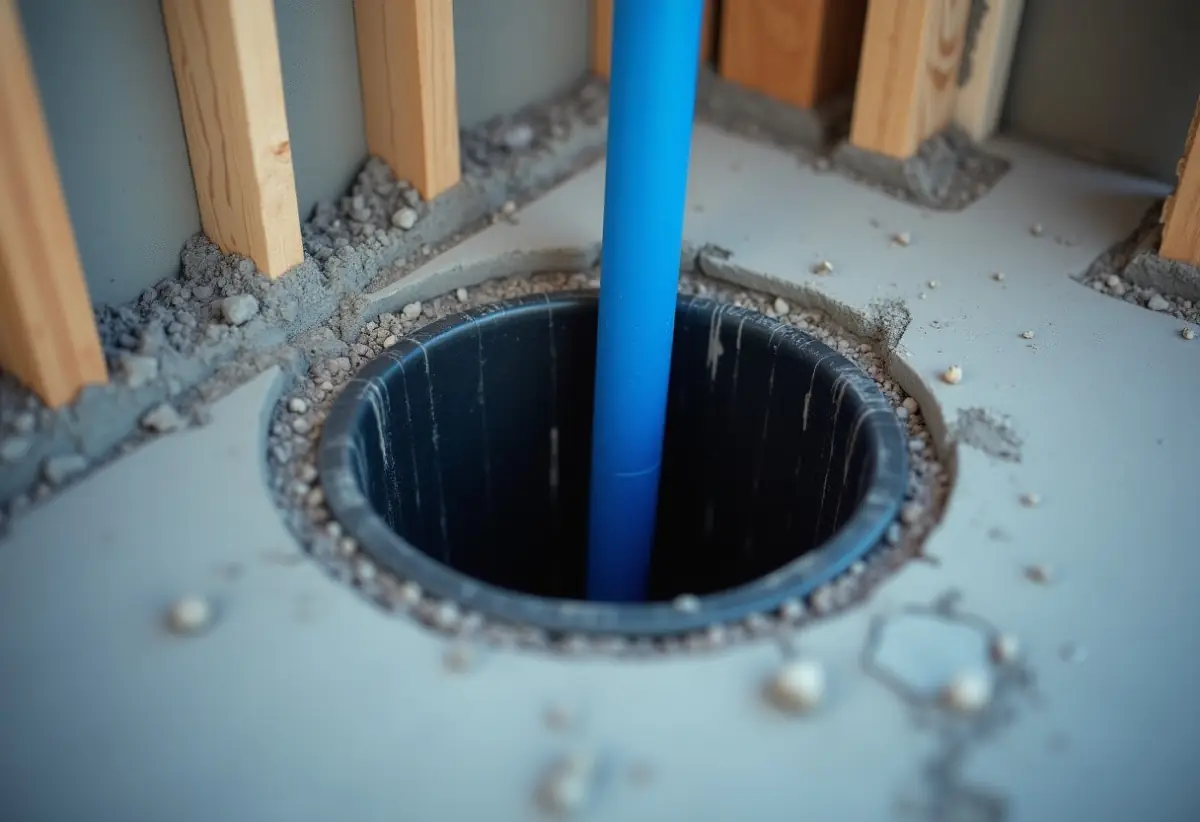
Why doesn’t “approved underground” cover a joint inside a concrete slab?
SharkBite writes separate instructions for soil and for concrete, and only the soil instructions allow a joint. The concrete passage in the New Construction guide says: “Do not allow joints within the slab. Use a continuous length of SharkBite PEX Pipe within the slab and be sure to check for leaks before pouring concrete.” It also calls for non-metallic sleeves where PEX enters or exits the slab. The catalog’s “concrete burial” approval describes the PEX pipe, not a fitting.
For a Universal brass fitting in soil, the guide sets out this sequence:
- Make the connection at full depth before wrapping.
- Use self-fusing, formaldehyde-free and chloride-free, fully cured silicone tape at least 0.020 in thick. SharkBite sells this as part 25406, a 10 ft by 2 in by 0.02 in roll.
- Measure with the protective film still on. Overlap 1 in past each end of the fitting and 1/4 in to 1/2 in between wraps.
- Pull the tape tight, remove the film and cover the fitting completely. It bonds to itself within minutes and cements within a few hours.
- Backfill with soil free of rocks, debris and sharp objects.
The guide also rules out burial where soil is or may become contaminated, and it names the examples: below pH 6, above pH 8, petrochemicals from reclaimed service station sites, high nitrogen compounds from animal waste or fertilizer, landfill runoff, formaldehyde compounds and solvents. A line through a former fuel site or a fertilized field is a reason to skip the joint and run continuous pipe. An unwrapped brass fitting voids the warranty, because the terms call out “wrapping any brass fitting when buried.”
How do you install a SharkBite that will be closed inside a wall?
Cut the pipe square, deburr it, mark the depth for that exact product line, push to the tube stop, then pressure test before any drywall goes up. The 2022 specification sheet states the sequence inside the fitting: the pipe passes the release collar and stainless grab ring, then the EPDM O-ring, and only when it reaches the stop is the joint secure.
Depth is where the two product lines part ways. The table takes its depths from the 2023.10 catalog and its clip numbers from the same catalog’s tools pages.
| Fitting size | Pipe OD | Universal depth | Max depth | Universal clip |
|---|---|---|---|---|
| 1/4 in | 3/8 in | 13/16 in | Not in catalog | U706 |
| 3/8 in | 1/2 in | 15/16 in | Not in catalog | U708 |
| 1/2 in | 5/8 in | 15/16 in | 1 in | U710 |
| 5/8 in | 3/4 in | 1-1/8 in | Not in catalog | Not in catalog |
| 3/4 in | 7/8 in | 1-1/8 in | 1-1/4 in | U712 |
| 1 in | 1-1/8 in | 1-5/16 in | Not in catalog | U714 |
Max runs 1/16 in deeper at 1/2 in and 1/8 in deeper at 3/4 in. Against the guide’s seating check, a depth mark within 0.005 in of the release collar, a mark taken from the wrong row misreports seating by 12.5 times that tolerance at 1/2 in and 25 times at 3/4 in. EvoPEX has no depth mark: the green indicator ring must show in all 4 slots.
Warranted pipe for Universal fittings is ASTM B88 hard drawn copper in K, L or M, PEX to ASTM F876, CPVC to ASTM D2846, and PE-RT to ASTM F2769. HDPE SDR-9 needs a stiffener and drops the term to 5 years. EvoPEX fits PEX only, and Universal fittings should not go on galvanized tubing. SharkBite’s U702 deburr and gauge tool covers 1/4 in to 1 in copper and CPVC.
Space Universal fittings at least 1 in apart so a clip can fit, and when soldering copper pipe nearby, make every solder joint first, because the guide warns flame can overheat the pipe. The guide also says Universal fittings are “not an electrically continuous fitting” and calls for a copper jumper on copper systems. If the plumbing may be part of your electrical bond, have a licensed electrician fit it.
What voids the 25-year SharkBite warranty on a concealed joint?
Installing against the documents voids it, and the guide’s warranty section says so directly. The term is 25 years for Universal on copper, PEX, CPVC and PE-RT. EvoPEX gets 25 years only with SharkBite PEX and a licensed plumbing contractor, and 5 years on other makers’ PEX. The Universal rows carry no licensed-installer condition. These are the failure causes SharkBite itself documents:
| Cause | What the document says | Prevention |
|---|---|---|
| Pipe short of the stop | Joint is secure only once pipe reaches the stop. | Check the depth mark before testing. |
| Rough cut or debris | Ends square and smooth, pipe and fitting clean. | Use a proper cutter and deburring tool. |
| Marked pipe on a redo | If damaged or marked, cut and use a new section. | Inspect after every clip removal. |
| Freezing | Pipes and fittings may burst; freeze damage is not covered. | Insulate or heat per IPC 305.4. |
| Foam, firestop or solvent (EvoPEX) | Keep from primers, solvent cement, firestops and spray foam. | 2 layers of polyethylene wrap minimum, or wrap 25406. |
| Leak detector spray (EvoPEX) | Only dish soap and water; avoid leak detector products. | Mix soapy water for the test. |
| Over-rating service | Excluded beyond rated pressure and temperature. | On PEX, stay within 160 psi at 73.4F, 100 psi at 180F and 80 psi at 200F. |
Property damage reimbursement runs only for the first 10 years after purchase, or the warranty period if shorter, and RWC does not pay labor to remove or replace a failed fitting. To claim, you return the product prepaid within 30 days of finding the failure, with a section of pipe still inserted in the fitting. So after a leak, cut the pipe out around the fitting and do not pull it off with a clip.
How we sourced this
We read SharkBite’s New Construction System Installation Guide, the August 2022 and 2009 specification documents, the 2023.10 catalog and the December 2022 Max sheets, plus Chapters 3 and 6 of the Virginia Plumbing Code 2021 and Chapter 4 of the Virginia Fuel Gas Code 2021 on UpCodes. We computed the Max and Universal depth gaps and tolerance multiples. The IAPMO directory page and sharkbite.com would not load for our reader, and the UPC text sat behind a login, so UPC statements rest on the maker’s documents and no UPC section numbers appear. City and state amendments are left out because we could not open their text. Nothing was tested or installed for this article.
Frequently asked questions
Are SharkBite fittings code approved?
SharkBite’s August 2022 specification sheet says its push-to-connect fittings meet UPC, IPC and cUPC requirements and are listed by IAPMO. The IPC text accepts push-fit joints that conform to ASSE 1061 and follow the maker’s instructions. Approval still rests with your local inspector, because a jurisdiction can amend the model code.
Can SharkBite fittings be used underground?
Yes, in soil, with conditions. Brass-body Universal fittings need an impervious barrier such as silicone tape at least 0.020 in thick, SharkBite part 25406, and the soil must not be contaminated. EP EvoPEX fittings need no wrap and carry a 10-year warranty when buried. Check your local code first.
Is SharkBite Max approved for behind the wall use?
Yes. The 2023.10 SharkBite catalog says Max fittings are approved for underground and behind-the-wall applications with no access panels, with wrapping required when burying. Max uses different depth marks from Universal, 1 in on 1/2 in pipe and 1-1/4 in on 3/4 in pipe, and a December 2022 sheet rates the Max tee at 400 psi and 200F.
How long do SharkBite fittings last behind a wall?
The documents read give a warranty term, not a service life. Universal fittings carry 25 years on copper, PEX, CPVC and PE-RT and 5 years on HDPE SDR-9. Property damage reimbursement stops 10 years after purchase, or at the end of the warranty period if that comes first.
Can you take a SharkBite fitting off and reuse it?
Universal fittings come off with a disconnect clip or tongs, and SharkBite allows reinstalling with care on clean pipe free of scratches and burrs. They are not designed for repeated connection. EvoPEX fittings are permanent and cannot be removed. Leave 1 in between Universal fittings so the clip fits.