How to Replace a Toilet Seat: Sizes, Bolts, and 10-Minute Steps
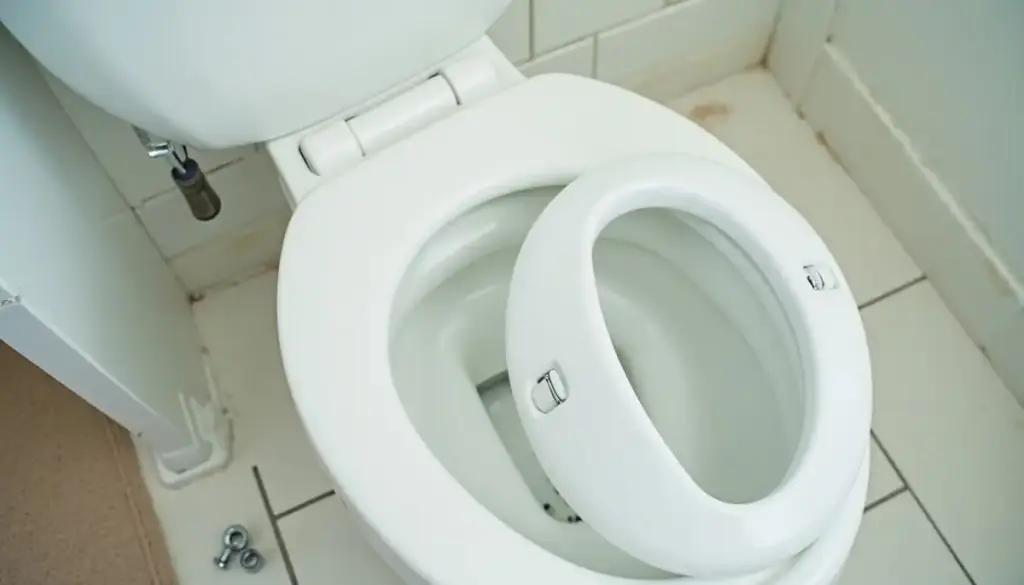
How to replace a toilet seat: measure the bowl first (about 16.5 inches round, 18.5 inches elongated), check the 5.5 inch bolt spacing, unbolt the old seat and snug the new hinges by hand.
Key Takeaways
- This Old House measures from the center of the mounting holes to the front of the bowl: about 16.5 inches is round, about 18.5 inches is elongated.
- Kohler’s buying guide says elongated seats measure 18-5/8 inches or more, measured from the hinge to the front of the seat.
- Kohler spec sheets list seat-mounting holes at 5-1/2 inches (140 mm) center to center.
- Bemis Stay-Tite hardware is a 3-step install: place and adjust, tighten the nut with a wrench, snap off and discard the nut.
- The Bemis 1UFITSL Universal Fit seat fits round and elongated bowls, lists a 5.5 inch bolt spread and sold for $37.80 on Bemis’s store in October 2026.
- Skirted and one-piece toilets hide the nuts, so they need top-mount hardware that installs entirely from above the bowl.
What Size Toilet Seat Do I Need?
You need a seat that matches your bowl’s shape and length, and there are only two common US sizes. This Old House puts a round bowl at about 16.5 inches and an elongated bowl at about 18.5 inches, measured from the center of the seat mounting holes to the front edge of the rim. Hole spacing is almost always 5-1/2 inches.
Shape is the first call. A round seat on an elongated bowl leaves the front lip exposed, and an elongated seat on a round bowl overhangs the front. Our guide to elongated vs round toilet bowls covers which shape suits small bathrooms and which suits comfort.
Kohler uses a slightly different reference point. Its toilet seat buying guide says elongated seats measure 18-5/8 inches or more, measured from the hinge to the front of the seat. The 1/8 inch gap between the two numbers comes from measuring the seat (hinge to tip) instead of the bowl (hole center to rim), so do not read it as a third size.
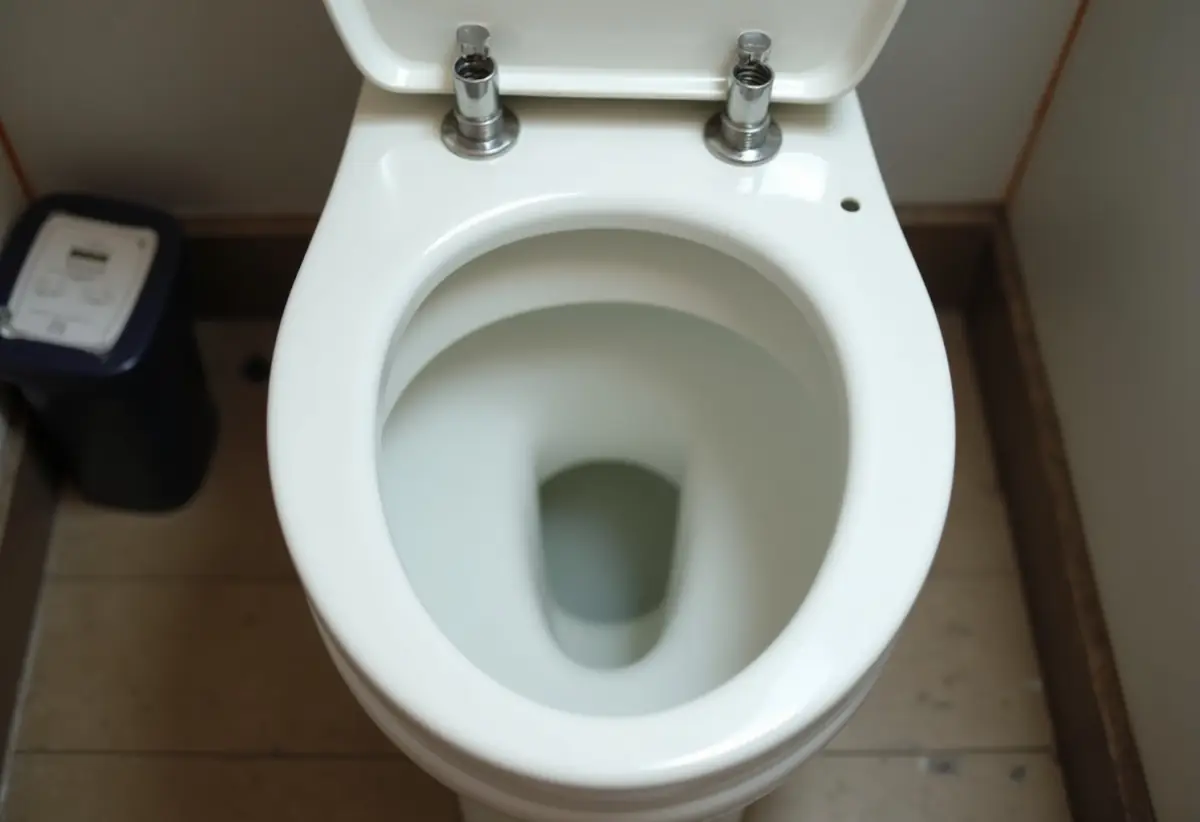
How Do You Measure a Toilet for a New Seat?
Measure the toilet, not the old seat, because seats overhang and wear. You need three numbers, and a tape measure gets all three. Take the old seat off first or flip it fully up so the tape sits on bare porcelain.
- Length. Hook the tape at the center point between the two bolt holes and run it to the outside front edge of the rim. About 16.5 inches means round; about 18.5 inches means elongated (This Old House).
- Bolt spacing. Measure center to center between the two mounting holes. Kohler lists 5-1/2 inches (140 mm) on its seats; a different number usually points to an older or imported bowl.
- Width. Measure across the widest outside point of the rim. Compare it with the seat’s listed width, for example 14.28 inches on the Bemis 1UFITSL, so the seat does not sit inside the rim edge.
- Hidden bolts. Look under the back of the rim with a flashlight. If you cannot see or reach nuts below the holes, you need top-mount hardware.
Which Toilet Seat Fits Which Toilet?
The fit question reduces to shape, length and how the hardware reaches the bowl. The table matches each bowl type to its length, an example seat with published specs, and the hardware it needs.
| Toilet / bowl | Bowl length (hole center to front) | Example seat and published spec | Hardware to buy |
|---|---|---|---|
| Round, two-piece | About 16.5 in (This Old House) | Bemis 200SLOWT round, Whisper Close and Stay-Tite: 16-3/4 in long, 14-11/16 in wide (PlumbersStock listing) | Standard bolts with nuts under the rim |
| Elongated, two-piece | About 18.5 in (This Old House); Kohler seats 18-5/8 in or more hinge to front | Kohler Impro ReadyLatch Quiet-Close elongated (26801); Kohler Hyten Elevated Quiet-Close elongated (K-25875) | Standard bolts or Kohler Grip-Tight top-down hardware |
| Unsure of shape, or switching homes | Fits both | Bemis 1UFITSL Universal Fit: 19.48 in deep, 14.28 in wide, 5.5 in bolt spread, $37.80 (Bemis) | Stay-Tite bolts and nuts |
| Skirted or one-piece with concealed nuts | Measure the same way | Seats sold as top-mount; some Kohler spec sheets note all hardware installs from above the bowl | Top-mount expanding anchors |
Material is the next choice. Plastic seats resist stains and cleaning chemicals and are what most hinge upgrades ship on. Enameled wood feels warmer and heavier but can chip at the hinge holes. Slow-close hinges, sold as Bemis Whisper Close and Kohler Quiet-Close, lower the seat on a damper instead of letting it slam.
Height matters to some buyers. Kohler’s Hyten Elevated seat (K-25875) raises the sitting position on a standard bowl, a cheaper fix than swapping to a comfort height toilet.
The chart mixes bowl and whole-seat measurements. A seat’s overall depth, such as the 19.48 inches Bemis lists for the 1UFITSL, includes the hinge area behind the bolts, so it always runs longer than the bowl length you measure.
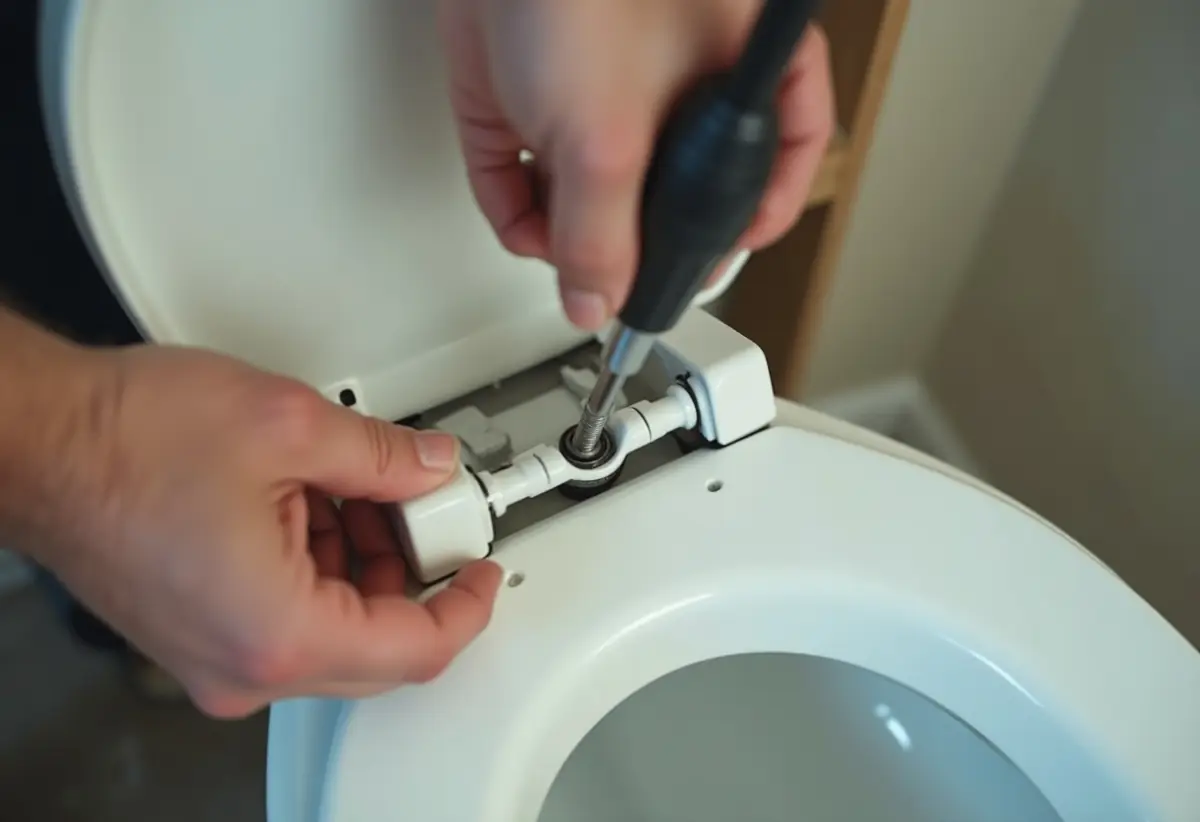
How Do You Remove a Toilet Seat?
Removing a toilet seat is four moves when the bolts turn freely: open the hinge caps, hold each nut, unscrew each bolt and lift the seat away. Quick-release seats are faster still. Kohler’s K-4775 spec sheet says its Quick-Release hinges let the seat unlatch from the toilet with no tools required, which is also how those seats come off for cleaning.
Tools: This Old House lists a flathead screwdriver, a Phillips screwdriver, adjustable pliers and a tape measure, plus penetrating oil for rusted bolts. Add a small wrench if the new seat uses Bemis Stay-Tite nuts.
- Close the lid and lift the hinge caps. Slide a flathead screwdriver under the front lip of each cap at the back of the seat and flip it up.
- Find the nuts. Reach under the back of the rim, behind each hole. On a standard two-piece toilet you will feel a plastic or metal wing nut.
- Hold the nut, turn the bolt. Grip the nut with your fingers or adjustable pliers and turn the bolt counterclockwise with the screwdriver.
- Repeat on the other side, then lift the seat straight up.
- Clean the rim. Scrub the bolt-hole area, which is usually the dirtiest spot on the toilet, and let it dry.
If the toilet itself rocks while you work, deal with it now: the seat bolts do not hold the bowl down. Our guide to fix a wobbly toilet covers the closet bolts and shims that do.
How Do You Remove a Stuck or Rusted Toilet Seat Bolt?
A bolt that spins without loosening, or will not turn at all, needs a different fix depending on what is failing. Metal bolts rust to their nuts, and plastic nuts strip so the bolt spins in place. Start gentle, because porcelain cracks under a slipping tool.
| Symptom | Fix | Tool |
|---|---|---|
| Metal bolt will not turn | Soak the threads from below with penetrating oil (This Old House), let it soak, try again | Penetrating oil, screwdriver |
| Bolt spins, nut spins with it | Clamp the nut with pliers from below while you turn the bolt from above | Adjustable pliers |
| Plastic nut stripped | Slit the nut along its side with a utility knife and peel it off the bolt | Utility knife |
| Metal bolt seized, nothing turns | Cut the bolt in the gap between the hinge and the porcelain; tape the bowl around the cut | Hacksaw blade or oscillating multi-tool with a metal blade |
When you cut, lay painter’s tape on the porcelain on both sides of the blade. Cut slowly; new seats ship with fresh bolts.
How Do You Install a Replacement Toilet Seat?
Installing a replacement toilet seat means dropping the new bolts through the hinges, centering the seat on the bowl, then tightening evenly from side to side. A Bemis installation sheet has you thread the plastic nuts onto the bolts by hand under the back of the bowl, use the front-to-back adjustment for fit, and tighten while alternating sides.
- Set the hinges. Place the new seat on the bowl and drop the bolts through the hinge posts and the bowl holes.
- Start the nuts by hand from below, a few turns each.
- Center the seat. Close the seat and slide it forward or back until its front edge lines up with the front of the rim and it sits evenly side to side. The Bemis 1UFITSL product page lists front-to-back adjustability for exactly this step.
- Tighten in turns. Snug one side, then the other, so the seat does not pull off center.
- Finish the hardware. For Bemis Stay-Tite, Bemis says to tighten the nut with a wrench, then break off the outer piece of the nut and discard it. For Kohler Grip-Tight top-down hardware, Kohler’s Hyten instructions have you drive the screws through the hinge mounts into the Grip-Tight hardware with a screwdriver.
- Close the caps. Snap the hinge covers down.
- Test. Sit on it and shift side to side. Any movement means one side needs another quarter turn.
For a seat with plain plastic nuts, stop at firm hand pressure plus a small turn. Vitreous china does not flex, and overtightened hardware is how seat installs crack bowls. Rubber bumpers under the seat, such as Kohler’s Grip-Tight bumpers, keep it from sliding once installed.
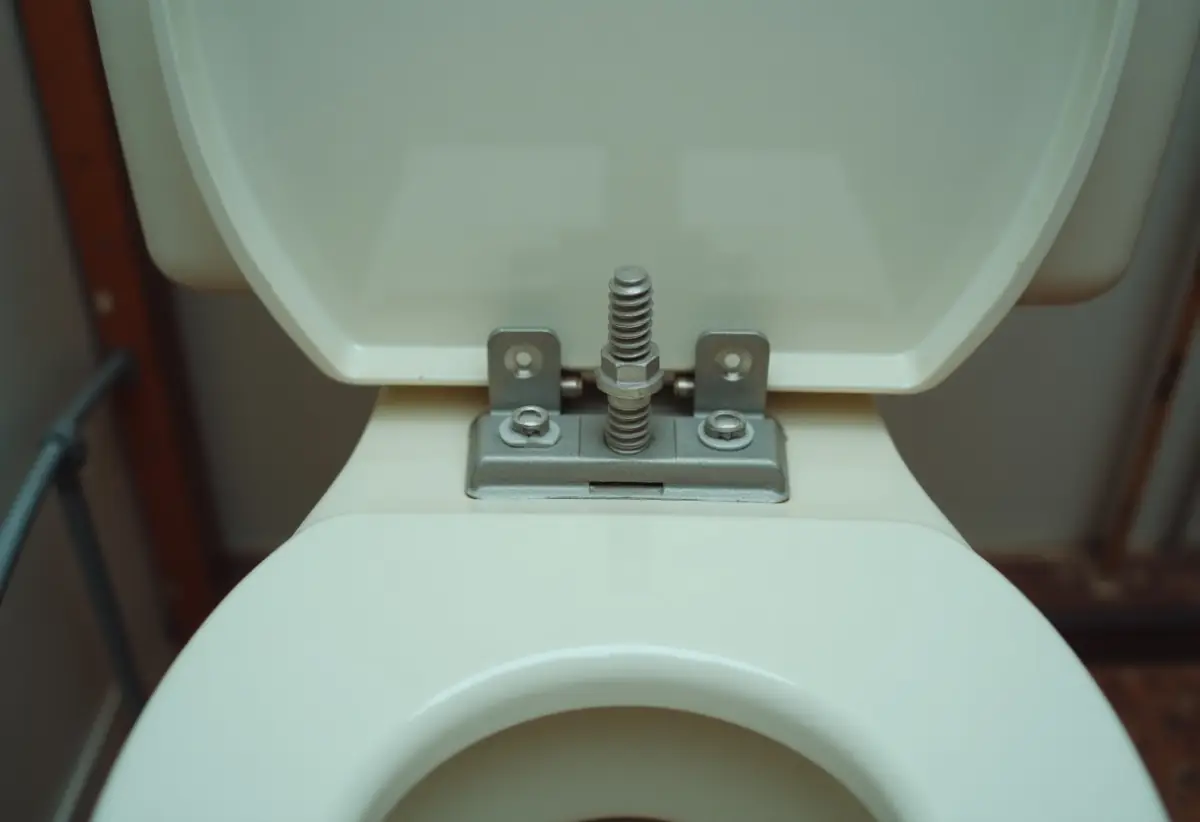
How Do You Replace a Toilet Seat on a Skirted or One-Piece Toilet?
To replace a toilet seat on a skirted or one-piece toilet, use top-mount hardware, because the porcelain skirt hides the nut pocket under the rim. Top-mount bolts are turned from above, and an anchor below the hole expands or tightens against the porcelain as you turn. Some Kohler spec sheets state that the hardware installs entirely from above the bowl.
Check the old seat before you buy. If its bolts have no reachable nut and the anchor pulls up through the hole as you unscrew, it is top-mount. Buy a replacement labeled top-mount or one-piece compatible, or a seat from the toilet’s own maker. Our overview of toilet types shows which styles hide their hardware.
To remove one, unscrew from above until the anchor loosens, then pull it up and out of the hole.
What Changes When the New Seat Is a Bidet Seat?
A bidet seat uses the same two mounting holes but adds two jobs: a water connection and, for electric models, power. Measure the bowl length the same way first, because electric bidet seats are sold by shape. Kohler’s 18-5/8 inch elongated threshold is the number to compare against a bidet seat’s listed fit.
- Water: the seat tees into the toilet supply line at the shutoff valve, so that valve must turn off fully before you start.
- Power: electric seats plug into an outlet near the toilet. The National Electrical Code generally requires ground-fault protection for bathroom receptacles, and your local code decides whether an existing outlet qualifies. Hire a licensed electrician if there is no outlet within the cord’s reach.
- Length: bidet seats run longer than plain seats behind the hinge line, so check the clearance between the bowl and the tank lid.
Non-electric bidet attachments skip the outlet and slip under an existing seat, using the same 5-1/2 inch bolt holes.
How we sourced this
We reviewed the October 2026 top results for the keyword and a measurement variant (This Old House, Lowe’s, HomeServe, Wayfair). Dimensions, hardware steps and prices come from This Old House, Kohler’s toilet seat buying guide and Kohler spec sheets (K-4775, K-25875, K-7315), Bemis’s Stay-Tite page and its 1UFITSL product page, and one PlumbersStock listing for the Bemis 200SLOWT. Prices are maker’s-store figures from October 2026. We excluded bowl-width ranges and bolt-spacing tolerances published only by unattributed sites, and bidet electrical specs we could not confirm on a maker’s spec sheet. The 10-minute timing in the headline is our editorial estimate for hardware that turns freely, not a manufacturer figure.
Frequently asked questions
How do I know what size toilet seat to buy?
Lift the old seat off and measure the bowl from the center of the two mounting holes to the front edge of the rim. This Old House puts a round bowl at about 16.5 inches and an elongated bowl at about 18.5 inches. Then measure center to center between the holes. Kohler spec sheets list 5-1/2 inches as the standard spacing.
Are all toilet seats the same size?
No. US seats come in two main shapes, round and elongated, and the two lengths differ by about 2 inches. The bolt spacing is far more consistent, with Kohler listing 5-1/2 inches (140 mm) on its seats. Older and imported toilets can differ in both length and hole spacing, so measure the bowl itself rather than the old seat.
How do you remove a toilet seat?
Flip up the two hinge caps at the back with a flathead screwdriver. Hold the plastic nut under the rim with adjustable pliers or your fingers and turn the bolt counterclockwise with a screwdriver until it drops free. Repeat on the other side and lift the seat away. Seats with quick-release hinges simply lift off their posts with no tools.
How do you remove a rusted toilet seat bolt?
Spray the threads with penetrating oil, as This Old House recommends, and let it soak before trying again. If the bolt still spins, hold the nut with pliers while you turn. If the nut is plastic, slit it with a utility knife. A metal bolt that will not budge can be cut between the hinge and the porcelain with a hacksaw blade or an oscillating multi-tool.
How tight should toilet seat bolts be?
Snug, not cranked. Bemis instructions have you thread the plastic nuts on by hand and tighten while alternating sides. Its Stay-Tite nuts are tightened with a wrench and then the outer piece snaps off and gets thrown away, which stops the seat from loosening later. Overtightening any hardware against vitreous china risks cracking the bowl.
Can you put a round seat on an elongated toilet?
It will bolt on, since both shapes share the same hole spacing, but it fits badly. A round seat leaves the front of an elongated bowl exposed, and an elongated seat hangs past the front of a round bowl. If you cannot tell which bowl you have, a universal seat such as the Bemis 1UFITSL is built to fit both.
How do you replace a toilet seat with hidden bolts?
On skirted and one-piece toilets the nuts sit where you cannot reach them, so these bowls use top-mount hardware. You turn the bolt from above and an anchor expands inside the hole. Some Kohler spec sheets note that all hardware installs from above the bowl. Buy a seat whose packaging says top-mount or one-piece compatible.