Sewer Smell After Rain: Causes and Fixes
A sewer smell after rain usually means the storm shifted air pressure or water levels in your drains, pushing gas out a dry trap, roof vent, cracked lateral, open cleanout or soaked septic field.
Key Takeaways
- IPC Section 1002.4 requires a 2 to 4 inch water seal in every trap; a dry seal is the cheapest cause to fix.
- California Plumbing Code Section 906.2 keeps vents 10 feet from, or 3 feet above, openable windows, because downdrafts carry vent gas back inside.
- EPA treats wet-weather sewer flow above 275 gallons per person per day as excessive, versus a 120 gallon dry-weather benchmark.
- Rockland, Massachusetts reports 1.4 MGD of base sewer flow that storms push to 3 to 4 MGD, sometimes past 6.
- EPA estimates up to 50 percent of infiltration and inflow may come from house laterals, per 3 Rivers Wet Weather.
- OSHA says hydrogen sulfide can deaden smell at 100 to 150 ppm, so a fading odor is not proof the gas is gone.
Why does it smell like sewer after rain?
A sewer smell after rain has seven usual causes: a falling barometer pushing gas out, a downdraft dropping roof vent gas near windows, a dry or siphoned trap, groundwater entering a cracked lateral, rain pouring into an open cleanout, a surcharged city sewer pushing air up your line, or a septic field too wet to absorb effluent.
Low pressure arrives with most storms. When outside pressure falls, sewer gas moves toward the easiest exit, your roof vent or any weak trap seal, and heavy, humid air keeps it from rising away.
Water does the rest. Rising groundwater and rain entering through downspouts and open cleanouts fill pipes that normally run partly empty, and the displaced air often exits through the house.
How do you tell where a sewer smell after rain is coming from?
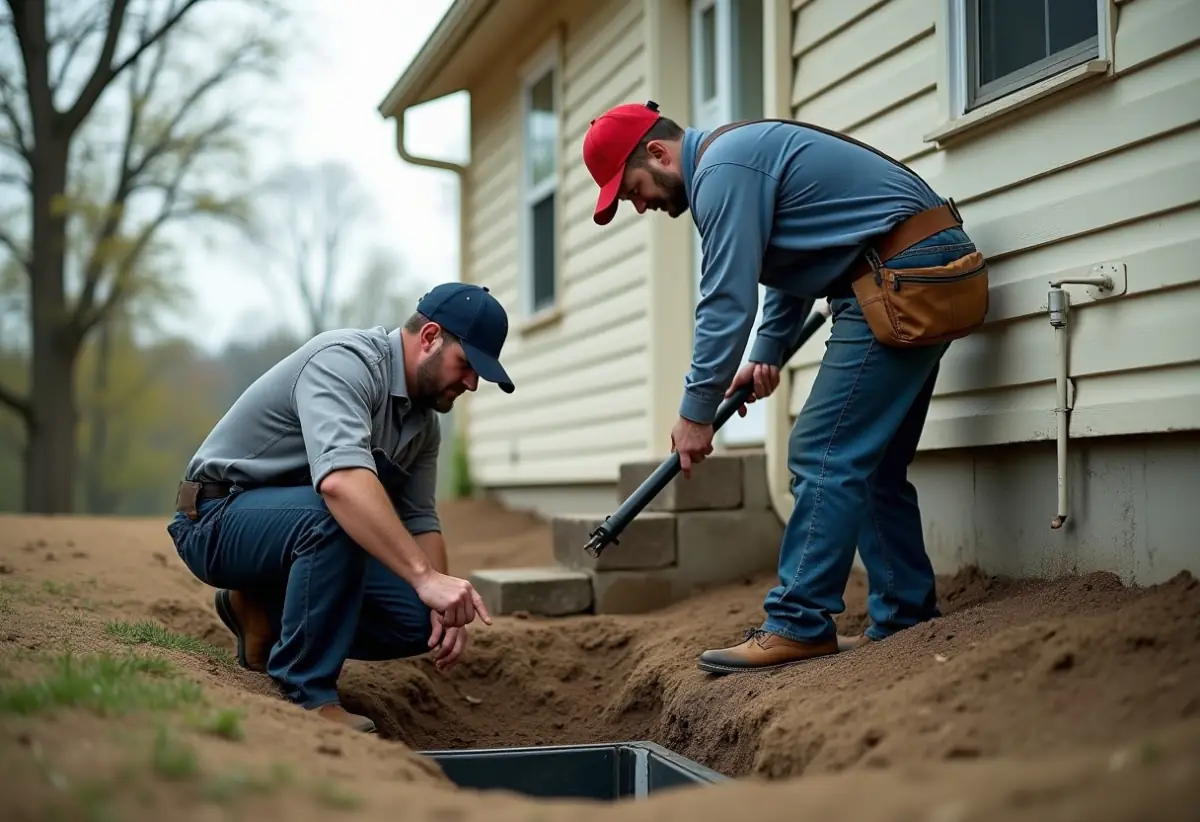
Pin down where and when you smell it. A smell outdoors near the eaves points to the roof vent, a smell at one basement floor drain points to a dry trap, a smell in several rooms with gurgling drains points to a surcharged sewer, and a smell over the backyard points to the lateral, the cleanout or the septic field.
| Where you smell it | When | Likely cause | Fix |
|---|---|---|---|
| Outside near windows, deck or patio | Calm, overcast, low-pressure days | Roof vent downdraft; vent too short or too close to an opening | Extend or relocate the vent; carbon vent filter |
| Basement floor drain or laundry standpipe | After a dry spell, then worse in storms | Evaporated or siphoned trap seal | Refill; add a trap primer (ASSE 1018) or barrier insert (ASSE 1072) |
| One bathroom only | During heavy rain | Weak trap seal, wax ring or vent | Refill traps, check the toilet seal |
| Several rooms, drains gurgling | Peak of a heavy storm | Surcharged city sewer pushing air up the lateral | Call the utility; consider a backwater valve |
| Yard near the cleanout | During or after rain | Cracked, loose or missing cleanout cap | Replace the cap and inspect the riser |
| Yard over the lateral path, soggy strip | Days after rain | Cracked lateral with groundwater infiltration | Camera inspection, then spot repair or lining |
| Yard over the septic field | After a multi-day soak | Saturated drain field | Divert roof and sump water; cut water use; septic inspection |
| Street manholes, whole block | Storm peaks | Municipal sewer at or over capacity | Report to the sewer utility |
If the odor stays inside and does not track with rain, start with our guide to tracking a sewer smell through the rest of the house.
Can a dry floor drain cause a sewer smell after rain?
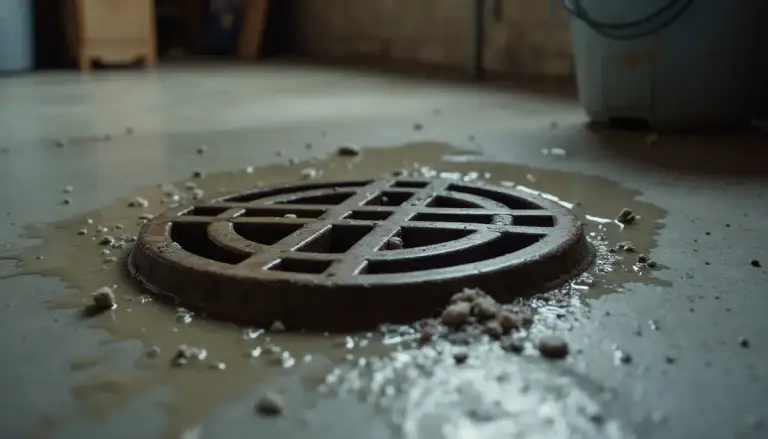
Yes, and it is the first thing to check. Basement floor drains, laundry standpipes and guest-bath showers sit unused for weeks, so their trap water evaporates below the 2 to 4 inch seal that IPC Section 1002.4 requires. When storm pressure shifts arrive, gas walks straight through the gap.
Rain can also empty a full trap. When a surcharged sewer fills the building drain and then drops, the moving water can siphon trap seals, especially on unvented floor drains.
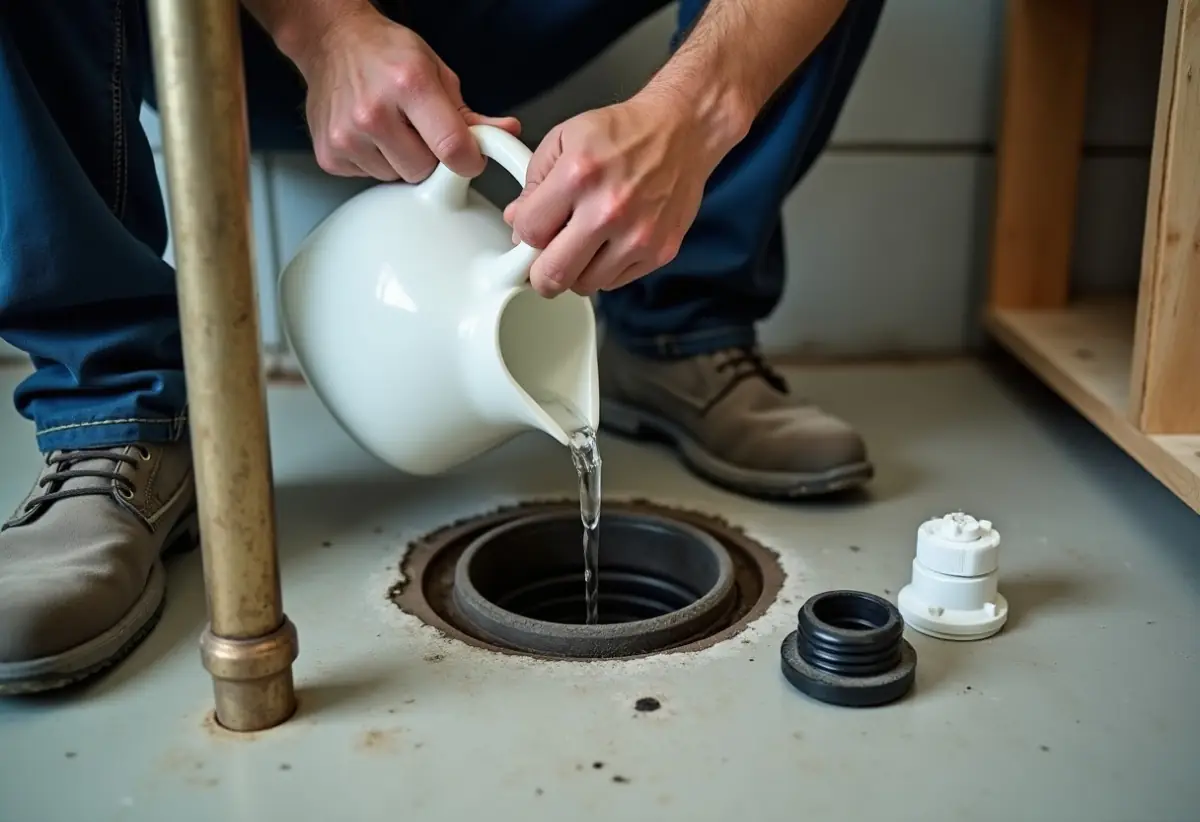
- Pour water slowly into each floor drain, standpipe and unused shower or tub until it runs freely past the trap.
- Sniff again at floor level once the water settles.
- If the drain dries out again within weeks, protect it permanently. IPC Section 1002.4.1 lists a water-supplied trap primer valve (ASSE 1018), a wastewater-supplied primer (ASSE 1044) or a barrier-type insert (ASSE 1072) that blocks evaporation.
- Barrier inserts drop in by hand; primer valves tie into a water line and usually need a plumber.
If the smell is limited to one bathroom, our breakdown of why a bathroom smells like sewer walks through the toilet wax ring, shower trap and sink overflow checks.
Why does the roof vent smell worse when it rains?
A roof vent should release sewer gas high enough to drift away. On low-pressure, humid, still days that gas sinks instead, and a downdraft over a ridge or taller wall rolls it toward windows, a deck or a bedroom. The vent works; it is just badly placed for the weather.
Code sets the minimums. The California Plumbing Code, Sections 906.1 and 906.2 (based on the UPC), requires a vent to end at least 6 inches above the roof and 1 foot from any vertical surface, and at least 10 feet from or 3 feet above any openable window, door or air intake. IPC and IRC rules are similar but vary by edition and local amendment.
- Extend the vent. Add pipe of the same diameter so the terminal clears the nearest window by 3 feet or sits above the roofline eddy.
- Relocate it. If the vent sits under a dormer or beside a second-story window, a plumber can reroute it; expect a permit.
- Add a carbon vent filter. A filter cap on top of the pipe adsorbs odor. Pick one sized to the pipe and rated for outdoor use, and replace the carbon on the maker’s schedule, because a clogged filter can choke the vent and slow drains.
For how stacks, branch vents and air admittance valves tie together, see our plumbing vent diagram and sizing guide.
Can saturated soil cause a sewer smell after rain?
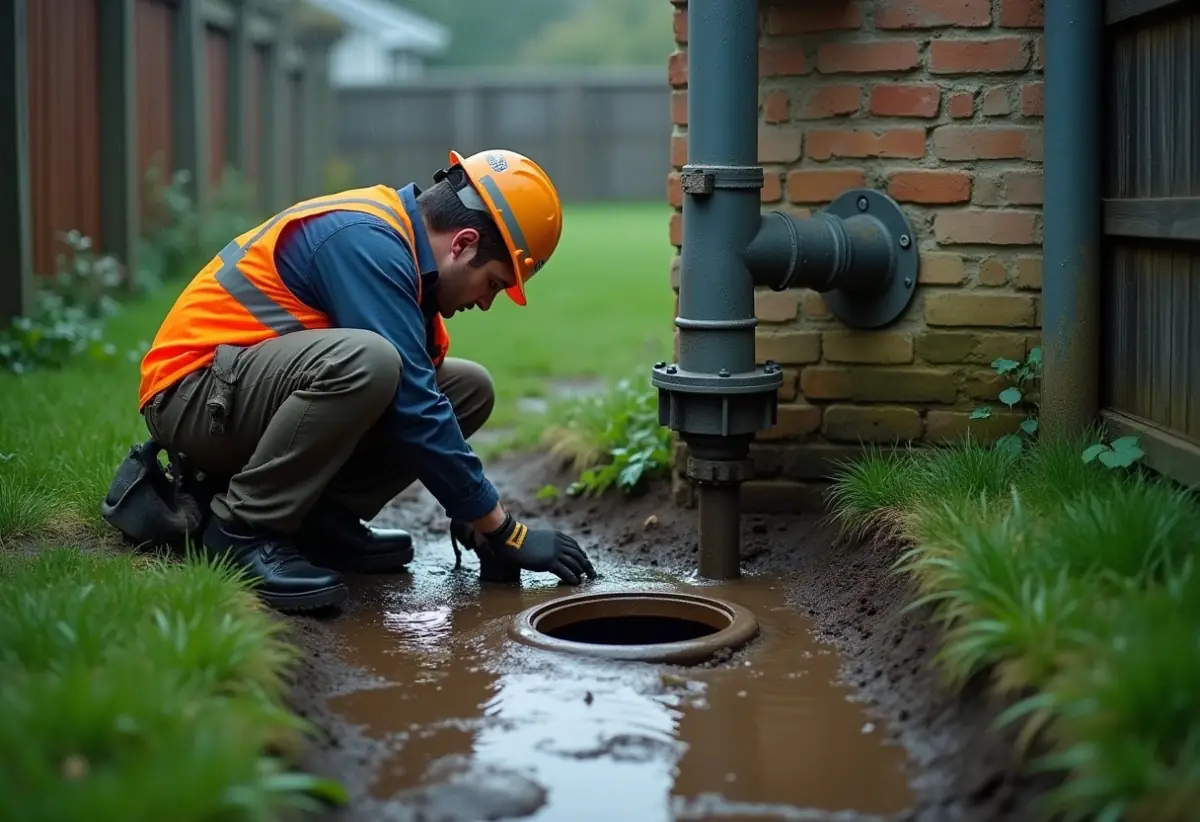
Yes. EPA defines infiltration as groundwater that enters a sewer through broken pipes, defective joints or illegally connected foundation drains. A cracked lateral can go unnoticed in dry weather, then smell for days after rain as rising groundwater pushes gas up through soil and slab.
The private lateral is a common culprit. 3 Rivers Wet Weather reports that EPA estimates up to 50 percent of the infiltration and inflow problem may come from house laterals, the pipe from your foundation to the street, which in many cities is the owner’s responsibility.
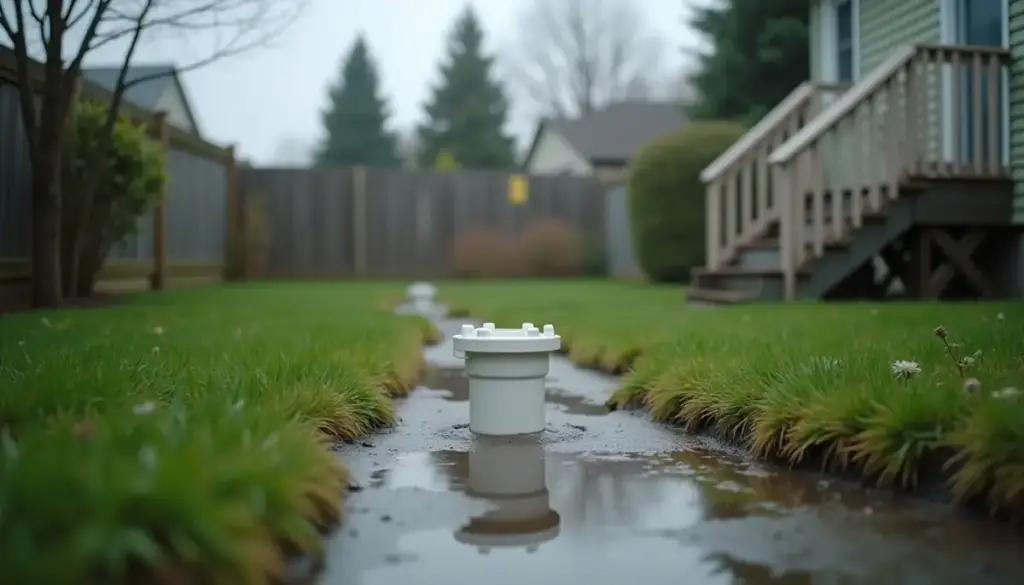
The cleanout is the other weak point. The Town of Rockland, Massachusetts sewer department lists broken or missing cleanout caps alongside downspouts, sump pumps and yard drains as household sources of inflow.
- Find the cleanout riser and check its cap for cracks or stripped threads. Measure the riser’s inside diameter and buy a matching threaded plug or test cap.
- Thread it on snug by hand, then just snug with a wrench; overtightening cracks plastic caps.
- If the yard smells along a soggy strip after rain, book a sewer camera inspection before digging.
Is the city sewer causing the smell after heavy rain?
Often, yes. Sanitary sewers are sized for wastewater plus some leakage, and EPA’s 1985 guidance treats wet-weather flow above 275 gallons per person per day as excessive. When storms push past that, mains run full and force air up the nearest outlets, including your lateral and vent, often across a whole block.
EPA’s Infiltration/Inflow guidance sets a 120 gallon per person dry-weather benchmark, and 3 Rivers Wet Weather says storms can add as much as 3,000 gallons of stormwater per person per day. Rockland’s brochure says its storm flows suggest I/I could be as much as three times the town’s wastewater flow.
Rockland lined about 11,000 linear feet of main in 2021 and removed nearly 113,000 gallons a day of infiltration, yet says a large share of what remains comes from private homes. Its fix is smoke testing, blowing nontoxic smoke into the mains to show which roofs and cleanouts leak.
When the main backs up instead of just venting air, water can rise out of the lowest drain. If you see that, follow our steps for what to do when sewage backs up into your home.
Why does a septic system smell after rain?
A septic drain field treats effluent by letting it soak into unsaturated soil. After days of rain, the soil is already full of water, so effluent backs up in the trenches and the tank, odor rises through the ground and the tank vent, and drains may slow. EPA’s septic care guidance says excess water slows down or stops the treatment process.
- Point downspouts and sump discharge away from the field, as EPA advises.
- Spread out laundry loads until the ground drains.
- Do not park or drive on the field; EPA warns against it, and wet soil compacts faster.
- Keep the routine EPA sets out, an inspection at least every three years and pumping typically every three to five years.
- If the smell outlasts a few dry days or liquid surfaces, call a septic professional.
How do you fix a sewer smell after rain for good?
Work from the cheapest fix to the costliest, testing after each rain. Most homes solve it with a refilled or primed trap, a new cleanout cap or a taller vent. A backwater valve or lateral repair is for homes where the smell comes with gurgling or water rising in a basement drain.
- Refill every trap, including floor drains, then add a barrier insert or primer to the ones that dry out.
- Cap the cleanout with a matching threaded plug.
- Disconnect rainwater from the sanitary line. Downspouts, sump pumps and window-well drains tied into the sewer are inflow sources that many utilities prohibit; Rockland lists all three.
- Fix the vent: clear it, extend it, move it or filter it.
- Install a backwater valve if your lowest fixtures sit below the next upstream manhole cover, the test in IRC Section P3008.1 and IPC Section 715.1. A Los Angeles County Public Works fact sheet put an installed flap valve at about $600 and a combination gate and flap valve at about $1,400 in 2011 dollars.
- Repair the lateral after a camera inspection locates the crack, offset or roots.
When should you call the utility, a plumber or a septic pro?
Call your sewer utility when the smell is strongest at street manholes or neighbors notice it too, because the city owns the main. Call a plumber when the smell is inside, tied to your vent or traps, or comes with gurgling drains. Call a septic service when the odor sits over the tank or field.
Treat a strong smell as a safety issue. OSHA says prolonged exposure to 2 to 5 ppm hydrogen sulfide may cause nausea, headaches and loss of sleep, and that 100 ppm can deaden smell within 2 to 15 minutes. If a basement smell is strong, open windows, leave and call the utility.
Report overflows even if your house is fine; EPA estimates 23,000 to 75,000 a year in the US.
How we sourced this
We reviewed top-ranking pages and People Also Ask questions for “sewer smell after rain” in October 2026; none gave code clearances or flow data. We cited EPA’s 1985 Infiltration/Inflow guidance, EPA’s sanitary sewer overflow and septic care pages, OSHA’s hydrogen sulfide hazard table, the 3 Rivers Wet Weather program, the Town of Rockland, Massachusetts sewer department, IPC Sections 1002.4 and 1002.4.1, California Plumbing Code Sections 906.1 and 906.2, IRC Section P3008.1 and a 2011 Los Angeles County Public Works fact sheet. We left out trap evaporation rates, pressure thresholds and vent filter models we could not verify.
Frequently asked questions
Why does my house smell like sewer when it rains?
Rain changes pressure and water levels in the drains. A falling barometer pushes sewer gas through weak trap seals and the roof vent, and groundwater or a full city sewer forces air up through cracked pipe. Refill every floor drain and unused shower first, then check the cleanout cap.
Why does my bathroom smell like sewer after rain?
A bathroom smell after rain usually means a trap seal that is low, siphoned or dried out, often in a shower or floor drain that rarely gets used. A failing toilet wax ring or a vent problem in that room can also let gas through when storm pressure shifts.
Why does my septic smell after heavy rain?
A septic drain field needs unsaturated soil to absorb effluent. After heavy rain the soil is full, so effluent backs up and odor rises through the ground and the tank vent. EPA says excess water slows or stops treatment. Divert downspouts away from the field and cut water use until it dries.
Can low barometric pressure cause a sewer smell?
Yes. Storms bring falling air pressure, and sewer gas moves toward the easiest exit, the roof vent or any weak trap seal. Humid, still air keeps vent gas from rising, so it lingers near the roofline and drifts toward windows and decks.
Is a sewer smell after rain dangerous?
A faint smell is mostly a nuisance, but OSHA says prolonged exposure to 2 to 5 ppm of hydrogen sulfide may cause nausea and headaches, and that high levels can deaden your sense of smell within minutes. If a basement smell is strong, open windows, leave the space and call the utility before you go back in.
How do I stop sewer gas from coming out of my roof vent?
You cannot block the vent, because the drains need it to breathe. You can extend it so it clears nearby windows, have a plumber relocate it away from decks and dormers, or add a carbon filter cap sized to the pipe. Replace the carbon on schedule, since a clogged filter can slow your drains.
Who do I call for a sewer smell outside my house?
Call the sewer utility if the smell is strongest at street manholes or neighbors smell it too, since the main belongs to the city. Call a plumber if it comes from your cleanout, roof vent or yard over the lateral. Call a septic service if the odor sits over your tank or drain field.