Cost to Plumb a New House
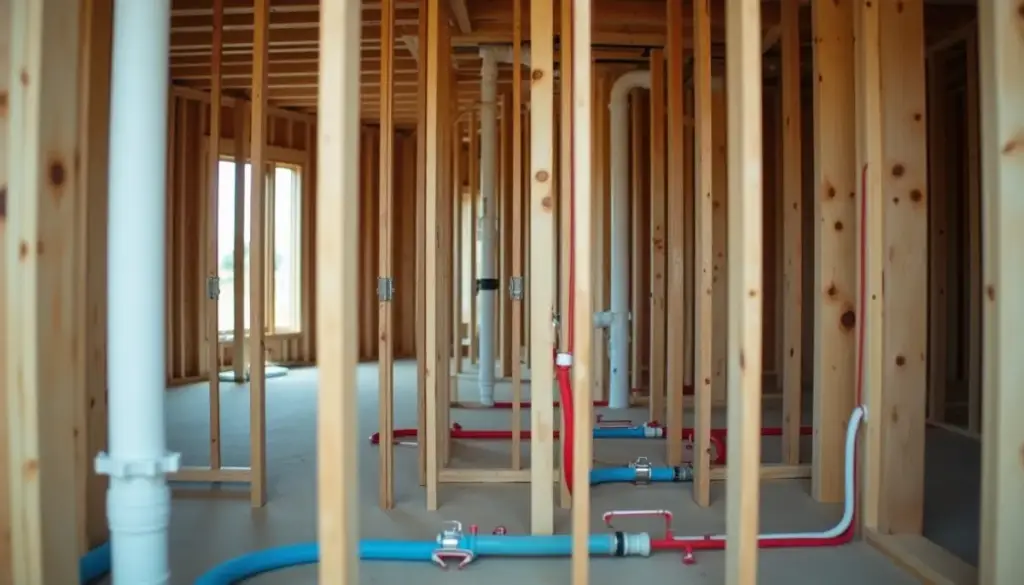
The cost to plumb a house in new construction averaged $27,180 for rough plumbing plus $7,922 for fixtures in NAHB’s 2024 builder survey, about $13 per square foot on a 2,647 sq ft home.
Key Takeaways
- Builders spent $27,180 on plumbing (except fixtures) per new home in 2024, 6.3% of total construction cost, per the NAHB Cost of Constructing a Home survey.
- Plumbing fixtures added another $7,922 (1.9%) in the same NAHB survey, so plumbing totaled about $35,100, or 8.2% of construction cost.
- HomeAdvisor’s June 2026 guide quotes new construction rough-in at $4.50 to $5.25 per square foot and whole-home jobs at $8,000 to $13,500, well below the builder survey.
- Plumbing’s share of construction cost climbed from 4.3% in NAHB’s 2015 survey to 6.3% in 2024.
- Water and sewer fees and inspections averaged $6,260 per home in NAHB’s 2024 data, separate from the plumber’s bid.
- 65.0% of single-family homes started in 2024 had two full bathrooms and 30.5% had three or more, per Census data analyzed by NAHB.
How much does it cost to plumb a new house?
The cost to plumb a house from scratch runs from roughly $8,000 to $13,500 on consumer price guides to about $35,000 in the 2024 NAHB builder survey, which counted $27,180 for pipe and labor and $7,922 for fixtures. The gap comes from home size, bathroom count, fixture grade and what each source counts as plumbing.
The NAHB Cost of Constructing a Home 2024 report surveyed 41 builders in fall 2024. Their average home had 2,647 square feet of finished area and a total construction cost of $428,215. Plumbing (except fixtures) and plumbing fixtures are separate line items, which makes it the cleanest national benchmark available.
Consumer guides price a smaller, simpler job. HomeAdvisor’s guide, updated June 17, 2026, puts new construction rough-in at $4.50 to $5.25 per square foot. Treat that as the floor for a basic two-bath house and the NAHB figure as what production builders actually paid on a bigger home.
What does new construction plumbing cost per square foot?
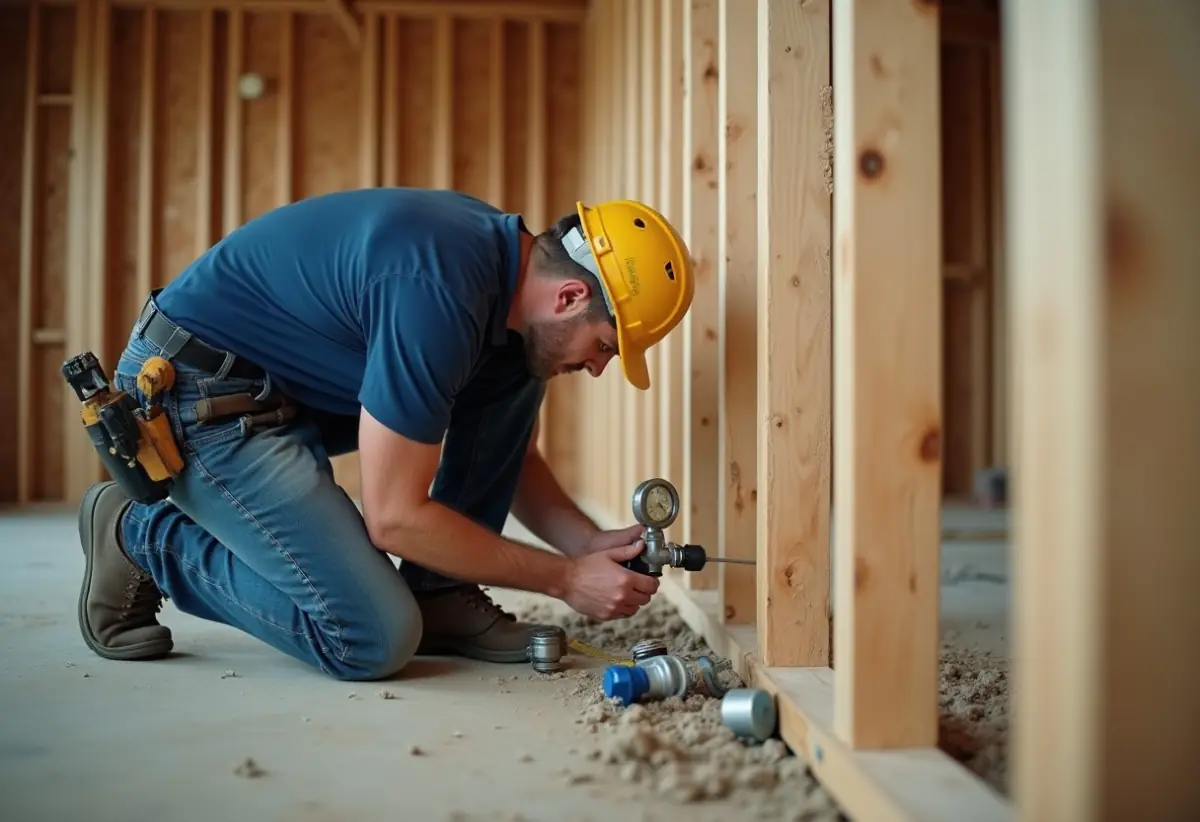
New construction plumbing costs $4.50 to $5.25 per square foot for rough-in on HomeAdvisor’s 2026 guide. NAHB’s 2024 survey works out to $10.27 per square foot for rough plumbing and $13.26 with fixtures, our math dividing its line items by the 2,647 sq ft average. Use the low rate for simple two-bath plans and the high one for larger custom homes.
Square footage is a shortcut, not how plumbers bid. They count fixtures, drain runs and stories. Two houses with the same three baths and one kitchen carry the same fixture count, so the larger one often prices lower per square foot.
| Home size | At HomeAdvisor rough-in rate ($4.50 to $5.25/sq ft) | At NAHB rough rate ($10.27/sq ft) | At NAHB rate with fixtures ($13.26/sq ft) |
|---|---|---|---|
| 1,500 sq ft | $6,750 to $7,875 | $15,405 | $19,890 |
| 2,142 sq ft (Census 2025 median completed home) | $9,640 to $11,250 | $22,000 | $28,400 |
| 2,647 sq ft (NAHB 2024 average) | $11,910 to $13,900 | $27,180 | $35,102 |
| 3,500 sq ft | $15,750 to $18,375 | $35,945 | $46,410 |
The 2,142 sq ft median comes from the Census Bureau’s Characteristics of New Housing highlights for the 1,005,000 single-family homes completed in 2025. Rows other than the NAHB average are straight-line estimates from published rates, not quotes.
What are the phases of plumbing a new house, and what does each cost?
Plumbing a new house happens in four phases: underground (groundwork), rough-in, top-out and trim (finish). Each phase usually ends with an inspection, and many plumbers bill in draws tied to those inspections. No national survey publishes a cost split by phase, so the table shows where each phase lands in the sourced numbers instead of an invented percentage.
| Phase | What gets done | Inspection | Where the cost shows up (sourced) |
|---|---|---|---|
| Underground / groundwork | Building sewer and water service trenches, under-slab drain lines, sleeves through footings, cleanouts | Underground inspection with lines under test, before the slab pour or backfill | Part of NAHB “Plumbing (except fixtures)” $27,180; utility tap work under NAHB “Water and sewer fees, inspections” $6,260 |
| Rough-in | Drain, waste and vent stacks, branch drains, hot and cold supply runs, stub-outs at every fixture | Rough-in inspection with a water or air test, before insulation and drywall | HomeAdvisor 2026: $4.50 to $5.25 per sq ft for new construction rough-in |
| Top-out | Vent stack through the roof, tub and shower valves and bodies set, gas piping to appliance locations where the plumber runs gas | Often combined with rough-in or a separate top-out check, depending on the jurisdiction | Usually inside the rough-in contract; no separate national figure published |
| Trim / finish | Toilets, sinks, faucets, shower trim, water heater, dishwasher and washer hookups | Final plumbing inspection before the certificate of occupancy | NAHB “Plumbing fixtures” $7,922; HomeAdvisor per-fixture piping costs below |
The order matters for your budget. Underground work must pass before concrete goes down, and a missed inspection there can mean cutting the slab later. Our guide to rough-in plumbing dimensions and inspection steps covers what the inspector checks at each stub-out.
How much does each bathroom and fixture add to the cost to plumb a house?
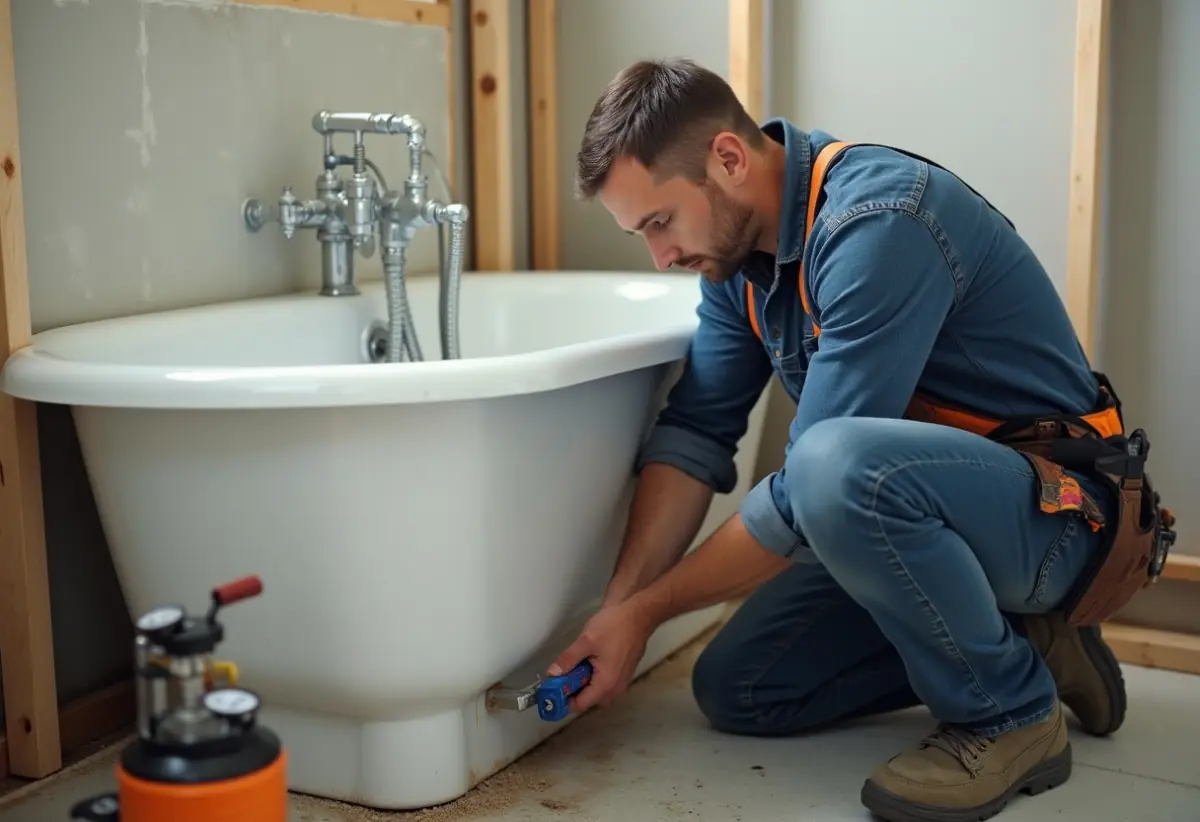
Each fixture adds both pipe work and hardware. HomeAdvisor’s 2026 guide prices the piping for a toilet at about $220 and a shower or tub at $600 to $1,600, before the fixture itself. NAHB builders spent $7,922 on plumbing fixtures per home in 2024. Count the kitchen sink, dishwasher, washer box and water heater too, not just the bathrooms.
| Fixture or appliance | Piping cost per fixture (HomeAdvisor, 2026) |
|---|---|
| Toilet | $220 |
| Double sink with faucet | $400 to $600 |
| Dishwasher | $400 to $650 |
| Shower or bathtub | $600 to $1,600 |
| Washing machine | $300 to $1,500 |
| Water heater | $400 to $1,800 |
Bathroom count is the biggest lever. Census data analyzed in NAHB’s Eye on Housing shows 65.0% of 2024 single-family starts had two full baths, 23.3% had three and 7.2% had four or more. Another 44.9% had one half bath, which adds a toilet and a lavatory.
What drives the cost to plumb a house up or down?
Six factors move a new construction plumbing bid more than square footage: fixture count, pipe material, foundation type, water heater choice, gas piping, and whether the lot connects to city water and sewer or a private well and septic system. Labor drives most of it, since HomeAdvisor estimates labor at about 70% of a plumbing job at $45 to $200 per hour.
- Pipe material. HomeAdvisor lists PEX at $0.40 to $4 per linear foot, CPVC at $0.50 to $3 and copper supply at $2 to $12. PVC drain, waste and vent pipe runs $2 to $4.50 per foot. PEX home runs from a manifold also install faster.
- Foundation. On a slab, all drains go in before the pour and must be exact. A crawlspace or basement leaves pipes reachable, which may raise material slightly but lowers the cost of future fixes. A basement bath often needs an ejector pump if it sits below the sewer line.
- Water heater. HomeAdvisor prices water heater piping at $400 to $1,800. A gas tankless unit may need a larger gas line and new venting, and a heat pump unit needs a condensate drain.
- Gas lines. Census reports 42% of homes completed in 2025 heat with gas. Each gas appliance (furnace, range, dryer, water heater) adds a branch, and some areas license gas fitting separately.
- Well, septic or city. City lots pay water and sewer fees, $6,260 on average in NAHB’s 2024 survey. Rural lots skip tap fees but pay a well driller and septic installer, usually under separate contracts from the plumber.
- Layout. Stacked bathrooms and a kitchen backed onto a bath share drains and vents. Spread-out wet rooms mean longer runs and more vent pipe.
The plan stage is the cheapest place to save. Our walkthrough of how new construction plumbing is laid out shows how a stacked wet wall shortens drain and vent runs. New pipe in an existing home is a different job, priced in our breakdown of what it costs to repipe an existing house.
What do permits, inspections and utility hookups add?
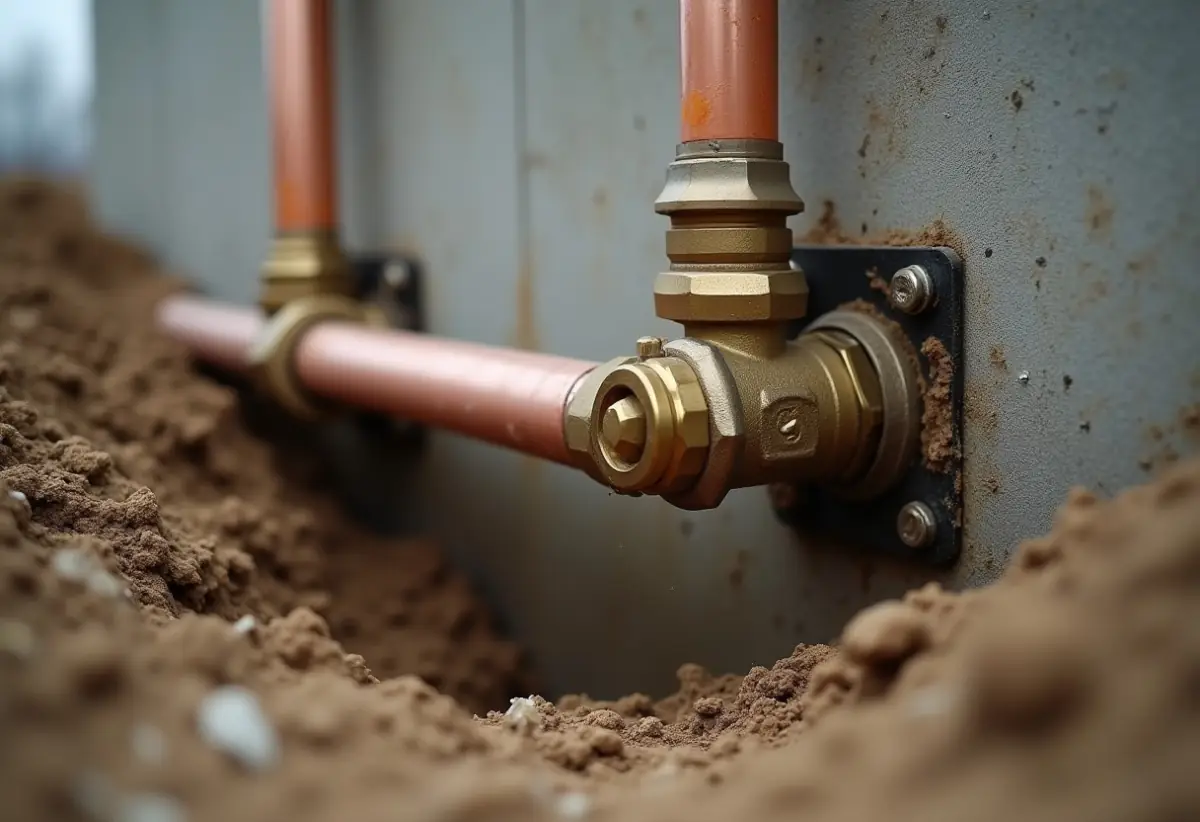
Permits and hookups add several thousand dollars that never appear on the plumber’s bid. NAHB’s 2024 survey averaged $7,640 for building permit fees, $6,367 for impact fees and $6,260 for water and sewer fees and inspections per home. HomeAdvisor lists a standalone plumbing permit at $50 to $500. All of these vary sharply by city and county.
On a full new build, the plumbing permit usually rides on the general building permit, and the plumbing contractor pulls a trade permit under it. Water and sewer tap fees go to the utility and often depend on meter size. Ask the utility for its fee schedule before you close on the lot, because a high tap fee can outweigh savings on pipe.
Inspection rules come from the plumbing code your state or city adopted, usually the International Plumbing Code or the Uniform Plumbing Code with local amendments. Our rundown of plumbing permit requirements lists what typically needs a permit and who may pull one.
How long does it take to plumb a new house?
Plumbing a new house spreads across most of the build schedule, but the hands-on work is short. HomeAdvisor’s guide says a small home may take a couple of days of plumbing work, while a large multi-story home with several baths can take weeks. The calendar stretches because each phase waits on other trades and on inspections.
- Underground: one to a few days, then wait for the underground inspection before the slab pour.
- Rough-in and top-out: several days to two weeks after framing, roofing and windows, then the rough inspection.
- Trim: a few days after drywall, cabinets and countertops, then the final inspection.
To compare bids, ask each plumber to list the fixture count, pipe material, water heater model, whether gas piping is included, and how many inspections and draws the price assumes. Two bids that differ by $8,000 often differ in scope, not in price per hour.
How we sourced this
We consulted the NAHB Cost of Constructing a Home 2024 report (January 2025, 41 builders surveyed in fall 2024) and its 1998 to 2024 history table, HomeAdvisor’s new plumbing cost guide (updated June 17, 2026), the Census Bureau’s Characteristics of New Housing highlights (2025 completions) and NAHB’s analysis of 2024 Census bathroom data. Per-square-foot NAHB rates and the home-size table are our arithmetic from those published figures. We excluded several cost pages that publish ranges with no named source or method. No source reports a national cost split by plumbing phase, so we did not estimate one.
Frequently asked questions
How much does it cost to plumb a 2,000 sq ft house?
At HomeAdvisor’s 2026 new construction rate of $4.50 to $5.25 per square foot, rough plumbing for 2,000 square feet runs about $9,000 to $10,500. NAHB’s 2024 builder survey implies a higher figure, about $20,500 for rough plumbing at $10.27 per square foot. Bathroom count, fixtures and local labor rates decide where your bid lands.
What is included in plumbing rough-in for a new house?
Rough-in covers everything that gets hidden in walls, floors and under the slab. That means drain, waste and vent piping, the vent stack through the roof, hot and cold supply lines, stub-outs at each fixture, and tub or shower valves. Fixtures, faucets and the final water heater hookup come later at trim, after drywall.
Is PEX cheaper than copper for new construction?
Yes, in most markets. HomeAdvisor lists PEX at $0.40 to $4 per linear foot installed versus $2 to $12 for copper supply pipe. PEX also runs in long flexible lengths with fewer fittings, which cuts labor hours. Copper still appears where local code, a builder spec or buyer preference calls for it.
How much does it cost to plumb a bathroom in a new house?
Price it by fixture. HomeAdvisor’s 2026 guide puts the piping for a toilet at about $220 and a shower or tub at $600 to $1,600, plus a lavatory sink connection. Add the fixtures themselves. NAHB builders spent $7,922 on all plumbing fixtures in an average 2024 home, so a third full bath adds both pipe and hardware.
Do I need a permit to plumb a new house?
Almost always. New construction plumbing typically needs a permit and several inspections, usually underground, rough-in and final, under the plumbing code your state or city adopted. HomeAdvisor lists plumbing permits at $50 to $500. On a full new build the plumbing permit often rolls into the overall building permit, which averaged $7,640 in NAHB’s 2024 survey.
Who pays water and sewer tap fees on a new house?
The owner or builder pays them, usually to the local water and sewer utility before service is turned on. NAHB’s 2024 survey put water and sewer fees and inspections at $6,260 on average. Amounts vary widely by city, and rural lots on a private well and septic system skip tap fees but pay for those systems instead.
Can I plumb my own new house?
Some states and cities let an owner-builder pull a homeowner plumbing permit for a house they will live in, while others require a licensed plumber for all new construction. Even where it is allowed, the work must pass the same inspections. Check with your local building department before buying pipe, because a failed rough-in inspection costs time and money.